Winter
EileenWinter is more than a backdrop in Eileen Dunlop’s account: it presses on bodies, streets, and relationships, making isolation tangible even as holiday rituals promise warmth and belonging. The season frames her night with Rebecca at O’Hara’s, her work at Moorehead, and a Christmas Eve drive with Eileen’s father. Across these scenes, cold can be exhilarating or punishing, snow can make a landscape seem beautiful or conceal its hardship, and seasonal festivity never quite dispels dread.
Cold, clothing, and exposure
On the night Eileen drives to O’Hara’s, winter is registered first through the effort of assembling an appearance. After showering, she chooses a black wool dress and a cape from Eileen’s mother’s closet, adds lipstick and stolen stockings, and finds that the available shoes are too large. Her worn loafers are unsuitable for the season, so she puts on snow boots, which make her feel oafish beneath the dress. The mismatch makes winter clothing a visible reminder of her limited resources and of her wish to present herself differently.
The cold follows her beyond the house. Eileen drives with the windows up, and by the time she leaves the driveway her wet hair has frozen in strips that rattle beside her ears. She parks beneath a broken streetlamp across from O’Hara’s, touches up her lipstick in the rearview mirror, and skids over ice to the bar. The small acts of preparation—choosing clothes, applying lipstick, crossing the icy ground—set her hope for social recognition against the season’s physical indignities.
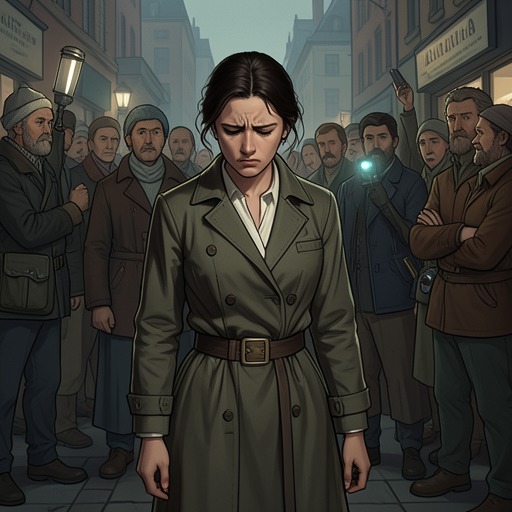
Inside O’Hara’s, the men in Rebecca’s booth wear heavy wool jackets and knit or ear-flap hats; their faces are chapped by wind, sun, and cold. Against that bundled company, Rebecca’s poised presence and martini seem strikingly out of place. Winter therefore marks a social contrast as well as a climatic one: it makes the men’s working clothes and exposure visible, while Rebecca appears to bring another kind of world into the bar. Eileen feels important when Rebecca calls her over, but that warmth is temporary. After the night, she wakes in the car beside a frozen pool of vomit, her pantyhose run, lipstick smeared, cape lost, purse gone, and keys missing. The cold has turned the aftermath of her hoped-for evening into a scene of bodily and material disarray.
Rebecca’s account of the season
Rebecca describes northern winters to Eileen as dark, cold, and nearly maddening. She contrasts them with her childhood in the West, where she played in sun and sand, and with her love of the ocean and beach. She also recalls rowing with her friends on the Charles after moving to Cambridge. Her account makes winter a measure of distance between Rebecca’s remembered landscapes and the New England town where the two women meet.
Eileen listens without correcting Rebecca’s judgment of the region. She privately rejects the suggestion that New England lacks imagination, yet says little and sits twisting her foot to the music. The exchange gives winter a personal and interpretive dimension: Rebecca treats its darkness as an oppressive feature of the place, while Eileen’s silence leaves her own attachment to the region largely unspoken. The season contributes to their uneven conversation, in which Rebecca speaks expansively and Eileen receives the attention without offering an equal account of herself.
Moorehead in the winter landscape
At Moorehead, winter surrounds an institution whose imposing appearance seems at odds with its use. Eileen describes the old gray-stone building, seen across rocky salt and beyond fenced gravel, with dunes in the distance. From afar it recalls a wealthy person’s summer home; the carved stone and coastal view might seem peaceful in different circumstances. Her account of the displayed historical drawings, maps, and photographs traces the building’s changing uses, from a temperance boardinghouse for seamen through a military hospital, boarding school, orphanage, rehabilitation hospital, and boys’ school, before its conversion into a prison for boys more than twenty years earlier.
The cold does not make the prison’s surroundings uniformly bleak. Eileen finds the sea breeze refreshing and watches from her car as a corrections officer escorts a young man inside. A new inmate’s arrival excites her because it brings paperwork, fingerprinting, and photographs for her to process. The winter view thus joins a strikingly serene coastal setting to the routine machinery of confinement. The same building that could suggest rest or contemplation from a distance is, in Eileen’s daily working life, a prison receiving new boys.
Christmas Eve: beauty beside unease
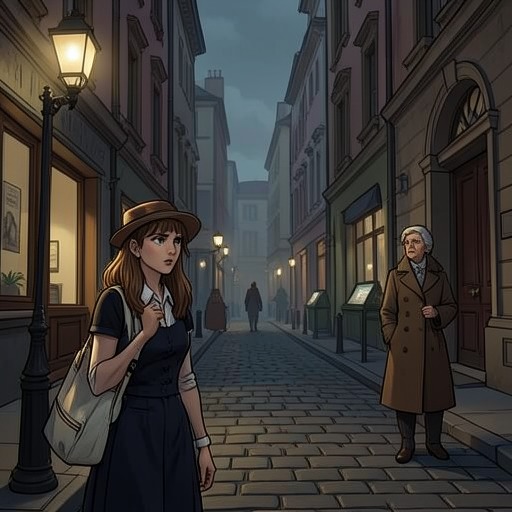
On Christmas Eve, fresh snow makes the roads glitter, while streetlamps wrapped in ribbon and holly, festive shop windows, and bundled shoppers lend the town a ceremonial brightness. Children build snowmen and play near the public library. Eileen anticipates missing that library and reflects that its books had saved her, so the winter scene carries a private association with refuge as well as an outward display of holiday cheer. In the car, however, the air still smells of vomit; Eileen’s father does not detect it because of the gin on his breath and skin. Seasonal beauty and domestic disorder occupy the same ride.
Elsewhere on the route, the holiday’s religious imagery is both present and defaced. Eileen sees a wooden nativity scene outside a church; Mary’s painted mouth has been marked over with lipstick and black lines, turning the smile into a grotesque grin. As hymns sound from inside, Eileen removes the cloth wrapped around the figure representing the Baby Jesus and discovers an empty motor-oil canister beneath it. She then wraps the wine in the cloth and continues on. Winter’s Christmas setting does not settle into uncomplicated reverence: the scene combines familiar ritual, irreverent alteration, and Eileen’s practical use of the discovered covering.
Later, snow and fading light make the landscape more isolated. Eileen recalls a cemetery under an iridescent blue cast, gravestones protruding through the icy surface, and long tree shadows as the roads darken. She drives past smaller, worn coastal homes, a corner store with old advertisements, and Rebecca’s street, where only a few lights are on. The contrast between this neighborhood and the festive displays elsewhere makes winter’s beauty inseparable from material differences in the town. Snow can soften the view, but it does not erase poverty, distance, or the questions Eileen brings to Rebecca’s life there.
Narrative significance
Winter repeatedly places Eileen at thresholds: outside a bar where she hopes to be welcomed, in a car between home and work, and on roads that carry her through the town’s contrasting neighborhoods. Weather gives those passages physical pressure—ice, frozen hair, cold air, and darkening roads—while the season’s public signs, from Christmas decorations to the nativity scene, place them within a shared calendar of expectation. Yet the promise of seasonal fellowship is often undercut by Eileen’s shame, her father’s drinking, or the visible separation between comfortable and poorer parts of X-ville.
The recollections also refuse a single emotional meaning for winter. The sea breeze can refresh Eileen, snow can make a drive glitter, and the library remains a source of rescue in memory; the same season leaves her cold, exposed, and moving through streets that grow darker. By returning to winter across intimate, institutional, and public scenes, the narrative makes the season a setting where beauty and distress coexist rather than resolve one another.