opening pages
Dedication to Fitzwilliam
Oliver Bern presents this book to William Winterbotham-Fitzwilliam, 4th Earl of Fitzwilliam, and presents it as a gift from a humble servant who is grateful for his favor. This dedication, which comes before the pedagogical argument of the book, establishes a personal
opening pages of the surviving edition
The Archive Edition
this book is provided by the internet archive and was digitized with funding from the university of toronto in [2011](entity:time-recall-time-2011-6b46f92808b6). the archive connects this 19th-century work with modern preservation networks
early in the introduction
The Case for Geometry
The preface argues that art and science have developed so broadly that it is easier to master the method of acquiring knowledge than new discoveries. [Geometry](entity:concept-recall-concept-geometry-30a5e55ccca2) is especially valuable because it cultivates investigative ability, sharpens the mind, strengthens reasoning, and supports practical professions such as measurement, engineering, navigation, mechanics
early in the introduction
Geometry as Mental Gymnastics
The author recalled that geometry was adopted by ancient Greek philosophers, as well as by the schools of [Plato](entity:character-recall-character-plato-f4afa87e1c00) and [Johann Heinrich Pestalozzi](entity:character-recall-character-johann-heinrich-pes-22e927c0f760), as the best mental exercise. Its value lies not only in the propositions themselves, but also in cultivating the habit of rigorous thinking
early in the introduction
Critique of Dry Instruction
The introduction criticizes the traditional presentation of propositions, arguing that formalism and repetitive proofs obscure the order of evidence. Even if students have sufficient understanding, they are still burdened by a tedious method, reducing reasoning to a memory exercise
after the critique of conventional teaching
The Coloured Method
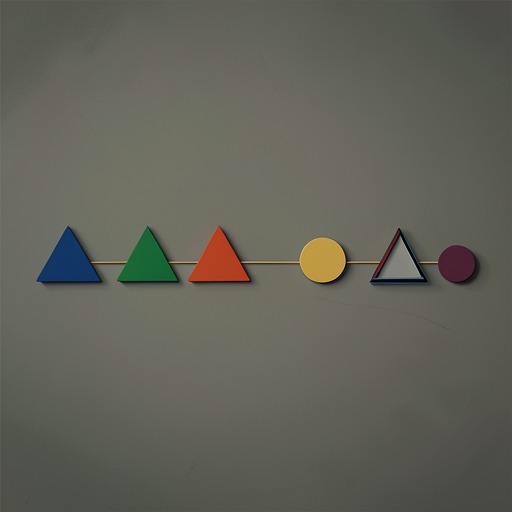
[Oliver Byrne](entity:character-recall-character-oliver-byrne-fb8f929d4027) introduced a system using colors to identify lines, angles, and other parts in a diagram. Unlike any letters, colors allow each part to be named visually, making the correspondence between the figure and the proof immediately apparent
during the introduction of the coloured method
Horace’s Visual Maxim
this book quotes horace's saying "things heard are harder to move the heart," and provides an english explanation, showing that faithful eyes are more powerful in conveying knowledge than ears. this citation gives classical authority to the proposed visual teaching method
midway through the introduction
Geometry as Visual Material
The introduction distinguishes geometric diagrams from ordinary representative symbols. Words name objects, while diagrams provide the relative quantities of materials established by reasoning, thus colors can make these materials more precise and easier to understand
midway through the introduction
The Triangle Demonstration
This book compares traditional alphabetic notation and color systems with right triangles. It first states the triangle's angles, their inequality relations, subtraction relations, and square relations through notation, and then restates these contents as relations between the red, yellow, and blue parts. This example demonstrates the core commitment of
after the triangle example
Colour as Naming Device
The author explained that colors do not change the mathematical straight line, angle, or size. Colors only serve the function of names, while the junctions of colored areas suggest mathematical lines in a familiar visual way
later in the introduction
Defining Point Line Surface
Introduction uses colored areas to explain the abstract concepts of points, lines, and planes. At the intersection of three colors, there is a point that has only position and no size; at the intersection of two colors, there is a line that has only length and no width; the surface separating two colors
near the end of the introduction
The Isosceles Triangle Lesson
Volume 1, Problem 5 is selected as a complete demonstration of this system. In an isosceles triangle, the equality of the base angles is proven through colored construction, and the equality of the exterior angles formed by extending the two sides is also proven
closing pages of the introduction
Geometry for Wider Education
The author suggests that schools use colored chalk, individual learning use colored pencils, and particularly calls on those engaged in women's education to adopt this method. This method is considered applicable to the classroom, oral demonstration, the deaf and mute, and even through tactile illustrations for the blind
Book I opening
Euclid’s Definitions Begin
Volume one begins with basic definitions such as point, straight line, straight line, plane, angle, right angle, acute angle, obtuse angle, figure, circle, diameter, semicircle, segment, and straight figure. The main text gradually moves from abstract elements into familiar shapes. These definitions
early in Book I
Figures and Triangles Defined
This book defines triangle, quadrilateral, polygon, equilateral triangle, isosceles triangle, scalene triangle, right triangle, obtuse triangle, and acute triangle. It then distinguishes square, rhombus, rectangle, lozenge, trapezoid, and parallel lines
after Book I definitions
The Three Postulates
The Euclidean constructional framework is stated through three postulates: a straight line may be drawn between any two points, a finite straight line may be produced indefinitely, and a circle may be described from any centre at any distance.
Together these postulates authorize the operations performed throughout the problems of the Elements.
after the postulates
The Common Notions
The axioms declare that magnitudes equal to the same thing are equal, equals may be added or subtracted, doubles and halves preserve equality, coincident magnitudes are equal, and the whole is greater than its part. They also include the impossibility of two straight lines enclosing a space and the equality of all right angles.
The parallel postulate appears as the final common notion, governing the behaviour of lines whose interior angles are less than two right angles.
after the axioms
Geometry’s Technical Vocabulary
The explanatory matter distinguishes problems from theorems, solutions from demonstrations, and defines corollaries, scholia, and lemmas. It also explains construction, hypothesis, perimeter, radius, hypotenuse, and the permitted use of the straightedge and compass.
This vocabulary teaches the reader how a Euclidean book is organized before the formal propositions begin.
before Proposition I
The Symbolic Notation
The book introduces symbols for therefore, because, equality, inequality, addition, subtraction, products, ratios, [parallelism](entity:relation-recall-relation-parallelism-0355e5929cdc), [perpendicularity](entity:relation-recall-relation-perpendicularity-ed910af36f39), angles, right angles, and abbreviated references to definitions, postulates, axioms, hypotheses, and constructions.
The notation is meant to compress repeated verbal statements while preserving the logical order of the demonstrations.
Book I Proposition I
Constructing an Equilateral Triangle
Given a finite straight line, the book describes circles from its two endpoints with the line as radius. Their intersection is joined to the endpoints, producing an equilateral triangle because all three sides are radii of equal circles.
This first problem establishes the basic constructive rhythm of the Elements: describe, draw, compare, and conclude.
Book I Proposition II
Copying a Given Line
From a given point, the construction transfers the length of a given finite straight line by combining an equilateral triangle, produced lines, and intersecting circles. The resulting segment is shown equal to the original through common radii and subtraction of equal lengths.
The problem extends the first construction into a general method for transporting magnitude.
Book I Proposition III
Cutting Off an Equal Part
From the greater of two given straight lines, the construction cuts off a segment equal to the lesser. A copied length is used as a radius to mark the required point on the greater line.
This elementary operation becomes an essential tool in the later proofs, where equal segments must be introduced without numerical measurement.
Book I Proposition IV
Side-Angle-Side Equality
Two triangles with two corresponding sides equal and the included angles equal are placed by superposition. Their third sides and remaining angles must coincide, because otherwise two straight lines would enclose a space
Book I Proposition V
Isosceles Base Angles
In an isosceles triangle, the equal sides are produced beyond the base and auxiliary equal segments are constructed. Two pairs of triangles are then compared by the fourth proposition, yielding equality of the external angles and finally equality of the internal base angles.
The result makes symmetry visible as a consequence of equal sides rather than an assumed appearance.
Book I Proposition VI
Equal Angles Opposite Equal Sides
The converse of the isosceles result is proved: if two angles of a triangle are equal, the sides opposite them are equal. Assuming one side greater, the proof cuts off an equal portion and constructs a smaller triangle whose congruence would make a part equal to the whole.
The contradiction forces the two opposite sides to be equal.
Book I Proposition VII
Uniqueness on a Base
Two triangles cannot stand on the same base and on the same side with their corresponding endpoint sides equal. The proof considers the possible positions of the vertices and uses the isosceles result to derive contradictory angle relations.
The proposition gives a rigidity principle: specified side data determine the triangle’s placement.
Book I Proposition VIII
Side-Side-Side Equality
Two triangles with three corresponding sides equal are shown to have equal included angles. When their equal bases are superposed, the uniqueness established in the preceding proposition forces their vertices to coincide.
This completes the principal elementary congruence pattern based solely on side equality.
Book I Proposition IX
Bisecting an Angle
A segment is marked equally on the two legs of a given rectilinear angle, and an equilateral triangle is constructed on the segment joining the marked points. The line from the vertex to the opposite vertex of that equilateral triangle divides the original angle into two equal parts.
The construction turns symmetry into a reusable instrument for later problems.
Book I Proposition X
Bisecting a Line Segment
An equilateral triangle is built on a given finite straight line, and its apex is joined to the midpoint construction. The two resulting triangles are congruent, so the given line is divided into equal halves.
The perpendicular-bisector operation becomes a foundation for locating centres and constructing perpendiculars.
Book I Proposition XI
Perpendicular Through a Point
Given a point on a straight line, equal distances are marked on either side of it and an isosceles triangle is constructed. Joining its apex to the original point produces a line whose adjacent angles are equal and therefore right angles.
The problem establishes the construction of [perpendicularity](entity:relation-recall-relation-perpendicularity-ed910af36f39) from a point already lying on a line.
Book I Proposition XII
Perpendicular from Outside
From a point outside an indefinite straight line, a circle is drawn to cut the line on both sides. The midpoint of the intercepted chord is found, and the line joining that midpoint to the external point is proved perpendicular to the original line.
This extends perpendicular construction beyond the line itself and prepares the way for circle geometry.
Book I Proposition XIII
Angles on a Straight Line
When one straight line stands on another, the adjacent angles are either two right angles or together equal to two right angles. The proof separates the perpendicular and non-perpendicular cases and invokes the equality of right angles.
The proposition supplies the basic additive law for linear angles.
Book I Proposition XIV
Straight-Line Continuation
If two straight lines meet a third on opposite sides and form adjacent angles equal to two right angles, they must lie in one continuous straight line. Any alternative continuation would create an angle relation contradicting the axiom that the whole exceeds its part.
The result formalizes when two drawn segments are actually one line.
Book I Proposition XV
Vertical Angles
When two straight lines intersect, each pair of opposite angles is equal because each pair forms two right angles with the same adjacent angle. Subtracting equal quantities yields equality of the vertical angles.
The theorem identifies a stable invariant in every intersection of straight lines.
Book I Proposition XVI
Exterior Triangle Angle
When one side of a triangle is produced, the exterior angle is shown greater than either remote interior angle. An auxiliary equal segment creates an isosceles triangle, allowing the remote interior angle to be transferred into part of the exterior angle.
The proposition begins the systematic comparison of triangle angles and sides.
Book I Proposition XVII
Triangle Angles Below Two Rights
Any two angles of a triangle taken together are less than two right angles. Producing one side converts one interior angle into an exterior angle, which is greater than the remote interior angle by the preceding proposition.
The result constrains the possible shapes of every triangle before the angle sum is proved.
Book I Proposition XVIII
Greater Side Opposite Greater Angle
In any triangle, if one side is greater than another, the angle opposite the greater side is greater than the angle opposite the lesser. A segment equal to the lesser side is cut from the greater, producing an isosceles triangle whose angle comparison gives the conclusion.
The theorem links linear magnitude to angular magnitude.
Book I Proposition XIX
Greater Angle Opposite Greater Side
The converse is proved: if one angle of a triangle is greater than another, the side opposite the greater angle is greater. The proof excludes both possibilities that the corresponding side is equal to or less than the other by invoking the preceding side-angle propositions.
Together with Proposition XVIII, it establishes the ordering correspondence between sides and angles.
Book I Proposition XX
The Triangle Inequality
The sum of any two sides of a triangle is greater than the third. One side is produced, an equal segment is constructed, and the resulting isosceles triangle converts the required comparison into an angle inequality.
The theorem states the fundamental feasibility condition for three lengths to form a triangle.
Book I Proposition XXI
Interior Point Inequality
From an interior point of a triangle, straight lines to the endpoints of one side are together less than the other two sides. At the same time, the angle between those lines is greater than the original angle at the opposite vertex.
The proposition refines the triangle inequality by showing how interior detours shorten while opening the angle.
Book I Proposition XXII
Constructing a Triangle
Given three straight lines whose pairwise sums exceed the third, a triangle is constructed with those lines as its sides. Circles centered at the endpoints of one chosen segment intersect because the inequality guarantees that the required radii overlap.
The problem proves that the triangle inequality is not only necessary but sufficient for construction.
Book I Proposition XXIII
Copying an Angle
At a given point on a given straight line, a rectilinear angle equal to another given angle is constructed. Equal segments and a copied triangle transfer the angle through side-side-side congruence.
This becomes the basic device for constructing parallel lines and regular figures.
Book I Proposition XXIV
SAS Side Comparison
Two triangles with two corresponding sides equal are compared when their included angles differ. The side opposite the greater included angle is proved greater by constructing a triangle with the smaller angle and applying the earlier angle-side order theorem.
The result shows that, with two sides fixed, opening the included angle lengthens the opposite side.
Book I Proposition XXV
SSS Angle Comparison
Two triangles with two corresponding sides equal but unequal bases are shown to have unequal included angles. If the greater base did not subtend the greater angle, the preceding proposition would produce a contradiction.
This is the converse comparison to Proposition XXIV and completes the elementary triangle-ordering chain.
Book I Proposition XXVI
Angle-Side Congruence
Two triangles are proved equal when they have two corresponding angles and either the included side or a corresponding opposite side equal. In each case, assuming inequality permits a third triangle to be constructed, after which the earlier congruence and angle theorems force an impossibility.
The proposition consolidates the principal angle-side criteria for triangle equality.
Book I Proposition XXVII
Alternate Angles and Parallelism
If a straight line crossing two others makes equal alternate angles, the two lines are parallel. If they met when produced, the exterior angle would be greater than its alleged equal alternate angle.
The theorem turns an angle condition into a geometric statement about never meeting.
Book I Proposition XXVIII
Tests for Parallel Lines
A straight line crossing two others establishes their [parallelism](entity:relation-recall-relation-parallelism-0355e5929cdc) when an exterior angle equals the opposite interior angle or when the interior angles on one side sum to two right angles. The proof reduces both conditions to the alternate-angle criterion.
These converse tests make parallel construction verifiable from local angle data.
Book I Proposition XXIX
Angles from Parallel Lines
A transversal crossing two parallel lines creates equal alternate angles, equal corresponding exterior and opposite interior angles, and interior angles on the same side summing to two right angles. The proof uses the parallel postulate to exclude unequal alternatives.
This proposition supplies the principal angle calculus of [parallelism](entity:relation-recall-relation-parallelism-0355e5929cdc).
Book I Proposition XXX
Parallels to One Line
Straight lines parallel to the same straight line are parallel to one another. A common transversal would give the same alternate angle at each intersection, allowing Proposition XXVII to establish their mutual [parallelism](entity:relation-recall-relation-parallelism-0355e5929cdc).
The theorem makes parallelism transitive within the plane.
Book I Proposition XXXI
Drawing a Parallel
Through a given point, a line parallel to a given line is constructed by drawing an auxiliary line and copying an alternate angle. The resulting equality invokes the parallel criterion.
This problem gives the standard Euclidean construction of a parallel through a point.
Book I Proposition XXXII
Triangle Angle Sum
Through a triangle’s vertex, a line parallel to the opposite side is drawn. The two remote interior angles appear as alternate angles, while the exterior angle is equal to the sum of the two remote angles; consequently, all three interior angles equal two right angles.
This is the central triangle angle-sum proof of Book I.
Book I Proposition XXXIII
Equal Parallel Connectors
Straight lines joining corresponding endpoints of two equal and parallel segments are themselves equal and parallel. A diagonal divides the resulting triangles, whose corresponding sides and alternate angles are equal.
The result introduces the characteristic structure of a parallelogram.
Book I Proposition XXXIV
Parallelogram Diagonal
Opposite sides and angles of a parallelogram are equal, and its diagonal divides it into two equal triangles. Parallel-line angle relations establish the congruence of the two halves.
The proposition makes area arguments possible by reducing parallelograms to congruent triangles.
Book I Proposition XXXV
Parallelograms on Same Base
Parallelograms on the same base and between the same parallels are equal in area. Their sloping portions can be rearranged into congruent triangles, leaving equal common or complementary parts.
The theorem establishes area invariance under shearing.
Book I Proposition XXXVI
Equal Bases Equal Areas
Parallelograms on equal bases and between the same parallels are equal. By drawing connecting lines, each figure is related to a parallelogram on the common base, after which the preceding area theorem applies.
The proposition isolates base length and altitude as the determinants of parallelogram area.
Book I Proposition XXXVII
Triangles on Same Base
Triangles on the same base and between the same parallels are equal in area. Each triangle is doubled into a parallelogram with the same base and altitude, and equal parallelograms yield equal triangles.
This is the triangular counterpart to the preceding parallelogram results.
Book I Proposition XXXVIII
Triangles on Equal Bases
Triangles on equal bases and between the same parallels are equal in area. Doubling both triangles into parallelograms reduces the claim to the equal-base parallelogram theorem.
The result prepares the proportional treatment of triangles in Book VI.
Book I Proposition XXXIX
Equal Triangles Share Parallels
Equal triangles on the same base and the same side must lie between the same parallels. If the line joining their vertices were not parallel to the base, a constructed parallel would create a triangle that was simultaneously equal to and a proper part of another.
The theorem reverses the area relation to identify a common altitude.
Book I Proposition XL
Equal Bases Share Parallels
Equal triangles on equal bases and on the same side are likewise between the same parallels. The proof converts the situation into a common-base comparison and excludes any alternative line through the vertices.
This strengthens the relation between equal area and equal altitude.
Book I Proposition XLI
Parallelogram Double Triangle
A parallelogram and a triangle on the same base and between the same parallels are compared by drawing the parallelogram’s diagonal. The diagonal divides the parallelogram into two equal triangles, so the parallelogram is double the given triangle.
The proposition becomes a standard area-conversion tool.
Book I Proposition XLII
Equal-Area Parallelogram
A parallelogram equal to a given triangle is constructed with an angle equal to a given rectilinear angle. A copied side and a parallel line create the required figure, whose area is twice that of the triangle.
The problem translates triangular area into a parallelogram suited to later constructions.
Book I Proposition XLIII
Equal Complements
The complements of two parallelograms arranged around a common diagonal are proved equal. Each complement is obtained by subtracting one of two equal diagonal halves from a larger parallelogram.
The theorem introduces the complement method that drives the second book’s algebraic geometry.
Book I Proposition XLIV
Applying a Parallelogram
On a given straight line, a parallelogram equal to a given triangle and having a prescribed angle is applied. A previously constructed equal-area parallelogram is transformed through parallels until one side coincides with the given line.
The problem demonstrates how area, angle, and placement can be controlled simultaneously.
Book I Proposition XLV
Applying to a Rectilinear Figure
A given rectilinear figure is divided into triangles, and equal-area parallelograms are successively applied to a straight line with a prescribed angle. The resulting figure is shown to be a single parallelogram equal in area to the original polygon.
The construction generalizes the triangle application to arbitrary rectilinear figures.
Book I Proposition XLVI
Constructing a Square
On a given straight line, perpendiculars and parallels are drawn to complete a parallelogram with right angles and equal sides. The resulting figure is a square.
This elementary construction supplies the standard unit figure for the metric propositions that follow.
Book I Proposition XLVII
Euclid’s Pythagorean Proof
In a right-angled triangle, the square on the hypotenuse is shown equal to the sum of the squares on the two legs. Squares are constructed on all three sides, and parallels divide the larger square into rectangles corresponding to the two smaller squares.
The theorem is the geometric proof of the [Pythagorean theorem](entity:concept-recall-concept-ce6e534f761e), converting a relation of lengths into an equality of areas.
Book I Proposition XLVIII
Converse of Pythagoras
If the square on one side of a triangle equals the squares on the other two sides, the angle subtended by that side is a right angle. A right triangle is constructed with the same two sides, and the equality of squares forces the original triangle to coincide with it.
The proposition establishes the converse of the [Pythagorean theorem](entity:concept-recall-concept-ce6e534f761e).
Book II opening
Rectangles and Squares Defined
Book II defines a rectangle as a right-angled parallelogram contained by two adjacent sides and identifies the square as the special case in which those sides are equal. It also introduces the gnomon, formed from a parallelogram around a diagonal together with its complements.
The geometry is now prepared to express algebraic identities through areas.
Book II Proposition I
Distributive Rectangle Theorem
A rectangle under an undivided line and a line divided into several parts equals the sum of the rectangles under the undivided line and each part. Completing parallelograms makes the decomposition visibly additive.
The proposition is the geometric form of distribution over a sum.
Book II Proposition II
Square of a Sum
When a straight line is divided into two parts, the square of the whole equals the sum of the rectangles formed by the whole and each part. The constructed figure partitions the square into the two corresponding rectangular regions.
The result presents a basic expansion identity through area rather than symbols.
Book II Proposition III
Rectangle Expansion
For a line divided into two parts, the rectangle contained by the whole and either part equals the square on that part together with the rectangle under the two parts. The proof completes a square and identifies the component rectangles.
This gives the geometric counterpart of a binomial product.
Book II Proposition IV
Square of Two Parts
The square of a line divided into two parts equals the two component squares together with twice the rectangle under the parts. The figure is assembled from two squares and two equal rectangular complements.
This is the classic geometric form of the square-of-a-sum identity.
Book II Proposition V
Equal-Half Rectangle Relation
A line is divided into equal and unequal parts, and the rectangle under the unequal parts together with the square on the segment between the division points is shown equal to the square on half the whole line.
The construction reveals how a central equal division controls products formed by unequal divisions.
Book II Proposition VI
Gnomon and Extended Square
A bisected line is produced to an external point. The rectangle formed by the whole extended line and the produced part, together with the square on half the original line, equals the square on the line made from the half and the produced part.
The proposition uses the gnomon to encode a completed-square relation.
Book II Proposition VII
Difference-of-Squares Relation
When a line is divided into two parts, the square of the whole and the square of one part equal twice the rectangle of the whole and that part together with the square of the other part. The proof rearranges the constructed squares and rectangles.
The theorem supplies another algebraic identity in purely geometric form.
Book II Proposition VIII
Square of an Extended Sum
For a line divided into two parts, the square of the whole plus one part equals four times the rectangle of the whole and that part together with the square of the other part. The construction extends the line and completes a larger square.
The result continues Book II’s systematic translation of polynomial relations into figures.
Book II Proposition IX
Unequal-Part Squares
A line divided equally and unequally yields a relation in which the squares on the unequal parts equal twice the squares on half the whole and on the segment between the division points. Right angles and equal triangles organize the decomposition.
The theorem connects symmetric and asymmetric divisions through a quadratic identity.
Book II Proposition X
Extended-Line Squares
A bisected line is produced, and the squares on the whole produced line and the produced part are shown double the squares on half the original line and on the combined half-plus-produced segment.
The construction extends the preceding identities to an external point and reinforces the role of completed squares.
Book II Proposition XI
Dividing for a Square Relation
A given straight line is divided so that the rectangle under the whole and one part equals the square on the other part. A square and a circle are constructed to locate the required division point.
This is an early geometric solution of a quadratic condition and a direct precursor to golden-ratio division.
Book II Proposition XII
Obtuse Triangle Theorem
In an obtuse triangle, the square on the side opposite the obtuse angle exceeds the sum of the squares on the sides containing it by twice a rectangle involving the produced portion beyond the perpendicular.
The theorem generalizes the Pythagorean relation to obtuse triangles by measuring the excess geometrically.
Book II Proposition XIII
Acute Triangle Theorem
In an acute triangle, the square on a side opposite an acute angle is less than the sum of the squares on the sides containing it by twice a rectangle. Separate cases handle whether the perpendicular falls inside or outside the triangle.
The result complements the obtuse case and completes the metric classification of triangle angles.
Book II Proposition XIV
Constructing a Square Root
A straight line whose square equals a given rectilinear figure is constructed. The figure is first converted into a rectangle, which is transformed into a mean-proportional construction; the resulting altitude supplies the required line.
The problem turns an area into a length through similar triangles and the geometry of proportion.
Book III opening
Circle Definitions
Book III defines equal circles, tangents, circles that touch, equal distances from a centre, segments, angles in segments, arcs, sectors, and similar segments. [Concentric circles](entity:state-recall-state-concentric-circles-66ddb06fcf26) are also named.
The book shifts from polygonal area to the structure of circular boundaries and their associated angles and chords.
Book III Proposition I
Finding the Center
A chord of a given circle is bisected, and the perpendicular bisector is drawn. Because the perpendicular from the centre bisects a chord, the intersection of two such bisectors identifies the circle’s centre.
The construction turns the unknown centre into a recoverable geometric point.
Book III Proposition II
Chord Lies Inside Circle
A straight line joining two points on a circle lies wholly within the circle. The centre is joined to points along the chord, and the triangle inequality shows that every interior point is closer to the centre than the radius.
The proposition establishes the convexity of the circular disk in Euclidean terms.
Book III Proposition III
Diameter and Chord Perpendicularity
A line through the centre that bisects a chord is perpendicular to it; conversely, a perpendicular from the centre to a chord bisects the chord. Congruent right triangles provide both directions.
This theorem links the circle’s centre, chord symmetry, and [perpendicularity](entity:relation-recall-relation-perpendicularity-ed910af36f39).
Book III Proposition IV
Intersecting Chords Not Bisecting
Two chords intersecting inside a circle cannot both bisect one another unless both pass through the centre. If both were bisected, the line from the centre to the intersection would be perpendicular to each, forcing an impossible equality of lengths.
The result distinguishes central diameters from ordinary intersecting chords.
Book III Proposition V
Intersecting Circles Have Different Centers
Two circles that intersect cannot share the same centre. A common centre would make the radii to an intersection point equal, while the same line would have to reach two distinct circumferences at unequal distances.
Intersection therefore reveals a difference in the circles’ centres.
Book III Proposition VI
Internal Tangency Centers
Two circles touching internally cannot have the same centre. A radius drawn through the point of contact would otherwise contain one radius as a proper extension of the other, making a part equal to the whole.
The theorem separates internal tangency from concentricity.
Book III Proposition VII
Lines from an Interior Point
From a point inside a circle but not at its centre, the greatest line to the circumference passes through the centre and the least is the remaining part of the diameter. Lines nearer the central diameter are longer than more remote lines; symmetric lines on opposite sides are equal.
The proposition orders all chords radiating from an interior point by their angular distance from the diameter.
Book III Proposition VIII
Lines from an Exterior Point
From a point outside a circle, among lines reaching the concave circumference, the central line is greatest and nearer lines are longer; among lines reaching the convex circumference, the central continuation is least and nearer lines are shorter. Equal symmetric lines occur in pairs.
The theorem prepares the distinction between secants and tangents from an external point.
Book III Proposition IX
Equal Radii Locate Center
If more than two equal straight lines can be drawn from a point inside a circle to its circumference, that point must be the centre. Were another centre assumed, the diameter through the two points would make one of the equal lines longer or shorter than the others.
Equal radial reach is therefore a definitive test for the centre.
Book III Proposition X
Two Circles Meet Twice
One circle cannot intersect another in more than two points. Three common points would give three equal radii from one circle’s centre to a point that is not its centre, contradicting the earlier ordering theorem.
The proposition fixes the maximum number of intersections of two distinct circles.
Book III Proposition XI
Internal Tangency Alignment
When two circles touch internally, the line joining their centres, produced, passes through the point of contact. If it did not, the triangle inequality would make one radius exceed the sum of the others in an impossible way.
[Tangency](entity:state-recall-state-tangency-801ffe515b9b) is shown to force the two centres and the contact point onto one straight line.
Book III Proposition XII
External Tangency Alignment
When two circles touch externally, the line joining their centres passes through their contact point. Any alternative placement would make the sum of two radii greater than the distance between the centres while also equal to it.
The theorem gives the external counterpart to internal tangency alignment.
Book III Proposition XIII
Single Point of Tangency
Two circles cannot touch one another in more than one point, whether internally or externally. The internal case contradicts radius and diameter relations, while the external case contradicts the centre-line inequality.
[Tangency](entity:state-recall-state-tangency-801ffe515b9b) is therefore a one-point relation rather than a repeated intersection.
Book III Proposition XIV
Equal Chords and Distances
Equal chords in a circle are equally distant from the centre, and chords equally distant from the centre are equal. Perpendiculars from the centre bisect the chords, after which right-triangle relations compare their halves.
The theorem converts chord equality into a statement about central distance.
Book III Proposition XV
Diameter as Greatest Chord
The diameter is the greatest straight line in a circle. Among other chords, the chord nearer the centre is greater than a more remote chord, proved by comparing equal perpendicular distances and the resulting right triangles.
The proposition gives a complete order of chord lengths by distance from the centre.
Book III Proposition XVI
Perpendicular Tangent Radius
A straight line drawn from the endpoint of a diameter perpendicular to it falls outside the circle and cannot meet the circle again. Conversely, a line from a point between that endpoint and the circle cuts the circle.
This is the foundational geometric characterization of a tangent direction.
Book III Proposition XVII
Constructing a Tangent
A tangent is constructed to a given circle from a point on or outside its circumference. At a point on the circumference, the tangent is the perpendicular to the radius; from an external point, an auxiliary concentric circle identifies the contact point.
The problem turns the existence of tangents into a straightedge-and-compass construction.
Book III Proposition XVIII
Radius Perpendicular to Tangent
If a straight line touches a circle, the radius drawn from the centre to the contact point is perpendicular to the tangent. Any assumed oblique radius would meet the circle again, contradicting tangency.
The theorem establishes the necessary right angle at every point of contact.
Book III Proposition XIX
Tangent Perpendicular Passes Center
The perpendicular drawn to a tangent at the contact point passes through the centre of the circle. If the centre lay elsewhere, the radius to the contact point would create a part equal to the whole.
This is the converse structural statement to Proposition XVIII.
Book III Proposition XX
Central Angle Doubles Circumference Angle
The angle at the centre of a circle is double the angle at the circumference standing on the same arc. Three cases are treated according to whether the centre lies outside, inside, or on the relevant side of the inscribed angle.
The theorem establishes the governing relation between central and inscribed angles.
Book III Proposition XXI
Angles in Same Segment
Angles in the same segment of a circle are equal because they stand on the same chord and therefore intercept the same arc. The proof handles segments greater than, equal to, and less than a semicircle.
The result makes the circular segment a stable angular region.
Book III Proposition XXII
Cyclic Quadrilateral Supplement
The opposite angles of a quadrilateral inscribed in a circle together equal two right angles. Drawing the diagonals divides the figure into angles standing on complementary arcs, and the angle relations add to a straight angle.
This introduces the characteristic supplementary-angle property of cyclic quadrilaterals.
Book III Proposition XXIII
Unique Similar Segment
On the same straight line and on the same side, it is not possible to construct two non-overlapping similar circular segments. If a secant line passes through both, although the circular segments are similar, they will produce unequal angle relations
Book III Proposition XXIV
Equal Similar Segments
The circular segments on equal straight lines are equal. When equal chords are superimposed, the similarity forces the two circular segments to coincide. This proposition links the equality of chords with the equality of their supporting circular regions
Book III Proposition XXV
Describing a Circle from a Segment
given a circular arc, draw the perpendicular bisectors of two chords; the intersection of the two perpendicular bisectors is the center. with that point as the center and the corresponding radius, draw a circle, which passes through all the points determining the circular arc
Book III Proposition XXVI
Equal Arcs Equal Angles
In equal circles, when the central angle or the inscribed angle is equal, the arcs they subtend are also equal. Equal central angles produce congruent sectors and similar segments. The inscribed angle holds because it is equal to half the corresponding central angle
Book III Proposition XXVII
Equal Arcs Equal Chords
In equal circles, equal arcs subtend equal chords. The radii connecting the endpoints of the arcs form congruent triangles, therefore chords subtending equal arcs are equal in length
Book III Proposition XXVIII
Equal Chords Equal Arcs
In equal circles, equal chords subtend equal arcs. Drawing a perpendicular from the center to a chord bisects the chord and forms equal isosceles triangles, thereby forcing the central angles to be equal, and consequently the arcs to be equal
Book III Proposition XXX
Bisecting an Arc
By drawing equal chords from the two endpoints of an arc and drawing the perpendicular bisector of the chord connecting these two endpoints, the arc can be bisected. Congruent triangles show that the resulting radius divides the arc into two equal parts
Book III Proposition XXXI
Angles in Semicircles
the angle opposite the semicircle is a right angle; the angle opposite a circular segment greater than a semicircle is an acute angle; the angle opposite a circular segment less than a semicircle is an obtuse angle. the diameter and its complement arc determine this classification. this proposition provides
Book III Proposition XXXII
Tangent-Chord Angle
when the tangent to a circle meets a chord at the point of contact, the angle between them is equal to the angle subtended by the opposite arc. the radius at the point of contact provides a right angle, and the inscribed angle theorem transfers the remaining angle to the opposite circular arc
Book III Proposition XXXIII
Constructing a Circular Segment
Construct a circular segment containing an equal angle to a given angle on a given straight line. Draw a line at the endpoint similar to a tangent, and construct a circle such that the angle between the tangent and the chord is guaranteed to produce the required inscribed angle. This problem converts the relationship between a
Book III Proposition XXXIV
Cutting Off a Circular Segment
From the given circle, cut off a circular segment containing the given angle, by drawing a tangent at an arbitrary point and constructing the required angle at that point. The theorem of the angle between the tangent and the chord determines that the angle of the resulting circular segment is equal to the given angle
Book III Proposition XXXV
Intersecting Chords Theorem
When two chords intersect inside a circle, the product of the segments of one chord is equal to the product of the segments of the other chord. The proof is discussed successively for the case of two diameters, a diameter and a common chord, and two common chords. This theorem converts the intersection
Book III Proposition XXXVI
Secant-Tangent Theorem
From a point outside a circle, draw a tangent and a secant. The rectangle formed by the whole secant and its external segment is equal to the square of the tangent. This is the tangent form of the secant theorem, establishing an important product relationship between the length of the external segment and
Book III Proposition XXXVII
Recognizing a Tangent
If a secant drawn from a point outside a circle intersects another line at the circle, and the rectangle formed by the whole secant and its external segment is equal to the square of the other line, then that line is a tangent to the circle. The tangent drawn is congruent to the candidate
Book IV opening
Inscribed-Figure Definitions
Volume four defines figures inscribed in other figures and circumscribed about other figures, polygons inscribed in a circle, and circles inscribed in polygons, as well as circles circumscribed about polygons. It also introduces regular polygons, which are figures with equal sides and equal angles
Book IV Proposition I
Placing a Line in a Circle
A straight line no longer than a circle’s diameter is placed as a chord in the circle. The diameter is first identified, and a circle with the given line as radius marks the required endpoints.
The problem supplies the elementary operation for inserting prescribed side lengths into a circle.
Book IV Proposition II
Inscribing an Equiangular Triangle
A triangle equiangular to a given triangle is inscribed in a given circle. Tangents and copied angles establish the required central and inscribed angle relations around the circumference.
The construction shows that a circle can host any prescribed triangular angle pattern.
Book IV Proposition III
Circumscribing an Equiangular Triangle
A triangle equiangular to a given triangle is circumscribed about a given circle. Equal central angles determine three radii, and tangents at their endpoints form the required sides.
The construction reverses inscription: the circle becomes an interior object bounded by the desired triangle.
Book IV Proposition IV
Inscribing a Circle in Triangle
The angle bisectors of two angles in a given triangle intersect at a point. Perpendiculars from that point to the three sides are shown equal, so a circle with any one as radius touches all three sides.
This constructs the incircle and identifies the incenter through equal distances from the sides.
Book IV Proposition V
Circumcircle of a Triangle
The perpendicular bisectors of two sides of a given triangle intersect at a point equidistant from all three vertices. A circle centered there passes through the triangle’s vertices.
The construction produces the circumcircle and establishes the perpendicular-bisector method for locating its centre.
Book IV Proposition VI
Inscribing a Square
Two perpendicular diameters are drawn in a circle, and their endpoints are joined. The resulting quadrilateral has right angles and equal sides, so it is a square inscribed in the circle.
The construction is the first regular-polygon inscription of Book IV.
Book IV Proposition VII
Circumscribing a Square
Perpendicular diameters of a circle are drawn, and tangents at their endpoints form a surrounding quadrilateral. The tangent radii create right angles and equal sides, proving that the outer figure is a square.
The construction pairs the inscribed square with its circumscribed counterpart.
Book IV Proposition VIII
Inscribing a Circle in Square
Lines through the midpoint of the square’s sides are constructed parallel to the opposite sides. Their intersection is equidistant from every side, so a circle centered there touches the four sides.
The problem constructs the incircle of a square through equal perpendicular distances.
Book IV Proposition IX
Circumcircle of a Square
The diagonals of a square are drawn and shown to bisect one another. Their common midpoint is equidistant from all four vertices, so a circle centered there circumscribes the square.
The diagonal intersection becomes the square’s circumcentre.
Book IV Proposition X
Golden-Ratio Triangle
A line is divided so that the rectangle under the whole and one segment equals the square on the other. The resulting division is used to construct an isosceles triangle whose base angles are double the vertical angle.
The problem links the quadratic construction of Book II to the golden ratio and the angular structure needed for a regular pentagon.
Book IV Proposition XI
Inscribing a Regular Pentagon
An isosceles triangle with base angles double the vertex angle is inscribed in a circle. Bisecting the base angles creates five equal arcs and therefore five equal chords, producing an equilateral and equiangular pentagon.
The regular pentagon emerges from the golden-ratio angle relation.
Book IV Proposition XII
Circumscribing a Regular Pentagon
Tangents are drawn at the vertices of a regular pentagon inscribed in a given circle. Congruent right triangles and equal central angles show that the five tangent sides and five angles are equal.
The result constructs the regular pentagon surrounding the circle rather than contained within it.
Book IV Proposition XIII
Inscribing a Pentagon’s Circle
The angle bisectors of a regular pentagon are shown to meet at a point whose perpendicular distances to all five sides are equal. A circle centered at that point is therefore tangent to every side.
This constructs the incircle of the regular pentagon.
Book IV Proposition XIV
Circumscribing a Pentagon’s Circle
Bisectors of the pentagon’s angles are drawn, and their common intersection is shown equidistant from all five vertices. A circle centered there passes through the pentagon’s corners.
The construction supplies the circumcircle of the regular pentagon.
Book IV Proposition XV
Inscribing a Regular Hexagon
A circle is used as the path of six equal chords, each equal to the radius. The resulting six central angles are equal, and their inscribed vertices form an equilateral and equiangular hexagon.
The regular hexagon follows directly from the equilateral triangle embedded in the circle.
Book IV Proposition XVI
Inscribing a Quindecagon
The arc belonging to a side of an inscribed pentagon is compared with the arc belonging to a side of an inscribed equilateral triangle. Their difference yields the arc for a fifteen-sided regular polygon.
The construction combines the fivefold and threefold divisions of the circle into a quindecagon.
Book V opening
Proportion Definitions
Book V begins the theory of magnitude and ratio, defining submultiples, multiples, ratio, and the condition under which magnitudes of the same kind have a ratio. The later definitions build a rigorous account of proportionality without relying on numerical commensurability.
The book shifts from visible constructions to the abstract comparison of magnitudes.
early in Book V
The Proportionality Axioms
The axioms state that equimultiples of equal magnitudes are equal, multiples preserve greater-than relations, and if one multiple exceeds another then the original magnitude does likewise. These rules support [Euclid](entity:character-recall-character-euclid-711968ac1085)’s general definition of proportion.
The theory is designed to include irrational and incommensurable magnitudes as well as ordinary numerical ratios.
Book V Propositions I–III
Adding Equimultiples
The first propositions show that if several magnitudes are separately equimultiples of corresponding others, their sums are equimultiples too. The result is extended from three magnitudes to arbitrary numbers and to selected pairs of sums.
These lemmas establish the additive stability needed for comparing ratios without arithmetic fractions.
Book V Propositions V–VI
Remainders Preserve Multiples
If one magnitude is the same multiple of another as a part is of a part, the remainders are the same multiple of the remaining magnitudes. Similarly, removing equimultiples leaves equal or correspondingly multiple remainders.
The propositions make subtraction as reliable for proportional reasoning as addition.
midway through Book V foundations
Defining Four Proportionals
Four magnitudes are defined as proportional when every pair of equimultiples preserves the same greater-than, equality, or less-than relation across the two pairs. The book explains this condition repeatedly in symbolic and verbal forms.
The definition is the conceptual centre of [Euclid](entity:character-recall-character-euclid-711968ac1085)’s theory of proportion.
after the proportional definition
Inverting Proportionals
The book proves that four proportionals remain proportional when their terms are taken inversely. If multiples of the first and third compare in a specified way with multiples of the second and fourth, the corresponding reversed comparisons follow.
This licenses the standard operation later called invertendo.
Book V Proposition IV
Multiples Preserve Ratios
If four magnitudes are proportional, arbitrary equimultiples of the first and third remain proportional to equimultiples of the second and fourth. The result follows from the earlier remainder and multiple propositions.
The theorem ensures that proportionality is stable under scaling.
Book V Propositions VI–X
Ratio Order
The book establishes that proportional magnitudes preserve greater-than, equality, and less-than relations, and that equal ratios can be cancelled or compared. It proves that a greater ratio corresponds to a greater antecedent when the consequent is fixed, and to a lesser consequent when the antecedent is fixed.
These results give order-theoretic control over ratios without reducing them to numbers.
Book V Proposition XI
Ratios of Ratios
Ratios that are respectively equal to the same ratio are equal to one another. The proof uses arbitrary multiples to show that the defining comparison condition transfers through a common intermediate ratio.
This is [Euclid](entity:character-recall-character-euclid-711968ac1085)’s transitivity principle for proportional relation.
Book V Proposition XII
Adding Proportional Magnitudes
If any number of magnitudes are proportional term by term, the sum of all antecedents is to the sum of all consequents in the same ratio. The proof adds corresponding inequalities, equalities, or lesser relations across all pairs.
The theorem provides the proportional analogue of summing equal multiples.
Book V Propositions XIII–XIV
Transferring a Greater Ratio
If one ratio equals a second and the second is greater than a third, the first is also greater than the third. The related proposition shows that greater, equal, or lesser antecedents under equal ratios produce corresponding consequents.
These results make ratio comparison transitive and structurally reversible.
Book V Proposition XV
Equimultiples Keep Ratio
Magnitudes have the same ratio as their equimultiples. The proof combines the theorem on sums of proportional magnitudes with the stability of ratios under scaling.
This is the geometric foundation for freely enlarging or reducing figures in later similarity arguments.
Book V Proposition XVI
Alternating Proportionals
Four proportionals remain proportional when taken alternately: the first is to the third as the second is to the fourth. The proof uses the preceding scaling and comparison results.
This establishes the operation later called alternando or permutando.
Book V Proposition XVII
Separating Joint Proportions
If sums of magnitudes are proportional, the separate remaining parts are also proportional. By adding equal multiples and cancelling the common component, the proof isolates the desired pair of remainders.
The theorem legitimizes division of a compound proportional statement into its components.
Book V Proposition XVIII
Joining Separate Proportions
If four magnitudes are separately proportional, then their sums taken jointly are proportional. The proof argues by contradiction and uses the uniqueness of equal ratios.
This is the converse of the preceding separation theorem.
Book V Proposition XIX
Converting Proportionals
When a whole is to a whole as one part is to another, the remainders are to each other in the same ratio as the wholes. The theorem formalizes conversion by subtracting corresponding parts from proportional wholes.
It prepares the technical operation called convertendo.
Book V Propositions XX–XXIII
Ex Aequo in Order
For three or more magnitudes in two ranks, if successive pairs have equal ratios, the first is to the last of its rank as the first of the other rank is to its last. The result is proved both in orderly and cross-order arrangements.
These are [Euclid](entity:character-recall-character-euclid-711968ac1085)’s ex aequali theorems, which allow proportionality to be carried through a chain.
Book V Proposition XXIV
Combining Two Ratios
If the first is to the second as the third is to the fourth, and the fifth is to the second as the sixth is to the fourth, then the first and fifth together are to the second as the third and sixth together are to the fourth.
The proposition combines separate ratios through addition of antecedents.
Book V Proposition XXV
Extreme and Least Together
Among four proportional magnitudes, the greatest and least together exceed the other two together. The result follows from the ordering of corresponding terms and the addition of unequal magnitudes.
It gives a useful inequality for proportional quadruples.
late in Book V
Duplicate Ratio
When three magnitudes are continuously proportional, the first has to the third the duplicate ratio of what it has to the second. The book interprets this as a squared ratio.
This definition provides the conceptual bridge from linear proportion to area relations.
late in Book V
Triplicate and Higher Ratios
For four continuously proportional magnitudes, the first has to the fourth the triplicate ratio of the first to the second; analogous terms are introduced for higher chains. Algebraic illustrations clarify the powers involved.
The definitions prepare the language of scale relations used in similar figures and solids.
closing definitions of Book V
Compound Ratio
A compound ratio is defined as the ratio obtained by combining successive ratios through a chain of magnitudes. The book explains that the resulting antecedent and consequent are the products of the component antecedents and consequents.
This formalizes ratio composition without reducing the theory to numerical calculation.
closing propositions of Book V
Ratios of Equal Components
Ratios compounded from respectively equal component ratios are shown equal. A further theorem states that if two compound ratios are equal and one component, or compound of components, is known equal, the remaining compound ratios are equal.
These results complete the machinery for cancelling and comparing complex ratios.
Book VI opening
Similar Figures Defined
Book VI defines similar rectilinear figures as figures with corresponding angles equal and sides about those angles proportional. It also defines reciprocal proportionality, [extreme and mean ratio](entity:relation-recall-relation-extreme-and-mean-rat-62da989a6eee), and altitude.
The book now applies the abstract proportion theory to concrete figures and lengths.
Book VI Proposition I
Triangles with Common Altitude
Triangles and parallelograms with the same altitude are shown proportional to their bases. Equal subdivisions of the bases generate equal triangles, allowing the general proportional relation to be inferred through equimultiples.
The theorem establishes the area-basis principle underlying similar-figure geometry.
Book VI Proposition II
Parallel-Line Proportion
A line parallel to one side of a triangle cuts the other sides into proportional segments. Conversely, if a line divides two sides proportionally, it is parallel to the remaining side.
This is the fundamental theorem connecting [parallelism](entity:relation-recall-relation-parallelism-0355e5929cdc) with [geometric proportionality](entity:relation-recall-relation-geometric-proportion-85e1941f9b7d).
Book VI Proposition III
Angle-Bisector Proportion
A line bisecting an angle of a triangle divides the opposite side into segments proportional to the adjacent sides. Conversely, a line dividing the opposite side in that proportion bisects the angle.
The theorem makes angle bisection measurable through side ratios.
Book VI Proposition IV
Equiangular Triangles Proportional
Equiangular triangles have corresponding sides proportional, and sides opposite equal angles are homologous. [Parallel lines](entity:concept-recall-concept-fc1139936a7e) placed through corresponding vertices reduce the claim to the proportional division theorem.
This is the foundational similarity theorem for triangles.
Book VI Proposition V
Proportional Sides Give Angles
Two triangles with proportional corresponding sides are proved equiangular, with homologous sides subtending equal angles. A copied angle and proportional construction force the two triangles to coincide by congruence.
The theorem gives the converse of the basic equiangular-triangle result.
Book VI Proposition VI
One Angle and Proportional Sides
If two triangles have one equal angle and proportional sides about that angle, they are equiangular and their homologous sides subtend equal angles. A constructed triangle with the same angle and side relation is congruent to the first.
This supplies a practical similarity criterion based on one angle and two proportional sides.
Book VI Proposition VII
Conditional Triangle Similarity
Two triangles with one equal angle and proportional sides about other angles are shown similar under the condition that those remaining angles are each less than or not less than a right angle. A contradiction rules out unequal angle placement.
The theorem resolves an ambiguity that can arise when proportional side data admit different orientations.
Book VI Proposition VIII
Altitude Creates Similar Triangles
In a right-angled triangle, a perpendicular from the right angle to the opposite side creates two smaller triangles. Each is equiangular with the whole triangle and with the other small triangle.
The construction is the central similarity pattern behind many later metric relations.
Book VI Proposition IX
Cutting Off a Required Part
A required part of a given straight line is cut off by constructing an auxiliary ray and dividing it into equal units. A parallel through the chosen point transfers the proportional division to the original line.
The problem makes arbitrary fractional division a geometric construction.
Book VI Proposition X
Similar Division of a Line
A given line is divided in the same proportions as another already divided line. Equal auxiliary segments and parallels transfer each division point through the proportional-line theorem.
The construction provides a general method for reproducing a scale pattern.
Book VI Proposition XI
Third Proportional
A third proportional to two given straight lines is found by arranging the first two on an auxiliary angle and drawing a parallel. The parallel-line theorem yields the required ratio.
This is the geometric construction of a quantity satisfying a squared proportional relation.
Book VI Proposition XII
Fourth Proportional
A fourth proportional to three given lines is constructed by placing two lines on one ray and a third on another, then drawing a parallel through the appropriate point. The resulting segment satisfies the required proportion.
The problem extends the third-proportional construction to four terms.
Book VI Proposition XIII
Mean Proportional
Between two given straight lines, a mean proportional is constructed by placing them end to end on a diameter of a semicircle. The perpendicular from their junction to the semicircle is the required mean proportional.
The result turns right-angle geometry into a direct construction of a square root relation.
Book VI Proposition XIV
Reciprocal Parallelograms
Equal parallelograms with one equal angle have their adjacent sides reciprocally proportional. Conversely, parallelograms with one equal angle and reciprocally proportional sides are equal.
The theorem connects area equality with reciprocal side ratios.
Book VI Proposition XV
Reciprocal Triangles
Equal triangles with one equal angle have their sides about that angle reciprocally proportional, and triangles satisfying the reciprocal condition are equal. A common diagonal-like arrangement reduces the claim to parallelogram area relations.
The proposition is the triangular counterpart of the preceding reciprocal-parallelogram theorem.
Book VI Proposition XVI
Extreme-Mean Rectangle Relation
Four straight lines are proportional exactly when the rectangle under the extremes equals the rectangle under the means. The construction represents the two products as parallelogram areas and compares them directly.
This gives the geometric product criterion for proportion.
Book VI Proposition XVII
Mean Proportional Square
Three straight lines are proportional exactly when the rectangle under the extremes equals the square on the mean. The theorem specializes the previous product relation to a repeated middle term.
It provides the central algebraic signature of a mean proportional.
Book VI Proposition XVIII
Constructing a Similar Figure
On a given straight line, a rectilinear figure similar and similarly placed to a given figure is constructed. The original polygon is divided into triangles, and corresponding angles and proportional sides are reproduced successively.
The problem shows how a single scale line can generate an entire similar figure.
Book VI Proposition XIX
Similar Triangles’ Duplicate Ratio
Similar triangles are shown to be to one another in the duplicate ratio of their homologous sides. A third proportional is introduced, and reciprocal side relations transform the similarity statement into a square ratio.
The theorem explains why areas scale as the square of a linear scale.
Book VI Proposition XX
Similar Polygons’ Duplicate Ratio
Similar polygons are divided into corresponding similar triangles. Each pair of triangles has the same ratio as the polygons, and the sum of the triangular areas preserves the duplicate ratio of homologous sides.
The result generalizes the square-scaling law from triangles to all similar rectilinear figures.
Book VI Proposition XXI
Similarity Is Transitive
Rectilinear figures similar to the same figure are similar to one another. Their corresponding angles are equal and their sides about those angles are proportional through the common model.
The theorem makes similarity an equivalence relation among figures.
Book VI Proposition XXII
Similar Figures on Proportional Lines
Similar and similarly placed rectilinear figures constructed on four proportional straight lines are themselves proportional; conversely, proportional similar figures imply proportional base lines. The proof uses third proportionals and the duplicate-ratio theorem.
This connects one-dimensional proportionality with two-dimensional area.
Book VI Proposition XXIII
Parallelogram Side Ratios
Equiangular parallelograms are to one another in a ratio compounded of the ratios of their corresponding sides. Placing adjacent sides in one straight line and completing a larger parallelogram makes the area relation factor into two side ratios.
The proposition is the parallelogram form of compound scaling.
Book VI Proposition XXIV
Diagonal Parallelograms Similar
The two parallelograms formed around a diagonal are similar to the whole parallelogram and to each other. Their common angles and proportional sides establish the similarity.
The theorem reveals a self-similar structure inside every parallelogram.
Book VI Proposition XXV
Constructing an Equal Similar Figure
A rectilinear figure similar to a given figure and equal to another is constructed. The two given areas are combined through a parallelogram, a mean proportional is found between relevant sides, and a similarly placed figure is built on it.
The problem solves the central scaling question: how to preserve shape while changing area to a prescribed value.
Book VI Proposition XXVI
Common Diagonal Principle
Similar and similarly placed parallelograms sharing an angle must be arranged about the same diagonal. Any alternative diagonal would create a second similar parallelogram with a proportional side relation contradicting equality.
The proposition identifies a unique internal axis for the shared similarity structure.
Book VI Proposition XXVII
Maximum Rectangle
Among all rectangles formed by the two segments of a given line, the greatest is the square on half the line. Unequal segments produce a deficit equal to the square on the distance between their division point and the midpoint.
The theorem is a geometric maximum principle and a direct expression of symmetry.
Book VI Proposition XXVIII
Prescribed Rectangle Division
A given line is divided so that the rectangle under its segments equals a prescribed area not exceeding the square on half the line. A circle locates the two possible division points, and the intersecting-chord relation verifies the product.
The construction solves the inverse maximum-rectangle problem.
Book VI Proposition XXIX
Producing a Line for a Rectangle
A given line is extended so that the rectangle under the original line and its produced part equals a given square or area. A circle and a completed-square construction locate the required extension.
The problem is the external counterpart to division within a fixed segment.
Book VI Proposition XXX
Dividing in the Golden Ratio
A given finite straight line is cut in [extreme and mean ratio](entity:relation-recall-relation-extreme-and-mean-rat-62da989a6eee). A square and a mean-proportional construction produce a point where the whole is to the greater segment as the greater is to the lesser.
This is the formal construction of the golden ratio and the key proportional division behind the regular pentagon.
Book VI Proposition XXXI
Similar Figures on Triangle Sides
Similar rectilinear figures constructed on the sides of a right-angled triangle satisfy the same relation as the squares on those sides: the figure on the hypotenuse equals the sum of the figures on the legs. Similarity converts each area into a common scale factor times the corresponding square.
The [Pythagorean theorem](entity:concept-recall-concept-ce6e534f761e) is thus extended from squares to all similarly shaped figures.
Book VI Proposition XXXII
Parallel Homologous Sides
Two triangles with proportional sides are placed so that homologous sides are parallel. Their corresponding angles are equal, and the remaining sides are shown to lie in one straight line.
The proposition provides a geometric arrangement for similar triangles that makes their scale relation spatially explicit.
Book VI Proposition XXXIII
Arcs and Angles Proportional
In equal circles, angles at the centre or circumference are in the same ratio as the arcs on which they stand; sectors follow the same relation. Equal arc subdivisions produce equal angular subdivisions, and the ratio extends through arbitrary multiples.
The theorem completes the book’s movement from straight-line proportion to circular magnitude.
Book VI auxiliary proposition A
External Angle-Bisector Ratio
A line bisecting an external angle of a triangle meets the opposite side produced and divides the whole produced side and its external segment proportionally to the two adjacent sides. A parallel construction reduces the proof to similar triangles.
The theorem extends the internal angle-bisector relation beyond the triangle’s boundary.
Book VI auxiliary proposition B
Angle-Bisector Product Relation
When a triangle angle is bisected, the rectangle under the two sides containing the angle equals the rectangle under the two base segments together with the square on the bisector. A circle through the triangle’s vertices supplies similar triangles and an intersecting-chord product.
The result connects angle bisection with a quadratic metric identity.
Book VI auxiliary proposition C
Altitude-Diameter Product
If a perpendicular is drawn from a triangle’s vertex to its base, the rectangle under the triangle’s two sides equals the rectangle under that perpendicular and the diameter of the circumcircle. Similar triangles formed with the circle’s diameter establish the equality.
The theorem links a triangle’s side product to its altitude and circumdiameter.
Book VI auxiliary proposition D
Ptolemaic Quadrilateral Relation
For a quadrilateral inscribed in a circle, the rectangle under its diagonals equals the sum of the rectangles under its pairs of opposite sides. An auxiliary angle construction creates similar triangles whose products combine into the stated equality.
The closing theorem gives the characteristic metric relation of a cyclic quadrilateral and brings the book to an end.
final page
The Treatise Ends
The volume concludes with the final demonstration and the formal mark “[Q.E.D.](entity:expression-recall-expression-q-e-d-2febc94efe06)”, followed by the printer’s imprint at [Chiswick](entity:location-recall-location-chiswick-7b19b749959a). Its journey has moved from visual pedagogy and elementary constructions through circles, proportion, similarity, and the metric culmination of cyclic figures.
The ending closes not a narrative plot but a complete Euclidean sequence, in which every later relation has been prepared by earlier definitions, postulates, constructions, and proofs.