
Social Rank and Marriage
EmmaThe theme of how social class influences marriage choices and perceptions of suitability.
increasing Bearing strength in each event
 decreasing
Bearing strength in each eventdecreasingEmma's Snobbery
Emma's Snobbery
A Farmer Is Below Notice
Emma believes that Robert Martin, being a farmer, is not good enough for Harriet. She wants Harriet to marry a gentleman.
Class Prejudice
Emma's views reflect the rigid social hierarchy of the time. She values rank over character.
Mr. Knightley's Counterargument
Mr. Knightley's Counterargument
True Worth
Mr. Knightley argues that Robert Martin is a man of sense and integrity, more worthy than many gentlemen. He values character over birth.
A Clash of Values
Emma and Mr. Knightley represent different views on social rank. This conflict is central to the story.
Mr. Elton's Ambition
Mr. Elton's Ambition
Marrying Up
Mr. Elton rejects Harriet because she is of low birth, and instead marries a woman with fortune. He is motivated by social climbing.
Emma's Contempt
Emma despises Mr. Elton for his snobbery, even though she herself is guilty of similar prejudice.
Jane Fairfax's Fate
Jane Fairfax's Fate
A Superior Alliance
Jane, despite her poverty, is engaged to Frank Churchill, a wealthy heir. Their marriage is considered suitable because of her accomplishments and his love.
Class and Merit
Jane's case shows that marriage can overcome class barriers when personal merit is recognized.
Harriet's True Place
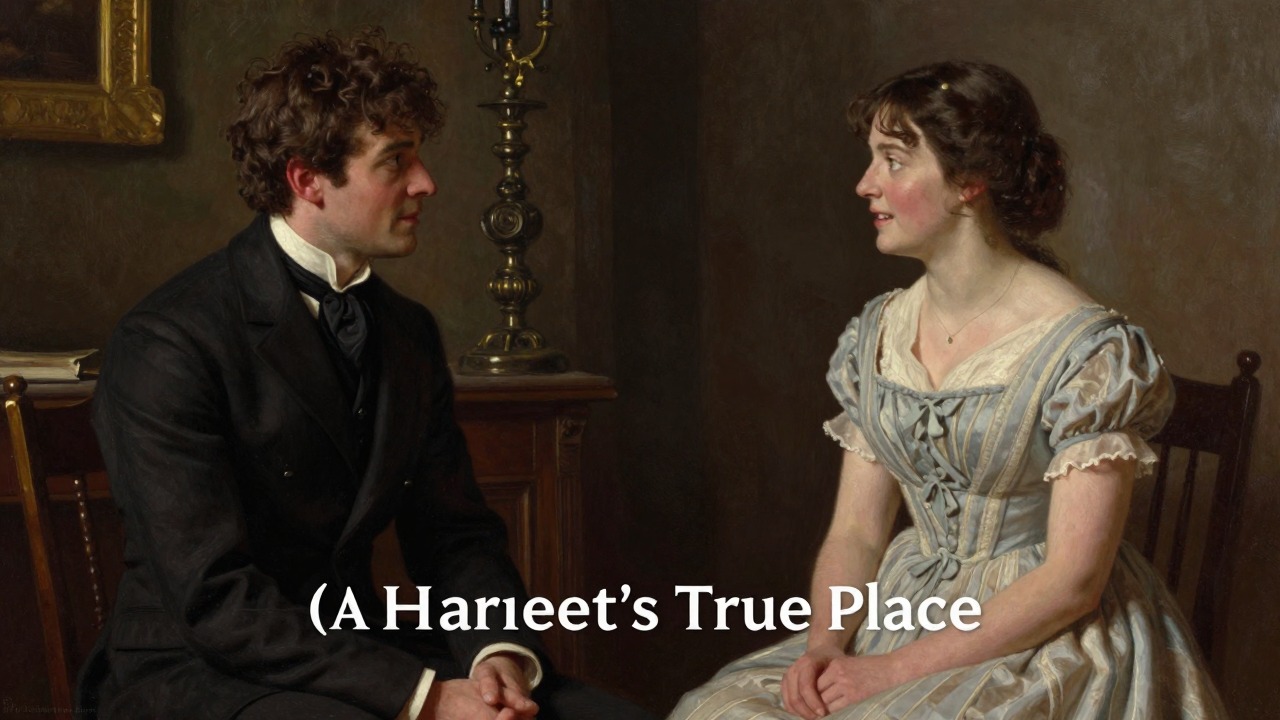
Harriet's True Place
A Suitable Match
Harriet's parentage is revealed to be that of a tradesman, making her marriage to Robert Martin entirely appropriate. She is happy in her own sphere.
Emma's Lesson
Emma learns that happiness does not depend on high rank. She accepts that Harriet's marriage is right and good.
early in the story, when she dismisses Robert Martin
during the argument about Harriet's refusal
when he chooses Augusta Hawkins
her engagement to Frank Churchill
when she marries Robert Martin
