Mr. Weston
EmmaMr. Weston is a native of Highbury, born of a respectable family that had been rising into gentility and property over two or three generations. He received a good education, but on succeeding early in life to a small independence, he became indisposed for the homely pursuits of his brothers and satisfied an active, cheerful mind by entering the militia of his county. As Captain Weston he was a general favourite, and when the chances of military life introduced him to Miss Churchill of a great Yorkshire family, she fell in love with him, to the mortification of her brother and his wife, who threw her off with due decorum. The marriage was unsuitable and did not produce much happiness; Mrs. Weston wanted at once to be the wife of Captain Weston and Miss Churchill of Enscombe, and after three years she died, leaving him rather poorer than at first and with a child to maintain. The boy, Frank, was taken in by the Churchills, who had no children of their own, and Mr. Weston, relieved of the expense, quitted the militia and engaged in trade with his brothers in London, a concern that brought just enough employment. Over the next eighteen or twenty years he realised an easy competence, enough to purchase a little estate adjoining Highbury—Randalls—which he had always longed for, and enough to marry a woman as portionless as Miss Taylor and to live according to the wishes of his own friendly and social disposition.
Character and Temperament
Mr. Weston is defined by his sanguine temper, open-heartedness, and social inclination. He is described as a straightforward, open-hearted man, and his cheerful manner makes him a general favourite wherever he goes. He is chatty and convivial, no friend to early separations, and always alert when business is to be done, as incapable of procrastinating any evil that is inevitable as of foreseeing any that is doubtful. His spirits are naturally high, and he is quick to find enjoyment in any situation; when Frank Churchill's visit is postponed, he soon begins to perceive that a later arrival would be a much better plan, with better time of year and weather. He is also a man of great goodwill, but his benevolence is so general that Emma reflects that general benevolence, not general friendship, makes a man what he ought to be, and that a little less open-heartedness would have made him a higher character. His temper is such that he takes things as he finds them and makes enjoyment of them somehow or other, depending much more upon society for his comforts than upon family affection. He is fond of society in his own way, and his house at Randalls is a centre of hospitality; he is always ready to invite friends to dinner, and he takes no denial when he wishes to have a party.
Life and Plot Trajectory
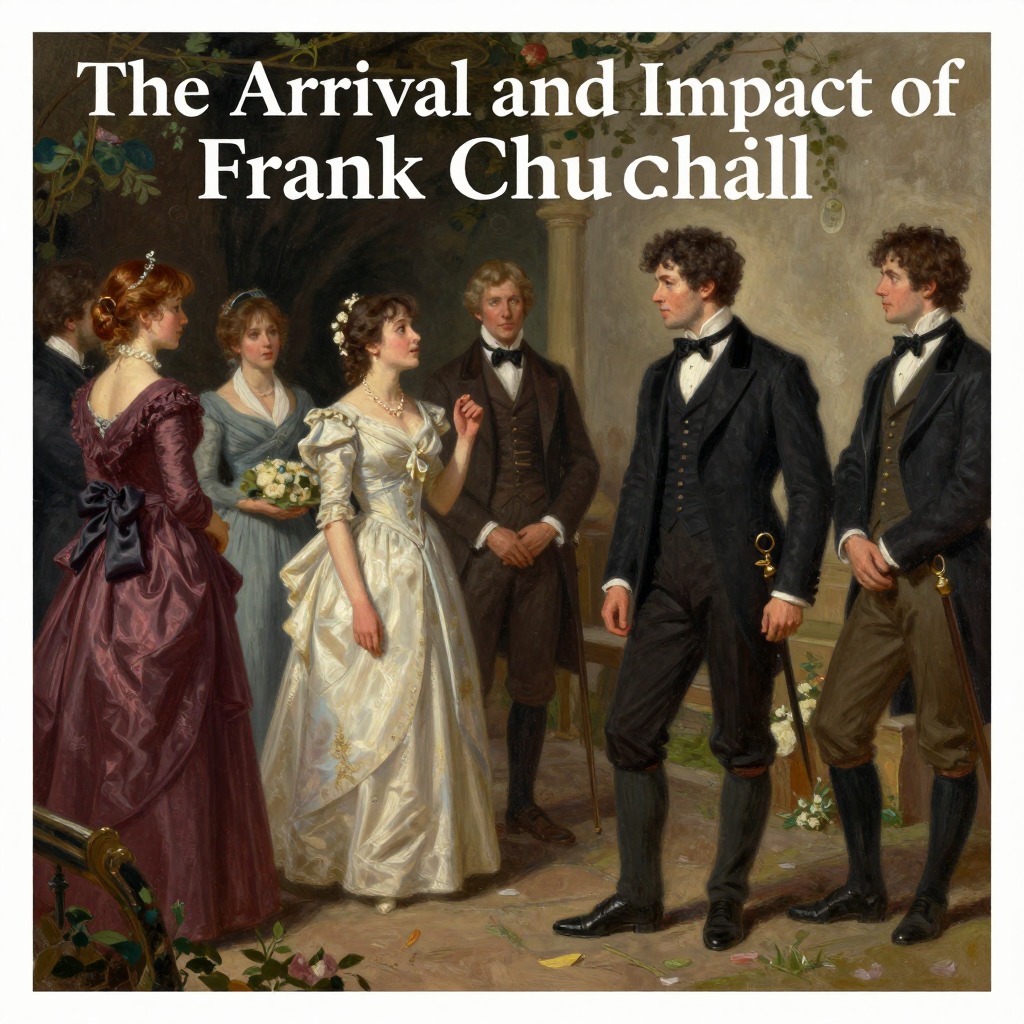
Mr. Weston's first marriage to Miss Churchill was a source of pride to the Churchills but proved to be a poor bargain for him; his wife's death left him with a child and reduced means. After giving up his son to the care of the Churchills, he rebuilt his life through trade, eventually purchasing Randalls and marrying Miss Taylor, Emma Woodhouse's former governess. This second marriage is the event that opens the novel, and Mr. Weston is presented as a man of unexceptionable character, easy fortune, suitable age, and pleasant manners. He is deeply proud of his son Frank, whom he sees every year in London, and he fondly reports him as a very fine young man, making Highbury feel a sort of pride in him too. He is eager for Frank to visit Randalls, and when Frank finally comes, Mr. Weston is exultant, declaring that everything has turned out exactly as he could wish. He is also instrumental in planning the ball at the Crown Inn, throwing himself into the scheme with thorough enjoyment. Later, when Frank's secret engagement to Jane Fairfax is revealed, Mr. Weston is initially shocked but quickly becomes reconciled, and he is among the first to congratulate the couple. He is also a warm supporter of Emma's marriage to Mr. Knightley, seeing the advantages of the match and rejoicing in them with all the constancy of his wife.
Relationships
Mr. Weston's relationship with his son Frank is one of fond pride and eager anticipation. He speaks of Frank with great warmth, and his fond report of him as a very fine young man has made Highbury feel a sort of pride in him too. He is confident that Frank will come to visit, and he is not easily discouraged by delays. His relationship with his second wife, Mrs. Weston, is one of mutual affection and respect; he is attentive to her and values her judgment, though his sanguine temper sometimes leads him to be more optimistic than she is. With Emma Woodhouse, he maintains a friendly and affectionate connection, treating her almost as a daughter. He is always glad to see her and to include her in his plans, and he is particularly pleased when she and Frank seem to be getting on well. His relationship with Mr. Knightley is one of neighbourly friendship, though Mr. Knightley is sometimes critical of Frank's character. Mr. Weston is also on good terms with the other families of Highbury, including the Coles and the Eltons, and he is always ready to extend hospitality.
Thematic Significance
Mr. Weston embodies the virtues of sociability, optimism, and goodwill that are valued in the world of Highbury. His rise from a militia officer to a prosperous landowner through trade reflects the social mobility that was possible in Regency England, and his two marriages illustrate the different kinds of love and partnership that the novel explores. His sanguine temper, while sometimes leading him to overlook difficulties, also makes him a source of cheerfulness and stability in the community. He is a contrast to the more reserved and critical Mr. Knightley, and his open-heartedness serves as a foil to the more guarded characters like Jane Fairfax. Ultimately, Mr. Weston is a figure of warmth and generosity, whose happiness in his second marriage and his son's eventual engagement underscores the novel's affirmation of domestic felicity and the importance of good-natured social bonds.