Frank Churchill
EmmaFrank Churchill, the son of Mr. Weston by his first marriage, is a figure of considerable fascination and controversy in Highbury long before he ever sets foot in the place. Raised from infancy by his wealthy and capricious aunt and uncle, the Churchills of Enscombe, he is known to the village only through his father's fond reports and a single, much-admired letter of congratulation to his new stepmother, Mrs. Weston. His arrival is eagerly anticipated as a kind of social event, yet his actual presence reveals a young man of complex motives, whose charm conceals a deeply entangled secret life.
Identity and Background
Frank Churchill is the only child of Mr. Weston and his first wife, Miss Churchill of a great Yorkshire family. After his mother's death when he was only two years old, he was given over to the care of his wealthy aunt and uncle, the Churchills, who had no children of their own. He was raised at Enscombe, assuming the Churchill name upon coming of age, and was treated as the heir to their fortune. This upbringing placed him in a state of dependence, subject to the whims of his imperious aunt, Mrs. Churchill, who ruled the household. His father, Mr. Weston, remained a fond but distant figure, seeing his son only annually in London. Frank thus grew up with the habits of a wealthy, fashionable young man, but with a life largely separate from his father and the modest society of Highbury.
Arrival and First Impressions
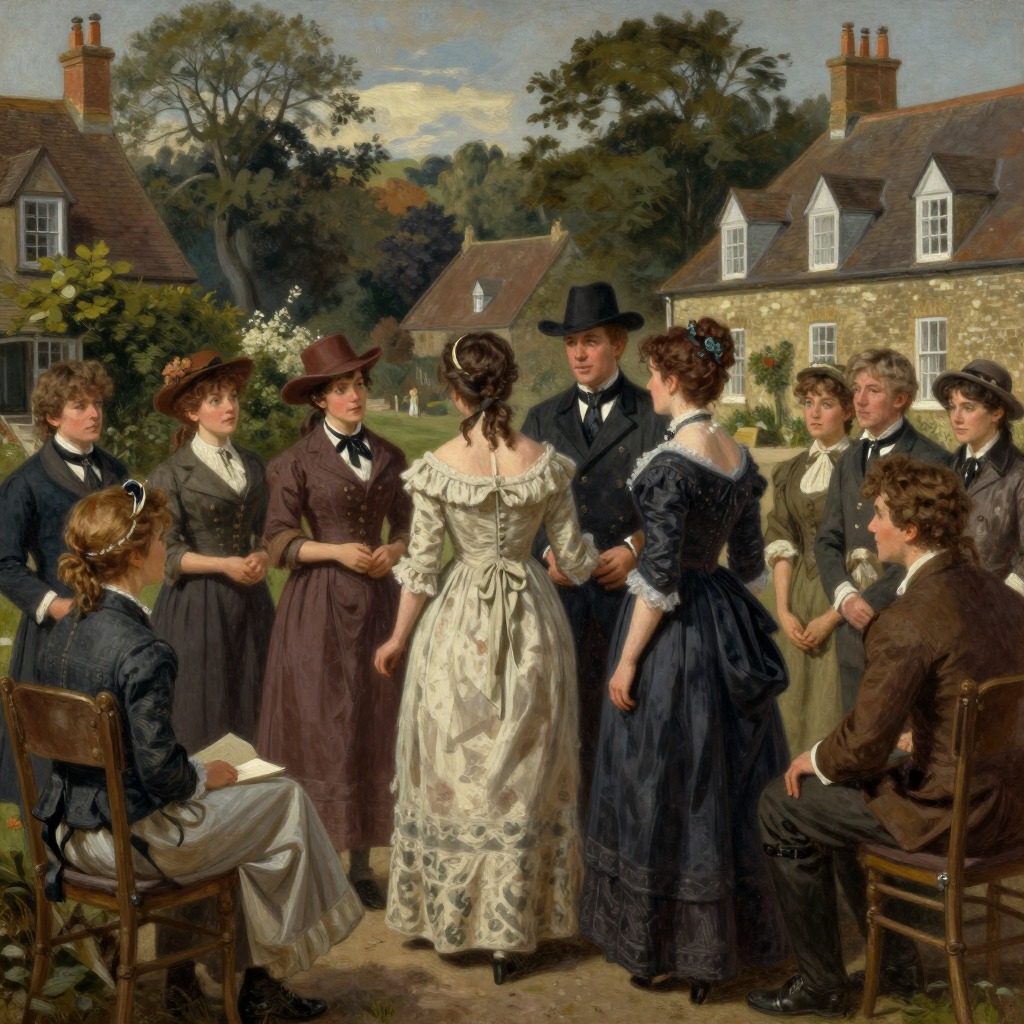
Frank Churchill finally visits Highbury in February, arriving a day earlier than expected. He is immediately found to be very good-looking, with a height, air, and address that are unexceptionable, and a countenance full of the spirit and liveliness of his father. He makes a powerful and favorable impression on Emma Woodhouse, who finds him quick and sensible, with a well-bred ease of manner and a readiness to talk. He professes a great curiosity about Highbury and Hartfield, and his gallantry towards Mrs. Weston, praising her warmly and expressing gratitude for the happiness she has brought his father, marks him as a man who knows how to please. Emma, who had already imagined him as a potential match, is immediately charmed, feeling that she should like him.
Key Actions and Objectives
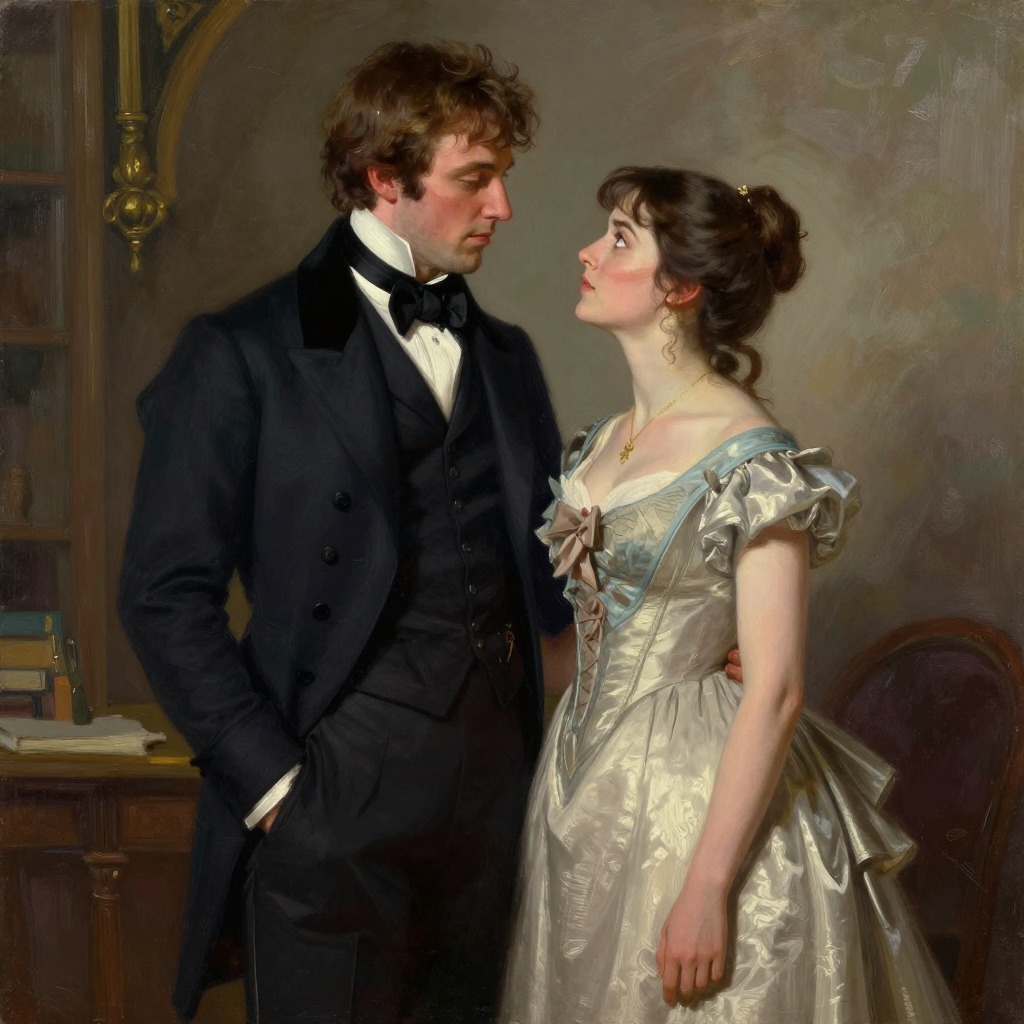
Frank Churchill's primary, hidden objective throughout his visit is to maintain the secrecy of his engagement to Jane Fairfax, formed the previous October at Weymouth. To this end, he engages in a series of actions that are deliberately misleading. He makes Emma Woodhouse his ostensible object of attention, flirting with her openly and encouraging the speculation of the entire neighborhood, including his own father and Mrs. Weston. He orchestrates the secret delivery of a pianoforte to Jane Fairfax, a grand romantic gesture that he must pretend is from Colonel Campbell. His behavior is a calculated performance: he dances with Emma, pays her extravagant compliments, and even goes to London merely to have his hair cut, a frivolous act that serves to maintain his cover of being a thoughtless, fashionable young man. His true objective is revealed only at the crisis, when Jane, believing herself abandoned, accepts a governess position, forcing Frank to confess everything to his uncle and secure his consent to the marriage.
Relationships and Conflict
Frank Churchill's relationships are defined by the central conflict of his secret engagement. With Emma Woodhouse, he cultivates a flirtatious friendship that is both a cover and a source of genuine amusement, though he is careful to note that he never believed her to be attached to him. With Jane Fairfax, his true beloved, his relationship is one of intense, secret passion marred by quarrels and misunderstandings. His public attentions to Emma cause Jane deep pain, leading to a crisis at Box Hill where his behavior is so shamefully neglectful that Jane resolves to break the engagement. His relationship with his father, Mr. Weston, is affectionate but distant, and he is ultimately dependent on the goodwill of his uncle, Mr. Churchill, whose consent is only secured after Mrs. Churchill's convenient death. Mr. Knightley, from the first, is deeply suspicious of Frank, correctly perceiving him as a trifling, insincere fellow whose conduct lacks integrity.
Change and Ending
Frank Churchill's character undergoes a significant transformation when the crisis of his secret engagement forces him into the open. After Jane breaks off their engagement and accepts a position as a governess, he is compelled to confess everything to his uncle, who, freed from his wife's influence, gives his consent. Frank then rushes to Highbury to reconcile with Jane, appearing genuinely agitated and remorseful for the suffering he has caused. His long, explanatory letter to Mrs. Weston reveals a man capable of deep feeling and self-criticism, acknowledging his shameful behavior and his debt to Jane's superior judgment. He is ultimately forgiven and accepted back into the good graces of the Highbury circle, marrying Jane Fairfax. The novel concludes with him as a happy, if chastened, man, whose future prospects are secured by his uncle's generosity.
Narrative Role and Thematic Significance
Frank Churchill serves as a catalyst for the novel's central themes of self-deception, social performance, and the dangers of judging by appearances. His presence throws Emma's own vanity and flawed judgment into sharp relief, as she misreads his attentions and projects her own romantic fantasies onto him. He is a foil to Mr. Knightley, whose integrity, openness, and genuine worth are highlighted by contrast with Frank's duplicity and charm. Frank's secret engagement represents a system of deceit that corrupts his own character and causes genuine pain to those around him, particularly Jane Fairfax. His story ultimately reinforces the novel's moral that truth and sincerity are the only foundations for lasting happiness, a lesson that Emma herself must learn.