Harriet Smith
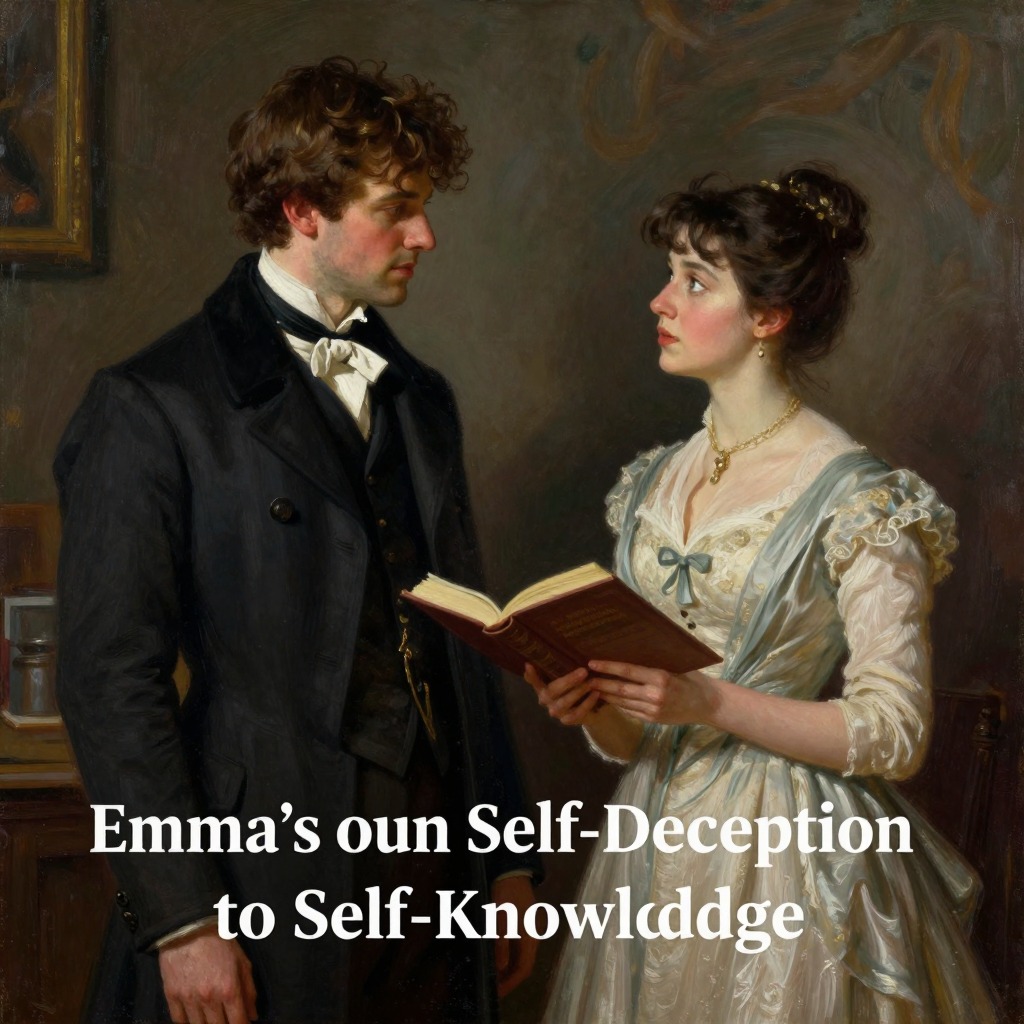
EmmaHarriet Smith is a pretty, good-natured, and uneducated young woman of unknown parentage who becomes the protégée of Emma Woodhouse, serving as a central figure in Emma's misguided matchmaking schemes and as a catalyst for Emma's eventual self-knowledge. Her trajectory through the novel—from a humble parlour-boarder at Mrs. Goddard's school to the wife of the respectable farmer Robert Martin—exposes the dangers of social manipulation and the limits of Emma's judgment, while her own simple, affectionate nature ultimately finds a happiness that Emma's interference had nearly destroyed.
Identity and Background
Harriet Smith is introduced as "the natural daughter of somebody," a girl of seventeen who has been placed at Mrs. Goddard's school by an unknown benefactor and recently raised to the status of parlour-boarder. She has no visible friends beyond those acquired at Highbury, and her history is known to no one in detail. Emma, upon first meeting her, is struck by her beauty—"short, plump, and fair, with a fine bloom, blue eyes, light hair, regular features, and a look of great sweetness"—and immediately determines to take her under her wing. Harriet is not clever; her conversation reveals no remarkable intelligence, but she possesses a sweet, docile, grateful disposition, is totally free from conceit, and desires only to be guided by those she looks up to. Emma sees in her the perfect project: a girl who wants only "a little more knowledge and elegance to be quite perfect."
Life and Plot Trajectory
Harriet's life at Hartfield quickly becomes a settled thing. Emma invites her constantly, and Harriet, delighted by the attention of so great a personage as Miss Woodhouse, becomes a regular companion. Emma's first act of interference is to persuade Harriet to refuse a proposal of marriage from Robert Martin, a respectable young farmer whom Harriet had genuinely liked during a visit to his family's farm. Emma convinces Harriet that Martin is beneath her, that she is a gentleman's daughter and must aim higher. Harriet, though tender-hearted toward Martin, is easily swayed and writes a refusal. Emma then sets her sights on Mr. Elton, the vicar, and encourages Harriet to believe he is in love with her. Harriet, who has no penetration of her own, readily adopts Emma's interpretation of Mr. Elton's attentions—his eagerness about her portrait, his gallant charade, his frequent visits—and falls into a warm attachment. The revelation that Mr. Elton has actually been pursuing Emma herself is a devastating blow. Harriet bears the intelligence with artless tears and a lowly opinion of herself, blaming no one, and Emma consoles her as best she can. For a time, Harriet's heart oscillates between the rejected Mr. Martin and the unattainable Mr. Elton, but the arrival of Frank Churchill introduces a new object. After Frank rescues Harriet from a frightening encounter with a party of gypsies, she develops a passionate admiration for him, which Emma—now herself half-imagining she is in love with Frank—encourages as a suitable match. The climax of Harriet's romantic delusions comes when she confesses to Emma that she is in love, not with Frank Churchill, but with Mr. Knightley. Emma is horrified to realize that her own encouragement has led Harriet to aspire to a man Emma herself now knows she loves. The final turn comes when Robert Martin, whose affection has never wavered, proposes again during a trip to London, and Harriet accepts him. Her parentage is finally revealed: she is the daughter of a tradesman, rich enough to have provided for her comfortably, decent enough to have wished for concealment.
Key Actions and Objectives
Harriet's primary objective throughout the novel is simply to be loved and guided. She has no ambition of her own; her desires are shaped entirely by those she trusts. Her key actions are all responses to the initiatives of others: she refuses Robert Martin at Emma's urging, she falls in love with Mr. Elton because Emma tells her he is in love with her, she transfers her affections to Frank Churchill after his gallant rescue, and she finally accepts Robert Martin when he renews his suit. Her only independent act of significance is the preservation of trivial relics—a piece of court-plaister and the end of a pencil—that she treasures as mementos of Mr. Elton, which she later burns in Emma's presence as a symbol of her recovered rationality. Her most decisive moment is her confession to Emma that she loves Mr. Knightley, a revelation that forces Emma to confront her own heart.
Relationships and Conflict
Harriet's central relationship is with Emma, who acts as both friend and manipulator. Emma's influence is nearly absolute: she forms Harriet's opinions, directs her affections, and determines her social aspirations. The conflict inherent in this dynamic is that Emma's judgment is repeatedly wrong, and Harriet suffers the consequences. Her relationship with Robert Martin is the most genuine and stable. Martin is a sensible, good-hearted young farmer who loves her steadily and without pretense. Harriet's initial liking for him is natural and unforced, but Emma's intervention convinces her that he is beneath her. Her attachment to Mr. Elton is entirely manufactured by Emma; Harriet herself has no real understanding of his character and is easily deceived by his gallantries. Her admiration for Frank Churchill is more spontaneous, born of gratitude and the romance of his rescue, but it is equally based on a superficial understanding. The most painful relationship is her imagined attachment to Mr. Knightley, which she believes is reciprocated based on his kindness to her at the ball and his subsequent attentions. This delusion, encouraged by Emma's earlier hints about the possibility of unequal matches, brings Harriet into direct, though unwitting, conflict with Emma's own deepest feelings.
Change and Ending
Harriet undergoes a genuine, if modest, development. She begins as a completely passive, unreflective girl who accepts whatever she is told. After the disappointment with Mr. Elton, she shows a capacity for genuine grief and a willingness to learn from her mistakes, burning her treasured relics as an act of self-discipline. Her final acceptance of Robert Martin is not a return to her original state but a mature choice made after she has seen something of a wider world. She marries Martin with Emma's full approval and is placed "in the midst of those who loved her, and who had better sense than herself; retired enough for safety, and occupied enough for cheerfulness." Her parentage, once a source of mystery and speculation, is revealed to be respectable though not genteel, and the stain of illegitimacy that Emma had so confidently dismissed is shown to be a real social liability. Harriet ends the novel as Mrs. Robert Martin, settled in a happy and secure domestic life, her friendship with Emma naturally subsiding into a calmer goodwill.
Narrative Role and Evaluation
Harriet Smith functions as a mirror and a foil for Emma Woodhouse. Her simplicity, gratitude, and lack of self-awareness highlight Emma's cleverness, vanity, and self-deception. She is the primary instrument through which Emma's matchmaking impulses are exercised and through which Emma's errors are most painfully exposed. Harriet's romantic misadventures are the direct result of Emma's interference, and her final happy marriage to Robert Martin is both a vindication of natural affection over social ambition and a rebuke to Emma's meddling. Harriet is a flat character in E. M. Forster's sense—she is built around a single idea of sweet, docile, unreflective goodness—but she is not a mere stereotype. Her capacity for genuine feeling, her artless tears, and her simple gratitude give her a warmth that makes her more than a plot device. She is, in the end, "the luckiest creature in the world, to have created so steady and persevering an affection in such a man," and her happiness is a necessary condition for Emma's own.