Lorraine and Maynard's wedding crisis
ErasureLorraine and Maynard Boatwright’s wedding crisis exposes the private cost behind Thelonious Ellison’s efforts to arrange a new life for Lorraine and institutional care for his mother, Agnes Ellison. What begins as a quarrel over being called old becomes a confrontation with the limits of family caregiving: Lorraine is entitled to a life beyond service, Agnes’s condition is worsening, and Thelonious must acknowledge that his plans serve his own needs as well as theirs.
Background: Care and Obligation
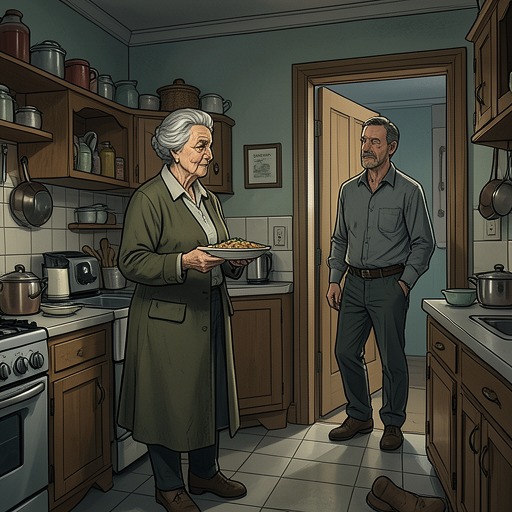
The crisis grows out of a household organized around care. Lorraine has spent much of Thelonious’s life working in the family home; he remembers her in the kitchen in a yellow apron, and, after returning home to care for Agnes, he recognizes the good she has done. He also knows that Lorraine has little saved. When he asks what will happen to her after Agnes dies, Lorraine says she will stay and take care of him. He accepts this offer, but the exchange makes plain how readily her future has been imagined in relation to someone else’s needs.
Thelonious’s position is not simply that of a family member arranging help. He makes out Lorraine’s checks and knows her financial circumstances, while Agnes’s dependence has made him responsible for decisions about her care. He has already told Agnes that it is unfair for Lorraine to have to do everything for her. The impending marriage therefore promises a change in a caregiving arrangement that has endured for years, even as it forces Thelonious to confront what will happen when Lorraine is no longer in the house.
The Wedding-Day Dispute
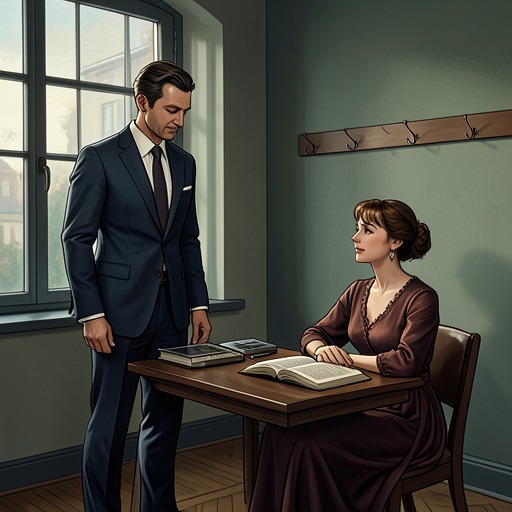
When Thelonious arrives at Maynard’s house, Lorraine is in the yard, objecting to the way Maynard has spoken about her age. Thelonious responds bluntly that she is old. His remark does not settle the disagreement; it leaves Lorraine visibly hurt. Maynard walks over, challenges Thelonious for speaking to his bride that way, and puts his arms around Lorraine. She hugs him back. The brief exchange shifts the scene: Maynard publicly takes Lorraine’s side, while Thelonious’s attempt at bluntness makes him the one who has wounded her.
Agnes, who has remained in the car, joins the exchange by asking what Lorraine’s age would make her. Thelonious turns to Maynard and asks where the preacher is. The wedding proceeds despite the tension. But the sharp banter and the quick turn toward the ceremony cannot contain the deeper conflict: Lorraine is moving into a marriage of her own, while Thelonious is nearing a decision about the mother whose care has shaped their household.
Agnes’s Confusion and the Interrupted Gathering
At the house, Agnes becomes confused about who is present and why. She objects to the gathering and accuses Lorraine of having ulterior motives. Thelonious tries to lead his mother away and explains to the others that she is sick. Lorraine is crying, and Thelonious takes some comfort from seeing Maynard try to console her. His apology does not restore the occasion to ease. When he turns back to Agnes, she rushes into the bathroom and locks the door.
Thelonious hears her pulling things from the cabinets and becomes afraid. He breaks the lock, finds that Agnes has begun undressing, helps her get dressed, and carries her out of the house while she cries. At the car she begins to recover her bearings and asks whether they are late. Thelonious tells her the service is over and describes it as nice. The contrast is painful: for Agnes, the momentary return of ordinary conversation makes the event seem intact, while Thelonious has just had to interrupt it to keep her safe.
The Marriage and Its Aftermath
Lorraine and Maynard do marry. That night Lorraine returns to collect her belongings on the way to a honeymoon in Atlantic City. She says little to Thelonious beyond expressing that this is the thanks she receives. He apologizes and gives her an envelope, while Maynard offers him a weak, understanding smile. Their restrained exchange records a real separation: Lorraine leaves the home where she has cared for Agnes, and the arrangement that Thelonious had depended on ends without being repaired by the wedding itself.
Thelonious then calls his brother, Bill Ellison, and says that Agnes will be placed in a care home the following day. Bill says he will fly in. Thelonious initially tells him not to come, insisting that he is not needed, but Bill says he will come anyway. The decision thus becomes a family matter, even as Thelonious tries to manage it alone.
That night, Thelonious stays awake beside Agnes, exhausted and unable to trust the stability she has shown. He fears waking to find her gone and injured or dead, and recognizes that placing her in care has become urgent. His admission is complicated: he wanted Lorraine to marry so that he would not have to care for her in her later years, and he also wanted Agnes admitted to a facility partly for his own sake. Yet he rejects the idea that his wish to place his mother is only self-serving; he wants her safe, and wants an end to his own constant desperation. The wedding crisis therefore resolves one household arrangement while bringing another decision into immediate focus.