The Ellison family's financial difficulties
ErasureThe Ellison family's financial difficulties are not a single crisis but a tightening set of obligations: Agnes Ellison’s savings are running out, Lisa Ellison’s medical practice is financially vulnerable, and Thelonious Ellison earns little from his books. Their paid-off family home offers some security, but it cannot erase the costs of care, the drain of Ben Ellison’s former office, or the uncertainty surrounding the clinic. Money becomes inseparable from the family’s questions of responsibility: Thelonious is asked to help, yet has little income to offer, while the work of caring for their mother already falls heavily on Lisa and Lorraine.
The family’s limited resources
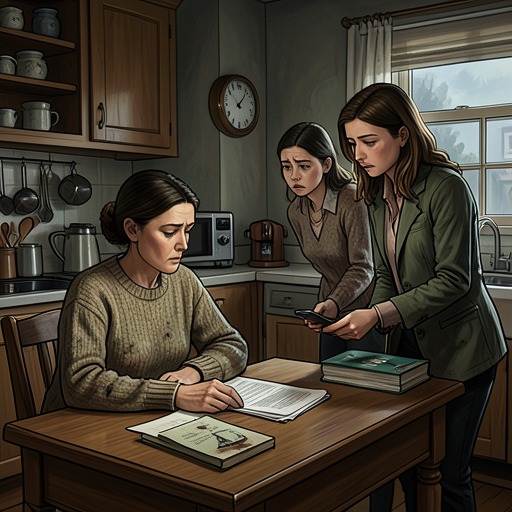
The problem comes into focus during a conversation between Thelonious and Lisa. He acknowledges that Lisa has had to manage everything for their mother and that the arrangement is unfair, then asks whether he can help. Lisa’s answer is practical: he can move to Washington, D.C. if needed. She then tells him that Agnes is running out of money. Thelonious had believed there was still money available, but Lisa confirms that the savings are dwindling. He explains that he does not earn much from his books, and Lisa does not press him for a contribution; she is letting him know the situation. The exchange makes the family’s need plain without offering an easy solution. His willingness to help cannot, by itself, supply the resources they lack.
The news leaves Thelonious feeling that he is failing both his sister and his mother. He recognizes that he had been living in his own bubble and had not considered the family’s finances. His distress is therefore about more than an account balance: it is the sudden recognition that his distance from the household has left Lisa carrying responsibilities he had not fully seen. The conversation converts a general offer of assistance into a concrete obligation, while also revealing the limits of what he can provide financially.
The clinic and the costs of care
Lisa’s practice adds another pressure to the family’s circumstances. Young doctors carry substantial debt, and establishing a practice requires further spending on such necessities as equipment. Lisa depends on grants and part-time work at a hospital to help keep the Women’s Clinic Southeast operating. She has taken out an insurance policy on herself, but much of its value is already committed to paying bills. Agnes has some savings, though she is not wealthy; the family home is paid for, but Ben’s former office drains money. These details distinguish the family’s assets from the income and support actually available to meet ongoing obligations.
The clinic is also precarious because of the danger surrounding its work. The two physicians who work with Lisa are worried that they may become targets. They are reluctant to deepen their commitment by buying Thelonious’s share of the clinic, leaving him with a one-third interest until he can sell it. That share is not presented as ready cash: the potential buyers are unwilling to take it on, even as one says the clinic has done good work and the other is nearly ready to cut losses and leave. The family’s financial problem thus extends beyond personal spending. Lisa’s professional work supports the household and serves patients, but the practice itself faces debt, risk, and uncertain continuity.
Thelonious seeks paid work
With money tight, Thelonious goes to the English Department at American University and asks for a job, presenting his curriculum vitae. The department chair says that a visiting appointment might be possible, but the department is already in its summer lull. There is, however, a need for a lecturer to teach a survey of American literature in the fall. The position is a limited opening rather than a secure long-term answer, and the chair estimates that it would pay about four thousand dollars—more precisely, thirty-nine hundred and something—for the entire semester. Thelonious asks whether that amount covers the whole semester, making the modest scale of the opportunity unmistakable.
The episode places his literary identity beside the material problem of earning a living. His books bring in little, while a university teaching job offers a defined, finite payment for a full semester. The position may provide income, but the evidence does not present it as enough to resolve the family’s wider needs: Agnes’s savings, the clinic’s financial exposure, and the cost of keeping care available remain distinct demands. His search for work is an attempt to respond to the family’s situation, not a solution that makes the underlying pressures disappear.
Care, work, and future obligations
The family’s finances are bound up with who performs care and whether that care can continue. Thelonious asks Lorraine what will happen when Agnes dies. Lorraine says she will stay and take care of him, an offer that reveals both her attachment to the household and her place within its arrangements. Thelonious knows her pay because he has begun writing her checks; her wages are accompanied by free room and food. When he asks whether she has savings, she says she has put a little aside but has never been good at saving. The exchange makes clear that Lorraine’s own modest resources cannot be treated as an independent reserve for the family.
The thought of Lorraine’s future also brings Thelonious up against his own motives. He recognizes that he wants her to marry Maynard partly so he will not have to care for her in her later years. He is also considering placing Agnes in a retreat in Columbia, and admits to himself that this is not only for his mother’s sake but for his own. He struggles with the finality of that decision and with the word he associates with institutional care. The book does not reduce these choices to money alone: fatigue, responsibility, and the desire to end his own desperation are also present. But the family’s limited means make the question of who can provide care impossible to separate from the question of what care can be sustained.
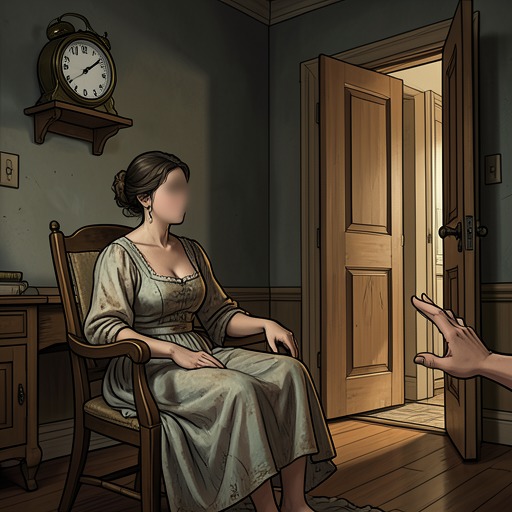
After Lorraine’s wedding, Thelonious sits through the night watching Agnes, exhausted and distrustful of the brief signs of stability she shows. He fears that she may be unsafe if left alone and feels an urgent need to know that she is protected. This vigil clarifies the human stakes behind the household’s financial strain: care is not an abstract future expense but continuing labor and vigilance, carried by family members and Lorraine within constrained circumstances. The family’s difficulties remain unresolved, but their consequences are visible in Thelonious’s attempt to find paid work, the uncertainty surrounding Lisa’s clinic, and the painful choices he faces about his mother and Lorraine.