Event 1
Burdock Muldoon’s Wizards’ Council summit
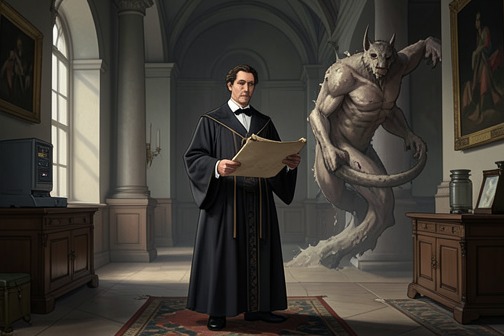
[Burdock Muldoon’s Wizards’ Council summit](entity:event-recall-event-burdock-muldoon-s-wizar-35d0d94b5b47) was a fourteenth-century attempt to include magical creatures in discussions of wizard law, and its failure exposed the limits of defining political membership by bodily appearance. After treating two-leggedness as a qualification for being a “being,” [Burdock Muldoon](entity:character-recall-character-burdock-muldoon-5a813f1065a9) summoned the creatures to meet with wizards; their gathering did not become the cooperative council he had hoped for. The episode ended with Muldoon abandoning attempts to integrate non-wizard members of the magical community into the [Wizards’ Council](entity:organization-recall-organization-wizards-council-66dec3c8d571), leaving later leaders to try different definitions of who merited a voice in government.
## The test behind the invitation
As Chief of the Wizards’ Council, the body that preceded the [Ministry of Magic](entity:organization-recall-organization-ministry-of-magi-3e70c2b24110), Muldoon decreed that any member of the magical community who walked on two legs would count as a “being.” The test made a visible physical trait the basis for inclusion. But the underlying question was not merely what a creature looked like: a “being” was understood as a creature deserving legal rights and a voice in the governance of the magical world, as distinct from a “beast.” Classification therefore determined not only a name but also the terms of political recognition.
The rule failed to account for the varied habits and preferences of the creatures it grouped together. Centaurs, for example, lived in the wild, refused clothing, preferred to keep apart from wizards and Muggles, and nevertheless possessed intelligence equal to theirs. Their example shows why neither outward form nor intelligence alone could guarantee participation. The summit brought this mismatch into view: an invitation extended under a broad category could not make its recipients share the wizards’ interest in their governing arrangements.
## A summit that went awry
Muldoon summoned all those he counted as “beings” to meet with wizards at a summit about new magical laws. He acted in a spirit of friendship, but the assembly did not function as a deliberative body. The creatures gathered in the meeting hall had priorities and conduct that did not conform to the occasion as the wizards had imagined it; the account notes, among other disruptions, children being fed [Porlock](entity:creature-recall-creature-porlock-c9ff25a2ad89) dung.
The meeting’s decisive moment was undignified rather than diplomatic. Muldoon stood to open the gathering, slipped on a pile of Porlock dung, and ran from the hall cursing. The physical accident gives the failed summit its bluntest image: the council’s attempt to order a mixed community ended in disorder, and the chief who had convened it could not continue the proceedings. The account does not describe a negotiated settlement or a new law emerging from the gathering; its consequence for Muldoon was withdrawal from the project.
## From classification to refusal
The episode demonstrates that possessing two legs did not mean that a magical creature could or would take an interest in wizard government. Muldoon had treated eligibility as if it would produce engagement; the gathering showed that the two were not the same. Embittered by the failure, he renounced further attempts to integrate non-wizard members of the magical community into the Wizards’ Council. The summit thus closed not with a wider political partnership, but with a retreat from one.
That retreat did not settle the question of who should count as a “being.” Muldoon’s successor, [Madame Elfrida Clagg](entity:character-recall-character-madame-elfrida-clag-b381351d17f0), tried to redefine the category in the hope of forging closer ties with other magical creatures. Not until [1811](entity:time-recall-time-1811-95c8b8fd1433) did definitions emerge that most of the magical community found acceptable: the later standard, decreed by [Grogan Stump](entity:character-recall-character-grogan-stump-41fdc850b8f0), tied “being” status to responsibility and capacity to understand the laws of the magical community. In contrast to Muldoon’s visible, bodily criterion, these efforts made the question more explicitly about participation and legal standing.
## Afterlives of the boundary
Later arrangements show that even a more acceptable classification could not guarantee shared political membership. Centaurs objected to being placed in the same “being” category as creatures such as hags and vampires and declared that they would manage their affairs separately from wizards; merpeople made the same request a year later. The Ministry of Magic reluctantly accepted these demands. A [Centaur](entity:creature-recall-creature-centaur-9d06569284c3) Liaison Office remained on the books within the Beast Division of the [Department for the Regulation and Control of Magical Creatures](entity:organization-recall-organization-department-for-t-ca0f059dfa6d), but no centaur ever used it. At the Department, being sent to that office became an in-joke meaning that someone was about to be fired.
Seen in this longer history, Muldoon’s summit is an early failed experiment in political inclusion, not a lasting settlement. Its central contrast persists: administrative categories can assign status, but they cannot by themselves create consent, participation, or a desire to be governed alongside wizards. The summit’s fall—from a friendly invitation to a cursing departure—makes that difference concrete and helps explain why later debates over magical creatures continued to concern self-government as well as classification.
Event 2
Madame Elfrida Clagg’s Wizards’ Council meeting
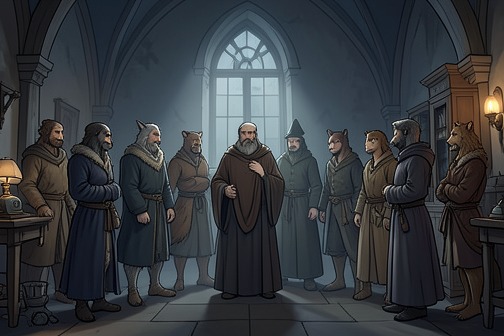
[Madame Elfrida Clagg’s Wizards’ Council meeting](entity:event-recall-event-madame-elfrida-clagg-s-c08417b92621) was a failed attempt to draw magical creatures closer to wizarding government: [Madame Elfrida Clagg](entity:character-recall-character-madame-elfrida-clag-b381351d17f0) broadened the definition of “beings” to include those able to speak the human tongue, but the new criterion neither prevented violence nor resolved disputes over representation. The episode shows how a supposedly inclusive category could still make participation depend on a wizard-defined standard, while the creatures it sought to include asserted interests and forms of autonomy the Council could not accommodate.
## Background and Intended Reform
As successor to [Burdock Muldoon](entity:character-recall-character-burdock-muldoon-5a813f1065a9), Madame Elfrida Clagg tried to redefine “beings” in the hope of creating closer ties with other magical creatures. Her proposal shifted the basis of inclusion away from the earlier two-legged test: those able to make themselves understood to Council members would qualify. The change treated communication, rather than bodily form, as the gateway to political recognition, and Clagg invited all who met that standard to the next Council meeting.
The invitation was expansive in principle, but its terms still made wizarding comprehension the measure of eligibility. The definition did not ask simply whether a creature possessed a language or could communicate within its own community; it privileged the ability to speak the human tongue or otherwise be understood by the Council. The resulting meeting tested the limits of that approach: an expanded category could bring more creatures into the room without making their interests compatible or granting them an equal say in how participation was defined.
## Disorder at the Meeting
The attempt to broaden membership did not avert a repeat of the earlier disorder. Goblins had taught trolls a few simple sentences, and the trolls used this acquired speech to qualify under the new definition. They then proceeded to destroy the hall, showing that the ability to meet a verbal threshold offered no assurance that a gathering would proceed peacefully. The episode's reversal is pointed: speech makes the trolls eligible to attend, but does not make the Council's framework capable of containing what follows.
The meeting also drew beings whose objections concerned the Council's priorities rather than the mechanics of entry. The dead attended, although they had to glide rather than walk on two legs, and left in disgust at what they called the Council’s “unashamed emphasis on the needs of the living as opposed to the wishes of the dead.” Their departure makes visible a conflict of interests that a broad definition could not settle: formal attendance did not mean that the Council would treat every constituency's needs as consequential.
## Exclusion, Protest, and Self-Government
The centaurs' position registered the change in classification and the limits of the reform at once. Under Burdock Muldoon they had been classified as “beasts”; under Madame Elfrida Clagg they were defined as “beings.” Yet they refused to attend the meeting, protesting the exclusion of the merpeople, who above water could converse only in Mermish. The centaurs' refusal therefore challenged not merely their own place in the Council but a system in which recognition depended on speech accessible to wizarding listeners.
The dispute continued beyond this meeting. Centaurs objected to being placed in the same “being” category as creatures such as hags and vampires, and declared that they would manage their own affairs separately from wizards. A year later, the merpeople made the same request. The [Ministry of Magic](entity:organization-recall-organization-ministry-of-magi-3e70c2b24110) reluctantly accepted their demands. The sequence turns the meeting's failed invitation into a wider argument about jurisdiction: inclusion in a common classification did not necessarily persuade a community to submit its affairs to wizarding administration.
That negotiated separation did not erase the institutions of oversight. A [Centaur](entity:creature-recall-creature-centaur-9d06569284c3) Liaison Office existed in the Beast Division of the [Department for the Regulation and Control of Magical Creatures](entity:organization-recall-organization-department-for-t-ca0f059dfa6d), but no centaur ever used it. Inside the department, “being sent to the Centaur Office” became an in-joke meaning that the person in question was shortly to be fired. The empty office is a compact aftermath to the Council's attempt at representation: an administrative channel remained on paper, while the people it was meant to connect with declined to use it.
## Place in the History of Creature Governance
The meeting belongs to a longer, unresolved effort to decide who counted as a “being” and who could participate in wizarding institutions. Clagg's definition was more accommodating than a bodily test, but it made intelligibility to the Council decisive; the trolls' destruction of the hall, the dead's departure, and the centaurs' boycott each reveal a different failure in that model. The event is therefore not simply an unsuccessful meeting. It demonstrates that eligibility, meaningful representation, and agreement about shared government are separate questions.
Later efforts to govern magical creatures also combined formal rules with administrative control. In [1750](entity:time-recall-time-1750-1bdb2fa11f8c), Clause 73 was inserted into the [International Code of Wizarding Secrecy](entity:object-recall-object-international-code-of-f851deca20b1), assigning wizarding governing bodies responsibility for the concealment, care, and control of magical beasts, beings, and spirits in their jurisdictions. The Department for the Regulation and Control of Magical Creatures dealt with creatures that remained conspicuous to Muggles, and the trade in fantastic beasts was closely watched; the [1965](entity:time-recall-time-1965-5b5e15ee9fba) [Ban on Experimental Breeding](entity:event-recall-event-ban-on-experimental-bre-1b7fe3d897e4) made the creation of new species illegal. These measures concern secrecy, care, control, and trade rather than Council membership, but they place the meeting within a broader governing structure whose reach depended on rules and offices as well as contested definitions.
The episode's central tension persists through these contrasts: a creature may be recognized as a “being” and still reject the category's company, its forum, or its authority. Clagg's reform widened the door, but the meeting showed that a doorway is not a settlement. Participation remained entangled with whose language counted, whose needs the Council prioritized, and whether any community wished to have its affairs managed by wizards.
Event 3
Grogan Stump’s 1811 classification decree
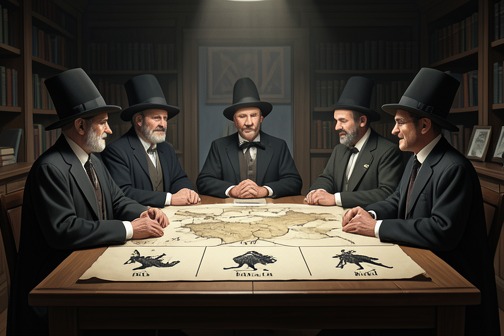
[Grogan Stump’s 1811 classification decree](entity:event-recall-event-grogan-stump-s-1811-cla-1bd359c79a94) was a turning point in the debate over which magical creatures counted as “beings” entitled to legal rights and a voice in governance, and which were classified as “beasts.” By setting a definition that most of the magical community accepted and creating three administrative divisions, it brought greater order to the question without settling the deeper conflict over recognition, representation, and self-government.
## Causes and Earlier Definitions
The decree followed a series of crude attempts to draw the boundary. In the [fourteenth century](entity:time-recall-time-765a4c6609ac), [Burdock Muldoon](entity:character-recall-character-burdock-muldoon-5a813f1065a9), Chief of the [Wizards’ Council](entity:organization-recall-organization-wizards-council-66dec3c8d571), ruled that any member of the magical community who walked on two legs qualified as a being. That physical test grouped together creatures with little else in common, and it did not resolve what legal recognition should mean.
Muldoon’s successor, [Madame Elfrida Clagg](entity:character-recall-character-madame-elfrida-clag-b381351d17f0), tried a different criterion in the hope of creating closer ties with other magical creatures: the capacity to speak human language. Neither effort settled the issue. The question at stake was more than a name; being classified as a “being” meant potential legal rights and a voice in the governance of the magical world.
## Stump’s Decree and Its Divisions
In [1811](entity:time-recall-time-1811-95c8b8fd1433), [Grogan Stump](entity:character-recall-character-grogan-stump-41fdc850b8f0), the newly appointed Minister for Magic, established a definition of “being” that most of the magical community found acceptable. The decree’s importance lay not only in defining a category but also in giving creature governance a departmental structure.
An exception clarified the limits of the new arrangement. Ghosts said that it was insensitive to call them “beings” when they were plainly “has-beens.” Stump responded by creating three divisions within the [Department for the Regulation and Control of Magical Creatures](entity:organization-recall-organization-department-for-t-ca0f059dfa6d): the Beast Division, the Being Division, and the Spirit Division. The resulting system recognized spirits as a distinct administrative category rather than forcing them into the being-or-beast distinction.
## Classification and Political Autonomy
The decree’s formal categories did not erase disagreements about membership or authority. Centaurs, whose habits differ markedly from those of humans, live in the wild, refuse clothing, and prefer separation from wizards and Muggles; nevertheless, their intelligence is equal to theirs. They objected to sharing being status with creatures such as hags and vampires and declared that they would manage their affairs separately from wizards. A year later, merpeople made the same request.
The Ministry reluctantly accepted these demands. Yet it retained a [Centaur](entity:creature-recall-creature-centaur-9d06569284c3) Liaison Office within the Beast Division, despite centaurs’ refusal to use it. The office became a bureaucratic joke: at the Department for the Regulation and Control of Magical Creatures, being sent to the Centaur Office meant that an employee was shortly to be fired. This mismatch between an official channel and the community’s chosen separation shows how a classification system can organize administration without securing participation or trust.
## Legacy and Significance
Stump’s decree supplied a durable framework for the Department, but the continuing disputes around it show that classification was never merely descriptive. The successive tests—physical form, speech, and the administrative divisions that followed—made assumptions about which traits qualified a creature for political standing. Centaurs’ insistence on separate management exposes the limit of recognition granted from above: a group may be categorized as a being and still refuse the terms of inclusion.
The decree therefore marks both a practical settlement and an unresolved boundary. It made creature governance more legible to the Ministry, while the demands of centaurs and merpeople kept open the question of whether legal classification could accommodate communities that sought autonomy rather than representation within wizard institutions.
Event 4
International Confederation of Wizards summit of 1692
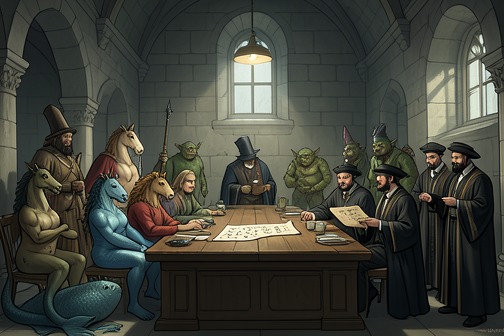
The [International Confederation of Wizards summit of 1692](entity:event-recall-event-international-confedera-e2ee98f30e47) was a pivotal debate over how magical communities could conceal magical creatures from Muggles, and it helped set the course toward [Clause 73 of the International Code of Wizarding Secrecy](entity:rule-recall-rule-clause-73-of-the-interna-14426b03d2e5). The summit’s effort to make concealment an international responsibility was complicated by the question of who had the right to govern the creatures being hidden: centaurs and merpeople resisted being grouped under wizarding authority and demanded separate self-management.
## Background and Deliberations
The [International Confederation of Wizards](entity:organization-recall-organization-international-co-fd4a709a1d04) argued the issue at its famous summit in [1692](entity:time-recall-time-1692-9404d8dc7fb8). The discussion lasted seven weeks and was sometimes acrimonious, reflecting the difficulty of deciding how the concealment of magical creatures should be organized. The summit was not simply a debate about hiding evidence from Muggles; it concerned the responsibilities and authority that would accompany that secrecy.
Delegations of centaurs, merpeople, and goblins were persuaded to attend. Their presence made the negotiations a matter of relations between wizarding governments and other magical peoples, not merely an internal administrative question. The available account notes that the goblins were an exception to the relevant efforts or arrangements, underscoring that participation and agreement were not universal.
## Dispute over Status and Autonomy
Centaurs objected to some creatures with whom they were asked to share “being” status, including hags and vampires. They declared that they would manage their own affairs separately from wizards. A year later, the merpeople made the same request. Their objections reveal a tension at the heart of the summit’s wider project: a system intended to classify and conceal magical life could also impose categories and jurisdiction on communities that rejected wizarding oversight.
The [Ministry of Magic](entity:organization-recall-organization-ministry-of-magi-3e70c2b24110) accepted these demands reluctantly. A [Centaur](entity:creature-recall-creature-centaur-9d06569284c3) Liaison Office nevertheless remained within the Beast Division of the [Department for the Regulation and Control of Magical Creatures](entity:organization-recall-organization-department-for-t-ca0f059dfa6d), although no centaur ever used it. Within the Department, being sent to the Centaur Office became an in-joke meaning that the person concerned was shortly to be fired. The contrast between the office’s formal existence and its non-use makes the limits of administrative recognition visible: a bureaucratic channel could be maintained even when the community it purported to serve refused it.
## From Summit Debate to International Rule
The number of magical creatures concealed from Muggles increased over the following century as wizards grew more confident in their methods of concealment. In [1750](entity:time-recall-time-1750-1bdb2fa11f8c), Clause 73 was inserted into the [International Code of Wizarding Secrecy](entity:object-recall-object-international-code-of-f851deca20b1), to which wizarding ministries worldwide conform. It made each wizarding governing body responsible for the concealment, care, and control of all magical beasts, beings, and spirits dwelling within its jurisdiction.
The later clause gives the summit’s debate a durable institutional consequence: concealment became a defined governmental duty, distributed among wizarding jurisdictions. Yet the history of the centaurs’ and merpeople’s demands complicates any picture of a single, uncontested authority. The international rule organized responsibility among wizarding governments, while the dispute over “being” status recorded communities asserting that their affairs did not belong to that system.
## Legacy and Significance
The summit belongs to the history of magical secrecy, but its significance extends beyond secrecy’s practical enforcement. It joined an international effort to keep magical life outside Muggle knowledge to an unresolved political question about the beings subject to that effort. The seven weeks of sometimes acrimonious discussion, the attendance of delegations, and the subsequent demands for autonomy together show that agreement on concealment did not mean agreement on who could speak for, classify, or govern every magical community.
Event 5
Insertion of Clause 73 into the International Code of Wizarding Secrecy
The [Insertion of Clause 73 into the International Code of Wizarding Secrecy](entity:event-recall-event-insertion-of-clause-73-0b82ecc2c0f6) was a landmark in the formal governance of magical creatures: adopted in [1750](entity:time-recall-time-1750-1bdb2fa11f8c), it made each wizarding governing body responsible for their concealment, care, and control and exposed that body to discipline by the [International Confederation of Wizards](entity:organization-recall-organization-international-co-fd4a709a1d04) if its failure allowed magical creatures to become known to the Muggle community. The clause gave legal form to a secrecy regime that depended not only on international obligations but also on domestic administration and practical concealment.
## Background and Adoption
Muggles had not always regarded magical creatures as imaginary. A glance at their medieval art and literature showed that creatures later hidden from Muggle knowledge had once been believed real. Over the following century, wizards grew more confident in their methods of concealment, expanding what could be kept outside the Muggle imagination. Clause 73 was inserted into the [International Code of Wizarding Secrecy](entity:object-recall-object-international-code-of-f851deca20b1) in 1750, turning concealment from an accumulated practice into an explicit international duty.
## Duties and Jurisdiction
The clause assigns responsibility to each wizarding governing body for the concealment, care, and control of magical beasts, beings, and spirits dwelling within its jurisdiction. Its scope therefore reaches beyond hiding creatures from view: the same authority must also oversee their treatment and management. The rule distributes implementation among national bodies while establishing a shared international standard, rather than placing all creature administration in a single central office.
The obligation has an enforcement consequence. If magical creatures become known to the Muggle community, the responsible nation’s wizarding governing body is subject to discipline by the International Confederation of Wizards. The clause thus connects local responsibility to international oversight, making a breach more than a domestic administrative failure.
## Administration and Practical Enforcement
Within the [Ministry of Magic](entity:organization-recall-organization-ministry-of-magi-3e70c2b24110), the [Department for the Regulation and Control of Magical Creatures](entity:organization-recall-organization-department-for-t-ca0f059dfa6d) handles the varied needs of the many species under its care. Creatures that remain conspicuous to Muggles, whether deliberately or inadvertently, create substantial work for the department. The existence of that continuing burden shows the practical distance between a legal requirement to conceal and the daily work needed to maintain secrecy.
That work uses several distinct measures. Safe habitats are described as perhaps the most important step in concealing magical creatures; controls on selling and breeding reduce the likelihood that larger or more dangerous beasts will alarm Muggles. The department keeps strict watch on trade in fantastic beasts, and the [1965](entity:time-recall-time-1965-5b5e15ee9fba) [Ban on Experimental Breeding](entity:event-recall-event-ban-on-experimental-bre-1b7fe3d897e4) made the creation of new species illegal. If a Muggle sees what they should not, a Memory Charm may be used; in the worst magical-Muggle collisions, the [Office of Misinformation](entity:organization-recall-organization-office-of-misinf-5b6c1a90f684) can seek a plausible non-magical explanation. These mechanisms show how the clause’s broad duty is carried out through habitat management, regulation, memory alteration, and official explanation.
## Limits and Significance
The text acknowledges that breaches have occurred since the clause was put in place. Clause 73 therefore establishes a governing framework, not a guarantee that concealment will always succeed: conspicuous creatures and occasional magical-Muggle collisions continue to test its requirements. Its significance lies in making secrecy an organized responsibility, supported by creature care and control as well as concealment, with international discipline as the stated consequence when national efforts fail.
Event 6
Ilfracombe Incident
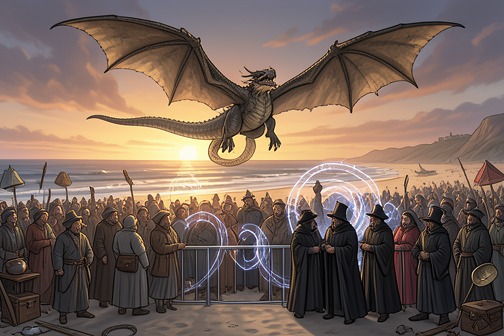
The [Ilfracombe Incident](entity:event-recall-event-ilfracombe-incident-6c93205c32c1) was a 1932 breach of wizarding secrecy: a rogue Welsh Green dragon swooped down on a crowded beach full of sunbathing Muggles, forcing a rapid response to conceal the magical world. The episode illustrates both the danger of a creature remaining conspicuous to Muggles and the scale of the memory-altering measures used to contain such a breach.
## Causes and Background
Since [1750](entity:time-recall-time-1750-1bdb2fa11f8c), [Clause 73 of the International Code of Wizarding Secrecy](entity:rule-recall-rule-clause-73-of-the-interna-14426b03d2e5) had made wizarding governing bodies responsible for concealing, caring for, and controlling magical beasts, beings, and spirits within their jurisdictions. The Ilfracombe Incident was one of the occasional breaches of that obligation: a dragon escaped concealment and entered a crowded public setting where Muggles could see it.
The creature was a rogue Welsh Green dragon. Its sudden descent upon a beach full of sunbathers turned a failure of magical secrecy into an immediate public danger. The account identifies the dragon and the setting, but does not explain how it reached the beach or what prompted its attack.
## The Incident
In 1932, the dragon swooped down on the crowded beach at [Ilfracombe](entity:location-recall-location-ilfracombe-b1aeaf28bab1). The presence of many sunbathing Muggles made the breach especially serious: the event was not a private sighting but a conspicuous encounter involving a large group of non-magical witnesses. The account reports that fatalities were narrowly averted, making the response a matter of preventing catastrophe as well as restoring secrecy.
Wizards performed the largest batch of Memory Charms of the century on the inhabitants of Ilfracombe. The scale of the intervention reflected the size of the witness group and the urgency of the breach. The charms narrowly averted catastrophe, though the surviving account does not specify the precise number of people affected or describe the dragon’s eventual fate.
## Aftermath and Significance
The incident demonstrates the practical limits of the concealment duties established by Clause 73. Magical authorities could respond to a visible breach by altering witnesses’ memories, but a dragon’s appearance before a crowded beach required an unusually extensive operation. The episode is presented as a warning of the work created by magical creatures that remain conspicuous to Muggles, and of the consequences when preventive concealment fails.
The book also preserves a later claim that the memory operation did not reach everyone. In his 1972 book *Muggles Who Notice*, Blenheim Stalk asserted that some Ilfracombe residents escaped the mass Memory Charm. He reported that a Muggle nicknamed Dodgy Dirk continued to tell bar patrons along the south coast about a large flying lizard that had punctured his lilo. This account is presented as Stalk’s assertion, not as confirmation that the charm failed more broadly; it leaves the incident’s aftermath with a small, persistent remnant of the sighting the wizards had tried to erase.
Event 7
Ban on Experimental Breeding
The [Ban on Experimental Breeding](entity:event-recall-event-ban-on-experimental-bre-1b7fe3d897e4) is a [1965](entity:time-recall-time-1965-5b5e15ee9fba) prohibition on creating new magical species, presented as a consequential measure in the governance of dangerous creatures. It restricted the breeding and sale of young and eggs, and [Newt Scamander](entity:character-recall-character-newt-scamander-60be543632fc) says he is prouder of it than of his work establishing the [Werewolf](entity:creature-recall-creature-werewolf-73193042775d) Register: by preventing new, untameable monsters from being created in Britain, the ban joined public protection to limits on human intervention in magical life.
## Origins and Purpose
The ban appears in a discussion of how the magical community manages creatures that may alarm Muggles. The concern is not only that large or dangerous magical beasts already exist: breeding and selling their offspring could increase the chance of encounters and create new risks. The account says that severe penalties attached to breeding such creatures and selling their young and eggs had greatly reduced the possibility of a Muggle being frightened by one.
The measure also addresses a different danger: experimental breeding could produce creatures with no established place among known species and no assurance of being tameable. In Britain, the ban effectively prevented the creation of new and untameable monsters. Its purpose therefore reaches beyond controlling commerce. It places a legal boundary on the deliberate production of magical creatures, treating the possible consequences of breeding as a matter for public regulation.
## Prohibition and Administration
The ban was passed in 1965. Its clearest stated legal effect is that creating new species became illegal. The account locates that prohibition alongside restrictions on breeding larger or more dangerous beasts and trading their young and eggs, rather than describing the ban as an isolated rule without administrative context.
The [Department for the Regulation and Control of Magical Creatures](entity:organization-recall-organization-department-for-t-ca0f059dfa6d) keeps a strict watch on trade in fantastic beasts. The department’s oversight gives the prohibition a practical setting: creature breeding and the movement of offspring are not left solely to private choice, but fall within an ongoing system of magical-creature management. The account mentions severe penalties for the regulated breeding and sales, though it does not specify their exact form or describe a particular prosecution under the ban.
## Newt Scamander and the Register
Scamander was almost solely responsible for creating the Werewolf Register in 1947, an earlier achievement in his work on magical-creature governance. Yet he says that the Ban on Experimental Breeding, passed eighteen years later, is the work of which he is proudest. The contrast gives the prohibition a personal as well as administrative significance: the Register records and organizes information about a group of beings, while the ban prevents the manufacture of new species and the risks associated with them.
The account does not claim that Scamander alone passed the legislation; it connects his pride in the achievement with his contribution to magical-creature work and identifies the ban’s date and effects. His judgement nonetheless frames the law as a defining accomplishment. Its importance lies, in his account, in preventing new untameable monsters from being created in Britain, not simply in adding another item to a list of regulations.
## Place in Creature Governance
The ban belongs to a wider framework in which magical authorities combine concealment, care, control, and trade oversight. Under [Clause 73 of the International Code of Wizarding Secrecy](entity:rule-recall-rule-clause-73-of-the-interna-14426b03d2e5), each wizarding governing body is responsible for magical beasts, beings, and spirits within its jurisdiction. The Department for the Regulation and Control of Magical Creatures handles the varied needs of those creatures, while breeding restrictions address one concrete route by which dangerous animals might be multiplied or new species brought into existence.
That framework does not make every creature-management measure identical. Some creatures remain conspicuous to Muggles and create work for the department; in extreme cases, areas associated with a creature such as the [Quintaped](entity:creature-recall-creature-quintaped-0d63ac013a38) have been made unplottable. Against those measures of concealment and habitat control, the breeding ban acts before a new species is created. It regulates human conduct at the point of production, complementing the wider task of managing creatures and reducing risks to the magical community’s secrecy.
The book also describes the classification of magical creatures as a contested historical process. Earlier authorities argued over which creatures counted as beings, with legal rights and a voice in magical governance, and which were classed as beasts. In [1811](entity:time-recall-time-1811-95c8b8fd1433), [Grogan Stump](entity:character-recall-character-grogan-stump-41fdc850b8f0)’s divisions of the Department for the Regulation and Control of Magical Creatures gave this dispute an enduring administrative form. The ban operates within that wider institutional world, but the evidence does not tie its scope to a particular creature category or explain how its rules interact with disputes over legal status.
## Significance and Limits of the Record
The ban’s significance rests on two connected outcomes: the creation of new species was made illegal, and the creation of new, untameable monsters in Britain was effectively prevented. At the same time, its restrictions on breeding and the sale of young and eggs form part of the effort to reduce the risk that Muggles might be alarmed by larger or more dangerous beasts. The measure thus connects a specific prohibition to both creature control and the maintenance of magical concealment.
The account celebrates prevention rather than recounting a dramatic enforcement episode. It gives no particular experimental breeder, newly created species, penalty, or case brought under the law. Instead, the ban is presented through its year, its regulatory consequences, the department’s oversight of trade, and Scamander’s stated pride. Its force in the narrative is the danger it is meant to avert: a new and untameable creature need never appear for the prohibition to matter.
Event 8
MacBoon transformation into Quintapeds
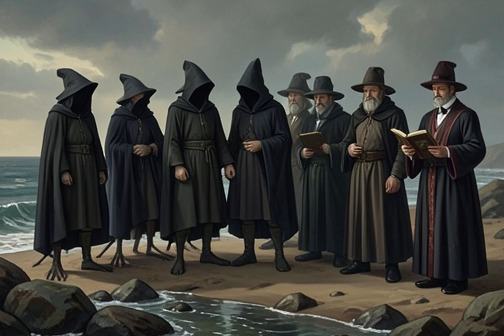
The [MacBoon transformation into Quintapeds](entity:event-recall-event-macboon-transformation-bd64695e98eb) is an origin legend linking the five-legged monsters to two wizarding families on the [Isle of Drear](entity:location-recall-location-isle-of-drear-82a7446e635a). Its decisive turn is also its unresolved one: the tale says the transformed wizards could not wield wands and were therefore unable to change back, but the account explicitly cautions that its truth can never be established.
## The Island and the Legend
The story places the transformation on the Isle of Drear, an island off the northernmost tip of Scotland that has been made unplottable. Legend says that two wizarding families, the McCliverts and the MacBoons, once lived there. The island’s isolation gives the account a setting suited to a tale whose witnesses and evidence have disappeared, though the guide presents that as context rather than proof.
The transformation is told as an inherited explanation for the Quintapeds. Instead of supplying a verified history of the creatures, the legend makes them the descendants—or, as its wording suggests, the continuing form—of a wizarding family turned monstrous. That account belongs to the book’s wider interest in how magical creatures can be misrecognized and how stories become explanations for what Muggles or wizards cannot otherwise account for.
## The Transformation and Its Irreversibility
At the legend’s turning point, the MacBoon monsters realize that, without anyone able to wield a wand, they will have to remain as they are forever. The consequence is a transformation without a return: wizarding identity is enclosed in a beastly form, and the means that might have reversed it is unavailable. The tale offers no witnessed moment of the change itself; it preserves instead the creatures’ supposed realization that the change cannot be undone.
The account leaves open whether this is literal history. No McCliverts or MacBoons survive to tell what happened to their ancestors, and the Quintapeds cannot speak. The guide likewise has no surviving specimen to examine and attempt to untransfigure. These absences prevent either confirmation or refutation: the legend’s explanation remains plausible within the account, but not demonstrable.
## What the Story Can and Cannot Establish
The guide allows the story to end in uncertainty rather than turning folklore into fact. It speculates that, if the Quintapeds really are Hairy MacBoons, they may be content to live out their days as beasts; this is a qualified possibility, not a report of their feelings. The episode thus keeps the creatures’ present existence separate from the unverified tale of their origin.
As a piece of magical natural history, the legend shows how a creature catalogue can preserve competing kinds of knowledge: classification and observation on one side, inherited explanation on the other. Its unanswered question is built into its evidence. The families are gone, the creatures cannot testify, and no specimen can be tested, leaving the transformation as an evocative account whose central claim remains beyond recovery.
Event 9
Replacement of the Golden Snidget by the Golden Snitch
The [Replacement of the Golden Snidget by the Golden Snitch](entity:event-recall-event-replacement-of-the-gold-b5c2fed9144d) is presented as a notable conservation measure: Quidditch ceased using a rare bird, and the [Golden Snidget](entity:creature-recall-creature-golden-snidget-18bdadf4bf2d) is now protected, with sanctuaries established around the world. The account connects sporting practice to species protection but leaves the substitution’s date and circumstances unstated.
## The Golden Snidget and Its Protection
The Golden Snidget is described as an extremely rare, protected bird. Its distinctive appearance—a completely round body, a very long, thin beak, and glistening, jewel-like red eyes—makes clear that the creature displaced from the game was a living species, not simply an abstract sporting symbol.
The text identifies the substitution of the [Golden Snitch](entity:object-recall-object-golden-snitch-4acceb4be794) for the Snidget in Quidditch as the most notable factor in the bird’s protection. It does not supply a chronology or describe the process by which the change was made, so the significance rests on the stated connection: the game’s use of the bird gave way to a replacement, while the species became protected.
## Sanctuaries and Significance
Golden Snidget sanctuaries exist worldwide. Their presence extends protection beyond the change in Quidditch and gives the rare species dedicated places of refuge, though the account does not specify their locations or management.
The episode brings sport and conservation into direct relation. Quidditch’s use of a Golden Snitch instead of the living Snidget stands as the account’s clearest example of a sporting practice changing in a way that supports protection of the animal. The book offers no further details about the decision or its effects on the population, and does not claim that substitution alone explains the species’ protected status.