Spring
FaustSpring enters the poem as a visible release from winter and as an inward stirring that draws Faust toward what lies beyond the present moment. In the translator’s introduction, it also becomes a useful way to understand the work’s movement: form carries meaning, and the effort to transfer Goethe’s verse is described as a joyful, painstaking act of renewal.
Seasonal Renewal
In Faust’s Easter speech, winter retreats under the quickening glance of spring. Brook and river are freed from ice; hope’s colors cling to the valley; and the old season, likened to a crownless king, withdraws toward the mountains, still sending sleet across the plain. The sun, however, will not let whiteness hold the landscape: where blossoms are absent, it takes the bright clothes of the people as its colors.
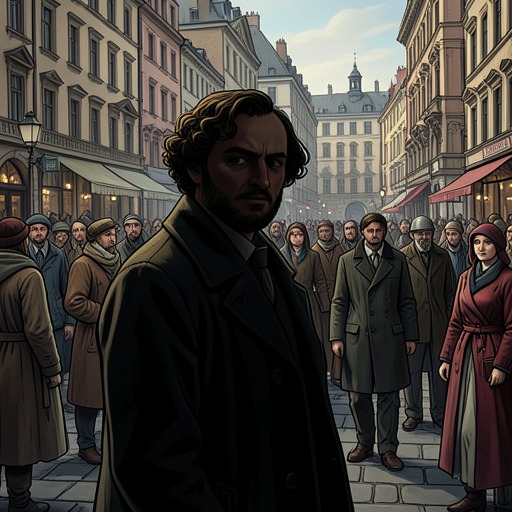
The change of season is also a change in human life. People stream out from gloomy gates and cramped streets, leaving work, trade, and the solemn darkness of churches behind for gardens, fields, and the river. Boats cross the water, the village sounds reach Faust, and the scene brings together high and low in shared pleasure. He calls this open, communal world the people’s proper heaven, a place where he can dare to be human.
Faust’s Springtime Longing
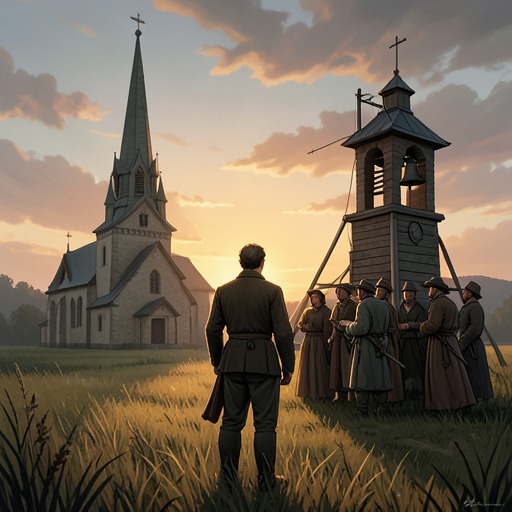
As evening falls, the landscape turns from the public celebration of Easter toward Faust’s private desire to travel beyond ordinary limits. The sun’s retreat awakens his mind; he imagines following its beams over mountains and a shining ocean, while the fading light makes those imagined distances seem both glorious and unreachable. The body remains on the ground even as the mind yearns upward and away.
That tension does not end with the dream’s fading. Faust recognizes the pleasure of striving itself in the lark’s song, the eagle’s flight over highlands, and the crane’s passage toward other shores. Spring is therefore not simply the arrival of ease: it stirs motion, appetite, and longing, while leaving the limits of bodily life intact.
Spring on the Mountain Path
Later, as Faust and Mephistopheles travel through valleys toward a rocky height and a fountain, Faust again understands spring through bodily sensation and the wish to linger. He says that his renewed strength makes a knotted staff sufficient, and that the winding valleys and steep climb are pleasures rather than obstacles. The fragrant birches and even the fir trees, he says, feel the season’s stirring; he asks whether human limbs could escape it.
Mephistopheles answers from an opposing season within himself. He feels winter, wants frost and snow, and finds the moonlight too dim to make the rough path safe. Their exchange makes spring a point of contrast between Faust’s readiness to move through the living landscape and Mephistopheles’ preference for cold and for a more convenient guide. The season renews Faust’s delight in the way itself, not merely in reaching a destination.
Form, Rhythm, and Renewal
The translator’s introduction gives this seasonal subject a formal counterpart. He argues that poetry is not merely a fashionable mode of expression: rhythm is required by certain ideas, and contributes essentially to their fullness of meaning. To translate poetry as prose, he contends, is like trying to translate music into speech. The image of spring’s renewal thus sits beside a larger account of how meaning comes alive through form rather than surviving intact as bare sense alone.
The translator describes his own undertaking as a long labor of reproducing Faust in its original metres. He reports that closer adherence to Goethe’s language often brought more of its rhythmic character with it, and that when meaning and music could not both be preserved, he chose meaning. His aim was not rigid imitation of every foot and rhyme: the verse varies in length and arrangement, and he allowed occasional changes while seeking to retain the work’s larger metrical plan.
He also emphasizes the part played by changing rhythms and rhyme patterns in shaping tone, dialogue, aphorism, and song. The task, as he frames it, is to carry not only the original’s sense and line structure but also the subtle music that seems to govern the rhythm. Spring consequently names more than a seasonal setting in these passages: it marks the poem’s renewed movement, while the introduction’s poetics explains why that movement depends on music as well as meaning.