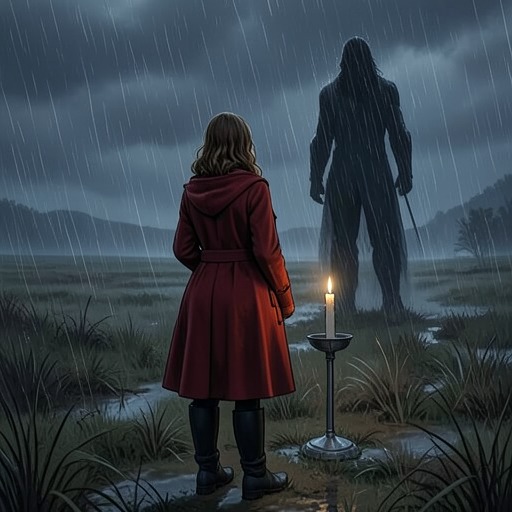
Day-weakened vampires
FirebugDay-weakened vampires combine supernatural danger with practical vulnerabilities that shape how the Coterie operates and how its enemies can resist it. The novel presents them not as invulnerable monsters but as predators whose power depends on control: sunlight weakens them, blood can provoke frenzy, wards can be severed, and fire can kill them. Their most consequential weakness, however, may be the confidence that comes from living too long as apex predators.
Nature and Limits
The novel corrects the folklore that vampires cannot go out in daylight. They can, but the sun substantially weakens them; in daylight they fare about as well as other nocturnal creatures. Sunblock and a parasol or umbrella can make short periods outdoors manageable, though daylight remains a disadvantage rather than a neutral setting. This distinction makes their vulnerability one of degree: the sun constrains them without making daytime exposure impossible.
Blood presents a more immediate danger to their self-command. During the attack on Ava Jane Halloway’s childhood home, the female vampire has not fed. The blood from Ava’s injured mother distracts the attackers, and Ava anticipates that its smell will drive the vampire into a frenzy. That prospect is dangerous, but it also creates an opening: while the assailants focus on the blood and their injured victim, Ava slips out of hiding and strikes one of them. The scene makes appetite a liability that can disrupt a recovery team’s attention as well as a sign of the attackers’ threat.
Fire is the clearest lethal danger established in the evidence. Ava explains that a Firebug can be employed to kill at a distance and that a burned body is easier to explain to human authorities than one drained of blood. A corpse emptied of blood may lead investigators to consider a vampire; a body burned to death is more likely to be attributed to an electrical fire or arson. The supernatural cause can therefore hide behind ordinary explanations, keeping both Firebugs and vampires beneath the human world’s notice.
Power and Coterie Enforcement
Vampires occupy positions of authority in the Coterie’s recovery teams. Ava understands the usual structure as a vampire leader selected by Venus, supported by two strong backups whom she guesses are were-creatures. Her childhood fear of these teams reflects their reach: they are the Coterie’s means of pursuing people who have escaped its control. Their effectiveness depends not only on physical force but on the organization behind them and the terror their arrival carries.
Venus’s conduct during Ava’s blood-pact ceremony joins that institutional power to the vampire’s relationship with blood. After Ava insists on taking the name Halloway, Venus cuts her hand with a silver knife and holds her still. Watching the wound, Venus appears, for an instant, to be at risk of her vampiric nature overcoming her. She places her ward in Ava’s bloody palm, where it disappears into blood and ash, then declares that Ava belongs to the Coterie. The ceremony makes blood both the substance of a binding ritual and a temptation that Venus must master. Her authority is expressed through control of Ava’s body, while the brief suggestion of appetite exposes a limit beneath that control.
Vulnerability, Overconfidence, and Fire
Ava’s later fight with a female vampire turns the ward into a practical vulnerability. The attacker’s necklace falls, and Ava sees the chain of the vampire’s ward severed cleanly by the dull blade of an ax. She seizes the moment, holds the vampire, and burns her. Ava’s mother has taught her that overconfidence is a vampire’s Achilles’ heel: fire may kill, but the predator’s belief in its own safety can create the opening. The severed chain is not merely decoration in this encounter; its loss marks the instant when the vampire’s apparent security fails.
The flames force the vampire to scream and release both Ava and her mother. Ava uses that opening to drag her mother from the building, then checks on Benny, who is dead. She leaves before the cabin collapses, while the fire continues to catch. The account establishes fire as an effective means of stopping the attacker and getting away, but it does not confirm the vampire’s death. That distinction keeps the scene focused on what Ava accomplishes: escape and rescue, not proof that the danger has been conclusively ended.
Adaptation and Narrative Significance
Owen illustrates how a vampire’s limitations can reorganize ordinary life. He has mostly shifted his schedule to match Venus’s, and his pale appearance is linked to that pattern. Although he is not a vampire, he clings to Venus so closely that Ava compares him to one. Venus notes that if Ava lived farther out, Owen would have to travel more; his raised eyebrow is the only answer. Their exchange shows vampire habits exerting influence beyond the species itself, shaping the routines of those attached to its powerful members.
Ava’s account of vampire weakness is consistently practical. Sunlight affects schedules; hunger threatens discipline; wards can be cut; fire can make a body disappear from supernatural suspicion and can turn a predator’s confidence against it. These details prevent vampire power from reading as absolute. The same creatures who command recovery teams and bind others through ritual remain vulnerable to material conditions, bodily appetite, and the errors encouraged by their own dominance.