Firebugs
FirebugFirebugs are rare beings with an inherited capacity to create and direct fire, a power that makes them coveted as living weapons by the Coterie and other groups. Their abilities develop over time, depend on control and distance, and can become volatile under pressure. Through Ava, the story connects this supernatural inheritance to family flight, coercive service, and the danger of being treated as a weapon rather than a person.
Identity and Inheritance
A firebug’s power is genetic, but the gene does not express itself in everyone who carries it. Both parents must carry the recessive gene for a child to be a firebug; a carrier may appear entirely human and cannot produce fire. Even when both parents carry it, a firebug child is not assured. The gene can therefore pass quietly through a family, hidden in someone who seems ordinary, before appearing in the next generation.
Ava’s mother was a firebug, while her father carried the gene without having the power. Her mother initially could not know whether Ava’s father was a carrier, but she would not wait to find out what that meant for their child. If Ava had been human, her mother planned to leave her with her father to raise her. If she had inherited the power, the Coterie might claim her for its own use. Her mother’s flight was thus an act of protection in either case: she would rather lose the life she wanted than let the organization decide what happened to her daughter.
The inheritance also put Ava’s father at risk. Her mother feared that, if the Coterie learned he could father firebugs, Venus might force him into a breeding role. The organization’s interest was not limited to controlling individuals who already possessed the ability; it could extend to controlling the people whose genes might produce more of them. In the family’s history, reproductive potential itself becomes a means by which the Coterie threatens and claims people.
Powers and Development
Firebug abilities do not fully manifest until puberty. Before then, a young firebug may produce occasional flare-ups, but the power is unreliable, like a box of wet matches. Ava’s mother began teaching her while she was still young, including how to juggle fire, but early instruction could not make Ava’s spark dependable before it had developed. The image of fire as both a skill to practice and a force that can erupt without warning defines her childhood.
Control is limited by distance: firebugs can affect a target only so far away before the flame goes out or becomes harder to govern. Benny taught Ava by drawing measured lines in the sand with a charred stick, each mark representing ten feet from a burnt-out tree. He had strong control and reach, though Ava’s mother was more capable. Such training establishes that firebug power is not simply a matter of producing the largest flame; range, precision, and restraint determine whether it can be used effectively.
Extreme stress can change the balance. Ava’s still-developing spark is ordinarily shaky, but in a fight-or-flight crisis her survival response can override that uncertainty, allowing her power to work with sudden force. When a recovery team attacks, she uses a stolen ward and sets a pursuer ablaze; the flames flare into quick combustion, and she keeps them burning when he tries to beat them out. The episode shows both the practical danger of underestimating a young firebug and the gap between deliberate mastery and power unleashed by necessity.
Fire can also be applied with precision rather than spectacle. While pursuing an ice creature, Ava concentrates on the crystalline heart inside its chest and melts it with a white-hot flame. A bullet might shatter the heart only for it to fuse back together, so she chooses a method suited to the creature’s nature. The killing is swift, but it is still a Coterie assignment: her ability to solve the problem is inseparable from the fact that she has been made to hunt targets.
The Coterie’s Use of Firebugs
The Coterie treats firebugs as scarce assets. Their rarity comes partly from the low odds of a firebug child even when both parents carry the gene, and partly from the short life expectancy that Ava attributes to poachers and organizations seeking to exploit them. Their power makes them useful as weapons; that usefulness, in turn, makes them targets. Ava recalls that even Hitler tried to track firebugs for military use, a historical example that places the Coterie’s exploitation within a wider pattern of powerful groups trying to turn them into instruments of violence.
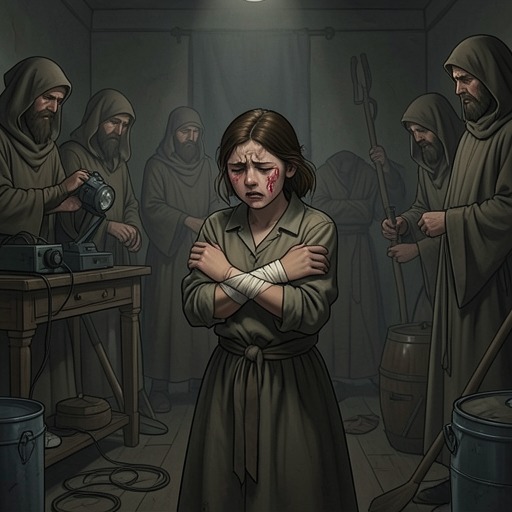
Ava experiences that exploitation as ownership rather than employment. Her blood pact requires her to hunt and kill targets for the Coterie; refusal would put her in violation of the pact and invite lethal punishment. Unlike Lock and Ezra, whose service is a tithe that ends at age twenty-five, Ava’s contract lasts until she or Venus dies. Venus can release her at her own discretion, but Ava doubts she will surrender a valuable asset. The difference between these contracts makes Ava’s status especially stark: the others have a defined term, while her supposed route out depends on the death or choice of the person who controls her.
The Coterie can also seek replacements. During a confrontation, a newly recruited firebug throws enormous fireballs, first roughly the size of a pony and then as large as a Volkswagen bus. Ava recognizes that the newcomer has formidable power but appears inexperienced in pacing it. She fears that a firebug who exhausts himself may begin drawing energy from essential bodily functions, including those sustaining the heart and lungs. His arrival also changes the danger she faces: Venus may no longer need to preserve Ava as her only available firebug. Yet Ava hesitates to hurt the newcomer, uncertain whether he has chosen the Coterie or, like her, has been forced into its service.
Fire in Ava’s Life
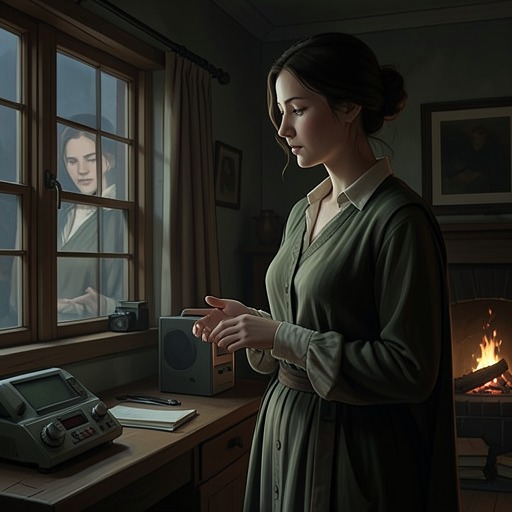
Ava’s abilities shape the ordinary performances she uses to pass as human. When she lights Ryan’s cigarette with an old-fashioned Zippo, the lighter is only a prop, empty of both fluid and flint. She can set the bench and boats in the harbor on fire by concentrating, but Ryan believes she is ordinary. The small gesture of pretending to need a lighter makes concealment part of her daily life: even a flame must be presented as the product of an object rather than herself.
The same power that makes concealment necessary also gives Ava a means to defend the people she loves. In a later fight, she is burned and sees Lock’s jacket smoldering after a new firebug attacks them. Once she sees her friend in danger, she stops holding back and sends fire at both opponents. Her decision follows a pattern in which violence imposed by the Coterie and violence used to protect chosen family collide. Fire is the ability the organization claims, but Ava’s loyalties are not its property.
Lock makes that distinction explicit when Ava asks why he and Ezra continue to stand beside her. As she tosses a small fireball between her hands, Lock deliberately puts his hand in its path, trusting her to extinguish it before it reaches his skin. He tells her that friendship means following her into danger, and insists that he is not afraid of her. The scene turns fire from a sign of what Ava can do to a measure of trust: Lock knows the danger and chooses closeness anyway.
Limits, Loss of Control, and Meaning
A firebug’s power can threaten allies as well as enemies when control breaks down. Near the final confrontation with Venus, Ava is exhausted and the fire is slow to take hold in the wind and soggy tinder. Yet she says that, once begun, nothing short of her death would stop it. As she feeds the flame, memories of her mother return: the bloodied back seat of a car, her mother fighting for her life, the warmth of her lap, her laughter and stories in cheap motel rooms, and the way she looked when she saw Cade. The fire grows from a personal history of love and loss, not merely from a tactical decision.
Ava understands that putting so much of herself into the flame risks a nova, an uncontrolled eruption that could consume the people around her and destroy much of the island. Lock’s presence is the difference she identifies between holding to the fire and losing control completely. The scene gives the firebug’s power a limit with moral weight: the same force that can bring down Venus could also take Ava’s friends with her.
After Venus’s defeat, Ava confronts Ryan while still worn thin. Her spark sputters before it catches, but she makes it burn hotter as a warning that he must stay away from her and the people she loves. The encounter does not suggest that firebugs are invulnerable or that power erases the harm done to them. Instead, Ava’s uneven flame registers the cost of what she has survived, while her threat marks a choice about how that power will be used. Across the story, firebug inheritance is at once a bodily capacity, a reason for persecution, and a means of resisting the people who would claim its bearer.