John Rainbird–Charlie McGee relationship
FirestarterJohn Rainbird and Charlie McGee’s relationship is a study in intimacy built on concealed purpose. During a blackout, Rainbird becomes the person Charlie trusts with her loneliness, fear, and memories; she even sees something of her father in him. Yet he is also the man who helped capture her, and he keeps that fact—and his refusal to pass messages to her father—hidden. His affection is genuine, but it does not undo the manipulation that makes their closeness possible.
A Relationship Formed in Captivity
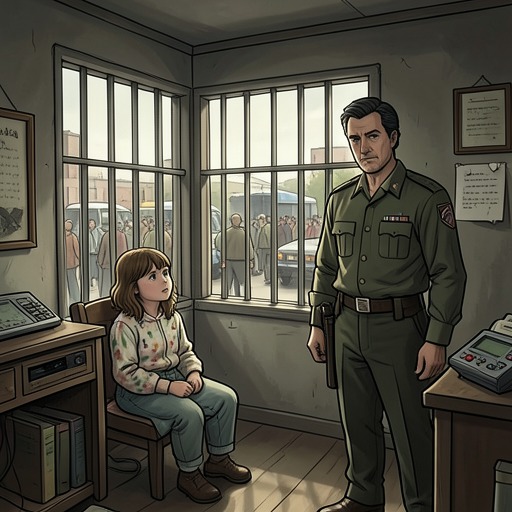
Rainbird’s connection to Charlie begins inside the Shop’s control, where she has spent months separated from her father and living without a dependable sense of time. She has refused to use her pyrokinetic ability, and the psychologists have come to believe that her vow will hold. Rainbird recognizes that this resistance has become the main obstacle to the Shop’s aims. The blackout gives him an opening: with staff unable to listen in as usual, he can approach her without the ordinary sense of surveillance and begin to reach the part of her that has withdrawn from everyone around her.
Charlie has already rejected the woman assigned to be her live-in companion. She stops speaking until the woman is removed, and makes clear that the only companion she wants is her father; if she cannot have him, she would rather be alone. Her response establishes how little the institution’s substitute care can offer her. Rainbird’s later success depends on meeting a need the Shop has failed to satisfy, while concealing that he is not an ally outside its machinery.
Confidence During the Blackout
The power failure shapes their conversation in two ways. Charlie knows that the usual listening devices are not operating, and Rainbird’s own fear of darkness makes him appear vulnerable rather than simply authoritative. He tells her about the memories the dark brings back from his wartime experience. In response, she speaks at length about why she is imprisoned, how intensely she misses her father, and how frightened she is that the Shop will trick her into using her ability again. Her disclosure begins as an effort to distract and comfort him, then gathers momentum into a confession of what she has kept to herself.
Charlie cries, and Rainbird holds her awkwardly. She thinks he is sweet and recognizes a resemblance to her father. The resemblance matters because her longing is not abstract: she wants her actual father, and Rainbird becomes a temporary point of closeness precisely while that relationship is being withheld from her. She embraces and kisses him; Rainbird returns the affection and privately understands their bond as mutual. His feelings are not merely a performance, but his tenderness exists alongside the role he is playing for the Shop.
That contradiction surfaces when he encourages her to set fires for the institution. The suggestion shocks Charlie because it presses against the fear and self-restraint she has just confided in him. Their closeness therefore does not simply comfort her: it also becomes a channel through which Rainbird tries to change her decision. Even after she falls asleep beside him, he looks at her with a divided response, feeling the force of her power and wondering whether the claims made about it could be true. The scene places affection and calculation in the same relationship without resolving one into the other.
The Deception Behind the Care
Rainbird sustains Charlie’s trust by acting as though he can carry messages to her father. In fact, he has never passed a single message to Andy McGee. He and Hockstetter judge that allowing a meeting would risk undoing the progress they have made: if Charlie saw what the Shop had done to her father, she might become resistant again. Rainbird sees Andy on monitors, not as a father whom he is helping to reunite with his daughter, and he lets Charlie believe the messages are being delivered.
The lie is central to the imbalance between them. Charlie’s disclosure and affection are real, but she cannot make an informed judgment about Rainbird because he withholds his part in the capture and the separation she most wants to end. His friendly manner gives her an apparent personal bond; the Shop’s restrictions define what he will actually do with that trust. Rainbird’s conduct shows how intimacy can be used as an instrument of institutional control without making the intimacy itself wholly false.
Trust Exposed
Andy eventually warns Charlie in a note that Rainbird was in charge of the men who took them prisoner at Granther’s place. He urges her not to trust Rainbird and explains that Rainbird has been convincing enough to win her confidence. The warning recasts the relationship: the man Charlie regarded as a comforting companion was involved in the event that placed her in captivity. Andy also tells her to keep her feelings toward Rainbird apparently unchanged until the escape plan can proceed, turning the trust Rainbird cultivated into something Charlie must conceal and manage.
The relationship’s defining tension is therefore not whether Rainbird feels affection, but what that affection is made to serve. Charlie’s loneliness and longing for her father make Rainbird’s attention powerful; his own attachment makes their bond more complicated than a simple act. Yet he continues to deceive her, withholds the messages she believes he carries, and cooperates in keeping her from Andy. The contrast between emotional closeness and practical betrayal gives their connection its significance: for Charlie, Rainbird briefly occupies the place of a trusted companion, while for the Shop he remains a means of weakening her resistance.