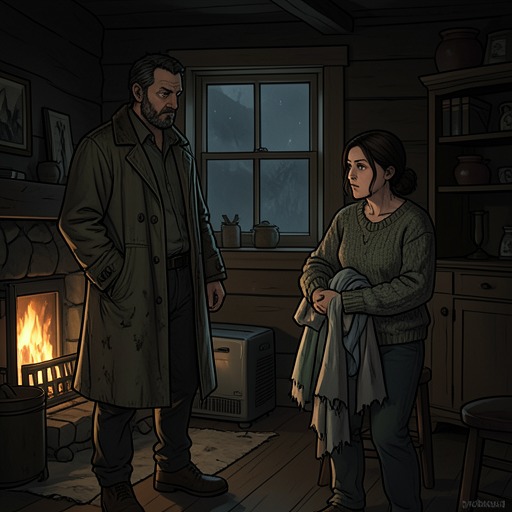
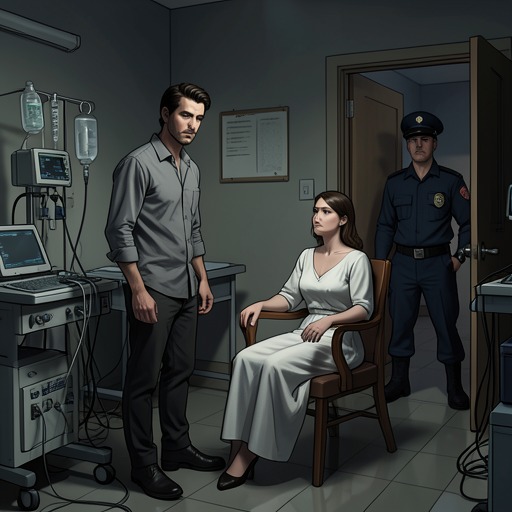
Event 1
Lot Six experiment
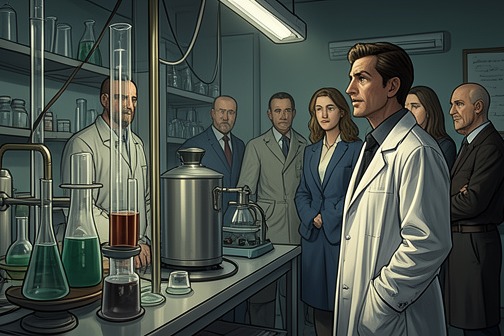
The [Lot Six experiment](entity:event-recall-event-lot-six-experiment-58fb46f61516) was a [1969](entity:time-recall-time-1969-711fcc62f578) trial at [Harrison State College](entity:location-recall-location-harrison-state-colle-01e45d1e3def) whose disastrous results turned a classified research project into the buried origin of the Shop’s pursuit of [Charlie McGee](entity:character-recall-character-charlie-mcgee-5d289d26ad76). Twelve student volunteers were divided between injections of water and water containing [Lot Six](entity:object-recall-object-lot-six-cec36af974d6), a compound described as a hypnotic and mild hallucinogenic. The participants’ experiences included possible psychic phenomena, but also profound confusion, lasting harm, and death. The project was halted, its consequences concealed, and its surviving subjects left with effects that continued to shape the story years later.
## Design and Rationale
The experiment was led by [Dr. Joseph Wanless](entity:character-recall-character-dr-joseph-wanless-2c51151aac54). At an earlier briefing, he explained that six volunteers would receive water and six would receive water mixed with Lot Six. The trial would use a double-blind method: neither the volunteers nor the researchers would know who had received the compound until later. All twelve were to remain under close observation for forty-eight hours after injection. Wanless described the compound’s exact composition as classified, offering the participants only a broad account of its effects.
Questions from the audience focused chiefly on what Lot Six contained. [Andy McGee](entity:character-recall-character-andy-mcgee-30b15980eceb), then twenty-two, wondered instead about Wanless’s habit of shredding cigarettes, but did not ask. The episode gives the briefing a mundane surface even as its unanswered questions point toward the secrecy surrounding the experiment. The volunteers were being asked to enter a carefully managed scientific procedure without being told the substance’s true nature.
The trial took place in Room 70 of [Jason Gearneigh Hall](entity:location-recall-location-jason-gearneigh-hall-5c0c9c116c8d). A dozen cots had been brought in from the college infirmary, and graduate assistants administered the injections while Wanless moved among the volunteers. Andy and Vicky Tomlinson were among those lying on the cots. Andy disliked the injection and looked away as it was given; the planned supervision and orderly room did not prepare the participants for what followed.
The project’s rationale was later recorded in a 1968 memorandum from Wanless. He warned that animal testing would not advance the inquiry and argued against using convicts or people he described as having deviant personalities, because Lot Six might be powerful. He nevertheless recommended testing it on selected college students, with contingency plans for failure. The choice of volunteers thus reflected an attempt to manage the risk through selection and supervision, not evidence that the researchers understood or could control the compound’s effects.
## The Trial and Its Uncertain Experience
Andy’s recollection of Room 70 is not a stable account of a sequence of events. He later remained unsure how much he had actually witnessed and how much belonged to hallucination. Time seemed to slow; ordinary objects appeared to move through the room as if blown by an invisible force. In his memory, the experience shifts between episodes without a dependable order, making the trial feel less like a continuous observation than a series of impressions whose reality cannot be securely sorted.
One volunteer experienced a crisis severe enough to bring graduate assistants running to his cot. Andy remembered the staff gathering around him and the urgent attempt to revive another participant after a cardiac arrest. A staff member, [John Mayo](entity:character-recall-character-john-mayo-9bd88877e0af), later recalled being the person who used a defibrillator. The remembered emergency and the later account establish that the danger was not merely a product of Andy’s altered perception, even though other aspects of the session remained uncertain.
The participants’ altered state also shaped Andy and Vicky’s encounter. During periods of drifting in and out of consciousness, they talked about their lives and confided experiences they might not ordinarily have shared so early in an acquaintance. Andy spoke about his mother’s death in a car accident and the grief that followed; Vicky described a painful experience from childhood and the fear it had left her with. Their conversation became part of the relationship that later led to their marriage.
Music from the ceiling speakers offered a different anchor within Andy’s disordered memory. He and Vicky later concluded that it had been Rachmaninoff. For Andy, hearing that composer afterward brought back the suspended, dreamlike time in Room 70. The music’s recurrence links an ordinary detail of the setting to an experience that he could neither fully reconstruct nor leave behind.
## Casualties and Long-Term Consequences
The immediate and subsequent toll on the twelve volunteers was devastating. According to John Mayo’s recollection, one participant died after going into cardiac arrest during the trial, and a female participant died six days later, apparently from a brain embolism. Two others suffered severe and lasting consequences: one became blind, and another developed paralysis from the neck down. Wanless characterized the paralysis as psychological, but the cause remained uncertain. These outcomes made the supervised trial’s failures impossible to separate from its human costs.
The Shop’s later account of the cohort tracks further deaths. One former participant died in a 1972 car accident that the Shop believed was probably suicide. Another died by suicide in 1973 after leaving a note describing an inability to endure what was in his mind. Three more participants died by suicide between 1974 and 1977. The files distinguished four definite suicides from a fifth that was considered probable. The Shop’s records attributed this pattern to a lasting effect of Lot Six, while acknowledging uncertainty about what the individuals themselves had experienced.
By 1977, three participants remained central to the Shop’s attention: [James Richardson](entity:character-recall-character-james-richardson-f168493fd7d1), who was under covert surveillance, and Andy and his wife, Vicky. Richardson had demonstrated telekinesis, thought transference, and mental domination while under the drug’s influence. The Shop considered him a likely failure, leaving its attention fixed on the couple. The eventual marriage of two Lot Six subjects mattered to the organization because Wanless had repeatedly warned that their children might require close observation.
The experiment’s psychic effects were powerful but uncontrolled. A retrospective account describes the volunteers as experiencing drug-induced abilities while also being profoundly disoriented. The Shop’s leaders saw that combination as a central obstacle: even where the trial produced results, researchers could not reliably direct or contain them. One scientist compared the intervention to placing a jet engine in an old car: forceful, but liable to fail at the first obstacle. That judgment captures the gap between eliciting an ability and making it useful or safe.
## Cover-Up and Legacy
After the trial, the Shop concealed what had happened and imposed an indefinite moratorium on further testing. The senior leadership had found no sign that foreign powers were pursuing drug-induced psychic abilities and judged Lot Six a dead end despite its apparent positive results. The decision reflected not only scientific doubts but the difficulty of concealing student deaths, missing people, and continuing distress among former participants. The people involved had friends and acquaintances, even though the volunteers had been selected partly because they had few close relatives.
The cover-up was extensive and expensive. The Shop’s retrospective account puts hush money at nearly seven hundred thousand dollars and describes efforts to silence a persistent investigator connected to the participant who had become blind. Secrecy did not erase the consequences; it made concealment another part of the experiment’s history. The moratorium ended neither the survivors’ suffering nor the institution’s interest in the abilities Lot Six had exposed.
Years later, Andy explained to [Irv Manders](entity:character-recall-character-irv-manders-2313bf360f21) that he and Vicky had both received Lot Six and that he believed the drug had altered their chromosomes. In his account, the changes passed to Charlie and combined in a new way, giving her extraordinary abilities. He also believed the Shop wanted to study her and use her as a means of reactivating the program. His explanation presents Charlie’s powers as connected to the experiment’s legacy, while preserving the distinction between what he knew about the injections and what he could only infer about their biological effects.
Rainbird later forced [Dr. Wanless](entity:character-recall-character-dr-wanless-bb54c24a77f3) to recount the complete history of the Lot Six tests and their climactic experiment. Wanless supplied details that filled gaps in Rainbird’s knowledge, and the account renewed the connection between the original trial and the Shop’s interest in Charlie. In this way, the experiment returns not as a closed episode but as the source of later pursuit: the institution’s attempt to produce psychic power had left behind casualties, concealed records, and a child whose abilities revived the project’s ambitions.
Event 2
The Shop’s attack on the McGee family
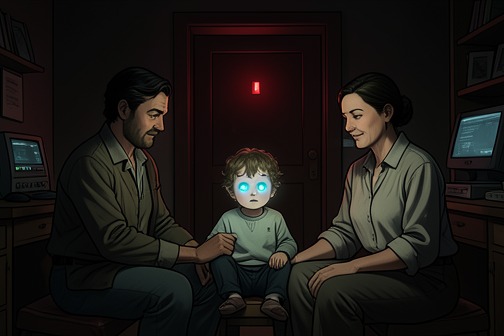
[The Shop’s attack on the McGee family](entity:event-recall-event-shop-a03184fde2b2) is revealed not as one fully recounted scene but through fragments of memory: Andy’s grief over Vicky’s death, Charlie’s recollection of being taken, and Andy’s fear that the family could be seized again. Together, these passages establish the attack’s central consequence: the Shop’s violence destroys the family’s security and makes protecting Charlie an urgent, recurring struggle.
## Background and Warning Signs
The danger surrounding the family appears first as a threat that is difficult to name openly. Andy remembers being afraid for himself, Vicky, and Charlie, and seeking information from his former roommate [Quincey](entity:character-recall-character-quincey-1701952c5871). Quincey warns that people may listen to telephone calls and invokes the atmosphere of the [Watergate era](entity:time-recall-time-watergate-9e778fd75cd2) before referring to an experiment involving twelve participants about six years earlier. His guarded explanation does not spell out the attack, but it places the family’s fear within a larger hidden operation and suggests why direct discussion feels unsafe.
Other memories show that the threat had already entered the family’s life through Charlie’s unusual abilities. Andy recalls that when Charlie was an infant, the pillow in her crib began to smolder; her parents stopped using the crib after the incident. He remembers fires occurring during her first year, including one involving curtains, and the strain that her parents experienced while trying to care for her. These events are not themselves the attack, but they establish the vulnerability around which the Shop’s interest and the family’s apprehension gather.
## Vicky’s Death and Charlie’s Capture
Andy’s memory of Vicky’s fate is fragmented by grief and uncertainty. He understands that people connected with the Shop harmed her and that she eventually disclosed information, but he cannot settle on exactly how she died. His recollection holds on to the loss more firmly than to its precise mechanics: Vicky was dead, and the Shop stood behind the danger that had reached the family. Charlie’s later memory is more direct about the outcome. She recalls that the bad men killed her mother and took her away, placing Vicky’s death and Charlie’s capture within the same traumatic break in family life.
The difference between the two recollections matters. Andy’s account is shaped by a husband’s grief and by the uncertainty surrounding Vicky’s death; Charlie remembers the event from the position of a child who lost her mother and was removed from her father. Neither passage supplies a complete operational account of the attack. Together, however, they establish its essential results without resolving every circumstance: Vicky dies, Charlie is taken, and the family is forcibly divided.
## Andy’s Rescue and Renewed Fear
The attack continues to govern Andy’s actions after Charlie is back with him. In one episode, he collects her from her second-grade classroom using an excuse about a sick grandmother. The urgent detail is his fear that he might arrive to find her seat empty and learn that people had already taken her away using a note supposedly from him. Charlie is there when he reaches the school, but Andy cannot know how narrowly he may have missed the people he feared. He later admits that he had been moving through the afternoon in blind panic, taking subways and buses and mostly walking, while Charlie grew tired beside him.
Their hurried travel ends with Charlie asleep in a cab. Andy has pushed the driver to accept his explanation, and he recognizes that he will have to pay the price for using that ability. His hand rests on Charlie’s leg as he watches her sleep. Her resemblance to Vicky brings affection and pain together: having Charlie physically beside him gives him relief, but it also recalls the wife he has lost. The scene shows the attack’s continuing force through practical decisions, fear of another abduction, and the burden Andy associates with using his power to protect his daughter.
## Memory, Family, and the Attack’s Significance
Charlie’s memory places the coming danger alongside a change in her father’s behavior. When she was five, nearly six, Andy set aside her familiar storybooks and read aloud from nonfiction books about extraordinary events. He told her that the accounts were true and important, while her mother had previously stopped him from reading from a book devoted to pyrokinesis, saying Charlie should wait until she was older. In Charlie’s recollection, this unusual storytime belongs just before the men came for her mother and took her. The books therefore mark Andy’s attempt to prepare his daughter, even though the memories offer no basis for saying that he knew exactly what would happen.
The attack’s narrative shape mirrors the family’s damaged security. It is pieced together from fear, recollection, and aftermath rather than presented as a single, settled account. Andy’s careful attention to the sleeping Charlie, his memory of Vicky, and the remembered warning about watched telephone calls each disclose a different cost of the Shop’s intervention. The result is not only the loss of Vicky and Charlie’s capture, but a lasting pattern in which ordinary acts—collecting a child from school, explaining travel, letting her sleep—are overshadowed by the possibility that the Shop may reach them again.
Event 3
Andy and Charlie’s escape from New York
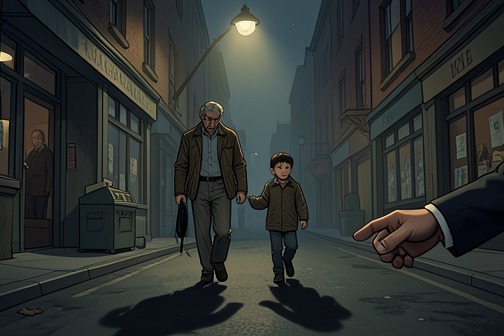
[Andy and Charlie’s escape from New York](entity:event-recall-event-dbece04c777f) is a flight undertaken on foot, with no money and almost no reserve of the power Andy depends on to protect them. Its decisive turn comes when Andy uses [the push](entity:expression-recall-expression-the-push-cb95e368f89e) twice in quick succession: first to keep a cabdriver from helping the men following them, then to make the driver take them toward [Albany](entity:location-recall-location-albany-9564c6bfd1ac). They get away from the curb, but the escape is no clean victory. Andy’s exertion leaves him physically ill, and the sleeping child beside him makes the cost of each delay impossible to ignore.
## Causes and Immediate Stakes
The flight begins with Andy taking Charlie out of her second-grade class in the middle of the day. He gives the school a hurried explanation about an ill grandmother and a call from home. Beneath that excuse is the fear that the Shop might reach Charlie before he does. Andy imagines arriving at the classroom to find her seat empty, her books stacked neatly in the desk, and an explanation that she had gone with people carrying a note from him. The image is especially frightening because Charlie has been taken before: Andy remembers the terror of an empty house, his frantic pursuit, and the earlier return of Vicky. This time, however, Charlie is there when he reaches the school.
After collecting her, Andy keeps moving. He gets them a late lunch at Nathan’s, then takes them on subways and buses, though most of the afternoon passes on foot. He is acting in blind panic, and Charlie is worn out by the constant travel. When the street scene opens, she is tired enough to ask if they can stop; Andy says they cannot. He is a broad-shouldered man in a scuffed corduroy jacket and brown slacks, walking quickly with her hand in his. Their appearance offers little protection against the danger: they have no overnight bags, and Charlie is still a child in school clothes while her father tries to keep them moving through the city.
The pursuit has become unmistakable. A green car follows them slowly along the curb, and Andy repeatedly looks back to judge its distance. He suspects the men may have been charting him. If they have observed the pattern of his use of the push, they may know how little strength he has left. That possibility turns the car into more than a visible tail: it may mean the pursuers understand the weakness on which their timing depends.
## The Pursuit Reaches the Corner
Their lack of money makes the danger harder to escape. Andy remembers going to the bank at noon because he had felt that the pursuers were closing in. He expected the money in his accounts to give him and Charlie a way to run. Instead, his personal checking, business checking, and savings accounts at Chemical Allied Bank of New York have all disappeared. The money’s sudden absence convinces him that the Shop means to act decisively. By the time he is walking Third Avenue with Charlie, he has spent five and a half hours living with the knowledge that his financial means of escape have been removed.
His supernatural resource is scarcely more reassuring. Nearly a week has passed since he last used the push, on a suicidal man who attended a Thursday-night counseling session at [Confidence Associates](entity:organization-recall-organization-confidence-assoc-627bcce2a0b5). Andy had intervened in the hope of preventing the man from taking his own life. Now, with the men in the green car closing in, Andy bitterly wonders whether any remnant of that power remains. He briefly considers whether an echo of the force might help them, then rejects the thought in horror: he does not want to wish the consequences of his power onto anyone else. The hesitation marks a conflict between the immediate need to save Charlie and his knowledge that using the power can injure people beyond its target.
At the intersection, the green car stops. Two young men in business suits get out, and Andy sees that they are fresher than he is. He pushes through the gathered pedestrians, looking for a vacant cab, while the pursuers approach. The city crowd does not become a dependable refuge. Andy calls out apologies as he tries to pass, but the cabs he expects to find are absent. Charlie, exhausted, rests her head on his shoulder and yawns. Then Andy spots an empty cab and waves it down. Behind him, the two men abandon any pretense of walking casually and run.
## Two Uses of the Push
Andy gets Charlie into the back of the cab and dives in after her, directing the driver to La Guardia. When one of the pursuing men shouts that he is police, the driver turns toward the voice. Andy uses the push gently. The effort arrives as a sharp pain in the center of his forehead, then recedes into a duller ache. He supplies the driver with a false explanation: the men are pursuing a black man in a checkered cap. The driver accepts it and pulls away from the curb. The invented figure redirects the immediate threat without requiring Andy to confront the pursuers directly, but the falsehood is also a measure of how urgently he is improvising.
Once the cab is moving, Andy changes the destination to Albany. The driver objects that the trip is too far. Andy has only a single dollar bill in his wallet, and he is relieved that this cab has no bulletproof partition. He believes open contact makes it easier to use the push, though he has never worked out whether the effect is psychological. He offers the driver a nonexistent five-hundred-dollar bill and presses the suggestion hard. For a moment he fears that nothing is left in him: the earlier push may have exhausted his remaining ability.
The power does take hold, but the physical backlash is severe. The familiar pain strikes like a steel dagger; his stomach seems to gain weight, his bowels lock, and he wonders whether he will vomit or die. His response recalls the danger of overusing the ability, and the memory of a warning to use it without abusing it returns with sickening force. Andy has got them out of immediate reach, but he has done so by spending bodily strength he can scarcely afford to lose.
## The Escape’s Cost and Meaning
Charlie’s sleep sharpens the contrast between what the escape accomplishes and what Andy endures. He looks at her trusting him to get them out of trouble, takes off his corduroy jacket, folds it, and slips it beneath her head. Her confidence offers him a reason to keep going even as he experiences despair at the repetition of their predicament. The danger feels like the same mess recurring: they survive one pursuit only to run again. His tenderness toward Charlie does not make the flight safe; it makes the stakes of each decision more immediate.
The escape also carries the fear of arriving too late. As Andy keeps a hand on Charlie’s leg while she sleeps, he recalls how narrowly he may have beaten the Shop to her school. He cannot tell whether he reached her half an hour, fifteen minutes, or less before the people who might have taken her. That uncertainty confirms that the rescue and the flight are linked: removing Charlie from the classroom is only the first step, because the pursuers remain close and the family has been targeted before.
The driver’s acceptance of Andy’s directions depends on the push, not on a credible account of who Andy and Charlie are. He does not question why a seven-year-old is visiting her father for two weeks in October while school is in session, why neither has an overnight bag, or why their story is incomplete. Andy has made the driver unconcerned, and he expects to pay for that intervention with the same power he has just strained. The cab’s departure therefore marks a narrow change in their situation, not an end to the danger: they have left the pursuing men behind and set off toward Albany, but their means of escape remain fragile, and Andy’s ability to protect Charlie has a painful bodily limit.
Event 4
Albany airport fire incident
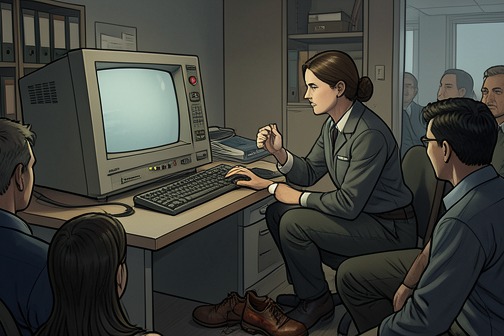
The [Albany airport fire incident](entity:event-recall-event-afdac24ab416) transforms a small act of desperation into a public spectacle: while trying to obtain change for her father, [Charlie McGee](entity:character-recall-character-charlie-mcgee-5d289d26ad76) accidentally sets a serviceman’s shoes on fire. The episode makes her feared power visible to strangers and, through the airport police report, alerts the Shop to a striking clue about the fugitives’ whereabouts.
## Causes and Setting
At ten past midnight, the terminal lobby is crowded with travelers who have nowhere else to be: servicemen returning from leave, tired families, businessmen, and young people with packs and tennis rackets. Amid the restless crowd, [Andy McGee](entity:character-recall-character-andy-mcgee-30b15980eceb) and Charlie sit at desks with televisions bolted to them. Andy spends his last two quarters to keep their seats. He is exhausted, in pain, and unable to offer Charlie the money or rest they need; when she asks whether they have to leave, he tells her they have no money and cannot stay.
Charlie understands that her father is hurt and that the men from the Shop may be coming after them. She knows that when Andy is in this condition, thinking is difficult and he needs quiet and sleep. She also understands that the Shop wants to examine them and find out how they work. Although she is grieving her mother and frightened by the danger, she decides to look for money herself.
The choice brings her up against the rule Andy has repeated throughout her childhood: she must not use [the Bad Thing](entity:expression-recall-expression-the-bad-thing-6c0d53e4113a). Charlie remembers the earlier incident in which she hurt her mother, and the screams and bandages that followed. She fears that once her power is released it may spread beyond her control and hurt herself, one person, or many. The need to help her father presses against that warning; the airport’s ordinary objects become the means by which she tests a power she has been taught to fear.
## Charlie Gets the Money
Charlie takes a paper shopping bag from a trash basket and finds a bank of pay phones. She is afraid to use her power, but enters an end booth and pretends to speak to her grandfather while watching through the glass for anyone paying attention. A woman nearby is occupied with a flight-insurance machine, and no one seems to be watching Charlie.
She shoves the phone. The first effort does not produce the result she wants, but the sensation of pushing objects feels good to her, which unsettles her: she wonders whether she might come to like doing something dangerous. She tries again, more lightly, and a flood of silver change spills from the coin return. Charlie hurries to hold the bag beneath it, but most of the quarters, nickels, and dimes scatter onto the floor. She gathers what she can, repeatedly checking the booth window as she works.
At the next booth, a serviceman is still talking on the phone. Charlie hears him speaking to a woman and senses that he is trying to deceive her. She closes the booth door while he is outside smoking, then turns her attention to the phone. This time she positions the bag first. The coins cascade into it, and she moves on with money for Andy. The sequence makes her ability seem briefly useful and almost manageable: a shove can produce the small, immediate resource she needs. But the phone is only the first object to respond to her power that night.
## The Fire and Its Immediate Aftermath
The serviceman is Eddie Delgardo, whose thoughts have been occupied by resentment toward Sally Bradford and plans for his leave in [New York City](entity:location-recall-location-new-york-city-65df0a129d4c). His private fantasy of revenge is interrupted by heat at his feet and the smell of something singeing. When he looks down, his shoes are burning. He leaps up as people turn and security guards notice the commotion; soon the cuffs of his uniform are catching too.
Eddie runs across the concourse trailing smoke and rushes into the women’s room. There, a woman leaving a stall sees him and screams, her voice magnified by the tiled walls. Eddie catches the door of a pay toilet before it can latch, hauls himself into the toilet feet first, and the water produces a hiss and a billow of steam. The incident draws the airport security guards into the room. What began as Charlie’s attempt to gather coins has become an emergency visible across the terminal, with Eddie’s burning shoes and uniform making the danger unmistakable.
Charlie returns to Andy crying. She has obtained the money, but tells him that it got away from her again: there was a soldier, and she could not stop what happened. Andy, still struggling to think through intense pain, puts an arm around her and reassures her that the man is all right and has been taken to the security office. Charlie explains that she overheard him on the phone, formed a few thoughts about his attempt to trick the woman he was speaking to, and then saw him as the fire began. She is horrified that she might have hurt him badly. Andy’s response is unexpected: he tells her to keep her voice down and calls the incident the most encouraging thing that has happened in some time. His judgment places the accident in the context of their immediate danger, even as Charlie experiences it as a frightening loss of control.
## Consequences and Significance
The fire gives airport authorities a memorable detail to report. When an airport cop tells the driver of a green car that two people matching the fugitives’ description were seen, he adds that a fool has also set his own shoes on fire. The driver, who had seemed bored, sits upright at the information. The report connects Charlie and Andy’s passage through the airport with an unusual event that the Shop can recognize as relevant to its pursuit.
Eddie’s ordeal continues beyond the blaze. Instead of spending his leave sightseeing in New York, he is taken into a drug-induced state of total recall and made to describe repeatedly what happened before and after his shoes caught fire. The incident therefore has consequences on two scales: Charlie’s unintended power injures and terrifies a stranger, while the Shop turns that stranger’s experience into intelligence. The coins in Charlie’s bag answer an immediate need, but the fire exposes the cost of using her ability in a crowded public place. Her wish to help Andy, her terror of repeating the harm done to her mother, and the Shop’s capacity to exploit whatever the airport witnesses combine to make this brief episode a turning point in their attempt to remain hidden.
Event 5
Teddy bear fire incident
[Teddy bear fire incident](entity:event-recall-event-c26c62e7e523) is the childhood episode in which [Charlie McGee](entity:character-recall-character-charlie-mcgee-5d289d26ad76)’s power turns a familiar toy into a warning of what she may do to the people around her. Recalled by [Andy McGee](entity:character-recall-character-andy-mcgee-30b15980eceb) from six years earlier, the scene joins an ordinary accident to a frightening discovery: Charlie’s response to being hurt sets Teddy alight, and her father tries to make the consequences unforgettable. The incident helps explain both the family’s quiet precautions and the prohibition that came to define Charlie’s relationship with her ability.
## Causes and Background
Charlie was one year old at the time, but the family’s fear had begun much earlier. When she was only a week old, [Vicky Tomlinson McGee](entity:character-recall-character-vicky-tomlinson-mcg-6b6341f6a372) brought her into bed because a pillow in the crib had begun to smolder. On the night they put the crib away, the heat blistered Charlie’s cheek; she cried for much of the night despite Andy’s use of Solarcaine. In that first year, delayed bottles were followed by fires in wastebaskets, and curtains once burst into flame while Vicky was in the room. The parents had known from early on that something about their daughter was not ordinary, but their fear was difficult to discuss.
Vicky avoided the subject with what Andy remembered as hysterical stubbornness, insisting there was nothing wrong with Charlie. Their silence did not mean they ignored the danger. Fire extinguishers appeared throughout the house without discussion, a practical precaution that became part of the household’s everyday landscape. The contrast is central to the incident: the family could prepare for fire even when it could not speak openly about the power that might cause one.
The immediate circumstances were domestic and deceptively calm. Charlie was crawling and had learned to climb the stairs on her hands and knees, then back down the same way. Andy sat reading in the living room near the foot of the stairs while she went up and down. A teddy bear sat on a step. Because Charlie had gone around it on earlier trips, Andy had become lulled by the apparent normality of the routine and did not move it. The fall that followed was the moment that routine broke.
## The Fire and Andy’s Response
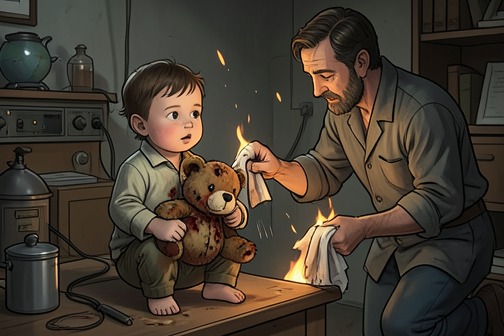
On her third descent, Charlie’s feet tangled with the bear and she tumbled to the bottom. The carpeted stairs spared her a bruise, but she wailed with fear and anger. Andy hurried to her, lifted her, and checked for blood, a badly injured limb, or signs of concussion. As he held her, he felt what he understood as a passage from her mind: an invisible, soundless bolt, like warm air stirred by a fast-moving subway train on a summer platform. Then Teddy was burning.
The sequence makes the fire seem less like an accident than a direct answer to the fall. Teddy had hurt Charlie; the toy now suffered in turn. Flames rose around its black button eyes and began spreading to the stair carpet. Andy put Charlie down and ran for the extinguisher mounted near the television. The family’s unspoken precaution became an immediate means of containing the danger: he twisted the knob and covered the spreading fire with foam. He then carried the scorched, foam-speckled bear downstairs.
The danger had been stopped, but Andy did not treat the extinguished flames as the end of the matter. He believed that a line had to be drawn and a lesson learned, even as he hated himself for what he was about to do. He pressed the blackened, still-warm bear close to Charlie’s tear-streaked face and made her look at what had happened. In his distress, he imagined marking her with a scar; instead, he tried to make the ruined toy itself carry the warning. His choice turns the bear from a plaything into evidence of the consequence he wants her to understand.
## The Warning and Its Consequences
Andy told Charlie that she had burned Teddy and that she might burn her parents as well. He ended the warning by telling her not to do it again because it was a Bad Thing. Charlie was still crying and calling for her father and Teddy, and Andy’s severity lasted only as long as he could bear to inflict it. He picked her up, carried her back and forth, and held her until her sobs subsided and she fell asleep against his shoulder.
The episode establishes an early pattern in the family’s response to Charlie’s power: practical preparation coexists with silence, fear, and attempts to impose limits. The extinguishers can contain a fire, but they cannot prevent the impulse that starts it; Andy therefore tries to teach restraint through the charred object and the possibility of harm to those she loves. The lesson is delivered to a frightened one-year-old, not through explanation she can fully grasp, but through the vivid sight of Teddy burned and Andy’s urgent warning.
As a remembered event, the scene also gives the later prohibition on Charlie’s power a personal origin. It is bound to her father’s attempt to protect her and the family, but also to his awareness that the warning itself causes her distress. The toy’s damaged body makes the abstract danger visible, while Andy’s embrace after the reprimand restores the care the lesson has strained. The incident’s lasting force lies in that unresolved pairing: Charlie’s fire is frightening because it can injure, and the first rule imposed on it is framed as an effort to keep her from hurting the people she loves.
Event 6
The Shop resumes the hunt and orders Andy’s elimination
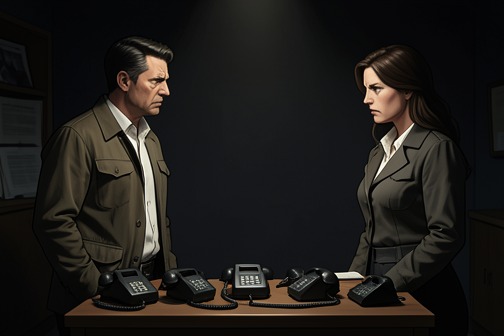
The Shop resumes the hunt for [Andy McGee](entity:character-recall-character-andy-mcgee-30b15980eceb) and [Charlie McGee](entity:character-recall-character-charlie-mcgee-5d289d26ad76) as its leaders realize that the search has underestimated the child. A clue as strange as a row of emptied pay phones redirects suspicion toward Charlie, while [Cap Hollister](entity:character-recall-character-cap-hollister-824388451c6f)’s response turns an expansive manhunt into an operation with permission for extreme force against Andy. The scene’s decisive shift is from trying to locate the fugitives to preparing to eliminate the father and capture the girl.
## Causes and Changing Assessment
At first, Cap and [Al Steinowitz](entity:character-recall-character-al-steinowitz-a3403cef3720) discuss whether Andy has pushed his mental ability too hard. Al believes its effect is dissipating: when he demonstrated it to roughly six people that morning, only a couple thought they saw anything, and their reactions fell short of those of a cab driver and the woman who lived with him. Cap asks whether Andy has overreached; Al agrees, but treats that as a reason the fugitives should be easier to catch, not a reason to stop looking.
Their estimate of the fugitives’ whereabouts remains uncertain. They may have slept in the woods, found an outlying motel, or broken into a summer cabin. Al nevertheless believes they are nearby and that the search can put the arm on them without much trouble. The uncertainty concerns where to find them, not whether the search should continue.
A call from [Orville Jamieson](entity:character-recall-character-orville-jamieson-3e2efdcc3169) introduces a clue that unsettles this account. The airport’s pay phones are empty, with a few quarters and dimes left on some floors, but none has been jimmied. Jamieson reports that the phone company is going crazy; the unexplained condition of the phones cannot be explained as ordinary break-ins. The detail prompts Cap to reconsider which fugitive has been exerting power.
## The Manhunt Expands
The response is already immense. Al reports that more than seven hundred people, counting the state police, are involved in the search. They have checked more than forty hotels and motels in the immediate [Albany](entity:location-recall-location-albany-9564c6bfd1ac) area and are extending the operation into neighboring towns. A man and a little girl, Al argues, stand out; the searchers will find them, or at least find the girl if Andy is dead. Al wants to be present when the operation reaches its conclusion, and Cap tells him to bring the fugitives to him.
The pursuit is organized across several levels of communication and command. Cap contacts [Norville Bates](entity:character-recall-character-norville-bates-9715e981d80c) through an open walkie-talkie link, accepting the imperfect connection. Bates, whom Cap regards as reliable and persistent rather than imaginative, reports that the teams are spreading into Oakville, Tremont, Messalonsett, [Hastings Glen](entity:location-recall-location-hastings-glen-74b4d273479c), and Looton. This expansion gives the search a wider geographic reach even as its leaders are still reasoning from incomplete clues.
The empty phones change that reasoning. Cap recalls [Dr. Joseph Wanless](entity:character-recall-character-dr-joseph-wanless-2c51151aac54)’s warning that Andy is forcing Charlie to reeducate herself, then joins it to Jamieson’s report. He concludes that Andy did not empty the phones; the girl did. He also connects Charlie to an earlier incident in which a soldier’s shoes were burned off, probably by accident. What had seemed to Cap like evidence of Andy’s dwindling power now sits beside signs that Charlie herself can act on the physical world.
## Extreme Sanction
Cap says he will follow half of Wanless’s advice, whose eloquence he acknowledges even while dismissing him contemptuously. The practical consequence is not a gentler approach to Charlie but a sharper escalation against Andy: Cap tells Bates that circumstances have changed and that “the big boy” must be sanctioned, specifying “Extreme sanction.” Bates repeats the order flatly. The exchange establishes the seriousness of the authorization without describing its eventual execution.
The contrast is stark. The Shop’s immense search force is looking for both father and daughter, but Cap’s new command singles out Andy for extreme treatment while the growing evidence identifies Charlie as the source of the unexplained effects. Cap’s earlier instruction to Al remains to bring the fugitives to him; the order to Bates adds a more lethal edge to the pursuit rather than resolving how the two aims will be reconciled.
## Rainbird Is Summoned
As the manhunt broadens, Cap makes arrangements to involve [John Rainbird](entity:character-recall-character-john-rainbird-7dcd776488fe). He learns that Rainbird has returned from Venice and is at Longmont, where he has been since six o’clock the previous evening. Cap asks that he be woken and wants to see him when Wanless leaves, confirming that Wanless is still there. The brief scheduling details place Rainbird’s arrival alongside the Shop’s rapidly changing assessment of the fugitives.
Rainbird enters quietly enough that Cap recalls how even Al Steinowitz once described him as seeming not to push air in front of him when he walked. Cap admits that Rainbird terrifies him, despite being glad he is on the Shop’s side. Cap first calls the proposed work small and stresses that it is strictly voluntary, while suggesting that it may lead to a much more interesting assignment. Rainbird asks to hear more. The scene ends before he accepts or the precise job is disclosed, leaving the renewed hunt, the extreme-sanction order, and Rainbird’s possible involvement poised as separate but converging developments.
Event 7
Charlie burns her mother’s hands
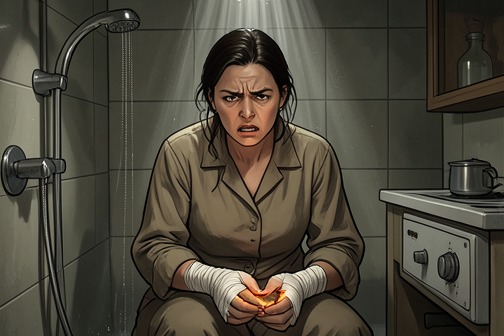
The event known as [Charlie burns her mother’s hands](entity:event-recall-event-charlie-5df73747304e) is a childhood accident recalled by [Charlie McGee](entity:character-recall-character-charlie-mcgee-5d289d26ad76), but it becomes more than an explanation for her mother’s bandages: it is the moment the family names Charlie’s ability, confronts its potential danger, and gives her rules meant to keep it from harming anyone again. The memory joins a child’s anger and confusion to the frightening discovery that an involuntary power can still have consequences for another person.
## The Memory and Its Immediate Context
The event is presented as Charlie remembers it, rather than as a scene unfolding in the present. As the recollection comes to her, she is under warm water; the passage turns from that immediate comfort toward the earlier family crisis. The contrast places the memory inside an effort to feel safe while showing why safety has become bound up with control of her ability.
The remembered incident took place the day before. Charlie had been told she could not go to Deenie’s house because she had not picked up her room. She became very angry, and the firestarting ability she did not understand appeared suddenly. Charlie pushed the fire away from herself and toward her mother. The trigger was an ordinary childhood frustration, but its consequence was not ordinary: her mother’s hands were bandaged, and Charlie understood that she was responsible for what had happened.
The household’s circumstances limited the harm. The sink was full of soapy dishwater, and the fire did not become worse. Charlie’s memory holds both sides of that outcome together: the event could have had a more serious consequence, but it did not. The water is therefore not merely part of the setting; it is the concrete circumstance that helped contain an accident Charlie could not yet control.
## Naming the Ability and Its Danger
Afterward, Charlie’s parents explain that the ability is called pyrokinesis: she can sometimes start fires by thinking about fire, particularly when upset. Her mother presents this as an explanation rather than a diagnosis of intention. The power may remain unknown to some people who possess it, while in others it can take control briefly. Her mother cannot finish describing that possibility, leaving Charlie’s father to complete the warning.
Her father connects the danger to an earlier childhood incident in which Charlie’s hair caught fire. He also tells her that she can learn to control the ability and that what happened is not her fault. That reassurance matters, but it does not remove the need for caution. His and her mother’s brief exchange of looks suggests that the subject carries weight for both adults; the passage shows the exchange without specifying what they understand or decide through it.
The parents’ explanation therefore holds two claims in tension. Charlie did not choose to possess the power or to have it emerge in a moment of distress, yet she must learn to direct it safely. The account distinguishes blame for having the ability from responsibility for trying to prevent future harm. For Charlie, whose understanding is still that of a child, those ideas arrive together with the evidence of her mother’s bandaged hands.
## The Family’s Safety Rules
Her father gives Charlie practical instructions for what to do if the ability emerges again. She is to try not to become upset in the way that starts fires; if she cannot prevent it, she should direct the fire away from herself, toward a wastebasket or ashtray, try to get outside, or direct it toward water if water is nearby. These alternatives turn an overwhelming power into a set of specific actions, each intended to keep the fire away from a person.
Her mother makes the central boundary explicit: Charlie must never direct the fire at someone. She warns that doing so could kill a person. The rule follows directly from the recent accident, in which Charlie’s anger had been redirected toward her mother. It is not an abstract lesson imposed on a distant possibility; the bandages make the danger present within the family.
The instruction to redirect the fire also recognizes that prevention may not always succeed. Her parents ask Charlie to avoid the emotional state that preceded the incident, but they also give her steps to take if she cannot. This distinction keeps the rules practical: they do not assume that a promise alone will make the ability disappear, and they identify water and open air as possible safeguards.
## Guilt, Promise, and Significance
Charlie responds by weeping in terror and remorse. She now understands why her parents had looked upset and why her father had read her frightening stories: the bandages are connected to what she did. Her memory emphasizes that she had been angry, that the fire appeared, and that she sent it toward her mother. The event is accidental in the sense that Charlie did not understand or master her power, but the sequence also makes her action and its consequence unmistakable to her.
She promises her parents that she will never let it happen again. The repeated insistence of the promise records the intensity of her fear and her wish to undo the harm; it does not show that she has already gained control. In the present moment of remembering, her father’s reassurance remains important to her. She trusts him as the smartest man in the world, and his certainty that things can be all right provides comfort alongside the memory’s unresolved warning.
The scene establishes the emotional and practical terms through which Charlie understands her ability: it can emerge when she is distressed, it can be directed, and directing it at a person can be deadly. It also binds her power to family care without making that care simple. Her parents comfort her, explain what happened, and set strict limits; Charlie, in turn, carries fear and responsibility for an event she did not know how to prevent. The accident thus supplies the basis for her promise and for the safety rules that govern how she is expected to live with her firestarting ability.
Event 8
Vicky McGee’s murder and Charlie’s kidnapping
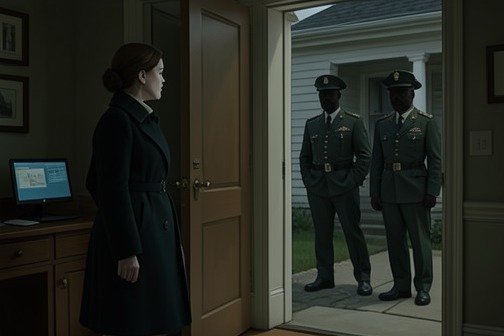
[Vicky McGee’s murder and Charlie’s kidnapping](entity:event-recall-event-vicky-mcgee-charlie-67b9daeff6ec) turn The Shop’s surveillance of the McGee family into an attack with irreversible consequences. When Charlie’s absence is misread as evidence that her parents have gone underground, Vicky is killed while The Shop seeks her daughter’s whereabouts, and Charlie is taken from a friend’s home. [Andy McGee](entity:character-recall-character-andy-mcgee-30b15980eceb) discovers his wife’s death only after the agents have left; his effort to locate Charlie begins in shock and proceeds through an ordinary telephone call that exposes how little he knows about the kidnapping already underway.
## Causes and Misreading
By the time of the attack, the McGees had spent months either fleeing or trying to stay hidden from The Shop. Andy later places the event within a fourteen-month period of pursuit and reconstructs the family as having been under surveillance for some time. The immediate mistake, as he understands it afterward, began when Charlie failed to come home from summer daycamp on Wednesday afternoon and was still absent on Thursday. Rather than discover that she was staying with her friend Terri Dugan, The Shop’s watchers apparently concluded that Andy and Vicky had recognized the surveillance and taken their daughter underground.
The misunderstanding was sharpened by an ordinary family arrangement. Charlie had been at Terri’s house for two days and two nights, and Vicky had called the reciprocal visit they were planning the Great Swap of 1980. What looked to the family like a familiar exchange of visits became, to the people watching them, a sign of flight. Andy’s retrospective account makes that gap between the event and its interpretation central: the agents’ false conclusion turned an absence that had a simple explanation into the trigger for violence.
## Vicky’s Death
Andy returns home and searches for Vicky. He finds her in the laundry room, concealed beneath the ironing board. She has been killed, and the signs of questioning are unmistakable: some of her fingernails have been removed. Andy understands that the agents were trying to find out where Charlie was. The discovery converts the family’s long-running danger into a personal loss, and he recognizes that the surveillance phase is over.
The scene also distinguishes what Andy knows from what he can only infer. He is certain that Vicky was killed and that the agents wanted Charlie’s location. He cannot determine whether they killed her deliberately or whether an operative went too far. He considers whether Vicky resisted with her own unusual ability, but the possibility remains speculation rather than an established account of what happened. The cause of the attack is therefore clear in outline, while the precise decisions behind her death remain unresolved.
## Charlie Is Taken
After leaving Vicky, Andy goes upstairs and calls the Dugans, using the number in Vicky’s Phone-Mate. He asks to speak to Charlie. Joan Dugan instead tells him that Charlie has gone with two people she believes are the McGees’ teacher friends. One of them had come downstairs and spoken to Joan; she had understood the visit to be all right. Charlie had left about fifteen minutes before Andy called.
The short interval makes the kidnapping’s timing plain: by the time Andy learns where Charlie had been, she is already gone. Joan’s account also reveals how the agents gained access without forcing an entrance or openly announcing themselves as strangers. The adults’ mistaken trust and The Shop’s impersonation allow the removal to follow directly upon Vicky’s killing. Andy asks whether the two people might be coming to his home, but this exchange gives him no assurance that he can reach Charlie or intercept them.
## Consequences and Narrative Significance
For Andy, the murder becomes a dividing line between the fear he thought he understood and the loss he now has to face. His memories of Vicky as his wife—shared daily life, affection, and moments of care—return against the fact of her death. Yet shock gives him a temporary, practical composure: on the telephone he speaks calmly to Joan even as he is trying to understand that Charlie has been taken. The contrast makes his immediate task stark. Grief has arrived, but he must first act on the news about his daughter.
The episode is presented as Andy’s later reconstruction, not as a complete account from the agents’ perspective. The retrospective telling assembles the mistaken surveillance inference, Vicky’s death, and Charlie’s removal into one causal chain while preserving uncertainty about the attackers’ exact orders and Vicky’s final resistance. Its decisive reversal is from the appearance of a family visit to the reality of an assault: the child was not hidden underground, but the attempt to find her leaves her mother dead and puts Charlie in The Shop’s hands.
Event 9
Rescue at an Ohio Turnpike rest stop
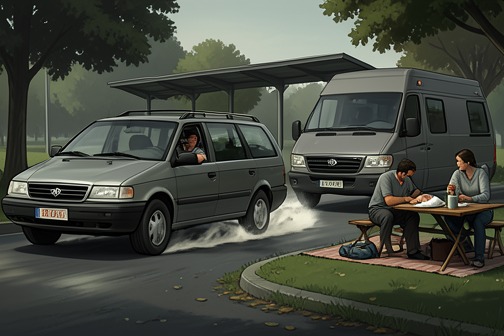
The rescue at an Ohio Turnpike rest area turns an ordinary roadside stop into a public confrontation between [Andy McGee](entity:character-recall-character-andy-mcgee-30b15980eceb) and the men holding Charlie. Andy’s recognition of a gray van leads him to his daughter, but the reunion is immediately threatened by guns. To get her back, he uses his mind-control ability after months of avoiding it, disabling both agents while civilians watch. The rescue restores their contact, but Andy knows the exertion will exact a price.
## A Suspicious Van at the Rest Area
Andy is driving through heavy traffic beneath a bright sun when the glare from passing cars aggravates his headache. He slows, leaves the passing lane, and turns off at a rest-area sign. The place is modest: slant parking, a water fountain, bathrooms, and several cars, including a gray van. The sight of that van makes him nearly certain he has found the people he is pursuing. He turns in sharply, the station wagon’s tires wailing as he heads toward it.
The everyday scene around the van heightens the danger by making it difficult to distinguish threat from routine. Two families are eating at picnic tables; one is packing away lunch, while a young couple sits with a sleeping baby. Two young women are on the grass beneath elm trees. Andy sees no Charlie and no men who look like Shop agents. He switches off the engine and gets out, his heartbeat so forceful he feels it in his eyes. An elderly couple moves slowly through the lot, too, carrying on with an ordinary errand as Andy watches the van.
Then Charlie emerges from the men’s room. Two men in sport coats flank her, and she wears her packsack. Her face is blank with shock. She looks from one man to the other, speaks to one, and gets no response; the second shrugs and speaks over her head to his partner. They turn toward the drinking fountain with her. From Andy’s perspective, the men are the ones who killed his wife and took his daughter. Fear gives way to fury as he slips behind the van, with the agents’ backs turned.
## The Reunion Becomes a Standoff
The men recognize Andy almost at once. Charlie recognizes him, too: the blankness leaves her face, replaced by gladness, and she cries, “Daddy!” Her attempt to run to him is cut short when one agent grabs her shoulder and hauls her back. He draws a gun and presses its barrel against her temple. His partner moves toward Andy with a hand inside his coat, reaching for his own weapon. The agents make the daughter Andy has come to rescue the leverage they need to keep him away.
The threat plays out in full view of the other travelers. One of the agents claims government business and tells a young man nearby to stay where he is; the man’s wife pulls him down by the arm. Andy answers the armed agent in a low, pleasant voice: “That gun is much too hot to hold.” The balding man looks puzzled, then screams and drops his revolver. It strikes the pavement and fires. As he dances in pain, white blisters rise on his palm. The sudden injury distracts the other agent, whose gun drifts away from Charlie’s head.
Andy uses that opening against the man still holding his daughter. “You’re blind,” he tells him, and pushes as hard as he can. Pain wrenches through Andy’s head; the agent screams, releases Charlie, and clutches his eyes. Andy calls her name. She runs to him and clings to his legs in a trembling embrace. The man in the information booth runs out to see what has happened, while the nearby families and picnic-goers witness pieces of the confrontation.
## The Cost of Getting Charlie Back
The rescue is not complete when Charlie reaches Andy. The balding agent, still clutching his burned hand, runs toward them. Andy tells him, “Go to sleep,” and pushes again. The man drops sprawling onto the pavement, striking his forehead. Meanwhile, the blinded agent staggers across the grass, reaches a litter barrel, and falls among discarded sandwich bags, cans, cigarette butts, and soda bottles. Andy has stopped both men, but the violence remains visible and uncontrolled in a public place.
His head hurts badly. The effort is especially costly because he had not used [the push](entity:expression-recall-expression-the-push-cb95e368f89e) since perhaps May, not even to prod a student whose grades were slipping. The months without using it have not made the power harmless: exertion brings immediate pain, and Andy expects that the charged-up state will be followed by a reckoning. He is glad it is summer, but he does not mistake relief from the immediate danger for freedom from consequence.
Charlie tells him how frightened she was and begins to cry. Her words return the scene to the father-daughter bond that had been interrupted by the agents’ guns: after shock, separation, and a violent struggle, she is again physically holding on to Andy. The rest-area rescue therefore shifts the immediate balance of power, not the wider danger surrounding them. Andy has recovered Charlie and shown that he can still use the push; the pain in his head makes clear that the means of protection carries its own cost.
Event 10
Rainbird kills Wanless
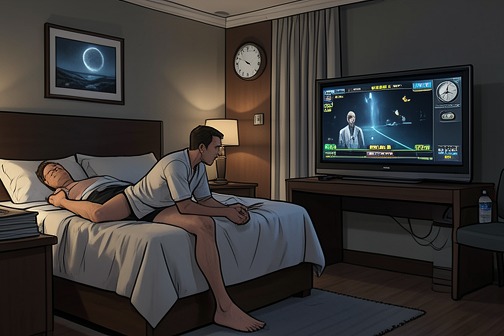
Rainbird kills [Dr. Joseph Wanless](entity:character-recall-character-dr-joseph-wanless-2c51151aac54) in the [Mayflower Hotel](entity:location-recall-location-mayflower-hotel-fa4366c16f10) after making him recount the history of the [Lot Six experiment](entity:event-recall-event-lot-six-experiment-58fb46f61516) and what he knows about [Charlene “Charlie” McGee](entity:character-recall-character-charlene-charlie-mc-7182fe824994). The episode turns an apparently controlled assassination into a disclosure: Wanless supplies information Rainbird lacks, while Rainbird’s final thoughts reveal that his interest in Charlie has become personal and possessive. The scene sets a deliberate waiting ritual against the abruptness of death, and places Rainbird’s professed peace beside the violence through which he pursues what he believes will complete him.
## Waiting for the appointed hour
Earlier that day, [Cap Hollister](entity:character-recall-character-cap-hollister-824388451c6f) had noticed how silent Rainbird was. In Washington, D.C., Rainbird waits alone in his room at the Mayflower Hotel, watching the television game The Crosswits. He is naked, sits with his bare feet neatly together, and waits for night to become late, then early. His plan is to go upstairs to Room 1217 when the hotel is quietest, kill Wanless, return to his room, and consider what the doctor had told him. Sleep is postponed until after sunrise. The sequence makes the murder seem, to Rainbird, less like an eruption than a task assigned its own precise hour.
The room’s stillness is reinforced by Rainbird’s refusal to eat, drink, or smoke as he waits. When the program ends and the news begins, he remains seated, clean and empty, anticipating the moment he has chosen. That composure belongs to the scene’s design: the long interval gives the killing an air of ritual, but does not soften its purpose. Rainbird is not waiting for Wanless to approach him or for circumstances to change. He has already decided what will happen and is waiting only for the time to act.
## Wanless’s account
Wanless wakes to find Rainbird beside his bed. Rainbird quiets him and says that he does not want his money. Instead, he offers Wanless a chance to live if he will give a full account of what he knows, suspects, and theorizes. The promised escape from Cap and the Shop is therefore inseparable from a threat: Wanless’s survival depends on providing the lecture Rainbird wants. The bargain gives the exchange its immediate stakes, even though Rainbird’s plan has already been framed as a killing.
Rainbird names Charlene McGee as the subject, and Wanless begins with the history of the [Lot Six](entity:object-recall-object-lot-six-cec36af974d6) tests and the climactic experiment. Much of the account is information Rainbird already has, but Wanless fills in gaps. He repeats the explanation he had given Cap earlier that day; this time, Rainbird listens closely, responding to parts of the talk and encouraging Wanless to continue. The distinction matters. Rainbird is not merely collecting a familiar story: he wants the details he has not yet obtained, and he gives Wanless room to supply them before the murder resumes.
Rainbird has asked for everything Wanless knows, suspects, and theorizes, not simply a settled account. The breadth of that demand shows how he treats uncertainty: as something to be pursued through another person’s knowledge, even at the point of death. The scene provides no complete transcript of Wanless’s lecture, but it establishes that it concerns Charlie, the experiment that preceded her, and parts of the history that had remained blank for Rainbird. Wanless’s information thus becomes the immediate object of the encounter, but not its final consequence.
## Death and recognition
After the lecture, [Rainbird kills Wanless](entity:event-recall-event-rainbird-wanless-88bc7c1633be). The narration marks the decisive instant as a moment Rainbird watches for: he studies the doctor’s eyes as Wanless dies. Their expression is not described as understanding or revelation. Instead, Rainbird reads it as puzzlement, and takes that look to mean that Wanless sees him. For a brief interval, the scene makes recognition—however uncertain and fleeting—Rainbird’s focus. Once the doctor is dead, Rainbird treats the body as a doll and waits ten minutes to be certain.
The episode’s contrast between a living gaze and the stillness that follows sharpens the scene’s emotional unease. Rainbird has arranged to hear a lecture and then silence its speaker; at the critical moment, however, what occupies him is not the value of the information but the possibility of being seen. The account does not explain what he believes Wanless recognizes, and Rainbird gains no conversation from the moment. It gives him only a short, private sense of contact before the doctor’s death is final.
Afterward, Rainbird kisses Wanless on both cheeks, returns him to the bed, covers him with a sheet, and leaves the room. These actions follow the killing without undoing it. The contrast between violence and a gesture resembling tenderness leaves the scene morally unsettled: Rainbird can perform a form of care toward the dead man while remaining responsible for his death. His composure persists, but it does not make the act benign.
## Charlie as the next purpose
Rainbird reflects on Wanless’s account of the girl who can supposedly start fires. He compares the possibility with something he once saw in Calcutta: a man putting knives into his body and drawing them out without wounds. The comparison does not prove Charlie’s ability to Rainbird; it makes the extraordinary seem possible enough to hold his attention. His immediate response is curiosity, expressed as a question of whether a child could possess such power.
By the time he falls asleep shortly after six in the morning, curiosity has become resolve. He thinks about Charlie repeatedly, wonders where she is and what she might be thinking or dreaming, and feels tender and protective toward her. The last turn is not toward Wanless’s promised bargain or the information just obtained, but toward Charlie: Rainbird decides that she will be his. That intention gives the murder a forward consequence. Wanless has supplied knowledge about the girl, and Rainbird leaves the encounter with a new objective centered on her.
The episode makes that tenderness disturbing rather than reassuring. Rainbird’s protective feeling appears beside his decision to kill Wanless and his certainty that Charlie will belong to him. His quiet attention to her imagined thoughts does not establish a relationship with her; it reveals an attachment formed at a distance and already framed as possession. The scene therefore connects the murder to the larger pursuit of Charlie while exposing the disquieting gap between Rainbird’s self-description as peaceful and the actions through which he pursues his aims.
Event 11
Victoria McGee’s death and Charlie’s capture by the Shop
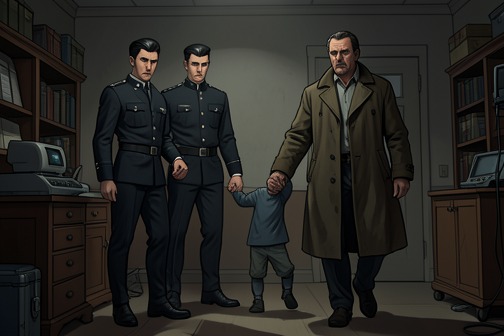
[Victoria McGee’s death and Charlie’s capture by the Shop](entity:event-recall-event-charlie-shop-a2d7a2ec4d8b) marked a crisis for the McGee family and, in retrospect, for the agency pursuing them. The capture was brief: [Andrew McGee](entity:character-recall-character-andrew-mcgee-b35e7fcb5d2c) took his daughter away from two trained Shop agents. The Shop’s failure to hold them became a conspicuous example of its mishandling of the case, helping turn the family’s ordeal into a threat to the agency’s standing.
## Background and Capture
The episode is recalled in connection with criticism of how the Shop had handled the McGees from the day [Victoria McGee](entity:character-recall-character-victoria-mcgee-e9582fdab143) was killed and Charlie was taken. The account stresses that the capture did not last: Andrew, a college instructor with no military service, succeeded in removing his daughter from the two agents assigned to hold them. The decisive reversal was therefore not simply that the Shop had taken Charlie, but that its trained personnel could not keep her in custody.
## Immediate Consequences
The agents suffered sharply different but lasting consequences. One was left mentally disturbed; the other remained in a coma for six months and was described as permanently unable to function effectively. After waking, even hearing the word associated with sleep could cause him to collapse for hours. These outcomes magnified the failure: the operation had neither secured Charlie nor left the agents able to resume their work normally.
## Institutional Fallout
The episode became part of a broader groundswell of criticism. The McGees’ repeated ability to stay ahead of the Shop made the organization look inept, while Andrew’s success against the two agents gave critics a particularly pointed example. The Manders farm incident later intensified the damage, but the agency’s handling of the family had already become a central vulnerability. In the Shop’s internal political climate, Victoria’s death and Charlie’s short-lived capture thus remained more than a failed operation: they helped turn a pursuit into a catalogue of perceived incompetence, with possible consequences reaching secret congressional hearings and the leadership’s future.
Event 12
The Manders farm fire and the McGees’ escape

[The Manders farm fire and the McGees’ escape](entity:event-recall-event-manders-fa3d1e8e8021) mark the point at which a pursuit the Shop expected to control became a public-relations and institutional danger. [Charlie McGee](entity:character-recall-character-charlie-mcgee-5d289d26ad76)’s recollections connect the farm’s flames with her growing, frightening awareness of her own power; the Shop’s later response reveals how thoroughly its agents failed to understand that power. [Andy McGee](entity:character-recall-character-andy-mcgee-30b15980eceb)’s recovery of his daughter from two trained agents turned the escape into a judgment on the agency as well as a desperate family reunion.
## Background and Escape
The incident followed the killing of [Victoria McGee](entity:character-recall-character-victoria-mcgee-e9582fdab143) and the Shop’s abduction of Charlie. The agency’s failure to hold her was especially damaging because Andy was a college instructor with no military service, yet he took his daughter away from two trained Shop agents. One agent was left mentally impaired; the other fell into a coma lasting six months and was never again able to function normally. The contrast between the agents’ training and the outcome made the escape difficult for the Shop to dismiss as an ordinary operational setback.
The McGees’ success also extended beyond the farm. They had managed to stay ahead of the Shop for a prolonged period, making the escape part of a larger record of pursuit failures. For the institution, the problem was not only that Charlie and Andy had got away, but that the outcome invited a blunt comparison: a father acting to recover his child had overcome the agency’s trained personnel.
## Charlie’s Memory of the Fire
Charlie’s later recollection gives the fire a private meaning distinct from the Shop’s institutional accounting. At night she saw again the men on the porch crowned with flame, the cars exploding, the chickens catching fire, and the teddy bear she remembered as something she had herself set alight. These images gathered the farm’s violence into a sequence she could not treat as a detached success. Her memories joined the danger to her own actions and to the knowledge that her power had grown more compelling the more she used it.
That attraction troubled her. Charlie understood the capacity as something that became harder to stop through repeated use, and she regarded the harm associated with it as evidence against herself. Her recollection therefore carries two opposing consequences of the incident: she had been able to use a power that helped make escape possible, but the experience deepened her fear and guilt about what using it meant. The fire was not simply a weapon in the contest with the Shop; it became part of the moral burden she carried afterward.
## The Shop’s Failure to Recognize the Cause
For [Cap Hollister](entity:character-recall-character-cap-hollister-824388451c6f), the farm incident had nearly brought the agency down. He understood that criticism was gathering around the way the McGees had been handled, from Victoria’s death and Charlie’s brief capture through Andy’s rescue and the consequences for the agents. The fire itself became the most dangerous part of that record because it threatened the Shop’s credibility beyond its own personnel. Cap anticipated whispering, memoranda, and perhaps testimony at secret congressional hearings, while the agency’s other business was being eclipsed by the McGee case.
Cap’s account also identifies a second failure beneath the tactical one: people inside the Shop would not accept that Charlie was pyrokinetic, a firestarter. Reports attributed the Manders farm fire to explanations such as gasoline, a broken kerosene lamp, or spontaneous combustion. Some reports came from people who had been present. In Cap’s view, this was not a lack of evidence so much as a refusal to acknowledge what the evidence implied. The institution could not respond effectively to Charlie while continuing to describe her ability as something else.
## Aftermath and Significance
The escape left the Shop facing both operational embarrassment and a threat to Cap’s position. He believed the criticism had begun an undermining process that could not be stopped indefinitely. He had used years’ worth of favors to remain in his role through the winter, and he weighed the prospect of holding on for months against the possibility that a more aggressive defense might tear the agency apart. He did not want to destroy an organization in which he had invested half his life, but he was prepared to see the matter through.
The farm fire thus joins Charlie’s private reckoning to the Shop’s institutional crisis. To Charlie, the recalled flames signified power, damage, and a frightening loss of restraint. To Cap, the same incident exposed the agency’s failure to protect its reputation and, more fundamentally, its refusal to understand the threat it faced. The McGees’ escape was a concrete reversal of control; the Shop’s effort to explain away the fire ensured that the reversal continued to matter after they had left.
Event 13
Andy McGee’s letters are intercepted
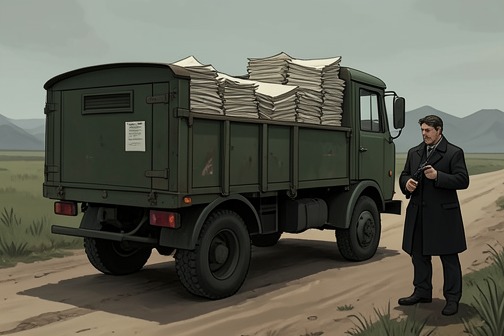
[Andy McGee](entity:character-recall-character-andy-mcgee-30b15980eceb)’s six letters are intercepted when two men seize them from postal carrier Robert Everett on a New Hampshire road before the mail can reach the sorting office. The episode turns an ordinary rural mail route into a point of surveillance and coercion: the letters are taken, Everett is threatened into silence, and the postal system’s routine becomes a means of blocking Andy’s correspondence.
## The Mail Route and Its Interruption
There was no post office in [Bradford, New Hampshire](entity:location-recall-location-bradford-new-hampshi-03c6d532d906), or in Tashmore, Vermont; Bradford’s mail was collected and processed through the nearby town of Teller. At 1:15 p.m. on [March 10](entity:time-recall-time-march-10-d3d63a712b42), a small postal truck arrived at Bradford’s general store. Its mail included six letters from Andy McGee and a postcard from Miss Shirley Devine, a fifty-year-old woman writing to her sister in Tampa. Across the lake, Andy was napping while [Charlie McGee](entity:character-recall-character-charlie-mcgee-5d289d26ad76) built a snowman. The parallel between this quiet domestic scene and the approaching interception makes the letters’ vulnerability part of the scene’s tension: their journey proceeds beyond the writers’ and recipients’ immediate view.
The carrier, Robert Everett, placed the mail in his truck and continued to Williams, another small town in Teller’s postal area. After turning around on Williams’s Main Street, he headed back toward Teller, where the mail was due to be sorted at about three o’clock. Five miles outside Williams, a beige Chevrolet Caprice blocked both narrow lanes. Everett stopped beside a snowbank and got out to ask whether the occupants needed help. The apparent roadside obstruction thus interrupts not only his route but the normal chain by which the letters would be carried, sorted, and sent onward.
## The Seizure
Two men approached Everett from the car, showed credentials, and explained what they wanted. Everett protested when they demanded the out-of-town mail, and later warned them that robbing the [U.S. Postal Service](entity:organization-recall-organization-f693d6324468) carried a serious penalty. One of the men, [Orville Jamieson](entity:character-recall-character-orville-jamieson-3e2efdcc3169), also known as OJ, was willing to handle the encounter so long as his orders did not bring him within three miles of Charlie McGee. That detail places the interception within the wider pursuit of Charlie while keeping Jamieson’s own role carefully bounded: he carries out the assignment at a distance from the girl he fears.
The other man spoke for the pair and pressed Everett to hand over the bag. Everett complied. The men opened it beside the road and sorted through its contents. Their handling of the mail was impersonal, while Everett experienced the act as a violation of a basic boundary. He felt anger and sick shame, comparing the intrusion to a stranger barging into his home and undressing his wife. His reaction registers the seizure as more than a theft of property: the men have commandeered a public service and forced its worker to witness the breach.
The search singled out [Andy’s six letters](entity:object-recall-object-andy-1c047677dc33). The second man handed them to Jamieson, who put them in his pocket. The letters were all addressed in the same careful handwriting, and Everett recognized them as mail taken from the Bradford general store’s collection box. The men left the opened mailbag on the road and drove away. The postcard and the rest of the collected mail are not identified as targets; the evidence establishes that the six letters were the specific items the men removed.
## Threats and Aftermath
Everett called after the men, insisting that they would answer for what they had done. Jamieson did not turn back. Instead, he warned Everett to speak to his postmaster before speaking to anyone else, and tied the threat to Everett’s Postal Service pension. Everett picked up the mailbag and returned it to his truck, but the routine appearance of the bag could not undo the interception or restore the missing letters.
He drove back to Teller as quickly as the slushy roads allowed and followed Jamieson’s instruction by reporting to his postmaster, Bill Cobham. Everett remained in Cobham’s office for more than an hour; at times, their voices could be heard through the door, raised and angry. Cobham, who was fifty-six and had worked for the Postal Service for thirty-five years, was badly frightened. He communicated that fear to Everett, who never spoke of the robbery again, not even to his wife. Yet the silence did not erase the event: Everett never forgot it, and retained anger, shame, and disillusionment.
## Narrative Significance
The interception is presented through the small, concrete steps of mail delivery rather than through the contents of Andy’s letters. The narrative specifies the collection point, the carrier’s route, the planned sorting time, and the roadside location, then shows the letters removed before their ordinary passage can be completed. Their words remain undisclosed; what becomes visible is the force used to prevent their delivery.
That contrast gives the episode its significance. Andy’s correspondence exists within a mundane system of bags, trucks, postal offices, and scheduled sorting, but the men can seize it by blocking a road and threatening the worker who carries it. Everett’s long silence shows the effect of that coercion beyond the moment itself. The letters disappear from the route, while the fear and indignity of their interception remain with the person forced to surrender them.
Event 14
Rainbird makes a deal with Cap Hollister
[Rainbird makes a deal with Cap Hollister](entity:event-recall-event-rainbird-cap-hollister-03e57b103c70) by turning the Shop’s plan to bring [Andy McGee](entity:character-recall-character-andy-mcgee-30b15980eceb) and [Charlie McGee](entity:character-recall-character-charlie-mcgee-5d289d26ad76) to Longmont into an agreement that gives him access to Charlie and promises a later cover-up. Cap accepts the bargain despite his authority and suspicion, because Rainbird presents himself as the one person able both to deliver the fugitives and to deal with the girl’s power. The agreement makes their cooperation possible, but rests on competing aims, concealed knowledge, and Rainbird’s claim over Charlie after the tests.
## The Offer and Its Leverage
The negotiation begins when Cap tells Rainbird he has a job for him. Rainbird immediately asks whether it is the one he wants; Cap, surprised but considering, answers that he thinks it is. He then outlines a plan to bring Andy and Charlie to Longmont. The account stresses how quickly he gives it: the plan does not take long to explain. That brevity makes the exchange feel less like a new proposal being built from scratch than a convergence between Cap’s operational need and Rainbird’s unstated purpose.
Cap asks whether Rainbird can use the gun. Rainbird says he can use any gun, approves the plan, and then makes clear that he will be the one to fire it, but only on one condition. Cap reacts by standing, planting his hands on a desk littered with pieces of the McGee file, and leaning toward Rainbird. He insists that Rainbird does not set conditions with him. The physical arrangement gives Cap the posture of command; the desk and its scattered file materials also show that the McGees are already the subject of an institutional operation. Yet Rainbird’s condition reverses the apparent balance: Cap may control the office and the plan, but he needs Rainbird’s particular contribution.
Rainbird justifies that leverage by describing the time he spent in Arizona walking, observing, reading, and thinking. He says Cap’s situation looks bitter to him, and claims he may be the only person who can reliably bring Andy and Charlie in—and the only one who can do something with Charlie once she arrives. He contrasts his own judgment with Cap’s report and the drugs available to the Shop, naming Thorazine and [Orasin](entity:object-recall-object-orasin-984de2eb1726) and warning that the girl may present dangers those drugs cannot manage. Cap hears in Rainbird’s words an echo of Wanless and is overcome by fear and fury, to the point that he cannot speak. Rainbird’s authority in the negotiation thus comes not only from his willingness to act, but from his insistence that the institution misunderstands what it is trying to contain.
## The Price of Cooperation
Rainbird states the central condition plainly: after the Shop has finished its tests, Cap must give Charlie to him for disposal. Cap calls him mad. Rainbird accepts the description, then turns it back on Cap, arguing that Cap is also mad to plan to control a force beyond his comprehension. His language elevates Charlie from the object of a file, a drug regimen, and a testing program into a power that neither man can treat as ordinary. It also exposes the sharp divide between their purposes: Cap is arranging an institutional procedure, while Rainbird demands personal possession of the outcome.
When Cap asks what Rainbird wants in return, Rainbird denies that he intends to destroy Cap, the Shop, or U.S. domestic intelligence, and says he is no idealist. He says he wants the girl and repeats that the drugs in Dr. Hockstetter’s cabinet may not accomplish what he can. The answer does not soften the demand; it frames it as a bargain rather than a political campaign. Rainbird proposes that, once the McGee affair is over, the U.S. Bureau for Geological Understudies will cease to exist. Cap’s computer chief, Noftzieger, can alter the codings, and Cap will fly with Rainbird to Arizona on a public airline. They will dine at Rainbird’s favorite restaurant in [Flagstaff, Arizona](entity:location-recall-location-flagstaff-arizona-385dab3a21c4), then burn papers, tapes, and films in a fire behind Rainbird’s house. Rainbird even offers to show Cap his shoe collection. The domestic and almost convivial details sit beside the planned destruction of records, making the promised ending sound both intimate and calculated.
## Cap Accepts; Rainbird Defines His Role
Rainbird reinforces the bargain by telling Cap that the two of them know where hundreds of bodies are buried, literally and figuratively, and suggests they can keep Cap in office much longer. Cap thinks it over and feels old, tired, and at a complete loss. He finally says Rainbird has made himself a deal. His acceptance is not presented as an enthusiastic endorsement: the language emphasizes weariness and diminished command. The agreement is achieved because Rainbird has joined a practical service to a personal demand and a future threat of exposure, leaving Cap with reasons to cooperate even as he resents Rainbird’s terms.
Rainbird then specifies how he will operate inside the Shop’s arrangement. He will be Charlie’s orderly, a figure with no apparent importance in the established order. That low-status position matters because it can make him familiar to the girl without making his real role visible. He also says Charlie must never know he was the person who fired the rifle, calling that knowledge dangerous. The plan therefore depends on a division between what Cap and Rainbird know and what Charlie is allowed to know: Rainbird will help bring her into the facility, approach her from an apparently ordinary position, and keep his part in the shooting concealed.
## The Photograph and the Bargain’s Meaning
When Cap asks why Rainbird has gone to such lengths, Rainbird answers with a comparison to officials who protect themselves in the same business. He takes a photograph from Cap’s desk: Charlie laughing as she slides down a crusted snow slope on a flattened cardboard box. The image places an ordinary childhood moment amid the McGee file components and the machinery of capture. Rainbird’s explanation that he began protecting himself before Charlene McGee was born complicates the immediate claim that he wants the girl: his self-preservation predates her, while his bargain now makes her central to his future arrangement.
The deal’s decisive shift is that Rainbird stops being merely the person Cap asks to carry out a plan and becomes a partner who dictates the conditions of success. Cap retains the authority to run the tests, but Rainbird secures the promised disposal of Charlie afterward, a concealed role as her orderly, and a later destruction of incriminating records. The bargain binds cooperation to secrecy: Cap needs Rainbird to bring the McGees in, while Rainbird needs Cap’s institution to complete its tests before handing Charlie over. Its apparent resolution is therefore also a trap of mutual dependence, with Charlie’s fate negotiated between the two men while she remains unaware of the shooter’s identity and of Rainbird’s condition.
Event 15
The McGees are captured at Granther’s camp
The capture at Granther’s camp turns the McGees’ attempted departure into an ambush: [John Rainbird](entity:character-recall-character-john-rainbird-7dcd776488fe)’s carefully limited operation ends with Charlie incapacitated and Andy shot while trying to protect her.
## Preparation and Plan
An even dozen agents took positions around Granther’s cabin the night before the operation. Rainbird had selected them himself and kept nearly all of them unarmed, seeking to prevent panic after the earlier events in New York and to reduce the chance of further deaths. He reserved a rifle for himself and a .22 pistol for [Don Jules](entity:character-recall-character-don-jules-06e8c98447ac), the agent he had chosen to work with repeatedly because he was quick, practical, and unobtrusive at critical moments. At the briefing, Rainbird assigned himself and Jules the central roles: if either Andy or Charlie came out alone, Rainbird would take that person and Jules would move them out of sight; if they emerged together, Rainbird would take Charlie and Jules would take Andy. The remaining agents were positioned as backup and witnesses, not as the main participants.
## The Ambush
As Andy and Charlie stepped out of Granther’s cabin carrying their suitcases, Rainbird was positioned halfway up a spruce about 150 yards away. Lineman’s spikes and a belt held him against the trunk while he aimed through the rifle’s telescopic sight. Concentration temporarily restored the depth perception he had lost after the injury to his other eye. His weapon was designed not to fire an ordinary bullet: a specially modified rifle launched a dart tipped with an ampul of [Orasin](entity:object-recall-object-orasin-984de2eb1726). The shot therefore carried risks of its own, though the nearly windless day favored it.
Rainbird saw that Charlie had come out beside her father, and the suitcases confirmed that they were preparing to leave. Her parka was open at the throat. He aimed there and fired; the rifle made a muted sound rather than an explosion. At the edge of the cabin steps, Charlie stopped. Andy heard no shot, but immediately sensed that something had changed. He saw the dart lodged at her throat, caught her as she fell, and called out for whoever had attacked them to appear.
Jules came around the porch holding his .22 pistol. Andy, still holding Charlie, demanded to know who had shot his daughter. As he tried to get her inside, Jules shot him from behind. Andy collapsed over Charlie, and Jules signaled for the other agents to come out of the woods. Rainbird approached the cabin through the late-March snow; Jules treated the operation as unexpectedly straightforward. The carefully arranged seizure had become a violent reversal of the McGees’ attempted departure: Charlie was incapacitated, and Andy was no longer able to protect her.
## Outcome and Significance
The operation’s outcome exposes the gap between Rainbird’s effort to control every contingency and the human consequences of the plan. The agents had been arranged to seize the father and daughter with minimal confusion, but the scene ends with Charlie incapacitated and Andy unable to protect her. Jules’s assessment that the job was straightforward reduces the capture to its execution; against that cold appraisal, the failed departure marks the abrupt loss of the McGees’ freedom and of their ability to remain together on their own terms.
## The Reversal of the Departure
The scene’s decisive reversal is built around an ordinary act of leaving: [Andy McGee](entity:character-recall-character-andy-mcgee-30b15980eceb) and [Charlie McGee](entity:character-recall-character-charlie-mcgee-5d289d26ad76) step out carrying suitcases, and the ambush converts that preparation for escape into the moment they are separated from control of their own fate. Rainbird had designed the operation around contingencies, but its orderliness offers no protection once the attack begins. The contrast between that deliberate planning and Don Jules’s matter-of-fact assessment afterward makes the capture feel less like a cleanly managed operation than a sudden collapse of the McGees’ independence.
Event 16
Charlie confides in Rainbird during the blackout
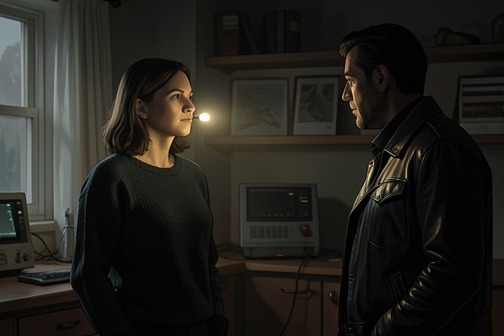
[Charlie confides in Rainbird during the blackout](entity:event-recall-event-charlie-rainbird-45fcd30153fa) at the Shop, an encounter that converts his carefully cultivated presence into a rare opening for her to speak freely. In the dark, she tells him what she has endured and lets herself feel understood by someone she believes shares her pain. The intimacy is real for Charlie, but its conditions are engineered: Rainbird uses his own account of suffering to earn her trust, while privately treating that trust as part of his plan to control her.
## A Familiar Voice in the Dark
Before the power fails, Charlie has increasingly watched and listened to Rainbird while he works nearby. He talks about ordinary matters—his bowling scores, his dog, and a broken television whose replacement parts cost too much. His questions do not feel like interrogations, and he does not insist on answers. To Charlie, his low, wandering voice offers a secret passage back to the outside world, distinct from [Patrick Hockstetter](entity:character-recall-character-patrick-hockstetter-9db3edbc3e14)’s sharp, probing manner. The familiarity has been building through small, unthreatening exchanges rather than a single dramatic appeal.
The blackout interrupts that routine. Charlie is standing at the bathroom door with one hand on the knob when the lights go out; the vacuum cleaner’s whine dies away. She suspects a trick, and when the lights return she stays inside. Rainbird comes to the door to ask whether they went out, then the power fails again. His voice changes: he sounds frightened, asks what happened, and cries that he has to get out and needs them to let him out. Charlie’s own fear of the dark begins to recede beneath her response to his. She opens the door and reaches out cautiously, still wary of tripping over the vacuum cleaner, but when she hears him crying she starts to feel her way toward him.
## A Story That Opens a Door
Rainbird tells Charlie that interrogators had pressed him for information about troop movements, supplies, and light-infantry deployment. He says he was only a grunt, that they did not believe him, and that they withheld morphine and proper medical treatment until he answered. He describes being left in a hole in the ground, in a small earthen room with roots in its walls and only a glimpse of sunlight far above. According to his account, his captors warned that his injured face would become infected and that he would die, then covered the boards over the hole again when he begged to be released. He compares the darkness to being buried alive.
The account is presented as Rainbird’s disclosure, not as verified history. The narration makes clear that he is laying a deliberate emotional trap: he registers Charlie’s sympathy as another notch in a process he has been patiently advancing. His story nevertheless finds its mark. Charlie recognizes in its pattern of interrogation, threatened pain, and confinement something close to her own ordeal at the Shop. When he speaks of being disbelieved and treated like an animal, she thinks of Hockstetter and the steel tray of curly wood shavings he used to pressure her into demonstrating her power. She cries for Rainbird, but also for herself, her father, and her mother, and for the pain and rage she has held back over the previous five months.
## The Confidence and Its Cost
Charlie answers Rainbird’s account with solidarity rather than suspicion. When he calls them both trapped, she tells him that being together matters more than whether the lights return soon. He asks her not to tell anyone what he has said, explaining that he needs the job and fears being fired. Charlie promises to keep the secret. That promise gives them a private bond, and Rainbird recognizes that the confidence has made her more accessible to him.
The blackout also loosens what Charlie has kept inside. She later cannot recall the conversation’s details, only its high points: her intense loneliness for her father and her terror that the Shop will find a way to make her use her pyrokinetic ability again. Rainbird asks why she has been locked up; she begins talking to distract him from the dark, then finds that the words are coming faster than she can manage. She cries, and he holds her clumsily. His apparent understanding resembles the comfort she associates with her father, helping explain why she gives him information she had meant to withhold.
By the time they reach the refrigerator, Charlie has told him nearly everything, including what happened at the Manders farm. She worries that the Shop will punish him if it discovers how much he knows, and the thought that he might be in danger moves her. What matters to her is not simply that Rainbird asks questions, but that he seems to receive her answers without the cross-examination and mistrust she expects. The exchange reverses the usual imbalance of her confinement: for a time, she is not merely being examined but choosing to disclose, and to someone she believes can understand.
## Affection, Strategy, and Reversal
The connection is not reducible to a simple performance. Charlie embraces Rainbird and kisses him; he returns the embrace, and the narration describes his affection for her as real in his own way. Yet tenderness coexists with a lethal intention. Rainbird thinks of killing Charlie by putting his hands around her neck and imagines that he might then follow her into death. He hopes to read a particular signal in her eyes before sending her to her death. His fondness does not cancel the plan; it makes the relation more disturbing, because the person receiving her confidence is simultaneously measuring her for that final act.
The scene’s emotional turn comes after the comfort has taken hold. Charlie dozes beside Rainbird, and his abrupt suggestion that she should set the Shop’s fires if she can jolts her awake. Her shock exposes the limit of the apparent refuge he has created: the conversation has not taken her outside the institution or removed its demands. Rainbird has secured her confidence, and now he directs that closeness toward the very power she fears using. The blackout therefore produces both a temporary intimacy and a new avenue of pressure. Charlie’s confession gives Rainbird access to her grief and vulnerabilities; his final provocation begins to convert that access into leverage.
Event 17
Andy regains his mind-control ability and overcomes his dependence on Thorazine
[Andy McGee](entity:character-recall-character-andy-mcgee-30b15980eceb)’s recovery of his mental-control ability and release from his dependence on Thorazine begin in the dark of his confinement at the Shop. With [Charlie McGee](entity:character-recall-character-charlie-mcgee-5d289d26ad76) separated from him and the doors locked by the power failure, an uncertain intuition that Charlie is in danger becomes the first sign that his lost ability may not be gone. A severe headache then leads him to recognize that he has pushed himself while asleep; when he realizes the pill no longer exerts its usual pull, the episode changes helplessness into a tentative prospect of action.
## Confinement and the First Warning
During the power failure, Andy remains behind a locked door. He does not know that the failure has automatically locked the doors or that no one has come to get him out. For a time he is overwhelmed by panic and imagines the place burning, although the storm outside has cleared and late-afternoon sunlight is already fading. His fear, the dark, and his separation from Charlie define the crisis in which his recovery first becomes perceptible.
Charlie suddenly comes into Andy’s mind with unusual clarity. He takes this as a hunch that she is in danger, and its force matters because he has had no such intuition since the last day at [Tashmore Pond](entity:location-recall-location-tashmore-pond-b55700da08e3). He remembers that he did not even have a clearer hunch on the day [Victoria McGee](entity:character-recall-character-victoria-mcgee-e9582fdab143) was killed. The premonition does not establish what is happening to Charlie, but it restores a form of awareness that Andy believed he had lost along with his ability.
That connection remains uncertain. Andy wonders whether the return of the hunch means [the push](entity:expression-recall-expression-the-push-cb95e368f89e) is still present, hidden rather than gone. He cannot test the thought: he is alone, confined, and has no one on whom to try the ability. He initially treats its return as no more attainable than a wish. At the same time, some deeper part of him seems to resist his conscious inclination to give in and cooperate with whatever is demanded of him. The possibility of resistance begins as a doubt, not a plan.
## Recognition in the Dark
Andy wakes in nearly total darkness, unsure at first when sleep ended. He recalls reading about monkeys kept in environments that muffled their senses and understands why such deprivation could become unbearable. In the absence of ordinary sensory information, his headache is the one definite signal he can interpret. When he sits up, the pain is intense, then gradually recedes enough for him to think clearly.
At first he considers an ordinary explanation, such as having slept awkwardly. He then recognizes the headache as one associated with exerting the push. It is more severe than the headaches following the small nudges he had given businessmen and [Mrs. Gurney](entity:character-recall-character-mrs-gurney-3d7f504133b6), but not as severe as the one after using the ability on people at a turnpike rest stop. This comparison gives the pain meaning: it suggests not merely that Andy is unwell, but that he has performed an act of mental exertion.
He checks his face by touch and finds no numbness; when he smiles, both corners of his mouth rise as usual. Without light, he cannot inspect his eyes in a mirror for the sign he associates with pushing. The physical check therefore offers limited reassurance, while the headache supplies stronger evidence. He reaches the startling conclusion that he has pushed himself, apparently while asleep. The event is a recovery, but not a controlled or fully understood one: Andy cannot say why the ability disappeared, why it returned, or precisely what brought it back.
## Thorazine and a Changed Sense of Self
Andy’s next realization concerns the pill he expects to need. The thought of taking Thorazine no longer produces a craving. Instead, the idea feels emotionally neutral, and apart from the headache he feels relatively well. He compares the pain with the worse headache he experienced at the [Albany](entity:location-recall-location-albany-9564c6bfd1ac) airport, reinforcing that the present discomfort is not, by itself, evidence that the drug is necessary. His dependence has not been overcome through a deliberate treatment plan; in this episode, he discovers that its familiar urgency has vanished.
The loss of craving and the return of the push arrive together, changing how Andy understands both his ability and his vulnerability. For the first time, he is frightened by his own talent and recognizes how little he understands about its limits. He considers several possible causes: fear in the dark, the sudden conviction that Charlie was threatened, self-reproach at having forgotten her, or the blow to his head when he fell. These are possibilities he tests in thought, not established explanations. What he knows is narrower and more consequential: he has pushed himself, and the thought of Thorazine no longer compels him.
Andy asks himself whether he is free of the drug and whether that state can last. The episode answers the first question in the immediate moment, not the second. That distinction keeps the recovery provisional. He is no longer ruled by the craving he expected, but he does not yet know whether he can remain free of it or what the returned ability will demand of him.
## From Discovery to a Possible Plan
The change gives Andy a new way to imagine helping Charlie. He wonders whether the same ability could be used on another person while he is awake, particularly [Herman Pynchot](entity:character-recall-character-herman-pynchot-d45e35b7dd93), who might know what has happened to Charlie. He also considers whether Pynchot could be made to reveal that information and whether Charlie could be brought out. These are questions and possibilities, not actions already carried out; the evidence does not show Andy testing the push on Pynchot during this episode.
For the first time in months, Andy feels hopeful and capable of action. He begins working through fragments of a plan, accepting some possibilities and rejecting others. One condition becomes central: the Shop must continue to believe both that he is still drugged and that he cannot use his mental-control ability. His recovery therefore creates an immediate need for concealment. What might give him a chance against the people holding Charlie must remain hidden from them.
The lights return while Andy is still considering what to do. The television resumes, and he remembers that the facility’s electric eyes may be watching again or soon will be. The blackout has offered a brief interval of isolation in which he could recognize the change, but the return of power also restores the possibility of observation. The episode ends not with escape or reunion, but with Andy newly alert to his capacity, his daughter’s possible danger, and the need to keep both his recovery and his intentions concealed.
Event 18
Charlie agrees to cooperate with the Shop’s fire tests
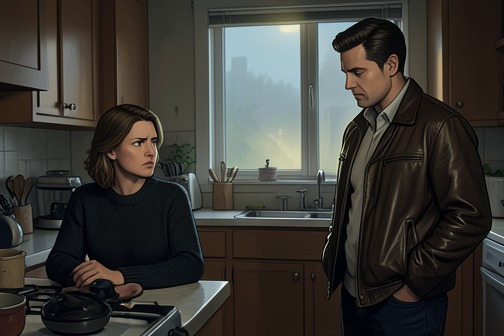
[Charlie McGee](entity:character-recall-character-charlie-mcgee-5d289d26ad76)’s agreement to undergo the Shop’s fire tests reverses her firm refusal, but it is not an uncomplicated surrender. Still shaken by the Manders farm, she consents only after [John Rainbird](entity:character-recall-character-john-rainbird-7dcd776488fe) has made himself a trusted friend, argued that testing could help her gain control, and urged her to insist that the Shop proceed on her terms. Her decision is both an attempt to act for herself and a choice made within a relationship Rainbird has carefully shaped.
## From Refusal to Negotiation
Rainbird raises the subject after nearly ten days without discussing fires since the blackout. Their conversations take place quietly in the kitchen, which he says has no listening “bugs.” He now calls her Charlie rather than “kid,” at her request: a small sign of the closeness she wants from him, and of the trust he has secured. Charlie has reason to feel indebted. On three occasions he risked his job to pass notes to her father, and he has brought her news that her father is well, relieved to know she is safe, and cooperating with the tests.
That trust does not make the proposal easy to hear. Since the Manders farm, even thinking about making fires leaves Charlie cold, tense, and trembling, a reaction Hockstetter’s reports classify as a mild phobia. She first repeats her absolute refusal. Although she wishes Rainbird would drop the subject, she listens because he has done so much for her, because she does not want to hurt him, and because she needs a friend. The pressure operates through affection as well as argument: refusing the tests now also risks disappointing the person she has come to depend on.
## Rainbird’s Case for Testing
Rainbird presents the tests as a way for Charlie to acquire control, not simply as something the Shop wants from her. He suggests the staff know how the farm fire got out of control and would therefore take precautions; he does not expect them to test her in a room full of paper and oily rags. He also argues that control, once learned through repeated practice, could end her fear of losing control. To make that idea familiar, he compares it to learning to tie shoes or form letters in kindergarten.
The analogy has an edge of concealment. Rainbird returns to a metaphor associated with Wanless and likens control to toilet training, telling Charlie that once she has mastered it she will be safe from the same failure. Hockstetter has noted that the comparison is not invariably true, but Charlie does not know that. Rainbird is offering reassurance that supports his case, not a complete account of the limits of what practice can guarantee.
Charlie’s answer exposes what reassurance cannot settle. A few days after their first conversation, she says the tests would never end: if she began, the Shop would want larger fires, then bigger ones, then bonfires. Her fear is not only that she might lose control in a particular room; it is that a first agreement would give the institution reason to keep demanding more. Rainbird admires her intuition and recognizes that she understands something of the Shop’s plans. The narrative also reveals his private caution: if she were to discover that he was not the friend he appeared to be, he believes she could become dangerous to him.
## The Decision and Its Conditions
Three days after Charlie voices her fear of escalating demands, she tells Rainbird she has decided to let the Shop conduct its tests. Her face is thin, pinched, and pale; the decision has not erased the distress that accompanied the subject from the outset. She says she will be careful and will make the staff be careful too if they do not know how. Rainbird does not simply celebrate the answer. He asks whether she has thought it through and whether she is doing it for herself, giving her space to reaffirm the choice rather than presenting it as his decision for her.
Charlie answers that she is doing it “For me. And for my father.” That qualification matters. She has been troubled by learning that her father is cooperating, but is beginning to understand that what is best for her may not be what is best for him. Her agreement joins her own wish to act with her concern for her father, without making her fear of the Shop disappear. Rainbird tells her to make the staff play by her rules, to avoid showing weakness, and to be tough. His advice acknowledges the imbalance between the child being tested and the institution controlling the tests, even as it encourages her to enter the process.
Charlie plans to tell Hockstetter the next day that she will cooperate “a little,” and to state what she wants. Rainbird advises her not to ask for too much at first, comparing the tactic to showing a midway carny some flash before taking the cash. The comparison turns negotiation into a performance: Charlie is to demonstrate enough to secure a return, while holding something back. The account marks the turn with the image of a fish swallowing a lure. Her consent is real, but Rainbird has helped bait the decision through friendship, selective reassurance, and coaching in how to bargain.
## Significance
The event changes Charlie’s position from outright refusal to conditional participation. She has not abandoned her fear or accepted unlimited testing; instead, she intends to set terms and make the Shop take care. Her insistence that she act for herself gives the decision a measure of agency, while her concern for her father shows how family loyalty also shapes it.
At the same time, the scene makes the source of that agency uncertain. Rainbird has become someone Charlie trusts partly because he has carried messages and news about her father, yet he is steering her toward the tests and privately weighs the danger of her seeing through him. The agreement therefore advances the Shop’s access to Charlie not through a simple command, but through an apparent friendship that makes cooperation feel chosen. The contrast between Charlie’s pale, anxious resolve and Rainbird’s satisfaction gives the turning point its tension: her consent opens the door, while her fear of what the Shop will demand remains unresolved.
Event 19
Capture of Andy and Charlie
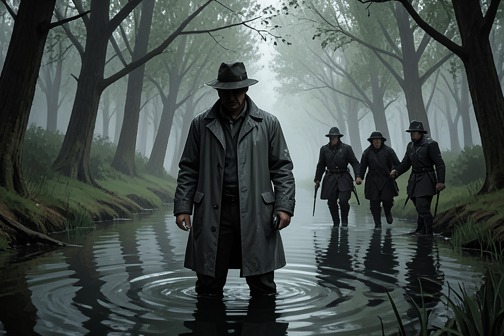
The capture of [Andy McGee](entity:character-recall-character-andy-mcgee-30b15980eceb) and [Charlie McGee](entity:character-recall-character-charlie-mcgee-5d289d26ad76) at [Tashmore Pond](entity:location-recall-location-tashmore-pond-b55700da08e3) was the Shop operation that placed them in its custody and gave [John Rainbird](entity:character-recall-character-john-rainbird-7dcd776488fe) control over the next stage of Charlie’s testing. Andy learns who led it only later, when [Cap Hollister](entity:character-recall-character-cap-hollister-824388451c6f) explains Rainbird’s role and the personal danger behind his apparent efforts to win Charlie’s cooperation.
## The Operation and Its Leader
Cap tells Andy that Rainbird was in charge of the Shop operation that finally caught him and Charlie at Tashmore Pond. The account establishes the capture as a deliberate Shop action rather than an accidental encounter, though it does not describe the operation’s tactics or the precise moment they were taken.
Rainbird’s authority over the operation carries added weight when Cap identifies him as a Shop hitter who was horribly wounded in Vietnam and lost an eye. Andy recognizes the figure as the one-eyed pirate from his dream, joining an earlier image to the man now directing events around Charlie.
## From Capture to Testing
The capture leads into Rainbird’s campaign to get Charlie to light fires under test conditions. Cap explains that, during a blackout, Rainbird took an inspired first step toward that goal. At the time of the conversation, Charlie has been allowed to take walks outside and ride a horse as part of a carrot-and-stick approach that Rainbird expects to sustain her cooperation for the next couple of weeks. The gradual privileges show how the Shop’s control continues after the capture, with ordinary freedoms turned into inducements.
## What Andy Learns
Cap also reveals the darker limit of Rainbird’s apparent patience: Rainbird’s personal interest is Charlie’s life when the deception surrounding the tests has run its course. The disclosure recasts his efforts to gain her trust as a strategy with a lethal endpoint, not simply a means of securing experimental results.
Andy listens in growing fury and horror, trembling as Cap finishes. His response gathers the event’s consequence into a personal realization: the capture has placed Charlie within Rainbird’s reach, and the man managing her cooperation is also waiting for the deception to end.
Event 20
Shop blackout
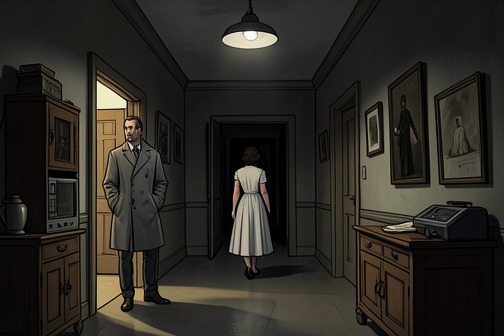
The [Shop blackout](entity:event-recall-event-shop-96b80422f5e7) matters less as a documented technical failure than as a breach in the Shop’s control of [Charlie McGee](entity:character-recall-character-charlie-mcgee-5d289d26ad76): [John Rainbird](entity:character-recall-character-john-rainbird-7dcd776488fe) turned the darkness into an opening for personal trust, while Charlie later feared that even the outage itself might have been part of the trap.
## The Blackout as a Turning Point
The outage is recalled as an endless night of darkness at the Shop. The available account does not explain what caused it or establish whether anyone deliberately produced it. Its importance lies instead in what Rainbird did with the opportunity. When [Cap Hollister](entity:character-recall-character-cap-hollister-824388451c6f) later briefed [Andy McGee](entity:character-recall-character-andy-mcgee-30b15980eceb), he described the blackout as the first step in Rainbird’s successful effort to get Charlie to light fires under test conditions.
That account recasts the darkness as more than an interruption to routine. Rainbird’s approach was gradual: the blackout opened a path toward Charlie’s confidence, and that confidence could be converted into cooperation. The event’s consequence was therefore psychological and strategic, not simply a temporary loss of power.
## Rainbird’s Use of the Opportunity
Cap’s account gave Andy a compressed history of Rainbird’s campaign. Rainbird was a Shop operative who had been badly wounded in Vietnam and had lost an eye there. He had also led the Shop operation that captured Andy and Charlie at [Tashmore Pond](entity:location-recall-location-tashmore-pond-b55700da08e3). The blackout belonged to the next stage: instead of relying only on confinement and institutional authority, Rainbird began building a personal connection with Charlie.
The wider pattern at the Shop clarifies why that approach mattered. After Charlie’s fire test, staff members discussed fireproofing her quarters, assigning a full-time guard, and restarting her drug regimen. Rainbird opposed disrupting the existing approach. He argued that the scientists had underestimated Charlie’s ability and that suddenly changing how they treated her would upset her again. The contrast is telling: while others reached for tighter physical and chemical control, Rainbird favored preserving the conditions under which her trust could be cultivated.
## What Charlie and Andy Understand
Andy learned about the blackout and Rainbird’s role through Cap’s urgent, unemotional briefing. The information transformed his understanding of the relationship developing between Rainbird and Charlie: what might have looked like attention or kindness was part of a deliberate effort to secure her cooperation. Andy’s response was fury and horror, sharpened by the knowledge that Charlie was at the center of a plan whose eventual end Rainbird understood as her death.
Charlie’s later thoughts expose a different uncertainty. She cannot stop considering whether the Shop made the blackout happen, or whether it simply occurred and Rainbird took advantage of it. Her fear does not settle the question; the narrative preserves both possibilities. That unresolved suspicion deepens the event’s significance: Rainbird’s manipulation has made even an apparent accident difficult for Charlie to experience as innocent.
## Consequences and Significance
The blackout marks the beginning of a long contest disguised as intimacy. Rainbird used it to advance a plan that brought Charlie closer to performing for the Shop, while Charlie’s later recollection turns the same darkness into evidence she cannot confidently interpret. The event thus links the Shop’s institutional control to Rainbird’s individual deception: coercion need not announce itself as force when trust can be made to serve the same purpose.
Event 21
Charlie’s first successful fire test
[Charlie’s first successful fire test](entity:event-recall-event-735c0193dde5) is a turning point in the Shop’s attempt to measure her ability: the demonstration succeeds, but its scale and volatility expose how little control the laboratory has over what it has brought into the room. Charlie makes woodchips explode, heats a tub of water to a boil, and then, when her concentration breaks, leaves the test room through a door the fleeing technician has left open. The test proves her power while undermining the observers’ confidence that it can be safely contained.
Event 22
Herman Pynchot’s death
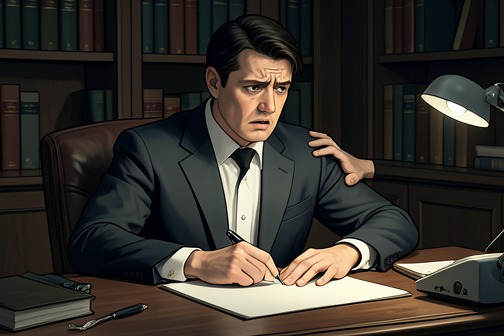
[Herman Pynchot’s death](entity:event-recall-event-2ec888fc82d9) is the fatal consequence of an unintended echo triggered by [Andy McGee](entity:character-recall-character-andy-mcgee-30b15980eceb)’s mental push. What begins as a light suggestion becomes entangled with Pynchot’s buried shame and a recurring image of his kitchen garbage disposal, until the chain of association overwhelms him. The death changes Andy’s understanding of the risks of his power: this time, he cannot stop the reaction he has started.
## Background and Trigger
Pynchot is under pressure over the handling of Andy’s case. He has not yet written his memorandum, but tells Andy that [Patrick Hockstetter](entity:character-recall-character-patrick-hockstetter-9db3edbc3e14)’s approval is effectively assured. Andy urges him to recommend another series of tests, presenting the proposal as a precaution. As he speaks, Andy gives Pynchot a light push. The suggestion serves Andy’s immediate purpose, but the influence does not remain confined to the report.
In a later conversation, Andy asks Pynchot about the roads and countryside around the Shop’s facility. Pynchot answers dreamily, mentioning that the area is pleasant since the holes have been filled, then brings up his wife’s affection for an unspecified object. Andy recognizes that a push can sometimes draw out an involuntary trace memory through an obscure association. He also knows that interrupting such a response may set off an echo, which can gather force and rebound unpredictably. Because he has seen this process before, he lets Pynchot’s thoughts run rather than pressing him with questions.
The association that returns to Pynchot is a garbage disposal he has installed at home. Its image recurs alongside the thought of looking pretty, and the recollection draws on a humiliating episode from his youth. In high school and college, Pynchot secretly wore women’s clothes. At college, two fraternity brothers discovered this and forced him through a humiliating ordeal in return for keeping it secret. He left the fraternity, troubled not only by the exposure but by his own complicated response to what had happened. He had not consciously revisited the episode in years. The past is not introduced as an excuse for what follows; it identifies the vulnerable memory that [the push](entity:expression-recall-expression-the-push-cb95e368f89e)’s echo catches and repeatedly returns to.
## The Echo Becomes Compulsive
The echo initially moves slowly. Pynchot’s attention returns intermittently to the disposal and to the idea of being pretty, while the memory and its associated shame press back into awareness. But the pattern is not simply a thought that fades when attention shifts. The narrative marks a worsening process: the echo gathers momentum, becoming a ricochet that Andy can no longer reliably control.
That progression is shown in [Longmont Hills](entity:location-recall-location-longmont-hills-c29b4e995fd8), where Pynchot is alone at home. With his wife away and his children elsewhere, he puts on some of his wife’s clothing and goes into the kitchen in a trancelike state. He turns on the newly installed [Waste-King garbage disposal](entity:object-recall-object-waste-king-876da8e5f199) and engages in a private act. When the trance breaks, he is terrified and disoriented. He switches the machine off, hurries from the kitchen, and tries to pass the windows unseen. His headache and confusion leave him unable to understand what has happened to him.
The sudden return of awareness does not undo the echo. Pynchot has recognized that something is wrong, but Andy’s influence has developed beyond the original suggestion about a memorandum. The domestic object that had been a recurring mental image has become the focus of an action from which Pynchot emerges frightened. The scene makes the danger less a matter of a command followed obediently than of an association gathering force outside the person’s ordinary, deliberate control.
## Death and Andy’s Responsibility
[Cap Hollister](entity:character-recall-character-cap-hollister-824388451c6f) later tells Andy that Pynchot is dead and that he killed himself the previous night. Pynchot had gone into the kitchen, started the disposal, and put his arm into it. Andy is stunned. He tells Cap that Pynchot was his friend, while internally recognizing the connection between his own push and the fatal ricochet. His reaction is divided: he is horrified by the result, yet admits to himself that he cannot feel uncomplicated sorrow for a man whose arrogance and treatment of others had angered him. Relief and guilt coexist rather than resolving into a single response.
Cap is alert to the possibility that Andy is concealing something. He asks whether Andy pushed Pynchot into the act and points out that Pynchot had been involved in decisions that could send Andy to Maui, away from [Charlie McGee](entity:character-recall-character-charlie-mcgee-5d289d26ad76). Andy denies causing the death, saying that even if he still possessed the ability, he would have had no reason to do such a thing. The exchange leaves the practical question of suspicion in the air: Cap is testing Andy’s answers, while Andy knows that his real involvement is not the deliberate action Cap is trying to uncover. Andy had not intended Pynchot’s death, but his earlier push had set the dangerous process in motion.
## Aftermath and Significance
At Pynchot’s funeral, Andy had expected to manage his feelings. His headache is gone, and he has treated the funeral partly as an opportunity to be alone with Cap. He recalls Pynchot’s arrogance and the satisfaction Pynchot took in exercising power over other people, and those memories had made it easier to feel little guilt about the echo. The service changes that distance. Seeing Pynchot’s wife and two sons at the graveside makes the consequence immediate in a way that his private recollection of Pynchot’s faults cannot cancel.
The funeral also forces Andy to compare this death with earlier instances of the echo effect. A push can leave a person extremely suggestible, and a suggestion that connects to fear, guilt, or other buried impulses can lead into dangerous mental territory. Andy had previously managed to interrupt such patterns. He once used another push to break a troubling association in a businessman’s mind, and he had also stopped a different person’s frightening lapses before they became worse. With Pynchot, there is no chance to break the echo before it becomes lethal. The crucial difference is not that Andy had never known the danger, but that prior experience had allowed him to intervene in time.
Pynchot’s death therefore makes Andy’s power newly legible as a responsibility with limits. Its effects are not always contained by the immediate purpose for which he uses it, and an apparent success in influencing someone may carry consequences that emerge later through that person’s own memories. The funeral supplies no easy absolution: Andy did not set out to kill Pynchot, yet he understands that his push helped begin the chain. The episode leaves him with both facts, and with the knowledge that the echo he could once stop has, in this case, become irreversible.
Event 23
Charlie’s fourth fire test
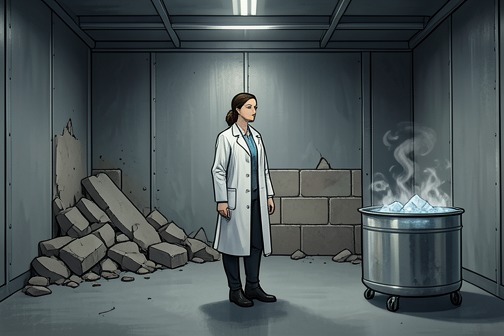
[Charlie’s fourth fire test](entity:event-recall-event-53f4706f698c) is the Shop’s most striking demonstration of her ability to concentrate heat, and a turning point in how she understands her control over it. In a room converted from the Shop’s chapel, she destroys a cinderblock wall and boils a tank of ice water despite extensive cooling equipment. The instruments record extraordinary temperatures but little corresponding physical exertion. The test strengthens her command of the ability even as its results leave the observers unsettled and Charlie herself overwhelmed by conflicting feelings.
## Setting and Experimental Arrangement
The test takes place at two o’clock on an early October day in a long room that had been the Shop’s nondenominational chapel until the previous week. The chapel’s pews and wood paneling have been removed. Asbestos batting and heavy-gauge tempered steel cover the insulated walls and floor, while partitions divide off the former altar and nave for [Patrick Hockstetter](entity:character-recall-character-patrick-hockstetter-9db3edbc3e14)’s monitoring instruments and a computer terminal. The rapid conversion reflects how quickly the Shop’s testing program has advanced: the work began only four days before [Herman Pynchot’s death](entity:event-recall-event-2ec888fc82d9), and the remaining tests on Charlie are now being held there.
The apparatus sets a formidable limit for the demonstration. A cinderblock wall stands in the middle of the room, with a six-foot-deep tank of water nearby containing more than two thousand pounds of ice. Eight industrial Kelvinator air conditioners are arranged around the room. They switch on when its overall temperature passes ninety-five degrees, pumping freezing air into the space. The cameras record the test in color, and a temperature probe at the wall’s center sends its reading to a digital display. This arrangement makes the test both an experiment and a visible contest between Charlie’s focused heat and the machinery meant to contain it.
Charlie, eight years old, stands before the wall in a blue denim jumper and red-and-black striped rugby socks, her blond hair in pigtails tied with black velvet bows. Patrick Hockstetter gives the signal over a hastily installed intercom. The first few seconds show little outward movement. On the camera’s inset temperature display, however, the reading rises from seventy degrees to eighty and then ninety; after that, the numbers change too rapidly to follow clearly.
## Destruction of the Wall and Tank
The recording shifts to extreme slow motion because the action is otherwise too fast to capture in detail. The wall first begins to smoke. Mortar and concrete particles lift from its surface; the mortar between the blocks softens and runs, and the blocks crumble outward from the center. The sensor reaches a reading above seven thousand degrees and then freezes—not because the temperature has stopped increasing, but because the probe has been destroyed. Even the slowed footage cannot fully clarify the process, but it shows the blocks breaking apart under heat.
The cooling system does not prevent the room from heating. With all eight air conditioners operating, its expected temperature is minus fifteen degrees Fahrenheit, give or take five degrees. Instead, the recorded temperature continues upward through one hundred, one hundred and five, and one hundred and seven degrees. It eventually reaches 112 degrees. The observers’ sweating cannot be explained by heat alone, the account notes, suggesting that witnessing the event is affecting them as well as the room’s physical conditions.
The cinderblocks themselves catch fire, burning with blue and yellow flames before the wall is obscured by the outward burst of disintegrating particles and disappears. Charlie makes a half turn; the icy water in the tank then churns and boils. After the room’s temperature peaks, it begins to fall. The sequence gives the test a clear progression: the focused attack breaks down the wall, spreads to the tank’s water, and then recedes, leaving the monitoring equipment and observers with a record of effects that exceed the room’s capacity to control them.
## What the Recordings Reveal
A memo about Test #4 considers the films and telemetry together. Its writer says the footage is difficult to accept as genuine and anticipates that viewers at a Senate subcommittee hearing on [Lot Six](entity:object-recall-object-lot-six-cec36af974d6) appropriations and renewal may doubt it. The memo summarizes the findings as unresolved rather than claiming a scientific explanation. Charlie’s blood pressure remains within normal limits for a child of eight, with hardly any change as the wall is destroyed. Her alpha-wave readings are abnormally high; the memo’s writer and a colleague interpret their relative evenness as possibly indicating controlled imaginative dexterity and more precise manipulation, while acknowledging that the reading may mean nothing.
The metabolic data are similarly ordinary. The telemetry shows no unusual metabolic activity, and a Beal-Searles CAT test indicates a caloric expenditure of about twenty-five calories—roughly the effort of a handful of sit-ups or walking around the building twice. Yet the memo estimates that Charlie produced upwards of 30,000 degrees of focused heat. The contrast between that estimate and the small measured expenditure raises the central unanswered question: whether the heat comes from Charlie or passes through her from some other source. The memo does not resolve the problem; it stresses that the limited testing may never do so.
The writer’s response moves from technical uncertainty to apprehension about the implications. He warns that further testing should be reconsidered and wonders what Charlie might produce if she deliberately exerted herself. The concern is not proof of a discovered mechanism, but it marks how the test alters the observers’ assessment: the results are no longer merely evidence of a controllable capacity to ignite or heat objects. They suggest a scale of power that the existing measurements and procedures cannot confidently explain.
## Charlie’s Changed Position and Aftermath
For Charlie, the tests have a different consequence. Repeated practice has weakened her fear of starting fires, like an earthen dam developing leaks, and has refined what had been a crude force into an ability she can direct with deadly precision. The fourth test therefore demonstrates more than strength: the training has changed the relationship between Charlie and her power. She understands the tests as an object lesson in who is in charge, and reaches the conclusion that she is.
That realization does not settle her feelings. After Patrick Hockstetter leaves, Charlie collapses onto the couch and sobs, experiencing guilt, horror, indignation, a measure of angry pleasure, and—most strongly—fear. She thinks that agreeing to the tests has changed things, perhaps permanently, and now needs to see her father for guidance. The passage sets her recognition of agency against her dependence and distress: she can command the force demonstrated in the room, but has not yet decided what that command means or how to live with its consequences.
The test also unsettles the Shop’s own personnel. Patrick Hockstetter leaves afraid and angry with [John Rainbird](entity:character-recall-character-john-rainbird-7dcd776488fe), who had anticipated what would happen without telling him. The following day, Hockstetter writes that any additional knowledge gained through testing should be weighed against hazards that, in his view, are increasing too quickly for comfort. The fourth test thus ends without an explanation of Charlie’s heat or a settled judgment that the experiments should continue. It leaves three linked outcomes instead: a record of extraordinary destructive capacity, a more practiced and self-aware Charlie, and a growing institutional fear that knowledge of her ability may carry risks the Shop cannot contain.
Event 24
Andy plans to leave the Shop
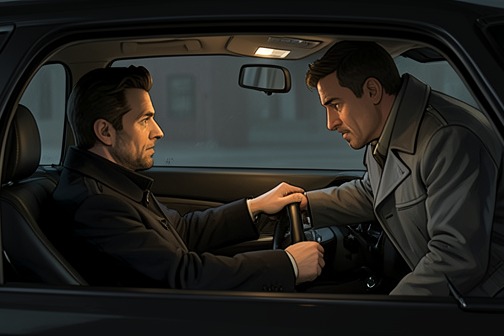
[Andy plans to leave the Shop](entity:event-recall-event-shop-528f9a79ad37) by turning [Captain Hollister](entity:character-recall-character-captain-hollister-5d7de91db6aa), one of its senior figures, into an unwitting ally and arranging an earlier departure with Charlie. The plan changes their immediate prospects from confinement under the Shop’s control to a risky attempt at escape, while making clear that [John Rainbird](entity:character-recall-character-john-rainbird-7dcd776488fe)’s influence over Charlie is one of the dangers Andy must outmaneuver.
## A Plan Made Under Pressure
Andy begins by using [the push](entity:expression-recall-expression-the-push-cb95e368f89e) on Captain Hollister during their drive away from the cemetery. The ability is available, but it brings on a headache almost at once; Andy recognizes this as the cost of using it again so soon. The strain is part of the plan’s circumstances: he needs Hollister’s cooperation, but securing it is not effortless or safe for him.
The car is twenty miles from the compound, and much of the route follows Highway 301, a fast road. Andy estimates that he has no more than twenty-five minutes to arrange everything. He has spent the previous two days thinking through the escape, yet still needs to learn how long Hollister and Rainbird can keep Charlie cooperating. The compressed timetable makes the conversation less a general appeal than an attempt to settle the most urgent practical questions before the car reaches the Shop.
Hollister says that Charlie’s cooperation cannot be maintained much longer. Rainbird has arranged matters so that, in Andy’s absence, he is the person with real control over her, occupying the role of a father surrogate. Andy’s concern is therefore not simply how to get out of the facility: he must also prevent Charlie from remaining subject to Rainbird’s influence. The exchange gives the escape plan a personal urgency that its transport arrangements alone would not convey.
## Moving the Departure Forward
Andy tells Hollister that he is scheduled to go to Hawaii a week later, then orders him to arrange for the move on Wednesday instead of Saturday. The change leaves only four days for Andy to recover, less time than he considers ideal, but he believes events are approaching a climax and cannot leave Charlie exposed to Rainbird any longer than necessary. The accelerated date is a deliberate choice to trade preparation time for a chance to act before the situation worsens.
Andy also sets a departure time: three in the afternoon. He instructs Hollister to ensure that Rainbird is elsewhere, and Hollister responds with evident relief at the prospect of sending him away. Andy does not prescribe a destination for Rainbird, only that he not be present. The instruction shows how the plan depends on separating Charlie from the person who has secured her trust, rather than confronting him directly during the departure.
The intended journey is an army transport flight. Hollister is to travel with Andy, while two Shop agents assigned to accompany them are to meet the party at [Andrews Air Force Base](entity:location-recall-location-a334be61798f). Hollister will ask Puck where the aircraft is scheduled to refuel when he calls to change the flight date. Andy also requires Charlie to travel with them. Hollister initially objects that she is dangerous, but Andy rejects the idea that her power is an inherent reason to exclude her: in his view, the Shop’s actions helped make her dangerous. Under pressure from the push, Hollister agrees not to contradict him again.
## The Note to Charlie
Andy gives Hollister a folded note for Charlie and directs him to deliver it that day without attracting suspicion. As the car nears the Shop and passes the electrified fences, Andy asks Hollister to repeat the essential arrangements. Hollister recites the revised Wednesday departure, the planned companions, the need to find the refueling location, the concealed delivery of the note, and the arrangement to have Rainbird in San Diego that Wednesday. The recap turns the scheme into a set of instructions that Hollister has demonstrably understood, while the approaching compound underscores how little time remains before Andy must rely on them.
The note gives Charlie the part of the plan that cannot safely be discussed openly. Andy tells her to destroy it after reading and explains that the person delivering it is on their side without knowing it. He directs her to be in the stables at one o’clock on Wednesday afternoon, leaving the means of getting there to her. The request is conditional on the plan going as hoped, but it gives Charlie a specific place and time to meet the escape attempt.
Andy also warns Charlie not to trust Rainbird. He explains that Rainbird was in charge of the men who captured them at Granther’s camp, and that Rainbird’s apparent closeness to her has served his own purposes. At the same time, Andy instructs her to behave as though her feelings toward Rainbird have not changed if Rainbird approaches her before the escape. The warning therefore carries two demands: understand the deception, but do not reveal that she understands it before Wednesday.
## Escape and Exposure as Objectives
Leaving the compound is only the first aim Andy gives Charlie. He proposes that they go to Los Angeles or Chicago and says that he is counting on an old friend, [Quincey](entity:character-recall-character-quincey-1701952c5871), to help arrange a press conference. Andy sees public attention as a possible means of preventing the Shop from simply keeping them confined elsewhere. He does not present this outcome as certain; he hopes Quincey will help and believes that publicity could allow father and daughter to remain together even if the authorities still try to control their whereabouts.
The plan depends on several linked contingencies: Hollister must change the flight, find out where the plane refuels, keep Charlie’s presence from arousing suspicion, and arrange for Rainbird to be away; Charlie must reach the stables; and Andy must get them to a point where they can contact Quincey and seek public exposure. Before entering the Shop, Andy wonders whether the scheme can work or whether it will end in their deaths. That doubt keeps the escape from reading as a completed victory. At this point, it is an improvised operation whose immediate success depends on concealment, timing, and the continued effectiveness of Andy’s power.
Event 25
Rainbird uncovers the escape plan
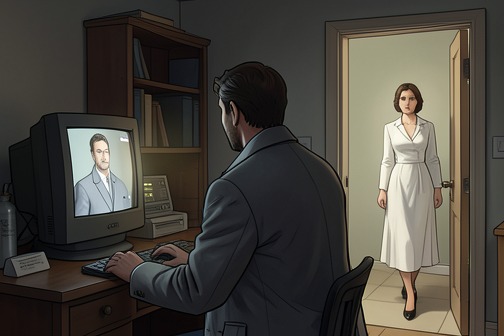
[Rainbird uncovers the escape plan](entity:event-recall-event-b6ddd3e3585b) by watching surveillance footage of [Cap Hollister](entity:character-recall-character-cap-hollister-824388451c6f) and [Charlie McGee](entity:character-recall-character-charlie-mcgee-5d289d26ad76), then connecting Cap’s concealed handoff with signs that [Andy McGee](entity:character-recall-character-andy-mcgee-30b15980eceb) has recovered his ability. The discovery changes the danger from a suspected breach of Shop procedure into a family escape already in motion. Rainbird can stop it, but chooses instead to let it begin, redirecting the official arrangements so that he can meet Charlie at the point where her father’s plan and her power converge.
## The videotape and the handoff
Rainbird asks to see the videotapes, and Neary installs him in a small room with the Sunday recordings and a Sony deck equipped for close-ups and freeze frames. The tapes run in three-hour blocks, labeled by their hours. Rainbird locates the one showing Cap and watches it four times, scarcely moving except to rewind the moment when Cap tells Charlie he will be going, that he will see her again, and that she should not worry. The repeated viewing turns an ordinary farewell into evidence to be examined frame by frame.
Cap’s manner troubles Rainbird as much as his words. He seems older, sometimes loses the thread of his speech, and wears a vague, bemused expression that Rainbird associates with the onset of combat fatigue. Rainbird briefly considers whether an abrupt remark about Charlie’s father playing golf is a code phrase, but dismisses the idea: Cap knows that activity in Charlie’s rooms is monitored and reviewed, and the remark is too disconnected from the surrounding conversation to make a convincing signal. The golf reference remains puzzling rather than explanatory.
The decisive clue comes at the end. Cap pauses as if he has almost forgotten something, hands Charlie a small object, and watches her put it into her robe pocket. At first Rainbird thinks it might be gum. He uses the deck’s freeze-frame and zoom features until the object looks very likely to be a note. The recording cannot tell him what the note says, but the deliberate handoff, its concealment, and Cap’s strained performance give Rainbird grounds to suspect that the goodbye is part of a plan.
## From suspicion to a high probability
The apparent irregularities extend beyond Cap. Rainbird realizes that [Herman Pynchot](entity:character-recall-character-herman-pynchot-d45e35b7dd93) had decided to send Andy to the [Maui compound](entity:location-recall-location-maui-compound-2a558c74afff), reasoning that if Andy could not demonstrate what [Lot Six](entity:object-recall-object-lot-six-cec36af974d6) could do, there was no reason to keep him nearby—and that separating him from Charlie would be safer. Pynchot then abruptly schedules another run of tests. Rainbird also recalls Pynchot cleaning out a garbage disposal while it is still running. These shifts do not prove a conspiracy on their own, but, taken together, they make the institution’s recent decisions look less coherent than they first appeared.
Rainbird turns to the Shop computer and tests the possibility that Andy can exert mental control. One result gives Andy a 35 percent probability of mental domination, a figure that surprises him. In a later query, the probability rises to 90 percent, with Herman Pynchot and [Captain James Hollister](entity:character-recall-character-captain-james-holli-d6e025370376) listed as cross-references. The figures convert Rainbird’s suspicion into a practical judgment: Andy’s ability is not merely an old capacity rendered irrelevant by captivity. He may have regained it, or concealed it from the Shop, and the people involved in his confinement may themselves have been subject to his influence.
The computer does not reveal the note’s contents, and Rainbird does not claim certainty about every part of Andy’s design. He nevertheless wagers that the message is from Andy to Charlie and contains an escape plan. The surveillance footage and the probability results now reinforce one another: the note supplies a likely means of communication, while Andy’s apparent mental control offers a way to manipulate the very organization holding him.
## The escape redirected, not stopped
Rainbird uses the Shop’s filing system to cancel the flight arrangements that would take him from [Andrews Air Force Base](entity:location-recall-location-a334be61798f) to San Diego. He specifies that the cancellation is to be passed to Victor Puckeridge and Richard Folsom, so the revised instruction will go out in the midnight telex and the plane will leave without him. The change is arranged quietly; Cap, Rainbird believes, will not know that the original departure has been canceled.
Rainbird could halt the escape that night, but decides that doing so would leave too much unresolved. The computer’s probabilities are suggestive, not conclusive; he prefers to wait until the plan is under way and its participants have committed themselves. He also finds the unfolding maneuver entertaining. While the Shop has watched Charlie, Andy may have recovered his ability, abandoned his medication, and begun influencing Cap. In Rainbird’s reading, Andy is close to turning the machinery of his captivity against the organization that built it.
Rainbird can infer an intended route but not its precise details. He expects the party to go to Andrews, though not necessarily to Hawaii. Charlie may travel with her father; Cap, Rainbird thinks, could get her off the Shop grounds more easily than anyone else. He considers possibilities including a disappearance into Washington, D.C., or a stop in Durban followed by a staff car and a move toward Chicago. These are forecasts, not confirmed steps in Andy’s plan. Their uncertainty is part of why Rainbird leaves the operation running: he wants the plan to expose itself before he intervenes.
## Charlie as the real stake
Rainbird imagines what might happen if he simply allowed the escape to succeed. Cap could end in a mental institution or dead by his own hand; public exposure of the McGee family’s ordeal could destroy the Shop within months. Rainbird has never felt loyalty to the organization, and the prospect of its survival does not decide his actions. He describes himself as answerable neither to the Shop nor to the wider world that, in his view, had cast him out of the desert society that might have offered him a place.
His allegiance is instead to Charlie. That attachment gives his choice its particular shape: he does not merely preserve a chance to capture the escapees but arranges matters so he can watch Charlie and her father come together. He expects the reunion to make Charlie vastly more dangerous, imagining her as a loaded flamethrower, yet he wants to see what will happen. His planned meeting is bound up with his fixation on her and with the prospect of a final confrontation; he has not calculated that killing her would save the world as the governing reason for his decision.
The escape plan therefore becomes, in Rainbird’s mind, both an operation to be manipulated and an appointment he has chosen not to prevent. He goes to Washington that night, pays a lawyer three hundred dollars in small bills, and puts his affairs in order for the next day. The immediate outcome is not the escape itself, but Rainbird’s deliberate preparation to let it advance far enough for him to meet Charlie on his own terms.
Event 26
Shop stable escape confrontation
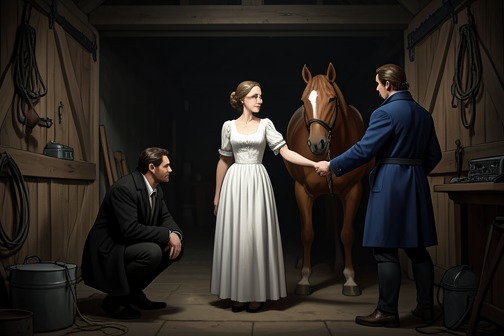
The [Shop stable escape confrontation](entity:event-recall-event-shop-95604b5a6f91) turns a planned escape into a contest over who can command [Charlie McGee](entity:character-recall-character-charlie-mcgee-5d289d26ad76): her father, the man who has manipulated her, or the volatile power she fears using. In the shadowed stable, [John Rainbird](entity:character-recall-character-john-rainbird-7dcd776488fe) reveals that he was the supposed friend Charlie trusted, while Charlie’s fire threatens to break the trap open. The immediate confrontation ends not with a clear victory, but with [Cap Hollister](entity:character-recall-character-cap-hollister-824388451c6f)’s scream abruptly cutting across the standoff.
## The stable becomes a trap
Rainbird waits inside the stable expecting Cap Hollister and [Andy McGee](entity:character-recall-character-andy-mcgee-30b15980eceb), but sees [Don Jules](entity:character-recall-character-don-jules-06e8c98447ac) and Charlie approaching across the duckpond instead. Before the confrontation reaches its central revelation, Rainbird has prepared the space: he checks that the stalls are latched and locked, then climbs a wooden ladder into the shadowed upper lofts. The horses and the stable’s closed doors make the setting more than a hiding place. It is a confined arena in which Rainbird can watch Charlie without being seen, while the frightened animals register the danger before its source is fully exposed.
Jules grabs Charlie by the wrist and tells her they must find someone. Rainbird, watching from concealment, is prepared to shoot Jules. Charlie instead tells Jules he can go, and he releases her hand as though he had touched something hot. Rainbird studies the change closely. The moment establishes that Charlie’s power can intervene directly in the struggle, even before she openly threatens to use fire. The release is not a negotiated decision: Jules’s body responds against his hold, and he rubs his wrist while Rainbird tries to determine whether it bears a mark.
Charlie then orders Jules away and threatens to burn him. Steam begins to rise from a bucket nearby, though Jules remains fixed on Charlie and appears not to notice it. Rainbird silently encourages her, but his approval is not uncomplicated protection: he is ready to support her if Jules attacks, while also knowing that her power can get out of control. The encounter therefore gives Charlie both leverage and risk. Her threat can make Jules hesitate, but the possibility of escalation remains present in the unstable heat of the scene.
## Rainbird reveals himself
From the loft, Rainbird calls to Charlie and identifies himself as the person who has been with her all along. She searches the stable but cannot see him behind the bales in the shadowed upper level. Her response connects the revelation to an earlier betrayal at Granther’s camp: she remembers that her father had said Rainbird was the one responsible there, and instinctively touches her throat where Rainbird had placed the dart. The gesture ties the unseen man above her to the bodily vulnerability of her capture. What had seemed like a relationship with a trusted companion is exposed as part of his deception.
The horses begin to whinny and kick at their stalls. Their cries intensify as Charlie calls out for Rainbird, and the temperature rises beneath him. From her position below, she cannot see where he is, while he can observe her from concealment. That unequal visibility makes the revelation feel less like a simple unmasking than the continuation of his control: he has finally named himself, but still determines when and how she can find him.
Rainbird eventually climbs over a pile of bales and sits at the loft’s edge, his pistol in his lap. He tells Charlie that he mixed truth with lies and claims he did so to keep her alive. Charlie calls him a liar, yet the scene records her dismay at wanting to believe that he had liked her. Her exhaustion and longing complicate her anger; the deception has hurt precisely because the apparent friendship mattered to her. Rainbird’s claim that he cares only about Charlie is set against his concealed weapon and the manipulations she has just recognized. The intimacy he offers is therefore inseparable from threat.
## The ladder and the threatened choice
Rainbird invites Charlie up to the loft. The narration describes the pull of his words as resembling hypnosis and telepathy, while making clear that she understands the danger beneath them. She recognizes that his invitation is not merely to talk: it offers an ending to her doubt, fear, and misery, and to the temptation to make increasingly destructive fires. Part of her wants the promised release and the possibility of a friendship no one else can offer. Her movement toward the ladder is consequently both an act under pressure and a response to a real emotional vulnerability.
That movement is interrupted when Andy bursts into the stable. He calls for Charlie, and she answers with relief that turns to dread as she warns him not to come in. The horses are still restless, and Andy cannot immediately see her in the transition from light to shadow. Rainbird’s voice comes from above, confirming that the father has entered a space in which the hidden adversary still holds the higher position. Charlie’s warning shows that she understands Andy’s arrival has not made the danger disappear.
Rainbird continues to call Charlie toward him and tells her to proceed as she had intended, insisting that nothing has changed and that their business will end. Andy refuses and says they are leaving. Rainbird then makes the threat explicit: if Charlie does not come up, he will shoot her father, betting that he can pull the trigger before she can burn him. The choice he presents is coercive, aimed at turning Charlie’s attachment to Andy into a means of controlling her. She is already standing on the first rung when Rainbird makes the threat, and Andy tells her not to move. The ladder remains the physical emblem of the dilemma: one direction leads toward Rainbird’s concealed control, while retreat risks Andy’s life.
## The confrontation breaks open
At the moment Charlie seems caught between obeying Rainbird and protecting Andy, Cap—whom the others have forgotten—begins to scream. The sound interrupts the threatened shot and Charlie’s poised movement, shifting the scene away from the direct contest between Rainbird and the McGees. The excerpt does not resolve the standoff after the scream, but its timing matters: just as Rainbird tries to force Charlie into an immediate choice, an unforeseen disturbance breaks the apparent control of the encounter.
The confrontation gathers several forms of power into one enclosed space. Charlie can make Jules release her and can threaten fire, but she is also emotionally susceptible to Rainbird’s appeal and physically positioned beneath his weapon. Rainbird has the advantage of concealment and height, yet his revelation has destroyed the trust on which his influence depended. Andy’s arrival challenges Rainbird’s hold over Charlie, while his threat turns their father-daughter bond into the scene’s most urgent vulnerability. Cap’s scream suspends that contest at its sharpest point. The stable episode thus makes Charlie’s escape more than a question of finding a way out: she must recognize the difference between affection and manipulation while confronting the danger of her own power.
Event 27
Charlie escapes the Shop again
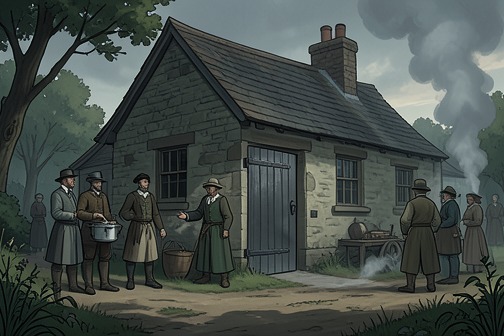
[Charlie escapes the Shop again](entity:event-recall-event-charlie-shop-429776e9e56a) when its agents return to the Manders farm on the last day of April. Their arrival reveals that the secrecy protecting her stay has failed: word of the mysterious girl has circulated through [Hastings Glen](entity:location-recall-location-hastings-glen-74b4d273479c), and the Shop has found its way back to the farm. But the agents arrive too late. Charlie has left on her own, telling Irv and [Norma Manders](entity:character-recall-character-norma-manders-f1ad040f7d5e) only that she believes she knows what to do next.
## How the Secret Spread
[Dr. Karl Hofferitz](entity:character-recall-character-dr-karl-hofferitz-a07c9b432b1f) had kept the story of the Manderses’ “boarder” to himself for more than three months. One February night, after three glasses of wine while watching television with Shirley McKenzie, he told her the whole story after asking her to keep it secret. The narrative presents the disclosure not as a single breach but as the beginning of a chain: Shirley held the information for almost a month, then told her close friend Hortense Barclay; Hortense kept it for about ten days before telling Christine Traegger; Christine soon shared it with her husband and three close friends.
The changing scale of the secret supplies the immediate background to the raid. By April, enough people in Hastings Glen knew that the Manderses had taken in a mysterious girl for curiosity and gossip to spread beyond the original confidants. The narration stresses the ordinary social route by which private knowledge becomes public: a promise of secrecy is passed from one trusted person to another, and each disclosure makes further containment less likely. Eventually the information reaches people who can act on it. A call is made from a scrambler phone, and the Shop’s agents close in again. The account links the town’s talk to the renewed pursuit without identifying who placed the call or specifying what information the caller supplied.
## The Second Approach to the Farm
On the last day of April, the agents approach across the dawn fields through spring mist, wearing bright flame-resistant suits. A National Guard unit backs them up, although its members do not know why they have been ordered to the peaceful town of [Hastings Glen, New York](entity:location-recall-location-1eb48ffb09bd). The contrast makes the operation’s scale and strangeness visible: a local secret has brought an armed government presence into a quiet rural setting, while those sent to support the operation are themselves uninformed about its purpose.
At the farm, the agents find Irv and Norma Manders sitting stunned in their kitchen. Between them is a note that Irv discovered at five in the morning, when he got up to milk the cows. Its placement gives the escape a domestic, sharply specific frame: while Irv was beginning the day’s routine, Charlie had already gone, leaving the couple a written explanation in place of a face-to-face farewell. The account does not describe her route from the farm or how she evaded the approaching agents; her absence is the decisive fact of the encounter.
## The Note and Charlie’s Solitary Flight
The note reads, “I think I know what to do now. Love, Charlie.” Its wording offers Irv and Norma a sign of intention but no plan they can follow or use to locate her. The statement marks a shift from staying under the Manderses’ protection to acting alone, while the affectionate sign-off acknowledges the people she has left behind. The text does not explain what Charlie thinks she must do, so the note remains both a communication and a limit on what the reader knows about her next move.
The narrative confirms that she has eluded the Shop again, but emphasizes the cost of the escape: wherever she is, she is alone. That qualification keeps the successful evasion from reading as a secure victory. Charlie has escaped the immediate danger of the raid, yet the people who sheltered her are left behind and the agents have returned to the farm. The only stated consolation is practical rather than protective: this time she does not have so far to hitch. The comparison indicates that she has less distance to cover by hitchhiking than on an earlier flight, but it does not identify her destination or guarantee that she will reach it safely.
## Consequences and Narrative Significance
The escape turns a failure of secrecy into an immediate separation. The Shop’s second approach shows that the renewed pursuit is real; Charlie’s absence shows that she has again acted before its agents can take her. The note preserves a connection with Irv and Norma even as she departs without them, and the final reference to hitchhiking leaves her movement unfinished rather than resolved. Her escape is therefore both a successful evasion and a precarious break from shelter.
The episode also makes the danger of being known part of the action. Hofferitz’s confidence in one confidant becomes a succession of disclosures, and the spread of information through a small town ultimately precedes the agents’ return. Against this gradual circulation, the raid is sudden and organized, but it finds only the people Charlie has left behind. The note becomes the narrow point where those two movements meet: the widening reach of the Shop’s search and Charlie’s departure on a course she has not explained. She is free of the farm when the agents arrive, but the account closes with her isolated and still in transit.
Event 28
Charlie seeks publicity through Rolling Stone
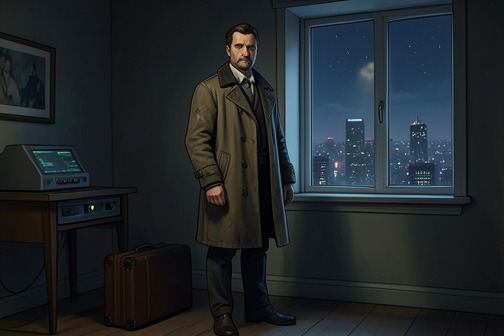
[Charlie seeks publicity through Rolling Stone](entity:event-recall-event-charlie-rolling-stone-f5bb2a7b3c1a) after escaping another Shop raid, turning a plan discussed by Irv and [Norma Manders](entity:character-recall-character-norma-manders-f1ad040f7d5e) into a solitary journey to [New York City](entity:location-recall-location-new-york-city-65df0a129d4c). The sequence moves from the danger of being discovered to the possibility of making Charlie visible on her own terms: she does not yet reveal her story in print, but she finds a publication where she can offer both testimony and proof.
## The need for a public account
Irv and Norma recognize that sheltering Charlie at the Manders farm cannot keep her safe indefinitely. Irv argues that a small local paper would not be enough: the account must be honest, reach a nationwide audience, and have no ties to the government or its ideas. A country weekly could be silenced if The Shop learned of it before the story spread. For Irv, publicity is therefore not simply a way to tell what happened; it is a practical defense against an organization that can reach the people trying to help Charlie.
The decision carries danger for the Manderses as well. Irv says that he has already been shot once and fears that Charlie’s presence could put their lives at stake. He insists that he loves her like his own, while also pressing Norma to face the risks realistically. Norma shares his concern about what might happen if the news reaches The Shop, and proposes finding a lawyer. But their discussion ends without a plan: they will think further, and for the moment hope that no one knows Charlie is there. The delay is immediately overtaken by events.
## The raid and Charlie’s departure
The news reaches The Shop, and a call is made from a scrambler phone. On the last day of April, agents return to the Manders farm at dawn, crossing the fields through spring mist in flame-resistant suits. A National Guard unit accompanies them, though its members do not know why they have been sent to the peaceful town of [Hastings Glen, New York](entity:location-recall-location-1eb48ffb09bd). The force’s arrival makes the threat the Manderses had debated concrete: the danger is no longer hypothetical, and the farm cannot protect Charlie simply by remaining hidden.
Irv and Norma are found stunned in their kitchen, with a note between them. Irv had discovered it at five that morning, when he got up to milk the cows. Charlie has left a single line: “I think I know what to do now. Love, Charlie.” She has eluded The Shop again, but this escape leaves her alone. The brevity of the note gives no account of her destination or plan; it records only the decision that has carried her away. The immediate consequence is separation from the people who have sheltered her, while the next step remains uncertain.
## A librarian’s direction
Charlie reaches the [New York Public Library](entity:location-recall-location-91a655faf789) carrying a paper shopping bag. She is described as woefully thin, wearing a green blouse and bluejeans. The young librarian listens carefully and respectfully as she explains that her father had told her a difficult question should be taken to the library, where people know the answers to almost all questions. His remembered advice gives her journey a clear starting point: alone and in need of a next step, she turns to an institution her father had taught her to trust.
The librarian works through what she is looking for and asks why she needs it. Charlie pauses before explaining, “I have to tell them something.” He considers the request for several moments, appears about to speak, then consults another librarian. When he returns, he gives her two words. Charlie asks for an address, and he writes it carefully on a square of yellow paper. The referral is a small but decisive turn: the librarian does not become her spokesperson, but he supplies the destination that lets her act on the plan to make the story public.
## At [Rolling Stone](entity:organization-recall-organization-rolling-stone-162a4cc7f0ed)
Charlie follows the address to the sixteenth floor of a skyscraper. In the elevator she is a conspicuously small child among adults, holding her crumpled bag and a Sunkist orange, but the other passengers mind their own business. She gets off, reads the signs, and turns left toward a reception area behind double glass doors. Beneath the words the librarian gave her is Rolling Stone’s motto, “All the News That Fits.” The setting makes the destination unmistakable, while the motto offers an apt counterpoint to Irv’s hope for an honest account beyond government influence.
Outside the doors, Charlie whispers, “I’m doing it, Daddy. Oh, I hope I’m doing it right.” Her words connect the solitary errand to her father’s guidance, but also register uncertainty: she has found a place to begin, not a guarantee that she will be believed or that her plan will work. She opens a glass door and enters the magazine’s offices. The receptionist notices the bag, the orange, and Charlie’s slightness; Charlie, in turn, speaks in a low but clear and firm voice. She asks to see someone who writes for the magazine and says, “I have a story I want to tell. And something to show.” When the receptionist compares this to school show-and-tell, Charlie smiles and answers, “Yes. I’ve been waiting for a long time.”
The scene ends at the threshold of disclosure, not with publication or a demonstrated power. That distinction matters: Charlie has not yet made The Shop’s secrets public, and the excerpt does not establish what the magazine will do with her appeal. What has changed is her position. She has moved from being hidden by the Manderses, and endangered by the spread of news about her, to choosing a national magazine as the place where she will tell her story and show what she can do.