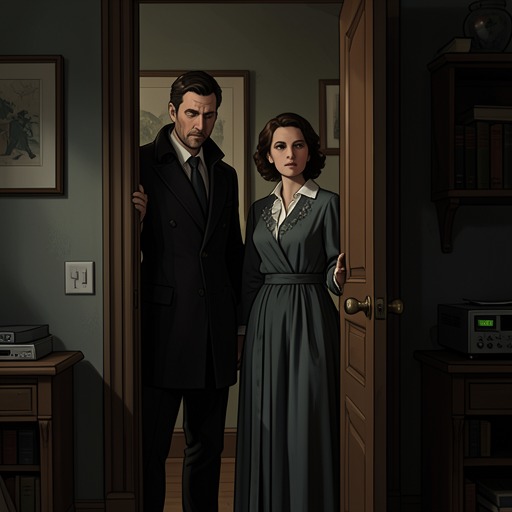
Kurt Wallander’s loneliness
FirewallKurt Wallander’s loneliness is not simply the result of living alone: it is the absence of the companionship he once found in a relationship, the widening distance from his daughter, and a growing sense that even colleagues do not truly see one another. It colors his memories, narrows his plans for the future, and makes the possibility of seeking a new partner feel both necessary and humiliating. Even when a walk lifts his spirits, the relief is temporary; the deeper question of how to live differently remains unresolved.
The Loss of Baiba
At Mossbystrand, Wallander remembers the investigation that once brought him to Latvia and to Baiba, the widow of a Latvian police officer he had known and liked. Their relationship had seemed capable of becoming a shared life in Sweden. They looked at houses, and Wallander believed for a long time that Baiba might move there. But she began to draw back, not because she had met someone else, as his jealousy led him to suspect, but because she doubted marrying another policeman and leaving her homeland and her rewarding, poorly paid work as a translator. The relationship ended without the future he had imagined.
A year has passed since Wallander last spoke to Baiba. She still appears in his dreams, but the dreams offer no reunion: whenever he approaches her or reaches toward her, she disappears. His jealousy has faded, and he no longer recoils at the thought that she might be with another man. What remains is more difficult to dismiss. He recognizes that he misses the companionship he had with her, and that the relationship had helped him escape a loneliness he had not even known he felt. The distinction matters: he is not simply longing to reclaim Baiba or revive their plans, but grieving the ordinary closeness that her presence provided.
Solitude and the Threat of Depression
The deserted autumn beach turns that recognition into a more ominous memory. Wallander recalls an earlier period when he was on sick leave with depression, had taken refuge in a remote part of northern Jylland, and thought he would never return to police work in Ystad. He can still remember the experience in frightening detail. The bleak, blustery landscape seemed to awaken his deepest anxieties, and the empty beach before him now carries enough of that atmosphere to make him decide that he should avoid deserted beaches in autumn. His loneliness is thus connected not only to sadness about particular relationships but also to a fear of returning to a state from which recovery once seemed impossible.
The practical choices surrounding his November leave make the same isolation visible in everyday terms. He had discussed taking a charter flight somewhere warm with Linda and offering to pay, but she could not get away. He considers Sten Widén, who raises horses outside Ystad, then doubts that Widén would be a good companion because he drinks heavily while Wallander is trying to keep his own former drinking under control. He also considers Gertrud, his father’s widow, but cannot imagine what they would talk about for a whole week. He concludes that there is no one else to ask. Rather than travel alone or keep searching, he plans to stay home and put the money toward replacing his aging Peugeot. The car’s worsening noises give that decision a concrete, mundane destination; they do not solve the emptiness behind it.
Distance from Linda
Wallander’s relationship with Linda offers affection without the regular presence he wants. At twenty-six, she lives in Stockholm, shares a flat on Kungsholmen with two women he knows only by name, and sometimes works as a waitress to make ends meet. He has enjoyed the food at the restaurant where she works, but found its music oppressively loud. These small details emphasize how much of her independent life reaches him only indirectly. He misses seeing her regularly and does not know what she is studying; when he calls, she and her flatmates are out, and he leaves a message saying that the call is not important.
The unanswered call leaves him staring at cold coffee and feeling irritated by his own sense of age and weakness. He is only fifty, yet feels ancient. He makes himself go out for an evening walk, struggling to find an excuse not to. By the time he returns, the walk has cleared his mind and lifted his spirits. But Linda has not called, and the temporary improvement does not bring the contact he wanted. When she later speaks with him, she declines his offer to pay her fare to visit: the obstacle, she insists, is lack of time, not money. Wallander recognizes that he cannot change her mind, and that her stubbornness resembles his own.
Linda also identifies the loneliness he tries to keep at a distance. She tells him that he is beginning to sound whiny and suggests a dating agency or a personal advertisement so he can meet someone. Her teasing contains an uncomfortable recognition: he worries about where she spends her nights, while knowing very little about the people she dates. He feels irritation and jealousy, and admits to himself that she sees him clearly. Yet he has considered advertising before and always backed away. To make such a choice would, in his eyes, amount to admitting an unacceptable desperation. The possibility of companionship is therefore present, but so is his resistance to the vulnerability required to seek it.
Work, Change, and the Unresolved Future
Loneliness extends beyond Wallander’s private life. At the police station he thinks that the staff work together without really seeing one another. The thought places his personal isolation inside a professional environment where people share duties but not necessarily meaningful attention. Later, as he waits for colleagues and feels time rushing away, Widén’s decision to get away sharpens his unease. Wallander feels as if he has entered a race he never expected to win but does not want to finish last. He cannot initially explain what is troubling him; what he can say is that he cannot go on living this way and that something has to change.
That declaration does not yet produce a plan. He keeps walking, considers travel and dating, calls his daughter, and revisits memories of a relationship that once relieved his loneliness. Each action shows both a wish to move toward connection and a habit of retreating when connection demands a choice: Baiba withdrew from the life he imagined, Linda is unavailable, and Wallander turns away from dating services as too desperate. The state remains unresolved, but it is no longer entirely unrecognized. What he once experienced without naming it has become a pressure to change, even as he has not decided what change will mean.