Sonja Hökberg’s trauma after being raped
FirewallSonja Hökberg’s trauma after being raped is a hidden part of her life that becomes legible only after her death, through fragments gathered from a former boyfriend and her parents. The account links a concealed assault in February 1995 to her withdrawal from intimacy and raises the possibility of revenge, but it never establishes who raped her or proves that the trauma led her to kill Carl-Einar Lundberg.
The account emerges
The first account comes from Kalle Ryss, whom Ann-Britt Höglund questions after learning that he had led the police to Jonas Landahl. Ryss says he fell in love with Sonja when he first saw her. After they began dating, however, he found that she had no interest in sex; eventually, he tired of the relationship. He tells Höglund that Sonja explained this lack of interest by saying she had been raped a few years earlier and remained traumatised by the experience.
That disclosure reaches the investigation second-hand. Höglund checks police files and finds no case involving Sonja, suggesting that she never reported the rape. Ryss’s story is therefore significant but limited: it records what Sonja apparently told a boyfriend, not a police finding or a testimony made directly to investigators. Even the basic circumstances remain unresolved. Höglund places the possible assault in Ystad, but the evidence does not identify a perpetrator or establish a precise date.
Intimacy and silence
In Ryss’s recollection, the effects of the rape appear in the early course of a romantic relationship: Sonja’s lack of interest in sex becomes the point at which he begins to lose patience. His account gives the trauma a relational consequence, but it also exposes how little he understood of her experience. He reports what she told him and describes his own frustration; he does not provide an account of her recovery, her feelings, or how she understood the relationship.
Sonja’s silence is not presented as proof that the rape did not happen. Höglund notes that there can be many reasons a woman does not go to the police, while admitting that she cannot yet explain how Sonja might have identified her attacker or learned that Carl-Einar Lundberg was connected to him. Her remarks frame non-reporting as possible without claiming to know Sonja’s particular reason. The difference matters: the investigation can identify an absence in the files, but it cannot turn that absence into an explanation supplied by Sonja.
The night in February 1995
When Kurt Wallander visits Sonja’s parents, Ruth and Erik Hökberg, he asks about the period around 1994 or 1995 and whether Sonja ever came home bruised or unusually distressed. At first, neither parent confirms such an episode. Ruth recalls that Sonja broke an ankle, and Erik corrects her: it was sprained, not broken. Their brief correction illustrates how ordinary family memories initially give Wallander little access to the event he is trying to uncover.
After Wallander tells them that investigators have information indicating Sonja was raped, Ruth rejects the claim and says Sonja never spoke of it. Erik then recalls a night near the end of February 1995, after Sonja had returned from England. She came home bleeding from her mouth and nose, her clothes dirty, and in shock. When her parents asked what had happened, she said she had fallen. Erik now recognises that explanation as a lie, but at the time they never learned the truth.
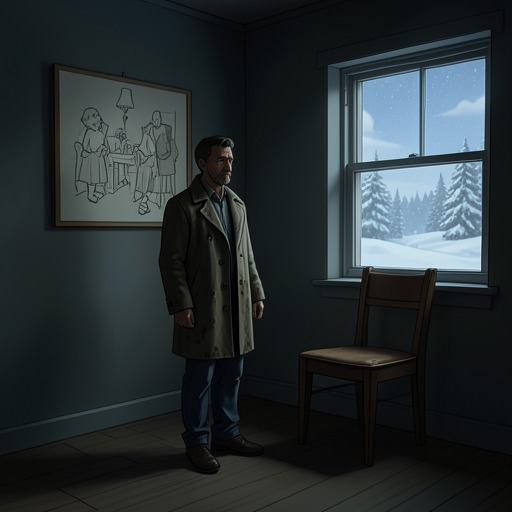
Erik remembers the day as snowy: it snowed throughout, and by evening everything was white. The following morning, Sonja’s blood was still visible on the snow. The image supplies a concrete trace of the concealed assault while preserving the limits of what the family knew. Her parents saw the blood and the shock; they did not hear a direct account of the rape from her. Ruth’s denial and distress when Wallander raises the subject further show how painful and destabilising the revelation is for the family, without resolving what Sonja had chosen or felt able to tell them.
From trauma to a revenge theory
Höglund connects Sonja’s reported rape to Carl-Einar Lundberg, whose father, Johan Lundberg, had been murdered. Carl-Einar had stood trial for a violent rape and been acquitted, though Höglund says there were indications that he had been guilty. From that history she develops a theory: he may have committed an earlier rape against Sonja, and Sonja may have killed his father as revenge. The theory offers a possible motive for Johan Lundberg’s murder, but it is explicitly an inference. The evidence presented does not establish that Carl-Einar raped Sonja, that she knew Johan was his father, or that revenge was her purpose.
Wallander considers the newly disclosed assault important but initially sees Johan’s murder as incidental to the larger chain of events involving Tynnes Falk. The contrast prevents the trauma from becoming a complete explanation for the case: it may illuminate one possible motive, while other events remain connected to a separate investigation. Later, when Sonja’s parents recall her return in shock, their memory strengthens the evidence that something happened in February 1995, but it still does not identify the attacker or settle the theory.
A story reconstructed after her death
Sonja’s trauma reaches the reader through a sequence of delayed disclosures: Ryss’s recollection, Höglund’s questioning, Wallander’s conversation with her parents, and Erik’s recovered memory of the blood on the snow. Each account adds a different kind of evidence, but none gives Sonja a chance to explain the assault in her own voice. The sequence moves from a reported effect on intimacy to the family’s belated recognition of a night they could not then understand.
That structure makes the trauma both central and incomplete. It changes how the investigation reads Sonja’s past and makes a revenge motive conceivable, while leaving the identity of her attacker and the meaning she gave the experience unresolved. The distinction between what Sonja reportedly told Ryss, what her parents witnessed, and what Höglund suspects remains essential: her suffering is disclosed, but the case surrounding it is not conclusively solved.