Death of the Kinsellas’ son
FosterThe Death of the Kinsellas’ son is a drowning that reaches the reader as belated, partly hearsay knowledge rather than as a witnessed scene. Unnamed girl has been wearing the dead boy’s clothes without knowing whose they were; when she learns what happened, ordinary objects and silences in the Kinsellas’ home take on a different meaning. The event is both a family bereavement and a revelation about the child’s place among people who have suffered a loss they do not openly describe.
Circumstances and the Report
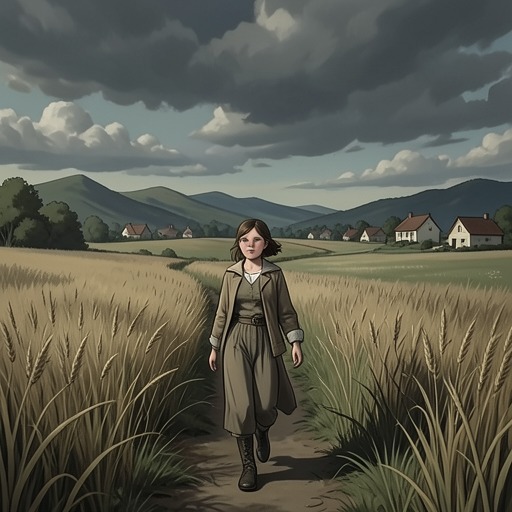
The account comes while Unnamed girl is walking with a woman who has noticed her new clothes. The woman identifies the Kinsellas’ dead child as a young boy and says that he followed the family dog into a slurry tank and drowned. She qualifies the story as what people say happened, marking it as a local account rather than an omniscient explanation. The death is stated plainly, but its circumstances arrive filtered through neighborhood talk.
The same woman adds another story about the dog: John Kinsella took a gun and led the hound down the field, but could not bring himself to shoot it. Her description of him as softhearted belongs to her telling; the passage does not establish why he took the dog out or explicitly connect that moment to the drowning. Placed beside the report of the boy’s death, however, the detail makes the animal part of the story’s painful aftermath. The account offers no direct scene of the drowning and no settled explanation beyond the reported sequence of boy, dog, tank, and death.
Discovery Through the Clothes
Before the woman names the dead boy, Unnamed girl explains that she had been wearing clothes provided during her stay and had gone to Gorey that morning to buy new things. The woman’s remark about the outfit leads to the correction that the child has been living in the dead boy’s clothes. Unnamed girl’s brief inability to answer registers the shock of learning that the clothes were not simply spare garments: they belonged to a child who had died.
The revelation reaches backward into an ordinary part of her recent life. She had worn the clothes to Mass the previous Sunday without knowing their history. Once their provenance is disclosed, dressing becomes an inadvertent encounter with the Kinsellas’ bereavement: she has been made part of the household’s daily arrangements, but not told what those arrangements conceal. The clothes connect the living child’s bodily presence to the absent son without suggesting that she is a replacement for him.
Grief Within the Household
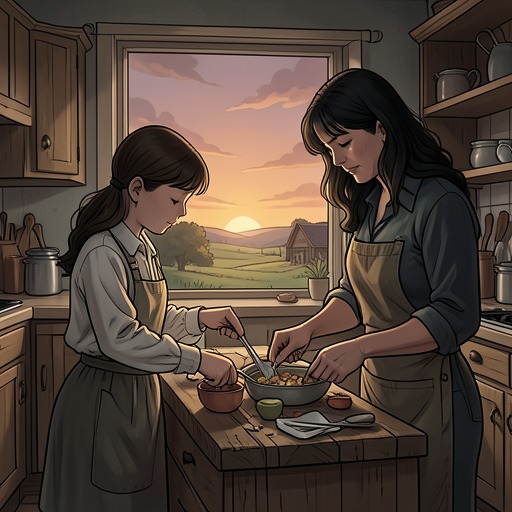
The death is not narrated directly by John Kinsella or Edna Kinsella in these passages. Instead, Unnamed girl carries the neighbor’s account home and tells Edna that she has learned about the little boy who followed the dog into the slurry tank and died, as well as the clothes she wore to Mass. The report’s passage from neighbor to child to Edna makes the knowledge itself an event: what had been withheld from Unnamed girl is now spoken inside the house.
At home, the hound comes out to greet them. Unnamed girl realizes that she has not heard either Kinsella call the dog by name. The detail does not explain their silence, but after the reported story it gives the animal an uneasy presence in the family’s shared space. John sighs and goes to milk. Later he says he is not ready for bed and that there will be no visitors that night because of the wake, adding that he does not want any. The wake places the household’s mourning in a social setting, while his refusal of visitors conveys how little comfort that gathering necessarily offers him.
Narrative Significance
The boy’s death is disclosed indirectly, through information that Unnamed girl lacks and a local woman chooses to state without gentleness. Its delayed arrival changes how the reader understands the clothes, the dog, and the quiet around the Kinsellas. Even the woman’s additional claim that the pair turned white overnight belongs to the surrounding talk rather than to a directly shown transformation; grief is presented through stories people tell as well as through what the household does.
An earlier nighttime passage gives the loss a quieter, more oblique echo. Looking at trains on the bedroom wallpaper, Unnamed girl sees a small boy standing apart and feels sorry for each version of him, then wonders whether her mother’s expected child will be a girl or a boy. The passage does not identify the pictured boy with the Kinsellas’ son. Its juxtaposition with the later revelation instead places children, absence, and change within the same narrative field. The drowning itself remains irrecoverable as a scene: its consequences surface in inherited clothes, a dog whose name is unspoken, a wake, and the difficult act of telling what has happened.