Narrator’s summer placement with the Kinsellas
FosterThe narrator’s summer placement with the Kinsellas is a temporary arrangement that becomes a formative experience of care and belonging. Dan brings his daughter to John Kinsella and Edna Kinsella, who welcome her into their home; over the summer, shared routines and small gestures make their household feel like a possible home. When Mary calls the girl back for school, the journey ends, but its emotional consequences remain visible in the girl’s silence and in John Kinsella’s return to embrace her.
Departure and welcome
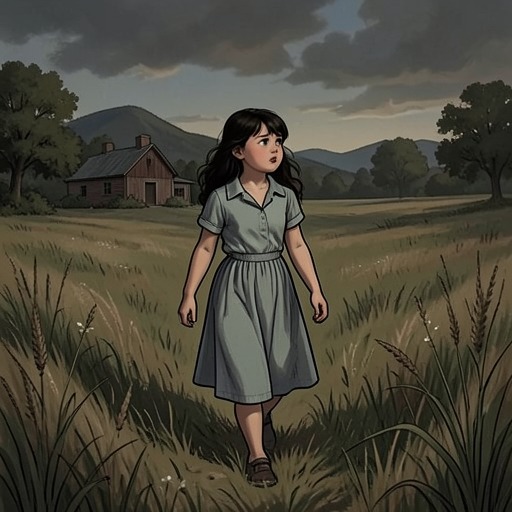
The placement begins on a Sunday after first Mass in Clonegal. Instead of taking his daughter home, Dan drives through Wexford towards the coast, where Mary’s family came from. The journey carries traces of the family’s circumstances: they pass through Shillelagh, where Dan lost the red Shorthorn in a game of forty-five, and Carnew, where the man who won the animal later sold her. In the car, Dan smokes with his window down while the girl lies across the back seat, watching the sky, trees, wires and passing birds. Her destination is unfamiliar, and her thoughts turn to what the Kinsellas might be like and whether their house will have a bathroom with running water.
The adults’ first discussion of the arrangement makes the difference between the homes plain. Dan remarks that the child will eat a great deal but can work; John Kinsella answers that she will not need to do that and will only help Edna Kinsella around the house. Edna Kinsella says that they will gladly keep her and that she is welcome. Dan jokes that the girl will eat them out of house and home, then suggests there will be no word of complaint this time next year. His words make the stay sound practical and temporary, while the Kinsellas’ welcome offers a different possibility: the girl may be received as someone to care for, rather than as a burden to put to work.
When Dan leaves, he puts rhubarb in the car and offers the Kinsellas good luck, adding a warning to the girl not to fall into the fire. He drives away without saying goodbye or telling her when he will return. The girl watches the car reverse into the lane and hears it cross the cattle grid and recede along the road. The abruptness of the departure gives the placement an uncertain beginning: she has arrived in a new household, but no clear promise has been made about how long she will stay.
Care becomes belonging
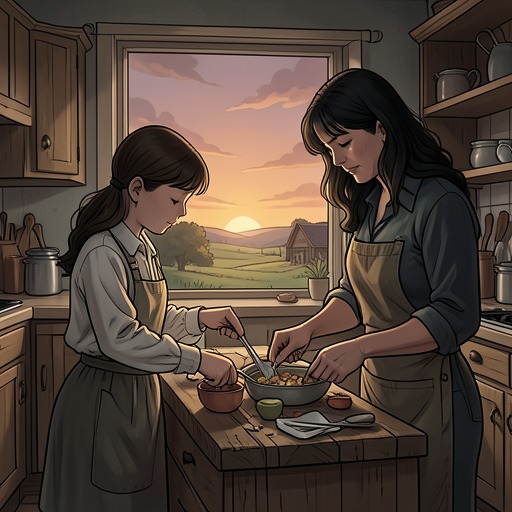
The summer’s change is registered through daily attention rather than a formal declaration of family. At the well, Edna Kinsella warns the girl that it is deep and tells her to be careful. After the girl drinks six ladlefuls of cool water, Edna pulls her back onto safe grass and goes down alone to retrieve the bucket. On the walk back through the fields, the girl holds Edna Kinsella’s hand and feels that she is keeping her balanced. She imagines that Edna ordinarily needs two buckets when the girl is not there. The thought reverses the usual direction of care: the child who has been looked after imagines herself as necessary to the adult beside her.
That night, Edna Kinsella tucks the girl into bed rather than making her kneel to pray. She allows her to say prayers in bed if that is what she normally does, and pauses while about to hang a blanket over the curtain rail to ask whether the girl would rather the light remain. The gestures are modest, but they leave room for the child’s habits and preferences. Together with Edna Kinsella’s protection at the well, they establish a form of care expressed through practical attentiveness rather than demands for gratitude or explanation.
John Kinsella’s care is also conveyed physically. On a moonlit night, he takes the girl’s hand as they set off along the road towards the sea. She realizes that Dan has never held her hand. At first, this recognition makes her want John Kinsella to let go, because the contrast is painful; as they walk, however, she begins to settle into the difference between life at home and life with the Kinsellas. John Kinsella adjusts his steps so that they can walk in time. The scene does not erase the girl’s earlier experience, but it gives her a bodily measure of another kind of companionship.
The return home
The placement ends when a letter from Mary brings news of the girl’s new brother, who weighs nine pounds, two ounces, and says that school starts on Monday. Mary has asked the Kinsellas to keep the girl through the weekend so she can get her ready. The girl asks whether she has to go back; Edna Kinsella confirms that she does and assumes she already knew. The return is therefore set in motion by the practical calendar of school and by the needs of the household she left, rather than by any stated decision about what the summer has meant to her.
On Sunday evening, after supper and washing and changing into their good clothes, the girl and the Kinsellas set out by car. They travel through Gorey and back along the narrow roads through Carnew and Shillelagh. When the girl points out where Dan lost the red heifer playing cards, John Kinsella asks whether that is a fact. The detail from the opening journey returns on the way home, linking the two crossings of the same landscape. The first trip carried the girl away from Dan without a clear goodbye; this one carries her back, but the attachment formed during her stay makes the return more than a reversal of the outward journey.
At the house, John Kinsella tells Mary that the girl is a credit to her and urges the girl to keep her head in her books, saying he wants to see gold stars in her copybooks next time he visits. He kisses her, and Edna Kinsella hugs her. The girl watches them get into the car and hears the doors close and the engine start. John Kinsella seems more eager to leave than he was on arrival. His words look towards a future visit, but the departure itself leaves the girl once more watching a car move away.
Silence and the lasting bond
After the Kinsellas have gone, Mary asks what happened. The girl answers that nothing happened, then recognizes that she has learned enough to understand that what happened is not something she ever has to mention. Her silence marks a change in her understanding of what she owes others: she does not have to make the summer fully available for her mother’s questioning. The placement has given her a private knowledge of care and attachment, as well as a reason to guard what cannot or will not be said.
The ending gives that bond a physical form. Hearing the car brake on the gravel and a door open, the girl runs down the lane. John Kinsella is at the gate, putting its clamp back in place. When he sees her, he grows still; she reaches him and is lifted into his arms. They hold one another for a long stretch as her heartbeat and breathing settle. Over John Kinsella’s shoulder she sees Dan approaching with his walking stick, while Edna Kinsella sobs and cries. The girl holds on, unwilling to get down and tell Edna Kinsella that she will never tell, yet held there by something deeper. The placement has ended in practical terms, but the girl’s final movement—running back to John Kinsella and clinging to him—shows how thoroughly the summer has altered her sense of where she belongs.