The zinc bucket
FosterThe zinc bucket is a practical household object whose changing place in Unnamed girl’s life gives it narrative weight. Carried from the scullery to The well, it belongs first to a routine of care: Edna Kinsella takes it into the fields, draws water, and leads the girl safely home. When the girl returns alone near the end of her stay, the same object accompanies an act of care she hopes to perform in return. The familiar work turns dangerous, and her attempt to lift the bucket ends with her being pulled into the water.
Household Use and Material Presence
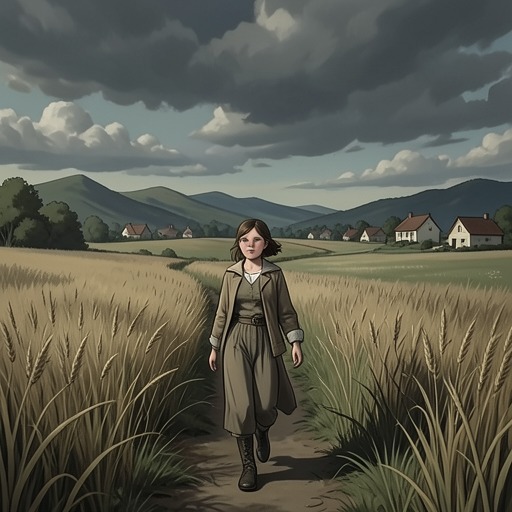
The zinc bucket is introduced as an ordinary implement fetched by Edna Kinsella from the scullery before they go down the fields. The journey gives its function a clear setting: they cross fenced strips of pasture where Friesian cows graze, pass a stile, and follow a grass path to a small iron gate and the steps down to The well. The bucket is carried through this landscape as part of the daily work of obtaining water, connecting the domestic interior to the farm beyond it.
At The well, the bucket is not the first vessel Unnamed girl uses. Edna points her to a dipper hanging from a nail, and the girl drinks from it while Edna holds the belt of her trousers to keep her from falling. Only after the girl has drunk does Edna go down alone to fill the bucket. The distinction matters: the dipper serves the girl’s immediate need, while the larger bucket belongs to the continuing household task of carrying water away. The same visit therefore places care for the child and routine labor side by side without making them identical.
The bucket’s material presence is emphasized through small physical actions. At the first visit, it floats on its side for a moment before sinking; the water seems to swallow it with a glug, and Edna pulls it up. The scene makes the vessel more than a static piece of equipment: its movement in the water is part of the work, and its weight and buoyancy shape how that work proceeds. The sound is noticed alongside the girl’s attention to her own breath echoing over the still mouth of The well.
The First Visit and an Experience of Care
The first trip establishes an association between the bucket and a rare sense of safety. Unnamed girl has already felt estranged in her unfamiliar clothes, but walking with Edna through the fields, she forgets that unease. The two do not speak as they go; the girl recognizes their quiet as something that can belong to happiness. Their shared passage to The well thus gives the bucket a place within a scene of companionship, not merely farm labor.
The water is reached through a sequence of careful gestures. Edna warns that The well is deep, holds the girl’s trousers, and lets her drink from the dipper before descending herself. The girl drinks six measures, looking first at the rippled reflection of the two figures and taking in her changed appearance: she is clean, in different clothes, and has Edna behind her. The bucket’s work follows that moment of recognition. Edna fills it, then draws it up, and on the walk back the girl holds Edna’s hand, imagining that without her the woman would tip over. The bucket’s journey home is therefore bound to the child’s new feeling that she is needed as well as minded.
The bucket also carries the practical implication of Edna’s life when the girl is absent. Holding Edna’s hand, Unnamed girl wonders how she manages when the girl is not there and concludes that she must ordinarily fetch two buckets. This is the child’s conjecture, not a confirmed account of Edna’s routine; nevertheless, it shows how she interprets the shared task. The bucket helps her picture Edna’s work, while the imagined second bucket turns that work into evidence that the woman has a life to manage beyond the child’s presence.
The Return to The Well
Near the end of the stay, the bucket appears again in the scullery, catching a watery light. Edna has gone to the milking parlour, and Unnamed girl considers going out to help but decides she would only be in the way. Instead, she thinks she could bring water from The well so Edna will have it for tea when she returns. She understands this may be the last thing she does there. The familiar implement becomes the means for an attempted act of reciprocity: the child wants to prepare something for the person who has cared for her.
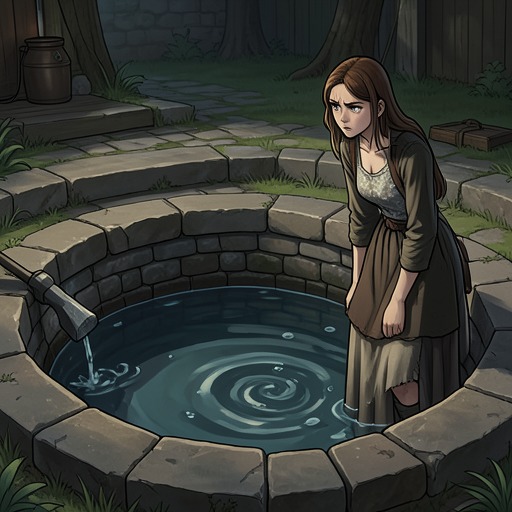
She takes the bucket down the fields and knows the route well enough to find The well with her eyes closed. Yet the path no longer resembles the one from the first evening. It is muddy and slippery, and the water has risen: on the earlier visit she stood on the fifth step, but now she is on the first, with the water close to the step below. These changes in the path and water make the return materially different even though the route and object are familiar. The bucket’s earlier safe passage through the same landscape cannot guarantee safety now.
At the water, Unnamed girl repeats part of the earlier procedure. She stands breathing over The well, listening to the sounds return, then bends down with the bucket and lets it float, swallow, and sink as Edna had done. The action is an imitation learned through watching. But when she reaches with her other hand to lift the bucket, another hand appears to come out of the water and pulls her in. The bucket does not itself pull her under; rather, the familiar task brings her into the position from which the sudden danger takes hold.
Repetition, Care, and Danger
The zinc bucket structures a striking contrast between two visits. On the first, Edna accompanies Unnamed girl, steadies her at the edge, and manages the bucket herself; the girl drinks safely and walks back holding her hand. On the later visit, Edna is away, and the girl takes over the water-drawing gesture. What had been a scene of being cared for becomes an attempt to care for someone else, but without Edna’s presence to guide the task. The reversal is not simply a change in who carries the bucket: it alters who is responsible at the well and exposes the danger beneath a familiar routine.
The episode also gives the bucket a role in the girl’s sense of belonging. At the first visit, the water tastes to her of Dan leaving and of having nothing after he was gone; she wishes the place without shame or secrets could be her home. The bucket is part of the practical world that makes this wish feel briefly possible, carrying water from the fields toward the house where she is being looked after. On the return visit, the girl’s intention to bring water for Edna’s tea shows that she has taken this domestic pattern into herself. The same wish to participate in care now leads her back to the exposed edge of The well.
After the fall, Unnamed girl comes back soaked to the skin. Edna goes still, gathers her up, takes her inside, and makes up her bed again; the following morning, she keeps the girl upstairs and brings her hot drinks with lemon, cloves, and honey, as well as aspirin. The bucket is not described as the cause of the fall, nor is its later disposition given. Its significance lies in the repeated task it enables: first, Edna uses it within a scene of protection; later, the girl repeats that work alone, and the act ends in danger before Edna’s care resumes indoors.