Bōli bànshén
GunsoulThe Demigods of Ultraviolence are the wasteland’s true sovereigns of weaponized death: spiritual beings formed when the qi released by human killing accumulates around an idea of violence until that idea incarnates. Their importance lies in the way they transform ordinary murder into a continuing supernatural system. Each firearm, blade, bomb, or other weapon may acquire power from its victims, but the greatest concentration of that power produces a demigod whose influence survives individual bodies, sects, and historical eras.
Nature and Emergence
The Demigods of Ultraviolence arose during the spiritual collapse of the Lost Age. After the Spiral Dancer sought to shock humanity out of its decay, the world instead produced monsters. Cultivation became a route to power and glory rather than enlightenment, while nations approached a war capable of destroying them all. Alongside self-aware megacorporate spirits born from industrialized greed, the Demigods of Ultraviolence emerged from a civilization increasingly organized around violence.
Their existence follows a spiritual economy of death. When a person is slain, that victim’s qi returns to the world. If the death is dedicated through a sacrifice, another spiritual entity can claim and direct the resulting surge. An undedicated killing sends much of that energy toward the weapon responsible for it. Over time, the qi of countless victims can rub off on a weapon, granting it supernatural properties; most of the accumulated force, however, flows toward the larger idea represented by the weapon. When enough power gathers around that idea, it incarnates as a spirit, just as a region of the Thunderlands can manifest a caretaker spirit.
Weapon Families and Hierarchy
The Demigods of Ultraviolence are plural rather than a single species with one common form. Each weapon family possesses its own representative power: The Gun, The Nuke, The Blade, The Bomb, The Biohazard, and The Arson are among the examples identified by Arc. Their strength is unequal because their authority depends upon historical body counts and cultural prominence. Nuclear weapons are terrifying, but comparatively few people were killed by them across history. The Spear and The Blade therefore dominated for long periods before losing prominence, while The Gun eventually usurped their position.
Each demigod has a dedicated Path, but its descendants do not necessarily follow the same reincarnation pattern as Gunsouls. The Blade is said to prefer possessing swords rather than people, whereas The Gun alone is known to pass from Gunsoul to Gunsoul. This difference makes the firearm lineage unusually personal and cyclical: its power is repeatedly embodied in human successors, who may become vessels, victims, or rivals of the same inherited force.
The Gun as the Central Example
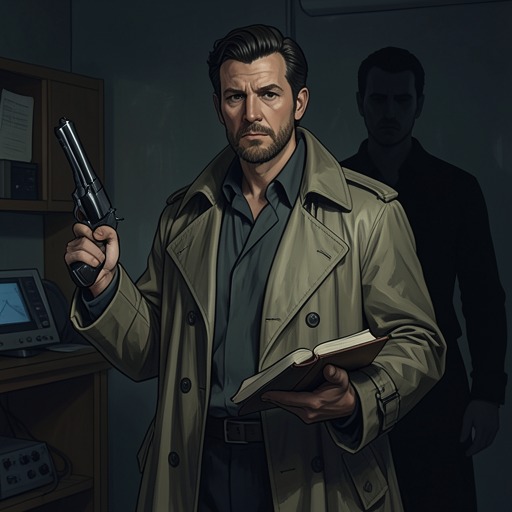
The Gun reveals the most consequential truth about the Demigods of Ultraviolence. It is not an individual identity but a title, and also a curse that can be passed on. This explains why The Gun craves death while sometimes encouraging people to flee rather than fight, why Arc tried to prevent a Gunsoul from killing its target without lethal damage, and why Gatling Man described the condition as a curse from which he needed liberation. The apparent personality of The Gun is therefore the surface expression of a recurring office of violence rather than the permanent self of one being.
The Gun is more precisely defined as death by firearms. It is not simply an infernal creature associated with death, nor is it reducible to a particular weapon. Every firearm murder strengthens the larger principle, whether the killer acts in The Gun’s name or has never heard of it. As Arc explains, when people continue killing one another with guns, The Gun cannot permanently die. Its survival is distributed across the world’s violence, making its return independent of any single host.
The succession is also coercive. The Gun eventually comes for its Gunsouls, either killing them or forcing them to win the right to become its next host. Yuan Guang recognizes that the same fate awaits him. The cycle makes inheritance indistinguishable from threat: to wield the power is to enter the path toward being consumed by it, while resisting it requires confronting the violence that sustains it.
Effects on Cultivators and Society
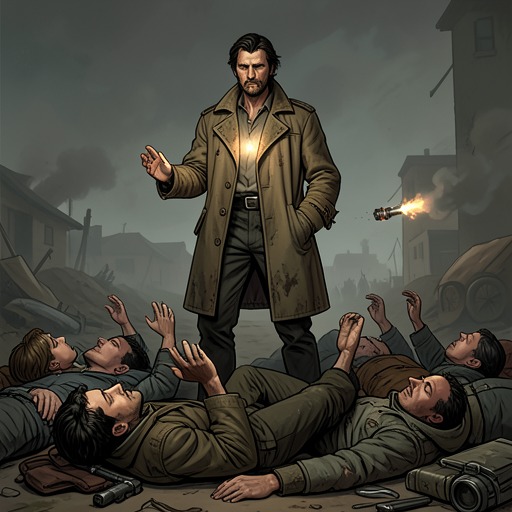
The Demigods of Ultraviolence give spiritual meaning to violence that might otherwise appear random. Sacrificial deaths are valuable because they direct released qi toward a chosen entity, which helps explain why Hitobashira are so precious to infernal and supernatural powers. A human body can thus become an instrument for feeding a demigod, while a battlefield becomes an uncontrolled source of nourishment for the weapon principle involved.
Their power also exposes the limits of ordinary cultivation. Yuan Guang begins as a Scrap, one of the many people born without the potential for a qi core, and later identifies himself only reluctantly as a First Coil cultivator. The social order treats such labels as destiny, reserving rare spirit pills for established cultivators and reducing unpowered people to labor. Against that background, the Demigods represent a darker inversion of cultivation: they do not gain authority by disciplined personal advancement but by absorbing the qi released from the deaths of others. Their strength grows through the same hierarchy that condemns Scraps, yet on a vastly larger and more impersonal scale.
The imagery surrounding the demigods makes this system visible. The Yinyang Khan appears as a four-armed colossus marked by black-and-white bodily symbolism, a lightning tiger skin, golden clothing, and a necklace of skulls. Even as a hologram, he radiates malice and a savage delight in the spectacle of competition. His presentation links supernatural authority to public violence, ritualized display, and the consumption of death as spectacle.
Defeat, Continuance, and Significance
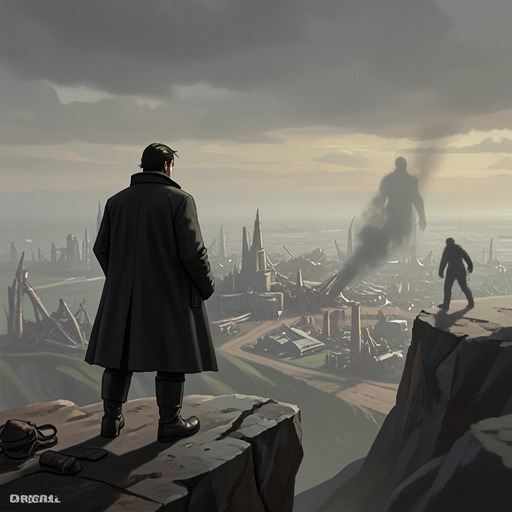
The Demigods of Ultraviolence are not defeated simply by destroying a body. Because they are ideas fed by recurring human violence, their existence persists beyond individual incarnations. The Gun’s title can move between Gunsouls, and its power remains available so long as firearms continue to kill. This gives the demigods a form of continuity closer to a social or metaphysical institution than to biological survival.
Yuan Guang’s later transformation marks a significant resistance to that logic. When Revolver senses The Gun inside Yuan Guang, the presence is described as quelled, as though its safety has been engaged. Yuan Guang declares that The Gun is part of him but that he is greater now, naming himself The Gunman. The moment does not erase the demigod’s existence; it changes the relation between host and inherited power. Instead of allowing the title to define him completely, Yuan Guang claims a self capable of containing and mastering the Gun Path.
The Demigods of Ultraviolence therefore function as both creatures and explanations. They account for miraculous weapons, sacrificial practices, cursed lineages, and the persistence of large-scale violence across history. More fundamentally, they show how repeated human killing can become an autonomous power that outlives its perpetrators. The Gun’s promise that it will never die is not merely a boast by a monster. It is a verdict on a world that keeps supplying the deaths from which such monsters are made.