Hungry ghost
GunsoulHungry ghosts are the dangerous and sorrowful dead who remain after death instead of passing cleanly into reincarnation. In the world of Gunsoul, funerals are not merely acts of respect: killers perform the Last Rites sutras for their victims because an improperly settled corpse may return to haunt the living. The Hungry ghost therefore embodies both supernatural threat and moral residue, turning every mass death into an obligation that cannot be dismissed once the battle is over.
Definition and Conditions
Hungry ghosts are described as bitter shadows bound to the life they lost and burdened by unfinished business. Those who return from death before reincarnation speak of Nowhere as a void through which the dead fall until reaching a new self; a soul that fails to move onward may instead linger in a wasteful, tormented state. Yuan Guang understands that even a cultivator’s Hungry ghost is only a pale shadow of the person who lived, yet it remains dangerous enough to torment the living. The condition is thus a diminished continuation rather than a true resurrection: the dead retain grievance and spiritual force while losing the fullness of their former existence.
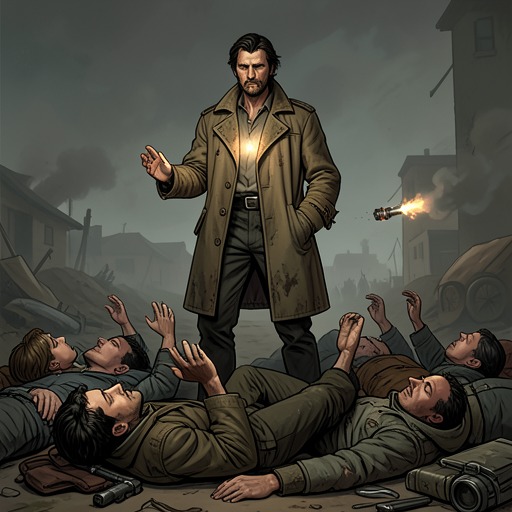
The possibility of becoming a Hungry ghost shapes burial customs from the opening of Yuan Guang’s story. After Yuan Guang and his companions are murdered, their killer digs them a tomb and gives them the Last Rites sutras. The gesture is grotesquely contradictory, since the murderer is still responsible for their deaths, but it reflects a practical belief that funerary ritual can prevent revenge from crossing back into the world. Yuan Guang briefly wonders whether his own will might preserve him despite the sutras, because he wants to avenge his fallen friends and fulfill his final curse against the masked murderer. His death is therefore framed from the beginning not as a clean boundary, but as a contested passage between vengeance, burial, and reincarnation.
Ritual, Burial, and Prevention
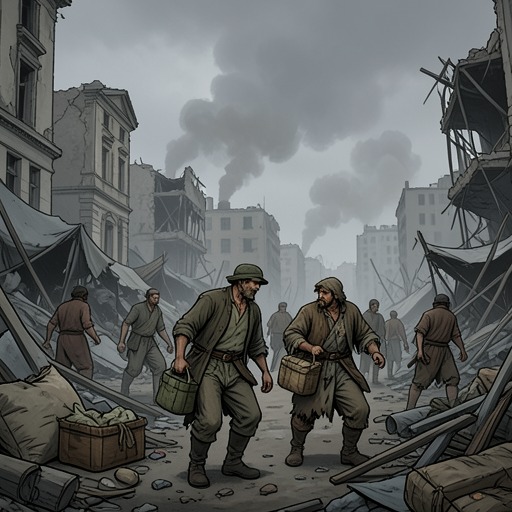
Because Hungry ghosts can remain after death, burial becomes a form of spiritual containment as well as mourning. Revolver explains to Yuan Guang that shooting corpses will not restore his murdered companions as ghosts or Gunsouls: if anyone had wished them to rise, they would already have awakened. The distinction separates ordinary death from the exceptional condition that produced Yuan Guang, while also closing off his hope that violence could recover the people he lost. Later, when the Gun’s bombardment leaves Fleshmarket filled with unidentifiable remains, Yuan Guang helps carry bodies into a mass trench rather than attempting individual graves. He does not bury his defeated enemies out of honor; he does it because even the diminished Hungry ghosts of cultivators remain dangerous, and he refuses to let the dead continue tormenting the living. Holster performs the Last Rites sutra without stopping, silently praying over the bodies while the survivors gather what can be salvaged. The ritual turns burial into an urgent communal duty, especially because the destruction has produced too many corpses and too few gravediggers.
Mass Death and Collective Consequences
The destruction of Fleshmarket demonstrates how quickly the Hungry ghost problem becomes a civic catastrophe. The Gun’s rain of qi-charged bullets levels every building, turns sewers and basements into tombs, and leaves hundreds of bodies undiscovered as sunset approaches. Orient rescues only around a hundred people, while the contaminated reservoir makes the city incapable of sustaining itself even if survivors attempt to rebuild. Fleshmarket is therefore doomed twice: first by physical annihilation, and then by the spiritual danger created by unburied dead who may return by the following day. Yuan Guang’s grim work in the trench is part of a race against both time and haunting, showing that mass violence continues after the weapons fall silent because its victims still require ritual care.
The Dead as Ethical Remains
The Hungry ghost also gives death a social and ethical afterlife. Yuan Guang learns that Deathsong may have allowed such spirits to linger for two opposed but compatible reasons: to grant the dead one final opportunity to settle unfinished affairs, and to compel the living to assume responsibility for those they have killed or failed to bury. This possibility changes the meaning of ritual. The Last Rites are not simply a defense against supernatural retaliation; they are an acknowledgment that the dead remain part of the community’s obligations even after their bodies have become difficult to identify. Yuan Guang’s response to the ruins of Battletown follows the same principle. Pale, emaciated figures haunt the former slave market, striking their heads against hastily drawn Barriers around the refugee camps. Rather than treating them as monsters to be destroyed, he recognizes them as bitter shadows yearning for the lives they lost, and sees their existence as a reminder of his own temporary condition. Orient and Holster therefore propose altering the artificial leyline so that Battletown and the History Road collapse together in a single Last Rites ritual, burying the city, allowing the Hungry ghosts to rest, and releasing the Human Pillars that had been forced to sustain the leyline. The ritual destroys the Yinyang Khan’s physical legacy while giving the exploited dead a passage beyond the tyranny that used them.
Persistence Beyond the Gun
The scale of death does not end with the Gun’s destruction. In Nowhere, Yuan Guang hears triggers and explosions above the void and sees corpses falling through darkness, humans, beasts, demons, and Yaoguai alike, each marked by a bullet from the violence of firearms. The Gun is dead, but its worshipers continue sacrificing lives, and Bullet Hell still threatens to claim victims without distinguishing heroes from villains. The crucial difference is that no prison warden remains to offer these souls another chance at revenge; they must find rest without the cycle’s former machinery. Yuan Guang experiences this conclusion as tragic rather than triumphant. For every Gunsoul tormented by the Gun, there were people who resisted the wastes’ horrors, yet victims and warriors alike are still destined to fade while the violence that produced them persists. The Hungry ghost thus extends the book’s central conflict beyond any single killer: even when a weapon, tyrant, or battlefield is removed, the dead preserve the evidence of what happened and demand that the living decide whether responsibility will end in revenge, burial, or release.
Narrative Significance
Hungry ghosts connect the book’s metaphysics to its recurring images of mass violence, abandoned cities, and improvised graves. They make burial politically meaningful: when Yuan Guang, Holster, Orient, and the survivors tend the dead of Fleshmarket and Battletown, they are not merely restoring custom but resisting a world in which bodies are treated as ammunition, fuel, or disposable remnants. The threat of haunting also complicates Yuan Guang’s revenge. He begins as a murdered man who wishes to return against his killer, but gradually becomes someone who protects the living from the dead and seeks release for those whom larger powers have sacrificed. In that progression, the Hungry ghost is both a supernatural creature and a measure of moral failure. A society that cannot bury its victims leaves its violence active; a society that performs the Last Rites accepts that survival carries duties toward the dead.