Annie Duchesne
HappeningAnnie Duchesne’s clandestine abortion at twenty-three becomes the central experience through which she examines class, law, reproductive choice, and the transformation of memory into writing. The account follows her from the discovery of an unwanted pregnancy and the search for practical help to a later act of narration that refuses to treat the event as merely private or safely past.
Identity and social background
Born into a family of laborers and shopkeepers, Annie Duchesne was the first in her family to pursue higher education. Her baccalauréat and B.A. in liberal arts had taken her away from factory work and commerce, but they did not, in her view, erase the poverty associated with her working-class origins. She understood the pregnancy not only as a personal crisis but as a mark of social failure, joining the figure of the pregnant young woman to that of the alcoholic in a shared inheritance of deprivation.
Her account also places the pregnancy against a longer history of sexual fear and shame. She describes having been taught to regard her own desire with suspicion and recalls the social judgments that had accompanied her efforts to avoid intercourse. This history helps explain why the pregnancy could seem at once astonishing and, in retrospect, almost inevitable. The contradiction is central to her self-understanding: she experiences the event as something that should not have happened to her, while also reading it through the constraints and stigma that had shaped her life.
Pregnancy and decision
In early October, Annie Duchesne had a sexual relationship with P, a political science student she had met during the summer and visited in Bordeaux. She knew that the Ogino method placed her in a fertile period, yet did not imagine that she would become pregnant. Later, the familiar images of Bordeaux—the room overlooking the Cours Pasteur, the narrow bed, the Café Montaigne, and the cinema—acquired a single, painful meaning: she had been there without knowing that a pregnancy was beginning.
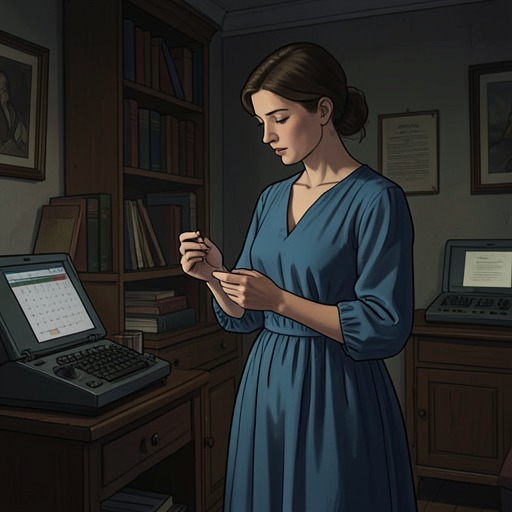
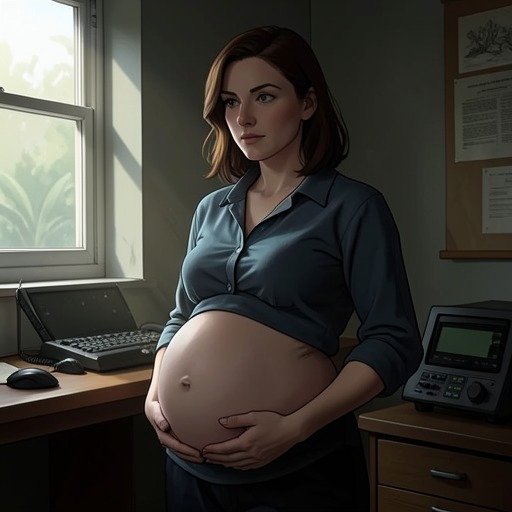
In November, a nurse on the university staff gave her injections on two consecutive days without comment. During the Armistice Day weekend at her parents’ home, Annie Duchesne experienced a brief discharge and deliberately placed stained laundry where her mother would see it, hoping to misdirect her. Back in Rouen, Doctor N confirmed the pregnancy and sent a Pregnancy certificate. It named Annie Duchesne and gave a delivery date of July 8, 1964. The document made a possible future suddenly legible; she imagined summer, then tore it up.
She wrote to P that she was pregnant and would not continue the pregnancy. Their relationship had not seemed especially serious to either of them, and she took pleasure in unsettling his carefree attitude. She expected him to be relieved by her decision. The letter makes clear that, although the pregnancy involved both of them, the decision and its consequences were becoming hers to confront.
Seeking help and confronting risk
Annie Duchesne initially regarded an abortion as feasible, though difficult. Her knowledge came from novels, local gossip, and hushed conversations, which had left her with fragmentary ideas about methods and the costs of finding someone who would help. A story from a young divorcee had prepared her for pain, but not for the possibility that an abortion could be fatal. The gap between what she thought she knew and the danger she faced gives her early confidence a sharp retrospective irony.
A week or so before Christmas, LB came to see her after Jean T had passed along the message that Annie Duchesne needed help. LB gave her the address of Madame P-R, a paramedic who worked at a clinic and offered abortions at Passage Cardinet in Paris’s 17th arrondissement. LB described a procedure using an Abortion probe and said that the instruments were sterilized. She also disclosed that she herself had contracted septicemia despite those precautions, and advised Annie Duchesne to obtain antibiotics afterward. Annie already had a prescription for penicillin, which made the plan seem manageable to her. Madame P-R charged four hundred francs; LB offered to lend the money. The address and the loan turned an apparently distant possibility into an immediate course of action, while LB’s own infection exposed how little hygiene could guarantee safety.
Annie Duchesne later explains why LB remains identified only by initials. LB belonged to a succession of women whose knowledge, practical help, and judgment supported her through the ordeal. The wish to recognize LB publicly is checked by the knowledge that she is a real, living person who never agreed to have her identity disclosed. This restraint makes the support visible without treating another woman’s private life as the narrator’s property.
Memory, law, and writing
The abortion remains present in Annie Duchesne’s later life through recurrence rather than simple recollection. For years, fictional accounts of abortion could shock her, and songs that had helped her endure the period—La Javanaise and J’ai la mémoire qui flanche—still upset her when she encountered them. The past is not sealed away by the passage of time; particular words and sounds bring its emotional force back into the present.
Writing about the event begins as a frightening possibility. Annie Duchesne tests whether the impulse to write is still there, dreams of an abortion book whose cover announces “OUT OF PRINT,” and cannot decide whether the dream urges her to write or warns that writing would be pointless. She nevertheless resolves to proceed, comparing that determination with the one that followed her decision to end the pregnancy. Her diary and engagement book provide dates, while the narrative form allows her to revisit images and establish what happened. The work is therefore both an account of remembered events and an inquiry into how an experience that once seemed difficult to name can become intelligible in language.
Her retrospective account also rejects the idea that the end of criminal prohibition should end public discussion. Annie Duchesne argues that when abortion is no longer outlawed, former victims may remain silent on the assumption that the matter is over, allowing secrecy to persist in another form. She writes from a historical distance that lets her describe the experience without relying on the slogans of the earlier protest movement, while insisting on its enduring connection to law, ethics, taboo, and the body.
Aftermath and significance
For many years, Annie Duchesne marked the night of January 20–21 as an anniversary. In retrospect, she understands the ordeal and sacrifice as necessary to her later wish to have children and accept reproduction within her own body. This interpretation does not erase the danger or distress of the abortion; it gives the event a place in a life that continued beyond it.
The conclusion also resolves a particular burden of guilt: not guilt for having had the abortion, but for having experienced something consequential and done nothing with it. By writing, Annie Duchesne turns what had felt like a discarded present into testimony. She proposes that the body, sensations, and thoughts can become writing, allowing an individual experience to enter the lives and understanding of others. The significance of her character thus lies not only in the decision she made under restrictive conditions, but in her later refusal to let silence be the final form of that experience.