Madame P-R
HappeningMadame P-R is the middle-aged paramedic who provides the narrator with a clandestine abortion in Paris in January 1964. She is neither presented as a conventional doctor nor reduced to a simple villain: she works with practical competence in a modest apartment, charges for a service that carries legal and personal risks, and becomes a figure the narrator remembers with gratitude, unease, and lasting intensity. Her role brings the consequences of criminalized abortion into the intimate space of an improvised medical encounter.
Identity and Practice
Madame P-R works as a paramedic at a clinic and lives in a small apartment in the 17th arrondissement of Paris. The narrator first receives her address from LB, who has dealt with her before. LB describes her as reliable and attentive to hygiene, saying that she sterilizes her instruments. That reassurance is qualified by LB’s own experience of septicemia after an abortion. She advises the narrator to take antibiotics afterward; the narrator already has a prescription for penicillin.
Madame P-R’s work is paid and clandestine. She charges four hundred francs, to be paid in cash, and her method involves using a speculum and a probe. The narrator understands the arrangement as accessible in practical terms: she has an address, money lent by LB, and penicillin. But the apparent simplicity depends on private knowledge passed between women, rather than on safe, publicly available medical care. Madame P-R’s expertise is useful precisely where formal protection is absent, and it remains unacknowledged as expertise.
The First Meeting and Its Terms
On January 8, the narrator travels to Paris to meet Madame P-R and arrange the date and fee. After hitching a lift in sleet, she reaches Passage Cardinet in the dark and climbs to the third floor of an old, dilapidated building. The name on the street sign differs from the Impasse Cardinet address LB had given her. Inside, Madame P-R ushers her through a narrow, dark kitchen into the apartment’s slightly larger furnished room. The flat consists of only those two rooms.
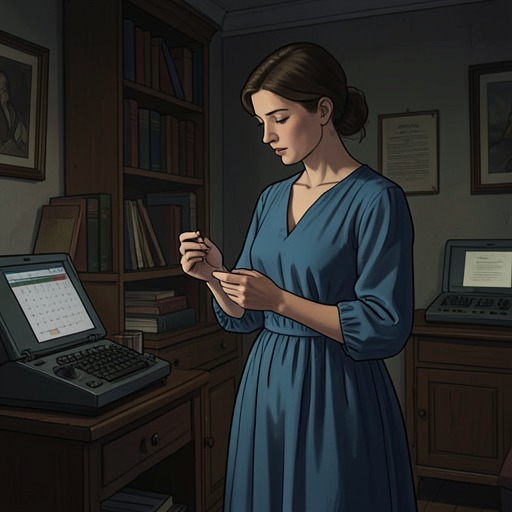
Madame P-R is short and plump, with spectacles, dark clothes, and gray hair tied in a bun. She asks when the narrator last menstruated and examines her abdomen over her skirt. She says the timing is suitable and treats the matter as a practical task. She sets out the essentials: the date, the technique, and the fee. She does not address the narrator familiarly or ask personal questions. The narrator finds this concentration on logistics unexpectedly reassuring. In retrospect, she understands that a conversation kept to practical matters could prevent distress from turning into delay or a change of decision.
The narrator also considers what may have driven Madame P-R. Money was evidently part of the arrangement, and the fee was high. Yet the narrator wonders whether Madame P-R also believed she was helping women. Her position at the clinic, where she spent her working day tending to sick and pregnant people, offered a contrast to the authority of doctors who scarcely noticed her. In her apartment, she exercised a skill that official institutions could not openly recognize. The narrator suggests that the charge reflected not just risk and experience, but also the shame the clandestine service could leave behind. These motives remain the narrator’s retrospective possibilities, not established facts about Madame P-R’s private thoughts.
The Procedure and Further Assistance
When the narrator returns on January 15, Madame P-R has prepared a table beside the bed and instruments heated in water. She works briskly and repeats that she will use the probe alone. While attending to the procedure, she recounts the recent death of a woman after another abortion provider used a dangerous method. The narrator later understands that Madame P-R was expressing anger at incompetent practice and trying to reassure her, although the story frightened her instead.
After inserting the first probe, Madame P-R tells the narrator not to touch it and gives her brief instructions about what to expect and when to contact her. They drink coffee in the kitchen. Madame P-R is satisfied that the immediate work is finished, but she remains concerned about the narrator’s journey home. She insists on walking her to Pont-Cardinet station, wearing her coat over her slippers. The narrator initially wants to leave alone, yet accepts rather than offend her. Only afterward does she imagine that Madame P-R may also have feared the narrator would collapse outside the apartment.
Madame P-R’s work continues when the first probe needs replacing. On a later visit, the narrator is no longer afraid, and the replacement does not hurt. Madame P-R recognizes the narrator’s condition as resembling labor, a comparison that had not occurred to the narrator before. She charges nothing extra and asks for the probe to be returned because that model is difficult to find. Her practical assistance ends there; she does not provide further care. The narrator does not send the probe back. She eventually drives into a forest and throws it into the bushes, a decision she later regrets.
Memory, Meaning, and Legacy
The narrator never sees Madame P-R again, but does not stop thinking about her. For years, she recalls the apartment from the position in which she lay and remains convinced that its walls hold the memory of the women who went there. She also remembers Madame P-R’s face and habits, while the address book page bearing her name becomes a material trace: the narrator tears it out soon afterward, yet the name remains in memory. Years later, she associates it with a schoolboy and imagines a family connection, but presents this as an association produced by memory, not as knowledge about Madame P-R’s life.
The narrator’s final assessment holds gratitude and discomfort together. She remembers Madame P-R as avaricious and notes that her apartment was poorly furnished; at the same time, she credits her with helping to bring the abortion about and describes her as having wrenched the narrator away from her mother and into the world. She says the book should be dedicated to her. The relationship is therefore not sentimentalized: Madame P-R’s paid service was limited, but its consequence was immense in the narrator’s life.
The account places this encounter within the history of abortion’s criminalization. The narrator describes how prohibition forced women to seek private assistance, rely on informal networks such as LB’s, and accept the risks attached to clandestine care. She also connects abortion’s past secrecy to the silence that can persist after laws change: the end of criminalization does not make earlier experiences disappear or ensure that those who endured them will speak. By reconstructing Madame P-R through specific meetings, arrangements, and remembered objects, the narrator turns a hidden transaction into a record of embodied experience. Madame P-R remains both a particular woman, remembered with unresolved complexity, and part of the practical support through which women helped one another under conditions of legal exclusion.