Doctor N
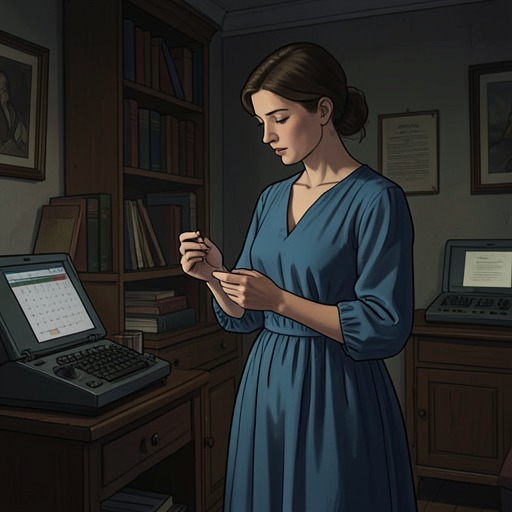
HappeningDoctor N is the gynecologist whom Annie Duchesne consults after her period fails to return in 1963. He confirms her pregnancy, gives her treatment that cannot end it, and later offers limited help while keeping his distance from the clandestine procedure she seeks. His appearances trace the narrow, legally perilous space in which medical care could be offered: he is neither a straightforward rescuer nor merely an obstacle, but a physician whose actions are constrained by the criminalization of abortion.
Identity and Introduction
By the end of October, Annie Duchesne has given up hope that her period will return and has arranged an appointment with Doctor N for November 8. She fears that her mother may notice the delay while sorting the laundry, a private anxiety that precedes the medical confirmation. On the way to the appointment, she encounters Jacques S and disguises the purpose of her journey by claiming she has a stomach complaint and is going to see a stomatologist. The mistaken term briefly threatens to expose her secret, but she leaves before he can accompany her.
At the examination, Doctor N tells her that she is pregnant and identifies her apparent stomach pains as morning sickness. He prescribes injections intended to bring back her bleeding, although he appears doubtful that they will work. As she leaves, he offers a cheerful remark about children conceived in love. The narrator remembers it as painfully out of step with her situation: she does not want to continue the pregnancy. The contrast establishes an early limit to his understanding of her objective, even as he has provided a diagnosis and a possible treatment.
Limited Assistance and Legal Boundaries
After the injections fail, Annie Duchesne continues to seek help. When she returns to Doctor N, she tells him that she does not intend to keep the pregnancy and says she has harmed herself, a claim she later identifies as a lie meant to make the urgency of her decision unmistakable. He examines her, says that all is well, and remains visibly distressed as she weeps. He does not offer to perform an abortion. Instead, he gives her a prescription for penicillin and advises her to take it around the operation, without asking where she will go or what procedure is planned.
The narrator initially interprets this encounter as a lost opportunity, believing that stronger pleading or a more convincing account might have changed his decision. She later qualifies that judgment: she may have misread what was possible, and only Doctor N could explain his reasoning. The assistance he does provide is concrete but restricted. Penicillin may help guard against infection, yet it does not make the abortion safe or legal, and he leaves the procedure itself to others.
That boundary becomes clearer after Annie Duchesne has gone to Madame P-R and had a probe inserted. From the station, she telephones Doctor N, perhaps hoping that he will summon her and take over. After a long pause, he recommends Masogynestril and makes clear through his response that he does not want her to call again. In a later reflection, the narrator imagines the dilemma facing him: seeing her could require him, under the law, to remove the device and allow the pregnancy to continue, while refusing to see her could leave her in danger. This is a retrospective reconstruction, not knowledge of his private thoughts. It nevertheless places his withdrawal within a system that made the provision of care legally hazardous and forced medical decisions into a choice among harms.
Emergency and Aftercare
When the narrator later experiences severe bleeding, a doctor on night duty sends her to Hôtel-Dieu Hospital. The hospital episode follows the clandestine procedure and the failure of her efforts to manage the situation without medical intervention. After five days, she is discharged on January 25. Once home, she contacts Doctor N to tell him that the ordeal is over. He advises her to take penicillin because she was given no medicine at the hospital, and he informs the family physician of the abortion so that she can be examined discreetly and receive the medication.
This follow-up differs from his earlier refusal to take over the procedure: after the immediate crisis, he helps arrange continuing care while preserving discretion. His role remains practical rather than publicly protective. The need for secrecy persists even after the abortion has ended, because the legal and social risks surrounding it have not simply disappeared with the medical emergency.
A few months later, Annie Duchesne returns for an examination. Doctor N tells her that she has come through the experience remarkably well, a response the narrator understands as encouraging her to regard survival as a personal victory. He gives her a diaphragm and sperm jelly. The encounter brings contraception into their relationship as a concrete form of prevention, though it follows a pregnancy and an abortion that the available legal and medical arrangements had failed to prevent or safely accommodate.
Characterization and Narrative Significance
Doctor N is characterized less through a continuous portrait than through separate encounters, each revealing a different limit or possibility in his care. At the first consultation, his treatment and optimistic remark do not align with Annie Duchesne’s intention. Later, he offers penicillin without asking for details, but will not accompany her into the clandestine procedure. Afterward, he advises her on medication, helps ensure discreet follow-up, examines her, and provides contraception. The sequence resists reducing him either to a compassionate ally or to a callous authority.
The narrator’s account also distinguishes what she knew then from what she imagines later. For years, she believed that she had failed to persuade Doctor N; in retrospect, she considers that the law may have made meaningful intervention impossible for him. Her uncertainty does not absolve him or establish his motives. Instead, it shows how criminalization shaped the doctor-patient relationship: the patient had to conceal her purpose, the physician avoided explicit discussion, and even necessary treatment was framed through prescriptions and guarded communication. Doctor N’s significance lies in this constrained involvement, which makes visible the distance between medical expertise and a patient’s ability to obtain safe, lawful care.