P
HappeningP is a political science student whom the narrator meets during the summer and later visits in Bordeaux. Their relationship leads to her pregnancy, but as she seeks an abortion he offers little practical support and avoids making the crisis part of their shared social life. His importance in the narrative lies less in a fully developed portrait than in the distance between their circumstances: while the narrator’s attention is consumed by finding help, he appears anxious to preserve his studies, future prospects, and holiday plans.
Identity and Introduction
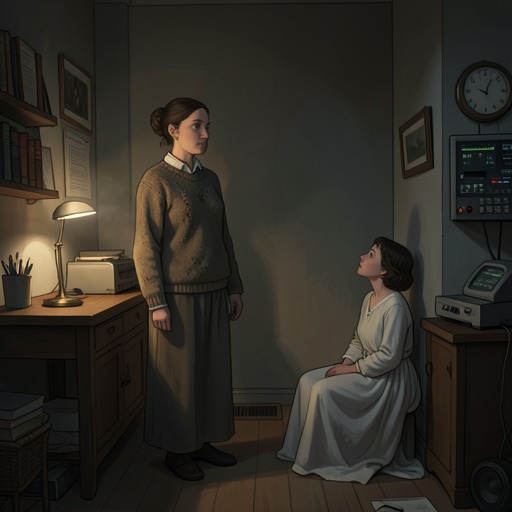
The narrator identifies P as a political science student she met during the summer vacation. She visits him in Bordeaux, where their relationship becomes intimate. In early October, they have sex on several occasions. The narrator knows that, according to the Ogino method, the timing puts her at risk of pregnancy, but she cannot imagine that conception will occur. In retrospect, the memories of Bordeaux—the room overlooking the Cours Pasteur, its traffic, a narrow bed, the Café Montaigne, and a film they saw—are gathered under the knowledge that she was becoming pregnant without knowing it.
When the narrator tells P that she is pregnant and does not intend to continue the pregnancy, she takes pleasure in disrupting his carefree attitude. She expects that he will be relieved by her decision. The relationship, she says, had not seemed especially likely to develop further; her account therefore places the pregnancy not within a secure partnership but within an attachment already marked by uncertainty about what either of them wanted.
Letters and Unequal Responsibility
As the narrator searches for someone who can help her, P sends only infrequent letters from Bordeaux. In them, he refers to the many problems standing in the way of a solution, but the narrator’s diary records her conclusion that he is leaving her to cope alone. Looking back, she interprets his letters as evidence that he no longer cared and wanted to return to his untroubled routine, focused on examinations and a future career. She also acknowledges that she may have sensed this at the time without being willing to face it.
The narrator’s decision to keep the relationship going is presented as conscious, even though she recognizes its costs. She cannot bear the prospect of adding separation to her urgent search for an abortion. Her frustration with the thought of P joking with other boys in Bordeaux gives her another reason to keep disrupting his peaceful routine. They had already arranged to spend Christmas vacation at a winter resort with another couple, and she has no intention of changing those plans. The account thus distinguishes his apparent withdrawal from her own decision to remain attached: she sees the imbalance, but does not feel able to end the relationship while confronting the crisis.
The Le Mont-Dore Holiday
During the holiday in Le Mont-Dore, the narrator meets P again, although she seriously doubts that he has wanted to see her. Traveling to the Massif Central and spending some of the money she needs for an abortion are, in her later judgment, unwise choices. At the time, however, she has never been to the mountains and needs a few weeks before she can face the address in Paris that LB has given her. The trip therefore combines delay, desire, and the practical pressure of a limited budget.
P and the narrator stay at a modest inn, while Annick and Gontran, the other couple, stay at an expensive, old-fashioned hotel. The contrast in their accommodation marks a difference in means, but the group’s outward mood is light and sociable: they go dancing, plan to see films, and trade jokes. Annick and Gontran do not know that the narrator is pregnant and wants an abortion. P has not told them, dismissing them as bourgeois and conformist because they are engaged but do not sleep together. He also seems unwilling to spoil the vacation by raising the matter. When the narrator mentions it, his face darkens; she doubts that he has found a solution in Bordeaux, or even made much effort to look.
The couple’s intimacy during the holiday is hurried and infrequent. The narrator observes that neither of them responds to the situation as though it had changed their ordinary conduct: P does not make the pregnancy a reason to discuss their relationship openly, and she struggles to join the others’ pleasure. While the group pursues its holiday, her central concern remains finding a way to end the pregnancy. The difference is not simply between enjoyment and distress, but between P’s apparent ability to keep the crisis at the margins and the narrator’s inability to escape it.
Characterization and Narrative Significance
P is characterized primarily through actions the narrator can observe—his sparse correspondence, his silences, his darkened expression when she raises the abortion, and his choice not to tell their companions. The account does not establish precisely what he feels or whether he makes any efforts that the narrator does not know about. She herself marks that uncertainty when she says she doubts he tried to find a solution. His motives are therefore not presented as settled fact; his conduct is filtered through a retrospective account shaped by her loneliness and disappointment.
The narrator’s view of P also contains ambivalence. She is angry that he appears to leave her to manage alone, yet she remains unwilling to end the relationship and continues with the planned holiday. She later wonders what he meant to her and what she expected from him. Perhaps, she suggests, she wanted him to recognize her abortion as a sacrifice approaching an act of love, although she had made the decision in her own interest. That unresolved possibility complicates any simple reading of P as either a committed partner or a wholly indifferent one: the narrative makes clear the practical asymmetry between them, while leaving the emotional meaning of the relationship unsettled.
P’s narrative role also sharpens the contrast between private responsibility and the forms of help available to the narrator. His letters and holiday behavior provide no comparable practical assistance to the support LB later offers. The account does not claim that P controls the narrator’s decision; she has already declared her intention to abort. Rather, his distance makes visible how much of the burden falls on her while he can continue to attend to exams, career, and leisure. As a result, P remains an important but deliberately partial presence: the reader sees the relationship through the woman who must act, wait, and find help, while his own account is absent.