Abortion probe
HappeningThe Abortion probe is the instrument at the center of Madame P-R’s clandestine procedure on the narrator in January 1964. Intended to initiate a miscarriage, it was not merely a tool applied during one appointment: it remained with the narrator for several days, altered the course of her waiting, and became a persistent object in the book’s reconstruction of the event. Its presence connects intimate bodily experience to the practical knowledge women shared under a criminal prohibition, and to the act of turning remembered material details into writing.
Function and Preparation
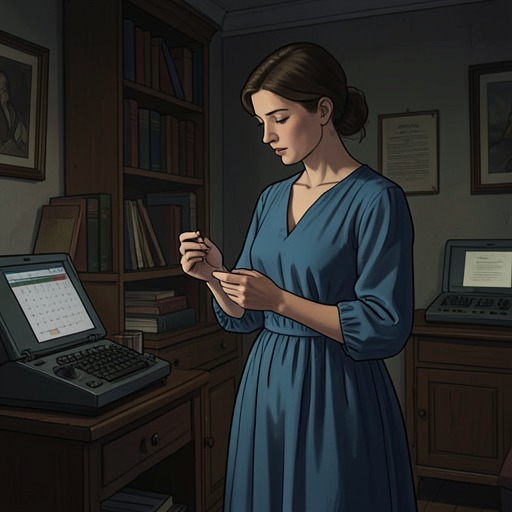
Before meeting Madame P-R, the narrator learned from LB that the procedure involved inserting a probe using a speculum and then waiting for a miscarriage. LB described Madame P-R as reliable and careful about hygiene, while also telling the narrator that she herself had contracted septicemia. The account made the procedure sound straightforward, but it also revealed that cleanliness could not remove every danger. LB advised the narrator to obtain antibiotics afterward; the narrator already had a prescription for penicillin and understood the address, the fee of four hundred francs, and the instrument as the practical elements needed to proceed.
At their first meeting, Madame P-R clarified how she intended to work. She would use the probe on its own, without the substances the narrator had heard mentioned elsewhere. She would bring back a vaginal speculum from the hospital where she worked on the one day of the week she could do so. The arrangement depended on discreet access to equipment and on knowledge acquired outside authorized medical care. Madame P-R kept their conversation to essentials: the date of the narrator’s last period, the method, and the cash payment. In the narrator’s account, this matter-of-fact manner was reassuring because it set aside moral judgment and left little room for emotional negotiation.
Use and Replacement
On January 15, the narrator returned to Madame P-R’s apartment for the procedure. A saucepan on the gas ring contained what the narrator thought were the instruments being prepared. Madame P-R had arranged a table beside the bed and moved quickly through the preparations. She spoke while working, including a story about a woman who had recently died after another practitioner’s unsafe method. The narrator later understood the warning as an effort to distinguish Madame P-R’s own practice from what she regarded as incompetence; at the time, it added to the tension surrounding the instrument and the procedure.
The narrator experienced severe pain during the insertion, though she could not remember how long the process took. Afterward, Madame P-R told her not to touch the probe and placed cotton wool between her thighs in case the waters broke. She said the narrator could walk and use the bathroom normally, and that the process should resolve within a couple of days; if it did not, she should call. The two women then drank coffee in the kitchen. The narrator did not recall handing over the money, a small gap in memory within an account otherwise organized around precise objects and actions.
When nothing happened, the narrator called Madame P-R on the evening of January 17 and returned the next morning. This time, a basin of steaming water stood on the kitchen table with a thin red pipe in it, and a hairbrush lay nearby. The narrator understood the pipe to be a second probe. She had not seen the first instrument, so the second appeared not as a repeated detail but as a new object introduced into an already difficult procedure. Madame P-R removed the first probe and replaced it with this one. She told the narrator that she was in labor, a description that made the narrator recognize the procedure as resembling a delivery. Madame P-R did not charge extra, but asked that the probe be returned because that model was difficult to find.
Waiting and Consequences
After the second appointment, the probe remained inside the narrator for days. She told Doctor N that she had been fitted with one. He paused, then recommended Masogynestril. The narrator understood from his response that he did not want to see her again. The probe therefore marked the limits of his involvement as well as the continuation of Madame P-R’s intervention: his advice did not replace the device or provide the follow-up the narrator had hoped for. At a drugstore, she could not obtain the medicine without a prescription, and the pharmacists’ questions left her feeling exposed and desperate.
The narrator’s relationship to the probe changed during the wait. At first it was part of a frightening and uncertain procedure; later she became accustomed to it and regarded it as an ally, though she felt it was not working quickly enough. On January 19, she noted slight twinges of pain and wondered how long it would take for the embryo to die and be expelled. The following day, after five days with the probe, she found that her clothes were wet with blood and fluid and that the instrument was slipping out. These details establish the change in her condition without making the probe’s eventual outcome the focus of this account.
Material Trace and Meaning
The probe recurs in the narrator’s memory through surrounding objects and places. Unable to read or listen to music, she drew the Passage Cardinet as she remembered seeing it when she left Madame P-R’s building: façades converging toward a narrow opening. She later singled out the basin, the pipe, and the hairbrush as an image that could stand for the episode. The drawing and the remembered arrangement of objects preserve what a general account of the procedure might lose: its specific setting, the equipment on hand, and the hours of waiting attached to it.
The probe also carries the consequences of secrecy beyond the apartment. The narrator tore the page bearing Madame P-R’s name from her address book, yet remembered the name years later through associations with other people. In the narrative, the instrument belongs to a network of practical support—especially LB’s information and loan—as well as to a system that left women to seek clandestine care. The book places that system against the law’s punishment of those who performed, encouraged, or underwent abortions. It also connects the narrator’s experience to her working-class background, which she understood as part of the social conditions surrounding her pregnancy and the stigma she attached to it.
In retrospect, the probe is at once an implement with a specific function and a material remnant through which the narrator can recover an otherwise difficult-to-represent experience. She describes writing as a way to make bodily sensations and thoughts intelligible to others. The object’s repeated return—from the instructions LB gave, to the replacement in the basin, to the days of waiting and the later drawing—shows how a concealed event becomes narratable through concrete traces. Its significance lies not in any abstract symbolism alone, but in the way its presence shaped what happened and gave memory a form that could be revisited.