Pregnancy certificate
HappeningThe Pregnancy certificate is a brief but consequential object in Annie Duchesne’s account of her clandestine abortion. Sent by Doctor N after confirming her condition, it gave the pregnancy a name and a date. Annie tore it up, rejecting the future it recorded; years later, the act remained a point of reference in the story she chose to write.
Issuance and contents
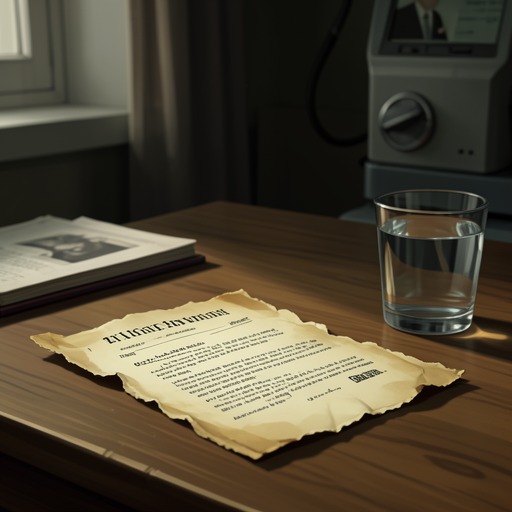
After returning to Rouen, Annie called Doctor N, who confirmed her condition and said he would send a certificate. It arrived the next day. The document identified Annie and gave July 8, 1964, as the expected date of delivery. Its administrative precision set a date against the uncertainty of her own experience: the future appeared on paper even though she had no intention of continuing the pregnancy.
The certificate came after an earlier visit to a university nurse, who gave Annie two injections without comment. When Annie later saw the stated delivery date, she imagined summer and sunshine, then tore up the document. The account does not describe the certificate’s appearance or say that it had any formal legal status beyond its role as Doctor N’s confirmation.
Destruction and decision
Tearing up the certificate was a physical response to what it represented. Annie had already decided that she would not keep the pregnancy, but the document made its projected outcome legible in a way she refused. The act did not resolve the practical problem of obtaining an abortion; instead, it became a clear marker of her determination to proceed. In retrospect, she compares that resolve at age twenty-three with her later decision to complete the story.
Three days after destroying the certificate, Annie encountered Jean T as she left the university buildings. She hinted that she was pregnant, partly in the hope that his involvement in an underground movement supporting contraception and birth control might help. A week after the certificate arrived, she also wrote to P that she was pregnant and did not intend to continue it. These encounters show the document’s place in a widening sequence: private confirmation gave way to selective disclosure and the search for assistance.
A condition made tangible
Annie describes wavering between disbelief that this had happened to her and a sense that it was bound to happen. She connects her condition to her working-class background: although she was the first in her family to pursue higher education, she felt that education had not removed the legacy of poverty. She saw the pregnancy as a stigma of social failure. The certificate did not create that interpretation, but its named recipient and fixed date gave material form to a condition she otherwise resisted naming.
That resistance appears elsewhere in her account. She says she avoided terms such as pregnant or pregnancy because they seemed to endorse a future that would not occur; in her diary she generally used it or that thing instead. Against this reluctance, the certificate stands as an unusually explicit record. Its dated statement made the future concrete, while her destruction of it asserted that the stated future would not be hers.
Memory, evidence, and writing
The certificate survives in the narrative as a remembered document, not as a preserved object. Annie identifies her diary and engagement book as sources for dates and evidence when reconstructing events, and she reflects on how difficult it is to establish past thoughts and feelings. Elsewhere, she is fascinated by handwritten magazine references in her address book because their material permanence can convey reality differently from memory or writing. The torn certificate belongs to the same inquiry into how objects and records anchor recollection, but its destruction means it cannot serve as a surviving document to consult.
In the later act of narration, the certificate’s significance shifts from medical confirmation to a remembered threshold: the moment a projected delivery date met Annie’s decision to seek an abortion. She describes the experience as clandestine and argues that its having happened in the past is no reason to leave it surrounded by silence, even after abortion is no longer outlawed. The certificate’s brief appearance therefore links an intimate decision to the larger work of making a hidden experience intelligible through writing.