Attempting a self-induced abortion with knitting needles
HappeningAttempting a self-induced abortion with knitting needles was the narrator’s first direct attempt to end her pregnancy without outside assistance. At 23, she used a pair of needles originally bought for knitting a cardigan, but stopped when the attempt became painful and she could not continue. Its failure led her to contact Doctor N and, later, to accept practical help from LB. The episode brings the consequences of criminal prohibition into the scale of an individual decision: a familiar household object becomes an improvised means of action, while access to safer assistance depends on a precarious chain of personal contacts.
Background and Decision
The attempt came after the narrator had concluded that she had found no solution and would have to act for herself. On a Monday, she returned from visiting her parents with two long, shiny blue needles. She had bought them during the previous summer intending to knit a cardigan; now she took them for an altogether different purpose. The change in their intended use makes the decision concrete without making it simple: the ordinary object is available, but possessing it does not give her the knowledge or ability she needs.
The evening before, she had gone with other women from her dormitory to see Mein Kampf. She was agitated by what she planned to do the next day. The film’s depiction of suffering in the death camps led her to measure the pain she expected against a much greater suffering, a comparison that gave her courage and strengthened her resolve. She also drew comfort from knowing that many other women had faced abortion. Her decision therefore took shape through both a private calculation and an awareness, however indirect, of women’s shared experience.
The wider conditions were restrictive. The law described in the narrative exposed women who ended their own pregnancies, along with people who helped them, to fines and imprisonment; the provisions also reached those advocating contraception. The narrator later observes that the end of prohibition does not automatically end the silence surrounding clandestine abortion. Her account places this attempt within that history, while keeping its immediate circumstances in view: she believed she had to proceed, but lacked reliable assistance and was preparing to rely on herself.
The Attempt and Its Failure
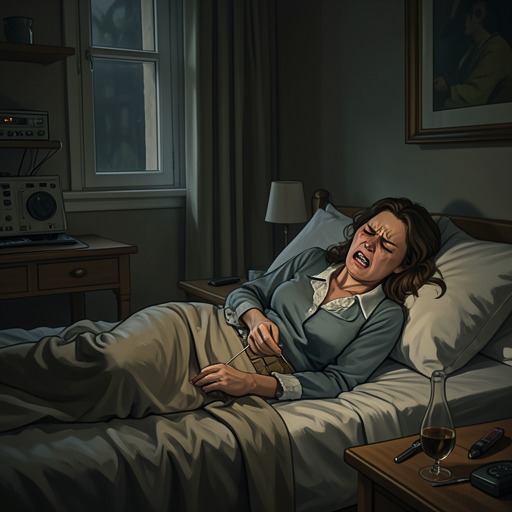
The following morning, the narrator lay on her bed and tried to use one of the knitting needles to induce an abortion. The account establishes the limits of what she could do: she could not carry the attempt through, and stopped when she felt pain. It was unsuccessful. She was left weeping and angry at her helplessness, not with a method she could safely manage but with the recognition that determination alone could not make it possible.
The episode turns on a stark contrast between intention and capacity. The needles were physically at hand, and the narrator had resolved to take action, but neither fact supplied the expertise required. The object’s new function is thus not a sign of mastery; it marks the absence of accessible, dependable care. The attempt’s failure also changed what happened next. Rather than continue alone, she called Doctor N, hoping he might help.
Doctor N and the Immediate Aftermath
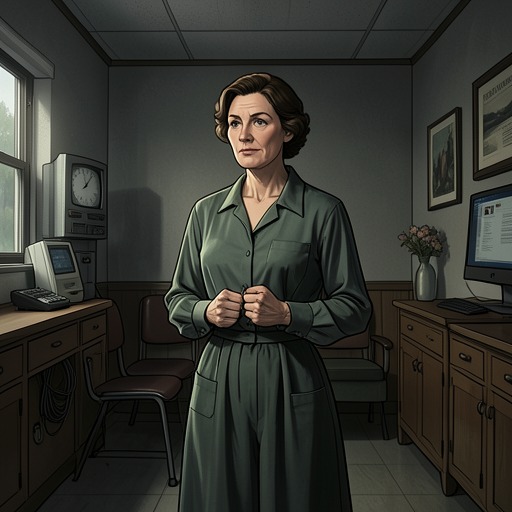
When she reached Doctor N, the narrator said that she did not want to continue the pregnancy and claimed that she had harmed herself in her attempt. She later clarifies that the claim was a lie, made to convey that she would stop at nothing to end the pregnancy. Doctor N asked her to come to his office, examined her, and told her that all was well. He did not arrange an abortion. Instead, he gave her a prescription for penicillin and instructed her to take it for eight days before and after the operation.
Neither of them said the word abortion. The omission reflects the conditions in which the conversation took place: she was asking for help with an act that could not be openly named, and he offered a limited form of assistance while avoiding knowledge of where she would go. She left believing that she had ruined her last chance, and for years blamed herself for not pleading more forcefully or describing her predicament differently. In retrospect, she recognizes that this interpretation may have been mistaken; only Doctor N could have said what might have changed his response. What she could see at the time was that he wanted to protect her from blood poisoning.
Help from LB and the Larger Significance
The failed attempt was followed by a route to practical assistance. A week or so before Christmas, LB came to the narrator’s room after Jean T had told her that the narrator needed to see her. LB gave her the address of Madame P-R, a middle-aged paramedic working at a clinic, and explained that the procedure involved inserting a probe and waiting for a miscarriage. She described Madame P-R as reliable and careful about hygiene, but also disclosed that she herself had contracted septicemia. The penicillin prescription Doctor N had supplied seemed useful in light of that risk, though LB’s experience showed that precautions did not eliminate danger.
Madame P-R charged four hundred francs. LB offered to lend the money, making the referral more than information: it provided a contact and a way to pay for the service. The narrator presents LB as the first in a series of women whose knowledge, experience, and decisions helped her through the ordeal. That support contrasts with the isolation of the knitting-needle attempt. The sequence does not erase the danger or uncertainty; it shows how access to assistance depended on women passing along practical knowledge and material help.
Looking back, the narrator connects the episode to Working-class origins and social stigma. Though she had become the first in her family to pursue higher education, she describes poverty as a continuing inheritance and saw her pregnancy as a mark of social failure. The self-induced attempt belongs to that account of constrained choices, rather than to a story of individual resourcefulness alone. In her later reflection, she says she has shed the guilt of having experienced the event and done nothing about it, and considers that these experiences may have happened so that she could recount them. The needles’ failed use is consequently part of a larger transformation: what could not be managed in private becomes, through writing, an experience made intelligible to others.