Shaltiel Abravanel secludes himself and destroys his manuscripts
JudasShaltiel Abravanel’s self-imposed seclusion and destruction of his manuscripts make his political defeat both a withdrawal from public life and an erasure of the record by which his ideas might be judged. Having argued for a shared Jewish-Arab home and opposed partition, he closes himself off after his expulsion from the Zionist institutions: he stops answering letters and calls, remains within the house and its garden, and destroys the writings he continues to produce. What survives is fragmentary—newspaper notices, a will, and the memories of those who lived with him.
Political defeat and the closing of public life
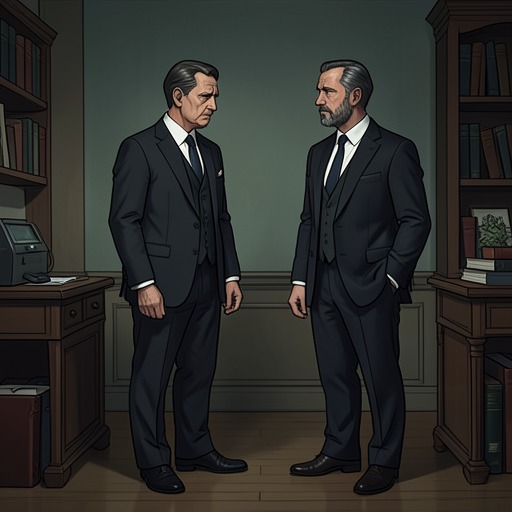
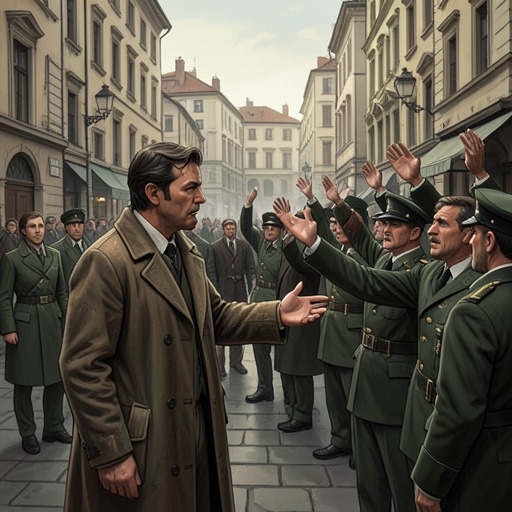
Abravanel’s retreat followed years of growing disagreement with his colleagues. He still believed that Jews had a valid claim to a home in the land, but came to believe that it should be shared with the Arabs. In 1947, he expressed an individual opposition to the United Nations partition plan and to Israeli independence as then pursued. His colleagues gave him a choice between resignation and expulsion; he was removed from the Zionist Executive and the leadership of the Jewish Agency. A contemporary report in Davar described his fear that the chosen course would lead to a bloody war between the two peoples, with the lives of the Jewish community in the land at stake, and his belief that a historical compromise remained possible.
The surviving public record also shows how quickly dissent was contained. An earlier Davar notice reported that Abravanel had requested permission to present a minority opinion to the United Nations Special Committee on Palestine, but that the leadership rejected his request in favor of speaking with one voice. He considered appearing independently, then accepted the majority’s discipline. A later notice recorded his removal from office, while reporting that he declined to explain it to the newspaper. Shmuel Ash found these brief items buried low on interior pages while searching nine monthly volumes of Davar, from June 1947 to February 1948. Their smallness on the page mirrors the scant public space given to Abravanel’s dissent.
Seclusion as refusal
After the war, Abravanel cut off contact with the outside world. Letters sent through European intermediaries from Beirut or Ramallah went unanswered, as did a French journalist’s request to visit and ask questions. He would not approach the telephone and spoke about the new state only to his daughter, Atalia, and Gershom Wald. He did not discuss the state’s founding, its victory, the displacement of Arabs, the arrival of Jewish immigrants, or bloodshed along the new borders. The account presents his silence not simply as self-punishment, but as a punishment directed at the world that had rejected his political hopes.
His withdrawal took the form of a strict domestic routine. He read the newspaper in the morning and passed it silently from himself to Atalia and then to Wald. He walked for an hour or more in his room or the garden, moving a chair across the paved courtyard to follow the shade of a fig tree, rested after lunch, and spent the remaining hours reading or writing. He never went beyond the courtyard—not to a shop, a newsstand, or the fields at the end of the street. In one rare outburst, he predicted that the new state would endure only a few years, or at most two or three generations. Then he fell silent again.
Writing, destruction, and the missing archive
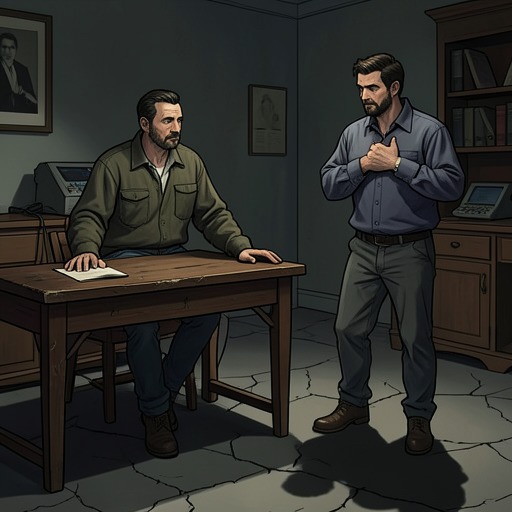
Abravanel’s seclusion did not mean that he stopped writing. He spent hours at his desk, sometimes working into the evening by lamplight and making notes on scraps of paper. Yet after his death, no manuscript or note could be found in his room. Atalia searched the cupboards and drawers; Wald’s account also describes searching the shelves and between the pages of books. There were no signs that the papers had been burned. The explanation offered is that Abravanel tore them into tiny pieces and disposed of them in the lavatory over many days.
The missing papers included, according to Wald, valuable correspondence with prominent Arabs from Jerusalem, Bethlehem, Ramallah, Beirut, Cairo, and Damascus. This destruction left no private archive to balance the sparse public record or to clarify the development of Abravanel’s ideas in his own words. The narrative makes the loss especially pointed by describing both Abravanel and Wald as people who wrote, destroyed what they had written, and began again. In this household, writing is a repeated effort to give form to thought, while destruction prevents that thought from becoming a stable testament.
Aftermath and significance
Abravanel’s seclusion extended beyond the war into his final years. The household received almost no visitors; people who came to offer condolences after Mija Wald’s death soon stopped coming, and Abravanel himself wanted no relations with others. He died alone in the kitchen, more than two years after the war of independence. His will survived: it left Atalia the house, land in the Talpiot neighborhood, and his savings, and asked that Wald be allowed to remain in the house for the rest of his life. The will stands in stark contrast to the writings he destroyed: a carefully preserved legal document remains, while his political and intellectual papers do not.
The account of this withdrawal reaches the reader through layered and incomplete evidence. Shmuel’s newspaper research establishes what the public press recorded; the records of secret Agency debates, he learns, are classified for decades; and Wald’s recollection supplies details of the private life that the archive cannot provide. These sources do not make Abravanel’s vanished manuscripts recoverable. Instead, their unevenness gives the disappearance its force: his political dissent was first marginalized, then left with no surviving body of papers to speak for itself. His silence and destruction become the final form of his break with the institutions and public that had refused to hear him.