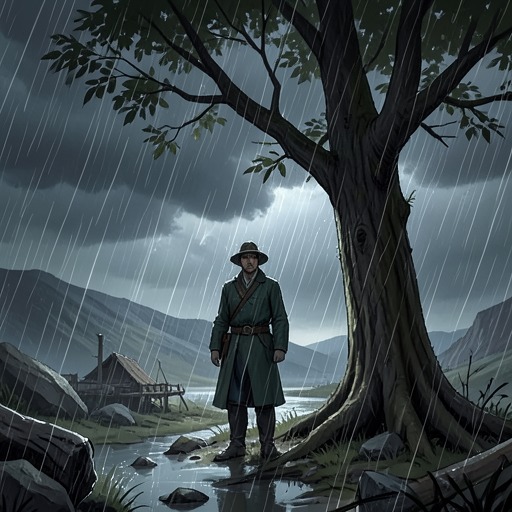
“Nature sufficeth unto herself”
Justine“Nature sufficeth unto herself” is Comte de Bressac’s assertion that Nature needs no divine author or external mover. In his argument to Therese, the maxim joins a materialist account of natural motion to an attack on religion’s claims: God is an unnecessary explanation, and the idea of a creator is a human fabrication born of fear and ignorance.
The Maxim and Its Argument
Comte de Bressac presents Nature as self-sufficient and perpetually active. If natural productions arise from laws that govern Nature and her motion belongs to her essence, he asks, what place remains for a sovereign master? A creator adds nothing to an account in which Nature moves herself; if the proposed motor acts on matter, he further challenges how it could be an immaterial mind capable of producing motion.
His reasoning also presses the problem of creation. A God who creates must imply either an initial nothingness or an original chaos. If either state was evil, Bressac argues, the creator allowed evil to persist; if it was good, there was no reason to change it. And if the present world is already good, a creator has nothing left to do. The sequence turns the maxim into more than a denial: it is the premise for a chain of questions meant to expose contradictions in the idea of divine power.
Religion as Human Invention and Social Power
Bressac links religious belief to the limitations of early human understanding. Faced with frightening natural phenomena and unable to discover their causes, people imagined a directing being, then developed rituals to worship it. Different peoples shaped their gods according to their circumstances, while the many forms of worship, in his account, conceal the same basic illusion. He invokes Coeur-de-fer’s reasoning as support for this explanation and calls the creator an unnecessary hypothesis rather than a genuine cause.
He also gives religion a political history. Bressac describes it as a restraint imposed by the powerful on the weak: rulers, he claims, represented God as the source of the chains that bound the oppressed, making domination appear divinely ordained. On this account, religion’s authority rests not only on mistaken explanations of Nature but also on the interests of those who use belief to secure obedience.
Bressac’s Attempt to Influence Therese
The maxim is spoken within a conflict over Therese’s religious convictions. She had tried to use religious consolation and instruction to restrain Bressac and turn him from his hostility toward his aunt. He would not tolerate this for long. Instead of allowing himself to be converted, he sought to corrupt Therese, recalling Coeur-de-fer’s principles as he argued that religions begin from a false premise because no creator exists.
Bressac’s speech therefore makes the maxim both a philosophical proposition and a weapon in a personal exchange. Its assertion that Nature needs no author supports his rejection of religious doctrine, while his address to Therese turns that rejection into an effort to displace the source of consolation she has relied upon. The evidence establishes his attempt to influence her, but does not establish that she accepts the maxim.
Meaning and Limits
In the argument as Bressac presents it, the maxim removes divine purpose from the explanation of Nature: natural processes require no supernatural governor, and religious institutions cannot claim unquestioned authority by appealing to a creator. Its force depends on joining a claim about how Nature operates to claims about why people believe and how religious power functions. The novel presents the proposition through Bressac’s advocacy, in direct opposition to Therese’s faith, rather than as an impersonal statement detached from their dispute.