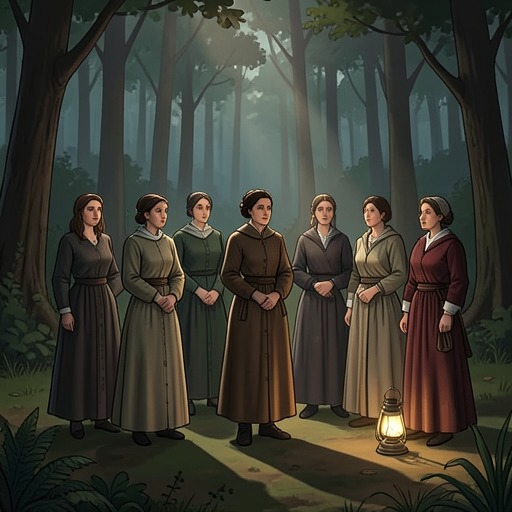
Ilmarinen’s Abduction of the Pohjola Maiden
KalevalaIlmarinen’s Abduction of the Pohjola Maiden is a failed courtship that becomes a forced departure and ends in magical transformation. Ilmarinen asks the hostess of Pohyola for a second daughter, but the maiden resists the future he represents; after he carries her away, a wizard sings her into the form of a sea-gull. The episode makes the difference between seeking a bride and securing her consent impossible to ignore: Ilmarinen’s physical command of the journey cannot determine its outcome.
A second daughter sought
Ilmarinen presents himself at Pohyola seeking a second daughter, described as the fairest among the virgins. The request places the episode within a larger pattern of courtship by heroic suitors, but the maiden’s response overturns any assumption that a request made to her household settles her own wishes. She identifies the life attached to the blacksmith as one she will not accept: she says she will never sweep either the cottage or the blacksmith’s coal-place. Her refusal is concrete, framed not as an abstract dispute but as rejection of the household work and identity she associates with him.
Ilmarinen answers her resistance with disdain and anger. He turns his head away and shakes his dark locks; when her refusal is repeated, he again turns aside disdainfully. These gestures make the disagreement reciprocal, but not equal. Her words express refusal; his anger does not persuade her, and his eventual power over her movement turns the conflict from courtship into coercion. The episode thus distinguishes his status as an accomplished metalworker from any authority to choose a wife against her will.
The forced journey
Ilmarinen takes the maiden with him, holding the reins in one hand and the maiden in the other. The paired actions give the abduction its defining image: he controls the means of travel while physically retaining the person who has refused him. The scene does not describe a willing departure. The maiden speaks while weeping, naming the lowland berries and the herbs at the water’s edge as they reach them. Her words accompany the journey rather than consent to it; the landscape passes before her as she is carried away from the home where she had refused the proposed life.
That detail sharpens the contrast between movement and choice. Ilmarinen can make the pair travel, but the maiden’s tears preserve her opposition within the very act that removes her. Her mention of the lowland and water-border plants also marks the journey through its terrain without suggesting that the landscape makes the departure welcome. The scene’s physical particulars—the reins, his hold on her, and her weeping—keep the episode grounded in an imbalance of control rather than presenting the abduction as an ordinary successful wooing.
Song and transformation
The episode’s aftermath shifts from physical force to supernatural song. In the morning, a wizard wakes slowly, confused and dishevelled, and asks whether he should begin singing magic songs and incantations. He then sings in anger. The song’s effects expand outward: rocks split, and distant hills echo. Its power is not merely expressive; it alters the world and then reaches the maiden herself.
The final transformation changes the terms of Ilmarinen’s seizure. The maiden is sung into a sea-gull, croaking from ocean ledges and calling from ocean islands. The change does not restore her to the household she left or produce a marriage; instead, it removes her from the human courtship arrangement by giving the episode a supernatural ending. The open, maritime locations of her new form contrast with the cottage and coal-place she had rejected. Her refusal began in speech, continued in tears during the forced journey, and culminates in a transformation that prevents the proposed union from being fulfilled as Ilmarinen intended.
Narrative significance
The episode reverses the expected result of a suitor’s journey. Ilmarinen can ask for a bride, disregard her refusal, and carry her away, but those actions do not secure the relationship he seeks. The maiden’s answer about domestic labor supplies a specific reason for rejecting his proposal, while the abduction shows that his response is not persuasion but control. The later song makes that failure decisive: the maiden becomes a sea-gull rather than a wife.
The movement from household refusal to forced travel and then to transformation gives the episode three distinct forms of resistance. The maiden first states what she will not do, then remains visibly unwilling as Ilmarinen takes her away, and finally is changed beyond the human role he would impose on her. The wizard’s magic does not erase the coercion that preceded it; it supplies the astonishing outcome that turns a failed courtship into a tale of separation. Ilmarinen’s mastery of metal and command of the reins alike prove insufficient to command another person’s consent.