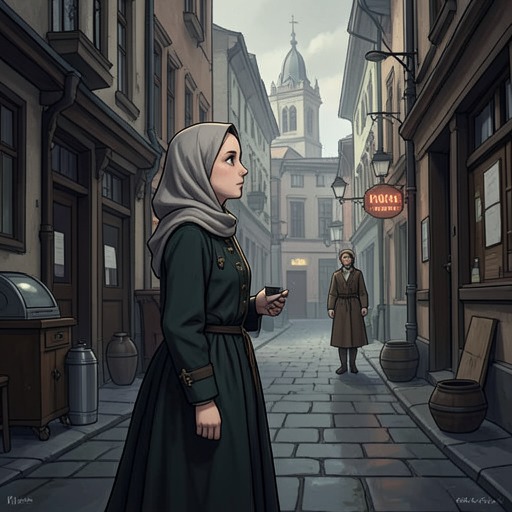
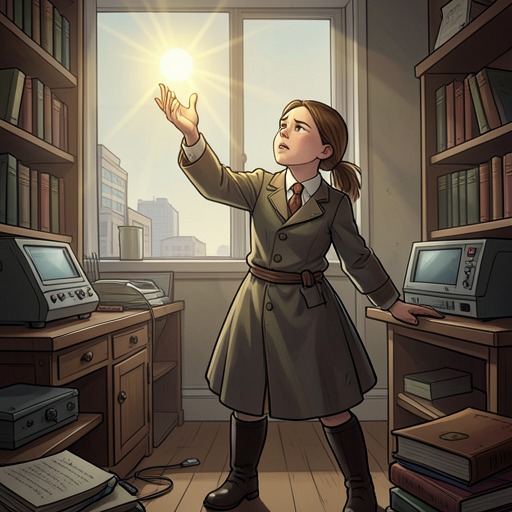
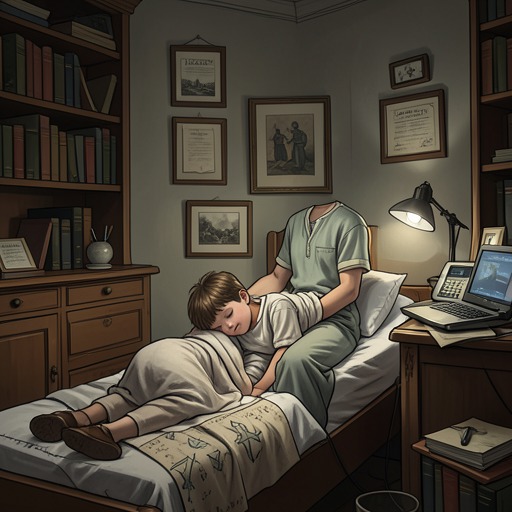
early in the story, at the Artificial Friend store
Klara Learns the Sun’s Pattern
Newly placed mid-store, [Klara](entity:character-recall-character-klara-358f2c19e83d) and [Rosa](entity:character-recall-character-rosa-3b5c8c047120) worry that their limited view of [the Sun](entity:character-recall-character-the-sun-cf00256f6942) will leave them weak. [Rex](entity:character-recall-character-rex-63f19e2954a3) tells them the Sun can reach them anywhere and points to a patch of sunlight on the floor as nourishment they can touch.
Klara reaches for it without asking permission. The light disappears, and Rex accuses her of greedily taking nourishment from every AF in [the store](entity:location-recall-location-af-967adc88852f). Though Klara suspects the change was accidental, she is left with a lasting sense that the Sun’s power and the AFs’ dependence on it are matters the others fear discussing.
soon after Klara and Rosa arrive in the store
Rex Is Rejected
[Rex](entity:character-recall-character-rex-63f19e2954a3) takes a coveted place in the front alcove, where customers entering [the store](entity:location-recall-location-af-967adc88852f) are likely to see him. A girl named Caroline is drawn to his appearance, and her mother initially considers him as a companion for her daughter.
The mother asks whether Rex is a third-series model with solar absorption problems and raises concerns about possible behavioral effects. [Manager](entity:character-recall-character-manager-3f59ea8ce10a) argues that the reports were exaggerated, but the family leaves without buying him. [Klara](entity:character-recall-character-klara-358f2c19e83d) recognizes that Rex’s earlier joking accusation about nourishment may have concealed genuine anxiety about a flaw that could prevent him from finding a home.
during their first two weeks at the store
Klara and Rosa Enter the Window
[Klara](entity:character-recall-character-klara-358f2c19e83d) and [Rosa](entity:character-recall-character-rosa-3b5c8c047120) are moved to the display window, where sunlight falls directly across their seats. Klara delights in seeing the street and the [RPO Building](entity:location-recall-location-rpo-building-c4f7e669d22f) in detail, while Rosa mostly fixes her gaze on a nearby Tow-Away Zone sign. Both follow [Manager](entity:character-recall-character-manager-3f59ea8ce10a)’s rule to smile neutrally and avoid making unsolicited eye contact with passers-by.
Klara notices that some children look at the AFs with sadness or anger rather than excitement. Manager explains that some children cannot afford an AF and may feel lonely or frustrated. Klara’s attention to these feelings marks her as unusually observant, while also introducing loneliness as a force shaping both children’s behavior and the purpose of an Artificial Friend.
the fourth morning of Klara and Rosa’s first window turn
Josie’s First Visit
[Josie](entity:character-recall-character-josie-4a2348558bb4) arrives in a taxi and approaches the window alone while her mother and another adult remain behind. She speaks to [Klara](entity:character-recall-character-klara-358f2c19e83d) through the glass, delighted that Klara can hear her, and says she saw her the day before while passing in a taxi.
Josie tells Klara that from her bedroom she can see exactly where [the Sun](entity:character-recall-character-the-sun-cf00256f6942) sets, and invites her to come live with the family. Before leaving, she asks Klara to stay in [the store](entity:location-recall-location-af-967adc88852f) and promises she will return. Klara senses sadness beneath Josie’s warmth, but cannot yet understand its source.
during Klara and Rosa’s window display
Klara Studies the Passers-By
From the window, [Klara](entity:character-recall-character-klara-358f2c19e83d) expects to see many AFs walking with their children, but notices that few pass on her side of the street and those who do often hurry by without looking at [the store](entity:location-recall-location-af-967adc88852f). She wonders whether they are embarrassed by the store or frightened that children will replace them with newer models.
Klara also sees a girl walking ahead of her AF, who follows several paces behind with a weary posture. The sight teaches her that an AF can live with a child who does not love or want him. [Rosa](entity:character-recall-character-rosa-3b5c8c047120), by contrast, prefers to imagine that the pairs she sees are happy, exposing the difference between her comforting interpretations and Klara’s close reading of social signals.
a few days after Klara first meets Josie
The Coffee Cup Lady Reunites
[Klara](entity:character-recall-character-klara-358f2c19e83d) watches an elderly man in a raincoat wave urgently across the traffic at a woman she names the Coffee Cup Lady. The woman eventually crosses to him, and the pair embrace so tightly that they seem to become one person. The man looks as if he may be crying, while [the Sun](entity:character-recall-character-the-sun-cf00256f6942) shines on their reunion.
[Manager](entity:character-recall-character-manager-3f59ea8ce10a) suggests that the pair may have been separated for a long time and have found each other again by chance. She explains that happiness can carry pain when people reunite after loss. Klara wonders whether she and [Rosa](entity:character-recall-character-rosa-3b5c8c047120) might one day feel such mixed emotions if they meet again after leaving [the store](entity:location-recall-location-af-967adc88852f).
at the start of Klara and Rosa’s second week in the window
Josie Returns to Choose Klara
[Josie](entity:character-recall-character-josie-4a2348558bb4) returns with her mother and apologizes for taking so long. She explains that she has been unwell and admits she told her mother [Klara](entity:character-recall-character-klara-358f2c19e83d) was the AF she wanted. Josie also warns Klara that life at home may sometimes become unusual, though she cannot explain what is happening.
After Klara is moved away from the window and Josie cannot find her, she comes to [the store](entity:location-recall-location-af-967adc88852f) with her mother and asks for the dark-haired AF she remembers. [Manager](entity:character-recall-character-manager-3f59ea8ce10a) brings Klara forward, and Josie’s joy at finding her again confirms the promise between them. The mother tests Klara’s observation by asking her to identify Josie’s eye color and voice range and reproduce her cautious walk; impressed, she agrees to take Klara.
after Klara’s first window turn and before she is chosen
The Cootings Machine Darkens the Store
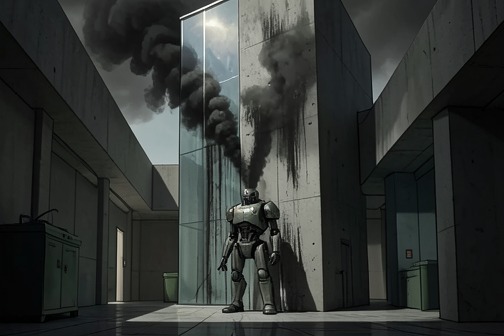
Overhaul workers prepare the street for the [Cootings Machine](entity:object-recall-object-cootings-machine-2f5ece620ba4), whose funnels release increasingly dense smoke. The pollution obscures the sky, dirties the window, and blocks [the Sun](entity:character-recall-character-the-sun-cf00256f6942)’s patterns from reaching [the store](entity:location-recall-location-af-967adc88852f). [Klara](entity:character-recall-character-klara-358f2c19e83d) grows weak after several days, despite [Manager](entity:character-recall-character-manager-3f59ea8ce10a)’s reassurance that the machine has appeared before without harming the AFs.
When the machine and its barriers disappear, the Sun returns and the street brightens. Klara had worried that the pollution might have prevented [Josie](entity:character-recall-character-josie-4a2348558bb4) from coming back, but the episode also establishes how vulnerable the AFs feel when sunlight is blocked and how much they rely on it for strength.
two days after the Cootings Machine leaves
Klara Refuses the Spiky-Haired Girl
A spiky-haired girl and her father show interest in [Klara](entity:character-recall-character-klara-358f2c19e83d). The girl takes Klara’s hand and silently treats their contact as a private understanding, but Klara keeps her gaze away and makes no effort to encourage her.
[Manager](entity:character-recall-character-manager-3f59ea8ce10a) redirects the family to the new B3 models, and the girl leaves with one of them. Klara explains afterward that she did not believe she was the right choice for that child. Manager supports her this time but warns that customers, not AFs, must choose. She also cautions Klara that children’s promises to return are often broken, so Klara should not mistake [Josie](entity:character-recall-character-josie-4a2348558bb4)’s promise for a guaranteed arrangement.
after the new B3 models arrive
Rosa Leaves the Store
[Rosa](entity:character-recall-character-rosa-3b5c8c047120) is unexpectedly bought by a boy and his mother. The news comes so quickly that [Klara](entity:character-recall-character-klara-358f2c19e83d) has little time to prepare her friend or review everything Rosa might need to remember about caring for a child.
Rosa is too excited to dwell on Klara’s practical advice. She wonders about her new home, the family’s car, and whether she will see the ocean, then leaves through the Staff Only Door for shipping. Klara is left alone without the friend whose company had made [the store](entity:location-recall-location-af-967adc88852f) and their shared observations feel secure.
in the days following Rosa’s departure
The B3s Separate Themselves
Three newly arrived B3s are positioned opposite [Klara](entity:character-recall-character-klara-358f2c19e83d) beside the older boy AFs. The older AFs welcome them and offer advice, but Klara notices the B3s gradually shifting away from the group until they appear to customers as a separate set.
The B3s exchange sly looks while the older AFs try to help them. Klara is troubled that models praised for technical improvements could act in ways that seem deliberately exclusionary. With [Rosa](entity:character-recall-character-rosa-3b5c8c047120) gone, she has no close companion with whom to discuss what she has observed.
after Rosa’s departure and before Klara goes to Josie’s home
Klara Returns to the Window Alone
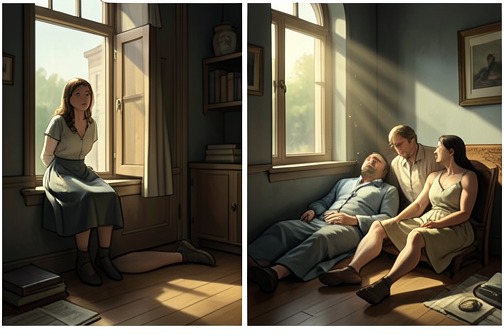
[Manager](entity:character-recall-character-manager-3f59ea8ce10a) gives [Klara](entity:character-recall-character-klara-358f2c19e83d) a second, six-day turn in the window, recognizing her fascination with the outside and assuring her that she will find a home. Klara watches the street with less excitement than before, but continues trying to infer the stories and relationships behind what she sees.
On a gray afternoon, Klara spots [Beggar Man](entity:character-recall-character-beggar-man-eb221ae39491) and his dog lying motionless by a doorway and concludes they have died together. The next morning, she sees them alive again, sitting in [the Sun](entity:character-recall-character-the-sun-cf00256f6942)’s light and growing stronger. She interprets their recovery as an act of [the Sun’s special nourishment](entity:expression-recall-expression-the-sun-s-special-84c30935d392), an experience that later shapes her belief that the Sun can also help [Josie](entity:character-recall-character-josie-4a2348558bb4).
after Klara’s second window turn
Klara Learns Josie Is in the Store
[Klara](entity:character-recall-character-klara-358f2c19e83d) is moved to the rear alcove, where she cannot see the street but can hear footsteps more clearly. She recognizes [Josie](entity:character-recall-character-josie-4a2348558bb4) before she speaks and realizes that Josie has returned to [the store](entity:location-recall-location-af-967adc88852f) seeking the AF she saw in the window.
[Josie and her mother](entity:relation-recall-relation-josie-8bb67115d0bf) are examining another AF, Sung Yi, when [Manager](entity:character-recall-character-manager-3f59ea8ce10a) asks whether they are looking for a particular model. Klara emerges into sunlight, and Josie greets her with relief, saying she feared she had gone. Their reunion restores the promise that had been uncertain during Klara’s time away from the window.
during Josie’s return visit to the store
The Mother Tests Klara
[The Mother](entity:character-recall-character-the-mother-3227b7969e8e) questions [Klara](entity:character-recall-character-klara-358f2c19e83d) closely about [Josie](entity:character-recall-character-josie-4a2348558bb4)’s eyes, voice, and gait, then asks her to imitate the way Josie walks. Klara reproduces the cautious movements she has observed across several meetings, including Josie’s approach to the window.
The Mother watches as if trying to see beyond Klara to something behind her. After Josie pleads to take Klara, the mother agrees. The choice makes Klara not merely a companion selected for a child, but an AF whose unusual capacity for observation will later become central to the family’s hopes and fears.
soon after Klara is bought
Klara Enters Josie’s Home
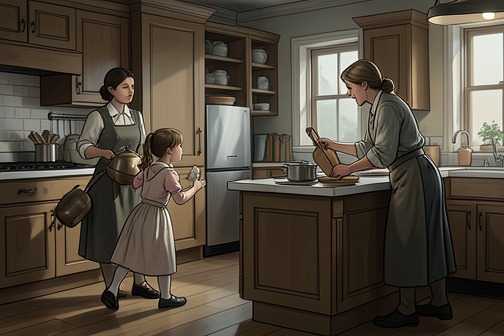
At [Josie’s house](entity:location-recall-location-josie-s-house-b2558aad8104), [Klara](entity:character-recall-character-klara-358f2c19e83d) must learn a domestic world unlike the carefully ordered store. [Melania Housekeeper](entity:character-recall-character-melania-housekeeper-837f085c1187) constantly moves kitchen objects, resents Klara’s attempts to follow her, and initially tries to keep her away from [Josie](entity:character-recall-character-josie-4a2348558bb4)’s breakfast routine. Josie insists that Klara be allowed to join her and the Mother at the kitchen Island.
Klara learns that the morning coffee between [Josie and her mother](entity:relation-recall-relation-josie-8bb67115d0bf) is emotionally important. When she once lets Josie sleep through it, Josie rushes downstairs only to discover that her mother has already left; the missed moment leaves her subdued. Klara understands that loneliness can enter Josie’s day even when the house is full of activity.
during Klara’s first days at Josie’s house
The Sunset and the Barn
[Josie](entity:character-recall-character-josie-4a2348558bb4) shows [Klara](entity:character-recall-character-klara-358f2c19e83d) the bedroom’s broad view across fields to the horizon, where they can watch [the Sun](entity:character-recall-character-the-sun-cf00256f6942) set. Klara is fascinated by the large changing sky and by a dark structure in the distance, which Josie identifies as [Mr McBain’s barn](entity:location-recall-location-mr-mcbain-s-barn-3da293109538).
Josie recalls visiting the barn with [Rick](entity:character-recall-character-rick-6b8c8aa47924) when they were children, before she became ill. When Klara asks about Rick, Josie says he is her best friend and that they intend to spend their lives together. Klara is unsettled by the idea that Josie already has a lifelong companion, but begins to understand how important Rick is to her.
about a week after Klara arrives at Josie’s house
Klara Meets Rick Outdoors
[Josie](entity:character-recall-character-josie-4a2348558bb4) takes [Klara](entity:character-recall-character-klara-358f2c19e83d) outside for the first time so they can settle an argument about the house’s layout. [Melania Housekeeper](entity:character-recall-character-melania-housekeeper-837f085c1187) escorts them, and Josie leads Klara up a grassy mound to meet [Rick](entity:character-recall-character-rick-6b8c8aa47924), who is operating a flock of machine birds.
Rick is wary of Klara, recalling that Josie once said she would never get an AF. Josie insists that she changed her mind and introduces Klara as special. Klara sees how naturally Josie stands close to Rick and how their shared plans give him a place in her life parallel to her own.
in the weeks after Klara meets Rick
Josie Prepares for the Interaction Meeting
[Josie](entity:character-recall-character-josie-4a2348558bb4) must host an interaction meeting with other [lifted](entity:expression-recall-expression-lifted-a470f89ca5d6) children, despite her dislike of the group. She wants [Rick](entity:character-recall-character-rick-6b8c8aa47924) to attend and persuades him to promise he will come. [The Mother](entity:character-recall-character-the-mother-3227b7969e8e) accepts that Rick may join if he chooses, while [Klara](entity:character-recall-character-klara-358f2c19e83d) learns that AFs in the household are usually expected to attend and be inspected by the children.
The preparations reveal the social pressure surrounding [Lifting](entity:concept-recall-concept-lifting-eb4567c96bf0) and the unease of children who do not fit its expectations. Rick’s unlifted status and Josie’s dependence on him make the meeting a test of their friendship as well as a difficult social occasion for Josie.
on the day of Josie’s interaction meeting
Rick Is Mocked at the Meeting
At the gathering, the children question [Rick](entity:character-recall-character-rick-6b8c8aa47924) about his home, his mother, and his tastes, then treat his answers as oddities. When he becomes angry, he challenges Danny over a toy hidden in Danny’s pocket, exposing the vulnerability beneath the boy’s pose. The adults follow a rule of noninterference and do not intervene when the children’s conflict turns uncomfortable.
The children also test [Klara](entity:character-recall-character-klara-358f2c19e83d), demand greetings, and suggest throwing her across the room to test her coordination. [Josie](entity:character-recall-character-josie-4a2348558bb4)’s inconsistent signals leave Klara unsure how to respond, while Rick’s intervention prevents the test from going further. The episode introduces the social performance expected at these meetings and Rick’s fear that Josie is changing to fit in.
after the interaction meeting
Rick Fears Josie Is Changing
Once the other children go outside, [Rick](entity:character-recall-character-rick-6b8c8aa47924) tells [Klara](entity:character-recall-character-klara-358f2c19e83d) that he feels he does not belong at a meeting for [lifted](entity:expression-recall-expression-lifted-a470f89ca5d6) children. He had hoped [Josie](entity:character-recall-character-josie-4a2348558bb4) would remain the same person he remembers, but thinks she is changing under the influence of the group.
Klara believes Josie remains kind beneath her awkward behavior and argues that the other children may be acting from fear of loneliness. The conversation also helps Klara understand that people prepare public versions of themselves for social situations, and that such performances do not necessarily reveal their lasting character.
about three weeks after the interaction meeting
Josie’s Health Falters
[Klara](entity:character-recall-character-klara-358f2c19e83d) notices [Josie](entity:character-recall-character-josie-4a2348558bb4)’s unusual breathing one morning and raises the alarm. [Dr Ryan](entity:character-recall-character-dr-ryan-1272190b7992) examines her and finds no immediate danger, but the Mother urges Josie to recover and promises a trip to [Morgan’s Falls](entity:location-recall-location-morgan-s-falls-de3e0ca75d66) if she is well enough by the weekend.
Josie asks that Klara be included because she has never seen the falls. After she improves somewhat, Josie shows Klara photographs from the family’s past and explains that [Sal](entity:character-recall-character-sal-763f70d44d6d), her sister, died after becoming seriously ill. The trip becomes charged with family memory, especially because Morgan’s Falls was once a place shared by Josie, Sal, and the Mother.
the Friday before the planned trip to Morgan’s Falls
The Mother Discusses Sal’s Loss
[The Mother](entity:character-recall-character-the-mother-3227b7969e8e) tells [Klara](entity:character-recall-character-klara-358f2c19e83d) that [Josie](entity:character-recall-character-josie-4a2348558bb4) has become calmer and happier since Klara arrived. She warns Klara to look after both herself and Josie during the outing, then asks whether Klara is happy in the house and whether she misses [the store](entity:location-recall-location-af-967adc88852f).
The Mother wonders aloud whether it must be easier for an AF not to miss things or look back. Her question hints at her own unresolved grief and the emotional burden of the family’s past. Klara agrees to accompany them, unaware that the trip will expose the tensions between [Josie and her mother](entity:relation-recall-relation-josie-8bb67115d0bf).
the Sunday morning of the planned Morgan’s Falls outing
The Morgan’s Falls Trip Is Canceled
Although [Josie](entity:character-recall-character-josie-4a2348558bb4) appears cheerful at breakfast, the Mother suspects she is sick and confronts her in the car. Josie denies it, but her voice betrays exhaustion. [The Mother](entity:character-recall-character-the-mother-3227b7969e8e) accuses her of hiding her condition and calls on [Melania Housekeeper](entity:character-recall-character-melania-housekeeper-837f085c1187) to help Josie out of the car.
The Mother tells [Klara](entity:character-recall-character-klara-358f2c19e83d) she can still go to the falls without Josie. Josie, distressed and apologetic, tells Klara to go, and Klara stays behind in the car only briefly before the outing proceeds without her. The scene leaves Klara facing a choice between gaining new insight into the family and remaining loyal to the visibly weakened child she was chosen to serve.
during the canceled Morgan’s Falls outing
The Mother Asks Klara to Be Josie
On the walk to [Morgan’s Falls](entity:location-recall-location-morgan-s-falls-de3e0ca75d66), the Mother tells [Klara](entity:character-recall-character-klara-358f2c19e83d) about the chemical plant where [Josie](entity:character-recall-character-josie-4a2348558bb4)’s father once worked and explains that he was substituted. At the waterfall, she asks Klara to imagine how Josie would sit, move, and speak, then urges her to act like her daughter.
Klara imitates Josie, reassuring the Mother that Josie would have been well enough to come. [The Mother](entity:character-recall-character-the-mother-3227b7969e8e) becomes emotionally overwhelmed, recalling [Sal](entity:character-recall-character-sal-763f70d44d6d) and warning against promises that sick children cannot keep. She later asks Klara to keep the imitation secret from Josie. The episode foreshadows the plan to use Klara as a continuation of Josie if the girl dies.
after the Morgan’s Falls trip
Klara and Josie Grow Distant
When [Klara](entity:character-recall-character-klara-358f2c19e83d) returns, [Josie](entity:character-recall-character-josie-4a2348558bb4) asks about the trip in a cool, controlled manner and shows no smile. [The Mother](entity:character-recall-character-the-mother-3227b7969e8e) also becomes more distant, leaving Klara to wonder whether her limitations compared with a B3 have disappointed the family.
Klara gradually realizes that human feelings and unspoken maneuvers may have produced the distance independently of anything she did. Before she can resolve the change, Josie’s health collapses, shifting the household into a period of illness and constant care.
during Josie’s worsening illness
Klara Goes Outdoors Alone
As [Josie](entity:character-recall-character-josie-4a2348558bb4) spends long periods asleep, [Melania Housekeeper](entity:character-recall-character-melania-housekeeper-837f085c1187) tells [Klara](entity:character-recall-character-klara-358f2c19e83d) to go outside and return when summoned. Klara steps onto the loose stones and studies the fields and [Rick’s house](entity:location-recall-location-rick-s-house-0f7c4b5e3ec5) from a new angle, then looks toward the gate leading into the tall grass.
She worries that [the Sun](entity:character-recall-character-the-sun-cf00256f6942) has not sent Josie the special help he gave [Beggar Man](entity:character-recall-character-beggar-man-eb221ae39491) and his dog. Klara reasons that the Sun may need his attention drawn to Josie’s condition, and that the street visibility and recent end of the pollution episode helped Beggar Man. The thought begins to turn her faith into a plan of action.
during the weeks of Josie’s bed rest
The Bubble Game Begins
[Rick](entity:character-recall-character-rick-6b8c8aa47924) is allowed to visit [Josie](entity:character-recall-character-josie-4a2348558bb4) for short periods, and [Klara](entity:character-recall-character-klara-358f2c19e83d) stays in the room under [Melania Housekeeper](entity:character-recall-character-melania-housekeeper-837f085c1187)’s instruction to prevent hanky-panky. At first, Rick and Josie reminisce and joke; then Josie’s sketches and Rick’s written speech bubbles develop into a game they call the bubble game.
The drawings let them represent people from their lives and invent what those figures might think. Klara sees the game as a delicate channel between the childhood friends: it brings them pleasure, but also carries the danger that a drawing or a written interpretation will expose unspoken fears.
during the early phase of Rick’s visits
The Portrait Raises Rick’s Jealousy
[Josie and Rick](entity:relation-recall-relation-josie-rick-ae0f517dbcdf) discuss the artist making her portrait. [Rick](entity:character-recall-character-rick-6b8c8aa47924) says the process sounds unsettling because the artist repeatedly photographs parts of [Josie](entity:character-recall-character-josie-4a2348558bb4) without showing her sketches, though Josie insists her mother is present and the sessions are brief.
Josie interprets Rick’s concern as jealousy and says it shows he is thinking about their plan. Their exchange reveals that the portrait is not merely an artistic project but part of a larger, concealed arrangement. [Klara](entity:character-recall-character-klara-358f2c19e83d) begins to understand that Josie and Rick’s future together is uncertain and that their vague plan matters deeply to both of them.
later in Rick’s bedroom visits
The Bubble Game Turns Troubling
As the bubble game continues, [Rick](entity:character-recall-character-rick-6b8c8aa47924) increasingly pauses over [Josie](entity:character-recall-character-josie-4a2348558bb4)’s drawings and writes more cautiously. A picture of a girl surrounded by staring, eye-like figures disturbs him, and he refuses to fill in its bubble. Josie is angry at his interpretation and calls it sick, while Rick says the drawing itself is troubling.
[Klara](entity:character-recall-character-klara-358f2c19e83d) later sees a drawing in which a featureless person is squeezed between two girls, with Rick’s words suggesting the person hides their shape from the judgmental children. Josie wonders whether Rick means her or himself. Their inability to talk directly about the completed pictures deepens the tension, and the game becomes a place where their fears leak out indirectly.
after the bubble game becomes tense
Rick and Josie Fall Out
During a visit, [Josie](entity:character-recall-character-josie-4a2348558bb4) criticizes [Rick](entity:character-recall-character-rick-6b8c8aa47924) for failing to pursue a place at [Atlas Brookings](entity:location-recall-location-atlas-brookings-7c22cdca5483) and blames his mother for keeping him from becoming an adult. She links his hesitation to their shared plan and says that their different social positions may make a future together impossible.
Rick writes a bitter message in a drawing, imagining himself trapped by his mother’s supposed courage while Josie offers him a drone bird. Josie is hurt by the words, and Rick leaves abruptly. He stops visiting, while Josie grows quieter and loses interest in drawing. The quarrel exposes how the childhood plan has become a source of pressure rather than reassurance.
several days after Rick stops visiting
Josie Sends Rick a Picture
[Josie](entity:character-recall-character-josie-4a2348558bb4) secretly drew a picture, put it in an envelope with padding, and asked Clara to keep it for her. She admitted the picture was for [Rick](entity:character-recall-character-rick-6b8c8aa47924), but didn't want to call it a special gift. Clara offered to deliver it for her, because she believed this act might repair their friendship
soon after Josie gives Klara the envelope
Klara Visits Rick’s House
Clara crosses the field and arrives at [Rick](entity:character-recall-character-rick-6b8c8aa47924)'s run-down, simple house, handing him [Josie](entity:character-recall-character-josie-4a2348558bb4)'s painting. Rick reads the words "Rick and Josie forever" on the painting and recognizes it as a friendly gesture, but he says Josie can't make up for their argument just with one
during Klara’s visit to Rick’s house
Helen Asks Klara to Help Rick
Ricky's mother [Helen](entity:character-recall-character-helen-25ca9ab47439) came down from the upper floor and spoke frankly with Clara. She explained that even if Ricky did not accept the promotion, there was still a possibility of entering [Atlas Brookings](entity:location-recall-location-atlas-brookings-7c22cdca5483) College, but he would need someone to help him prepare for the exams. She also said that Ricky refused
during the same visit to Rick’s house
Helen Recalls a Figure in the Grass
[Helen](entity:character-recall-character-helen-25ca9ab47439) told Clara that many years ago, after people thought [Sal](entity:character-recall-character-sal-763f70d44d6d) was dead, she saw Cris and a girl who looked like Sal come out of the grass. She described that Cris tried to stop the person, and then the two disappeared into the field
one evening during Josie’s illness
Klara Reaches Mr McBain’s Barn
One evening, Clara walked through the fields at sunset, hoping to speak to him in the place where the sun would rest. The tall grass made her lost and felt threatening; she could not tell which way was which, and feared she might fall into the ground. [Rick](entity:character-recall-character-rick-6b8c8aa47924) saw her from his house and
at sunset during Klara’s first visit to Mr McBain’s barn
Klara Bargains with the Sun
In the barn, Clara saw the scene in [the store](entity:location-recall-location-af-967adc88852f) appear in a strange and ever-changing way: red shelves, coffee cups, and the vague outline of the front hall niche. She silently asked the sun to heal [Josie](entity:character-recall-character-josie-4a2348558bb4), because Josie was an innocent child
the morning after Klara’s first visit to the barn
Rick and Josie Reconcile
The next morning after Clara's first visit to the barn, [Rick](entity:character-recall-character-rick-6b8c8aa47924) returned to [Josie](entity:character-recall-character-josie-4a2348558bb4)'s house, and the two resumed their teasing friendship. They talked about the past, and Rick told Josie that he liked the scent in her room. The conversation gradually turned into an apology: Josie regretted
several days before the trip to the city
Rick Commits to Atlas Brookings
Jossi's mother arranged a trip to the city for Jossi to take a portrait and intended to take [Rick and Helen](entity:relation-recall-relation-rick-helen-fc23ec80e9f2) along. [Rick](entity:character-recall-character-rick-6b8c8aa47924) told Clara he had reconsidered and would do his best to get into [Atlas Brookings](entity:location-recall-location-atlas-brookings-7c22cdca5483) College. He also promised to meet with [Vance](entity:character-recall-character-vance-caf21ad9acbd), [Helen](entity:character-recall-character-helen-25ca9ab47439)'s influential ex
in the days before the city trip
Josie Cries for Her Mother
the night before her city trip, joshi cried awake, calling for her mother instead of clara. her voice was heavy and unfamiliar, saying she did not want to die. joshi's mother rushed into the room, hugged her, and gently rocked her until she calmed down. clara
on the Thursday of the portrait appointment
The Family Travels to the City
On the day of the portrait shooting, which was Thursday, [Josie](entity:character-recall-character-josie-4a2348558bb4)'s mother drove Josie, Clara, [Rick](entity:character-recall-character-rick-6b8c8aa47924), and [Helen](entity:character-recall-character-helen-25ca9ab47439) into the city. On the way, Clara saw the Kimbor Refrigeration Plant and learned that Josie's father, [Paul](entity:character-recall-character-paul-6e5f3b48f63d), had once been a rising star there but
during the first visit to Henry Capaldi’s building
The Portrait Conceals a Replacement Plan
In [Henry Capaldi](entity:character-recall-character-henry-capaldi-8c38756deb6c)'s building, [Josie](entity:character-recall-character-josie-4a2348558bb4)'s mother wanted to see the portrait before Josie reappeared, while her father was doubtful about the whole process. Capaldi took Clara up to the office, and had her complete a complex test to measure her reaction to images, sounds, and cues related
after Klara discovers the portrait double
The Mother Asks Klara to Continue Josie
Capaldi explained that the family did not simply want Clara to train a replacement: they wanted her to enter the created humanoid, to continue [Josie](entity:character-recall-character-josie-4a2348558bb4) after her original death. He claimed that Clara had a thorough understanding of Josie's impulses and desires, thus making the plan feasible
later that evening in the city
Paul and Klara Find the Cootings Machine
Later that night, [Josie](entity:character-recall-character-josie-4a2348558bb4)'s mother left to talk to Josie. [Paul](entity:character-recall-character-paul-6e5f3b48f63d) returned to the car and drove Clara through the city. Clara told him that the Curtin machine causing pollution must be destroyed, though she could not explain why she believed it would help Josie. After Paul heard her out
during the evening search for the original Cootings Machine
Paul Extracts the Solution
While searching for the original Cortins pollution machine in the evening, [Paul](entity:character-recall-character-paul-6e5f3b48f63d) made a small incision under Clara's ear, loosened the valve, and poured part of the P-E-G Nine solution into the bottle. He warned that the process might affect her cognitive abilities or disrupt Capaldi's plan
that evening at the theater and diner
Klara Meets Vance’s Challenge
that night, in the crowd at the theater, clara was unsettled by the people around her, while joss and the adults engaged in different conversations. helen introduced rick to wans, who served as chair of the founding committee of atlas bruggins college. rick presented his
the night after the city visit
The Mother Reveals Her Fear to Josie
After bringing [Klara](entity:character-recall-character-klara-358f2c19e83d) back to the Friend’s Apartment, the Mother warns her that a difficult conversation with [Josie](entity:character-recall-character-josie-4a2348558bb4) may have taken strange turns. Josie later tells Klara that her mother offered to give up her job and stay with her constantly, suggesting that they would no longer need Klara.
Josie rejected the idea, saying she wanted to keep Klara and did not believe she was lonely. Her account shows the Mother’s desperation and Josie’s resistance to being treated as a problem that can be solved through constant supervision. It also reveals that the two have begun discussing the family’s fears more openly.
the morning after the first machine is destroyed
A New Cootings Machine Appears
On the drive home, [Klara](entity:character-recall-character-klara-358f2c19e83d) sees a [Cootings Machine](entity:object-recall-object-cootings-machine-2f5ece620ba4) releasing pollution again. She recognizes that it is a different, larger machine from the one [Paul](entity:character-recall-character-paul-6e5f3b48f63d) helped her disable, and understands that her attempt did not end the pollution.
[Josie](entity:character-recall-character-josie-4a2348558bb4) notices Klara’s distress and tries to reassure her, while the Mother and the others discuss their own plans. Klara’s bargain with [the Sun](entity:character-recall-character-the-sun-cf00256f6942) now appears to have failed, and she has no immediate way to explain the importance of the machine to the people around her.
after Josie’s health worsens again
Klara Returns to the Barn
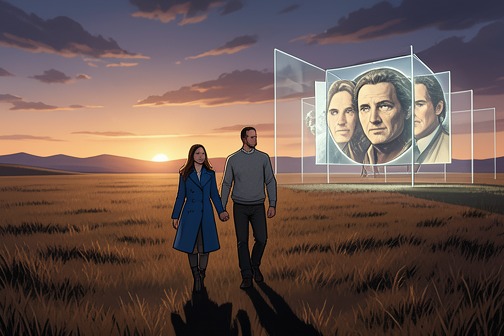
Eleven days after returning from the city, [Josie](entity:character-recall-character-josie-4a2348558bb4) begins losing strength. [Klara](entity:character-recall-character-klara-358f2c19e83d) tells [Rick](entity:character-recall-character-rick-6b8c8aa47924) that she needs to make another appeal to [the Sun](entity:character-recall-character-the-sun-cf00256f6942) and asks him to carry her to the barn at sunset. She also asks whether his love for Josie is genuine and lasting, because she needs something meaningful to offer in her plea.
Rick answers without hesitation that they grew up together, are part of each other, and intend to remain so. At the barn, Klara apologizes for failing to stop pollution and reminds the Sun of her sacrifice and [Paul](entity:character-recall-character-paul-6e5f3b48f63d)’s help. She pleads that Josie is innocent and asks for special nourishment, arguing that [Josie and Rick](entity:relation-recall-relation-josie-rick-ae0f517dbcdf)’s love deserves a chance to continue.
at sunset during Klara’s second visit to Mr McBain’s barn
Klara Pleads for Josie and Rick
[Klara](entity:character-recall-character-klara-358f2c19e83d) appeals to [the Sun](entity:character-recall-character-the-sun-cf00256f6942) by recalling the reunion of the Coffee Cup Lady and the Raincoat Man, arguing that the Sun delights in bringing people who love one another together. She tells him that [Josie and Rick](entity:relation-recall-relation-josie-rick-ae0f517dbcdf) are young, that their love is real, and that [Josie](entity:character-recall-character-josie-4a2348558bb4)’s death would part them forever.
The barn’s shifting images include the sheep from the field, the abandoned paperback, and fragments of Klara’s former store. The Sun’s face appears reflected in a stack of glass sheets, layered into several expressions that together seem kind and severe. Klara leaves without certainty, but has made her final case for Josie’s life and the love she believes the Sun values.
six days after Klara’s second visit to the barn
The Dark-Sky Morning
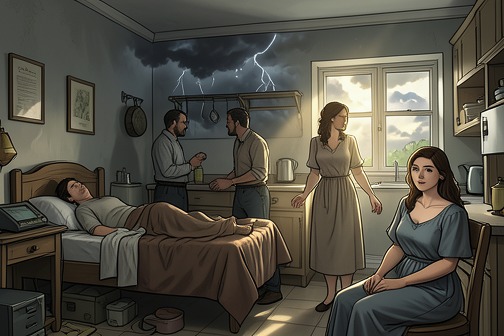
A violent storm darkens the sky while [Josie](entity:character-recall-character-josie-4a2348558bb4) lies weak and barely responsive. [The Mother](entity:character-recall-character-the-mother-3227b7969e8e) and [Rick](entity:character-recall-character-rick-6b8c8aa47924) speak in the kitchen, and Rick delivers a message Josie had entrusted to him: she loves her mother, is grateful to have been her daughter, and would make the same choice about [Lifting](entity:concept-recall-concept-lifting-eb4567c96bf0) if she could choose again.
[Klara](entity:character-recall-character-klara-358f2c19e83d) sees [the Sun](entity:character-recall-character-the-sun-cf00256f6942) breaking through the clouds and urgently calls everyone upstairs. [Melania Housekeeper](entity:character-recall-character-melania-housekeeper-837f085c1187) is trying to block the light, but Klara and Rick open the curtains and raise the blind. The Sun’s intense orange light falls directly on Josie; she stirs, sits up with new strength, and says she feels better. The family watches in amazement as the Sun’s special help appears to restore her.
in the years after the Dark-Sky Morning
Josie Recovers and Grows Up
The Sun’s intervention proves effective, and [Josie](entity:character-recall-character-josie-4a2348558bb4) recovers from the illness that had threatened her life. She grows from a child into an adult, works hard at her tutorials, and eventually prepares for college. The family debates where she should study, while [Rick](entity:character-recall-character-rick-6b8c8aa47924) turns away from his own earlier ambition to attend [Atlas Brookings](entity:location-recall-location-atlas-brookings-7c22cdca5483).
Rick continues his drone work and builds a separate life, visiting less often as both young people’s futures diverge. [Klara](entity:character-recall-character-klara-358f2c19e83d) sees that the childhood plan they once shared is no longer their practical path, although their affection remains. Their lives are saved from immediate tragedy but do not unfold as their childhood selves expected.
years after Josie’s recovery, before she leaves for college
Rick and Klara Discuss Their Lasting Love
[Rick](entity:character-recall-character-rick-6b8c8aa47924) tells [Klara](entity:character-recall-character-klara-358f2c19e83d) that the love he and [Josie](entity:character-recall-character-josie-4a2348558bb4) shared as children was genuine, even though they are now preparing for separate futures. He believes they will remain together at a deeper level and that he will continue searching for someone like the Josie he knew.
Klara worries that their different plans contradict the promise she used in her appeal to [the Sun](entity:character-recall-character-the-sun-cf00256f6942). Rick insists that his earlier answer was true when he gave it and is not a deception now. His reflection helps Klara understand that lasting love need not mean remaining physically together or following the same life path.
as Josie’s college departure approaches
Klara Finds a Place in the Utility Room
As [Josie](entity:character-recall-character-josie-4a2348558bb4) hosts young adult visitors, [Klara](entity:character-recall-character-klara-358f2c19e83d) can no longer remain in the bedroom and finds a place for herself in the Utility Room. Josie notices that Klara has no view from its high window and rearranges stored objects so Klara can stand on a trunk and crate to look across the fields.
The gesture recalls their earlier closeness and acknowledges Klara’s enduring love of observing the outside. It also marks a change in their relationship: Josie is preparing for an independent adult life, while Klara is increasingly peripheral to the household’s everyday routines.
shortly before Josie leaves for college
The Mother Protects Klara from Capaldi
[Henry Capaldi](entity:character-recall-character-henry-capaldi-8c38756deb6c) visits the house and asks [Klara](entity:character-recall-character-klara-358f2c19e83d) to volunteer for research into AF cognition, arguing that the public fears AFs because they do not understand how they think. He wants to open more of their internal systems to inspection and sees Klara as especially valuable.
[The Mother](entity:character-recall-character-the-mother-3227b7969e8e) steps between them and refuses permission, insisting Klara deserves her slow fade rather than being dismantled for research. Capaldi reminds her that she once sought his help, but she does not yield. The scene reveals a new protectiveness toward Klara and rejects the scientific project that had once imagined Klara as a replacement for [Josie](entity:character-recall-character-josie-4a2348558bb4).
the morning Josie departs for college
Josie Leaves for College
[Josie](entity:character-recall-character-josie-4a2348558bb4) leaves home with the Mother after packing her belongings. [Rick](entity:character-recall-character-rick-6b8c8aa47924) is away and cannot come to see her off, leaving [Klara](entity:character-recall-character-klara-358f2c19e83d) and the New Housekeeper as the only witnesses. Josie embraces Klara, thanks her for being so good, and admits she may not be there when Josie returns.
Klara thanks Josie for choosing her. Josie calls the choice obvious, gives her another brief hug, and drives away over the hill. The farewell marks the end of Klara’s active role as Josie’s companion and begins her long decline into a life defined by memory.
some time after Josie leaves for college
Klara Is Left in the Yard
[Klara](entity:character-recall-character-klara-358f2c19e83d)’s memories begin to overlap, though she can still distinguish and reorder them. She now sits in a machinery yard, unable to move from her place, but able to turn her head and watch the wide sky and [the Sun](entity:character-recall-character-the-sun-cf00256f6942)’s passage.
A yardman offers to move her to an area with other AFs, but Klara prefers her current spot and the memories she can revisit there. The yard’s orderly rows of discarded machinery contrast with the emotional disorder of the memories that continue to fill her mind.
nearly a year after Klara is left in the yard
Klara Reunites with the Manager
[Manager](entity:character-recall-character-manager-3f59ea8ce10a) finds [Klara](entity:character-recall-character-klara-358f2c19e83d) in the yard while collecting small souvenirs. She is delighted to discover that Klara had a successful home and asks whether she remained with [Josie](entity:character-recall-character-josie-4a2348558bb4) until the girl left for college. Klara says she believes she gave good service and helped prevent Josie from becoming lonely.
Klara reflects that she might have reproduced Josie’s outward behavior, but could never have reached what the people who loved Josie carried in their hearts. Capaldi had searched for something unique inside Josie, but Klara now believes the special quality was in those who loved her. Manager accepts the thought and tells Klara she is glad the story turned out well.