Event 1
莫妮卡·莱温斯基与比尔·克林顿事件
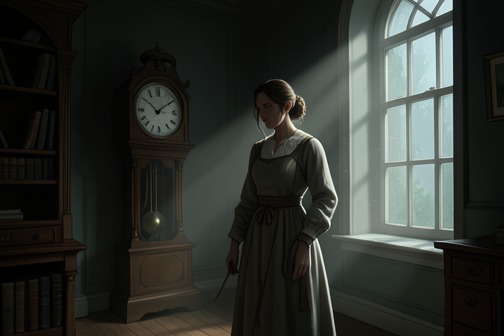
The Monica Lewinsky and Bill Clinton affair is a defining historical reference in the novel: for [Claire Farel](entity:character-recall-character-claire-farel-ad491473703f), it is both a near-miss that shadows her own past and a case study in how sexual desire can undo political power, reputation, and family life. Her proximity to the [White House](entity:location-recall-location-9fd5fefc5ad5) scandal gives her reflection a personal charge, while her later confrontation with Bill Clinton turns that memory into a question about whose humiliation a powerful man is willing to acknowledge.
## Claire Farel’s proximity to the scandal
Claire understands sexual desire as a force capable of reducing years of social construction to a brief, destructive encounter. That conviction reaches back to her childhood: at nine, she watched her family come apart because of her mother’s irresistible attraction to a physician she had met at a medical congress. In her later career, she saw public figures jeopardize their offices, reputations, and families for short-lived affairs. The Clinton scandal supplies the most intimate version of that pattern, because Claire herself was at the White House when it unfolded.
At twenty-three, Claire was a White House intern at the same time as Monica Lewinsky. The narrator stresses the contingency of their different fates: Claire imagines that she was not chosen by Clinton because she did not match the aesthetic standards of the Oval Office. She was a slender, average-height Franco-American with braided blonde hair, dressed in masculine-cut trouser suits; Lewinsky, by contrast, is described as a voluptuous brunette. The difference is presented not as a distinction in ambition or character, but as the arbitrary physical selection that placed one young woman at the center of a scandal and left the other outside it.
Claire repeatedly wonders what would have happened had Clinton chosen her instead. She believes she, too, would have yielded to the attraction of power and fallen in love with the president. In that imagined alternative, she would have been questioned by Senator Kenneth Starr and compelled to repeat the same account while the scandal became material for social gossip and a 475-page report. The scale of the public reckoning makes Claire’s near-miss feel less like an escape from desire than an escape from its consequences: she imagines the same vulnerability to power, followed by exposure on a national stage.
## The scandal as a public spectacle
The episode also belongs to a wider political and media landscape populated by women whose private lives become public evidence. In 1995, Claire, Lewinsky, and Huma Abedin entered the White House through exceptional academic records and recommendations. Their subsequent trajectories diverged sharply. Lewinsky became internationally famous at twenty-five for her sexual relationship with the president, while Abedin became a close aide to Hillary Clinton. The contrast makes the scandal’s spectacular visibility especially stark: Lewinsky’s notoriety rested on the sexual episode, while the other intern’s career developed through political service.
The novel does not treat the scandal simply as a private affair. Claire imagines the report’s impact on a public already inflamed by indignation and calls for general moral reform. In this account, a sexual encounter becomes a crisis that circulates through hearings, political institutions, social conversation, and mass attention. The public spectacle does not distribute its consequences evenly: the young woman’s intimate life is exposed, while the president’s conduct is absorbed into a much larger contest over his career and the appearance of contrition.
## Claire’s later confrontation with Clinton
About ten years after the affair, Claire meets Clinton at a dinner marking the publication of his memoirs. By then she has become a respected intellectual, and she asks him directly why he submitted publicly to a humiliating exercise in contrition to protect his wife and daughter, yet showed no compassion for Lewinsky, whose intimate life had been devastated. Clinton dismisses the question with a feigned air of detachment and asks who Claire is; he does not remember her.
His failure to recognize her lends the encounter an understated irony. Claire’s presence at the White House had been close enough for her to imagine an entirely different life, but not significant enough to remain in Clinton’s memory. She can name the imbalance between his public performance of remorse and the harm to Lewinsky, while he cannot place the woman asking him to account for it. The exchange therefore joins two forms of invisibility: the intern overlooked by the president and the young woman whose private life became an international spectacle.
## Place in the novel’s larger conflicts
The affair gives Claire a historical frame for thinking about the destructive force of sexual desire, but it also complicates the idea that public disgrace necessarily produces moral recognition. Clinton’s public contrition, as Claire sees it, protected his wife and daughter without extending compassion to Lewinsky. The difference between protecting one’s family and acknowledging the woman whose life was exposed becomes the ethical point of Claire’s question.
That concern echoes through the novel’s later treatment of [Alexandre Farel](entity:character-recall-character-alexandre-farel-23479f753109)’s rape case, without making the events equivalent. The case is reported to the press by the [Agence France-Presse](entity:organization-recall-organization-agence-france-pr-8053e672bcbd) after Alexandre is taken into custody; during the trial, sexual violence and consent are argued over in a post-#[MeToo](entity:expression-recall-expression-metoo-6aff81e06a5a) climate shaped by the Weinstein revelations. The defense objects that public opinion has already judged Alexandre, while the prosecution and public protests challenge the silencing of women. The novel also shows how a defendant can be reduced to a media label: [Maître Célérier](entity:character-recall-character-ma-tre-c-l-rier-e46595d9bbe8) argues that search results associate Alexandre’s name with the word “rapist,” and that the public tribunal has damaged his prospects before the court reaches its verdict.
The Clinton episode thus acts as more than a biographical detail in Claire’s past. It establishes her sensitivity to the gap between a powerful man’s public image and the intimate consequences borne by a woman, while the later trial places that gap within a contested debate over consent, justice, and media judgment. Across both contexts, exposure can force private experience into public circulation, but neither publicity nor a formal performance of remorse guarantees that those who suffered will be heard or treated with compassion.
Event 2
克莱尔·法雷尔离开让·法雷尔
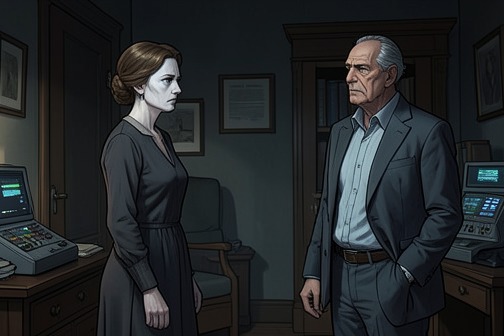
[Claire Farel](entity:character-recall-character-claire-farel-ad491473703f)’s departure from [Jean Farel](entity:character-recall-character-jean-farel-a16bb5a3d663) in October 2015 is a decisive break in a marriage whose apparent harmony had concealed a deep imbalance of power. Her choice followed a new relationship with [Adam Wizman](entity:character-recall-character-adam-wizman-a34d82a64076) and a recovery from breast cancer that changed how she regarded risk, love, and the prospect of giving up the life she wanted. The separation ends Claire and Jean’s shared domestic arrangement, but its effects extend into Adam’s family and the lives of their children.
## Marriage and its imbalance
Claire had met Jean in [Washington](entity:location-recall-location-e23f665bea45) while completing an internship at the [White House](entity:location-recall-location-9fd5fefc5ad5). Twenty-seven years older than she was, Jean was already a celebrated political journalist and broadcaster. Claire abandoned the prospect of a career in American public service, returned to [France](entity:location-recall-location-4f282e1af8a7), and married him. He introduced her to influential social and intellectual circles, and for years acted as husband, mentor, and principal supporter. The age difference and his authority had also left her in a subordinate position.
For twenty years, they maintained intellectual companionship and mutual esteem, presenting themselves as each other’s closest friends. They talked at length about philosophy and politics, often at dinners in their large apartment on Avenue Georges-Mandel. Their son, [Alexandre Farel](entity:character-recall-character-alexandre-farel-23479f753109), was the strongest bond between them. Yet their polished account of marital friendship also concealed that they no longer had a sexual relationship. By the time Claire left, she was forty-three and determined to conduct her life by her own rules.
The marriage belonged to a prominent media couple whose social standing rested partly on Jean’s greater influence. Claire understood that separation could cost her professional support and access: friends and colleagues might gravitate toward Jean, and press coverage of her books could diminish without his needing to intervene directly. Her hesitation was not simply attachment to routine. She feared isolation and the loss of the security their shared life provided, while feeling guilty about leaving a husband approaching old age.
## Claire’s choice to leave
In October 2015, while Alexandre was away at [Stanford University](entity:location-recall-location-ead1b02dd0b4), Claire told Jean she had met someone. That person was Adam, a French teacher of her own age, married and living with his wife and daughters. Claire’s relationship with him began after he invited her to meet his students; following their conversation at the school, they continued talking over a drink. Their connection soon became an affair, initially conducted at a distance and in infrequent meetings. For Claire, the relationship unsettled the orderly, secure life she had built and made the possibility of beginning again after forty an urgent question.
Her decision came after a breast-cancer diagnosis five years earlier and the news that she had recovered. Confrontation with illness had made mortality immediate; she resolved to live with an intensity she had not previously allowed herself. The advice surrounding her urged caution, particularly because she was a woman of her age whose illness had made her seem vulnerable. Claire instead came to regard renouncing love and the chance to live differently as the greater danger.
After prolonged hesitation, she packed her bags and left. She put a postcard depicting a mountain landscape on the living-room table, with a brief message on its reverse: “C’est fini.” The abruptness of the note registered the urgency of her departure. Rather than gradually renegotiating a marriage shaped by habits and unequal influence, she ended their shared life in a single morning.
## Adam’s family and the costs of separation
Claire’s departure coincided with a longer conflict in Adam’s household. His family had moved to [Israel](entity:location-recall-location-e1a1566e26c9) after the 2012 attack on the Jewish school where his daughters had studied, which killed three children and a father. The family later returned to France after Adam found that life in Israel did not bring the integration or political clarity he had hoped for. His wife, [Valérie Berdah](entity:character-recall-character-val-rie-berdah-b367fa38b875), increasingly observed Orthodox religious practices, changed her name to Sarah, and adopted new rules governing dress, food, [Shabbat](entity:time-recall-time-shabbat-2dc9d5d54f46), and marital contact. Adam felt that their life together had become estranged from the person he was.
For about a year, Adam continued his relationship with Claire without committing to leave his family. His sense of obligation to his Jewish household and community, concern about losing daily contact with his daughters, and fear of the consequences of divorce kept him from making a final choice. Claire’s preference for transparency and a relationship openly acknowledged made the arrangement increasingly painful. After repeated breaks and reconciliations, Adam eventually told her he would divorce.
The separation did not produce the response Adam had anticipated from Sarah. Rather than confront him, she treated him as if he no longer existed, then told the director of his school that he had left her for a non-Jewish woman with whom he had been having an adulterous relationship. Adam lost his teaching job. He left with a suitcase, joined Claire in a [Paris](entity:location-recall-location-paris-c02b439ce220) hotel room, and, several days later, they rented a furnished apartment in the city’s thirteenth arrondissement.
## A new household, divided families
At first, Claire and Adam turned inward. Their shared passion and Adam’s newly available time drew them away from friends and family, and they declined invitations. When Sarah announced that she would move to [Brooklyn](entity:location-recall-location-b0361f31948e) with the daughters, Adam did not oppose her. Claire, who was no longer raising Alexandre at home, also did not want to take on a shared week-by-week household with Adam’s daughters. Their retreat together brought a period they remembered as exceptionally happy, but it also marked a departure from the roles they had previously valued as attentive parents and faithful spouses.
That arrangement changed when Mila, Adam’s older daughter, arrived at their apartment with a suitcase. She could not bear life in New York within her mother’s increasingly religious community and its restrictions on how she dressed, walked, and thought. Mila’s later account of the family rupture described resentment toward Claire for breaking up her parents’ marriage, as well as guilt intensified by her mother’s claim that the later events would not have happened had she stayed in the [United States](entity:location-recall-location-5d55e9152db1). Her parents’ separation thus remained part of a wider history of displacement, religious conflict, and estrangement rather than a private matter confined to the new couple.
## Significance and aftermath
The departure reverses the arrangement in which Claire’s independence in public coexisted with a private life organized around Jean’s standing and the security of their marriage. Her choice is neither cost-free nor presented as a simple liberation: it brings professional and emotional risks, while Adam’s decision carries the loss of his job and distance from his family. Their new relationship offers a form of intense companionship, but its early happiness is inseparable from the people and obligations left outside it.
The novel also places this intimate rupture within the consequences of historical violence and communal insecurity. The attack that drove Adam’s family to leave France, their failed move to Israel, and Sarah’s turn toward stricter religious observance all shape the conditions under which Adam and Claire meet and separate from their former households. Claire’s departure is therefore both a personal assertion of agency and the beginning of a chain of family divisions whose costs fall unevenly on adults and children alike.
Event 3
亚当·维兹曼离开家庭
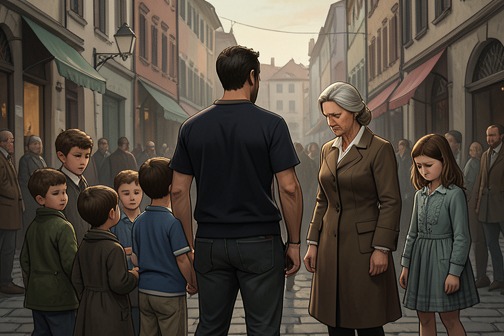
[Adam Wizman](entity:character-recall-character-adam-wizman-a34d82a64076)’s decision to leave his wife and daughters for [Claire Farel](entity:character-recall-character-claire-farel-ad491473703f) is not a clean break but a long-delayed choice between a family life shaped by shared history and religious obligation, and a passion that has made his settled existence feel alien. His departure fractures the household and costs him his teaching position, while exposing how intimate decisions in the novel are bound up with communal belonging, fear, and the possibility of starting over.
## Background and competing loyalties
Adam had built a life with his wife over nearly twenty years. They had two daughters, and he had remained faithful to a marriage in which she supported his professional projects and cared for their children. At her request, he sang a traditional Friday-evening song celebrating the virtuous woman. Yet their intimacy had come to seem serene, codified, and increasingly devoid of desire.
The family’s sense of Jewish identity was inseparable from fears about survival. After the 2012 attack on the Jewish school attended by their daughters, Adam and his wife withdrew the girls from the school and moved to [Israel](entity:location-recall-location-e1a1566e26c9), settling in Ra’anana. The experience failed: Adam felt he could not integrate without deforming himself, and he was troubled by the political disengagement he perceived among fellow emigrants. The family returned to [France](entity:location-recall-location-4f282e1af8a7), where Adam taught French at a Jewish school and lived within a close communal world. His wife became more observant, took the name Sarah, adopted modest dress, and sought stricter observance of dietary rules, [Shabbat](entity:time-recall-time-shabbat-2dc9d5d54f46), and the laws of family purity. During menstruation and the prescribed period afterward, the couple did not sleep together; Sarah slept on a mattress on the floor, an arrangement Adam could not bear to see.
## Passion and hesitation
At forty-two, Adam met Claire and experienced a forceful erotic and emotional attachment unlike the placid marital sexuality he had known. Their relationship unfolded largely through a secret, erotic correspondence and had not yet been tested by ordinary shared life. It nonetheless made Adam see his marriage as alienating and left him imagining that, with Claire, he could become more fully himself.
Leaving also meant risking his place in the community. Adam feared being treated as a pariah, a Jew who had abandoned his household, and he had been raised to believe that Jewish identity carried duties toward the survival of the people. The January 2015 attacks on Charlie Hebdo and the Hyper Cacher further intensified the family’s sense of shared vulnerability. For three days after the killings, Adam stayed home with his wife and daughters behind closed shutters; in his mind, their common exposure to danger bound them together more powerfully than love.
The conflict stretched on for months. Adam repeatedly came close to leaving, then retreated to the life whose foundations he had helped build. He worried about the effect of separation on his daughters, particularly his older daughter Mila, who remained psychologically vulnerable after the school attack and suffered nightmares and recurring thoughts of death. Claire, who wanted their relationship acknowledged openly, was more distressed by the stalemate. They broke up and returned to one another, each aware that their intellectual and sexual intimacy felt exceptional. Eventually Claire let go, interpreting the impasse through familiar ideas about midlife upheaval and the desire to reaffirm oneself. Then Adam told her he had made his choice: he would divorce.
## The announcement and departure
In the days before telling his wife, Adam imagined tears, insults, threats, attempts at reconciliation, or intervention by a rabbi, friends, relatives, and members of the community. He had not imagined silence. His wife refused to speak to him or look at him, moving through the apartment as if he had become invisible and impure. Her refusal turned the announcement into a form of social and domestic erasure: Adam could still move and speak, but she treated him as though he no longer existed.
The next day, Sarah told the director of the Jewish school where Adam taught that he had left her for a non-Jewish woman with whom he had long been having an adulterous affair. Adam was fired. He packed a suitcase and went to join Claire in a [Paris](entity:location-recall-location-paris-c02b439ce220) hotel room. A few days later, they rented a furnished apartment in the city’s thirteenth arrondissement and began living together. The departure therefore changed more than Adam’s marital status: it removed him from the family home and his communal workplace at once, while turning his private relationship into an openly consequential break.
## Later consequences and narrative significance
Adam’s separation forms part of the family history surrounding the later Farel case. When [Alexandre Farel](entity:character-recall-character-alexandre-farel-23479f753109) was taken into custody on suspicion of rape, news of the accusation reached the press within hours. Alexandre’s lawyer publicly denied the allegations, while the case brought scrutiny and insults to Claire and [Jean Farel](entity:character-recall-character-jean-farel-a16bb5a3d663) as well. The novel places these public reverberations against the earlier intimate choices that had rearranged the family: Adam’s departure had already made Claire’s relationship with him a source of conflict and exposure.
The episode resists a simple opposition between desire and duty. Adam’s choice follows months of indecision, and the grounds for his hesitation are concrete: his daughters’ vulnerability, his wife’s years of loyalty, the religious community in which he lived, and the historical fear of Jewish disappearance. Yet remaining had come to feel like a life without desire or a future. His departure is decisive precisely because it does not resolve those competing claims; it gives him a new household with Claire while leaving the losses, family ruptures, and communal consequences in its wake.
Event 4
2015—2016年科隆跨年夜性侵事件
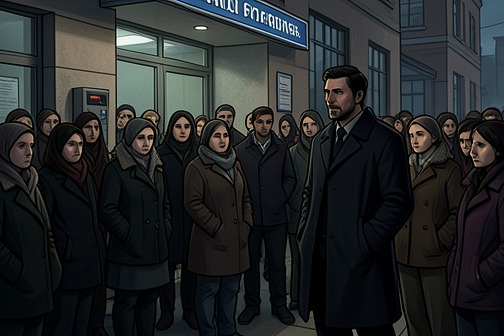
The 2015–2016 Cologne New Year’s Eve sexual assaults are a public event whose significance in the novel lies not only in the reported attacks but in the arguments they unleash. Reports that hundreds of women sought to file complaints after the celebrations, and that the number of assailants was estimated at 1,500, become the setting for a conflict over how to condemn sexual violence without turning it into a charge against entire groups. Through [Claire Farel](entity:character-recall-character-claire-farel-ad491473703f)’s response, the novel stages a difficult distinction: opposing racist generalization does not require silence about violence, while speaking about the perpetrators’ origins can itself be made to serve political ends.
## The reported attacks and their political context
In the days after the night of December 31, 2015, to January 1, 2016, hundreds of German women went to police stations to report sexual assaults and rapes during the New Year’s Eve festivities in a central square in Cologne. The number of assailants was estimated at 1,500. Some suspects were arrested; most were described as immigrants from North Africa. The reports provoked criticism of Angela Merkel’s policy of large-scale migrant regularization, including the admission of migrants from Syria. The attacks thus entered public discussion at the intersection of sexual violence and migration policy, with the factual reports quickly acquiring significance beyond the immediate question of what had happened to the women who came forward.
The novel places two dangers beside each other. Some left-wing intellectuals and politicians, concerned that the attacks would be exploited by racists, were described as emphasizing that risk rather than beginning with condemnation of the violence. The mayor of Cologne also warned against conflating individual perpetrators with immigrants as a group, but her advice to women to keep away from men became a provocation in its own right. Claire’s response takes that advice as evidence of an unacceptable burden being placed on women: they should not have to avoid men in order to be safe. The question is no longer only whether public speech might be appropriated by the far right, but whether fear of that appropriation can become a reason to leave victims unheard.
## Claire Farel’s intervention
Claire argues that the assaults must be named and those responsible punished, whatever their origins. She condemns generalizations about immigrants while also rejecting the idea that the specific acts reported in Cologne should be concealed to prevent the far right from gaining support. In her view, asking assaulted women to stay silent because their testimony might help fascists is a mistake and a discredit to feminism. Her position makes the women’s right to be heard central without treating the perpetrators’ reported backgrounds as irrelevant.
That distinction brings Claire into conflict with [Françoise Merle](entity:character-recall-character-fran-oise-merle-3920535efdef), who criticizes the interview before its publication. [Françoise](entity:character-recall-character-fran-oise-d26e2c6492c7) believes it will intensify the stigmatization of foreigners in Germany and [France](entity:location-recall-location-4f282e1af8a7), especially Muslims. The disagreement is not presented as a simple choice between concern for women and concern for migrants: both positions claim to defend vulnerable people, but they differ over which danger must be addressed first and how public language can avoid reproducing it. [Jean Farel](entity:character-recall-character-jean-farel-a16bb5a3d663) responds to Françoise with a joke about being in love with an “Islamo-leftist,” turning a serious dispute into a moment of personal teasing without resolving it.
## Interview, reception, and backlash
The interview reaches beyond the editorial dispute. While undergoing a breast examination, Claire hears a doctor refer to her radio comments on Cologne and assume that she has said migrants are imposing a culture and religion that humiliate women. Claire corrects him: she has given an interview that will appear the following day. The exchange shows how her position is already being simplified before the text is published. Her anxiety about possible distortion is intensified by the doctor’s confident interpretation, even as her medical examination ends with the reassuring news that everything is normal.
After publication, Claire’s remarks are challenged in a radio debate with the head of a feminist association. Her interlocutor argues that the underlying issue is sexual violence and patriarchy, not migrant origin, and objects to singling out migrants as responsible. Claire says that she condemns sexual violence generally but is also speaking about the particular reports from Cologne, involving young men from Syria or the Maghreb, and differences in relations between men and women. Her opponent insists that patriarchal domination does not depend on nationality and that sexual violence was not imported by migrants. The exchange makes explicit the competing explanations: a focus on the specific setting and reported perpetrators, and a structural account that locates violence across societies and among men of many backgrounds.
The debate grows sharper when the other speaker cites annual figures of about 14,000 reported rapes in France and slightly more than 7,000 in Germany, adding that many victims do not report at all. She argues that perpetrators include men from every social type, from a psychopath to a respectable father, and warns that Claire’s framing risks benefiting the far right. Claire replies that she will not accept a lecture from someone who substitutes denunciation and fixed judgment for debate. The scene does not settle the political disagreement; instead, it shows how appeals to statistics, structural analysis, transparency, and the public consequences of speech collide in a live broadcast.
## Media framing and the novel’s wider stakes
The Cologne controversy becomes entangled with the later publicity surrounding the accusation against Claire’s son, [Alexandre Farel](entity:character-recall-character-alexandre-farel-23479f753109). When news of his police custody is reported by [Agence France-Presse](entity:organization-recall-organization-agence-france-pr-8053e672bcbd), Claire’s interview on the Cologne attacks collides with the rape allegation in public discussion, and she receives insults on [Twitter](entity:organization-recall-organization-twitter-31930dc42d31). The two matters are distinct, but their simultaneous circulation subjects Claire to a compressed public identity: her views on Cologne become part of the response to an allegation concerning her family. The novel uses this collision to show how public argument can attach one controversy to another, leaving little room for careful distinctions.
The attacks also sit within a broader account of insecurity among French Jews after the 2012 [Toulouse](entity:location-recall-location-ddb428d21325) school attack and the 2015 attacks on Charlie Hebdo and the [Hyper Cacher de la porte de Vincennes](entity:location-recall-location-702458c4f7dd). [Adam Wizman](entity:character-recall-character-adam-wizman-a34d82a64076) and his family leave France for [Israel](entity:location-recall-location-e1a1566e26c9) after the school attack, but their move to Ra’anana proves unsustainable; they return, and the strain of security fears and religious change further reshapes the family. These events are not presented as causes of the Cologne assaults. Rather, their presence gives the novel’s disputes over migration, identity, and public responsibility a wider context in which fear of violence is real but does not yield a single political response.
The novel’s treatment of Cologne resists a clean division between a defense of women and a defense of migrants. Claire insists on condemning the attacks and listening to victims; her critics insist that sexual violence be understood as patriarchal and not attributed to migrant identity. The episode’s lasting narrative force comes from the tension between those claims and from the way media exposure can turn an argument against silence into a new occasion for simplification and hostility.
Event 5
2012年图卢兹犹太学校枪击案
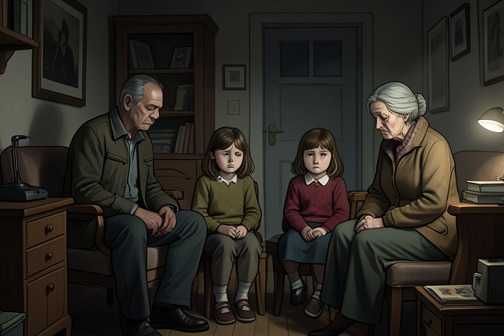
The 2012 [Toulouse](entity:location-recall-location-ddb428d21325) Jewish school shooting is the rupture that turns a family’s fear of antisemitism into a decision to leave [France](entity:location-recall-location-4f282e1af8a7). Three children and a father are killed at a Jewish school, and the attack alters the lives of [Adam Wizman](entity:character-recall-character-adam-wizman-a34d82a64076) and his daughters: the family departs for [Israel](entity:location-recall-location-e1a1566e26c9), discovers that refuge does not mean belonging, and returns to France carrying the consequences of the violence.
## The attack and its immediate effect
On March 19, 2012, an Islamist radical attacked the Jewish school attended by Adam Wizman’s daughters, killing three children and a father. The crime was filmed with a GoPro camera fixed to the attacker’s chest. In the novel’s account, the violence shocks France: the killing of children because they were Jewish makes antisemitism not an abstract fear but a direct threat to the family.
Adam and his wife withdrew their daughters from the school immediately. For the family and many of their traumatized relatives, the attack changed the question from whether Jewish life in France could continue to how long they could remain. Their conversations repeatedly returned to the fear that European Jews could no longer ignore antisemitism that killed, and that they or their children might eventually have to leave to protect themselves.
## Flight to Israel and return
In the aftermath, Adam and his family left France for Ra’anana, in Israel, where they rented an apartment for six months. The move was made in haste, under the pressure of fear and the wish to keep the children safe. It did not become a lasting home. Although Adam felt a profound attachment to Israel, he found that he could not imagine integrating there without changing himself. The everyday atmosphere felt aggressive to him, and the constant familiarity of life among other Jews did not produce the solidarity he had experienced when meeting Jews abroad as members of a minority.
The family’s disappointment also had a political dimension. Adam was troubled that other French Jews who had moved for similar reasons treated the Israeli-Palestinian conflict as an abstract reality or an unavoidable fate. In his view, accepting that impasse for the sake of personal security amounted to a moral defeat at odds with the humanist Judaism he claimed. The family returned to France, subdued by the failure of the move and the suffering it had brought.
## The attack’s continuing consequences
The shooting remains a dividing line in the family’s history. Before it, Adam had accepted the possibility of living happily as a Jew in France; afterward, he believed that possibility had ended. He had understood Georges Perec’s novel *A Void* through the image of a missing letter: remove one letter from the Bible’s original text and its meaning changes. For Adam, the formal constraint of writing without the letter “e” suggested how persistently Jewish disappearance remained imaginable. The attack gave that apprehension an immediate, personal force.
The family’s return did not restore their former life. Adam resumed teaching French at a Jewish school, and the family lived within a close communal world. His wife grew more religiously observant, a change that would deepen the distance between them. The attack also forms part of [Mila Wizman](entity:character-recall-character-mila-wizman-ab5ee4a0e196)’s history of trauma: at trial, a psychologist describes her as having had a happy childhood until the school massacre, after which she developed psychological difficulties and struggled at school. The shooting is therefore both a public act of antisemitic violence and a continuing private wound, shaping decisions, family relationships, and the lives of the children who survived.
Event 6
2015年1月巴黎恐怖袭击
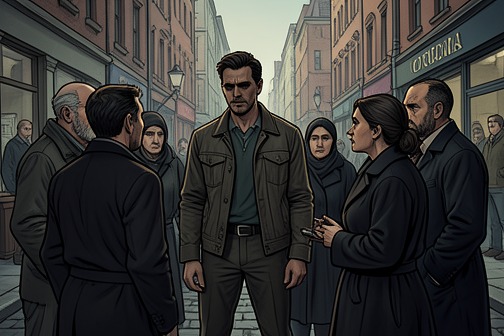
The January 2015 [Paris](entity:location-recall-location-paris-c02b439ce220) attacks are a public catastrophe whose force in the novel extends into private life. For [Adam Wizman](entity:character-recall-character-adam-wizman-a34d82a64076), the killings at Charlie Hebdo and the Hyper Cacher of the porte de Vincennes, and the deaths of two police officers, sharpen the conflict between his love for [Claire Farel](entity:character-recall-character-claire-farel-ad491473703f) and his sense of obligation to the family and Jewish community he might leave behind.
## Background and Personal Stakes
The attacks arrive amid Adam’s struggle to decide whether to leave his wife and daughters for Claire. Their affair has exposed to him the cost of a placid marriage and made him imagine becoming more fully himself, but he fears that separation would make him an outcast: a Jew who had abandoned his home. He has been raised with the conviction that Jewish identity carries a duty to help ensure the survival of the people.
The violence of January 2015 makes that inherited responsibility newly immediate. The novel frames the attacks not only as a national trauma but as an event that magnifies Adam’s fear of breaking with his family. His private choice is entangled with a sense of collective vulnerability: in the face of hostility, the family’s cohesion seems to offer protection and continuity.
## The Three Days at Home
For three days after the attacks, Adam cannot work. He remains inside with his wife and daughters, the shutters closed. The domestic scene gives the public events a physical consequence: instead of appearing only as news, the violence alters the family’s daily life and confines them together.
That enforced closeness reinforces Adam’s hesitation. The narrator describes the family’s shared tragedy, common fate, and precarious condition as binding them more strongly than love. The comparison does not resolve his conflict; it shows why leaving feels like more than ending a marriage. His desire for Claire presses against a solidarity renewed by danger and the fear of what might happen to a community already under threat.
## Consequences for Adam’s Decision
Adam’s relationship with Claire begins in a period when sexual passion makes it difficult for him to think of anything beyond being with her. More than once he nearly packs his bags, but it takes a year before he can tell his family that he is leaving permanently. The attacks are part of the emotional and historical pressure shaping that delay: the decision to depart is made against the memory of a collective shock that had kept the family shut inside together.
The event therefore functions as more than backdrop. It brings the novel’s themes of transmission and survival into Adam’s intimate dilemma, while refusing to make his eventual departure either a simple act of liberation or a straightforward betrayal. His choice carries the weight of a family’s shared fear and of obligations inherited across generations.
Event 7
亚历山大·法雷尔在综合理工学院自杀未遂
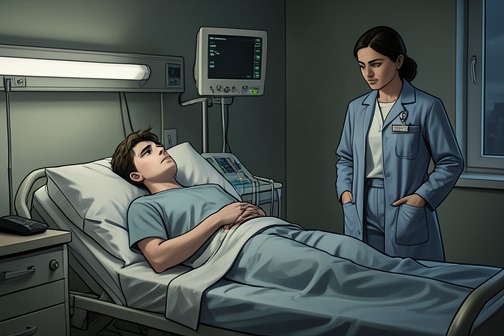
[Alexandre Farel](entity:character-recall-character-alexandre-farel-23479f753109)’s suicide attempt at [École polytechnique](entity:organization-recall-organization-cole-polytechniq-7532b4627331) is the rupture in an apparently faultless ascent: after years of academic distinction, military instruction and relentless physical discipline overwhelm him, and within weeks of arriving at the school he tries to end his life. He survives, but the event becomes a secret to manage, sharpening the divide between the successful public self he presents and the distress he cannot safely disclose.
## Background and pressure
Alexandre’s record had marked him out as exceptional from childhood. He learned to read, count, and write at three, excelled at school, entered the most sought-after scientific preparatory class, and won admission to École polytechnique at nineteen in third place. His later acceptance to Stanford extended the same trajectory of distinction. Performance, the narration observes, had long seemed to reduce his life to a single word.
That achievement concealed a more fragile history. Alexandre had been an unusually sensitive, withdrawn, and timid child, and the preparatory years left him feeling persistently tested and defeated. The transition to École polytechnique changed the terms of his life with startling speed: after two years of intensive intellectual preparation, he was subjected to military instruction, physical exertion, and a strict hierarchy of command.
## The attempt and its immediate aftermath
Alexandre hated the school’s first-month military training and the discipline and caporalism it imposed. At the La Courtine military camp, he had to perform daily exercises under the orders of superiors he despised. The abrupt shift from sustained intellectual work to a body continually mobilized and tested became intolerable. Three weeks into the training, he attempted suicide.
He was taken to hospital in a state of extreme exhaustion and distress. When he left, he believed that no one would know what had happened. The attempt was not simply an episode he survived; it became information he felt compelled to keep from the professional world that was already watching for the next generation of entrepreneurs. His fear that the event could define him turned recovery into concealment.
## Family, silence, and institutional pressure
During the crisis, Alexandre’s parents were present and even overprotective. Their care, however, existed alongside a family reserve in which physical tenderness was rare. He understood himself as an object of his parents’ admiration, but not as someone accustomed to open displays of affection. The attempt thus occurred within a relationship marked by genuine attachment and distance at once.
The novel places his crisis within a wider pressure system. In less than two years, three students at elite schools had died by suicide, while the institutions that produced the nation’s elite treated suicide as a major taboo and organized themselves to prevent students from reaching that point. The account sets this silence against a contrasting gesture at American universities, where gentle, long-haired white Polish sheepdogs were made available to students for comfort. Alexandre’s private collapse and the institutional response together expose the cost of a culture that prizes exceptional performance while struggling to acknowledge distress.
## The secret’s return
Years later, as Alexandre rehearses for a [Google](entity:organization-recall-organization-google-fc93c5cfd03a) interview, the attempt remains a fact he cannot use in the carefully shaped account of his life. Asked to describe his greatest ordeal, he recognizes that telling the truth—that he had tried to end his life—could disqualify him. His mother’s illness offers another possible answer, but he cannot speak of cancer without trembling and decides not to bring her into the interview either. The past is therefore present not as a narrated recovery but as a forbidden answer.
The episode also casts a shadow over his later public self-fashioning. Alexandre tends his résumé as an elite athlete tends his body, rehearses interview questions in fluent English, and curates an image of discipline and optimism online. His suicide attempt gives those performances their hidden counterhistory: behind the polished record and motivational signals is a young man who once could not endure the demands imposed on him.
## Narrative significance
The attempt links individual suffering to the meritocratic structures surrounding Alexandre. The same institutions and expectations that certify his promise make vulnerability feel professionally dangerous; his survival does not erase that contradiction, but teaches him to conceal it. In this sense, the event is both a personal crisis and an early revelation of the novel’s concern with performance: achievement can make distress less visible, not less real.
Its later recurrence in Alexandre’s thoughts also gives the event continuing force. When he considers what employers will hear, the attempt is not an old fact he can freely reinterpret but a truth he believes must remain unsaid. The silence preserves his prospects while leaving the wound embedded in the very success that follows.
Event 8
罗莎·帕克斯拒绝让座
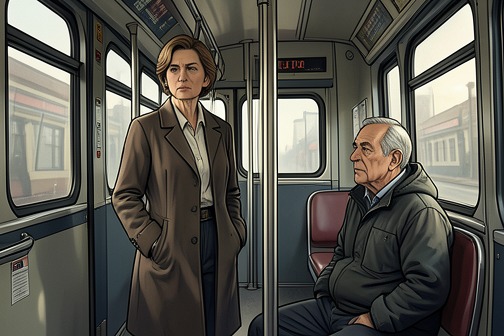
Rosa Parks’s refusal to give up her seat to a white passenger on December 1, 1955, is presented as a landmark act of resistance and a decisive moment in the struggle against racial segregation on buses in the [United States](entity:location-recall-location-5d55e9152db1). The novel invokes it in an interview answer by [Alexandre Farel](entity:character-recall-character-alexandre-farel-23479f753109), who says he would have wanted to be on the bus; his admiration for Parks sits alongside his account of the feminist convictions he inherited from his mother.
## The remembered act
Asked which historical event he would have liked to witness, Alexandre hesitates over whether Parks’s refusal should be called an event of history, then names it specifically: he wishes he had been on the bus when she refused to surrender her place to a white passenger. His answer centers not on a later public commemoration but on the immediate scene of refusal, imagined from the perspective of someone present.
## Historical consequence
Alexandre connects that refusal to what followed. A year later, the United States Supreme Court declared laws enforcing segregation on buses unconstitutional, and Parks struggled alongside Martin Luther King. The compressed account thus places an individual act within a larger political sequence: a refusal made in public, a legal challenge to segregation, and collective activism.
## Alexandre’s account of justice
The recollection appears in an interview that also asks Alexandre what achievement makes him proudest. He answers that he is proud of the feminist education his mother gave him and describes his view of relations between men and women as fully egalitarian. He recalls that she experienced unfair treatment and sexist remarks, and that some male colleagues undervalued her work. She spoke openly about these experiences with her children, was distressed by them, and continued to fight rather than present herself as a victim. Alexandre adds that he spent an entire summer reading an anthology of major twentieth-century feminist writing. Beside that account, his wish to witness Parks’s refusal frames resistance to injustice as something he values across distinct histories of racial and gender inequality.
Event 9
亚斯米娜·瓦瑟尔的堕胎
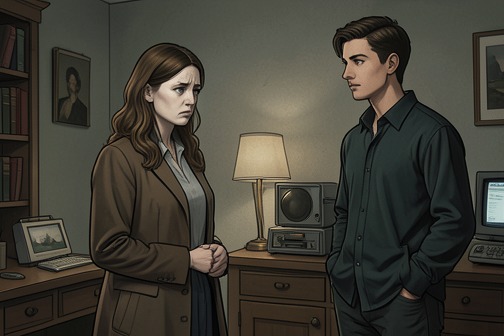
[Yasmina Vasseur](entity:character-recall-character-yasmina-vasseur-72db2197e899)’s abortion is both the decisive rupture in her relationship with [Alexandre Farel](entity:character-recall-character-alexandre-farel-23479f753109) and the event around which [Jean Farel](entity:character-recall-character-jean-farel-a16bb5a3d663) and [Françoise Merle](entity:character-recall-character-fran-oise-merle-3920535efdef) construct a secret intervention. The novel first makes the loss legible as heartbreak and sudden disappearance; only later does it disclose the role played by Alexandre’s parents, turning a private separation into a conflict over protection, consent, and what a family may conceal in the name of its child.
## Relationship and rupture
In the spring of 2015, while completing his third-year internship at the Ministry of the Economy, Alexandre began a relationship with Yasmina, a thirty-four-year-old adviser with an elite educational and political background. She was older than him, committed to a political career, and cautious about the relationship from the outset. Their affair was intense, but the discovery that she was pregnant brought it to an abrupt end: Yasmina had an abortion and left Alexandre.
The separation is initially filtered through Alexandre’s questions about love and the pain of a breakup. He recalls that the day after the abortion Yasmina stopped replying to his messages and removed him from her social networks. An acquaintance called this behavior ghosting: the person loved seemed to vanish without explanation. Alexandre continued asking for an account of her sudden distance until he eventually found her and heard that her new position was incompatible with their relationship. She had just become chief of staff to the Minister of the Economy, and did not want to risk her career for a younger, unemployed man when neither could promise how long their relationship would last.
After that conversation, Alexandre sent further messages asking to see her, but received no answer for six months. Then Yasmina unexpectedly contacted him to arrange a telephone conversation. He initially hoped the contact might mean a reconciliation; instead, she asked him to return a cashmere sweater and scarf and to delete the messages they had exchanged. She offered no substantial explanation beyond the possibility that someone might tamper with their messages. Her caution, whose reason Alexandre did not yet understand, retrospectively foreshadows the secret surrounding the abortion.
## The concealed intervention
The account later establishes that Yasmina’s abortion took place after the legal deadline. In a confrontation with Jean, [Françoise](entity:character-recall-character-fran-oise-d26e2c6492c7) asks how he could have requested that she help arrange the abortion and hide from Alexandre that the deadline had been exceeded. Jean answers that he acted to protect his son, and argues that Françoise acted for the same reason. He portrays Yasmina as a threat to Alexandre’s future and insists that she agreed to the decision.
Françoise challenges the moral simplicity of that defense, suggesting that Jean must have promised Yasmina something to persuade her. Jean’s answer is that everything he did was for his son’s good. The exchange does not resolve what Yasmina was promised or how freely she made her decision; it exposes instead the gap between Jean’s claim of protection and Françoise’s suspicion that persuasion was involved. The abortion is therefore not simply a private medical event in the novel’s account: it becomes evidence of the parents’ willingness to intervene in Alexandre’s life while withholding the circumstances from him.
## Family history and divided motives
Jean’s defense belongs to a longer pattern of decisions made in the name of family stability. He had avoided divorcing Claire, not chiefly because of his continuing interest in their marriage, but because he wanted to protect Alexandre and provide him with a stable upbringing. At the same time, Jean had maintained a long relationship with Françoise, whom he had met through Ambition pour tous, the association he founded to help students from disadvantaged backgrounds enter journalism schools. His private life thus rests on a separation between the family structure he preserves for his son and the intimate life he shares elsewhere.
Françoise’s involvement in the abortion places her within that same protective arrangement, but her confrontation with Jean shows that she does not simply endorse his account of it. The two had spent years anticipating a life together that Jean never made possible, in part because he would not leave his family. Their argument over the abortion therefore carries the weight of a relationship marked by deferred promises as well as secrecy: Jean invokes their shared purpose, while Françoise makes the question of what he told Yasmina impossible to ignore.
The novel also places this concealed episode against the earlier family histories of Claire and Jean. Claire’s own mother, Marie, had given up her ambitions to care for her daughter and experienced motherhood as a form of alienation. Later, when Claire learns that Alexandre is advancing his departure, she remembers the fear and helplessness she felt after giving birth, when she understood herself to be responsible for him for life. These different experiences do not explain Yasmina’s decision, but they frame the family’s repeated effort to define women’s choices through the needs and futures of others.
## Aftermath and narrative significance
The breakup leaves Alexandre facing a loss he struggles to interpret. Yasmina’s disappearance from his messages and social networks makes the relationship’s end feel, to him, like a sudden erasure; her later request for the return of two personal items and deletion of their correspondence turns that erasure into a deliberate demand to remove its traces. The novel delays the explanation for her caution, allowing the reader to encounter the emotional consequences before learning of the concealed intervention.
That delayed disclosure changes the meaning of the event without making the characters’ accounts equivalent. Jean frames his actions as protection and points to Yasmina’s agreement; Françoise questions how that agreement was obtained. Alexandre, meanwhile, experiences the outcome as abandonment and heartbreak, without initially knowing what his father and Françoise had done. The different versions remain in tension, and the novel does not supply a complete account of Yasmina’s own reasoning beyond her concern for her political career and the eventual end of the relationship.
The abortion consequently links three kinds of silence: Yasmina’s withdrawal from Alexandre, the parents’ concealment of the missed legal deadline, and the later demand that their messages be erased. Its significance lies not in resolving every uncertainty about the decision, but in showing how an act described by some characters as protective can also become a source of secrecy, suspicion, and lasting emotional injury. The episode makes the family’s central contradiction concrete: Alexandre is treated as the person to be protected, while major decisions affecting his relationship are made around him and kept from him.
Event 10
让·法雷尔在爱丽舍宫获授荣誉军团大军官勋章

[Jean Farel](entity:character-recall-character-jean-farel-a16bb5a3d663)’s investiture as a Grand Officer of the Legion of Honour at the Élysée Palace is meant to crown a career spent at the center of French political life. Instead, the ceremony becomes a collision between public triumph and private emergency: a carefully staged ascent is interrupted by news that [Françoise Merle](entity:character-recall-character-fran-oise-merle-3920535efdef) has attempted suicide, then by the collapse of [Michel Duroc](entity:character-recall-character-michel-duroc-31d85c74091f) in the middle of Farel’s speech. Farel receives the decoration and carries on, but the honors, photographs, and applause cannot restore the appearance of a life held together.
## A ceremony engineered as a triumph
Farel has been a familiar presence at the Élysée across the French Fifth Republic, invited by successive presidents and steeped in the calculations of political power. His enemies joke that the palace is his second residence. When his appointment is announced in the Journal officiel, he presses for an individual ceremony in the palace’s winter room and contacts the decorations service to set the date. He refuses to be honored alongside an ordinary prefect or even a Nobel Prize-winning writer: the President, he believes, owes him a ceremony of his own. Farel had invited the future President onto Grand Oral when the latter was a young activist; years later, Farel announced his election on television.
The scale and composition of the gathering make the event a demonstration of influence as much as an award ceremony. Ninety carefully selected guests arrive, including representatives of the CAC 40, media executives, journalists, writers, publishers, and ministers, mostly men. The Élysée secretary-general has approved the list, despite privately objecting that Farel has invited too many people; the presence of three former or current prime ministers and the assembled business elite makes the excess difficult to refuse. Farel has also cultivated the speechwriter, a young ÉNA graduate, over lunch two weeks earlier. He supplied favored profiles of himself, named contacts the writer could consult, and prepared his own text for the occasion. Five days before the ceremony, he even had a lectern delivered so he could rehearse under Élysée-like conditions.
The guests’ movement through the palace exposes the social choreography behind the event. Political and media figures assess one another, approach the most influential person available, and maneuver into conversations through a kind of musical-chairs contest. Farel’s brothers, Gilbert and Paulo, have traveled from their village in the Gard with their families and take photographs on the palace steps, while two cousins hesitate over whether they are allowed to use their cameras inside. A guest’s attempted selfie with Catherine Deneuve is checked by an usher. At the center of this ordered spectacle, Farel moves from one guest to another, delighted by the culmination he has arranged.
## The private crisis enters the public room
Among the guests are Farel’s wife, [Claire Farel](entity:character-recall-character-claire-farel-ad491473703f), and his son, [Alexandre Farel](entity:character-recall-character-alexandre-farel-23479f753109). Claire wears a dress Jean asked her to wear; she appears tense, and Alexandre speaks with her. Farel’s private thoughts undercut the family image being presented to the room. He imagines his mother’s corpse under a shroud and thinks that everything in his life had seemed destined for sordid failure, yet he has reached the summit of the state. He tells himself that he has done it all for her. The ceremony’s display of family and achievement is therefore shadowed, even before the interruption, by death and the fear of loss.
A text message from an unknown sender abruptly changes the event’s emotional stakes: [Françoise](entity:character-recall-character-fran-oise-d26e2c6492c7) has attempted suicide. Farel cannot move at first; a migraine overwhelms him, and he imagines collapsing in front of the guests, with a humiliating photograph of him circulated afterward. He regrets having been too hard on Françoise and recognizes that he loves her. Seeing Claire in the dress he dislikes, he tells himself that Françoise is the only woman he has ever loved and that she has tried to die because of him. The ceremony continues to demand his attention: the President is arriving, and Farel feels unable either to delay him or to leave the palace and search the [Paris](entity:location-recall-location-paris-c02b439ce220) hospitals. A second message specifies that Françoise is in the psychiatric unit at Bichat Hospital.
The formal proceedings proceed while Farel struggles to keep his distress out of sight. When an acquaintance puts a hand on his shoulder and asks if he is all right, he smiles and says that everything is very well, though he is sweating and trembling. [Francis Ballard](entity:character-recall-character-francis-ballard-7d4ba7459e69) presses his arm and jokes that the Legion of Honour is the last Viagra of powerful men. Farel recoils and thinks that, if he had a weapon, he would kill him. The remark punctures the ceremonial language of honor with a crude joke about power and masculinity, while Farel’s attention remains fixed on the message he cannot act on.
## Investiture and interruption
The President’s address presents Farel as a veteran journalist who has shaped French political life for more than forty years. He praises Farel’s Sunday interviews, his combination of warmth and aggression, and his refusal to let politicians evade a question. Farel, however, is unable to concentrate. A line in the prepared speech about the political figure who influenced him strikes him as a low blow: the writer has included Pierre Mendès [France](entity:location-recall-location-4f282e1af8a7), though Farel considers Charles de Gaulle the only man who truly marked him and knows large sections of de Gaulle’s memoirs by heart. The personal mismatch offers a small but telling crack in the polished portrait being delivered on his behalf.
When the President declares Farel a Grand Officer of the Legion of Honour, Farel steps forward to receive the decoration pinned to his jacket. The President kisses him and presses a hand to his arm in a friendly gesture; a photographer records the exchange, and guests raise their phones to capture the same image. The President then gives Claire a bouquet of roses. Farel’s private anxiety remains active beneath this fixed public picture: the message about Françoise continues to occupy his mind, even as he accepts the honor he has worked so hard to obtain.
Despite protocol, Farel takes the lectern after the President. Their long friendship has made the exception possible, and Farel begins the speech he has spent two weeks preparing. As he looks up, he sees Michel Duroc entering the room. Duroc is disheveled, heavyset, bearded, and appears to have been drinking; his gaze is hard and threatening. Farel realizes that he forgot to remove Duroc’s name from the guest list. The man’s arrival makes the speech’s planned passage on Farel’s personal ethics feel newly dangerous: Farel imagines an outburst and grows increasingly unwell, convinced that he is about to faint.
Instead, Farel remains standing and Duroc collapses in the middle of the room. Guests cry out and draw back. Claire, Alexandre, and Jean’s three brothers move toward Duroc to help, while Farel stops speaking but does not move. A Republican Guard begins first aid and calls three colleagues to carry Duroc into the adjoining Napoléon III salons, behind a heavy red velvet curtain. Five minutes later, firefighters arrive. What happens to Duroc is removed from the main room and from the guests’ sight; Claire and Alexandre return to the ceremony space, while the audience waits amid whispers.
## A speech continued, an image unsettled
The President quietly asks Farel what they should do. Farel answers that they should continue, then returns to the lectern and resumes his speech. The decision preserves the ceremony’s outward form, but its meaning has changed: the guests are no longer listening to an uninterrupted tribute, but wondering what has happened to Duroc and whether Farel can go on while his friend is in the hands of the firefighters, perhaps dying. The red curtain holds the emergency out of view without making it disappear. The event’s polished stage and the crisis behind it remain physically adjacent.
Farel’s remaining remarks turn from public career to family and affection. He says that his son is the best thing he has accomplished, drawing the audience’s attention to Alexandre, who blushes. He then invokes Baltasar Gracián’s The Courtier, a book journalists have ironically called his bedside reading, while naming Proust, Gary, and Gombrowicz as his true passions. He closes by distinguishing admiration from love and thanking those who love him. The audience applauds. News circulates that Duroc has been taken to hospital, but once the buffet opens, the guests’ attention moves on. The scene leaves Farel’s declaration of love beside the fact of an unresolved medical emergency and a personal crisis he has not yet faced.
## After the palace
Farel cancels his reservation at a restaurant on Place de la Madeleine and crosses the Rue du Faubourg-Saint-Honoré pale and trembling. The Élysée’s brilliance has vanished. During the ceremony the gathering had offered the illusion of a united, loving, solid family; outside it, that structure seems to be splitting apart. Farel thinks only of Françoise’s suicide attempt. Claire has left after the ceremony to join [Adam Wizman](entity:character-recall-character-adam-wizman-a34d82a64076), leaving the President’s bouquet on one of the tables. Farel takes the roses, intending to give them to Françoise, who had dreamed of receiving them.
On the street, Farel posts a photograph of himself receiving the decoration on [Twitter](entity:organization-recall-organization-twitter-31930dc42d31), but his caption mistakenly turns “honor” into “horror.” He deletes the post after users mock the error, yet screenshots continue to circulate. The typo makes his ceremonial distinction instantly available for ridicule, and he recognizes that haste and impulsiveness have already damaged careers. Even as he heads toward Françoise, the public image of the ceremony is being reframed online by a mistake that cannot be taken back.
Despite the late hour, Farel takes a taxi to Bichat Hospital. His celebrity gets him past the usual restrictions on visiting the psychiatric ward: a smile and an autograph secure entry after visiting hours. The access recalls the earlier moment when he learned that Alexandre had attempted suicide, making Françoise’s crisis echo a prior family emergency. Carrying the President’s roses, Farel enters a small, dark, overheated room and finds Françoise profoundly weakened. His journey from the palace to her bedside brings the public award into contact with the private consequences that the ceremony could neither pause nor repair.
Event 11
米歇尔·迪罗克与让·法雷尔的洗手间对质
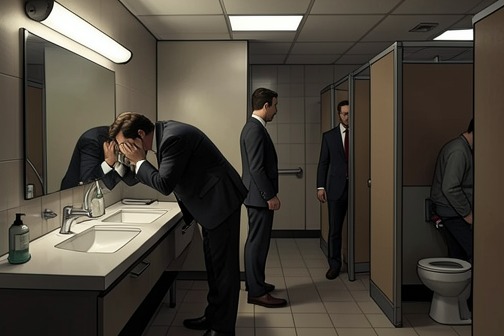
The restroom confrontation between [Michel Duroc](entity:character-recall-character-michel-duroc-31d85c74091f) and [Jean Farel](entity:character-recall-character-jean-farel-a16bb5a3d663) turns a public celebration into an encounter with the secret Jean has tried to contain. Duroc’s earlier collapse during the medal ceremony gives way to an accusation: Jean had asked him to arrange an abortion for a young woman after the legal time limit and to keep the truth from his son, [Alexandre Farel](entity:character-recall-character-alexandre-farel-23479f753109). The scene marks the break in their friendship, but it also exposes the moral logic that binds them: Duroc participated, Jean calls it protection, and neither can undo what that choice cost.
## The Ceremony Breaks Open
Duroc has suffered a fainting spell during Jean’s speech at the ceremony where Jean receives a presidential decoration. In the restroom, he rinses his face at the sink, still wet and shaken, while Alexandre slips into a toilet cubicle. Jean enters with his brother, [Léo Farel](entity:character-recall-character-l-o-farel-a1c2b6acafb9), who leaves when Jean signals him out. The setting briefly allows father and son to be near one another without facing each other: Duroc imagines Alexandre behind the cubicle door and wants him to hear what his father made him do.
Jean asks why Duroc came. Duroc answers that Jean invited him, but Jean objects to being called by his old nickname. The exchange gives way to Jean’s anger over Duroc’s collapse during the speech and his remarks to a journalist. Jean suspects that the incident was meant to attract attention on the day of his honor. He insists that he is under enormous pressure and exposed every day on radio and television; Duroc’s quiet question about whether Jean is really “playing his life” punctures that self-dramatizing account without immediately settling the argument.
## The Secret Behind the Rift
Duroc explains that he was shocked to be invited to contribute to a flattering newspaper portrait by a man whose career had been spent disparaging that paper. Jean had not contacted him for six months, Duroc says, since asking him to do something “ignoble” behind Alexandre’s back. Duroc’s fainting spell and his disclosure to the journalist are therefore not presented as an isolated provocation: they emerge from a long silence and from his refusal to keep carrying the secret alone.
The hidden act concerned Alexandre’s girlfriend, whose pregnancy had passed the legal time limit for an abortion. Jean had asked Duroc to arrange the abortion and conceal from Alexandre that it was no longer legally permitted. Jean defends the decision as an effort to protect his son from a woman he describes as an opportunist who might destroy Alexandre’s life; he also insists that she agreed. Duroc answers that he can imagine what Jean promised her to secure that agreement. The exchange reveals the gap between Jean’s appeal to consent and Duroc’s suspicion that consent was obtained through inducement.
The secret has injured Duroc as well as the young woman. He tells Jean that he has been taking antidepressants for six months because of him, and that he has lost his health and all sense of dignity. He says he chose friendship over ethics and now despises himself. His distress gives the confrontation its cost: complicity did not preserve the friendship or spare Duroc the consequences of what he helped do.
## Friendship, Threat, and Moral Judgment
Jean answers Duroc’s accusation by extending the same defense: he acted for his son’s good. Duroc condemns Jean for finding a justification even for acts that are unacceptable. Jean, in turn, acknowledges a brutal and unjust world and says he is prepared to do unacceptable things to protect his family. Their conflict is not simply over what happened, but over whether loyalty can excuse the means used in its name. Jean treats protection as an overriding duty; Duroc now sees his own loyalty as an ethical failure.
When Duroc asks whether Jean considered how Alexandre might react if he learned the truth, Jean replies that his son will never find out. He then threatens Duroc with the consequences of speaking: loss of reputation and work, and removal from the medical register. Duroc says that at least he would be at peace with himself. The threat makes explicit the power imbalance beneath their old friendship: Jean can put Duroc’s profession and standing at risk, but cannot make him believe that silence is morally harmless.
Duroc’s final judgment reaches beyond the abortion arrangement. He calls Jean cynical and narcissistic, accusing him of believing that he can control people and situations, even death. Jean does not answer. The narration connects this accusation to his discovery of his mother’s corpse when he returned from school, a childhood shock that left him afraid of disaster’s sudden arrival. Jean’s need to control, the scene suggests, is less a fear of death itself than a fear of catastrophe breaking into the life he has arranged.
## What the Confrontation Changes
The encounter leaves the friendship irreparably exposed. Jean had believed that the abortion arrangement and its concealment could remain a private measure taken for his son’s protection; Duroc’s disclosure shows that the secret has instead become a source of illness, shame, and estrangement. Jean says he has endured stress at work and asks Duroc to understand his position, but Duroc points to six months without a call. Personal neglect and ethical betrayal have converged: Jean sought Duroc’s help when he needed it, then left him alone with the consequences.
After the ceremony, Jean cancels a restaurant reservation and goes to the hospital where [Françoise Merle](entity:character-recall-character-fran-oise-merle-3920535efdef) has been admitted following a suicide attempt. He carries the bouquet given to him by the President, which he had intended to offer her because she had dreamed of such flowers. Before reaching the hospital, he posts a celebratory message on [Twitter](entity:organization-recall-organization-twitter-31930dc42d31), mistyping “honor” as “horror”; the resulting mockery spreads through screenshots even after he deletes the post. The public mistake and the restroom confrontation form a pointed contrast: Jean’s carefully staged honor is already vulnerable to exposure, while the more consequential secret has been challenged by the friend he threatened into silence.
## Significance in the Wider Story
The confrontation anticipates the later public and legal crisis surrounding Alexandre. When Alexandre is arrested on suspicion of rape, Jean seeks secrecy, but the news reaches the press through [Agence France-Presse](entity:organization-recall-organization-agence-france-pr-8053e672bcbd) within hours. At the trial, Duroc’s disclosure gives the concealed abortion arrangement a place in the larger story of Jean’s efforts to protect his family, even when protection requires coercion or concealment. The restroom scene does not resolve the later case; it establishes that Jean’s interventions have their own moral and personal consequences, separate from the question of Alexandre’s guilt.
The novel also lets the scene’s opposing accounts remain in tension. Jean presents himself as a father willing to do unacceptable things for his family; Duroc sees that formulation as another way Jean makes himself the judge of what others can endure. The secret’s later circulation through journalism, social media, and court testimony enlarges the private rupture into a public conflict over reputation, responsibility, and the limits of loyalty. In the restroom, however, those abstractions have a precise human measure: a friend who says he has lost his health and dignity, and a powerful man who answers with a threat.
Event 12
弗朗索瓦丝·梅尔的自杀未遂

[Françoise Merle](entity:character-recall-character-fran-oise-merle-3920535efdef)’s suicide attempt is the crisis that makes [Jean Farel](entity:character-recall-character-jean-farel-a16bb5a3d663) confront, without being able to undo, the damage caused by his treatment of her. The news reaches him during his Élysée Palace decoration ceremony, at the height of his public triumph; his hurried visit to [Françoise](entity:character-recall-character-fran-oise-d26e2c6492c7) in hospital ends not in reconciliation but in her demand that he leave and take responsibility for Claude, the dog he gave her. Her attempt marks a rupture in their relationship and exposes the distance between Jean’s professional courage and his private conduct.
## News at the Élysée
Jean learns of Françoise’s attempt by text message while guests are gathered for his ceremony at the Élysée Palace. The contrast is immediate: around him, the rituals of public recognition continue, but his attention is captured by the possibility that Françoise may die. He imagines collapsing in front of the assembled guests and being photographed in disgrace. When another message says that she is in psychiatry at Bichat Hospital, he still cannot leave. The President is arriving, and the ceremony in Jean’s honor is about to begin.
The news also changes how Jean understands their recent confrontation. He regrets having been too harsh and thinks that Françoise attempted suicide because of him; he tells himself that he loves her. Yet even in this moment of alarm, his attention keeps returning to the demands of public performance: he cannot make the President wait, and he believes he must play his part at the ceremony and the reception. The crisis is not simply set against his achievement; it unfolds inside the very occasion that publicly confirms his status.
Jean’s ceremony also coincides with other signs that his public image is precarious. After it ends, he posts a photograph on [Twitter](entity:organization-recall-organization-twitter-31930dc42d31) with a misspelled reference to the Legion of Honor, writing “Légion d’horreur” instead of “Légion d’honneur.” Mockery spreads online, and he deletes the post, though screenshots continue to circulate. He then takes a taxi to Bichat, carrying the bouquet the President gave him. The bouquet, left behind by Claire after she goes to join Adam, becomes an offering for Françoise, who had once dreamed of receiving one.
## The hospital visit
Jean reaches the psychiatric ward despite the late hour and the end of visiting time. A smile and an autograph persuade staff to let him in, a small instance of celebrity granting him access that ordinary visitors would not have. An nurse warns him not to tire Françoise, who is very weak. In the small, dark, overheated room, she lies under a white sheet, her hands marked with brown spots; Jean finds her looking gravely altered and kisses her forehead. The scene’s care and intimacy do not restore their former closeness. Françoise answers his concern with a dry remark that she failed in her attempt.
Jean asks what drove her to it, but Françoise does not answer. The narrative sets her silence against the life she had built around freedom and independence: she knew she needed to leave him for the sake of her mental and physical survival and had already been pushed beyond her limits. Jean takes her hand and apologizes, calling himself brutal and stupid and saying that he loves her. Françoise turns her face away. His apology acknowledges his behavior, but it cannot substitute for the separation she has decided is necessary.
## Courage and private conduct
When Jean presses Françoise to say something, she answers by distinguishing his public bravery from his private life. She recognizes that he took professional risks and placed himself at the center of the country’s political life; she says that she admired him for that. But, in her judgment, he showed no courage in private. Her accusation punctures the identity celebrated at the Élysée: the ceremony’s honor cannot settle the question of how Jean has treated the people closest to him.
Jean partly concedes the charge, saying that he was too absorbed in his work and that he deserves what he has received. But the narration also records his inward resistance: he thinks of her criticism as conventional psychology and reflects that adultery’s illicitness was part of what made it exciting to him. The gap between apology and recognition remains. He can express regret and desire, yet still frames their relationship through his own justification and does not show that he has understood the cost Françoise describes.
## Separation and its consequences
Jean moves closer as if to kiss Françoise, but she draws back. In a flat voice, she tells him to go and not return. He is stunned for a few seconds, then agrees. The farewell is both an immediate boundary and a decisive break: Françoise does not ask him to comfort her or resume their relationship. She asks for practical help instead, telling him to look after Claude and fetch the dog. She calls Jean’s gift of Claude the best thing he ever did for her, then rejects any further offer of assistance.
Jean believes the attempt will also end Françoise’s journalism career. He anticipates sick leave and eventual dismissal, and thinks that he will not be able to save her from that outcome. This forecast is presented through his anxious perspective, not as a confirmed later resolution. What the visit does confirm is the changed balance between them: Françoise has made leaving him a condition of survival, and Jean leaves without having persuaded her to stay.
## Narrative significance
The attempt recurs in the novel as an interruption of Jean’s public self-presentation. At the Élysée, he is being celebrated as an eminent journalist; at Bichat, he encounters a weakened Françoise who refuses to let his fame or remorse define what she needs. His brief use of celebrity to enter the hospital contrasts with the limits of that privilege once he is at her bedside. He can secure access, but he cannot command forgiveness or intimacy.
The episode also places the costs of Jean’s controlling, self-absorbed conduct in the intimate sphere alongside the scrutiny he faces elsewhere. After the news that Alexandre has been taken into custody on suspicion of rape becomes public, Jean’s attention turns to the threat to his own reputation and to the family name. Against that wider pressure, Françoise’s attempt and refusal to return remain a separate personal consequence: a crisis Jean cannot convert into a public-relations problem and resolve by managing appearances. The scene ends not with rescue or reconciliation, but with a concrete obligation—to care for Claude—and a relationship Françoise has told him to leave behind.
Event 13
让·法雷尔遭摩托车袭击
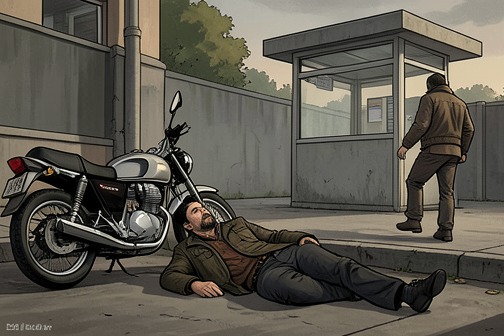
The motorcycle attack on [Jean Farel](entity:character-recall-character-jean-farel-a16bb5a3d663) turns his public visibility into a physical vulnerability: two helmeted men knock him to the pavement in central [Paris](entity:location-recall-location-paris-c02b439ce220), and he leaves with a bruised arm and a torn trouser leg. He refuses immediate help, checks for photographers, and returns to work before asking his son Léo to find him a gun.
## The attack in public
Jean is crossing the Champs-Élysées after an unusually successful broadcast, pausing along the way to give passersby autographs and photographs. He is checking [Twitter](entity:organization-recall-organization-twitter-31930dc42d31) when two helmeted men on a motorcycle suddenly appear and propel him sideways. He falls near a newspaper kiosk and remains unconscious for several seconds. When a passerby hurries over to help, Jean pushes him away and insists that he is fine. His next concern is whether a photographer has captured the assault, a reflex that makes the threat to his image visible alongside the threat to his body.
## Injury, secrecy, and the return to work
The attack leaves visible evidence even as Jean tries to contain its public meaning. His trousers are slightly torn and his left arm badly bruised; after reaching the radio station, he changes clothes with his assistant’s help while the makeup artist covers the red marks on his hands. The concealment is practical as well as theatrical: filmed interviews and photographs for the station’s social-media accounts have made appearance part of the broadcast routine, and the staff have been told to keep communicating. The assault interrupts that machinery only briefly. Jean proceeds with his interview, pressing a left-wing politician and novelist with sharp questions, then disparaging her to his team after she has answered him forcefully. No one joins in; their silence reflects the cost of contradicting a presenter on whom their jobs depend.
## Aftermath and the demand for a weapon
Once Léo arrives to drive him, Jean recounts the assault. Léo asks whether Jean saw the attackers’ faces; Jean says they were helmeted. Léo urges him to hire a bodyguard because he is too exposed, but Jean refuses. The exchange leaves the perpetrators unidentified and the threat unresolved: the attack is clearly described as premeditated, yet Jean has no answer to who arranged it or why.
Jean asks Léo to take him to Bichat hospital, where [Françoise](entity:character-recall-character-fran-oise-d26e2c6492c7) has been admitted after a suicide attempt. As they drive, Charles Aznavour’s song “[Il faut savoir](entity:expression-recall-expression-il-faut-savoir-58a8d9de3bce)” plays on the radio; Jean opens the window to the icy air and asks Léo to hurry. Then, abruptly, he asks him to find a gun, specifically a Beretta or something similar. Léo switches off the radio and asks what he means. The request connects the assault to a larger crisis in Jean’s life, but the scene does not identify the intended target or establish what he will do with a weapon. The motorcycle attack thus ends not with reassurance or resolution, but with Jean turning from public composure toward a potentially lethal response.
## The assault amid a public crisis
The attack occurs as Jean’s carefully maintained public image is colliding with private upheaval. Earlier, after receiving a decoration from the President, he posted a celebratory tweet misspelling “honneur” as “horreur.” Mockery spread online, and although he deleted the post, screenshots continued to circulate. The next morning, another tweet—celebrating an exceptional broadcast audience of nearly five million—was retweeted by his colleague [Ballard](entity:character-recall-character-ballard-41ea60670cef). Jean was checking the praise and accepting requests for autographs and photographs when the motorcyclists struck. The sequence places his exposure to public scrutiny beside his physical exposure on the street: online attention and celebrity offer him access and affirmation, but neither protects him from violence.
The assault also lands against the upheaval surrounding his family. The news that his son Alexandre had been taken into police custody on suspicion of rape soon reached the press through an [Agence France-Presse](entity:organization-recall-organization-agence-france-pr-8053e672bcbd) report, despite Jean’s request that the matter remain confidential. The public disclosure threatened to stain Jean’s own name and reputation, while messages from journalists flooded his and Claire’s phones. These surrounding pressures do not identify the attackers or establish a motive for the assault. Rather, they make the question Jean asks—who could have arranged it?—part of a wider atmosphere in which his family’s private crisis is becoming public spectacle.
## Public performance and concealed injury
Jean does not let the attack interrupt his professional routine for long. At the radio station, his assistant helps him change, and a makeup artist disguises the red marks on his hands. The concealment matters in a workplace where interviews are filmed and a staff member posts photographs of Jean with his guest to the station’s social-media accounts. Communication has become an explicit obligation for the team; even an injured presenter is expected to remain presentable and visible.
He conducts the interview with a young left-wing politician who is also a novelist, asking sharp questions and challenging her about the relative ferocity of political and literary circles. She answers by invoking Beckett’s warning that morning is the time to hide, describing the danger of people waking hungry for order, beauty, and justice. Jean closes the interview by telling her she has passed the dangerous passage, then leaves the studio and calls her a pit bull to his technicians. His colleagues do not echo the insult. Their silence makes the power imbalance inside the station tangible: Jean can turn his public-facing composure into a performance, while those around him have reason to keep quiet.
## The unresolved threat
When Léo collects him, Jean recounts what happened. Léo asks whether he saw the attackers’ faces; Jean says they wore helmets. Léo advises him to hire a bodyguard because he is too exposed, but Jean refuses. The attackers remain unidentified, and the narrative offers no confirmation of who sent them or what they wanted. Jean’s suspicion that the assault was premeditated remains unanswered.
Jean asks Léo to take him to Bichat hospital to visit Françoise, who has been hospitalized after a suicide attempt. As Charles Aznavour’s “Il faut savoir” plays, Jean opens the window to the cold air and tells Léo to hurry. He then abruptly asks him to find a weapon, naming a Beretta as one possibility. Léo turns off the radio and asks what he means. The request follows the assault but is not explained: the scene does not state whom Jean might target, whether the weapon is connected to the motorcyclists, or whether he will act on the request. It closes on an unresolved turn from bodily vulnerability and managed public appearance toward the possibility of lethal violence.
Event 14
米拉·维兹曼遭性侵事件
The alleged assault of [Mila Wizman](entity:character-recall-character-mila-wizman-ab5ee4a0e196) by [Alexandre Farel](entity:character-recall-character-alexandre-farel-23479f753109) is the central event behind the Farel case, transforming an encounter between two young people connected through their parents into a criminal investigation, a trial, and a national media controversy. The novel recounts it through incompatible accounts: Mila describes an assault she did not consent to, while Alexandre insists the encounter was consensual. That divide shapes the investigation and public response, but it does not by itself settle the question of what happened.
## Background and the two accounts
Mila and Alexandre were not strangers: he was the son of her father’s partner, and the two had met before. On the night of January 11–12, 2016, they attended a party together after their parents encouraged them to go. At trial, Mila said Alexandre was polite and that she trusted him. She described accepting a drink after he repeatedly urged her to try it, then feeling unwell and going outside for air. Alexandre followed, she said, because he claimed it was dangerous for a girl to be alone in [Paris](entity:location-recall-location-paris-c02b439ce220).
Mila also testified that Alexandre left her waiting while he spoke with another man, then returned saying he had obtained cannabis. She followed him to a nearby garbage room, in part because she did not know how to refuse without seeming foolish and did not feel able to return to the party without him. Her account places the encounter within a series of pressures and uncertainties that she says culminated in an assault. She told the court that she had not wanted what followed and that fear left her unable to respond as she wished.
Alexandre gave a different account, first during police questioning and later at trial. He said Mila had suggested going outside, that they had gone to smoke cannabis, and that they kissed and engaged in sexual activity by mutual agreement. He denied forcing her. At the confrontation, he added that he had considered their encounter a kind of initiation or prank and claimed that Mila later took offense and retaliated. His version framed the encounter as consensual; Mila rejected it as false.
## The police account and investigation
The investigation began the morning after the encounter. Mila arrived at a police station in Paris’s eighteenth arrondissement at 8:32 a.m. with her mother, crying, and reported that Alexandre had assaulted her in a garbage room behind a refuse container. Investigators sent her to hospital for examinations, searched the location and Alexandre’s parents’ apartment, and found the yellow underwear Mila had described. After Alexandre was identified, Mila recognized him in an identification procedure behind one-way glass.
The investigation established that sexual intercourse had occurred, but the forensic findings did not settle whether it had been coercive. DNA testing confirmed sexual contact; experts disagreed about its nature. Toxicology results indicated that both Mila and Alexandre had consumed alcohol and smoked cannabis, and that Alexandre had also taken cocaine. These findings supplied evidence about the circumstances while leaving the central dispute over consent unresolved.
During a formal confrontation, Mila said Alexandre had compelled her to perform sexual acts and had continued despite her unwillingness. She also said she had been terrified because he told her he had a knife. Alexandre remained rigid and denied her account, repeating that they had been together consensually. The confrontation brought their incompatible versions into the same room without reconciling them: her distress and his denial became part of the evidentiary record, rather than a shared explanation of the encounter.
## From allegation to public case
Alexandre spent his first night in a cell without sleeping. The following day, exhausted and disoriented, he overturned his meal and shouted that he would rather kill himself than go to prison. He was then told that he would face Mila in a confrontation. His father, [Jean Farel](entity:character-recall-character-jean-farel-a16bb5a3d663), tried to protect him and asked that the matter be kept secret, but the case became public within hours. [Agence France-Presse](entity:organization-recall-organization-agence-france-pr-8053e672bcbd) reported that Jean Farel’s son was in custody on suspicion of rape. Alexandre’s lawyer issued a statement denying the allegations and describing the encounter as one between consenting people.
The disclosure immediately made the private accusation a public family crisis. Journalists contacted Jean and [Claire Farel](entity:character-recall-character-claire-farel-ad491473703f) for comment, while Claire received insults on [Twitter](entity:organization-recall-organization-twitter-31930dc42d31). Jean experienced the allegation against his son as an attack on his own public reputation as well as Alexandre’s. The circulation of the story meant that the allegation was being judged in public before the trial could determine the criminal case.
The case later unfolded amid the wider wave of testimony following the Weinstein revelations. At Alexandre’s trial, journalists, students, and curious spectators queued outside the Palais de Justice; women held signs calling for an end to impunity, while demonstrators denounced Farel. The defense argued that publicity had compromised the presumption of innocence. The novel sets that claim beside the public demand that accusations of sexual violence be heard, making the media attention part of the event’s consequences rather than mere background.
## The trial and the conflict over interpretation
At trial, Mila initially struggled to speak. Her testimony returned to the party, the drink she had accepted under pressure, her discomfort, and the decision to follow Alexandre outside. She told the court that she had trusted him and had not agreed to the sexual acts she described. When asked what she expected from the trial, she appeared at the bar trembling and said she did not think she could manage. The difficulty of speaking did not replace the substance of her account; it showed the strain of giving it in a public courtroom.
The court also heard evidence from the investigating officer, who described Mila’s tearful report, the scene investigation, the recovered underwear, the identification, and the forensic results. A recording of Mila’s call was played in court; her frightened voice affected the jurors, while Alexandre kept his head down. These pieces of evidence shaped the courtroom’s understanding of the case, but the competing interpretations of the encounter remained central.
Alexandre acknowledged at trial that sexual activity had occurred, but said Mila had been willing and that he had mistaken her behavior for enjoyment. When the possibility was raised that she had been immobilized by shock, he rejected it. The exchange exposed a fundamental difference in how each account interpreted her apparent lack of resistance: for Mila, fear and constraint explained why she could not act freely; for Alexandre, her behavior had signaled consent. The novel presents that dispute as consequential to the case without treating either account as a substitute for the court’s eventual judgment.
## Aftermath and significance
The allegation continued to shape both lives during the two years of investigation. Alexandre was placed under judicial supervision rather than held in custody after his initial detention, but he could not approach Mila or leave [France](entity:location-recall-location-4f282e1af8a7). He abandoned plans to study at Stanford, and the proceedings repeatedly interrupted ordinary life with summonses, interviews, and expert assessments. Later, after encountering Mila by chance along the Canal Saint-Martin, he approached her; she screamed, and he grabbed and shook her as she tried to escape. Bystanders called the police. His judicial supervision was revoked, and he was sent to Fresnes Prison, where he was mistreated by other prisoners who identified him as a sex offender.
The case’s public life outlasted the initial reporting. Jean Farel’s phrase about “twenty minutes of action” was rapidly circulated by journalists, and Mila published a blog post addressing Alexandre and disputing his account of consent. A manifesto by intellectuals answered the phrase by emphasizing the longer-lasting harm to a victim. These interventions made the language used to describe the encounter itself a subject of conflict: compressed, dismissive wording was challenged by accounts of its enduring effects.
At the close of the trial, the defense argued that media condemnation had already damaged Alexandre’s prospects, citing the loss of his studies and the stigma attached to his name. The verdict did not end the social dispute: Jean left the courthouse relieved but declined to comment, while protesters outside said justice had not been done. The event thus remains both a disputed sexual-assault allegation and the origin of a broader conflict over testimony, legal proof, public judgment, and the unequal consequences of being named in a highly visible case.
Event 15
法雷尔强奸案审判
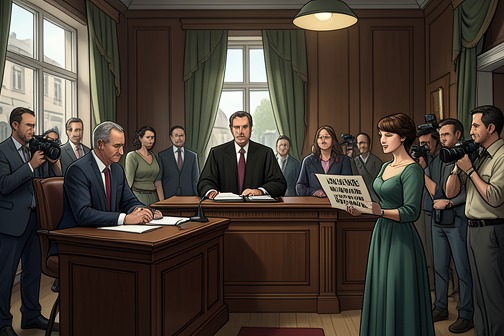
The Farel rape trial is the public and judicial reckoning with [Mila Wizman](entity:character-recall-character-mila-wizman-ab5ee4a0e196)’s accusation that [Alexandre Farel](entity:character-recall-character-alexandre-farel-23479f753109) raped her. The proceedings place a disputed account of a sexual encounter before a court while reporters, activists, online audiences, and the families watch; their central difficulty is not whether sexual contact occurred, but how to assess its circumstances and Alexandre’s responsibility.
## Public Trial and Social Climate
Six months after the Weinstein allegations became a major public scandal, women were increasingly speaking about sexual assault and harassment, including through social media. The Farel case entered that charged climate and attracted extensive press attention. Alexandre’s lawyer, [Maître Célérier](entity:character-recall-character-ma-tre-c-l-rier-e46595d9bbe8), argued in interviews that public opinion had already condemned his client and that the wider movement risked contaminating the trial. The novel presents this tension as part of the event itself: the court must examine an individual accusation, while the surrounding public debate makes the case a symbol in a larger struggle over silence and accountability.
On the morning the trial opened, journalists and spectators queued outside the courthouse. Women held signs calling for an end to impunity and invoking #[MeToo](entity:expression-recall-expression-metoo-6aff81e06a5a); other demonstrators displayed images and slogans targeting Farel, while Femen activists chanted accusations. Television crews filmed the protest, and newspapers featured the case. Inside, [Claire Farel](entity:character-recall-character-claire-farel-ad491473703f) passed security into a courtroom where her son would appear behind glass. The visible division between the public outside and the accused behind a barrier gave the proceedings an immediate theatrical quality: the case was being examined through legal procedure and watched as a public event.
## The Courtroom and Its Procedure
Alexandre arrived after a night without sleep, having been awake since four in the morning and worn down by searches, paperwork, and transport. He was brought into court handcuffed and escorted by three gendarmes, attached to one by a plastic cord. He sat behind glass, head lowered, while the courtroom’s attention fixed on him. Though he had been released under judicial supervision after being formally charged, that conditional liberty had already restricted his life: he could not approach Mila or leave [France](entity:location-recall-location-4f282e1af8a7), and he had abandoned plans to study at Stanford. During the investigation, official requests and summons repeatedly interrupted any return to ordinary routine.
The presiding judge organized the trial, explained the jurors’ role, and read the indictment, which set out the allegations and the evidence for and against Alexandre. The public and jurors encountered the case through this oral presentation; people outside the parties had not had access to the case file. Jurors could take notes and ask questions so long as their questions did not reveal their opinions. Alexandre could have challenged four jurors, and the prosecution could challenge three, but he chose not to participate in selecting those who would decide his case. Maître Célérier likewise declined to challenge anyone, presenting non-intervention as a sign of confidence, even as he privately sought information about jurors through a trainee’s searches of social media.
The first account of the indictment triggered an immediate interruption. As the judge described the alleged assault, Mila began to cry and said she could not bear to hear it. Her lawyer, Maître Ferré, tried gently to calm her; Mila wanted to go home. Her father watched, visibly distressed, but did not rise to join her. Her mother was absent, living in New York, and Mila and her mother had not seen one another for months after a painful exchange about Mila’s decision to move to [Paris](entity:location-recall-location-paris-c02b439ce220) with her father and his new partner. The courtroom’s formal introduction of the allegations thus became, for Mila, an experience of having the events recounted in public before she was ready to hear them.
## The Accusation and Conflicting Accounts
Mila’s testimony was preceded by an account of how the complaint entered the police process. The investigating officer said Mila arrived at a Paris police station at 8:32 a.m. with her mother, crying and appearing deeply shocked. She reported that Alexandre, the son of her father’s partner, had assaulted her in a refuse area. The officer arranged medical examinations and a search of the location, then investigators searched Alexandre’s parents’ apartment and recovered the yellow underwear Mila had described. In an identification procedure behind one-way glass, Mila immediately identified Alexandre. He initially denied that sexual contact had occurred; later DNA results established that it had, while experts disagreed over whether the encounter had been coercive. Toxicology showed that both had consumed alcohol and cannabis, and that Alexandre had also taken cocaine.
Alexandre’s account had begun with a narrower description of the evening. During questioning, he said that he and Mila had attended a party at their parents’ insistence, gone outside, and smoked cannabis after he bought it. He described kissing and other sexual contact, but denied that they had intercourse. At a later hearing before the investigating judge, he again maintained that he had never raped anyone. His lawyer emphasized the absence of certainty at that stage, Alexandre’s education, clean record, sociability, and respected family background, and questioned Mila’s motives. The judge nevertheless formally charged Alexandre with rape, while deciding against pretrial detention and placing him under judicial supervision.
The gap between these accounts was not resolved simply by establishing that sexual contact took place. The prosecution would later identify the disputed question as the circumstances of the encounter and Alexandre’s responsibility. At the trial, Mila described being frightened and unable to act freely; Alexandre maintained that she had appeared willing. When the presiding judge asked whether Mila had submitted because she was stunned, Alexandre rejected that interpretation. The conflicting accounts made the distinction between apparent acquiescence and consent central to the proceedings.
## Testimony, Doubt, and Family Loyalty
When Mila took the stand the next morning, she approached trembling and said she did not think she could manage. Her difficulty speaking became part of the trial’s evidence about what recounting the accusation demanded of her: she had to address the court while revisiting events that she said had left her frightened and unable to respond. During her account, she confirmed that Alexandre had held her head and that it hurt. Her testimony stood against his insistence that she had seemed willing, a disagreement the courtroom could not settle merely by establishing that sexual contact had occurred.
The proceedings also altered Claire’s understanding of her son. She had publicly maintained that she believed Alexandre was innocent, but hearing Mila’s testimony made her doubt. Earlier, after reading the confidential police record that Léo had obtained, she had already been shaken by its detailed account. When Claire confronted Alexandre after his release, he told her that he did not think he had raped Mila. He allowed that he might have been insistent while under the influence of alcohol and cocaine, gone too far, or misread her intentions, but framed the possibility as a single night of excess and said he had not meant to hurt her. Claire embraced him and told him she believed him, warning him not to drink again. In retrospect, she recognized the displacement in her own response: she had focused on drinking rather than on the possibility that he had forced someone, and came to feel that her loyalty had made her complicit.
Her self-questioning reached beyond that exchange. Claire wondered whether she had raised her son like a king and enclosed him in an aggressive model of masculinity, and whether her own history of enduring sexist remarks and harassment without open resistance had shaped what she had failed to teach him. During the investigation she had withdrawn from public debate, refusing invitations to sign statements and avoiding an opinion, even as that silence felt to her like a personal betrayal. The trial made the conflict between a mother’s defense of her child and her recognition of Mila’s account impossible to keep abstract: Claire had to face both her love for Alexandre and the possibility that his actions had harmed another young woman.
## Family Testimony and the Public Afterlife
[Jean Farel](entity:character-recall-character-jean-farel-a16bb5a3d663)’s testimony brought the father’s private attachment to the center of the courtroom. He described Alexandre as the great joy of his life, born when Jean was nearly fifty and had believed himself sterile. He recalled a baby who was anxious, slept badly, and cried often; a three-year-old who feared death; and a sensitive, brilliant child who struggled to make friends but was loved by his teachers. Jean acknowledged that he had sometimes hit his son, regretting it, and spoke of the family’s failure to reassure him. The account offered jurors a history of vulnerability and parental love, but it also placed the father’s account of his son beside the question of what that love could—and could not—explain.
The testimony quickly escaped the courtroom. Journalists circulated Jean’s remarks online, and hundreds of comments followed within minutes. The next morning, a newspaper published a manifesto signed by about thirty intellectuals, rejecting the description of rape as “twenty minutes of action” and emphasizing the victim’s lasting harm. Mila, who had created a blog the previous day, addressed Alexandre directly and challenged the competing account of the encounter. She rejected the idea that the situation belonged to a “grey zone,” insisting that she had not consented and describing fear and paralysis. Her post connected her own account to the wider post-#MeToo climate, in which women were speaking publicly about harassment and assault while, as she observed, men rarely recognized themselves in those accounts. The case had become not only a trial over disputed events, but a contest over who could describe them and whose description would carry authority.
## Closing Arguments and the Unresolved Judgment
In closing, the prosecutor acknowledged Mila’s fear, shame, and difficulty telling her story, tracing the ordeal from her police interviews and medical examinations to the scrutiny of the assize court. The prosecutor treated the fact of sexual contact on the night of January 11–12, 2016, as undisputed, but framed the central issue as the circumstances of the encounter and Alexandre’s responsibility. Alexandre, the prosecutor argued, could be both a vulnerable, diligent student and a person capable of contempt, violence, possessiveness, or jealousy. The possibility that he had committed an opportunistic rape—because the opportunity was there—was offered as an account of the passage from one version of his character to another, not as a substitute for examining the evidence.
The prosecutor also described Alexandre as sincere and fearful of imprisonment, and asked the jurors to consider his eventual reintegration if they convicted him. At the same time, the argument returned to Mila: she had been surprised, her trust abused, and the pain of remembering the events remained present. The prosecutor’s appeal to possible forgiveness unsettled her; she turned toward her lawyers with a frightened look, unsure why the advocate seemed to have shifted toward the other side. The moment leaves the trial’s competing demands exposed—recognition of the accused’s future, attention to the complainant’s continuing harm, and a legal decision that cannot erase the difference between proving sexual contact and judging consent. The trial’s significance lies in that unresolved pressure: the court must reach a judgment, while the public contest over testimony, responsibility, and the meaning of consent continues beyond the courtroom.
Event 16
弗朗索瓦丝自杀未遂

[Françoise Merle](entity:character-recall-character-fran-oise-merle-3920535efdef)’s suicide attempt interrupts [Jean Farel](entity:character-recall-character-jean-farel-a16bb5a3d663)’s moment of public recognition and turns their long relationship into a confrontation over courage, autonomy, and care. The attempt is not an isolated crisis: [Françoise](entity:character-recall-character-fran-oise-d26e2c6492c7) tells Jean that she has Alzheimer’s disease, fears the loss of her memories and independence, and intends to arrange an assisted death in [Switzerland](entity:location-recall-location-6e6c25b1c44d). When she asks him to leave, she makes clear that his remorse cannot restore the relationship; what she still asks of him is practical care for Claude, the dog he gave her.
## The attempt and Jean’s public triumph
Jean first learns of Françoise’s attempt by text message while attending a ceremony at the Élysée Palace, where he is being honored with the Legion of Honour. The news arrests him in the middle of the celebration. He fears another stroke and imagines collapsing before the guests, but he also recognizes that he has been too harsh with Françoise and regrets it. The ceremony proceeds: with the President about to arrive and a reception still to follow, Jean feels unable either to leave or to respond openly. His public achievement and private emergency occupy the same moment, but the demands of ceremony initially hold him in place.
A second message says that Françoise is in psychiatry at Bichat Hospital. After the ceremony, Jean takes a taxi there carrying the President’s bouquet. His own public image has already become a source of ridicule: a typo in a congratulatory tweet turns “honneur” into “horreur,” and screenshots continue circulating even after he deletes the post. At the hospital, however, his celebrity again opens a door. Though visiting hours have ended, a smile and an autograph get him into the psychiatric ward, where an exhausted nurse warns him not to tire Françoise.
Françoise lies in a small, overheated, dark room, covered to the neck by a white sheet. Jean sees her unmade hair, dry skin, and spotted hands, and kisses her forehead. Her sardonic reply that she is fine and merely failed to kill herself is followed by his apology: he says he was brutal and foolish, asks forgiveness, and tells her he loves her. But the attempt has not dissolved the conflict between them. Françoise remains silent at first, and then identifies the failure beneath his apology: he had taken risks in his professional life and entered the heart of the country’s political machinery, while showing no courage in his private life.
## The confrontation and separation
Jean tries to explain that his work consumed him and concedes that he deserves what has happened. Yet when he moves as if to kiss Françoise, she draws back and tells him to go and not return. Her rejection is delivered in a flat voice, but the effort of saying it seems to carry her whole body toward an abyss. Jean pauses, then accepts that the relationship is over. He also thinks immediately about the consequences of her attempt for her journalism career, imagining sick leave and eventual dismissal. Even in this moment, his concern is entangled with his belief that he can assess or manage the damage.
Françoise’s final request is not for reconciliation. She wants Jean to look after Claude, explaining that giving her the dog was the best thing he ever did for her; for everything else, she dismisses him. Jean leaves the room and, despite the gravity of the visit, poses smiling for a photograph with a young nurse. The episode sharpens the contrast between his facility with public attention and the emotional limits Françoise has just named. On the taxi ride home, he recalls that [Michel Duroc](entity:character-recall-character-michel-duroc-31d85c74091f) hates him, Claire rejects him, and now Françoise has sent him away too, yet he feels no guilt. He attributes his life’s ambition to vengeance for his mother’s suffering, a private history that keeps returning even as those closest to him withdraw.
## Alzheimer’s disease and the request for assistance
The attempt is followed by a further crisis in the hospital. On a later visit, Jean tries to enter the psychiatric ward in the morning, when visiting is not permitted. After a doctor turns him away, Jean pretends to head for the public toilets, then runs toward Françoise’s room. He finds her lying face-down on the floor, her nightdress raised to her thighs, incontinent. The sight recalls the position in which he found his mother’s body in the kitchen in October 1955, though this time the fluid on the floor is urine rather than blood. Hospital staff seize Jean and take him to a staff room.
After waiting an hour, Jean demands the truth about Françoise’s condition from the head of the department. He insists that he is her partner and that she has no children or family, describing himself as everything to her. The doctor refuses to disclose medical information because of confidentiality, and reminds Jean that the rules apply to everyone. Jean invokes Françoise’s standing as a prominent journalist and threatens to transfer her to the American Hospital; the doctor answers that Jean should first ask what Françoise herself wants. He is eventually allowed to see her by exception.
Françoise tells him plainly that she is ill. She explains that she sought medical help for memory problems and underwent an MRI and a lumbar puncture; the test markers, she says, confirmed the diagnosis. She understands Alzheimer’s as the end of the person she has been. She does not want to lose her mind or memories, or to be reduced to physical and intellectual decline. Her request is therefore specific: she intends to organize an assisted death in Switzerland and wants Jean to help her. He initially refuses, saying he cannot be asked to do such a thing, but the request returns as a condition of love. Françoise says that she will need his help getting to Switzerland and asks him to take care of Claude; she has already prepared documents and insists that the arrangements must be made years in advance.
## Care, autonomy, and the attempt’s aftermath
The later narrative places Françoise’s request within the long course of her illness rather than treating it as a passing declaration. As her condition worsens after she leaves her post, professional contacts dwindle to impersonal holiday emails and brief messages. Jean continues visiting and caring for her. When he brings her dinner, he helps her rise and sit at the table; Claude stays close, hoping for a slice of ham. Françoise bites into a tomato, spilling juice down her chin and staining her pink blouse, and Jean gently wipes her mouth with a napkin. After helping her back into her armchair, he takes out the assisted-suicide organization’s brochure and the papers she signed when her illness became markedly worse.
These later scenes give the earlier attempt a further meaning. Françoise’s wish to control the timing and conditions of her death is connected to the cognitive decline she fears, and to her insistence that Jean respond to her wishes rather than substitute his own judgment. At the hospital he claims the authority of the devoted partner, but the doctor’s reminder that Françoise must be asked what she wants exposes the limits of that claim. Jean does remain in her life as a caregiver, while her request for assisted death remains a difficult obligation between them. The attempt thus marks both a rupture—Françoise tells him to leave and not return—and the beginning of a different, practical form of care, organized around her illness, Claude, and her stated desire for autonomy.
Event 17
亚历山大的自杀未遂
[Alexandre Farel](entity:character-recall-character-alexandre-farel-23479f753109)’s suicide attempt at the beginning of his first year at [École polytechnique](entity:organization-recall-organization-cole-polytechniq-7532b4627331) interrupts a story of precocious academic success and becomes a defining fracture in his family’s understanding of his later distress. Alexandre presents it as a response to accumulated pressure and frustration rather than a lethal intention, while [Claire Farel](entity:character-recall-character-claire-farel-ad491473703f) remembers its aftermath as a rupture the family never managed to repair.
## Background and Circumstances
Alexandre recounts an adolescence shaped by demanding academic milestones: he passed the baccalauréat at sixteen, entered École polytechnique on his first attempt, and was later admitted to [Stanford University](entity:location-recall-location-ead1b02dd0b4). He stresses that this record made success look effortless from the outside, although he had struggled with anorexia between the ages of ten and thirteen and had been seen by a psychiatrist. In his second year of preparatory classes, pressure contributed to a depressive episode.
The attempt came just after the entrance examinations, at the start of Alexandre’s first year at École polytechnique. In his account, the examinations had required him to set aside his personal life for two years. He describes the combination of pressure and frustration as overwhelming, despite his outward achievements. He also says he did not want to die and characterizes the attempt as a way of drawing attention to himself, while specifying that it was not serious and posed no mortal danger.
## Family Response and Lasting Effects
During Alexandre’s trial, Claire Farel described the attempt as a terrible event for the family. Until then, she said, his life had seemed to proceed in a straight line; afterward, his parents remained afraid that he might try again. She likened him to broken porcelain whose pieces had been put back together without restoring its original integrity: even a sudden movement seemed capable of making it shatter again.
Claire connected the crisis to a broader change in her view of her son’s prospects. The contrast between visible markers of achievement and the less attainable reality of private happiness had become stark, and she feared that Alexandre might never again be fully happy. She also recalled that her own illness had preceded the attempt, making the family’s confrontation with death a double one that, in retrospect, may have left him more vulnerable than they understood at the time.
## [Jean Farel](entity:character-recall-character-jean-farel-a16bb5a3d663)’s Retrospective Account
Jean Farel later situated the attempt within a longer pattern of pressures and missed warning signs. He recalled that Alexandre had experienced fears and obsessive-compulsive symptoms as a child, had struggled to make friends at school, and had suffered from anorexia in adolescence. Jean believed that his own strict diet and emphasis on academic performance had influenced his son, and acknowledged that his ambitions for Alexandre reflected opportunities he himself had not had.
Jean also said the family had attributed the crisis to the pressures of military-style training at École polytechnique. Looking back, he admitted that they had not seen—or had not wanted to see—that Alexandre was doing badly. His testimony thus complicates the family’s earlier effort to treat the attempt as an isolated episode: it had occurred amid accumulated expectations and distress, while its meaning was only partly recognized at the time.
## Narrative Significance
The attempt recurs in the novel not only as a past crisis but as a point through which Alexandre’s parents interpret later events. Claire’s account emphasizes the lasting fear and sense of damage it left behind; Jean’s connects it to family expectations and the failure to recognize distress. Alexandre’s own explanation differs in emphasis, presenting the act as a bid for attention rather than a genuine wish to die. The event therefore remains consequential without yielding a single, settled account of what it meant to him or to his family.
Event 18
安妮塔·法雷尔被杀
The killing of Anita Farel is a long-hidden episode in the Farel family history, disclosed during the trial of her grandson Alexandre. [Jean Farel](entity:character-recall-character-jean-farel-a16bb5a3d663) had told people that his mother died of an overdose, but he later admits that his father killed her. The revelation changes the meaning of the family’s story: Jean’s account of his own childhood, his conduct as a father, and the violence under examination in court are bound together by a past Alexandre did not know.
## The concealed family history
For years, Jean represented Anita’s death as an overdose. At trial, [Michel Duroc](entity:character-recall-character-michel-duroc-31d85c74091f) contradicts that account, telling the court that Jean’s father killed Anita after discovering she wanted to leave him. Duroc says Jean found his mother after coming home from school, and that the father was arrested and later died by suicide in his cell. The account makes the killing not an isolated rumor but the origin of a family history shaped by secrecy and violence.
Duroc’s testimony also establishes the limits of what was known within the family. When asked who knew the truth, he says very few people did—and that Alexandre was not among them. The disclosure arrives in public, before the court, but concerns a fact that had remained private even from Jean’s son. Its force lies partly in that divide: the trial makes the hidden past audible while demonstrating how thoroughly it had been kept from the next generation.
## Jean’s acknowledgment
Jean later confirms the substance of Duroc’s account in his testimony. He acknowledges that he found his mother dead when he was nine and that drugs had not killed her; his father had. He says his father was intoxicated and had recently been released from prison when he discovered that Anita had become pregnant during his absence. Jean describes the killing as occurring in that circumstance, and reveals that the unborn child survived: [Léo Farel](entity:character-recall-character-l-o-farel-a1c2b6acafb9), Jean’s younger brother. Jean says that he called for help.
This admission corrects the story Jean had told about his mother’s death, but it does not erase the long silence surrounding it. In court, he moves from denying the family secret to naming the murder and his own childhood encounter with its aftermath. His account also places Léo’s survival within the same event: Jean’s mother was pregnant when she was killed, and her unborn child lived. The disclosure thus revises the family’s history while identifying a brother’s birth as inseparable from the violence that preceded it.
## The killing’s place in the trial
The revelation is introduced during testimony about Alexandre’s family relationships and upbringing. Duroc describes Jean’s treatment of his son as repeating violence he himself had experienced, then identifies the killing of Anita as the concealed history behind Jean’s public account. The testimony does not make the two men’s actions identical; instead, it gives the court a newly disclosed context for a family in which violence has been experienced, hidden, and carried forward.
Jean’s own testimony follows as he discusses his relationship with Alexandre, including his son’s childhood, pressures around achievement, and earlier distress. In that account he acknowledges both his father’s violence and his own efforts to explain the circumstances surrounding Alexandre’s alleged actions. The past therefore enters the trial not as a separate family chronicle but as part of the competing explanations offered about responsibility and inheritance. The killing remains a fact about Anita and Jean’s childhood; its relevance to Alexandre is the history of violence and secrecy that the court hears, not proof that the past determines his conduct.
## Secrecy and inheritance
The account of Anita’s death recurs in the narrative before Jean confirms it. During his visit to [Françoise Merle](entity:character-recall-character-fran-oise-merle-3920535efdef) in hospital, Jean sees her lying on the floor and is reminded of finding his mother in a similar position when he was a child. That earlier recollection links the present crisis to his childhood without yet disclosing the full truth of Anita’s death. At trial, Duroc’s statement and Jean’s eventual acknowledgment fill in what the memory had left unexplained.
The killing’s decisive significance is therefore both personal and structural. It reveals what happened to Anita, establishes that Jean’s account of her death was false, and shows that Alexandre had been kept ignorant of a defining episode in his family’s history. By making the truth emerge through testimony and then through Jean’s own words, the novel connects private memory to public scrutiny while refusing a simple equation between inheritance and guilt.
Event 19
雅斯米娜·瓦瑟尔的非法堕胎
[Yasmina Vasseur](entity:character-recall-character-yasmina-vasseur-72db2197e899)’s illegal abortion becomes a pivotal disclosure in the account of the events surrounding [Alexandre Farel](entity:character-recall-character-alexandre-farel-23479f753109). Recalled during the investigation of the allegation against him, it reveals that Alexandre’s father, [Jean Farel](entity:character-recall-character-jean-farel-a16bb5a3d663), intervened in Yasmina’s pregnancy and that the abortion took place after the legal deadline. The revelation changes the apparent history of Alexandre’s relationships: what had seemed a private heartbreak was entangled with threats, family authority, and an abortion managed by adults while Alexandre was kept uninformed.
## Background and relationship
A few months before the alleged assault, Alexandre was dating Yasmina Vasseur, an older woman who worked as a political adviser. She became pregnant. When Jean learned of the pregnancy, he reacted strongly; the later account describes Yasmina as having been persuaded, and perhaps coerced, to have an abortion. [Françoise Merle](entity:character-recall-character-fran-oise-merle-3920535efdef) says that she helped Yasmina at Jean’s request, and accuses Jean of threatening to damage Yasmina’s career. In [Françoise](entity:character-recall-character-fran-oise-d26e2c6492c7)’s telling, the episode exemplifies Jean’s longstanding desire to control his son’s life.
The disclosure sits against the broader history of Jean’s family. He had met Françoise three years after Alexandre’s birth and had maintained a double life with her for nearly eighteen years. He said that he had not divorced Claire primarily because he wanted to protect Alexandre and preserve a stable family setting. The abortion account complicates that self-presentation: Jean’s claimed protection of his son coexists with a willingness to direct the lives of the young people around him through pressure and secrecy.
## The abortion and its circumstances
Françoise states that by the time Jean and Yasmina came to her, the legal time limit had passed and Yasmina could not travel abroad. Françoise says she performed the abortion herself. Her account makes clear that the procedure was illegal, while leaving the details of the medical circumstances outside the narrative’s focus. Its significance lies in the circumstances that produced it: a pregnancy, a deadline already exceeded, and decisions shaped by Jean’s intervention.
Françoise later describes further pressure from Léo, Jean’s brother, who threatened her. She says that the situation went badly and that Yasmina suffered a serious medical emergency. She characterizes the episode as sordid and emphasizes that three men were involved in managing the abortion, while Alexandre did not know the full story. The account therefore presents the event not as an isolated decision by Yasmina, but as a crisis in which other people exercised influence while she bore the consequences.
## What Alexandre knew, and when
Alexandre learned by chance what had happened on the evening of Jean’s decoration ceremony—the same evening as the alleged assault involving [Mila Wizman](entity:character-recall-character-mila-wizman-ab5ee4a0e196). The timing links two events that had previously occupied separate parts of the family story: the concealed abortion and the accusation against Alexandre. At the disclosure, Alexandre recoils in shock. The response marks the revelation as new to him, not as knowledge that had guided his conduct beforehand.
Françoise offers her own account of Alexandre’s subsequent emotional state. She says that he could not bear rejection, that Yasmina no longer wanted contact with him after the abortion, and that he then harassed her for a time before eventually forgetting her. These claims are Françoise’s interpretation, not an independent finding established by the disclosure. They nevertheless supply the chain of circumstances through which she connects the pregnancy and abortion to Alexandre’s distress and to Jean’s protective, controlling intervention.
## Competing accounts and significance
Jean later rejects the suggestion that he forced Yasmina to have an abortion. He says he helped organize matters as well as possible to protect her from rumor because that was what she wanted. He also says Alexandre was heartbroken after Yasmina rejected him, and argues that rejection helps explain the subsequent harassment. His account differs from Françoise’s description of pressure and threats, leaving the degree of Yasmina’s freedom contested in the recollections presented.
The episode does not establish the truth of the separate accusation concerning Mila Wizman. Instead, it exposes how family authority and secrecy complicate the accounts offered in that case. Jean’s statements about protecting Yasmina coexist with Françoise’s claim that he threatened her; Alexandre’s apparent romantic history is altered by a pregnancy whose circumstances were concealed from him; and the discovery arrives on the night of the alleged assault. The abortion thus functions as a belated family revelation, showing that care, control, and protection are not clearly separable in the Farel family’s version of events.
Event 20
图卢兹学校恐怖袭击
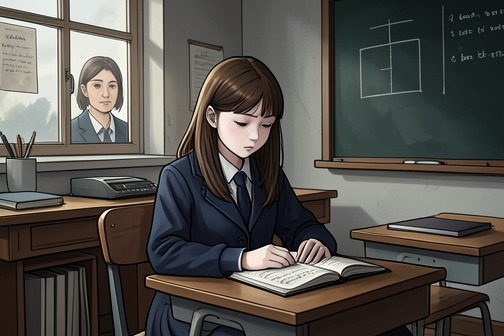
The [Toulouse](entity:location-recall-location-ddb428d21325) school terrorist attack is a formative event in [Mila Wizman](entity:character-recall-character-mila-wizman-ab5ee4a0e196)’s history, remembered in the novel chiefly through its aftermath. It marks a break in her previously happy childhood and becomes part of the instability that surrounds her adolescence, disrupted education, and later psychological distress. The book does not recount the attack as a scene; it reconstructs its consequences through testimony and a psychologist’s account during the trial.
## The Attack as a Turning Point
A psychologist who examined Mila describes her childhood as happy until the attack at her school. Afterward, Mila experienced psychological difficulties and failed her baccalaureate examination. Her former teachers remembered her as intelligent, but troubled by successive upheavals: first the attack, then a hurried move to [Israel](entity:location-recall-location-e1a1566e26c9) that proved unsuccessful. By the time of the events at the center of the trial, she was preparing to retake the examination as an independent candidate.
The attack also forms part of a broader family rupture. Mila’s parents had divorced, and her mother became increasingly religious. The psychologist’s account connects the deterioration in Mila’s circumstances to the attack, her mother’s religious turn, and, especially, her mother’s departure. Mila felt abandoned after her mother left; the family division and its aftermath compounded the instability that had followed the attack.
## Family Separation and Its Aftermath
Mila remained close to her father, [Adam Wizman](entity:character-recall-character-adam-wizman-a34d82a64076), and later lived with him in [France](entity:location-recall-location-4f282e1af8a7). Her mother, [Valérie Berdah](entity:character-recall-character-val-rie-berdah-b367fa38b875), had made a new life in [Brooklyn](entity:location-recall-location-b0361f31948e) with a man from an Orthodox Jewish milieu; they had a young son, while Mila’s younger sister lived with them. Mila had little contact with her mother and felt that the parents’ separation had left her caught between them. Her mother blamed her for joining her father in France, telling her that events would not have happened had Mila stayed in the [United States](entity:location-recall-location-5d55e9152db1). The mother was visiting [Paris](entity:location-recall-location-paris-c02b439ce220) when the later assault occurred.
The attack therefore does not stand alone in the account as an isolated trauma. It precedes a failed relocation and unfolds alongside parental separation, religious change within the family, and Mila’s experience of being left behind. The novel gives these circumstances as context for her vulnerable adolescence, without reducing her subsequent difficulties to one cause.
## Recollection in the Trial
The event enters the narrative retrospectively through professional testimony. The psychologist reports that Mila had been followed by several psychologists or psychiatrists and had difficulty concentrating and maintaining friendships. Her mood could shift into sudden crying, and she described feeling that friends could not understand what she had lived through. The account presents these problems as part of a longer history of distress, beginning after the attack and further affected by later events.
Mila’s own testimony also identifies the attack as a continuing source of psychological difficulty. She told the court that she was still suffering from its effects during the period before she met [Alexandre Farel](entity:character-recall-character-alexandre-farel-23479f753109); at that time, she had also failed her baccalaureate and felt stifled by the atmosphere at home. The recollection situates her within a particular period of strain, while keeping separate the earlier attack and the later events adjudicated at trial.
## Narrative Significance
By revealing the attack through testimony rather than dramatizing it directly, the novel makes it part of a layered account of memory and consequence. Its significance lies in the changes that follow: psychological problems, interrupted schooling, a failed move, and greater distance from Mila’s mother. During the trial, these details help establish the history against which her later experience is discussed, but they do not themselves settle the disputed legal questions. The attack remains a prior wound in Mila’s life, recalled as context rather than as a complete explanation for everything that follows.
Event 21
科隆新年前夜性侵事件

The Cologne New Year’s Eve sexual assaults enter the novel not only as a public event but as the immediate context for a family crisis. In the days after the assaults were reported, [Claire Farel](entity:character-recall-character-claire-farel-ad491473703f) defended the German women who had been attacked in an interview; some listeners interpreted her remarks as Islamophobic. When her son Alexandre was arrested on suspicion of rape, the two stories collided, drawing the family into a media storm and exposing how quickly public debate can turn a complex event into competing accusations and labels.
## Background and Public Debate
Six months before Alexandre’s trial, the Weinstein scandal had brought allegations of sexual abuse by internationally known actresses against the American producer into public view. A major investigation by [The New York Times](entity:organization-recall-organization-the-new-york-tim-bb503dc75ff2) described a system of threats and intimidation, while women’s accounts spread across social networks and encouraged others to break their silence. The novel places the Farel case within this wider moment of women speaking publicly about assault and harassment, while also showing the defense’s concern that the resulting public climate could prejudice a trial.
The Cologne assaults are the immediate backdrop to Claire’s interview. Her intention, as Alexandre later describes it, was to defend German women who had been assaulted; some people nevertheless perceived her remarks as Islamophobic. This split between stated purpose and public reception becomes central to the event’s place in the novel: the debate is not presented as settled, but as a conflict in which a public intervention is rapidly recast by its audiences.
## Claire Farel’s Interview and Its Backlash
The interview’s effects reach Claire through social media. Her son tells her that he has brought forward his departure, and she cannot bring herself to call him back to dissuade him. At the same time, she is facing professional turbulence and a torrent of hostile reactions to her article. She tells [Jean Farel](entity:character-recall-character-jean-farel-a16bb5a3d663) that she regrets the interview, believing she spoke too quickly and surrendered to the pressure to offer an immediate opinion without critical distance or debate. She says the response has made her ill and that she cannot bear the aggression of anonymous users or the experience of public humiliation.
Jean’s response is markedly different. He encourages Claire to accept the attention, treating favorable or unfavorable publicity alike as a way to keep people talking about her. Claire insists that exposure is not what she seeks. Their exchange makes the media aftermath personal as well as professional: her distress is met not with agreement but with his blunt view that public-facing work entails exposure to attack.
## The Collision with Alexandre’s Arrest
On January 12, 2016, a few days after news of the Cologne assaults, Alexandre is arrested. In his later account, the timing joins his mother’s controversial interview to the family’s sudden exposure to intense media pressure. He recalls receiving insults and death threats while those around him knew little about the allegations against him. The event therefore becomes inseparable from the arrest in the public narrative, even though the two matters are distinct.
The arrest quickly becomes news. [Agence France-Presse](entity:organization-recall-organization-agence-france-pr-8053e672bcbd) reports that the son of Jean Farel is in custody on suspicion of rape. Jean’s lawyer speculates about who may have disclosed the information, while Alexandre’s lawyer says his client disputes the allegations and characterizes the encounter as consensual. The account presents these as competing claims, not as a resolution of the case. Meanwhile, Claire receives dozens of abusive messages, and her interview about the Cologne assaults is overtaken by the news of her son’s arrest.
## Media Consequences and Narrative Significance
The Cologne controversy and the arrest place Claire and Alexandre under different but overlapping forms of public scrutiny. Claire is attacked over how she spoke about assaults against women; Alexandre is publicly identified through an accusation that he denies. As the trial approaches, his lawyer argues that public opinion has already condemned him and that the association of his name with the word “rapist” threatens his future prospects. At the verdict, Jean leaves the courthouse without commenting to reporters, while women demonstrate outside and one protester argues that the outcome protects a white man with a promising future. The novel does not make the Cologne event a verdict on the separate case; instead, it shows how the event’s public framing becomes entangled with questions of credibility, justice, and stigma.
The episode also links private vulnerability to the speed of public circulation. Claire’s interview, her regret, Alexandre’s arrest, online abuse, and press coverage are not presented as one interchangeable controversy. Their collision shows how media attention can make separate claims appear to confirm or discredit one another before their circumstances have been fully examined. The event’s significance lies in that pressure: it shapes how the family is seen and how its members respond, while leaving the underlying legal question to the judicial process.
Event 22
韦恩斯坦性侵丑闻曝光
The Weinstein scandal’s exposure marks a shift in the novel’s public climate: accusations of sexual abuse, once contained by silence and intimidation, begin to circulate as a collective account. Its reverberations reach the Farel case, where a highly publicized prosecution unfolds amid demands to hear women’s testimony and warnings that media attention may prejudge the accused.
## Exposure and the Breaking of Silence
Six months before the Farel trial, internationally known actresses accused American producer Harvey Weinstein of sexual abuse. An investigation published by [The New York Times](entity:organization-recall-organization-the-new-york-tim-bb503dc75ff2) described a system of threats and intimidation operating over many years. The disclosures did not remain isolated: as one woman spoke, others followed, encouraged to break the silence around assaults, rape, and harassment. Social media became one of the channels through which thousands of women made their experiences public.
The scandal therefore signifies more than the exposure of one producer. It changes the conditions under which testimony is heard. The novel presents a public movement gathering force through accumulated accounts, while also acknowledging that online spaces capable of amplifying women’s voices can expose them to harassment.
## The Scandal’s Context for the Farel Case
By the time [Alexandre Farel](entity:character-recall-character-alexandre-farel-23479f753109)’s case reached trial, the Weinstein revelations had helped create a climate in which sexual-violence allegations carried intense public attention. Outside the Palais de Justice, protesters invoked #[MeToo](entity:expression-recall-expression-metoo-6aff81e06a5a) and called for an end to silence; the case was widely reported. Alexandre’s lawyer, [Maître Célérier](entity:character-recall-character-ma-tre-c-l-rier-e46595d9bbe8), argued that public opinion had already condemned his client and feared that the scandal’s influence would contaminate the proceedings.
The novel does not treat the scandal as evidence about what happened between Alexandre and [Mila Wizman](entity:character-recall-character-mila-wizman-ab5ee4a0e196). Instead, it places their case inside a changed public conversation: the pressure to listen to women’s accounts sits alongside the legal requirement to judge the specific case rather than substitute public outrage for a verdict. That tension becomes central to the trial’s representation in the book.
## Competing Accounts and Public Judgment
As the case drew attention, reports, statements, and social-media reactions helped turn a private allegation into a public conflict. Following [Jean Farel](entity:character-recall-character-jean-farel-a16bb5a3d663)’s remarks in court, journalists circulated his words online, and hundreds of comments appeared within minutes. The next morning, a manifesto signed by about thirty intellectuals argued that rape could not be reduced to “twenty minutes of action” when a victim’s life had been destroyed. Mila, meanwhile, published a blog post addressing Alexandre directly and rejecting the idea that her account belonged to an ambiguous “gray zone.”
These responses show how the scandal’s wider legacy enters the Farel case: it gives public force to accounts that might otherwise remain unheard, while the speed and emotional intensity of online judgment also sharpen the dispute over fairness. Maître Célérier argued that the media trial had damaged Alexandre’s presumption of innocence and permanently marked his name. The novel keeps that claim in view without making it a substitute for the testimony or the court’s decision.
## Personal Reverberations and Significance
The scandal also informs [Claire Farel](entity:character-recall-character-claire-farel-ad491473703f)’s private reckoning. After hearing Mila’s testimony, Claire begins to doubt her public insistence that her son is innocent. She connects that doubt to the way she had previously accepted Alexandre’s explanations and reflects on her own experience of harassment and sexism. An article about Monica Lewinsky, discussing women’s voices and the complications of consent under unequal power, gives Claire a point of comparison without making the situations identical.
By linking an international exposé to a family’s crisis and a French trial, the novel presents the scandal as a catalyst for changed expectations about whose testimony is heard. It does not resolve the tension between collective recognition and individual adjudication. Instead, the Weinstein revelations make that tension unavoidable: silence is no longer the only available response, but public attention can itself become a force that threatens to decide a case before the court does.
Event 23
克莱尔·法雷尔科隆事件采访争议

[Claire Farel](entity:character-recall-character-claire-farel-ad491473703f)’s controversy over her interview about the assaults in Cologne becomes inseparable from the public disclosure that her son, [Alexandre Farel](entity:character-recall-character-alexandre-farel-23479f753109), has been placed in police custody on suspicion of rape. The episode traces how an interview Claire comes to regret is pulled into a larger media storm: first through hostile reactions to her remarks, then through the news about Alexandre, and finally through the rapid circulation of statements and comments. Her distress over online abuse stands in sharp contrast to [Jean Farel](entity:character-recall-character-jean-farel-a16bb5a3d663)’s more calculating view of publicity.
## Background and Collision of Events
Claire’s interview had already provoked an angry response. She told Jean that readers were insulting her and calling her racist, and admitted that she had spoken too quickly and too easily, swept along by the pressure to express an opinion immediately. She felt her thinking had been distorted and regretted agreeing to the interview. The episode makes the controversy more than a disagreement over her position: Claire also objects to the speed and lack of reflection demanded by public debate.
The dispute acquired a more intimate and consequential context when the [Agence France-Presse](entity:organization-recall-organization-agence-france-pr-8053e672bcbd) reported that Alexandre had been placed in police custody on suspicion of rape. His lawyer, [Maître Célérier](entity:character-recall-character-ma-tre-c-l-rier-e46595d9bbe8), denied the allegations and characterized the encounter as consensual. The public announcement therefore placed an unresolved criminal allegation alongside Claire’s already contentious interview, without settling the underlying facts.
## Claire and Jean’s Conflict over Publicity
Jean advised Claire to stand by her position, arguing that attention was useful whether it was favorable or hostile. Claire answered that she did not seek exposure and found the aggression on social networks difficult to bear. Jean’s response—that public writing and interviews necessarily expose their author to attention—reveals a difference in how they understand the costs of public life: he treats visibility as part of the profession, while she experiences its anonymous attacks as violence she may no longer be able to endure.
When Alexandre’s detention became public, Claire received dozens of abusive messages on [Twitter](entity:organization-recall-organization-twitter-31930dc42d31). The interview controversy and the accusation against her son now collided in the same public arena, multiplying the pressure on her. Jean told her not to read the comments or surrender to what he called the dictatorship of emotion. The advice acknowledged the force of the online reaction, but did not resolve their difference over whether public attention could simply be managed or had become intolerable.
## The Media’s Accelerating Effects
The novel places the episode within a wider moment of public testimony following the Weinstein revelations. After actresses accused the American producer of sexual abuse, a major investigation by [The New York Times](entity:organization-recall-organization-the-new-york-tim-bb503dc75ff2) exposed a system of threats and intimidation. Women’s accounts then spread across social networks, where thousands described harassment and assault. In this atmosphere, Maître Célérier feared that public opinion had already judged Alexandre before his trial.
The case’s public life continued through successive disclosures and reactions. The AFP headline transformed the custody decision into a widely legible accusation; Claire’s Twitter account became a site of abuse; and journalists later circulated Jean’s words online, prompting hundreds of comments within minutes. The episode presents media attention not as a passive record of events but as a force that changes their scale and the pressures faced by the people involved.
## Public Judgment and Aftermath
During the later proceedings, Jean’s remarks were disseminated by journalists and attracted a rapid wave of online responses. The defense argued that media judgment had already damaged Alexandre’s prospects, saying that universities would not accept him and that searches for his name associated it with the label of rapist. These claims belong to the defense’s account of reputational harm, not to a finding about the allegations themselves.
When the verdict was announced, Jean showed no visible emotion; he had taken an anxiolytic before entering the courtroom. He spoke briefly with Alexandre, then left past photographers and declined to comment. Outside, women protested the verdict, with one demonstrator arguing that it protected a white man with a promising future. Jean hurried away, wanting to reach [Françoise](entity:character-recall-character-fran-oise-d26e2c6492c7), who by then could no longer remember his account of the five days of anguish. The closing contrast links the public’s competing interpretations of the case with a private relationship in which even the story of Jean’s distress has lost its listener.