A Room of Quiet
LongingA Room of Quiet is the meditation room Dag Hammarskjöld created at United Nations Headquarters in New York. Its spare design made stillness an essential part of the room rather than a backdrop: a single shaft of light strikes a piece of iron ore, while the absence of other symbols leaves space for visitors of different religious traditions. Hammarskjöld’s decisive idea was that quiet reflection could belong within an international institution and orient its work toward the good of the whole world.
Design and the Single Symbol
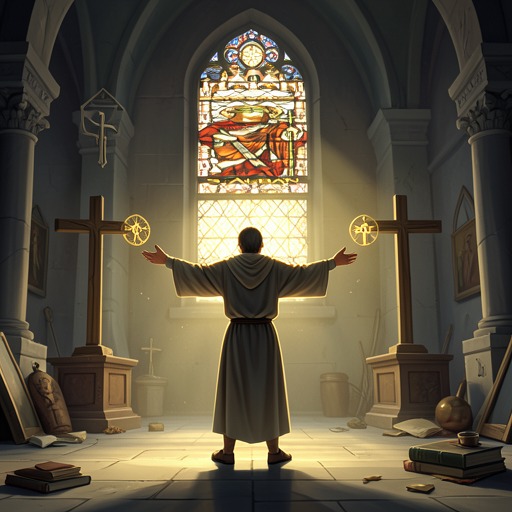
Hammarskjöld supervised every detail of the room, which he called “A Room of Quiet.” Its only symbol is a shaft of light falling on a piece of iron ore. He explained the image as showing “how the light of the spirit gives light to matter.” The iron ore therefore serves not as decoration but as the room’s concentrated visual statement: material substance and spiritual illumination are brought together in a simple, deliberate arrangement. The stone may look like an empty altar, but Hammarskjöld insisted that its emptiness did not mean that God was absent or that the space was dedicated to an unknown god. Rather, he described it as dedicated to the God worshipped “under many names and in many forms.” The room’s spareness thus expresses an expansive religious outlook without assigning the space to one tradition.
A Space for Many Visitors
The room was intended as a place within the United Nations where people could find quiet for reflection and stillness. Hammarskjöld rejected additional symbols because he did not want anything to distract visitors or disturb their inward attention. The design accommodates religious difference through restraint: instead of asking visitors to adopt a particular image or creed, it gives them space to reflect in their own terms. That restraint also makes the room’s purpose practical as well as contemplative. Its simplicity creates an atmosphere of deep silence in which a diplomat or another visitor can consider not only the work at hand but its significance for the whole world. The single symbol, Hammarskjöld believed, had a universal significance and could generate hope for peace among all people.
Hammarskjöld’s Religious Vision
The room gives physical form to Hammarskjöld’s broad religious outlook. Although steeped in traditional Christianity, he drew on non-Christian mystics and spiritual writers, referred to Chinese, Greek, and Zoroastrian religions, and held that God’s activity in the world was not confined to one faith. His claim that “The lovers of God have no religion but God alone” helps clarify why a meditation space at the United Nations should neither proclaim one religious identity nor treat religious difference as an obstacle to shared reflection. A Room of Quiet brings that conviction into the setting of public service. Its stillness invites those engaged in the institution’s work to look beyond immediate tasks toward their wider meaning; its central image links spirit and matter, while its deliberate lack of other symbols keeps the space open to people who understand God through different traditions. The room’s quiet is therefore not an escape from the world but a setting for reflecting on responsibility and peace within it.