Event 1
Violence at the Altamont Free Concert
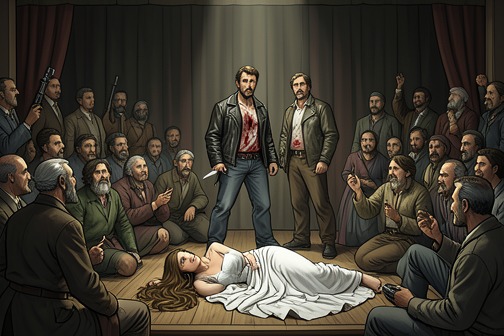
[Violence at the Altamont Free Concert](entity:event-recall-event-ca049e6ca9d3) was the fatal confrontation that erupted at [The Rolling Stones](entity:organization-recall-organization-ff82dbcec053)’ outdoor festival on December 6, 1969. As conflict between Hell’s Angels acting as security guards and members of the audience ended in the stabbing death of Meredith Hunter, the band’s deliberately cultivated image of danger met actual violence. The incident, captured in Gimme Shelter, becomes a turning point in the book’s account of rock’s darker cultural turn.
## Background and Setting
The episode followed The Rolling Stones’ rise to international fame and their construction of a provocative public identity. The book contrasts them with The Beatles, describing the Stones as boozers, fighters, and icons of sensual excess. The band traced its musical lineage to [Robert Johnson](entity:character-recall-character-robert-johnson-301e891227d6) and Delta blues, while cultivating Satanic imagery in promotional photographs and album titles such as Their Satanic Majesties Request and Let it Bleed. Its lyrics also approached subjects including drug addiction, rape, murder, and predation.
That image did not make the fatal violence a staged effect. The festival took place outdoors at [Altamont Speedway](entity:location-recall-location-8f20274b73c3), and the confrontation involved the Hell’s Angels serving as security and people in the audience. The setting brought the Stones’ public flirtation with menace into contact with an uncontrolled clash among people physically present at the event.
## Course and Fatal Outcome
The confrontation broke out only moments into The Rolling Stones’ performance of *[Sympathy for the Devil](entity:expression-recall-expression-sympathy-for-the-d-1a5e2e369480)*. Conflict between the Hell’s Angels security guards and members of the crowd escalated, ending with the fatal stabbing of Meredith Hunter, whom the account identifies as a Black man carrying a gun. The film documentary Gimme Shelter inadvertently captured the violence, preserving the event as more than a disturbing story attached to the concert: it became a recorded public spectacle.
The account links the fatal outcome to the broader disorder at Altamont without claiming that the song itself caused the clash. Its placement at the start of *Sympathy for the Devil* nevertheless sharpened the contrast between the band’s infernal theatrical image and violence unfolding in the audience.
## Aftermath and Significance
The book presents Altamont as a rupture in the optimistic narrative of the [1960s](entity:time-recall-time-1960s-fa3d18a6c9cb). The festival’s violence made the era’s peace-and-love promise appear unable to survive the transition into a new decade. The significance lies not only in the death, but in the collision between a countercultural performance of danger and an actual fatal event—one inadvertently documented by the film that would carry its image beyond the festival.
Event 2
Founding of the Church of Satan
The founding of the [Church of Satan](entity:organization-recall-organization-church-of-satan-ee7e14ee0ef2) on [Walpurgisnacht](entity:time-recall-time-walpurgisnacht-0b0b5b052ded), April 30, 1966, turned [Anton LaVey](entity:character-recall-character-anton-lavey-84a0edfe8747)’s accumulated interests in occultism and public performance into an organized religious institution. Its early visibility helped make [Satanism](entity:concept-recall-concept-252e3ea7bfc5) a widely recognized subject, while its principles distinguished it from the simple inversion of Christianity that the name might suggest.
## LaVey and the Founding
Before establishing the Church, LaVey had spent years in a variety of occupations: carnival work, police photography, accompanying burlesque performers on the organ, and occultism. The book presents this background as part of the context for his public emergence. He founded the first official Church of Satan on Walpurgisnacht, a date that gave the institution an unmistakably theatrical point of entry into public life.
## Principles and Public Presence
The Church’s foundations, as described in the book, lay not in shallow blasphemy but in opposition to herd mentality and in a Nietzschean ethic of anti-egalitarian human development. Its ideal was a person freed from Christian morality and elevated toward godhood on earth. This combination of religious identity and declared opposition to prevailing moral conventions made the Church well suited to sustained media attention; it soon became a household name around the globe.
That public profile should not be conflated with every later group or individual identified with Satanism. The book contrasts the Church’s archetypal or symbolic understanding of [Satan](entity:character-recall-character-satan-835177cd068e) with the early [Norwegian Black Metal](entity:concept-recall-concept-72d1e7e518a4) youths’ belief in Satan as a literal being. Those youths imagined the world as a continuing struggle between good and evil, differing from fundamentalist Christians chiefly in the side they chose. The contrast shows that the Church’s founding established one influential form of Satanism, not a single doctrine shared by all who later adopted the label.
## The Satanic Mass and Its Afterlife
In 1968, LaVey released a *Satanic Mass* LP that included a Black Mass recording. The book distinguishes the recorded Satanic Mass from a Black Mass understood as an inversion of Christian rite: the album instead presented a rejection of Christian doctrine. LaVey later described the record as a documentary of a performed event and recognized it as an early example of the kind of visual presentation that would become familiar much later. He also recalled that the recording was made live, with different tracks, and that publisher Lyle Stuart subsequently distributed it with some funding from Howard Hughes.
The album’s other side carried LaVey’s Satanic declarations over Wagner and other bombastic music. Drawn from essays, these texts became the framework for *[The Satanic Bible](entity:object-recall-object-the-satanic-bible-e9077ecac2ee)*, published in 1969. The book describes that work as the only openly Satanic manual of thought to achieve wide distribution, while acknowledging that its social impact cannot be measured precisely.
## Influence and Distinction
The book traces a cultural legacy from the Church’s publicity and LaVey’s writings to musicians who explored demonic and occult themes in their public identities, songs, and stage shows. By the late [1970s](entity:time-recall-time-1970s-2f89f32df2c9), some major metal acts still invoked sinister forces, though often superficially or with irony. The wider circulation of *The Satanic Bible*, however, helped keep the Devil in popular culture beyond any one musical moment. In this account, the founding’s decisive consequence was not that it dictated a single later practice, but that it gave Satanism an enduring institutional and media presence from which varied, sometimes sharply different, expressions could emerge.
Event 3
Mayhem's 1990 Sarpsborg performance
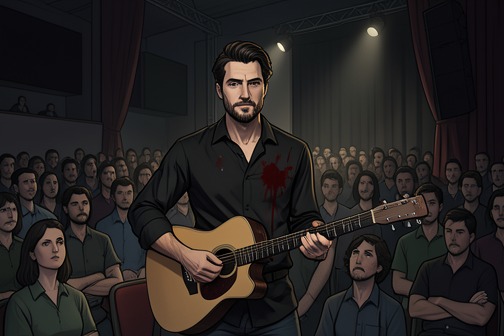
[Mayhem's 1990 Sarpsborg performance](entity:event-recall-event-1990-mayhem-2d757a7bb211) marked the band’s first official gig and turned an unusual concert into an enduring reference point for the emerging [Norwegian Black Metal](entity:concept-recall-concept-72d1e7e518a4) scene. Organized by [Metalion](entity:character-recall-character-metalion-62791a4f39cf) in the town where he lived, the show combined a substantial audience and a bill shared with other bands with stage elements designed to be extreme. Metalion’s recollections preserve both the preparations behind the spectacle and its consequences for [Dead](entity:character-recall-character-dead-fffe54e995a9), whose self-injury during the set left him in pain and seriously unwell.
## Background and Setting
[Mayhem](entity:organization-recall-organization-mayhem-d00b396b754c) had few public performances at this point, and Metalion remembered the [Sarpsborg](entity:location-recall-location-sarpsborg-37b4d940824d) concert as one of the band’s rare shows. It took place in February 1990, according to his account, and was the first official gig. That distinction matters in a scene where, as the book describes it, musical identity rested as much on belief and outlook as on sound. There was no fixed rulebook: the scene’s boundaries shifted, shaped in part by the strong personalities who gathered around it. Mayhem, already associated with rumors and an unusually intense reputation, helped define what that identity could look like in public.
Metalion organized the Sarpsborg event. He recalled that [Euronymous](entity:character-recall-character-euronymous-879bb1da8a60) wanted an extreme stage show and that Dead shared this ambition, seeking to push the live performance through corpse paint, blood, and other elements of display. The concert was not simply an isolated act of theatrical provocation: it belonged to a developing performance style in which the band’s appearance and conduct made its anti-social posture visible to an audience. The book contrasts this later imagery with Mayhem’s earlier look, which had been comparatively ordinary—dark clothing and leather jackets—before corpse paint became one of the group’s trademarks.
## Preparations and Performance
The pig heads used onstage came from a local butcher. They were inexpensive leftovers otherwise destined to be discarded, and the band prepared them by putting stakes through them. Metalion remembered Dead having difficulty getting a stake through a pig’s skull. The practical, improvised origin of the props sits alongside their deliberate impact: discarded butcher’s leftovers were made into conspicuous stage objects, helping give the performance an image that people would remember.
During the set, Dead intentionally injured himself with a broken bottle. Metalion placed the act midway through the performance, during a track with very few vocals, which gave Dead time to do it. He had spoken beforehand about what he intended, raising expectations; in Metalion’s recollection, Dead then went through with it. Metalion also remembered Dead tearing his shirt with a bottle at the Sarpsborg show. These acts made the body part of the spectacle, though the available account does not establish that the performance followed a formal ritual or shared script.
The aftermath was physical rather than merely theatrical. Dead lost a great deal of blood and was in pain and very sick after the show. He was supposed to go to a hospital, but arrived too late for stitches. The recollection thus records a clear boundary between a staged gesture and its consequences: whatever its place in Mayhem’s performance image, the self-injury left Dead with a serious immediate need for medical attention.
## Audience and Circulation
The Sarpsborg show was a substantial event by the standards of Mayhem’s sparse concert history. It included other bands, and Metalion estimated that about 300 people attended. The pig heads and the performance made a strong impression on those present. One attendee ate a piece of a pig head, which was old, and became ill. The detail underscores the awkward proximity between stage prop and food, while also showing that the display was not confined to the band’s visual presentation: objects from the performance entered the audience’s actions and had consequences beyond the stage.
The concert also brought people from other groups into the room. Metalion thought members of [Darkthrone](entity:organization-recall-organization-darkthrone-ffc0621cad8e) and [Immortal](entity:organization-recall-organization-immortal-cd40b89350b2) were present, connecting the gig to the wider network that was taking shape around Norwegian Black Metal. By mid-1991, Darkthrone, [Burzum](entity:organization-recall-organization-burzum-5b169b75fc03), Immortal, [Thorns](entity:organization-recall-organization-thorns-02e825d997f1), Enslaved, [Arcturus](entity:organization-recall-organization-arcturus-c3b0f3acd760), and later [Emperor](entity:organization-recall-organization-emperor-2aa40c379fc1) were in contact with Euronymous; the inner circle around these bands would subsequently be described in the press as the Norwegian Black Circle. The Sarpsborg audience therefore included, in Metalion’s recollection, people associated with bands that would become part of this broader scene, though the event itself should not be mistaken for a formal gathering of a named organization.
## Memory and Significance
A recording of the Sarpsborg show circulated as a bootleg titled Dawn of the Black Hearts, released by someone in South [America](entity:location-recall-location-5d55e9152db1), according to Metalion. That later circulation carried the performance beyond its local audience and gave the gig a second life as an artifact of the underground. Its reputation rests on more than one feature: the scale of the audience, the improvised pig-head staging, Dead’s mid-set act, and the presence of musicians linked to other emerging bands all contribute to the way the show is remembered.
The surviving account is retrospective, shaped by Metalion’s position as both organizer and longtime observer of the underground. His recollection supplies concrete particulars—where the props came from, how the performance was arranged, and what happened to Dead afterward—rather than reducing the concert to its notorious image. In that account, Mayhem’s extremity appears as a developing public language: a band’s approach to appearance and stage action made its rejection of ordinary expectations legible, while the consequences of Dead’s act exposed the cost of turning that language into an event before a live audience.
Event 4
Per Yngve Ohlin (Dead)'s suicide
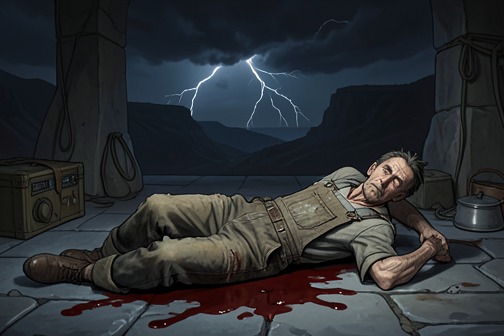
[Per Yngve Ohlin (Dead)'s suicide](entity:event-recall-event-dead-1677504a4547) on 8 April 1991 ended the life of [Mayhem](entity:organization-recall-organization-mayhem-d00b396b754c)’s vocalist and became a defining episode in the emerging [Norwegian Black Metal](entity:concept-recall-concept-72d1e7e518a4) scene. It was also recast by [Euronymous](entity:character-recall-character-euronymous-879bb1da8a60), who found him, as part of the band’s public mythology: the death that brought a private crisis into the scene’s increasingly deliberate performance of extremity.
## [Dead](entity:character-recall-character-dead-fffe54e995a9) and the emerging scene
Dead joined Mayhem in 1988, after singing for [Morbid](entity:organization-recall-organization-morbid-6f263f762f79), a horror-themed [Death Metal](entity:concept-recall-concept-6ba830d0a785) group. His arrival coincided with the beginning of a small but tangible network in [Oslo](entity:location-recall-location-oslo-aa85218d6b1a). Young musicians formed bands, attended one another’s shows, exchanged influences, and measured their own extremity against that of their peers. Fans elsewhere in [Norway](entity:location-recall-location-norway-64019b7a3249)—often teenagers living with their families in small towns or isolated areas—also made contact, especially with Euronymous. Correspondence and telephone calls connected people who might meet in person only when a better-known Metal band played in a major city. Dead’s death would become an early landmark in this network’s history, but it came after a period in which the scene was still taking shape through those ordinary connections.
Dead’s reputation also rested on a striking identification with death. In letters written shortly before his suicide, he described an interest in accounts of actual deaths and corpses, and in how people responded to them. He had also recounted an earlier episode in which he believed he had died and perceived a succession of colored planes. Someone he consulted interpreted the experience through an occult account of an astral world, including a realm associated with the dead. These accounts do not establish what he intended by them, but they show that death and an imagined otherworld were already prominent in the language through which he understood himself.
Stian Occultus, who briefly replaced Dead as Mayhem’s vocalist after the suicide, recalled that Dead did not regard himself as human but as a being from another world. According to Occultus, Dead spoke of visions and of feeling that his blood had frozen, and associated those ideas with the name he had chosen. The retrospective account presents this as part of Dead’s self-conception, not as proof that his death was inevitable. People who knew him reportedly spoke well of him, a notable contrast with the competitive, insular music underground around him.
## The suicide and its discovery
On 8 April 1991, at age twenty-one, Dead died at the house on Sørumveien Road in [Kråkstad](entity:location-recall-location-4c07e7d82240). He used a firearm kept in the house; the ammunition had been provided by [Varg Vikernes](entity:character-recall-character-varg-vikernes-c87846adebba) as a Christmas gift the previous year. The account gives this circumstance without establishing that the gift was connected to Dead’s decision. Its detail is stark precisely because it places an ordinary exchange between musicians alongside the later event, without making the exchange an explanation for it.
Euronymous found Dead after the house’s only key proved unavailable and the door remained locked. He entered through an open window into Dead’s room. After discovering him, Euronymous went to a nearby store to buy a camera, took photographs, and then called the police. The sequence places the act of documenting the scene before the call; it became one of the most consequential details in later accounts of the death. The photographs remained in the band’s possession until Euronymous was killed. His father then found them in his apartment and threw them away.
The book also records that a brief note was left at the scene. Its final line made a sardonic reference to the blood. That gesture sits uneasily beside the seriousness of the death: even at the point of ending his life, Dead left behind a trace of the dark humor associated with the scene. The account does not turn the note into an explanation of his motives, which remain unstated here.
## Aftermath and the making of a scene legend
The responses to the death were not uniform. People who knew Dead are described as having spoken well of him, while Euronymous appeared to show little sorrow. Instead, he glorified the violent departure and made it part of the catastrophe-laden mystique he cultivated around Mayhem. The distinction matters: the death was at once a loss within a small musical network and material that one of its central figures could use to shape the band’s image.
By the early [1990s](entity:time-recall-time-1990s-e168405d040a), Norwegian Black Metal had separated itself from the older spectacle of Metal performance. The book describes a newer face defined by corpsepaint and an opposition to what the scene considered good or life-affirming. In that context, Dead’s death did not simply mark the end of a vocalist’s life. Its retelling helped bind the scene’s aesthetic of extremity to real events, while also exposing the distance between personal grief and the public use of tragedy. The concerts Dead had imagined for [Sweden](entity:location-recall-location-sweden-0f697902ba54) did not take place; what endured instead was the account of his death, repeatedly drawn into Mayhem’s legend and the wider history of Norwegian Black Metal.
Event 5
Norwegian black metal church arson wave
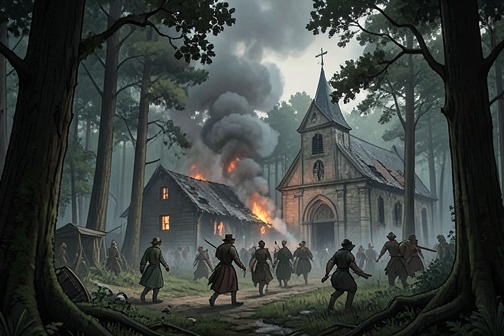
The [Norwegian black metal church arson wave](entity:event-recall-event-511b2abeb1da) was a series of fires and attempted attacks that made the conflict between parts of the [Black Metal](entity:concept-recall-concept-black-metal-a68ced181ea7) scene and Christianity a public criminal crisis. The attacks were presented by some participants as revenge for Christianity’s destruction of an older heathen culture, but the surviving counts do not establish that every incident belonged to the scene: one contemporary estimate put the proportion with a documented Black Metal connection at roughly a third. The wave outlasted the trials that brought its most prominent early cases to public attention, while its meaning was disputed among perpetrators, authorities, congregations, and the media.
## Background and motives
The fires did not emerge from a scene governed by a single creed or fixed code. Its beliefs and outlook mattered alongside its music, but there was no settled rule book, and influential personalities helped shift its ideological boundaries over time. Around the record shop associated with [Øystein Aarseth](entity:character-recall-character-ystein-aarseth-a5d55bfc01ea), acceptance depended in part on being trusted and regarded as serious in one’s views. People sought recognition from Aarseth and older participants, making belonging and standing within the scene part of the setting in which its confrontational identity took shape.
Before the attack on [Fantoft Stave Church](entity:location-recall-location-fantoft-stave-church-8b2b503c52ed), smaller criminal acts had already occurred. Aarseth referred proudly to break-ins at churches to obtain objects for the record shop’s interior decoration; the account suggests that some such offences probably took place from mid-1991 onward. These earlier acts did not by themselves constitute the later wave, but they show that trespass and the appropriation of church property preceded the fires. Aarseth was also developing a deliberately sinister public image for [Mayhem](entity:organization-recall-organization-mayhem-d00b396b754c), with a stated aim of spreading evil. That image and the later arsons became closely associated in public perception, although association alone does not prove that the band or every person around it participated in any particular attack.
The perpetrators’ stated rationale was generally retaliatory. In the case of [Varg Vikernes](entity:character-recall-character-varg-vikernes-c87846adebba), the book describes a repeated claim that the Christian church had destroyed the beauty of [Norway](entity:location-recall-location-norway-64019b7a3249)’s true culture, which he located in the heathen past. He cast arson as an instinctive uprising against what he regarded as Christianity’s alien restraints, and presented [Burzum](entity:organization-recall-organization-burzum-5b169b75fc03) as a means of encouraging such acts. His later explanation also connected the fires to the revival of [Odin](entity:character-recall-character-odin-74b64a134f46): he said that the aim was to make people see Odin and awaken that presence in them. This was Vikernes’s interpretation of the crimes, not a shared definition that can be assumed for all offenders or all Black Metal musicians.
The book characterizes the arsons as symbolic acts and notes that those convicted commonly treated them as justified revenge against Christianity, which they associated with weakness. It finds no evidence that sexual excitement was a motive in the church burnings or grave desecrations, while suggesting that sadism may have accompanied some of the provocative conduct. Its comparison with categories of pyromania identifies revenge as a useful parallel but also stresses that the Scandinavian cases were, to a considerable degree, unprecedented. The stated political and religious meanings therefore matter, but they do not reduce every attack to one motive or make the scene ideologically uniform.
## The fires and their spread
A small, ineffective fire at Storetveit Church occurred in the month before the Fantoft blaze. The destruction of Fantoft Stave Church, a recognized cultural landmark in [Bergen](entity:location-recall-location-2106a7d56ff4), then made national headlines. Other churches were attacked in a sequence of nighttime fires: Revheim Church was torched on August 1; twenty days later, [Holmenkollen Chapel](entity:location-recall-location-e54b641570af) in [Oslo](entity:location-recall-location-oslo-aa85218d6b1a) burned. Ormøya Church caught fire on September 1, followed by [Skjold Church](entity:location-recall-location-7aa6e9adf243) on September 13. [Hauketo Church](entity:location-recall-location-3c9e4564e617) burned in October.
After a pause of several months, [Åsane Church in Bergen](entity:location-recall-location-48f411264655) was consumed by fire. [Sarpsborg Church](entity:location-recall-location-aa3f350f8e4f) was destroyed only two days later. A firefighter died while responding to the [Sarpsborg](entity:location-recall-location-sarpsborg-37b4d940824d) blaze. The book records that some people later considered the Black Circle responsible for that death, a retrospective attribution rather than a finding established in the account. The casualty made the consequences of the attacks extend beyond the targeted buildings and their congregations to the people tasked with fighting the fires.
These prominent episodes formed part of a larger and less precisely bounded pattern. From the Storetveit incident onward, the book estimates at least forty-five to sixty church fires, near-fires, and attempted arson attacks in Norway. Sjur Helseth, head of the Technical Department of the Directorate for Cultural Heritage, assessed that about one-third had a documented connection to the Black Metal scene. Authorities were reluctant to discuss details of many cases, fearing that publicity might encourage further arson or copycat attacks. That caution itself shaped what could be known publicly: the record was extensive, but neither a single total nor the scene’s share of it was presented as definitive.
## Counting and assigning responsibility
An article in Aftenposten published on November 7, 1995, gave official statistics of thirteen fires in 1992, ten in 1993, fourteen in 1994, and seven in 1995; at the time of publication, ten, five, seven, and three cases respectively had been solved. Those figures total forty-four fires over four years, a startling count that nevertheless differs from the broader estimate of forty-five to sixty fires, near-fires, and attempts. The two tallies measure differently described sets of incidents and should not be collapsed into a falsely exact total.
The figures also differed from Vikernes’s claims. In an interview in 1995, he said that he knew of about thirty church arsons in the preceding year and maintained that attacks continued. A [Kripos](entity:organization-recall-organization-kripos-1adfb2650aa1) spokesman told Aftenposten that, in every solved case, the culprits were Black Metal Satanists. That reported statement concerns solved cases; it does not establish the identity of perpetrators in unsolved incidents or confirm that all attacks in the broader count came from one group. The distinction between verified links, official classifications, and participants’ claims is central to understanding both the scale of the wave and the contested attribution of responsibility.
## Publicity, imitation, and aftermath
The Fantoft destruction drew national attention, and the association between anti-Christian crimes and Black Metal intensified press interest. Vikernes’s face appeared on the front page of [Bergens Tidende](entity:organization-recall-organization-bergens-tidende-8ff432ddecae) on January 20, 1993, beneath a headline announcing that the fires had been lit by the people featured in the story. The article brought the scene to the attention of a mainstream Norwegian readership. A cover feature in issue 436 of the British magazine [Kerrang!](entity:organization-recall-organization-kerrang-dd7875321909), published on March 27, 1993, then helped carry the story internationally. The book describes the article as the scene’s most effective international publicity, while observing that the crimes would likely overshadow the music.
The participants’ public image and the reporting around the fires fed into one another. Some of the scene’s central figures welcomed the growing attention. Years later, Vikernes argued that many statements attributed to him in the coverage had been fabricated, misunderstood, misquoted, or removed from context; others looked back on the period as naive and deluded. The account thus treats the coverage as consequential without treating every reported claim as reliable. It also records a participant’s later contention that, after the arrests and media attention, many young people entered the scene and that children who joined afterward committed many of the subsequent fires. That is a claim about the cycle of publicity and imitation, not proof that reporting alone caused later attacks.
The social setting was wider than the church fires themselves. A study discussed in the book describes teenagers, mostly between fifteen and eighteen, adopting shifting identities as evil, Satanists, Nazis, or Odinists, while some attacked people and more attacked property. Between 1991 and 1993, several people were beaten, some stabbed, and two murdered; those facts establish a broader climate of criminal violence, not that these assaults or killings were all part of the arson wave. At some churches, police and congregations kept watch at night, with mixed results. A priest at Trinity Church in Oslo reportedly armed himself with an axe and guarded the sacristy. Such responses show how fear of attacks entered ordinary institutional life, even as sensational or undocumented stories about Satanic activity risked blurring evidence with rumor.
The church burnings continued after the early cases and did not stop when the trials concluded in 1994, though they received less publicity afterward. On the day Vikernes was sentenced to twenty-one years in maximum-security prison, two more churches were torched, apparently as a symbolic statement of support. [Bård Eithun](entity:character-recall-character-b-rd-eithun-0308f5c65b24) received a fourteen-year sentence for murder, while [Snorre Westvold Ruch](entity:character-recall-character-snorre-westvold-ruc-3411e8c344cf) received eight years for his part in the killing of Øystein Aarseth. Other people convicted of church burnings, including [Samoth](entity:character-recall-character-samoth-13411749ec12) and [Jørn Inge Tunsberg](entity:character-recall-character-j-rn-inge-tunsberg-0dda4a18c124), received sentences of two to three years in minimum-security institutions after confessing to police. Many arson participants also faced substantial fines to cover damage and reconstruction. The wave therefore left consequences in both the physical destruction of churches and the criminal sentences and financial liabilities imposed on those convicted.
The episode’s significance lies partly in the unresolved gap between cultural association and proven responsibility. The fires gave the [Norwegian Black Metal](entity:concept-recall-concept-72d1e7e518a4) scene international visibility, but media attention, extremist self-presentation, official statistics, and later recollections each offered different ways to define the threat. Some perpetrators described the attacks as a return to heathen strength; authorities counted and investigated crimes; congregations guarded their buildings; and journalists helped turn the events into an international story. The wave persisted beyond the moment when its most visible participants were tried, demonstrating that the fires could become both criminal acts in their own right and a public symbol capable of attracting further attention and imitation.
Event 6
Fantoft Stave Church fire of 6 June 1992
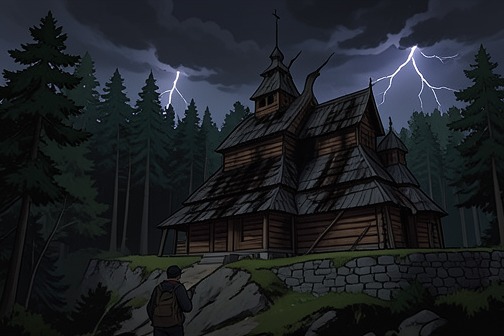
The [Fantoft Stave Church fire of 6 June 1992](entity:event-recall-event-e3b2aed2ae38) destroyed a historic wooden building whose remote, wooded setting had once helped preserve it and also made it vulnerable to arson. The fire became a national headline and a defining early episode in the [Norwegian Black Metal](entity:concept-recall-concept-72d1e7e518a4) church-arson wave. [Varg Vikernes](entity:character-recall-character-varg-vikernes-c87846adebba) was strongly suspected, but the crime remained unsolved in court: no conviction was made for the fire.
## The church and its setting
[Fantoft Stave Church](entity:location-recall-location-fantoft-stave-church-8b2b503c52ed) dated from the twelfth century and originally stood at Fortun, near the Luster Fjord in central [Norway](entity:location-recall-location-norway-64019b7a3249). Like a number of stave churches, it contained old runic inscriptions. At the end of the nineteenth century, it was scheduled for demolition to make way for a new burial ground. Instead, it was dismantled and moved to Fantoft, five miles south of [Bergen](entity:location-recall-location-2106a7d56ff4) on Norway’s west coast, thereby surviving a period when many other stave churches were destroyed before their historical and cultural value was recognized.
Its rescue did not leave the building untouched. During reconstruction in 1883, its ground plan was altered slightly and its exterior was renewed. Fantoft stood on a thickly wooded hilltop; the trees were dense enough that, from some vantage points, the church could not be seen until a visitor was nearly upon it. The building’s wooden construction made it susceptible to fire, while its obscured position offered an arsonist concealment. The history of the site therefore joined preservation and vulnerability: the move that had saved the church from demolition placed it in a secluded setting where a fire could be started without easy notice.
## The fire and unresolved attribution
Early in the morning on 6 June 1992, the church was set alight and burned fatally. The book identifies Varg Vikernes as strongly suspected of the arson, but emphasizes that no conviction was ever made in the crime. The distinction matters: suspicion became central to the public story of the fire, yet the legal record did not establish him as its perpetrator.
A photograph of Fantoft shortly after the arson was presented as allegedly having been taken by Vikernes himself. That allegation gave the image a charged place in the story, but it did not resolve the question of responsibility. The church’s destruction and the uncertainty over who caused it would continue to travel together: the fire was immediately consequential, while its attribution remained contested rather than judicially settled.
## From one fire to a wider wave
News that a Norwegian cultural landmark had been destroyed made national headlines. Further fires followed in the months after Fantoft. Revheim Church in southern Norway was torched on August 1; twenty days later, [Holmenkollen Chapel](entity:location-recall-location-e54b641570af) in [Oslo](entity:location-recall-location-oslo-aa85218d6b1a) burned. Ormøya Church caught fire on September 1, followed by [Skjold Church](entity:location-recall-location-7aa6e9adf243) on September 13. [Hauketo Church](entity:location-recall-location-3c9e4564e617) burned in October. After a pause of a few months, [Åsane Church in Bergen](entity:location-recall-location-48f411264655) was consumed by fire, and [Sarpsborg Church](entity:location-recall-location-aa3f350f8e4f) was destroyed two days later. A firefighter died while battling the [Sarpsborg](entity:location-recall-location-sarpsborg-37b4d940824d) blaze; some later assigned responsibility for that death to the Black Circle.
The wider pattern was not simply a matter of fires beginning where none had occurred before. Norwegian churches had burned in earlier years, usually because of natural causes such as lightning or faulty wiring; there had also been nine instances of deliberate church arson since the [Second World War](entity:time-recall-time-c7bd852e004a). But the events following Fantoft were understood as a distinct wave. The book estimates at least forty-five to sixty church fires, near-fires, and attempted arson attacks in Norway, with roughly a third documented as connected to the [Black Metal](entity:concept-recall-concept-black-metal-a68ced181ea7) scene. Authorities were reluctant to discuss many details, fearing that publicity might encourage copycats.
## Headlines, reporting, and interpretation
The fire’s public meaning expanded through media coverage. On January 20, 1993, the daily newspaper [Bergens Tidende](entity:organization-recall-organization-bergens-tidende-8ff432ddecae) brought the Black Metal scene to the attention of mainstream audiences in middle Norway with a front-page story beneath the headline WE LIT THE FIRES. The article presented Vikernes prominently and shaped the scene’s subsequent interaction with the media. Its claims included that Vikernes had burned eight churches, but the larger significance of the story lay in how it turned the fires into a public narrative of conspiracy, menace, and self-fashioned notoriety.
International coverage followed. A cover feature in [Kerrang!](entity:organization-recall-organization-kerrang-dd7875321909) reached newsstands on March 27, 1993, with imagery of a burning church and Vikernes holding knives. Its five-page account presented Norwegian Black Metal to readers beyond Norway, drawing heavily on alleged remarks by Vikernes and [Øystein Aarseth](entity:character-recall-character-ystein-aarseth-a5d55bfc01ea). Years later, participants disputed or reconsidered much of what had been reported, describing remarks as fabricated, misunderstood, misquoted, or taken out of context. Even with those reservations, the book credits the feature with bringing Norwegian Black Metal to the world’s attention, while arguing that the crimes would likely overshadow the music.
A 1998 Norwegian police report, [Kirkebranner og satanistisk motiverte skadeverk](entity:object-recall-object-kirkebranner-og-satani-4bbc915ff1be), later examined how the Black Metal scene was structured around the time of the investigations, how police opened up the subculture, and what other police departments might learn from the inquiry. Its retrospective institutional account added another frame to the fire and the wider series: alongside sensational headlines and participants’ disputed claims, investigators attempted to describe the scene and the methods used to investigate it.
## International echoes and significance
The fire’s importance extended beyond Norway as the country’s church-burning story became a model for coverage and, in some cases, imitation. In [Sweden](entity:location-recall-location-sweden-0f697902ba54), the first documented Black Metal transgression described in the book was a July 1992 attempt, under Vikernes’s direction, to burn down [Christopher Jonsson](entity:character-recall-character-christopher-jonsson-294a87061b60)’s house. In [England](entity:location-recall-location-england-b153c1f368ea), underground fans initiated church attacks in emulation of Vikernes, while the book also stresses that Black Metal was becoming a worldwide phenomenon rather than a uniquely Norwegian one. These examples establish international echoes of the Norwegian scene, not proof that each later attack was directly caused by the Fantoft fire.
The Norwegian arson wave eventually ebbed after many of its most active participants were imprisoned or had left the scene, although sporadic attacks continued. Fantoft’s destruction remained a hinge in that history: a rescued medieval church became the image through which a scattered series of crimes entered national and international awareness. Its story is also marked by a lasting limit. The fire’s cultural consequences, subsequent media life, and role in a broader wave are documented; the perpetrator of this particular arson was never convicted.
Event 7
Øystein Aarseth's murder
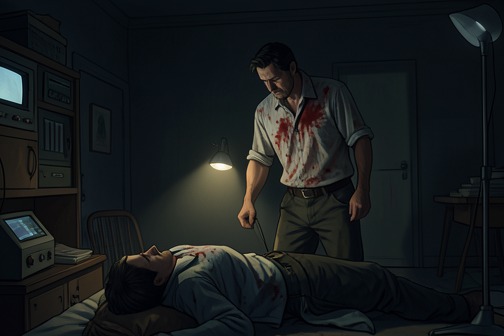
[Øystein Aarseth](entity:character-recall-character-ystein-aarseth-a5d55bfc01ea)’s murder in 1993 was a decisive rupture in [Mayhem](entity:organization-recall-organization-mayhem-d00b396b754c)’s history: the band’s late founder became permanently associated with a killing that followed years of rumor around the group. The account identifies the death as a brutal stabbing but does not establish its circumstances or identify a perpetrator; its emphasis falls instead on Mayhem’s reputation and the public narratives that gathered around [Norwegian Black Metal](entity:concept-recall-concept-72d1e7e518a4).
## Mayhem Before and After the Killing
Mayhem had become legendary well before Aarseth’s death, in part because of the rumors generated since the band’s inception. The book compares the group’s standing in [Norway](entity:location-recall-location-norway-64019b7a3249) with [Venom](entity:organization-recall-organization-venom-5cbba5a08fbe)’s broader place in [Black Metal](entity:concept-recall-concept-black-metal-a68ced181ea7): Mayhem was there before other Norwegian bands, and its notoriety eventually acquired an international cult following. The killing was therefore a startling setback to an already established reputation, not the event that first made the band famous.
Aarseth’s death nevertheless fixed the band’s history to its founder. Mayhem continued to exist, albeit in a different form, while remaining associated with him. That contrast—continuation alongside an enduring association with the dead founder—makes the murder both a rupture in the group’s story and a lasting part of its public identity.
## Rumor and the Cult of Ambiguity
The account presents rumor as part of Mayhem’s reputation before the murder, rather than as a consequence of it alone. Aarseth’s own conduct around another death illustrates how ambiguity could be cultivated within that reputation: speaking about [Dead](entity:character-recall-character-dead-fffe54e995a9)’s suicide, he reportedly accepted that people might believe he had caused it, because the belief would generate further rumors about Mayhem. He also withheld details of his treatment of Dead’s remains, leaving the public to imagine what he might have done.
That episode concerns Dead’s death, not Aarseth’s murder, and it does not explain or establish responsibility for the later killing. Its relevance is narrower: it shows how Aarseth’s public persona and Mayhem’s notoriety could be shaped by deliberate uncertainty. In that setting, the murder entered a story already primed to turn incomplete knowledge into legend.
## Media Attention and the Event’s Wider Frame
Norwegian Black Metal had reached mainstream attention in central Norway through a [Bergens Tidende](entity:organization-recall-organization-bergens-tidende-8ff432ddecae) cover story published on January 20, 1993, with [Varg Vikernes](entity:character-recall-character-varg-vikernes-c87846adebba) on the front page beneath the headline “WE LIT THE FIRES.” Once the anti-Christian crimes were understood as connected in some fashion to the Black Metal movement, media attention escalated. The book describes Vikernes and Aarseth as welcoming that attention.
A prominent international example followed in [Kerrang!](entity:organization-recall-organization-kerrang-dd7875321909), whose cover feature appeared in issue 436 on March 27, 1993. In retrospect, participants regarded much of what had been said as absurd; Vikernes later maintained that many of his remarks had been fabricated, misunderstood, misquoted, or taken out of context. The book nonetheless credits the article with bringing Norwegian Black Metal to a worldwide audience, while observing that the crimes would likely overshadow the music. This wider press history is not offered as an explanation of Aarseth’s murder; it shows the sensational public environment in which Mayhem’s name and its founder’s death would be remembered.
Event 8
Hendrik Möbus's flight and extradition
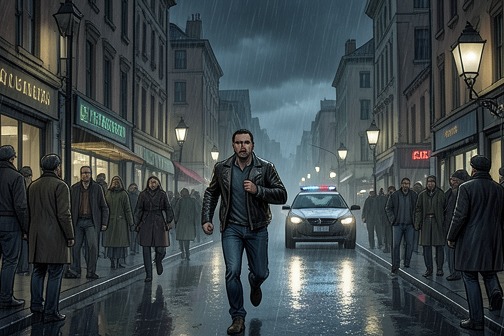
[Hendrik Möbus](entity:character-recall-character-hendrik-m-bus-a2912b5641cc)’s flight to the [United States](entity:location-recall-location-united-states-2f533bc8d0b9) and subsequent extradition to [Germany](entity:location-recall-location-germany-2e3723c2f347) transformed a dispute over publicity and extremist speech into an international fugitive story. The episode followed the use of remarks from an interview in legal proceedings against him, and ended with his apprehension by U.S. authorities and return to Germany.
## Background: Interview and Legal Proceedings
Möbus, a member of the German band Absurd, had been an obvious focus for the book because its account of the scene had become, in many respects, a true-crime narrative. In an interview he gave for the first edition, he made numerous extreme political statements. Critics accused the authors of giving an obscure figure an unwarranted platform for those views, and the authors faced that charge more than once.
The interview later acquired consequences beyond the controversy over publication. Many of Möbus’s remarks were used against him as evidence in subsequent legal proceedings. Those proceedings resulted in an additional sentence for publicly deriding the victim of his crime. The book thus presents the interview not merely as a record of incendiary speech, but as material that entered the legal case against its speaker.
## Flight and Shelter in the United States
Seeking to avoid being sent back to prison, Möbus fled Germany and flew to the United States. There he eventually found shelter with [William Pierce](entity:character-recall-character-william-pierce-ca1696e7f40c), author of The Turner Diaries and director of the [National Alliance](entity:organization-recall-organization-national-allianc-20821ca65543), which the book describes as widely regarded as one of the country’s most serious and potentially dangerous racialist organizations. His refuge therefore placed him within the orbit of a prominent extremist organization rather than ending his public exposure.
## Apprehension, Extradition, and Publicity
Möbus was soon apprehended by U.S. authorities and ultimately extradited to Germany. The sequence—from flight, to shelter, to arrest and extradition—made his attempt to evade imprisonment the basis of a much larger international story. In the book’s account, the once-obscure figure became a notorious fugitive whose case commanded headlines in major newspapers.
The episode also serves as a retrospective answer to the criticism that the book had needlessly given Möbus a platform. The authors argue that the attention they paid to him was warranted: his statements became evidence in legal proceedings, and his flight and extradition carried the story far beyond the original controversy about the interview. Publicity did not remain a matter of image alone; it became entangled with legal consequences and a fugitive’s increasingly conspicuous public profile.
Event 9
1997 Plot to Free Vikernes and Attack Public Figures
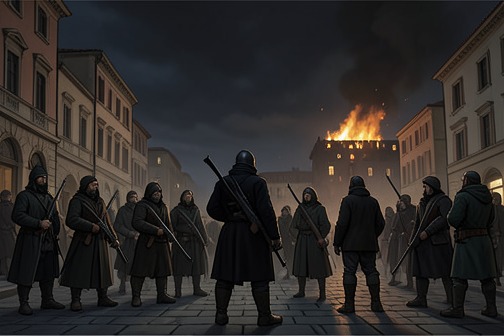
The [1997 Plot to Free Vikernes and Attack Public Figures](entity:event-recall-event-1997-6f245421e893) was an alleged conspiracy reported in [Oslo](entity:location-recall-location-oslo-aa85218d6b1a) in April 1997, in which perpetrators planned attacks on political and religious figures while seeking to free the imprisoned [Varg Vikernes](entity:character-recall-character-varg-vikernes-c87846adebba). Its significance in the book lies in the convergence it announces: a subculture first made notorious through music, image, and church arsons now appeared in headlines as a setting for political violence and a prison-break scheme.
## The April 1997 Headlines
The account opens with newspaper headlines announcing a plot to kill progressive politicians and religious leaders in [Norway](entity:location-recall-location-norway-64019b7a3249). The alleged conspirators were described as possessing weapons and substantial sums of money, and their plans extended beyond the proposed killings. They also intended to liberate an imprisoned comrade and smuggle him out of the country.
The proposed prisoner was not, the opening suggests, a familiar underground political activist. He was 24-year-old Varg Vikernes, identified as the world’s most infamous [Black Metal](entity:concept-recall-concept-black-metal-a68ced181ea7) musician. That contrast gives the revelation its force: a figure associated with an extreme musical scene had become the intended beneficiary of a conspiracy framed in the language of political terrorism.
## From Music Scene to Political Violence
The book presents the plot as part of a longer, uneven passage from pop music into militant action, and as the latest development in a saga that had largely gone unwritten. It places the allegations against a background of violence associated with Black Metal, including murders and an ongoing campaign of church arsons that brought religious intimidation into the scene’s public image. The account does not establish that music itself caused the 1997 conspiracy; rather, it shows how the plot entered a history already shaped by violence, defiant rhetoric, and the deliberate crossing of social boundaries.
That history had also acquired a public life through news coverage. In January 1993, the Norwegian daily [Bergens Tidende](entity:organization-recall-organization-bergens-tidende-8ff432ddecae) put Varg Vikernes on its front page beneath the headline WE LIT THE FIRES. Two months later, [Kerrang!](entity:organization-recall-organization-kerrang-dd7875321909) presented [Norwegian Black Metal](entity:concept-recall-concept-72d1e7e518a4) to an international readership through a lurid cover feature centered largely on alleged comments from Vikernes and [Øystein Aarseth](entity:character-recall-character-ystein-aarseth-a5d55bfc01ea). By the time the 1997 plot reached the headlines, Black Metal was already recognizable far beyond Norway, in part through such coverage.
## A Wider Field of Imitation and Attention
The book places Norway within an international spread of Black Metal rather than treating it as an isolated phenomenon. It describes the loosely connected Norwegian Black Circle as a source of an example that later surfaced in distant scenes, while cautioning through its account of those scenes that local histories and actions differed. In [Sweden](entity:location-recall-location-sweden-0f697902ba54), for instance, an attempted arson at [Christopher Jonsson](entity:character-recall-character-christopher-jonsson-294a87061b60)’s home in July 1992 was described as the first documented Black Metal transgression there and as having taken place under Varg Vikernes’s direction. In the United Kingdom, underground fans carried out church attacks in emulation of him, while a separate homegrown scene gained much wider popularity through [Cradle of Filth](entity:organization-recall-organization-cradle-of-filth-9c3a207271c9).
These episodes provide context for the 1997 headlines, not proof that an international network organized the conspiracy. The book’s framing connects musical subculture, political extremism, and media attention, while preserving the distinction between a shared reputation and demonstrated coordination. The alleged plot matters as a new escalation in the public story of Black Metal: an effort to turn a notorious musician’s imprisonment into the stated objective of a conspiracy involving attacks on public figures.
Event 10
2003 Norwegian chapel desecration
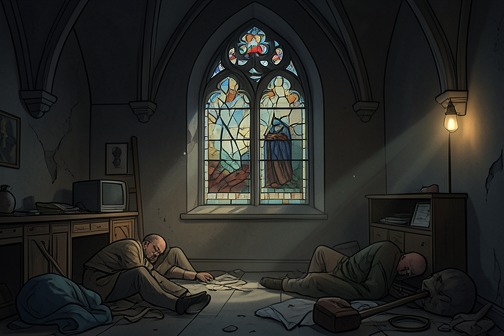
The [2003 Norwegian chapel desecration](entity:event-recall-event-2003-c97acfc68012) brought [Black Metal](entity:concept-recall-concept-black-metal-a68ced181ea7) back into the Norwegian headlines in June 2003, but the book presents the case as more than a sensational crime story: it exposes the gap between a subculture’s public image and the circumstances of an individual offender. A 26-year-old former bass player and younger companions entered a chapel where bodies were awaiting cremation, disturbed the remains, and vandalized the building. The ensuing coverage treated the crime as a possible expression of [Satanism](entity:concept-recall-concept-252e3ea7bfc5), while the book emphasizes that the principal suspect had already been rejected by the musical scene and that other explanations were more credible.
## Background and Scene Context
By the time of the desecration, Black Metal had changed from the underground phenomenon that had first alarmed [Norway](entity:location-recall-location-norway-64019b7a3249) into a critically acclaimed and commercially appealing genre. Its earlier history nevertheless connected its reputation to real crimes, including church burnings and murders, and some scene publications presented killers as celebrities or heroes. The book therefore resists explaining the genre’s notoriety as merely the work of confused outsiders: prominent participants had at times been central to the scene’s development.
The Norwegian scene was not governed by a fixed ideological rulebook. Its attitudes and boundaries shifted, often under the influence of its most prominent personalities, and music, belief, appearance, and status overlapped. [Mayhem](entity:organization-recall-organization-mayhem-d00b396b754c) occupied a foundational position in this history, while [Øystein Aarseth](entity:character-recall-character-ystein-aarseth-a5d55bfc01ea) cultivated a deliberately sinister public image for the band. In the early [1990s](entity:time-recall-time-1990s-e168405d040a), an inner network associated with his record shop valued trust, seriousness, and acceptance. That history helps explain why later crimes could be read through the scene’s existing reputation, but it does not establish that the chapel desecration was a Black Metal act.
## The Desecration
The arrested man had once played bass in a relatively obscure Black Metal band. He and several younger compatriots broke into the chapel, opened coffins, mistreated the deceased, and thoroughly vandalized the building. An older man’s head was removed and taken to a party as a grotesque display; it was later recovered from the basement of a young man who did not know it had been left there. The account gives these details as elements of the crime, not as evidence that it formed part of a religious rite.
The case rapidly became a national media spectacle. For several days, coverage of the desecration appeared to eclipse both murders of living people and major world events. Tabloids speculated that the acts might have been part of Satanic rituals, and some commentators called for Black Metal music to be outlawed. The book distinguishes these claims from what the case itself established: the coverage’s dramatic religious framing did not demonstrate a Satanic motive.
## The Suspect and the Question of Motive
The book identifies a crucial fact often missed in the reporting: the arrested man was not, at the time, part of the Black Metal scene. He had been dismissed from his band for musical reasons well before the crime and was so poorly integrated that he had been more or less ostracized by the wider scene. His former association with a band supplied a headline-ready link, but it did not make him a representative of the scene or show that its music had caused his actions.
His extensive use of drugs, including ecstasy and GHB, also formed part of the account. The book judges psychological and pharmacological factors more likely to have contributed to the extreme behavior than either Black Metal or Satanism. This is a qualified explanation rather than a claim to know every motive: it redirects attention from a convenient cultural label to the suspect’s circumstances, while leaving the crime itself firmly established.
## Media, Image, and Aftermath
The response to the desecration echoed a wider pattern in which sensational coverage could amplify Black Metal’s reputation. In discussing the earlier crime wave, the book notes that mass-media attention helped [Varg Vikernes](entity:character-recall-character-varg-vikernes-c87846adebba) construct a near-mythological public image and could intensify competition within the scene for dominance. That analysis does not establish that the 2003 reporting produced this crime; it does show why the book treats media attention as part of the history of the subculture’s public identity, rather than as a neutral account of it.
By 2003, the scene also had defenders in mainstream media. A prominent radio DJ who played Black Metal rejected the idea that desecrating a corpse would earn anyone status within the scene. The book treats that defense as a corrective to the tabloids, but not as a complete answer: it warns against both portraying all metal listeners as potential offenders and dismissing the scene’s history of criminal participants as irrelevant. The episode’s significance lies in that unresolved tension. The crime was committed by someone the scene had already excluded, yet his former musical affiliation was enough to revive a national debate about Black Metal, Satanism, and the influence of the genre’s cultivated image.
Event 11
Holmenkollen Chapel arson case
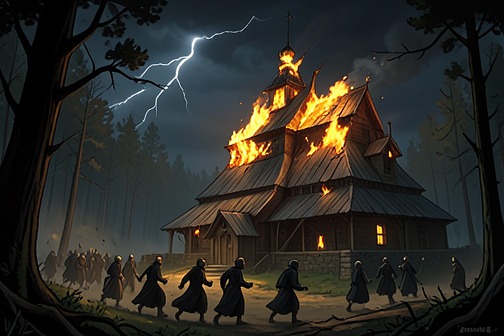
The [Holmenkollen Chapel arson case](entity:event-recall-event-ed8a4c65314e) was a church-burning episode associated with [Varg Vikernes](entity:character-recall-character-varg-vikernes-c87846adebba), [Bård Eithun](entity:character-recall-character-b-rd-eithun-0308f5c65b24), and [Øystein Aarseth](entity:character-recall-character-ystein-aarseth-a5d55bfc01ea). It marked the point where the [Norwegian Black Metal](entity:concept-recall-concept-72d1e7e518a4) scene’s cultivated transgression became a criminal act with substantial financial consequences. The book presents the fire both as part of a widening sequence of attacks on churches and as an event that strengthened the scene’s sense of shared identity.
## Sequence and Participants
Aarseth’s record shop had become a focal point for an emerging [Black Metal](entity:concept-recall-concept-black-metal-a68ced181ea7) network. By mid-1991, bands including [Darkthrone](entity:organization-recall-organization-darkthrone-ffc0621cad8e), [Burzum](entity:organization-recall-organization-burzum-5b169b75fc03), [Immortal](entity:organization-recall-organization-immortal-cd40b89350b2), [Thorns](entity:organization-recall-organization-thorns-02e825d997f1), and [Emperor](entity:organization-recall-organization-emperor-2aa40c379fc1) were in contact with him; he later used the name Norwegian Black Circle when speaking to the press about church burnings. Emperor singer [Ihsahn](entity:character-recall-character-ihsahn-6aa07f840bff) recalled the shop as a tightly controlled environment where acceptance depended on trust and seriousness, and where younger participants deferred to Aarseth and older figures. This helps explain the social world in which the chapel arson acquired meaning, without making every person in that network responsible for it.
The account places the burning after the killing of [Magne Andreassen](entity:character-recall-character-magne-andreassen-8067f9211048). Bård Eithun participated in the arson the following day, together with Vikernes and Aarseth. The book says they faced no immediate consequences for the chapel fire. In a separate retrospective account, Vikernes described Holmenkollen as one of the churches that burned after an earlier fire in [Stavanger](entity:location-recall-location-stavanger-4aa33f470c02); he also recalled that a fire in [Bergen](entity:location-recall-location-2106a7d56ff4) before August had been small and received no newspaper coverage. His account listed Holmenkollen, [Skjold Church](entity:location-recall-location-7aa6e9adf243), and [Åsane Church](entity:location-recall-location-sane-church-4322806c9d78) among the three successful church burnings for which he was convicted, alongside one unsuccessful attempt.
## Meaning Within the Scene
The fire’s significance extended beyond the destruction of a building. One scene participant recalled hearing about church burnings in the news and then encountering Vikernes, who showed photographs of a church he said he had burned. The images made the act seem exceptionally transgressive to the witness, who connected that reaction to the group’s existing anti-Christian discussions. The episode thus circulated not only as news but as a demonstration of commitment and a provocation that could be displayed to others.
A later recollection described the response among scene members as collective excitement and a desire to carry out similar acts. The arson came to feel personal: participants understood themselves as a group opposed to outsiders and attached to a shared creation, even when that creation was destruction. The same account likened the resulting solidarity to the bond formed by making music together and described the mood as a kind of war. Other explanations in the book are less uniform: church-burning could be presented as a symbol against Christianity, a test intended to prove oneself to respected figures, or simply an act of transgression. These accounts show how one event could acquire several overlapping meanings without establishing a single motive for every participant.
## Damages and Legal Aftermath
The arson later became the subject of a substantial civil claim. The city of [Oslo](entity:location-recall-location-oslo-aa85218d6b1a) sought damages from Vikernes for the burning of [Holmenkollen Chapel](entity:location-recall-location-e54b641570af); insurers also pursued claims relating to Skjold Church and Åsane Church. The initial demand sought the full rebuilding costs, nearly 40 million kroner. The amount was later reduced to exclude expenses for consecrating the rebuilt churches and holding celebrations afterward, but roughly 37 million kroner remained at issue. Vikernes rejected the charges, and the book says the dispute would have to proceed through the courts again; it does not provide the final outcome of that civil process.
The scale of the claim placed the chapel fire within a wider material aftermath. The Norwegian Directorate for Cultural Heritage estimated that rebuilding each completely destroyed church could cost between 15 and 30 million kroner. Those estimates excluded artistic decorations and did not cover damage to buildings that were only partly harmed. The figures make clear that the consequences extended well beyond the symbolic message attributed to the burning: reconstruction and repair carried costs that fell on public institutions, insurers, and the affected congregations.
## Recollection and Significance
The book’s presentation brings together retrospective testimony about the arson’s sequence, its reception, and its legal consequences. It places the chapel fire within the escalating criminal activity of the Black Circle, while also showing how the scene’s own participants interpreted the act as a proof of authenticity, an anti-Christian gesture, or a shared transgression. The later damages claim supplies a counterweight to that internal mythology: what could be treated within the group as a source of belonging and status became a long-running financial and legal liability.
Event 12
Attempted Arson at Christofer Johnsson's Home
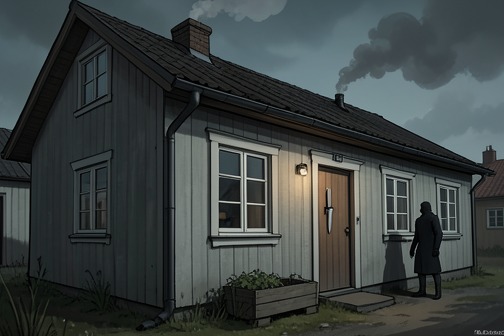
The [Attempted Arson at Christofer Johnsson's Home](entity:event-recall-event-cd0cb50795cb) was an unsuccessful attack on the [Upplands Väsby](entity:location-recall-location-99c828069cd1) residence of Therion frontman [Christopher Jonsson](entity:character-recall-character-christopher-jonsson-294a87061b60). On July 26, 1992, 18-year-old [Suuvi Mariotta Puurunen](entity:character-recall-character-suuvi-mariotta-puur-0f45ffd88e1d) tried to set the house on fire; the incident also became a vehicle for threats made in the name of Count Grishnackh and a revealing record of Puurunen's allegiance to that persona.
## Background and Target
Jonsson was the frontman of the [Death Metal](entity:concept-recall-concept-6ba830d0a785) band Therion and had argued with [Varg Vikernes](entity:character-recall-character-varg-vikernes-c87846adebba). The book places the attempted attack amid a period when threats and disturbances were being attached to [Black Metal](entity:concept-recall-concept-black-metal-a68ced181ea7) figures and rivalries. Jonsson's connection to a dispute with Vikernes made his home a target, while the note left at the door invoked the Count rather than explaining the conflict in ordinary terms.
## The Attempt in Upplands Väsby
On the night of July 26, Puurunen crept up to Jonsson's quiet house near [Stockholm](entity:location-recall-location-9563d9338d63) and tried to set it alight. She left a note fixed to the door with a knife, saying that the Count had been there and would return. Someone inside awoke after noticing smoke, and the fire was put out before serious damage occurred. The account records no serious harm to the house's occupants.
Shortly afterward, Jonsson received a letter from [Norway](entity:location-recall-location-norway-64019b7a3249) signed in the name of Count Grishnackh of [Burzum](entity:organization-recall-organization-burzum-5b169b75fc03). Its writer claimed to have just returned from a trip to [Sweden](entity:location-recall-location-sweden-0f697902ba54) and to have lost a match and a signed Burzum LP, then threatened to return and make Jonsson afraid. The letter's theatrical menace echoed the note at the house, though the later identification of Puurunen as the person who carried out the attack distinguishes the actual assailant from the threatening persona invoked around it.
## Diary, Arrest, and Consequences
Swedish authorities later arrested Puurunen and found her diary. In it, she described the attack as a mission for her leader, the Count, and expressed devotion to him and to his fantasies. The diary thus supplied evidence of how she understood her own actions: not as an independent dispute with Jonsson, but as service to an imagined authority. Puurunen was sentenced to one year of observation in a mental hospital for activities connected with the Black Circle.
## Media and the Wider Black Metal Panic
The book situates the incident within a wider public debate in which youthful Black Metal performers adopted shifting identities, including Satanist, Odinist, Nazi, or simply evil, while some also attacked people or property. In its account of that period, the media helped create the impression of a large-scale Satanic assault on Christians, intensifying fear among the public, police, and churches. That context helps explain why an attempted fire could be read through a much larger narrative of occult threat, even though Puurunen's diary and the account of her arrest provide more specific evidence about her own understanding of the act.
The book also examines how publicity could feed status contests within the scene. One interviewee, reconsidering an earlier view after speaking with journalists and people involved in Vikernes's trial, judged that mass-media attention had helped build Vikernes's street credibility and near-mythic image, and had intensified the struggle to become the scene's dominant personality. This is a broader assessment of the crime wave, not proof that coverage of this single attempt caused Puurunen's actions. A later, separate chapel desecration case in Norway again prompted tabloids to speculate about Satanic ritual and calls to outlaw Black Metal, illustrating the persistence of that framing without making the two incidents the same kind of crime.
Event 13
Magne Andreassen Murder
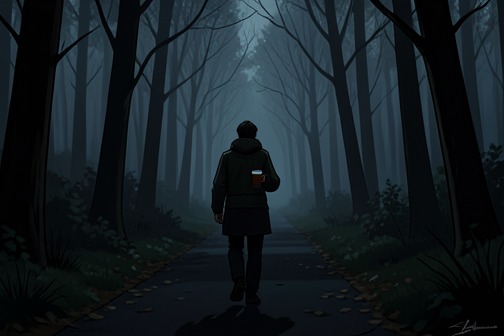
[Magne Andreassen Murder](entity:event-recall-event-913c65676879) was the killing of [Magne Andreassen](entity:character-recall-character-magne-andreassen-8067f9211048) by [Bård Eithun](entity:character-recall-character-b-rd-eithun-0308f5c65b24) in [Lillehammer](entity:location-recall-location-042a81b6d311) on August 21, 1992. It was a private act that initially left investigators with few leads, but its proximity to the [Norwegian Black Metal](entity:concept-recall-concept-72d1e7e518a4) scene’s escalating crimes gave it a wider and often misleading public frame. Eithun’s later account describes a decision made before the encounter reached the woods; the case’s subsequent course shows how that account, the police investigation, and the scene’s public image converged without making the murder part of an organized campaign.
## Background and Circumstances
Eithun was twenty years old and had moved to [Oslo](entity:location-recall-location-oslo-aa85218d6b1a) in July 1992. A month later, while visiting his mother in Lillehammer for a weekend, he went out late at night. He had a pint at a pub, found the atmosphere there uncomfortable, and set off home on foot. The book also situates him within the [Black Metal](entity:concept-recall-concept-black-metal-a68ced181ea7) milieu: he played in Stigma Diabolicum, [Thorns](entity:organization-recall-organization-thorns-02e825d997f1), and [Emperor](entity:organization-recall-organization-emperor-2aa40c379fc1), and published Orcustus, a fanzine through which he corresponded with and interviewed figures in the scene. Its account notes his long-standing fascination with murder and violence, alongside a broader atmosphere of provocation intensified by the first church burnings. These details offer context, not proof that the scene caused the killing.
In his later recollection, Eithun said that he carried a knife while living in Oslo, regarding it as precautionary rather than as a weapon intended for a particular use. On the night in question, a man approached him as he walked. They spoke, and the man asked Eithun to go with him toward the woods. Eithun said that he agreed because he had already decided to kill him. That admission is central to the account: the decision, as Eithun later represented it, preceded the walk and was not a sudden response to an attack.
## The Killing and Its Immediate Aftermath
Eithun described the killing as an episode he remembered only in fragments, with a sense of watching events from outside himself. He said he attacked Andreassen with the knife and continued after Andreassen had fallen. When Eithun began to walk away, he heard sounds, returned, and kicked Andreassen before leaving. In the interview, he explained his actions in terms of wanting to ensure Andreassen was dead and unable to report him. The account records Eithun’s reasoning; it does not turn that explanation into an independent justification for the killing.
The long walk to the woods later became relevant in court. The prosecutor relied on it in arguing for a first-degree murder charge, on the grounds that Eithun had time to act on his decision rather than simply reacting in the moment. Eithun also said he was sober and had taken no drugs. His recollection presents a deliberate choice followed by an account of altered, incomplete memory, a contrast that shaped how the event was later discussed without changing its outcome.
The investigation initially reached a dead end. The book describes no apparent motive that gave police a clear lead, and reports that they pursued lines of inquiry in the gay community without finding significant evidence. Andreassen’s body was found in the woods; the case remained unsolved for a time. Eithun later recalled expecting arrest at first, then becoming less concerned as months passed. The gap between the killing and its eventual resolution allowed him, by his own account, to believe he might escape detection.
## Connection to the Church Arsons and Public Attention
The day after the killing, Eithun took part with [Varg Vikernes](entity:character-recall-character-varg-vikernes-c87846adebba) and [Øystein Aarseth](entity:character-recall-character-ystein-aarseth-a5d55bfc01ea) in the burning of [Holmenkollen Chapel](entity:location-recall-location-e54b641570af). The group watched the fire before returning to the record store. The close succession of murder and arson linked the events in the public story of the Black Metal scene, even though the chapel burning did not explain the killing. As crimes associated with the scene accumulated, the murder appeared to have gone unpunished, while Eithun’s participation in the arson also initially produced no immediate consequences.
National attention intensified in January 1993, when [Bergens Tidende](entity:organization-recall-organization-bergens-tidende-8ff432ddecae) published a front-page story about the scene under the headline “WE LIT THE FIRES.” The article presented Vikernes as its central media figure and asserted that he had burned churches and killed a man in Lillehammer. The latter claim wrongly assigned Andreassen’s murder to Vikernes; Eithun was later jailed for the killing. The article thus helped make the case visible while also distorting responsibility. In March, [Kerrang!](entity:organization-recall-organization-kerrang-dd7875321909) carried a sensational cover feature about Norwegian Black Metal, drawing further international attention to the scene and its alleged crimes.
The book stresses that statements in these early reports were not always reliable. Years later, Vikernes said that remarks attributed to him had been fabricated, misunderstood, misquoted, or taken out of context; others looked back on the scene’s claims as naive or deluded. Yet the coverage had lasting consequences for public understanding: crimes and theatrical declarations threatened to eclipse the music itself. Andreassen’s murder entered that story partly through the mistaken newspaper attribution and partly through Eithun’s later conviction, making the distinction between media association and established responsibility especially important.
## Conviction and Significance
During the 1994 proceedings, Eithun received a fourteen-year sentence for the murder. Vikernes received twenty-one years for murder, arson, and weapons offenses, while [Snorre Westvold Ruch](entity:character-recall-character-snorre-westvold-ruc-3411e8c344cf), who had accompanied Vikernes in the Aarseth case, received eight years. The different sentences show the legal cases being resolved according to distinct acts and roles, rather than as a single collective judgment on the Black Metal scene. Eithun’s sentence was also substantially longer than those imposed on some participants in church arsons who confessed and received shorter terms.
The book’s treatment of the case places individual violence beside the scene’s performance of menace, but resists reducing one to the other. [Ihsahn](entity:character-recall-character-ihsahn-6aa07f840bff), Eithun’s former bandmate, suggested that Eithun’s fascination with serial killers and desire to know what killing was like were reasons for the act; this is an interpretation, not a judicial finding presented as fact. More directly, Eithun’s own account describes a prior decision, while the police initially lacked the evidence to solve the crime. Its significance lies in that tension: a killing first treated as an isolated dead end became part of a public narrative about Black Metal, even as the reporting around that narrative confused who had done what.
Event 14
1993 Lundby New Church fire
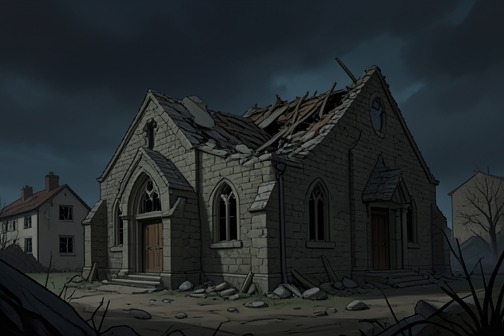
The [1993 Lundby New Church fire](entity:event-recall-event-11604c5e3d51) was the destruction of a historic church in [Gothenburg](entity:location-recall-location-1006091476d0) on February 7, 1993, accompanied that night by the desecration of another nearby Christian building. The account places the fire among similar acts emerging in [Sweden](entity:location-recall-location-sweden-0f697902ba54) as crimes associated with the [Black Metal](entity:concept-recall-concept-black-metal-a68ced181ea7) milieu were escalating in [Norway](entity:location-recall-location-norway-64019b7a3249), extending the story beyond its Norwegian center without identifying who set the fire or establishing a specific motive.
## Background and Setting
By late 1992 and early 1993, the book describes the Black Circle’s criminal transgressions as growing in gravity and proceeding without interruption. It then notes that similar events began to occur in Sweden. This framing links the Lundby fire to a wider regional pattern, but does not establish that named members of the Norwegian scene planned or carried it out.
[Lundby New Church](entity:location-recall-location-lundby-c249a5ce38f7) stood in Gothenburg. Built of stone in 1886, it was renowned for its good acoustics: a place valued not only for its religious use but also for the sound of its interior. That history gives the account’s concise description of the church a sharp contrast between its enduring structure and its sudden destruction.
## The Fire and Its Immediate Context
On February 7, 1993, Lundby New Church was burned down. The same night, another Christian building nearby was desecrated. The juxtaposition matters: the episode involved both the complete loss of a church and damage to another religious site, though the account supplies no further details about the second building or the circumstances of either act.
The passage does not name perpetrators, describe the method of ignition, or attribute a specific intention to the attack. Its placement among the period’s escalating anti-Christian transgressions provides context, not proof of an individual’s responsibility or of a direct organizational order.
## Significance and Wider Context
The fire belongs to the book’s account of how anti-Christian crime came to be associated with Black Metal and how that association drew increasing media attention. In Norway, the scene had already reached a mainstream audience through a January 1993 front-page story in [Bergens Tidende](entity:organization-recall-organization-bergens-tidende-8ff432ddecae); in March, [Kerrang!](entity:organization-recall-organization-kerrang-dd7875321909) carried a sensational international feature on [Norwegian Black Metal](entity:concept-recall-concept-72d1e7e518a4) and church burnings. These reports help explain the broader media environment in which church arsons were interpreted, but the account does not single out the Lundby fire as the cause of any particular article.
As a Swedish event in a narrative otherwise strongly associated with Norway, the burning of Lundby New Church complicates the idea that the violence belonged to one national scene alone. The evidence supports a careful distinction: similar events were appearing in Sweden, while the identities and motives behind this particular fire remain unspecified.
Event 15
Kerrang!'s Norwegian Black Metal Feature

[Kerrang!'s Norwegian Black Metal Feature](entity:event-recall-event-kerrang-fa77a3335bef), published in issue 436 on March 27, 1993, was a turning point in how the Norwegian scene appeared beyond its underground: the biggest Heavy Metal magazine in the world presented it to an international audience through a five-page account centered on church burnings, [Satanism](entity:concept-recall-concept-252e3ea7bfc5), and alleged conspiracy. The feature did more than describe the scene. It gave global reach to the sinister image cultivated by [Varg Vikernes](entity:character-recall-character-varg-vikernes-c87846adebba) and [Øystein Aarseth](entity:character-recall-character-ystein-aarseth-a5d55bfc01ea) ([Euronymous](entity:character-recall-character-euronymous-879bb1da8a60)), while making claims that the book later treats with considerable caution.
## Publication and visual framing
The feature arrived after [Norwegian Black Metal](entity:concept-recall-concept-72d1e7e518a4) had already attracted national attention. On January 20, 1993, [Bergens Tidende](entity:organization-recall-organization-bergens-tidende-8ff432ddecae) had put Vikernes on its front page beneath a headline about the fires. That earlier story established a pattern: Vikernes presented himself as a spokesman for a frightening, organized threat, and the coverage made the scene's claims part of its public identity. [Kerrang!](entity:organization-recall-organization-kerrang-dd7875321909) carried the story across a much wider boundary, from the Norwegian press to an international Heavy Metal readership.
The cover made its argument at a glance. Vikernes stared through long, darkly dyed hair, holding two large knives crossed in his fists. A blazing church appeared beside him, while an inset showed [Emperor](entity:organization-recall-organization-emperor-2aa40c379fc1) members in corpsepaint, a cowled robe, and medieval-style weapons. The headline promised a story of arson, death, and Satanic ritual. The imagery joined musicians, religious defiance, and criminal menace into a single spectacle, presenting the scene not simply as a sound or style but as a threat with a visual signature.
That emphasis on appearance had a local history. [Black Metal](entity:concept-recall-concept-black-metal-a68ced181ea7) in [Norway](entity:location-recall-location-norway-64019b7a3249) was defined partly by belief and outlook, but its boundaries shifted and there was no fixed rulebook. [Mayhem](entity:organization-recall-organization-mayhem-d00b396b754c)'s early image had been relatively ordinary; Øystein Aarseth later adopted corpsepaint for concerts and photographs, helping establish a macabre look that became one of the genre's trademarks. By the time Kerrang! published its feature, the scene's visual language could be turned into a magazine cover: a recognizable style made legible to readers who might never enter its underground spaces.
## Claims, alleged organization, and music
Inside, writer Jason Arnopp presented Norwegian Black Metal in lurid terms, relying heavily on alleged statements from Vikernes and Aarseth. The feature described the rise of church burnings and portrayed Black Metal as a national menace. It also discussed Mayhem and [Burzum](entity:organization-recall-organization-burzum-5b169b75fc03), and named the American bands Deicide and VON as examples of a dangerous trend. VON's raw demo had become legendary within the Norwegian scene; Vikernes's claim that the band's name stood for a phrase linking victory, orgasm, and Nazis is described in the book as apparently fanciful.
The article gave particular force to the idea that the crimes formed part of an organized movement. Vikernes and Aarseth presented themselves as members of a group called the Satanic Terrorists. Aarseth claimed that he and Vikernes stood on equal footing, and spoke of ten inner-circle members directing a larger body of Black Metal followers. He also described the [Helvete record shop](entity:location-recall-location-helvete-d58e7bb136f8) as the economic foundation for terrorism. These were claims made in the feature, not independently established descriptions of a functioning organization. Aarseth further said that he avoided direct participation in crimes because his arrest would cause the movement to collapse; the book notes that this could support Vikernes's later suggestion that Aarseth feared taking part in riskier actions.
The feature also juxtaposed allegations with promotional language about music. Vikernes was reported as acknowledging accusations that included church burnings, illegal weapons, and murder, while refusing to say whether he was guilty. He described Burzum's [Aske](entity:object-recall-object-aske-5279d7b1aa8b) mini-album as an invitation to imitate church burning and claimed that music could convert young listeners. The article thus presented the band's recorded work not only as music but as part of an alleged campaign of influence. Elsewhere, the book describes the broader scene as a shifting mixture of sonic experimentation, belief, visual style, and the struggle for acceptance around Aarseth's record shop.
## Reception and the limits of the account
The feature's sensational framing did not mean that its claims could be accepted at face value. The book records Vikernes's later insistence that many of his remarks had been fabricated, misunderstood, misquoted, or taken out of context. Other participants later looked back on the scene's outlook as naïve and deluded. These retrospective qualifications complicate the article's confident presentation: its portrait was built substantially from statements attributed to two leading figures whose public personas were themselves part of the story.
The reporting also helped define the terms through which the scene was discussed. The feature appears to have been the first media story to label Norwegian Black Metal neo-fascist, citing comments from members of [Venom](entity:organization-recall-organization-venom-5cbba5a08fbe) and Paradise Lost. Vikernes's reported approval of dictatorships, including those of Stalin and [Adolf Hitler](entity:character-recall-character-adolf-hitler-e6e3f1777476), and his declaration that he would become dictator of [Scandinavia](entity:location-recall-location-scandinavia-f99be1f7ff03), became especially durable material for later coverage. The book notes that this declaration was recycled in subsequent mass-media articles. The feature therefore did not merely record a controversy; it supplied images and statements that could be repeated as shorthand for the entire scene.
## Consequences and significance
At the time, the exposure was electrifying for the Norwegian underground. Vikernes, Aarseth, and members of prominent bands such as Emperor remained occupied with music even as reports associated the scene with criminal activity. Now the largest Heavy Metal magazine had devoted unprecedented, sensational attention to them. For people already competing for recognition within a scene shaped by dramatic personalities and strict informal tests of seriousness, international notoriety became another measure of prominence.
The book's account of the feature's legacy holds two consequences together. The coverage brought Norwegian Black Metal to the world's attention and functioned as powerful publicity; at the same time, it helped ensure that crimes and allegations would overshadow the music. A later assessment by [Asbjørn Dyrendal](entity:character-recall-character-asbj-rn-dyrendal-440f74db9517) likewise describes mass-media attention as invaluable to Vikernes's street credibility, amplifying his near-mythic public image and intensifying competition over who would dominate the scene. Kerrang!'s feature stands at the point where an underground's self-fashioned menace became an international media narrative—one influential enough to spread the music's name, but not neutral enough to separate that music from the spectacle surrounding it.
Event 16
Euronymous Murder Case
The [Euronymous Murder Case](entity:event-recall-event-7ef4ea2faf5b) centers on the killing of [Øystein Aarseth](entity:character-recall-character-ystein-aarseth-a5d55bfc01ea), better known as [Euronymous](entity:character-recall-character-euronymous-879bb1da8a60), in [Oslo](entity:location-recall-location-oslo-aa85218d6b1a) on August 10, 1993. The death of the founder of [Mayhem](entity:organization-recall-organization-mayhem-d00b396b754c), a central figure in [Norwegian Black Metal](entity:concept-recall-concept-72d1e7e518a4), broke the sense that the scene’s escalating transgressions could remain separate from their consequences. An investigation quickly shifted attention from a supposed feud with Swedish rivals to the conflict between Aarseth and [Varg Vikernes](entity:character-recall-character-varg-vikernes-c87846adebba), who was arrested in [Bergen](entity:location-recall-location-2106a7d56ff4) on August 19.
## A scene organized around influence
Norwegian Black Metal was not governed by a fixed rulebook. Its boundaries moved over time, shaped substantially by the personalities who directed the scene and by the beliefs and attitudes attached to its music. Aarseth had helped establish Mayhem’s standing and, through the [Helvete record shop](entity:location-recall-location-helvete-d58e7bb136f8) and [Deathlike Silence Productions](entity:organization-recall-organization-deathlike-silenc-0151b98f1877), became a powerful point of connection for other bands. The influence he exercised was personal as well as musical: people who came to the shop sought acceptance, and trust in their seriousness mattered.
By mid-1991, [Darkthrone](entity:organization-recall-organization-darkthrone-ffc0621cad8e), [Burzum](entity:organization-recall-organization-burzum-5b169b75fc03), [Immortal](entity:organization-recall-organization-immortal-cd40b89350b2), [Thorns](entity:organization-recall-organization-thorns-02e825d997f1), Enslaved, [Arcturus](entity:organization-recall-organization-arcturus-c3b0f3acd760), and later [Emperor](entity:organization-recall-organization-emperor-2aa40c379fc1) were in contact with Aarseth. He planned to release much of their music through his label. The close network around the shop was later described as the Norwegian Black Circle, a term Aarseth used publicly in connection with the church burnings. Emperor singer [Ihsahn](entity:character-recall-character-ihsahn-6aa07f840bff) recalled an intense environment in which visitors showed respect for the shop and deferred to Aarseth and older scene members. Those recollections help explain why the killing was understood not simply as a private crime: it occurred within a small, status-conscious network in which music, ideology, and personal authority were closely entangled.
Church arsons formed part of that broader climate of anti-Christian retaliation, but they should not be mistaken for a proven direct cause of the murder. Vikernes later rejected the idea that the activity amounted to an organized movement under his leadership. He said that one person had started it and described the [Fantoft Stave Church](entity:location-recall-location-fantoft-stave-church-8b2b503c52ed) fire as the incident that drew attention to the wider events. In the case literature, church burners were characterized as treating their crimes as revenge against Christianity. That atmosphere contributed to the scene’s public notoriety and to suspicion after Aarseth’s death, without resolving why the killing occurred.
## Suspicion turns inward
Because Norwegian and Swedish [Black Metal](entity:concept-recall-concept-black-metal-a68ced181ea7) participants had recently been at odds, some initially suspected Swedish rivals. Cooperation between the scenes had existed, but competition for standing within the loosely defined Black Circle had sharpened the hostility. After Aarseth was found dead in the stairwell of his apartment building, Vikernes reportedly told police that Swedish pseudo-Satanists had killed him out of envy for the more extreme Norwegian scene. A police spokesman described the groups as deeply hostile and capable of using almost any means against one another.
The investigation also heard a different assessment from [Ilsa Raluce Anghel](entity:character-recall-character-ilsa-raluce-anghel-66257840c519), a 16-year-old Swedish girl who had briefly lived with Aarseth. After speaking with her for eight hours on August 13, investigators had her view that the killer was jealous and wanted to take Aarseth’s leading position. She did not believe Swedish Satanists were responsible and withheld the name of the person she suspected, saying that naming him could endanger her. She also reasoned that Aarseth would not have admitted a stranger to his apartment. The account pointed suspicion toward someone inside the Norwegian scene; the book identifies Vikernes as the person she was alluding to.
The possibility was not wholly unexpected to those who knew the two men. Their relationship had deteriorated, and some scene members already knew they were no longer friends. Ihsahn, on hearing of the death on television, immediately suspected Vikernes and called [Samoth](entity:character-recall-character-samoth-13411749ec12) with that conclusion. He recalled that the two men hated each other, though the news still shocked him. The murder thus made an existing feud impossible to dismiss as merely another contest of personality.
## The journey and the competing accounts
Later trial testimony characterized the killing as premeditated. It said Vikernes had two accomplices: [Snorre Westvold Ruch](entity:character-recall-character-snorre-westvold-ruc-3411e8c344cf), also known as Blackthorn, and a friend who remained in Bergen. Ruch accompanied Vikernes on the roughly seven-hour journey to Oslo that night. The other friend stayed at Vikernes’s apartment, where a rented film was reportedly played. According to the allegation, the film had been selected because both travelers had already seen it and could describe it if questioned about their whereabouts. An ATM card was also left with the friend, who was meant to withdraw money from Vikernes’s account late that night as further apparent evidence that Vikernes had stayed in Bergen. In the rush to leave, however, the wrong card was left, and the withdrawal did not take place.
Vikernes later gave a sharply different account of his reason for going to Aarseth’s apartment. He claimed he had been told in detail that Aarseth planned to use a stun gun, restrain him, and torture him. He also described receiving a kind, positive letter from Aarseth while hearing that Aarseth had spoken with another person about getting rid of him. Vikernes presented the contrast as evidence of a threat concealed behind friendliness and said he believed Aarseth would eventually kill him. This was his explanation, not an independently established finding about Aarseth’s intentions.
In explaining why he proceeded, Vikernes framed the decision in terms of reciprocal honor and mercy: he said he would treat someone honorably if he expected the same in return, but believed Aarseth intended to harm him. His account therefore cast the killing as pre-emption and retaliation. The trial testimony about planning and the arrangements surrounding the trip, by contrast, describes preparation and an attempted alibi. Keeping those strands distinct matters: the accused’s justification does not erase the evidence about the journey, while the evidence of preparation does not by itself settle every disputed motive.
## Investigation, motive, and aftermath
After interviewing Anghel, police continued building their case. Four days after that interview, investigators had enough evidence and testimony to act; on August 19, 1993, they arrested Vikernes in Bergen. The investigation would ultimately lead to charges beyond Aarseth’s killing. The arrest transformed a scene already notorious for arson, threats, burglary, grave desecration, and vandalism into one confronting direct legal consequences for violence among its own leading figures.
The motive remained contested. Aarseth owed Vikernes substantial royalty payments from Burzum releases on Deathlike Silence Productions, although the label’s poor management made delayed payments unsurprising. Vikernes denied that money motivated him. Others interpreted the murder as a struggle for leadership: Aarseth had helped build the scene through the shop, while Vikernes had become associated with the church burnings. Ihsahn considered a contest for power plausible, since both men wanted influence and each had contributed to the scene’s development. [Metalion](entity:character-recall-character-metalion-62791a4f39cf), however, rejected the simple notion that killing a rival would automatically make the killer the scene’s unquestioned leader. The evidence preserves these explanations as competing interpretations rather than a single settled motive.
Aarseth’s death shook a scene whose members had appeared to act as though their deeds would go unpunished. It also revealed how its informal hierarchy could turn personal enmity into a crisis with consequences far beyond a dispute between two musicians. The investigation’s movement from suspicion of Swedish rivals to Vikernes’s arrest exposed the conflict within the Norwegian circle itself; the unanswered questions about motive remain part of the case’s significance.
Event 17
1994 Norwegian Black Metal Trials and Sentencing
The [1994 Norwegian Black Metal Trials and Sentencing](entity:event-recall-event-1994-876b1a197cd3) converted a sequence of arsons, a murder, and related offenses into a landmark public reckoning for [Norway](entity:location-recall-location-norway-64019b7a3249)’s [Black Metal](entity:concept-recall-concept-black-metal-a68ced181ea7) scene. Held in the spring of 1994, the proceedings brought scene members and their criminal activities into court, produced sharply different sentences according to each defendant’s role and cooperation, and made [Varg Vikernes](entity:character-recall-character-varg-vikernes-c87846adebba) a national pariah. Even as the judgments established legal consequences, the case remained entangled with competing accounts from defendants, witnesses, police, and a media already drawn to the scene’s cultivated notoriety.
## Background and Public Attention
The legal reckoning followed a period in which press coverage had helped define the public image of [Norwegian Black Metal](entity:concept-recall-concept-72d1e7e518a4). On January 20, 1993, *[Bergens Tidende](entity:organization-recall-organization-bergens-tidende-8ff432ddecae)* published a front-page feature centered on Vikernes. The article described a broad criminal menace and attributed to him a claim that he had burned eight churches and killed a man in [Lillehammer](entity:location-recall-location-042a81b6d311); the account associated that killing with the crime for which [Bård Eithun](entity:character-recall-character-b-rd-eithun-0308f5c65b24) would later be jailed. Vikernes was arrested on the day of the interview, and the article subsequently became one of the documents introduced at trial. Its presence in the courtroom joined media representation to the evidentiary record, while leaving the distinction between sensational claims and charges to be established through the proceedings.
Coverage intensified again with a March 1993 cover story in *[Kerrang!](entity:organization-recall-organization-kerrang-dd7875321909)* The feature presented the scene to an international metal readership through dramatic photographs and sensational framing, drawing heavily on alleged comments from Vikernes and [Øystein Aarseth](entity:character-recall-character-ystein-aarseth-a5d55bfc01ea). The book describes the article as a major source of worldwide attention and notes that participants later disputed or reconsidered much of what had been said. By the time the cases reached court, the defendants’ public image was therefore shaped not only by alleged acts and witness accounts but also by a cycle of media attention that had made the scene’s crimes and self-presentation difficult to separate in the public imagination.
## Evidence and Testimony
The proceedings brought forward a broad collection of material: Vikernes’s record contract, letters written by him and others, maps, forensic reports, police interviews, and the *Bergens Tidende* article. Testimony came from a succession of people connected to the Black Metal scene, and statements often implicated the witnesses as well as other defendants. The book characterizes the resulting testimony as a revealing roll call of the scene, in which people who had participated in criminal activity also described the actions of others.
Vikernes regarded confession and cooperation with the authorities as betrayal. In his account, he had maintained a code of silence, while those who testified were informers. That position stood in marked contrast to the practical shape of the prosecution: statements and interviews, together with the documentary and forensic material, were sufficient to convict him of murder, arson, and possession of illegal weapons. The contrast between his declared loyalty and the evidence assembled through others’ disclosures became part of the trial’s wider portrait of a close-knit subculture whose members could be bound together by shared activity and divided by the consequences of speaking about it.
Vikernes also presented his own explanation of the murder of Aarseth. He said he believed Aarseth intended to use a stun gun, restrain him, and kill him, and described the killing as a pre-emptive response to that perceived threat. He framed his conduct through a personal code in which honor and mercy were due only to someone expected to act honorably in return. Those statements record Vikernes’s justification, not a finding that the alleged plan was established as fact. The trial’s judgment, as described in the book, treated the killing as part of the criminal case that led to his conviction.
## Convictions and Sentences
Vikernes received a 21-year prison sentence for murder, arson, and illegal weapons offenses. In his own account of the sentence, he itemized three church fires, an attempted burning of a bell tower, theft and storage of 100 kilograms of dynamite and 50 kilograms of glynite, and break-ins at cabins from which two books were taken. He said he had confessed to the explosives offenses; for the church fires, he characterized the evidence as relying on a single witness for each fire, and for the attempted bell-tower burning as relying on two of the same witnesses. These details are his description of the case against him, rather than an independent summary of the court’s reasoning.
The book notes that Vikernes was 21 years old when he was ordered to serve his sentence in maximum security. It describes the 21-year term as equivalent in practice to a life sentence in Norway, whose maximum prison sentence was 21 years. The disparity between his sentence and those imposed on other participants reflected the different convictions and levels of involvement described in the account; it also gave the case a particularly stark personal consequence for its most prominent defendant.
Bård Eithun received a 14-year sentence for his murder conviction. [Snorre Westvold Ruch](entity:character-recall-character-snorre-westvold-ruc-3411e8c344cf), who had accompanied Vikernes on the drive to [Oslo](entity:location-recall-location-oslo-aa85218d6b1a) and was convicted as an accomplice to the killing of Aarseth, received eight years. Other participants, including [Samoth](entity:character-recall-character-samoth-13411749ec12) and [Jørn Inge Tunsberg](entity:character-recall-character-j-rn-inge-tunsberg-0dda4a18c124), had taken part in church burnings and confessed to police; their sentences were between two and three years, to be served in minimum-security institutions. The distinctions in punishment placed the murder convictions, the arsons, and cooperation with police within a single account of the scene, while showing that the defendants did not face identical terms or conditions.
## Aftermath and Significance
The day Vikernes was sentenced, two more churches were burned in Norway. The book presents the fires as presumably intended as a symbolic show of support; that interpretation remains qualified rather than certain. Their timing nevertheless set a disturbing counterpoint to the court’s attempt to bring the arson cases to judgment: punishment had been pronounced, yet the wave of destruction had not plainly ended. Many people involved in the arsons also faced substantial fines to repay the damage and reconstruction costs, extending the consequences beyond imprisonment and into the financial burden of rebuilding.
During the spring proceedings, Vikernes became a pariah in the nation’s public consciousness. Newspapers and television focused on him, and the book observes that his own public statements furnished further material for that attention. The trial thus had a consequence beyond individual convictions: it consolidated a public narrative in which criminal cases, provocative self-presentation, and the music scene were repeatedly treated together. The judgments fixed sentences and responsibilities in legal terms, but the surrounding coverage also ensured that the crimes would continue to overshadow the music in the scene’s public reputation.
Event 18
Vikernes Church Arson Compensation Judgment
The [Vikernes Church Arson Compensation Judgment](entity:event-recall-event-4bf914b9c439) turned the destruction of churches associated with the [Norwegian Black Metal](entity:concept-recall-concept-72d1e7e518a4) scene into a substantial civil liability for [Varg Vikernes](entity:character-recall-character-varg-vikernes-c87846adebba). Although claims initially sought nearly 40 million Kroner for rebuilding costs, the court ordered him in December 1997 to pay 8 million Kroner, with interest accruing from the summer of 1996. The proceedings connected the scene’s rhetoric of anti-Christian defiance to a concrete financial consequence, while leaving a marked gap between the amount claimed and the judgment imposed.
## Claims and the scale of the damage
The City of [Oslo](entity:location-recall-location-oslo-aa85218d6b1a) sued Vikernes over the burning of [Holmenkollen Chapel](entity:location-recall-location-e54b641570af). The insurance company Gjensidige separately pursued claims relating to [Skjold Church](entity:location-recall-location-7aa6e9adf243) and [Åsane Church in Bergen](entity:location-recall-location-48f411264655). The original demand was that Vikernes compensate the full cost of rebuilding the churches, a sum described as nearly 40 million Kroner, or about 5 million dollars.
That demand was later reduced to exclude the costs of consecrating rebuilt churches and holding cake parties afterward. Even with those expenses removed, around 37 million Kroner remained at issue. Vikernes rejected the charges, setting up another passage through the courts after his criminal convictions.
The figures belonged to a wider pattern of loss. The Norwegian Directorate for Cultural Heritage estimated that fully reconstructing a destroyed church could cost between 15 and 30 million Kroner; the rebuilding of totally damaged churches alone could therefore reach 300 million Kroner. Those estimates excluded damage to partially harmed churches and the cost of artistic decoration. [Fantoft Stave Church](entity:location-recall-location-fantoft-stave-church-8b2b503c52ed), a church museum and tourist attraction near [Bergen](entity:location-recall-location-2106a7d56ff4), had become a central symbol of the burnings. Its owner intended a faithful reconstruction, but kept the project’s exact cost confidential.
## The courtroom and the ruling
At the hearing, Vikernes appeared in green fatigues and leered, presenting himself in the courtroom as a public enemy. Security reinforced the exceptional atmosphere: everyone admitted was searched with metal detectors, an unusual measure in [Norway](entity:location-recall-location-norway-64019b7a3249). His defense attorney argued that Vikernes had been wrongly convicted of the church burnings, that the charges were outdated, and that he had no money to pay. The defense sought acquittal on all counts.
The court rejected those arguments. In December 1997 it ordered Vikernes to pay 8 million Kroner in damages. The judgment was far below the roughly 37 million Kroner still being claimed, but it carried a further cost: a 12% interest rate calculated from the summer of 1996. By the time of the trial, the interest alone had already reached nearly one million Kroner.
## The scene behind the claims
The lawsuits unfolded against a scene with no fixed ideological rulebook. Its beliefs and outlook mattered as much as the music, and its boundaries shifted over time, often under the influence of its most prominent figures. By mid-1991, [Darkthrone](entity:organization-recall-organization-darkthrone-ffc0621cad8e), [Burzum](entity:organization-recall-organization-burzum-5b169b75fc03), [Immortal](entity:organization-recall-organization-immortal-cd40b89350b2), [Thorns](entity:organization-recall-organization-thorns-02e825d997f1), Enslaved, [Arcturus](entity:organization-recall-organization-arcturus-c3b0f3acd760), and later [Emperor](entity:organization-recall-organization-emperor-2aa40c379fc1) were in contact with [Øystein Aarseth](entity:character-recall-character-ystein-aarseth-a5d55bfc01ea), who planned to release most of them through [Deathlike Silence Productions](entity:organization-recall-organization-deathlike-silenc-0151b98f1877). Aarseth called the circle of friends and acquaintances around these bands the Norwegian Black Circle when speaking to the press about the church burnings that were to begin before the end of the year.
[Ihsahn](entity:character-recall-character-ihsahn-6aa07f840bff) recalled the record shop as a tightly controlled social environment: visitors had to be trusted and accepted, and people deferred to [Euronymous](entity:character-recall-character-euronymous-879bb1da8a60) and older figures in the scene. [Corpse paint](entity:concept-recall-concept-1f38d072aacc) appeared even during daytime visits, making the scene’s visual identity conspicuous beyond performances. The close-knit atmosphere helped establish belonging and status, but the book also stresses that the scene’s attitudes were not static. Ihsahn, describing his own earlier involvement, said that extreme dress and strongly expressed views had once helped him provoke a reaction and prove his identity; with age, he became more comfortable with his beliefs and less interested in demonstrating them to others.
Accounts of the arsons convey how destruction could become a shared badge of defiance. One participant recalled first hearing about the fires on the news, then encountering Vikernes, who said he had burned a church and showed photographs. The participant described the act as impressive and evil, and remembered that others were inspired to do something similar. The fires came to feel personal, as an us-against-everyone cause; the speaker compared the group’s attachment to its destructive acts with the shared investment musicians feel in something they create, and described the resulting mood as a kind of war. Other explanations in the same account varied: some burned churches as a symbol against Christianity, some to prove themselves to respected figures, and some simply for the transgression itself.
## Vikernes’s account and the judgment’s significance
In an interview, Vikernes denied that the activities had been organized in the way the public imagined and refused to say that he had burned churches. He nevertheless described one person as having started the sequence and identified the fire at Fantoft Stave Church as what triggered the wider events. He said that people linked the fire’s date, June 6, to [Satanism](entity:concept-recall-concept-252e3ea7bfc5) because of the repeated sixes, while arguing that they overlooked the date’s association with the Viking raid on Lindisfarne in 793 and with [Hordaland](entity:location-recall-location-e2243ea544a7), his home county. These were his retrospective claims, distinct from the court’s findings and the compensation ruling.
The social reach of the scene extended beyond the record shop. Pubs in Oslo had served as meeting places for [Black Metal](entity:concept-recall-concept-black-metal-a68ced181ea7) musicians and other subcultures, including right-wing extremists, allowing movement between groups. One observer described a hierarchy in which musicians and senior figures occupied the top positions, and argued that the pursuit of recognition could become intense enough to contribute to extreme acts. In that context, the judgment supplied a different measure of consequence from reputation or status: the costs of reconstruction, a court’s rejection of Vikernes’s defense, and a continuing debt accruing interest.
Event 19
Fantoft Stave Church Burning
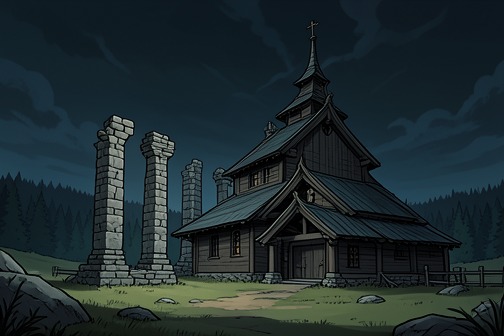
The burning of [Fantoft Stave Church](entity:location-recall-location-fantoft-stave-church-8b2b503c52ed) acquired a significance beyond the destruction of the building: its ruins became an image through which [Norwegian Black Metal](entity:concept-recall-concept-72d1e7e518a4) was publicized, sensationalized, and eventually marketed. The accounts here establish that the church burned down completely, but they chiefly document the fire’s subsequent life in news coverage and commercial imagery, rather than supplying a full reconstruction of how it began or who set it.
## [Destruction](entity:organization-recall-organization-destruction-f54fd40565a6) and Retrospective Account
A later recollection by [Varg Vikernes](entity:character-recall-character-varg-vikernes-c87846adebba) describes watching the news after the church had burned down. He said that the first major report concerned a murder he had committed and the second concerned the fire; he was nervous, he recalled, but believed the police had no traces or evidence. The account places the burning in the same evening’s news cycle as a separate murder report, but does not itself establish who started the fire. Its significance lies partly in the way Vikernes narrates the episode: the destruction appears alongside the crimes and publicity that were shaping his public image.
## The Front-Page Image
The [Black Metal](entity:concept-recall-concept-black-metal-a68ced181ea7) scene reached mainstream attention in middle [Norway](entity:location-recall-location-norway-64019b7a3249) through a front-page story in [Bergens Tidende](entity:organization-recall-organization-bergens-tidende-8ff432ddecae) on January 20, 1993. The newspaper placed Vikernes’s brooding gaze beneath the headline WE LIT THE FIRES. The article had originated with two young people who had grown up with him and conducted an interview they hoped the paper would publish as [Burzum](entity:organization-recall-organization-burzum-5b169b75fc03) prepared to release a new album. Its closing allegation connected Vikernes to eight church burnings and to a killing at [Lillehammer](entity:location-recall-location-042a81b6d311), the latter crime for which [Bård Eithun](entity:character-recall-character-b-rd-eithun-0308f5c65b24) would later be jailed. The presentation made the church fires part of a deliberately dramatic account of the scene, while collapsing distinct crimes and claims into a single headline-making portrait.
The newspaper story also helped set the terms for later media portrayals. It presented Vikernes in flamboyant language as a figure in a sweeping conspiracy against the established order, and gave unusual access to the way he was constructing his image for journalists. The church burning was no longer only an act of destruction: in the public narrative, it became evidence within a larger story about menace, rebellion, and the supposed intentions of the Black Metal scene.
## International Exposure
The attention escalated with the cover feature in issue 436 of the British metal magazine [Kerrang!](entity:organization-recall-organization-kerrang-dd7875321909), published on March 27, 1993. Its cover combined a glaring portrait of Vikernes, two large knives crossed in his fists, a blazing church, and an inset image of [Emperor](entity:organization-recall-organization-emperor-2aa40c379fc1) members in corpsepaint, a cowled robe, and medieval weaponry. The cover’s sensational promises and the article’s five-page treatment carried a lurid version of Norwegian Black Metal to an international audience. The evidence identifies the church image as part of the magazine’s visual framing, but does not establish that it depicts Fantoft itself.
The article relied heavily on alleged comments from Vikernes and [Øystein Aarseth](entity:character-recall-character-ystein-aarseth-a5d55bfc01ea). It helped make the scene legible to outsiders as a national menace and, in the account of the book, brought Norwegian Black Metal to the world’s attention. That exposure came at a cost: crimes and sensational claims threatened to overshadow the music. Years later, Vikernes disputed many of his reported remarks as fabricated, misunderstood, misquoted, or taken out of context; others looked back on the scene’s public statements as naive and deluded. The resulting uncertainty does not undo the article’s impact. It shows how the fire’s meaning was shaped by a media narrative that was both influential and contested.
## The Ruins as Merchandise
The church’s remains acquired a further afterlife on promotional lighters made by [Voices of Wonder](entity:organization-recall-organization-voices-of-wonder-e17c62347051) for Burzum’s [Aske](entity:object-recall-object-aske-5279d7b1aa8b) album. The lighter used an image of Fantoft’s smoldering ruins, turning the aftermath of the fire into a portable advertisement. The choice joined the band’s promotion to an image already charged by news coverage, but a retrospective explanation presented the decision as a misjudgment rather than an endorsement of a known arsonist. The speaker said that those involved had not suspected Vikernes had actually burned a church; they assumed that someone willing to do so would not boast about it. The lighter had been intended as a joke about the media attention he received.
That explanation also records a change in how the object was understood. At the time, its maker considered the gesture acceptable under the circumstances; later, the maker called it one of the stupidest things they had done and said they would rather not have made it. The ruins therefore moved through three frames: as evidence of a destroyed church, as a sensational sign of Black Metal’s alleged menace, and as a promotional image whose use became embarrassing in retrospect.
Event 20
Øystein Aarseth Homicide
The [Øystein Aarseth Homicide](entity:event-recall-event-ystein-aarseth-952140d74f0b) was a murder for which [Varg Vikernes](entity:character-recall-character-varg-vikernes-c87846adebba) was convicted and which he continued to describe as a necessary, pre-emptive act. Its significance in the account extends beyond the killing itself: competing explanations of what happened expose a sharp divide between Vikernes’s self-justification and the legal finding, while the crime became part of the violent reputation and public mythology of [Norwegian Black Metal](entity:concept-recall-concept-72d1e7e518a4).
## Scene and public image
The killing emerged within a [Black Metal](entity:concept-recall-concept-black-metal-a68ced181ea7) milieu in which appearance, provocation, and transgression were increasingly bound together. [Øystein Aarseth](entity:character-recall-character-ystein-aarseth-a5d55bfc01ea), known as [Euronymous](entity:character-recall-character-euronymous-879bb1da8a60), cultivated a militantly sinister image for [Mayhem](entity:organization-recall-organization-mayhem-d00b396b754c) and sought to spread evil to a wider audience. The group’s performances were rare, but they could make its image tangible: the 1990 [Sarpsborg](entity:location-recall-location-sarpsborg-37b4d940824d) concert became legendary, and a bootleg release reproduced an image of [Dead](entity:character-recall-character-dead-fffe54e995a9)’s suicide on its cover. This material concerns the scene’s image-making, not the circumstances of Aarseth’s later murder; it helps explain the atmosphere in which criminal acts and their representations could acquire cultural force.
The book also stresses that the scene was not simply a coordinated organization. Asked whether he had been a ringleader in the church-burning activity, Vikernes denied that there was an organization, while describing himself as the person who started it and identifying the [Fantoft Stave Church](entity:location-recall-location-fantoft-stave-church-8b2b503c52ed) fire as the event that set off the wider episode. That account is about the arsons, not a direct explanation of Aarseth’s death. Read together, however, these passages show how the scene’s public identity was assembled from individual acts, claims of leadership, and a reputation for defying ordinary limits.
## The killing and the accounts of its planning
At Vikernes’s trial, testimony later described Aarseth’s killing as premeditated. According to that testimony, Vikernes had two accomplices: [Snorre Westvold Ruch](entity:character-recall-character-snorre-westvold-ruc-3411e8c344cf), also known as Blackthorn and a member of [Bård Eithun](entity:character-recall-character-b-rd-eithun-0308f5c65b24)’s band [Thorns](entity:organization-recall-organization-thorns-02e825d997f1), and another friend in [Bergen](entity:location-recall-location-2106a7d56ff4). Ruch accompanied Vikernes on a seven-hour drive to [Oslo](entity:location-recall-location-oslo-aa85218d6b1a) that night; the other friend remained at Vikernes’s apartment in Bergen. These details place the killing within a plan involving more than the two men at its center, but the evidence presented here does not describe the attack itself.
Vikernes offered a different account of why he acted. He said he had been told Aarseth intended to use a stun gun, tie him up, and torture him to death. He also recalled receiving a friendly, positive letter from Aarseth while believing that Aarseth was discussing how to get rid of him with someone else. Vikernes presented that contradiction as evidence of a threat concealed behind apparent kindness. These are his claims about what he believed and had heard; the account does not establish that the alleged plan existed.
In describing the confrontation, Vikernes said Aarseth ran out, called for help, and rang neighbors’ doorbells. Vikernes interpreted this as cowardice rather than as a reason to stop. He said he believed Aarseth would eventually kill him, and argued that he could kill him then or wait for Aarseth to try. His explanation turns fear of a possible future attack into a rationale for killing in the present. It is a self-defence narrative, not an independent confirmation of the threat he described.
## Justification and conviction
Vikernes framed his conduct through an uncompromising rule of reciprocal honor. He said he would treat someone honorably if he expected honor in return, but that he had no reason to show mercy to a person he believed would bind and shoot him. The stated principle makes his account depend on his own judgment of Aarseth’s intentions: once he had decided that Aarseth posed a lethal threat, he treated violence as justified retaliation rather than as an act requiring restraint.
The legal outcome was different from Vikernes’s preferred description. He was convicted of murdering Euronymous, while maintaining that the killing was manslaughter committed in self-defence. The book notes that he was also found guilty of stealing 150 kilograms of explosives, which had been stored in his apartment when he was arrested. That theft conviction is separate from the homicide, but it contributes to the portrait of a criminal history that the author connects with the older Germanic idea of the outlaw. The distinction matters: Vikernes’s account insists on necessity, whereas the conviction fixes the act as murder.
## Reputation, aftermath, and meaning
The homicide was part of a wider period of violence associated with the Black Metal scene. An account of events from 1991 to 1993 records assaults and stabbings, a rape, and two murders. These broader crimes do not explain Aarseth’s killing, but they situate it in a period when attacks on people and property were increasingly discussed alongside the scene’s claims of evil and its attacks on Christian institutions.
Media attention helped shape how that period was understood. One assessment in the book says that mass coverage became valuable to Vikernes in building street credibility and a near-mythological public image. It also argues that coverage intensified the internal struggle to become the scene’s dominant personality, even though the scene had its own dynamics independent of outside attention. In this interpretation, the murder was both a crime and a powerful element in a reputation formed through actions, public claims, and their circulation.
A later reflection by [Garm](entity:character-recall-character-garm-10483dbadbd9) calls Vikernes a neo-Viking martyr and a prophet of the ego who had paradoxically become a [Jesus](entity:character-recall-character-jesus-e3ecfe1d0b33)-like figure for his own ideals. Garm expresses respect for Vikernes’s conviction and courage while questioning his sense of reality. The judgment captures a tension running through the accounts of the killing: Vikernes presents himself as acting decisively against an imminent threat, yet that self-image is inseparable from the notoriety and isolation that followed. Even years later, he said that regretting Aarseth’s death would mean regretting his own survival. The event thus remains unresolved at the level of his explanation, but not in its legal consequence: Vikernes was convicted of murder, and continued to defend the act as necessary.
Event 21
Sandro Beyer Murder
The [Sandro Beyer Murder](entity:event-recall-event-42dc1e9a9e4c) was the killing of a 15-year-old schoolmate in [Sondershausen](entity:location-recall-location-sondershausen-8589b926f207), [Thuringia](entity:location-recall-location-thuringia-fefc782a56af), in April 1993. The book places the crime within a small circle of young people gathered around the [Black Metal](entity:concept-recall-concept-black-metal-a68ced181ea7) band Absurd, but its account also traces the personal antagonisms and failed affiliations that preceded it. The murder became a national story, helping draw attention to a previously obscure German scene; the account presents that notoriety as part of a wider contest over how youth culture, music, and violence were understood, not as proof that music alone caused the crime.
## Setting and the Absurd Circle
The episode unfolded in Sondershausen, a town in the former [East Germany](entity:location-recall-location-east-germany-941d93a24532). After the Wall fell in 1989, records and videos that had been forbidden or difficult to obtain became more accessible. Against that change, a small group of high-school students developed interests in extreme Heavy Metal, occult subjects, violence, and horror films. The book identifies 17-year-olds [Hendrik Möbus](entity:character-recall-character-hendrik-m-bus-a2912b5641cc), [Sebastian Schauscheill](entity:character-recall-character-sebastian-schausche-f66c95b1a33b), and [Andreas Kirchner](entity:character-recall-character-andreas-kirchner-f82fa1938381) as prominent figures in this milieu. Their Satanic interests and Black Metal associations provoked hostility from other local young people, including left-wing punks and right-wing skinheads, while also attracting admirers among schoolgirls.
The group’s social life was not confined to the band. Members and associates met with a small circle at a rock quarry, where they reportedly held ceremonies described as Satanic baptisms. Absurd also rehearsed for a time at the Youth Center, a place where members argued with young people from the Christian Youth Club. The book depicts a close but unsettled local network, held together by shared tastes and correspondence rather than by a stable, clearly bounded organization. These details provide context for the murder, but do not in themselves establish a direct cause for it.
## Sandro’s Involvement and Estrangement
Sandro, then 14, became fascinated by the band and its associates in 1992. The book describes him as unpopular among his peers and as someone with few close friends. He adopted aspects of the group’s style and interests, asked to attend rehearsals, and corresponded with members of the circle. His efforts to draw closer did not lead to acceptance. Instead, the Absurd boys displayed their dislike of him, and exchanges between them became increasingly hostile.
Sandro’s family objected to his new affiliations. His parents were Christians, and on one occasion they burned a T-shirt of his bearing a pentagram. Sandro later concluded that the group’s interests were not for him, threw away his Satanic items, and told his mother he would stop spending time with the boys because of their treatment of him. Yet his break with the circle was incomplete. The account describes him as still drawn to people who had rejected him, a contradiction that helps explain the persistence of the conflict without making the later violence seem inevitable.
The antagonism developed into reciprocal provocation. Together with a young girl named Rita, Sandro planned actions intended to make Sebastian and Hendrik objects of ridicule in town. He wrote slanderous letters and spread rumors. He also knew of Sebastian’s relationship with Heidegrit Goldhardt, an older married woman who was pregnant with Sebastian’s child, and threatened to expose the affair. Sebastian responded in writing with threats. Those exchanges show that the dispute had moved beyond a failed attempt at friendship into a contest involving reputation, intimidation, and personal secrets.
## The Killing and Its Aftermath
On April 29, 1993, members of the student group murdered Sandro. The book reports that the perpetrators were later found to be members of Absurd, linking the crime to the band’s immediate circle. It does not, in the passages recounting the lead-up, give a detailed account of the killing itself; the event’s significance here rests on the confirmed connection between the perpetrators and the group, and on the conflict that had gathered around Sandro before his death. The distinction matters: the narrative supplies a history of hostility and threats, but that history should not be mistaken for a complete account of the crime’s circumstances.
The case briefly transformed the visibility of German Black Metal. In autumn 1994, Der Spiegel published a national-page article about the scene, and the book describes it as one contribution to a much wider wave of coverage. The murder brought national attention to Sondershausen, a town that had otherwise remained little known outside its region. Berlin journalists Lianne von Billerbeck and Frank Nordhausen later developed their research into Satanskinder, a 1994 book whose subtitle identified the subject as the murder case of Sandro B. Their account sought to reconstruct events within the youth milieu around Absurd and to consider influences that might have shaped the perpetrators’ behavior.
## Meaning and Limits of the Case
The book situates the crime alongside the [Norwegian Black Metal](entity:concept-recall-concept-72d1e7e518a4) cases that had already attracted attention, describing Absurd’s actions as following an example set by [Bård Eithun](entity:character-recall-character-b-rd-eithun-0308f5c65b24) and [Varg Vikernes](entity:character-recall-character-varg-vikernes-c87846adebba). That framing connects the Sondershausen murder to an international subculture and to the circulation of precedents; it does not establish that the Norwegian crimes mechanically produced this one. The local history remains particular: access to previously unavailable media, antagonism between youth groups, Sandro’s unsuccessful attempt to enter the Absurd circle, and the escalating exchange of rumors and threats all belong to the account of how the conflict developed.
The murder also became entangled with competing representations of Black Metal. Der Spiegel’s coverage helped turn the obscure local milieu into a national subject, while the subsequent book-length investigation sought to disentangle what had happened from the sensational image surrounding it. The case therefore carries two related but distinct kinds of consequence: a young person was killed by members of his local circle, and the crime became a highly visible point of reference in public discussion of German Black Metal. Keeping those consequences separate avoids treating publicity as explanation, or treating a subculture’s imagery as a sufficient account of individual responsibility.
Event 22
Fantoft Stave Church Fire
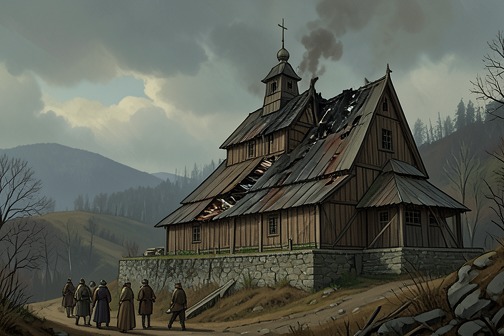
The [Fantoft Stave Church Fire](entity:event-recall-event-fantoft-0bfaea7cee8a) destroyed one of [Norway](entity:location-recall-location-norway-64019b7a3249)’s best-known historic wooden churches in the early morning of June 6, 1992. The blaze became a national story and was later treated as the opening signal of a wider wave of church fires, although [Varg Vikernes](entity:character-recall-character-varg-vikernes-c87846adebba), strongly suspected of setting it, was never convicted of this particular crime. Its significance lies both in the destruction of a landmark and in the competing meanings attached to the site, the date, and the fire’s place in the events that followed.
## The Church and Its Setting
Fantoft dated from the twelfth century and had originally stood at Fortun, near the Luster Fjord in central Norway. When it was scheduled for demolition in the late nineteenth century to make room for a new burial ground, it was dismantled and moved to Fantoft, about five miles south of [Bergen](entity:location-recall-location-2106a7d56ff4). The relocation saved the building at a time when many other stave churches were being destroyed before their historical and cultural value was widely recognized. The church also contained old runic inscriptions, connecting its long history to the cultural past later invoked in discussions of the fire.
The building’s form and setting made it especially vulnerable. Its ground plan was slightly altered during reconstruction in 1883, and the exterior was renewed. It stood on a wooded hilltop, screened by dense trees; an account cited in the book notes that the church could remain out of sight until a visitor was nearly upon it. Stave churches were made entirely of wood, and their construction left them exposed to destruction by natural causes as well as deliberate fire. At Fantoft, the concealed approach and isolated hilltop also meant that an arsonist could reach the building without being readily observed. These conditions help explain the site’s vulnerability, but do not establish who set the fire.
## The Fire and the Question of Responsibility
The church was fatally set alight early on June 6, 1992. The book describes Vikernes as strongly suspected of the arson, while making clear that no conviction was ever obtained. The distinction matters: the fire became inseparable in public memory from his name, but suspicion and later claims did not amount to proof in court. A photograph captioned as allegedly taken by Vikernes shortly after the arson further illustrates how images and assertions became part of the event’s contested record; the caption itself preserves the uncertainty rather than resolving it.
Vikernes later described the fire as the beginning of what followed, while denying that the subsequent activity was organized as a single campaign. In his account, the Fantoft blaze acted as a trigger: other people saw reports of it and decided to imitate the act, without contact with him. That explanation is his retrospective account, not an independently established chain of command. The distinction between one person’s alleged responsibility for a specific fire and the later spread of similar crimes is central to the book’s presentation of the episode. Fantoft became a point of origin in the narrative, but the evidence does not make every later fire an operation directed by the same group.
## Sacred Ground and Competing Interpretations
In explaining why the church mattered to him, Vikernes offered an interpretation rooted in pre-Christian religious history. He said the building stood on holy ground marked by a natural circle and a stone heathen altar, and that a large cross had been planted on the altar before the church was built at the site. This is presented as his account of the location and its religious meaning, not as a neutral description of the archaeological evidence. It shows how he framed the fire as an attack on a Christian structure erected over a sacred place associated, in his view, with an older tradition.
The date also acquired symbolic weight. Vikernes noted that June 6, 793, was the date of the first known Viking raid in Lindisfarne, and emphasized that the raiders came from [Hordaland](entity:location-recall-location-e2243ea544a7), the county he identified as his own. He complained that this historical association was overlooked while public attention focused on [Satanism](entity:concept-recall-concept-252e3ea7bfc5) and the apparent pattern of sixes in the date. His comparison supplied a heathen and Viking frame for the event, in contrast to the Satanic interpretation that dominated much of the immediate public discussion. These explanations reveal the symbolic history he wanted attached to the fire; they do not prove his involvement or establish his motive for setting it.
## Public Afterlife
News of Fantoft’s destruction made national headlines, and other churches soon burned in separate incidents. The sequence gave the Fantoft fire a lasting role as a perceived beginning, even as the relationships among those responsible remained disputed. In January 1993, a front-page story in the Bergen daily newspaper placed Vikernes’s image and statements at the center of the growing public story. Its presentation helped shape the way the [Black Metal](entity:concept-recall-concept-black-metal-a68ced181ea7) scene was discussed in the media, making the church fires central to a portrayal that joined music, criminality, and Satanism. The article’s dramatic framing was influential, but it should not be mistaken for a judicial finding about Fantoft.
The later account also resists treating the fire as self-explanatory evidence of a Satanic conspiracy. Vikernes maintained his innocence during police questioning and was released in March for lack of evidence; although he repeatedly intimated involvement in Fantoft, the crime remained unproven. The 1998 police report on church fires and Satanically motivated criminal damage reflects the subsequent effort to examine the scene’s structure and the investigations it prompted. By then, Fantoft functioned at once as the loss of a historic building, an unresolved criminal case, and a media symbol used to interpret later violence. Its prominence arose not only from what burned, but from the different and sometimes incompatible stories told about why it burned and what followed.
Event 23
Norwegian Church Arson Wave
The [Norwegian Church Arson Wave](entity:event-recall-event-1c20cd84fb10) was a succession of church fires and attempted attacks that, beginning in 1992, made [Norwegian Black Metal](entity:concept-recall-concept-72d1e7e518a4) a national focus of fear and controversy. Its significance lies not only in the damage to churches, but in the collision between a real series of crimes, participants’ claims that they were retaliating against Christianity, and media accounts that often presented the events as a unified Satanic assault. The evidence supports neither treating every church fire as a [Black Metal](entity:concept-recall-concept-black-metal-a68ced181ea7) crime nor reducing the wave to a media invention: the connections were substantial, but incomplete, and the competing explanations became part of the story.
## The First Fires and Their Spread
The destruction of [Fantoft Stave Church](entity:location-recall-location-fantoft-stave-church-8b2b503c52ed) near [Bergen](entity:location-recall-location-2106a7d56ff4) in the early morning of June 6, 1992, gave the wave its defining opening image. The church, a wooden cultural landmark on a wooded hill, was difficult to see from some vantage points until a visitor was close to it. Its construction made it vulnerable to fire, and the concealed setting made the arson easier to carry out. [Varg Vikernes](entity:character-recall-character-varg-vikernes-c87846adebba) was strongly suspected of starting the blaze, but he was never convicted of that crime. A photograph said to have been taken by Vikernes shortly after the fire added to the later association between him and the destruction.
The fires soon appeared at other sites. Revheim Church in southern [Norway](entity:location-recall-location-norway-64019b7a3249) was torched on August 1, 1992; twenty days later, [Holmenkollen Chapel](entity:location-recall-location-e54b641570af) in [Oslo](entity:location-recall-location-oslo-aa85218d6b1a) burned. Ormøya Church caught fire on September 1, followed by [Skjold Church](entity:location-recall-location-7aa6e9adf243) on September 13. [Hauketo Church](entity:location-recall-location-3c9e4564e617) burned in October. After a pause of several months, [Åsane Church in Bergen](entity:location-recall-location-48f411264655) was consumed by fire, and [Sarpsborg Church](entity:location-recall-location-aa3f350f8e4f) was destroyed two days later. A firefighter died while tackling the [Sarpsborg](entity:location-recall-location-sarpsborg-37b4d940824d) blaze. Some later attributed his death to [Svarte Sirkel](entity:organization-recall-organization-svarte-sirkel-917fef966379), but the evidence presents this as an attribution made by others, not an established finding.
The sequence was preceded by a small, ineffectual fire at Storetveit Church in the month before the Fantoft blaze. Looking across the wider record, the book estimates at least forty-five to sixty church fires, near-fires, and attempted arson attacks in Norway. According to Sjur Helseth, head of the Technical Department of the Directorate for Cultural Heritage, roughly one-third had a documented connection to the Black Metal scene. That distinction matters: the scale of the overall arson record was greater than the portion demonstrably linked to the subculture, and authorities were reluctant to publicize details for fear of encouraging further attacks.
## Motives and Responsibility
The book places the Norwegian attacks alongside the category of revenge-motivated arson, while emphasizing that the parallel is limited. Vikernes and others convicted of burning churches presented their crimes as retaliation against Christianity. Vikernes argued that the Christian church had destroyed what he regarded as Norway’s beautiful, heathen culture. He described the arson wave as an instinctive uprising against Christianity and understood his music project, [Burzum](entity:organization-recall-organization-burzum-5b169b75fc03), as a means of encouraging such acts. These are his stated political and cultural interpretations; they do not establish a single motive for every fire or every person involved.
The suggested retaliatory motive also differs from a blanket explanation based on Satanic ritual or a clinical label such as pyromania. The book notes that churches had burned in Norway before the wave—typically one or two each year—and that lightning and faulty wiring accounted for many earlier fires. Against that background, a series of deliberate attacks was distinctive, but the existence of ordinary accidental fires makes it especially important not to count every blaze as part of the same campaign. The evidence instead presents a mixture of confirmed scene connections, suspected responsibility, and incidents whose causes were not established.
The pattern also crossed national borders in its influence, if not as a single coordinated operation. In an interview, [Hendrik Möbus](entity:character-recall-character-hendrik-m-bus-a2912b5641cc) said that the fires had electrified his group and that they supported actions intended to weaken Christianity. He described the arsons as psychological warfare and said that plans for similar activity had been made before the group’s incarceration, though they had produced no concrete results. His account records an expressed response to the Norwegian events; it does not demonstrate that the Norwegian fires were directed by, or organized together with, groups elsewhere.
## Publicity and the Satanic Frame
News of Fantoft’s destruction made national headlines, and the subsequent fires brought growing attention to Black Metal. On January 20, 1993, [Bergens Tidende](entity:organization-recall-organization-bergens-tidende-8ff432ddecae) published a cover story featuring Vikernes and presenting him as a central figure in the crimes. The article helped establish the scene’s public image through Vikernes’s own theatrical self-presentation, as well as through claims about its aims. A prominent feature in the British magazine [Kerrang!](entity:organization-recall-organization-kerrang-dd7875321909) followed on March 27. Its dramatic cover and five-page report carried the Norwegian story to an international metal readership, while basing much of its account on alleged comments from Vikernes and [Øystein Aarseth](entity:character-recall-character-ystein-aarseth-a5d55bfc01ea).
That publicity did more than report on the arsons. It circulated the image of Black Metal as a national menace and helped Vikernes build a near-mythic reputation within youth subcultures, according to an interviewee who later reconsidered the media’s role. The same analysis describes attention as intensifying internal competition for dominance in the scene. The book also warns against treating the effect as one-way: media focus could amplify the stakes and prestige attached to transgression, but the subculture had its own internal dynamics and crimes had already occurred.
Coverage often framed the fires as evidence of a broad Satanic conspiracy. A later account by [Asbjørn Dyrendal](entity:character-recall-character-asbj-rn-dyrendal-440f74db9517) describes how the emergence of Black Metal in the headlines replaced earlier Norwegian stories about Satanic ritual abuse. The public image centered on teenagers who variously adopted Satanist, Nazi, or Odinist identities, or rejected established labels in favor of an identity built around evil. Some attacked people; more commonly, they attacked property, including churches and graveyards. This account connects the climate of alarm to actual violence while distinguishing it from the impression that every young Black Metal adherent belonged to an organized Satanic campaign.
The resulting fear prompted concrete responses. Police and congregations kept watch over churches, sometimes with little success; some churches were later burned when vigilance had slackened. Dyrendal’s account describes one Oslo priest keeping night watch in a sacristy with an axe. The tabloids’ Satanic framing and calls to act against the threat reflected a broader struggle over what the attacks meant: religious conspiracy, youth crime, political retaliation, or a subculture’s deliberate performance of evil. The 1998 police report, Church Fires and Satanically Motivated Criminal Damage, later reviewed the scene’s organization, the investigations, and methods for police facing similar cases. Its retrospective approach brought the crimes into an official account without dissolving the contradictions and uncertainties surrounding the scene.
## Decline and Legacy
The book describes the Norwegian wave as reaching a low ebb after the police crackdown sent many of its most active members to prison. With leading figures dead or older, the arson activity diminished, though sporadic attacks continued. That decline did not end Black Metal’s wider appeal. The Norwegian fires became a reference point for scenes and young people elsewhere, while the genre grew internationally; the book likens the spread to embers from a forest fire emerging far from their original source. This influence should not be mistaken for proof of a common organization: the account presents the fires as a catalyst and example, not as a centrally managed international campaign.
The wave’s lasting significance is therefore double-edged. The attacks were real, and some were demonstrably connected to Black Metal participants who cast them as anti-Christian retaliation. Yet the documented connection covered only a portion of a larger record of fires and attempted fires, and sensational coverage often blurred that distinction. In the book’s account, publicity helped convert crimes into both a national scare and a source of subcultural reputation. The churches that burned remained physical evidence of deliberate attacks; the explanations attached to them—ritual, revenge, performance, or political resistance—continued to compete.
Event 24
Deicide Stockholm Concert Bombing
The [Deicide Stockholm Concert Bombing](entity:event-recall-event-deicide-f04b180f6aea) was an explosion at the Fryshuset club in early December 1992, shortly before Deicide was scheduled to perform. It caused major structural damage and injured several people, but no one was seriously hurt. The incident became entangled with suspicions about the Swedish Black Circle; however, the evidence presented complicates that attribution and points instead toward threats made by [Animal Militia](entity:organization-recall-organization-animal-militia-b6ccc631eafc) against singer Glen Benton.
## Setting and Course
Deicide, a Satanic [Death Metal](entity:concept-recall-concept-6ba830d0a785) band from the [United States](entity:location-recall-location-united-states-2f533bc8d0b9), was touring Europe in early December 1992. The group played in [Oslo](entity:location-recall-location-oslo-aa85218d6b1a) and then travelled to [Stockholm](entity:location-recall-location-9563d9338d63). Before the band took the stage at Fryshuset, an explosion went off beside the venue’s fire exit. The blast knocked out an entire wall and caused extensive structural damage. Several people were injured, though none seriously.
The timing and location made the explosion appear connected to the concert, but the available account does not identify a confirmed perpetrator. Its significance therefore lies both in the damage itself and in the way competing explanations quickly attached the blast to rivalries and political conflicts within and around the extreme-metal scene.
## Initial Suspicions
It was first speculated that the Swedish Black Circle had carried out the bombing. One proposed explanation was that its members regarded Deicide as rival Satanists. Another, considered more likely in that initial speculation, was that the attack targeted [Gorefest](entity:organization-recall-organization-gorefest-c2c46190f7d7), the concert’s opening band, which was described as antiracist and politically correct. These interpretations treated the explosion as an expression of ideological or scene-based hostility, but subsequent investigation raised serious doubts that anyone connected to the Black Circle had placed the bomb.
The [Norwegian Black Metal](entity:concept-recall-concept-72d1e7e518a4) scene’s relationship with Deicide also sat uneasily with the theory that the band itself had been a target of its supposed rivals. Many from that scene attended Deicide’s Oslo show, where [Øystein Aarseth](entity:character-recall-character-ystein-aarseth-a5d55bfc01ea) served as DJ. The account says that the Norwegians approved of Deicide’s [Satanism](entity:concept-recall-concept-252e3ea7bfc5) and got along well with Benton. That does not establish who caused the Stockholm explosion, but it undercuts a simple account of hostility between Deicide and the Norwegian scene.
## The Animal Militia Lead
A different lead emerged shortly after the Stockholm incident. Before Deicide’s appearances in the United Kingdom, the group received death threats from an organization calling itself Animal Militia, described as a radical anti-vivisectionist group. The threats were directed specifically at Benton, who had advocated the torture and sacrifice of animals in Satanic rituals and claimed to participate in such activities. One threat from a group identifying itself as Animal Militia’s Manchester cell referred to Stockholm as a warning of what was to come.
The book treats that threat, together with the doubts about Black Circle involvement, as grounds for considering allies of Animal Militia the likely suspects. It does not present that attribution as a proven identification of the bombers. The distinction matters: the threats furnish a more specific possible connection than the initial scene-rivalry theories, but the account still leaves responsibility unresolved.
## Context and Significance
The bombing occurred amid a period when [Black Metal](entity:concept-recall-concept-black-metal-a68ced181ea7) identity was shaped by belief and outlook as well as music, but the scene had no fixed rulebook and its boundaries shifted over time. Aarseth’s circle around the record shop depended on trust, seriousness of views, and acceptance by senior figures. That setting helps explain why an attack at a rival band’s concert could be read through competing accounts of allegiance and status; it does not, by itself, demonstrate who carried it out.
The incident also stands apart from the church arsons associated with the Norwegian scene. The account notes that bombings were not the usual method of Scandinavian Black Metal perpetrators, while separately reporting that [Varg Vikernes](entity:character-recall-character-varg-vikernes-c87846adebba) later stole 150 kilograms of dynamite and other explosives, found in his apartment at his second arrest. That later discovery is contextual rather than evidence that Vikernes or the Black Circle was responsible for the Fryshuset blast. The bombing remains a case in which the damage and injuries are clear, while the path from suspicion to attribution remains uncertain.
Event 25
Lundby New Church Fire
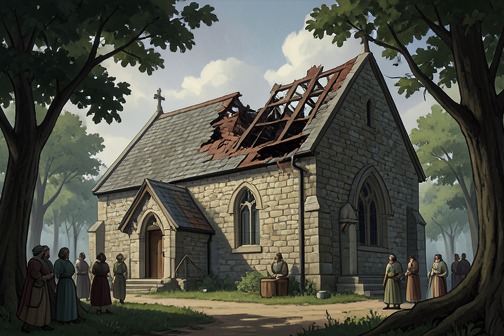
The [Lundby New Church Fire](entity:event-recall-event-lundby-befe9c8644e3) was the destruction of a stone church in [Gothenburg](entity:location-recall-location-1006091476d0), [Sweden](entity:location-recall-location-sweden-0f697902ba54), on February 7, 1993, during a period when [Black Metal](entity:concept-recall-concept-black-metal-a68ced181ea7)-associated church attacks were gaining attention beyond [Norway](entity:location-recall-location-norway-64019b7a3249). The fire became an early documented instance of this pattern in Sweden; three men, all about eighteen, eventually received sentences of two to three years for arson, and another Christian building nearby was vandalized the same night.
## Background and Chronology
The book places the fire amid escalating criminal activity associated with the Norwegian Black Circle in late 1992 and early 1993, as comparable events began appearing in Sweden. On January 20, 1993, the daily newspaper [Bergens Tidende](entity:organization-recall-organization-bergens-tidende-8ff432ddecae) brought the [Norwegian Black Metal](entity:concept-recall-concept-72d1e7e518a4) scene to wider public attention with a front-page story about [Varg Vikernes](entity:character-recall-character-varg-vikernes-c87846adebba). The Lundby fire followed less than three weeks later. The book describes Swedish adherents as taking up their own firebrands after the example set in Norway, presenting the event within a cross-border sequence rather than as an isolated act.
A prior Swedish incident forms part of that chronology but was distinct from the Lundby arson. On July 26, 1992, [Suuvi Mariotta Puurunen](entity:character-recall-character-suuvi-mariotta-puur-0f45ffd88e1d) attempted to burn down the home of [Christopher Jonsson](entity:character-recall-character-christopher-jonsson-294a87061b60) under Vikernes’s direction. That attempt did not amount to much, but Puurunen’s diary later supplied material for media portrayals of Vikernes. The account distinguishes this earlier case from the February 1993 fire and does not identify the Lundby arsonists as participants in Puurunen’s attempt.
## The Church and the Attack
Built of stone in 1886, the [Lundby New Church](entity:location-recall-location-lundby-c249a5ce38f7) was known for its acoustics and for recordings made there. On February 7 it burned down. The same night, another Christian building nearby was vandalized, extending the damage beyond the church itself. The account gives no further description of how the Lundby fire was set or of the damage to the second building.
The contrast between the church’s musical reputation and its destruction is part of the episode’s documented setting: the building was valued for its sound, yet became the target of an arson committed by young music devotees. The source does not establish that musical interest alone explains the attack; it places the incident in a wider subcultural and criminal context.
## Sentences and Wider Significance
Three male arsonists, each about eighteen, eventually received prison sentences of two to three years. The account supplies no names for them. Their prosecution gives the episode a definite legal outcome, although the book’s emphasis also falls on the fire’s place in the expansion of church attacks beyond Norway.
The fire occurred before [Kerrang!](entity:organization-recall-organization-kerrang-dd7875321909) published its widely circulated Norwegian Black Metal cover feature on March 27, 1993. That later article helped bring the Norwegian scene to international attention, but the Lundby attack already belonged to a developing cross-border story: the book describes Black Metal as a worldwide phenomenon and the Norwegian Black Circle’s embers as surfacing in distant places. The event is therefore presented both as a specific act of arson in Gothenburg and as evidence of the way a conspicuous Norwegian example could be taken up elsewhere.
Event 26
Salabacke Church Arson Incident
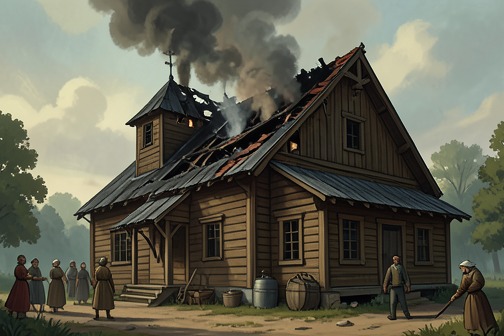
The [Salabacke Church Arson Incident](entity:event-recall-event-salabacke-12c6bd7162a0) was a July 3, 1993, attack on a wooden church in [Sweden](entity:location-recall-location-sweden-0f697902ba54), carried out by two 15-year-old girls who said they acted in salute to [Varg Vikernes](entity:character-recall-character-varg-vikernes-c87846adebba) and to hail [Satan](entity:character-recall-character-satan-835177cd068e). The fire destroyed the church organ and much of the building’s contents, while the survival of the church silver, pulpit, and altarpieces marked a limit to the destruction. The episode shows how the [Norwegian Black Metal](entity:concept-recall-concept-72d1e7e518a4) scene’s public association with church arson could become a point of reference for young offenders elsewhere in [Scandinavia](entity:location-recall-location-scandinavia-f99be1f7ff03).
## Background and Context
The attack followed an earlier Swedish church fire: [Lundby New Church](entity:location-recall-location-lundby-c249a5ce38f7) burned on February 7, 1993, after Varg Vikernes had publicly disclosed a connection between [Black Metal](entity:concept-recall-concept-black-metal-a68ced181ea7) and church burning. The book presents Swedish participants as taking up firebrands after the Norwegian example. Salabacke was a later incident in this sequence, but its reported salute to Vikernes gives the connection particular weight: the arsonists themselves framed the act through his notoriety, rather than the association resting only on outside interpretation.
## The Attack and Its Damage
Salabacke Church was a wooden building erected in 1957 and approximately forty-five feet high. The girls placed solvent-soaked papers against the outside of the structure and started a fire. Because the church was both wooden and tall, the blaze rapidly became uncontrollable. It completely destroyed the organ and much of the building’s contents. The church silver, pulpit, and altarpieces nevertheless survived.
## Arrests and Aftermath
Two girls were arrested. Their age meant that the state confined them to youth homes rather than imposing adult prison sentences. They also had to pay a joint fine of 75,000 Swedish Kronor, reported as approximately $9,400. The immediate legal consequences thus reflected their youth, even as the scale of the fire and the deliberate selection of a church made the incident more than a symbolic gesture.
## Recurrence and Significance
One of the girls, Alexandra Jansson, was later implicated in grave desecrations, death threats, and violence against civil officials in 1995 and 1996. The account says she received no rehabilitation during her time in state care. Her later implication gives the arson a continuing aftermath: the episode appears not as an isolated act of provocation, but as an early offense in a subsequent record of reported violence and threats. At the same time, the evidence identifies the girls’ stated salute to Vikernes and Satan without establishing that the wider Black Metal scene directed or organized this particular attack.
Event 27
Linköping “Nigger Hunt” Attack
The Linköping attack was a racist assault carried out by three youths in the Swedish city of Linköping on February 22, 1995. The account places it alongside a recent history of racist violence in [Sweden](entity:location-recall-location-sweden-0f697902ba54), while noting a connection between one participant and the [Black Metal](entity:concept-recall-concept-black-metal-a68ced181ea7) band [Nefandus](entity:organization-recall-organization-nefandus-8bcdc781aab9); it does not establish that the band or the wider scene directed the attack.
## The Attack
Three youths, aged between 16 and 18, went after a Black man carrying an axe and two machetes. The account describes them as terrorizing him, without providing further details of the assault. Its brief description leaves the victim unnamed and focuses instead on the attackers, their weapons, and the links between this incident and other acts attributed to members of the group.
## Links to Other Offenses
Two of the youths had also tried to set fire to a church a few weeks earlier. That attempt failed, and police caught them. The account thus connects the Linköping attack with an earlier episode of attempted arson, but does not give a specific motive for either crime or say that the arson attempt caused the assault.
One participant, identified by the name Belfagor, was involved in both crimes and belonged to Nefandus, a Black Metal band. This connection places a band member within the account of the attack, but does not establish that the other youths belonged to the Black Metal scene or that the band had any organizational role.
## Wider Context and Significance
The account presents the attack as part of a broader Swedish context of racist violence, not as an unprecedented incident. A few years earlier, the so-called Laserman had carried out a campaign involving at least ten murders or serious woundings of male immigrants and non-white citizens. The comparison situates the Linköping assault within an existing pattern of attacks on racialized people, without claiming a direct connection between the attackers and that earlier campaign.
The incident’s reported links to failed church arson and to a member of Nefandus bring together racist violence and Black Metal-associated activity in one case. Those links are specific to the individuals described: they do not support treating the attack as representative of the band, the music scene, or a shared motive among all three youths.
Event 28
Tunbridge Wells Church and Cemetery Desecrations
The [Tunbridge Wells Church and Cemetery Desecrations](entity:event-recall-event-ab50664a53dc) were a series of attacks carried out in 1994 by members of [Necropolis](entity:organization-recall-organization-necropolis-20f091fe4b41), an underground [Black Metal](entity:concept-recall-concept-black-metal-a68ced181ea7) group in Kent, [England](entity:location-recall-location-england-b153c1f368ea). The incidents moved from broken and overturned headstones to vandalism inside churches, and culminated in arrests and prison sentences. The group’s campaign brought the [Norwegian Black Metal](entity:concept-recall-concept-72d1e7e518a4) scene’s anti-Christian rhetoric into a local setting, where criminal acts won the youths more attention than their music did.
## Background and Influences
By spring 1994, British newspapers and music magazines had extensively covered church burnings in [Scandinavia](entity:location-recall-location-scandinavia-f99be1f7ff03). [Kerrang!](entity:organization-recall-organization-kerrang-dd7875321909) had repeatedly presented the Norwegian scene through accounts of shocking acts and statements by figures including [Varg Vikernes](entity:character-recall-character-varg-vikernes-c87846adebba). A small group of teenagers in [Tunbridge Wells](entity:location-recall-location-d26687519374) took particular notice of Vikernes’s claim that church arson was a form of heathen terrorism. Their actions followed this coverage, although the evidence describes the group’s inspiration and emulation rather than establishing that any one article directly caused a particular attack.
The group of friends, led by 18-year-old [Paul Timms](entity:character-recall-character-paul-timms-08d302df6633), formed the nucleus of Necropolis. Its other members were Dave Wharton, a 22-year-old postman; Mark Reeves, also 22; and Kevin Mooney, a 21-year-old British Airways engineer. Timms’s girlfriend later said that the band had been formed under Norwegian influence. Coverage of the case suggested that attacking churches was a way for the youths to gain respect and notoriety from the musicians they admired. Necropolis does not appear to have recorded any music, making the contrast between its musical identity and its criminal activity especially stark: the attacks, rather than recordings, became the group’s public signature.
## Course of the Attacks
The campaign began in April 1994 with damage to graveyards in Rusthall and Tunbridge Wells. In a single night, the group could knock over or break as many as sixty headstones. The scale and repetition turned isolated acts of vandalism into a sustained assault on local burial places, affecting not only the sites themselves but the communities connected to them.
Over Easter, the attacks widened to St. Peter’s Church in Southborough and St. Mark’s Church in Tunbridge Wells. At St. Mark’s, windows were shattered, the altar was damaged, prayer books were torn up, and church objects were overturned. Timms later said that the group wished it had burned the church afterward; he also claimed that they would have targeted larger churches if they had access to explosives. Those remarks indicate that destruction by fire was part of the group’s imagined escalation, but the documented attacks described here were desecrations and vandalism, not church arsons.
The group returned about a week later to attack the church in Southborough and St. Peter’s Church in Fordcombe. Its final assault involved graveyards in Speldhurst, Groombridge, and Frant. Cross-shaped headstones were among those pulled up and left upside down. The repeated reversal of the crosses made the attacks legible as anti-Christian provocation as well as property damage, while the targeting of cemeteries extended that provocation to the dead and their relatives.
## Stated Motives and Public Meaning
Timms described the group as Satanists and framed its actions as revenge against Christians, arguing that Christians had displaced pagan boundaries and built churches over them. His explanation echoed the heathen and anti-Christian language associated in British coverage with Varg Vikernes. The evidence thus records both a practical campaign of vandalism and an ideological account offered by one of its participants; it does not establish that all members held identical beliefs or that the claimed religious rationale exhausts their motives.
The attacks also show how a musical subculture’s public image could travel beyond music. Reports about Norwegian church burnings and the rhetoric surrounding Black Metal gave the Tunbridge Wells group a model of notoriety, while the local crimes made that borrowed image concrete. Yet the resulting publicity did not establish Necropolis as a musical act: the group apparently recorded nothing, and its renown rested on attacks against churches and cemeteries. In this case, the distinction between adopting a style and carrying its rhetoric into criminal conduct became difficult to separate in the public story of the group.
## Arrests and Sentences
Police arrested members of Necropolis in simultaneous raids on May 27, 1994, after receiving an anonymous tip. The first arrests were Wharton, Reeves, and Mooney; officers had not initially realized that Timms was connected to the group. A homemade Necropolis poster found during the searches of their homes depicted its four members and helped investigators recognize that another suspected participant might still be at large. Timms was arrested two days later. The account suggests that the tip may have followed someone overhearing him discuss the crimes with his girlfriend in a pub, but presents that as a possibility, not a confirmed source.
The youths expected community service, but received sentences of two and a half years in prison. During a court hearing before a Catholic judge, Timms wore a [Cradle of Filth](entity:organization-recall-organization-cradle-of-filth-9c3a207271c9) T-shirt bearing an anti-Christian slogan. When prison staff asked what he wanted to eat, he requested a Bible, then refused food for four days before giving up the protest. The damage was assessed at a minimum of £100,000, or $160,000, and might have been substantially higher. The sentence, the scale of the losses, and the group’s failure to establish itself through music closed the campaign with a consequence sharply at odds with its pursuit of underground status: its notoriety became inseparable from the harm and cost of the desecrations.
Event 29
Toulon Cemetery Exhumation and Desecration
The [Toulon Cemetery Exhumation and Desecration](entity:event-recall-event-a0dca65e8c8a) was a June 8, 1996 attack on the grave of Yvonne Foin by four youths. The case became a point where [Black Metal](entity:concept-recall-concept-black-metal-a68ced181ea7), occult claims, and far-right politics converged in media coverage; the evidence described in the book, however, does not establish that every group or cause later associated with the youths had a role in the crime.
## The desecration and initial investigation
According to L’Express, the four youths exhumed Foin’s body, which had been buried for twenty years, and placed a cross on it. Two of the youths, [Anthony Mignoni](entity:character-recall-character-anthony-mignoni-9ed6ecdbf500) and [Christophe Mignoni](entity:character-recall-character-christophe-mignoni-43bb03a41a4c), were both twenty and known as Black Metal fans. Police soon raided Anthony Mignoni’s apartment, where they found tracts and pamphlets. The reported facts connect two participants to the music, but do not by themselves establish that Black Metal motivated the desecration.
## Links to [Funeral](entity:organization-recall-organization-funeral-7af80eca7391) and the Emerald Order
A report in the fanzine Deo Occidi identified Anthony Mignoni as a member of the French Black Metal band Funeral, where he used the pseudonym [Hades](entity:organization-recall-organization-hades-874e8979b6e0). In an interview attributed to him, he presented the band as a vehicle for anti-religious and racial-supremacist ideas. The book identifies the source as an alleged neo-Nazi fanzine, a qualification that matters when assessing the interview as evidence of his views.
The same interview described an occult group called the Sacred Order of the Emerald, supposedly dedicated to [Lucifer](entity:character-recall-character-lucifer-904fe352bf46). Its founder, using the name Antitheos, was identified as Christophe Mignoni, who operated the group from his parents’ home. The fanzine also reported that the Mignoni youths regularly visited the cemetery. Its accompanying photograph showed two people in corpse paint before a tomb, with a Nazi armband visible. These details document the imagery and associations circulated around the case; they do not prove that the group’s activities constituted a motive for the grave desecration.
## The later discovery and limits of the claims
Months after the grave was desecrated and Anthony Mignoni’s apartment was raided, groundskeepers at a military area on the nearby Saint-Mandrier peninsula found a sack beneath a pile of rocks. It contained photographs of youths in trench coats and face paint, manuscripts from the Sacred Order of the Emerald, and neo-Nazi publications. The sack was traced to Christophe Mignoni. Police theorized that his brother David had hidden it after the arrest of his sibling and friends.
L’Express used the contents to imply links between the desecrators and the [Charlemagne Hammer Skinheads](entity:organization-recall-organization-charlemagne-hamm-dfc84ecd48ae), the [French Nationalist Party](entity:organization-recall-organization-french-nationali-31f12fd8596e), and the inner circle of [Nouvelle Résistance](entity:organization-recall-organization-nouvelle-r-sista-dd126502082e). The book treats those broader affiliations as unsupported speculation rather than established fact. It notes a more concrete concern in the material: some tracts that had been in the youths’ possession contained instructions for making bombs, Molotov cocktails, and explosive lightbulbs.
## Media framing and significance
The cemetery case appeared amid a wave of French newspaper coverage in early 1997 linking Satanist youth groups, Black Metal, and extreme right-wing factions. The book acknowledges that bizarre actions had occurred while warning that the reporting often overreached, drawing correspondences that the evidence did not warrant. The [Toulon](entity:location-recall-location-ff15414b0e4f) case thus reveals both the actual convergence of some individuals with extremist music and political material, and the danger of turning those limited connections into proof of a single organized cause.
Event 30
Jean Uhl's Christmas Eve Murder
[Jean Uhl's Christmas Eve Murder](entity:event-recall-event-5b0b2d9d879f) was the killing of an elderly priest by 19-year-old [David Oberdorf](entity:character-recall-character-david-oberdorf-2a223c8518b6) in [Mulhouse](entity:location-recall-location-bff2f3d2a34a) on Christmas Eve 1996. Its significance lies both in the violence of the act and in the contested meanings attached to it: Oberdorf had once professed his faith before Uhl, while press accounts linked him to [Black Metal](entity:concept-recall-concept-black-metal-a68ced181ea7), [Satanism](entity:concept-recall-concept-252e3ea7bfc5), and extreme-right influences without establishing that any one of these explained the murder.
## The killing
Oberdorf arrived at Father [Jean Uhl](entity:character-recall-character-jean-uhl-b5d861859a7e)’s residence carrying a recently purchased dagger with a twenty-centimeter blade. He told the priest that he was possessed by a demon and had to destroy men of religion. Uhl tried to dissuade him, but Oberdorf persisted; the priest was later found dead, killed by stabbing.
Prosecutors speculated that the murder was intended to symbolize the death of Christ. The evidence also described injuries inflicted after Uhl’s death, but their precise meaning remained uncertain: the account notes unusual markings and the possibility that Oberdorf had attempted to make a religious symbol. A legal official distinguished these from injuries sustained while resisting. The distinction mattered to the reporting, but did not settle Oberdorf’s motive.
## Oberdorf and Uhl
The killing was not a meeting between strangers. Oberdorf had professed his faith before Uhl at Saint Adelphe Church some years earlier. He had also made numerous anonymous harassing phone calls to the priest before the murder. That history gives the crime a personal and religious dimension, though the evidence does not explain how the earlier relationship developed or what prompted the calls.
Reports described Oberdorf as impressionable and of modest intelligence, and noted that he had previously attempted suicide. His room was otherwise described as ordinary, apart from a collection of disturbing CDs. Neighbors recalled music playing late at night, while some media accounts identified him as a fan of Viking music. These details formed part of the public portrait of the suspect; they do not, by themselves, establish a cause for the murder.
## Associations and uncertain links
The case was presented alongside discussion of Black Metal and right-wing influences. Oberdorf had links to [Anthony Mignoni](entity:character-recall-character-anthony-mignoni-9ed6ecdbf500), a [Toulon](entity:location-recall-location-ff15414b0e4f) grave desecrator whom reports described as his initiator. Mignoni, however, could not be directly implicated in the murder: he had a sound alibi, having been at his grandmother’s home that evening. The association widened the story’s network of apparent connections without demonstrating that Mignoni took part in the killing.
An 18-year-old acquaintance, Stephane Fest, was arrested after police found that he had hidden the murder weapon for Oberdorf. This was a concrete link to the aftermath, but the account does not identify Fest as a participant in the murder itself. The distinctions between the killer, those who knew him, and figures connected through other cases were easily blurred in sensational coverage.
## Press framing and significance
The account places the murder within a period when Black Metal was already a prominent media subject. Earlier coverage had presented the scene through lurid stories of church arson, murder, and Satanic threat; in this case, reports again drew together music, religious transgression, and political extremism. The [France](entity:location-recall-location-4f282e1af8a7)-Soir coverage mentioned right-wing currents, while a nearby article promoted a broader theory linking skinheads, Black Metal, drugs, neo-heathenism, and cultural intellectuals. Such associations shaped the story’s public frame, but the evidence does not establish them as the motive for Uhl’s murder.
The event therefore sits between a documented crime and competing explanations imposed upon it. Oberdorf’s prior profession of faith before Uhl, his stated claim of possession, and his earlier harassment of the priest supply specific context; the media’s wider cultural and political connections supply a different kind of narrative. Keeping those strands distinct prevents the murder from becoming proof of a generalized religious or musical conspiracy.
Event 31
Eugene Dari Mart Robbery-Murder
The [Eugene Dari Mart Robbery-Murder](entity:event-recall-event-dari-mart-004e297b2e1e) was a convenience-store robbery in Eugene, Oregon, shortly before midnight on April 10, 1994, in which one employee was killed and another survived an assault. Its aftermath extended beyond the criminal case: statements and materials linking the teenagers to Deicide and [Cannibal Corpse](entity:organization-recall-organization-cannibal-corpse-f70b5c13160f) became part of civil litigation against the bands’ record labels, without establishing that the music caused the crime.
## Background and Setting
The book presents the Dari Mart case among crimes associated, or alleged to be associated, with Satanic Metal. That framing places the robbery within a larger international debate about extreme music, youth identity, and criminal responsibility; it does not itself establish a causal connection between a musical scene and any particular offense. The case’s later legal history is therefore important not only for its violence, but also for the way claims about music entered the public and legal account of the crime.
The broader discussion also distinguishes the symbolic force of music and subcultural identity from proof of criminal motive. [Black Metal](entity:concept-recall-concept-black-metal-a68ced181ea7)’s image and outlook could offer young listeners a sense of strength or outsider identity, while media attention could intensify the pursuit of notoriety within a scene. Those observations form context for the book’s treatment of crime and publicity, not evidence that they explain the Eugene attackers’ actions.
## The Robbery and Attacks
A few minutes before midnight, Michael Hayward, Johl Brock, Jason Brumwell, and Daniel Paul Rabago arrived at the run-down Dari Mart and began a robbery at the cash register, using a metal bar weighing 1.7 pounds as a weapon. Rabago and Brumwell remained on guard while Hayward went to the rear cooler room, where a second employee was restocking beverages.
The attack on that employee proved fatal. Before the teenagers left, they also assaulted a woman working behind the front counter; she survived. The sequence of events turned a robbery into a case involving two victims and sharply different outcomes: one employee died, while the other lived to become a plaintiff in the later civil litigation.
## Investigation and Criminal Case
The teenagers were caught a few months later after detectives connected the robbery to a roll of Lotto tickets stolen from the store that night. The tickets were subsequently cashed using the culprit’s name, giving investigators a lead. The account says there was ample evidence to convict the boys and that a jury sentenced Hayward to death.
## Music Claims and Civil Litigation
The surviving clerk and the deceased employee’s family later brought civil suits, claiming that the teenagers’ behavior had been heavily influenced by Deicide and Cannibal Corpse. The book presents this as an allegation made in the lawsuits, not as a finding that music caused the attacks. Rabago had also been recorded during police questioning making a statement that associated the crime with Glen Benton and Chris Barnes, the lead singer of Cannibal Corpse.
The prosecution-related record described in the account included CDs, T-shirts, band photographs, and material identified as Satanic literature, seized from the teenagers’ homes and entered into evidence. The youths were also alleged to have listened to Deicide shortly before the robbery, in a church parking lot. These details supplied the civil claims with a set of purported connections between the crime and the bands, but the account does not present them as proof of causation.
The suits were directed mainly at [Roadrunner Records](entity:organization-recall-organization-roadrunner-recor-dd2875b6f635) and [Metal Blade Records](entity:organization-recall-organization-metal-blade-reco-af5e4698651f). They were settled out of court, with the labels paying substantial sums while expressly not admitting guilt. The outcome left the central dispute unresolved in the terms of the account: the attacks and convictions were established, whereas the asserted influence of the music remained a claim made in litigation.
Event 32
Caleb Fairley Double Murder

The [Caleb Fairley Double Murder](entity:event-recall-event-e5da65213862) was a pair of killings committed on September 10, 1995, at Your Kidz and Mine, a children’s clothing store in King of Prussia, Pennsylvania. The case became especially disturbing in the book’s account because Fairley went to a concert by [The Electric Hellfire Club](entity:organization-recall-organization-the-electric-hel-8721de0205a6) immediately afterward and sought the keyboardist’s help in pursuing a relationship with [Satan](entity:character-recall-character-satan-835177cd068e). The sequence links a specific violent crime to the musical and occult identity Fairley was trying to construct, without establishing that the band caused his actions.
## Setting and victims
Fairley was a teenager with a history of minor sexual misconduct and worked at Your Kidz and Mine, a store owned by his parents. On the evening of September 10, he was alone in the store when a woman arrived with her young daughter shortly before closing. The book identifies the two customers as the victims of the killings; it does not provide their names.
## The killings and charges
Fairley locked the customers inside the store, murdered them, and allegedly violated their bodies before leaving them outside. The account does not detail the acts or establish a subsequent court outcome. It reports that Fairley was charged with two counts of murder, robbery, two counts of aggravated assault, and abuse of a corpse. The distinction between the described events and the charges matters: the source reports an allegation of corpse abuse, not a final finding on that count.
## The concert and its significance
After leaving the store, Fairley went to his scheduled entertainment for the evening: a concert by The Electric Hellfire Club. There he approached keyboardist Shane Lassen and asked for help. Fairley explained that he wanted a more personal relationship with Satan and had unsuccessfully tried books including the Necronomicon and [The Satanic Bible](entity:object-recall-object-the-satanic-bible-e9077ecac2ee). Lassen was initially bewildered; he learned of the killings through subsequent newspaper headlines.
The episode shows how Fairley presented his search for occult affiliation to a musician, while the crime itself emerged in public through news coverage. The book places the case among crimes connected to The Electric Hellfire Club and singles it out as particularly disturbing, but the evidence given does not establish that the band directed or caused the murders.
Event 33
Fort Myers “Lords of Chaos” Crime Spree
The [Fort Myers “Lords of Chaos” Crime Spree](entity:event-recall-event-fort-myers-f0bd0fe5dc3b) was a campaign of arson and escalating violence by six male teenagers in [Fort Myers](entity:location-recall-location-670b0897889d), [Florida](entity:location-recall-location-7145a4a461e6), in April 1996. It culminated in the killing of high-school band director [Mark Schwebes](entity:character-recall-character-mark-schwebes-da18a3af9c2f), whose attempt to stop the group on school grounds brought him into direct conflict with its members. The episode’s significance in the book lies not only in the crimes themselves, but in the way the teenagers cast their actions as a public war and borrowed an apocalyptic vocabulary that resembled rhetoric from [Norwegian Black Metal](entity:concept-recall-concept-72d1e7e518a4), despite showing no overt signs of [Satanism](entity:concept-recall-concept-252e3ea7bfc5).
## Background and the Group’s Self-Image
The group called itself the Lords of Chaos and described itself as a militant anarchist organization. It consisted of [Kevin Foster](entity:character-recall-character-kevin-foster-846854018982), [Derek Shields](entity:character-recall-character-derek-shields-136b99112e7b), [Peter Magnotti](entity:character-recall-character-peter-magnotti-120f6271b215), Christopher Black, Christopher Burnett, and Thomas Torrone. Foster, who was 18, led the group; the others reportedly referred to him as [God](entity:character-recall-character-god-28f937b98b12). Investigators later found that members kept weapons in their cars and homes. Their self-description as a militia gave their crimes a theatrical political frame, but the evidence presented also shows a group of teenagers moving from vandalism and arson toward increasingly dangerous attacks.
The book places the Florida events beside the Norwegian Black Metal scene of the early [1990s](entity:time-recall-time-1990s-e168405d040a), where bands and associates gathered around [Øystein Aarseth](entity:character-recall-character-ystein-aarseth-a5d55bfc01ea) and the record shop he made a focal point. People sought acceptance within a tightly ranked scene, and one account describes the powerful atmosphere of belonging that could form around shared attitudes and symbols. A participant in the Norwegian scene also recalled that church burnings could make members feel bound together by a common act of destruction. These parallels help explain the book’s comparison, but they do not establish that the Fort Myers group was organized by, or directly connected to, the Norwegian scene.
The comparison is chiefly one of language and posture. The Lords of Chaos disrespected Christianity and adopted a grand, apocalyptic register similar to statements associated with [Varg Vikernes](entity:character-recall-character-varg-vikernes-c87846adebba) and other figures in Norwegian Black Metal. They took credit for crimes and threatened greater violence. The account nevertheless explicitly distinguishes them from overt Satanism: the resemblance rests on shared rhetoric, destructive spectacle, and the desire to present criminal acts as a challenge to society, not on evidence that they belonged to a Satanist group.
## Escalation in April 1996
The account dates the start of the crime series to April 13. The teenagers first burned a supermarket construction trailer, then set fire to a Baptist church. They next spread gasoline around a tropical aviary beside a theme restaurant and ignited its thatched-roof structure, killing the collection of exotic birds inside. The sequence widened the scale of destruction: from property used for construction, to a church, to a setting where the consequences extended to animals as well as buildings.
Their next attack targeted a deserted former Coca-Cola bottling plant. The group placed propane tanks inside, withdrew, and threw a Molotov cocktail into the building. The resulting explosions nearly destroyed the structure while the teenagers watched from across the street. Six days later, they carried out an armed robbery while masked and carjacked a vehicle outside another restaurant. The shift from setting fires to using explosives and carrying out an armed robbery marks a clear escalation in both the methods and risks of the spree.
A manifesto recovered by police offers the group’s own account, but its chronology differs from the narrative of the crime series. It says the campaign began on the night of April 12 with theft and damage to county vehicles, followed by further vandalism and arson. It describes fires at a site called The Hut, a construction site, and a church, and says that the group tested how quickly firefighters would respond. The manifesto also describes the arsonists using an ordinary cigarette lighter to ignite a trailer and a bus. Rather than treating this document as a neutral record, the book presents it as a taunting claim of responsibility: the teenagers turn their acts into a staged announcement of power and future threats.
## Schwebes’s Killing and the Arrests
The spree ended in a confrontation on April 30, which the account identifies as [Walpurgisnacht](entity:time-recall-time-walpurgisnacht-0b0b5b052ded). At about 11 p.m., Schwebes, the school’s marching-band director, encountered the teenagers on school grounds and confiscated cans of peaches they were preparing to throw through the windows. He ordered them to go home and warned that a school deputy would visit the following day. Investigators later determined that the group had actually been preparing to burn down the school; the cans of peaches were a misleading detail that initially obscured the danger.
A few hours after the confrontation, Schwebes answered a knock at his front door. Shields, who belonged to the Riverdale school band and could ensure that Schwebes would recognize him, was the member who approached the door. Once Schwebes opened it, Shields signaled Foster, who fired a shotgun. The book reports that Foster then fired a second shot because the group believed Schwebes was homosexual. This account makes the killing more than a sudden continuation of the school-ground encounter: the teenagers used Shields’s familiarity with the teacher to bring him to the door, and the attack reflected the group’s willingness to turn suspicion and prejudice into lethal violence.
Three days later, police arrested key members of the group as they were heading to rob a restaurant where two of the teenagers worked. Investigators said the plan was to kidnap the manager and shoot anyone who tried to intervene. The arrest therefore interrupted a further planned attack, rather than simply ending a series of past crimes. Shields later pleaded guilty to murder and agreed to testify against two co-defendants in exchange for life imprisonment without parole, avoiding the death penalty.
## Intended Mass Violence and the Event’s Meaning
The group’s plans extended beyond the crimes already committed. For a graduation-night visit to [Walt Disney World](entity:location-recall-location-0f0b7b19b85c), they intended to steal life-sized cartoon-character costumes, wear them in the park, and randomly kill Black tourists with handguns equipped with silencers. The sheriff cited in the account doubted that the plan could have proceeded smoothly under the park’s security, but warned that the teenagers might have responded violently if stopped. The plan reveals that the spree’s ambition was not limited to destruction of property or attacks on people who challenged the group: it included a proposed mass killing aimed at random visitors on racist grounds.
The manifesto intensifies that threat by presenting the teenagers as a formidable, growing militia and promising destruction on a biblical scale. Its boastful claims sit uneasily beside the concrete course of events: the group’s plans were repeatedly interrupted by authorities, and its leaders were arrested while preparing another robbery. The book’s comparison with Norwegian Black Metal thus points to a pattern of self-mythologizing and communal identity built around transgression, while the event’s actual record shows how quickly theatrical declarations became arson, armed crime, and murder. The group’s violent campaign ended in arrests, but its manifesto and intended attacks preserve the gap between its grandiose image of power and the real consequences of its actions.
Event 34
Mark Schwebes Murder
The murder of [Mark Schwebes](entity:character-recall-character-mark-schwebes-da18a3af9c2f) was the deadly culmination of the [Fort Myers](entity:location-recall-location-670b0897889d) [Lords of Chaos crime spree](entity:action-recall-action-lords-of-chaos-crime-s-bbb21a3f7818) in April 1996. Schwebes, a high-school marching-band director, had encountered the teenagers on school grounds on April 30; that night he was shot at his home. The arrests that followed revealed that the boys had been preparing to burn the school and had discussed a later mass attack at [Walt Disney World](entity:location-recall-location-0f0b7b19b85c).
## Background and Escalation
The group’s campaign began on April 13, when six male teenagers calling themselves the Lords of Chaos burned a supermarket construction trailer and then a Baptist church. They next set fire to a thatched aviary beside a theme restaurant, killing the collection of exotic birds inside. At a deserted former Coca-Cola bottling plant, they placed propane tanks in the building, retreated, and threw in a Molotov cocktail; they watched the ensuing explosions from across the street. Six days later, they carried out a masked armed robbery and carjacking outside another restaurant.
The book presents the Fort Myers crimes as recalling, in spirit, the Norwegian eruption of 1992–93, but locates this episode in a distinct American sequence of escalating attacks. April 30, [Walpurgisnacht](entity:time-recall-time-walpurgisnacht-0b0b5b052ded), brought the spree to its fatal turning point.
## The Killing
At about 11 p.m., Schwebes caught the teenagers on school grounds with cans of peaches and ordered them to go home, warning that the school deputy would visit the next day. The apparent prank concealed a more serious plan: investigators later learned that the group had been preparing to burn the school. The cans’ intended use remained unexplained in the account.
A few hours after the confrontation, Schwebes answered a knock at the door of his home. As soon as he opened it, a 12-gauge shotgun was fired at him. The killing transformed an interrupted act of planned arson into a murder. Three days later, police arrested key members of the group as they were heading to rob a restaurant at gunpoint. The teenagers planned to kidnap its manager and shoot anyone who tried to intervene.
## The Group and the Arrests
Investigators identified the six members as [Derek Shields](entity:character-recall-character-derek-shields-136b99112e7b), [Peter Magnotti](entity:character-recall-character-peter-magnotti-120f6271b215), Christopher Black, Christopher Burnett, Thomas Torrone, and their 18-year-old leader, [Kevin Foster](entity:character-recall-character-kevin-foster-846854018982). The others reportedly referred to Foster as [God](entity:character-recall-character-god-28f937b98b12). The boys kept reserves of weapons in their cars and homes, details that cast the attacks as more than isolated acts of vandalism.
Shields, a member of the school band, was able to ensure that Schwebes would answer the door. According to the account, after Schwebes opened it, Shields signaled Foster to fire. Foster allegedly fired a second shot because the group believed Schwebes was homosexual. These details, disclosed after the arrests, connected the killing to the boys’ deliberate selection of their victim and to their readiness to use violence.
## Aftermath and Further Plans
Shields later pleaded guilty to murder and agreed to testify against two co-defendants in exchange for a sentence of life without parole, thereby avoiding the death penalty. The book contrasts his cooperation with the capital punishment the other associates were said to face.
The arrests also brought to light a proposed attack for the group’s high-school graduation night at Walt Disney World. The teenagers planned to steal life-sized cartoon-character costumes, wear them in the park, and randomly murder Black tourists with silenced handguns. The plan was never carried out. A [Florida](entity:location-recall-location-7145a4a461e6) sheriff doubted it could have proceeded smoothly given the park’s security, while warning that the group would have reacted violently if anyone tried to stop them. The murder of Schwebes thus stands within an unfinished sequence: the group’s prior arsons and robberies had escalated to a killing, while its most ambitious planned attack was revealed only after the arrests.
Event 35
Pearl High School attack
The [Pearl High School attack](entity:event-recall-event-pearl-d51776bb4c8d) was a school shooting carried out by [Luke Woodham](entity:character-recall-character-luke-woodham-1bfc9c1ff4e9) in [Pearl, Mississippi](entity:location-recall-location-d22209edcd71), on October 1, 1997. Woodham had killed his 50-year-old mother earlier that morning; at 7:55 a.m., he arrived at the school’s Commons Room and opened fire with a .30-30 rifle. Two girls were killed and two other students wounded. The later discovery of Woodham’s connection to a group of boys who planned further violence widened the episode from an attack by one student into a glimpse of an intended campaign of destruction.
## The Attack and Apprehension
The day’s events began at home, where Woodham killed his mother, and continued at the high school. He methodically shot students in the Commons Room, then left the building. Joel Myrick, an assistant principal, tackled him outside and apprehended him. The account records a disquieting contrast between the attack and Woodham’s recent ordinary contact with Myrick: Woodham had worked as a delivery boy and had brought him pizza only a few nights earlier. When Myrick challenged him about what he had done, Woodham referred to that small exchange rather than offering an explanation for the killings.
Woodham later said that he had felt wronged by the world and could no longer endure it. That statement supplied a grievance, but not a proportionate or complete explanation for the attack. The account instead places his actions alongside evidence, found afterward, of violence that had preceded the school shooting and of plans that reached beyond the school itself.
## Earlier Violence and the Group
A diary or manifesto discovered after the attack documented Woodham’s earlier participation in the killing of his dog, Sparkle, with another accomplice. The book reports that Woodham described the act in the diary as beautiful. This earlier episode matters to the account not as a sufficient cause of the shooting, but as evidence that the attack was not the first violent act recorded in the private history Woodham left behind.
Police later found that Woodham belonged to a group of boys led by 18-year-old [Grant Boyette](entity:character-recall-character-grant-boyette-7e6e977bb3fa), whom the others called Father. Boyette allegedly prayed to [Satan](entity:character-recall-character-satan-835177cd068e) and admired [Adolf Hitler](entity:character-recall-character-adolf-hitler-e6e3f1777476) and Friedrich Nietzsche. The group’s stated watchword cast the removal of their enemies as a precondition for moving forward. Another member, Allen Shaw, said Boyette and his followers talked about killing, worshipped demons, and tried to summon them to serve their aims. These details are presented as reported claims about the group, not as an independently established explanation of Woodham’s actions.
The group had seven members, described as outcasts, and reportedly sought money and power. Its plans extended well beyond the shooting: the boys discussed cutting telephone lines, using homemade napalm to set the high school on fire, and escaping to Cuba by way of Louisiana and Mexico after killing their enemies. The attack at Pearl thus occurred against a background of imagined collective action, though the account does not say that every plan was carried out or that every member took part in the school shooting.
## Community Response and Interpretation
The killings and the subsequent discovery of the group left Pearl’s residents trying to make sense of violence within their town. The account emphasizes the absence of a clear rationale for Boyette and his followers’ conduct and notes that, in the predominantly Christian community, this uncertainty made supernatural explanations readily available. One resident’s description of the events as the grip of evil expresses that response; it is a community interpretation, not a demonstrated cause of the attack.
That distinction is important to the way the episode is told. The narrative gives concrete details about the morning, Woodham’s prior violence, and the group’s alleged plans, while leaving no single motive that accounts for all of them. The group’s religious language and extreme ambitions help describe its self-presentation, but do not by themselves establish why Woodham killed or what part the group played in his decision.
## Wider Context and Significance
The book places Pearl in a comparative account of [Black Metal](entity:concept-recall-concept-black-metal-a68ced181ea7) and associated violence beyond [Norway](entity:location-recall-location-norway-64019b7a3249). It describes the [Norwegian Black Metal](entity:concept-recall-concept-72d1e7e518a4) scene as internationally influential and recounts a 1992 attempt by [Suuvi Mariotta Puurunen](entity:character-recall-character-suuvi-mariotta-puur-0f45ffd88e1d) to burn [Christopher Jonsson](entity:character-recall-character-christopher-jonsson-294a87061b60)’s home in [Sweden](entity:location-recall-location-sweden-0f697902ba54) under the direction of [Varg Vikernes](entity:character-recall-character-varg-vikernes-c87846adebba). Its section on [England](entity:location-recall-location-england-b153c1f368ea) likewise describes church attacks by underground fans emulating Vikernes. These examples establish the book’s interest in imitation and the international circulation of rebellious identities, but they do not establish that Woodham or Boyette’s group was connected to Black Metal.
Instead, the Pearl episode appears as a parallel case in the book’s wider examination of youth groups, destructive identities, and reported Satanic or extremist associations. The juxtaposition is suggestive rather than proof of a direct relationship: the account provides evidence of Boyette’s group and its plans, but not of a Black Metal affiliation. The attack’s decisive consequence in the narrative is therefore both local and interpretive. It took the lives of two students, wounded two others, and forced Pearl to confront a network of alleged plans whose reach exceeded the school, while the surviving evidence still left the group’s violence without a single, settled explanation.
Event 36
Norwegian Einsatzgruppe Plot
The [Norwegian Einsatzgruppe Plot](entity:event-recall-event-einsatzgruppe-5ff1507ccad2) was a 1997 police investigation into a neo-Nazi group accused of planning violent action against Norwegian public figures and a forced prison break for [Varg Vikernes](entity:character-recall-character-varg-vikernes-c87846adebba). The case’s significance lies in the convergence it appeared to reveal: the notoriety generated by [Black Metal](entity:concept-recall-concept-black-metal-a68ced181ea7) and church arson was now being associated with people and resources from the revolutionary right. Yet the central evidence was contested. Police interpreted documents and weapons as signs of a terrorist plan, while the defense disputed what some of those materials meant.
## From notoriety to political convergence
The book presents the affair as a change in the perceived relationship between Vikernes and extremist politics. Until 1997, it says, their connection had appeared largely to consist of shared slogans and symbols. Vikernes had already become a prominent figure through the scene’s music, church-burning cases, and press coverage. In January 1993, a [Bergens Tidende](entity:organization-recall-organization-bergens-tidende-8ff432ddecae) cover story put his image and the headline WE LIT THE FIRES before a national audience. A [Kerrang!](entity:organization-recall-organization-kerrang-dd7875321909) cover feature followed that March, carrying the Norwegian scene to an international readership. In retrospect, the book notes, Vikernes disputed many of the remarks attributed to him, and others regarded the scene’s statements as naïve or deluded; nevertheless, the article had brought [Norwegian Black Metal](entity:concept-recall-concept-72d1e7e518a4) to worldwide attention.
The book also describes how media exposure could serve as a resource within the scene. Researcher [Asbjørn Dyrendal](entity:character-recall-character-asbj-rn-dyrendal-440f74db9517) argued that publicity helped Vikernes build street credibility and that the attention intensified competition to become the dominant personality. In an interview, Vikernes himself said that younger people were drawn to the scene after arrests and media reports. These observations provide context for the plot without proving that coverage caused the later conspiracy: by 1997, the book’s account had shifted from media spectacle and scene rivalry to an alleged organization seeking political force.
A [Burzum](entity:organization-recall-organization-burzum-5b169b75fc03) T-shirt had already hinted at a more direct connection. Produced in early 1997 to Vikernes’s specifications and sold through Misanthropy, it bore an SS death’s-head alongside the band logo and carried a slogan endorsing a local Einsatz-Kommando on its back. The shirt drew criticism, but many observers took it as an attempt to shock. The book stresses that, by the time the arrests made headlines, the design appeared less easily dismissed as mere provocation.
## Arrests and alleged plans
On April 12, Norwegian newspaper headlines reported the affair. Police had arrested five young men at Hemnes, a small community roughly 60 to 70 kilometers from [Oslo](entity:location-recall-location-oslo-aa85218d6b1a), on the night of April 8. In the days that followed, investigators described the group as plotting direct action against politicians, bishops, and other public figures. Its alleged plans also included breaking Vikernes out of jail by force.
The police portrayed the group as having paramilitary capacity. The items found included bulletproof vests, steel helmets, cartridge belts, and ski masks. Investigators also reported a list of twelve firearms and a map showing a hiding place in the mountains. The weapons initially seized included sawed-off shotguns and dynamite with blasting caps. The findings made the authorities’ account more than a matter of inflammatory slogans: they pointed to equipment and preparations, although the materials alone did not establish what action the group would ultimately have taken.
The financial evidence brought Vikernes’s mother, [Lene Bore](entity:character-recall-character-lene-bore-bd52e9c3064f), into the case. Police found a war chest of 100,000 Norwegian kroner, then close to $20,000, which they said Bore had supplied. She was arrested and charged with financing an illegal group. Bore admitted providing the money but said she did not know the men were right-wing extremists. She said she was concerned about her son’s treatment in prison and alleged that other inmates had assaulted him; the prison director dismissed that claim as unfounded. The book adds a relevant qualification: Vikernes had in fact broken his jaw in an altercation with another inmate in late 1996.
Police speculated that the money might have come from Vikernes’s record royalties. Bore, by contrast, said it came from the proceeds of selling a house. The account does not resolve this disagreement. It also notes that she could not be prosecuted under Norwegian law for conspiracy to break the law when the alleged purpose was to help a close family member.
## Competing readings of the evidence
The case turned in part on the interpretation of documents as well as on the seized equipment. Police cited lists of private addresses belonging to bishops, government figures, and Oslo police commissioner Ingelin Killengreen as death lists indicating plans for violent action. The defense argued that the addresses were intended for the mailing of propaganda. Investigators also found a Se og Hør article containing photographs of the public figures’ homes, and sketches of a military camp at Heistadmoen near Kongsberg with its arms depot marked. The book records these findings and the competing explanation, without presenting the disputed purpose of the lists as settled.
The group was to be charged under Paragraph 104 of the Norwegian penal code, which concerned conspiracy to disturb social order or gain influence in public affairs through sabotage, force, or other illegal means. The maximum sentence was two years, rising to six in grave cases. Authorities considered an armed unit a grave offense, making the question of the group’s capacity important. In a later raid, police found a 7.62 mm military-style battle rifle, a pistol, a rifle, and an old Russian AK-47 Kalashnikov; parts of a submachine gun were also recovered. The book mentions rumors of additional weapons but does not establish their existence as fact.
## Vikernes on camera
During a TV2 interview, Vikernes called the police’s involvement of his mother absurd. Asked about the danger posed by himself and his would-be rescuers, he identified them as nationalists and adherents of [Odin](entity:character-recall-character-odin-74b64a134f46), and presented them as a threat to what he described as Jewish power. Asked about the military supplies, he dismissed them as expensive toys for big boys. The interview connected the proposed rescue to an explicitly political self-presentation, while also preserving Vikernes’s habit of turning a serious accusation into a performance for the camera.
His appearance reinforced the impression. He had a shaved head, wore a black bomber jacket associated with neo-Nazi skinheads, and displayed an SS-insignia belt buckle. The book says that, as the case developed, the scenario seemed increasingly outrageous; some accounts even claimed that the group planned to flee with Vikernes to Africa. That reported destination sat uneasily beside the group’s racial politics. The episode therefore ends in the evidence provided not with a confirmed escape or attack, but with the arrest, the exposed materials, and an unresolved contest over whether those materials documented a terrorist plan or were being interpreted as one.
Event 37
Hyvinkää Dismemberment Murder
The [Hyvinkää Dismemberment Murder](entity:event-recall-event-hyvink-f965980c0adc) was a killing committed by four young men from a [Black Metal](entity:concept-recall-concept-black-metal-a68ced181ea7) milieu against a friend who also belonged to that scene. The crime became one of the most disturbing cases associated with Black Metal in [Finland](entity:location-recall-location-927c8bd1cf14), but the available account is not a complete judicial record: the book stresses that important details remained inaccessible, and distinguishes the prosecutor’s version from conclusions about motive or ritual. That uncertainty matters. The case was both a specific killing and a public story shaped by secrecy, prosecution, and sensational coverage.
## Setting and Background
On November 21, 1998, five black-clad youths went to a mobile Christian teahouse. After an argument with the Christians, the group returned to an apartment in [Hyvinkää](entity:location-recall-location-07f9d6261ddd) where some of them lived. The building stood in a notably poor part of Torikatu Street, a neighborhood familiar to police through frequent calls about domestic disturbances. Locals sarcastically called the area Luotikuja, or “bullet alley.” At the apartment, the youths listened to Black Metal records and drank heavily. They were known for making Kilju, a potent homemade drink fermented from orange juice and yeast; the account describes it as a regular feature of their gatherings.
The book places the crime within a small, confused Finnish Black Metal scene, while drawing a distinction between Finland and [Norway](entity:location-recall-location-norway-64019b7a3249): in Finland, it says, crimes connected with the genre came from fans rather than prominent artists. That distinction does not make the scene a cause of the murder. The victim, like the four accused, was involved in Black Metal, and had played in the band [Utuk Xul](entity:organization-recall-organization-utuk-xul-fb1eced852a0). He had an unsavory reputation among some scene members but was also reportedly admired by others, perhaps in part because he was older than younger participants.
## The Killing and the Evidence
As the gathering continued, the group turned against the fifth member. The precise reasons were unclear in the public account. The District Attorney’s application for a summons described a progression of punishments and humiliations, followed by the victim’s death. The book cautions that this document represented the prosecutor’s case, not a complete or neutral account of all the evidence. It also notes that the apartment’s doors and walls carried sound readily, a circumstance relevant to the prosecution’s account of efforts to keep the victim quiet.
After the killing, the defendants allegedly mutilated the body and carried out acts they associated with Satanic worship. The District Attorney, Erkki Koivusilta, did not consider the murder itself a ritual; in his view, the group had imitated material encountered in books and horror films. The distinction separates the alleged actions from the meaning later attached to them: ritual language entered the case, but the prosecutor rejected the idea that the killing had been performed as a ritual. The youths then sawed the remains into pieces and left them in rubbish bins and dumps around the area.
On November 24, a severely mutilated human leg was found at a garbage dump. Further discoveries of body parts in other locations enabled authorities to identify the remains as those of a young Black Metal enthusiast and led the investigation to four of his closest friends. Some of the four had lived with him. The discovery turned a hidden crime within a small social circle into a police case, while also revealing the group’s attempt to conceal the victim’s identity and dispose of the remains across the neighborhood.
## The Accused and the Case’s Limits
The account identifies 23-year-old Jarno Elg as the person most commonly regarded as the leader of the four. He was said to have considerable influence over his 17-year-old girlfriend and two male friends, aged 20 and 16. This description establishes a hierarchy within the group, but does not by itself explain why the victim was selected or how each accused participated. The book expressly says that the available public information was sketchy. It also reports that the court imposed a forty-year secrecy period on the proceedings, sharply limiting what could be established from outside the case.
At the time the book was written, the court case had not been fully resolved: some sentences, including a life sentence for the main defendant, were being appealed. The account therefore presents the prosecution’s description with an explicit qualification and does not treat every allegation as an uncontested finding. The police also told the media that the perpetrators had bragged about the crime to friends. Rumors reportedly spread through the small scene but remained there, in part because of fear of the killers and in part because participants observed a code of silence compared in the book to that of biker gangs or the Mafia.
## Public Reaction and Significance
Finnish newspapers responded with headlines emphasizing ritual murder and [Satanism](entity:concept-recall-concept-252e3ea7bfc5). The book compares this reaction to Norway’s response more than five years earlier to crimes associated with its Black Metal scene. The parallel concerns the public framing of the cases, not an assertion that their circumstances were identical. In Hyvinkää, the combination of a youth subculture, an alleged leader, and the prosecution’s account of postmortem acts made the language of Satanic ritual especially prominent, even as the District Attorney disputed that interpretation of the murder itself.
The case thus exposes a tension between a local crime and the larger images through which it was reported. Black Metal connected the victim and accused to a shared subculture, but the evidence presented does not establish that music or a uniform belief caused the killing. Instead, the account keeps several levels in view: the group’s activity in a shabby apartment, the limited and contested public record, the concealment and discovery of the remains, and a press reaction that turned the event into a national emblem of Satanic excess. The unresolved details remain part of the story; they should not be filled in by the sensational narrative that surrounded the case.
Event 38
Hadeland Murders
The [Hadeland Murders](entity:event-recall-event-hadeland-08c6cb98713d) were an early-[1980s](entity:time-recall-time-1980s-3c00692f91a5) episode of lethal violence linked to a Norwegian neo-Nazi group, set apart in the book’s account as an exceptional escalation within a movement where serious violence was otherwise described as relatively rare. The killings followed a dispute involving two young men recruited to steal weapons and a fear that they might report the group to the police.
## Background
The episode took place against a backdrop of far-right organizing and sporadic political violence in [Norway](entity:location-recall-location-norway-64019b7a3249). The book notes that, although some activists were preparing for violent conflict, serious incidents remained few and had not generally approached armed political violence on an urban-guerrilla scale. It identifies the Hadeland killings as the notable exception to that pattern.
The group involved called itself the [Norwegian Germanic Army](entity:organization-recall-organization-norwegian-german-d4d128cac8c1). The account places it within a neo-Nazi milieu but does not provide further details about the group’s structure or the dispute’s origins. Elsewhere, the book traces a separate organization, the Einsatzgruppe, to remnants of the [Birkebeiner Group](entity:organization-recall-organization-birkebeiner-grou-828fdbc8f797); it does not identify the Norwegian Germanic Army as the same organization.
## The Dispute and Killings
The immediate circumstances described are stark: two young men had been enlisted to steal weapons for the group, and a dispute developed between them and its members. Panic that the assistants might talk to the police led to their being killed. The account thus presents fear of disclosure—not an established report to authorities—as the precipitating circumstance.
The available description gives no further particulars about the victims, the sequence of the killings, or the investigation. It establishes the connection between the planned weapons theft, the dispute, and the group’s fear that the two young men could expose it, without supplying details beyond that causal outline.
## Significance
The Hadeland killings matter in the book’s account as a rare instance in which far-right political organizing crossed into lethal violence. Their stated cause also exposes a tension within the group’s activity: an effort to obtain weapons for itself became a source of risk, and fear that the recruits might reveal the plan ended in their deaths. The passage identifies this escalation but does not describe subsequent legal or organizational consequences.
Event 39
Hendrik Möbus Arrest and Extradition
[Hendrik Möbus Arrest and Extradition](entity:event-recall-event-fb44252f7295) traced a path from a disputed parole revocation in [Germany](entity:location-recall-location-germany-2e3723c2f347) to an international arrest and a failed appeal for political asylum in the [United States](entity:location-recall-location-united-states-2f533bc8d0b9). [Hendrik Möbus](entity:character-recall-character-hendrik-m-bus-a2912b5641cc) had disappeared from public view and left the musical demimonde after German authorities moved to revoke his parole over alleged political offenses. He eventually reached the United States, where a federal arrest on an international warrant brought his case before both governments and the news media. His extradition returned him to German custody, where further judgments extended his imprisonment and foreclosed a planned collaboration with [William Pierce](entity:character-recall-character-william-pierce-ca1696e7f40c).
## Parole Dispute and Flight
The immediate legal pressure arose from allegations that Hendrik Möbus had displayed banned political emblems and given a Hitler salute at a concert. In September 1999, a court ruled against him, and he sought to appeal. The case developed amid heightened scrutiny of radical music circles: in October, German police raided homes, particularly those connected to Darker Than Black and [No Colours Records](entity:organization-recall-organization-no-colours-recor-5cc9f4cb5cea), on charges involving the distribution of National Socialist, antisemitic, racist, and violent material. The raids did not lead to legal proceedings against those whose homes were searched. The parole case, by contrast, proceeded as a direct threat to Möbus’s freedom.
Around this period, Möbus vanished from public view and went underground, leaving behind the musical scene. He eventually flew to the United States and arrived in Seattle toward the end of 1999. His journey across the country was marked by unstable arrangements for shelter with racist associates on whom he depended. Two of those associates eventually threatened him violently. He then made his way to West Virginia and the headquarters of the [National Alliance](entity:organization-recall-organization-national-allianc-20821ca65543), a racialist organization led by William Pierce. For several weeks, his situation remained quiet, but he was still subject to an international warrant requested by the German government.
In late August 2000, United States federal agents arrested Möbus. Germany sought his extradition to face the parole-violation charges. The arrest thus transformed a case that had developed within German courts and music circles into an international legal dispute: Möbus was no longer simply a fugitive from a parole decision, but a person whose political affiliations and claims about state persecution became part of the public account of his case.
## Asylum Bid and Public Framing
The press recast Möbus from a Satanic murderer into a neo-Nazi fugitive, a shift that carried his story into major United States newspapers and made him an international cause célèbre. The coverage raised questions about how democratic states handle people regarded as threats to democracy. Soon after his arrest, Möbus wrote to President William Clinton and Attorney General Janet Reno seeking political-refugee status. He argued that extradition to Germany would expose him to persecution because of his political beliefs.
The National Alliance supported his legal defense. William Pierce solicited donations for the lawyers, while an online Free Hendrik Möbus campaign sought to build public support. Pierce also devoted episodes of his radio program, American Dissident Voices, to the case. These efforts presented the dispute as one about free speech: Möbus and Pierce emphasized that the conduct underlying the parole revocation was political rather than violent, and that such conduct would be legal in the United States. That framing placed the alleged acts, the German legal process, and the different standards of the two countries at the center of the defense.
The United States magistrate rejected Möbus’s political-asylum claim on the ground that he was a convicted felon in Germany. Möbus appealed. The account distinguishes the broad political argument made by Möbus and Pierce from the narrower path taken by the two governments: both sought to keep the proceedings focused on the practical and legal mechanics of the parole violation rather than decide whether the underlying political charges were valid. The unresolved conflict between those approaches gave the case its wider significance. What the defense described as a test of political expression, the governments treated as an extradition matter tied to an existing sentence.
## Extradition and Imprisonment
Möbus’s attempt to avoid extradition produced a sharp contradiction in his political position. To remain in the United States, he had to seek protection through liberal democratic asylum laws—precisely the kind of laws a nationalist opposed to immigration would reject for use in his own country. The strategy failed. On July 29, 2001, he was extradited to Germany and placed in the custody of the Thuringian Justice Department, which ordered him to serve the remaining three years of his original sentence.
His return did not settle the length of his confinement. Two further court judgments followed: one for publicly displaying the Hitler salute and another for mocking his victim in published statements. Together, they added more than two years to the time he would serve in prison. The result was not merely a change of country or custody. The added sentences extended the legal consequences that had begun with the parole dispute and made his imprisonment a continuing constraint on his public and musical ambitions.
## Consequences for the Planned Collaboration
The arrest and extradition ended Möbus’s immediate prospect of working with William Pierce on a project to promote radical [Black Metal](entity:concept-recall-concept-black-metal-a68ced181ea7) through the racial music underground. A prison cell made that plan impossible to realize. The intended venture linked Möbus’s musical interests to the racialist network that had supported his defense, but the extradition converted that proposed collaboration into an unrealized possibility.
Pierce’s death from cancer on July 23, 2002, exactly one year after Möbus’s extradition, further altered the prospects for the project. Whether the organization and record label Pierce left behind would continue trying to capitalize on the Black Metal market remained uncertain. The case therefore closed with two linked reversals: Möbus’s bid for refuge brought him back to serve his sentence, while the imprisonment that followed prevented the collaboration that had formed part of his plans in the United States.
Event 40
Ragnarök
[Ragnarök](entity:event-recall-event-ragnar-k-9507e4cf80d5) is the Norse myth of a cataclysmic battle that destroys the world yet gives way to renewal. In the book, its prophecy supplies an allegory for the apocalyptic hopes of [Black Metal](entity:concept-recall-concept-black-metal-a68ced181ea7)’s early leading figures and some of their extreme-right allies: both imagined the collapse of the existing order, though neither succeeded in bringing it about.
## Prophecy and Portents
The Elder Edda’s poems describe a society already breaking apart: brothers fight to the bloody end, a sister’s sons betray one another, and a storm-darkened age makes violence seem inescapable. These portents lead toward the battle known as the Twilight of the Gods, in which the established world and its divine order face destruction.
## The Battle and the World’s [Destruction](entity:organization-recall-organization-destruction-f54fd40565a6)
[Odin](entity:character-recall-character-odin-74b64a134f46) and the other [Æsir](entity:creature-recall-creature-sir-921bbe0c8634) fight the forces of darkness even though their doom has been foretold. Loki, released from his chains, joins the battle. His son Fenris defeats Odin and swallows the sun, plunging the earth into shadow. [Surtr](entity:character-recall-character-surtr-627bc6907b68) raises a blazing sword and lays waste to the world in purifying fire. The sequence makes Ragnarök more than a contest between opposing forces: the old order’s defeat is built into the prophecy itself.
## Renewal After the Cataclysm
Destruction is not the myth’s final state. The earth returns, its fields green and blooming; Balder comes back, and a hall for the righteous rulers stands on Gimli. The book compares this pattern to the phoenix, which is consumed by fire and rises again from its ashes. In that parallel, fire marks both an ending and the possibility of renewed life.
## Modern Apocalyptic Meaning
The book treats Ragnarök as a powerful shared image for Black Metal figures and extreme rightists who anticipated a violent end to the present world. The early Black Metal leaders hoped to accelerate that end by igniting the resentment they believed lay beneath modern civilization’s surface; occasional right-wing allies likewise sought to provoke upheaval. Neither achieved the revolution they imagined. Their failure, the book cautions, does not prove the underlying resentment has vanished—it means only that no one has yet found the fuse. Ragnarök thus links mythic destruction and rebirth to modern political and musical fantasies without claiming that the foretold apocalypse actually arrived.
Event 41
Wave of Norwegian church arsons in 1992
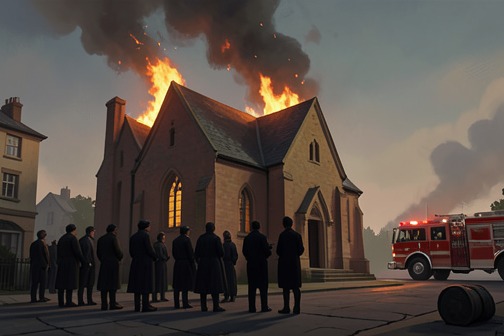
The [Wave of Norwegian church arsons in 1992](entity:event-recall-event-1992-35934dd8542f) was a series of fires at churches in [Norway](entity:location-recall-location-norway-64019b7a3249) that became a potent symbol in the conflict between parts of the [Black Metal](entity:concept-recall-concept-black-metal-a68ced181ea7) scene and Christianity. The fires caused a death during the response at [Sarpsborg](entity:location-recall-location-sarpsborg-37b4d940824d) and acquired meanings beyond the physical destruction: some musicians presented them as vengeance for Christianity’s historical suppression of heathen sacred places, while later coverage helped turn the attacks into a national and international media story.
## The fires and their human cost
A retrospective account lists churches set on fire in Storetveit, at the [Fantoft Stave Church](entity:location-recall-location-fantoft-stave-church-8b2b503c52ed), in Holmenkollen, [Stavanger](entity:location-recall-location-stavanger-4aa33f470c02), Ormøya, Skjold, Hauketo, and Sarpsborg during 1992. The sites included the Fantoft Stave Church, one of the few surviving stave churches. Their range made the attacks appear not as a single isolated incident but as a pattern reaching multiple communities.
The fires also had consequences beyond damage to the buildings. A member of the fire department died in the flames while efforts were being made to extinguish the Sarpsborg fire. That death stands apart from the symbolic language later attached to the attacks: the consequences were not confined to a conflict over religious identity or cultural memory.
## Claims, motives, and the meaning assigned to the fires
In a January 1993 front-page story, [Bergens Tidende](entity:organization-recall-organization-bergens-tidende-8ff432ddecae) reported an anonymous young man from [Bergen](entity:location-recall-location-2106a7d56ff4) claiming that those behind the fires were responsible for eight church burnings and intended to continue. The newspaper account presented the statement as an effort to spread fear and devilry. It is evidence of how responsibility and intention were publicly asserted at the time, rather than independent confirmation that every fire in Norway had the same perpetrators or motive.
[Varg Vikernes](entity:character-recall-character-varg-vikernes-c87846adebba) later described the destruction of stave churches as a possible new beginning after the passage from heathendom to Christianity. He denied having burned a church himself, while expressing approval of those who had. In this account, the church fires were imagined as a reversal of earlier religious violence: Christianization had destroyed or converted places treated as sacred by the Nordic population, and attacks on Christian buildings could therefore be represented by some Black Metal musicians as retaliation. That interpretation explains the symbolic claim made for the fires; it does not establish who set each one or why.
The book also places the episode within a scene whose defining elements lay as much in belief and outlook as in music, while emphasizing that it had no fixed rulebook and that its ideological boundaries changed over time. The arsons consequently became a contested emblem: for some participants they signified anti-Christian resistance and heathen identity, while for outside observers they could stand for a generalized threat attributed to [Satanism](entity:concept-recall-concept-252e3ea7bfc5).
## Public reaction and the media story
The press account of the claimed eight fires helped bring the [Norwegian Black Metal](entity:concept-recall-concept-72d1e7e518a4) scene to wider attention. As reporting on anti-Christian crimes escalated, the media increasingly presented them as arising from the scene. A later study of Norwegian coverage argued that this created the impression of a large-scale Satanic assault on Christians, provoking fear among both police and church communities. In some places, police and congregations kept watch over churches at night; some churches were later burned when vigilance had fallen.
The coverage did not remain confined to Norway. A 1993 feature in the British magazine [Kerrang!](entity:organization-recall-organization-kerrang-dd7875321909) presented the Norwegian scene to an international metal readership through a sensational account centered largely on alleged remarks by Vikernes and [Øystein Aarseth](entity:character-recall-character-ystein-aarseth-a5d55bfc01ea). In retrospect, the book describes the feature as the story that brought Norwegian Black Metal to the world’s attention, while observing that the crimes would likely overshadow the music. This later publicity was part of the event’s afterlife, not evidence that media attention alone caused the fires.
## Cultural resonance and limits of interpretation
One account draws a connection between the fires and the [Oskorei](entity:character-recall-character-oskorei-5ee34d48e80e), a folkloric Wild Hunt tradition, while distinguishing modern urban underground culture from the rural communities in which such folklore took shape. It presents Nordic cosmology as a possible continuing influence on Black Metal, not as proof of an unbroken tradition or a direct cause of arson. The fires could be cast in that cultural frame as an assault on Christian sacred space, but the account also notes that some musicians used Nordic symbols decoratively while others treated the cosmology as a serious basis for resistance.
The episode thus occupies two registers at once: a series of church fires with concrete damage and a fatal consequence, and a symbolic story repeatedly recast by musicians, journalists, religious communities, and later interpreters. Keeping those registers distinct matters. A claim of shared purpose, a religious explanation, and a media image of a unified Satanic campaign are not interchangeable with evidence about the circumstances of each fire.
Event 42
Åsane Church Fire
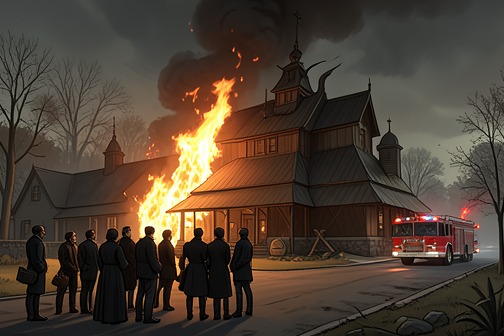
The [Åsane Church Fire](entity:event-recall-event-94a8f28fa373) was one of the church arsons in [Norway](entity:location-recall-location-norway-64019b7a3249) in 1992, and the church burned to the ground. A contemporary account portrayed the attack as part of a series of fires associated with a small group, while also preserving uncertainty about individual participation and motive. The event’s significance lies not only in the destruction itself, but in the competing explanations attached to it: deliberate hostility toward Christianity, anger provoked by a television broadcast, and a wider [Black Metal](entity:concept-recall-concept-black-metal-a68ced181ea7) narrative shaped by performers, journalists, and public fear.
## Place in the 1992 Arson Wave
The account places Åsane among a series of Norwegian church fires in 1992, alongside fires at Storetveit, Fantoft, Holmenkollen, [Stavanger](entity:location-recall-location-stavanger-4aa33f470c02), Ormøya, Skjold, Hauketo, and [Sarpsborg](entity:location-recall-location-sarpsborg-37b4d940824d). It says that a source for the newspaper report spoke in the plural and claimed six people had participated in eight fires. The report’s journalist inferred that the speaker had been present when [Åsane Church](entity:location-recall-location-sane-church-4322806c9d78) burned, although the speaker did not confirm this directly. The distinction is important: the account presents a contemporary source’s claims and the journalist’s impression, not a settled identification of every participant.
The wider sequence gave the fire a meaning beyond damage to one building. Fantoft was one of the few remaining stave churches, and the book describes some Black Metal musicians as interpreting church destruction as vengeance for Christianity’s earlier destruction or conversion of sacred places associated with the Nordic past. In that ideological framing, a church was not merely a building; it represented a religious history that participants regarded as imposed on heathen ground. That context helps explain why fires could be presented as symbolic retaliation, but it does not establish that every participant shared the same beliefs or acted from the same motive.
## The Reported Attack
In the account, the fire at Åsane Church was said to have occurred the night before Christmas Eve. The speaker characterized the timing as coincidental and the fire as unplanned. He attributed the group’s anger to a television use of the word peaceful, which, in his telling, intensified their resentment of what he described as society’s self-righteousness. This is the speaker’s account of motive, not independent confirmation that the broadcast caused the attack.
The same account describes an accomplice trying to enter through the windows, without success, and then using an axe against the door, which gave way. A source told the newspaper that gasoline was spread on the altar and on a figure of [Jesus](entity:character-recall-character-jesus-e3ecfe1d0b33), that hymn books were torn up and piled by the walls, and that additional gasoline was poured beneath the church tower. Matches then set the building alight. These details make the attack appear purposeful even as the speaker denied that the fire had been planned: the claimed lack of advance planning sits in tension with the described preparation and deliberate choice of religious objects and locations within the church.
The source said that the church bells began tolling seconds after the fire started and that fire engines arrived within two or three minutes. The group was nearby. The speaker also claimed that press descriptions of the perpetrators were mostly accurate, while insisting that a person questioned by police had nothing to do with them. The account does not establish the outcome of that investigation or independently verify the speaker’s claims. It does report the decisive physical consequence: Åsane Church was completely destroyed.
## Interpretation and Public Meaning
The fire entered a public argument in which the acts were variously understood as crime, anti-Christian violence, or Satanic ritual. The book describes the early Black Metal milieu as treating [Satan](entity:character-recall-character-satan-835177cd068e) as a real force in a cosmic struggle between good and evil, unlike international Satanic groups that treated Satan symbolically. That distinction illuminates the religious language around the arsons, but the account of Åsane does not identify the fire as a ritual. Its described actions and attributed explanation should therefore remain distinct from the sensational label of Satanic ritual.
Nor did the book reduce the fires to a single coherent religious program. It notes that some musicians celebrated church destruction as revenge against Christianity, while other uses of Nordic symbols and language could be decorative rather than grounded in serious study. Even an emphatic public statement by [Varg Vikernes](entity:character-recall-character-varg-vikernes-c87846adebba) distinguished between condemning or praising arson and claiming personal responsibility: he said he had never burned a church while endorsing those who had. Such statements formed part of the public rhetoric surrounding the fires, but they are not proof of who set Åsane Church alight.
## Media and the Limits of the Record
The arsons helped bring the [Norwegian Black Metal](entity:concept-recall-concept-72d1e7e518a4) scene into mainstream attention. In January 1993, [Bergens Tidende](entity:organization-recall-organization-bergens-tidende-8ff432ddecae) published a cover story built around Vikernes and the claim that the scene had lit the fires; in March, [Kerrang!](entity:organization-recall-organization-kerrang-dd7875321909) presented the Norwegian phenomenon to a broader metal readership through a lurid cover feature. The book argues that media exposure helped Vikernes construct a near-mythic public image and intensified competition within the scene for prominence. These broader observations explain why an individual church fire could become part of a much larger story about menace and identity, but they do not demonstrate that coverage caused this particular attack.
The surviving account is consequently strongest where it records the reported sequence and the destruction, and more tentative where it assigns responsibility or motive. The claimed group connection, the speaker’s explanation, and the journalist’s impression of his presence are not interchangeable kinds of evidence. Keeping them separate preserves both the force of the event and the uncertainty surrounding it: Åsane Church was deliberately set on fire according to the reported account and burned down, while the precise roles and intentions behind the attack remain less securely established in the material presented.
Event 43
Øystein Aarseth Murder
The murder of [Øystein Aarseth](entity:character-recall-character-ystein-aarseth-a5d55bfc01ea) on August 10, 1993, was a fatal rupture within the [Norwegian Black Metal](entity:concept-recall-concept-72d1e7e518a4) scene: [Varg Vikernes](entity:character-recall-character-varg-vikernes-c87846adebba), once Aarseth’s friend and prospective label associate, killed the founder of [Mayhem](entity:organization-recall-organization-mayhem-d00b396b754c) after their relationship had deteriorated. The case brought the scene’s internal rivalries into public view, while the dispute over why Aarseth was killed remained unresolved in the accounts presented here.
## A relationship formed inside the scene
By the time Vikernes entered the [Oslo](entity:location-recall-location-oslo-aa85218d6b1a) circle, Aarseth had become one of its central figures. Mayhem’s place in Norwegian Black Metal rested not only on its music but also on the influence of its founder, whose record shop and plans for [Deathlike Silence Productions](entity:organization-recall-organization-deathlike-silenc-0151b98f1877) helped draw other groups into contact. [Darkthrone](entity:organization-recall-organization-darkthrone-ffc0621cad8e), [Burzum](entity:organization-recall-organization-burzum-5b169b75fc03), [Immortal](entity:organization-recall-organization-immortal-cd40b89350b2), [Thorns](entity:organization-recall-organization-thorns-02e825d997f1), Enslaved, [Arcturus](entity:organization-recall-organization-arcturus-c3b0f3acd760), and later [Emperor](entity:organization-recall-organization-emperor-2aa40c379fc1) were among the bands connected with him. The scene had no fixed rulebook, but acceptance and recognition were shaped by senior musicians and the attitudes they represented.
Vikernes came from [Bergen](entity:location-recall-location-2106a7d56ff4), a long journey from Oslo, and made extended visits during which he and Aarseth became close friends. Aarseth was enthusiastic about Burzum’s recorded debut and discussed releasing it through his label. That earlier partnership makes the later killing more than a clash between distant rivals: it marked the collapse of a relationship formed through shared work, personal visits, and the ambitions of a small underground scene.
By 1993, however, their friendship had given way to hostility. The evidence presents money and control of the Burzum recordings as possible sources of the conflict. Aarseth owed Vikernes royalties, though the book notes that financial disorder at the label was not unusual. Vikernes denied that money motivated the killing. Other observers interpreted the conflict as a struggle for leadership, since both men had become influential in different ways: Vikernes was associated with church burnings, while Aarseth had helped build the scene around his shop and label. [Metalion](entity:character-recall-character-metalion-62791a4f39cf) rejected a simple explanation based on a contest for status, and the available accounts do not establish one definitive motive.
## From rivalry to killing
The killing took place against a background of escalating criminal activity and publicity. Church-burners associated with the scene commonly described their attacks as retaliation against Christianity. Vikernes had himself been arrested in early 1993 over suspected church arsons, then released when authorities could not prove his connection to them. The book also describes how extensive media attention helped Vikernes construct an almost mythic public image and intensified competition over who would command attention within the subculture. This context helps explain how notoriety and status became entangled with the conflict, but it does not by itself settle what prompted the murder.
According to testimony later presented at Vikernes’s trial, the journey to Oslo was planned in advance. [Snorre Westvold Ruch](entity:character-recall-character-snorre-westvold-ruc-3411e8c344cf), a member of Thorns, accompanied Vikernes on the seven-hour drive; a third friend remained in Bergen. The alleged arrangements included leaving that friend with a film and an ATM card to support a false account that Vikernes had stayed in town. The film had already been seen by both travelers, and the wrong card was left behind, preventing the planned withdrawal. These details were presented as evidence of preparation and an attempted alibi, not as proof of a motive.
Ruch’s account placed him outside Aarseth’s apartment. He said he had not intended to enter, but had agreed to accompany Vikernes as moral support and waited in the stairwell. Ruch reported that Aarseth came out of the apartment with Vikernes immediately behind him, after which Ruch hurried downstairs and toward the square outside the building. Vikernes followed him. The testimony described a sudden, unfolding scene that contradicted the plan, as Ruch understood it, for the killing to happen quickly inside the apartment.
## Suspicion and investigation
The murder did not come as an entirely unimaginable possibility to everyone in the scene. When [Ihsahn](entity:character-recall-character-ihsahn-6aa07f840bff) heard Aarseth’s name on the evening news, he immediately suspected Vikernes. He knew the two men were no longer friends and that they hated one another, although [Samoth](entity:character-recall-character-samoth-13411749ec12) initially thought the suspicion went too far. Ihsahn’s reaction captures the distinction between knowing of a feud and expecting it to end in a killing: the antagonism was recognized, but its consequence still shocked him.
[Ilsa Raluce Anghel](entity:character-recall-character-ilsa-raluce-anghel-66257840c519) likewise believed the killer belonged to the Norwegian scene. She declined to name the person she suspected, saying that doing so would put her at risk, and reasoned that Aarseth was unlikely to have admitted a stranger to his apartment. After the interview with Ilsa, police investigators assembled evidence and testimony and, according to the account, made their move four days later. On August 19, 1993, they arrested Vikernes in Bergen. The investigation widened beyond the killing as the authorities assembled a case involving other crimes.
## Trial and aftermath
The trial drew testimony from people across the [Black Metal](entity:concept-recall-concept-black-metal-a68ced181ea7) scene, including witnesses whose statements could implicate themselves as well as others. Documents presented included a record contract Vikernes had carried to Oslo, letters, maps, forensic reports, and the newspaper interview that had helped bring the case to public attention. Vikernes maintained a code of silence in his own account and resented those who testified. The statements and police interviews nevertheless supported convictions for murder, arson, and illegal weapons possession.
In spring 1994, Vikernes received a twenty-one-year sentence, [Norway](entity:location-recall-location-norway-64019b7a3249)’s maximum prison term. His sentence also covered three church fires, an attempted burning of a bell tower, and possession of explosives, including quantities he admitted storing. Ruch received an eight-year sentence for his part in the killing. On the day Vikernes was sentenced, two more churches were burned; the book presents the fires as presumably symbolic support for him, rather than establishing who was responsible.
The killing’s consequences extended beyond the courtroom. Headlines about the crime and Black Metal’s occult associations spread through newspapers and magazines. Some record shops and distributors refused to stock Burzum and other Norwegian bands, while bootleg recordings circulated. Aarseth’s death also altered the meaning of the scene’s earlier spectacle: the sinister image, the competition for recognition, and the fascination with transgression now stood alongside an actual murder and its legal consequences. The case made the conflict between the scene’s self-created mythology and the realities of its actions impossible to keep separate.
Event 44
Varg Vikernes Murder Trial
The [Varg Vikernes Murder Trial](entity:event-recall-event-varg-vikernes-b346e65f9662) ended in spring 1994 with Vikernes sentenced to 21 years in prison, then the maximum penalty in [Norway](entity:location-recall-location-norway-64019b7a3249), for killing [Øystein Aarseth](entity:character-recall-character-ystein-aarseth-a5d55bfc01ea). The case became a focal point where a violent act, disputed explanations, church-arson investigations, and a rapidly expanding media story converged. Its significance lay not only in the sentence but also in how the proceedings fixed Vikernes and [Norwegian Black Metal](entity:concept-recall-concept-72d1e7e518a4) in the public imagination.
## Background and Competing Explanations
Before the murder case, Vikernes had already been investigated over church arsons. He was accused of involvement in two fires and held from January to March 1993, but was released because the authorities could not prove a connection at that time. A broader interpretation of the church burnings described Vikernes and others convicted of such acts as viewing them as retaliation against Christianity; that account presents this as their justification, not as an established explanation for every fire.
The killing of Aarseth followed a conflict on August 10, 1993. One account associates the dispute with rights to [Burzum](entity:organization-recall-organization-burzum-5b169b75fc03) recordings and a large sum of money. Vikernes gave a different explanation in an interview: he said he believed Aarseth planned to stun, restrain, and torture him, and described his own actions as preemptive. These are Vikernes’s claims about his fears and reasoning; the available account does not establish them as the court’s finding of motive.
## Trial and Sentence
At the trial in spring 1994, Vikernes was sentenced to 21 years, Norway’s highest prison term. He was 21 years old. The account identifies the sentence with the killing of Aarseth, while its separate discussion of the earlier church-arson investigation records that authorities had initially failed to prove Vikernes’s connection to those fires. It does not detail the court’s findings on each charge or provide a full account of the trial testimony, so the distinction between the early investigation and the murder conviction remains important.
The sentences imposed on other participants show the broader reach of the proceedings. [Bård Eithun](entity:character-recall-character-b-rd-eithun-0308f5c65b24) received 14 years for murder, and [Snorre Westvold Ruch](entity:character-recall-character-snorre-westvold-ruc-3411e8c344cf), who accompanied Vikernes to [Oslo](entity:location-recall-location-oslo-aa85218d6b1a), received eight years as an accomplice to Aarseth’s killing. Other people who had participated in church burnings and confessed received terms of two to three years in minimum-security institutions. Some arson defendants were also ordered to pay substantial sums toward damage and reconstruction costs. On the day Vikernes was sentenced, two more churches were burned; the book presents these fires as presumably intended as symbolic support, rather than identifying their perpetrators or establishing that purpose as fact.
## Media Attention and Public Meaning
The trial took place after the scene had become a national and international media story. On January 20, 1993, [Bergens Tidende](entity:organization-recall-organization-bergens-tidende-8ff432ddecae) published a front-page feature based on an interview with Vikernes, with his face beneath the headline WE LIT THE FIRES. The account describes the article as a turning point in mainstream attention and as an occasion for Vikernes to construct a conspicuously threatening public image. It also notes that the article closed by attributing eight church burnings and a killing at [Lillehammer](entity:location-recall-location-042a81b6d311) to him, although the latter crime was later associated with Eithun.
A March 27, 1993, cover feature in [Kerrang!](entity:organization-recall-organization-kerrang-dd7875321909) carried that sensational framing beyond Norway. Its cover combined an image of Vikernes holding knives with a burning church and a photograph of [Emperor](entity:organization-recall-organization-emperor-2aa40c379fc1) in corpse paint and medieval-style costume. The article presented Norwegian Black Metal through lurid accounts of arson, death, and Satanic ritual, drawing much of its material from alleged remarks by Vikernes and Aarseth. It also appears to have been the first media story to label the scene neo-fascist. In retrospect, Vikernes disputed many of his reported remarks as fabricated, misunderstood, misquoted, or taken out of context; others regarded the scene’s statements as naive or deluded. Whatever their reliability, the coverage made the crimes more prominent than the music and carried the scene to an international audience.
The proceedings therefore unfolded in a climate where public interpretations had already hardened around provocative headlines and the scene’s cultivated image. The book does not treat those headlines as a substitute for judicial findings: it distinguishes media claims, participants’ later explanations, and what the available trial account establishes. The sentence became a defining public marker, but the surrounding coverage ensured that the case was read as part of a larger story about [Black Metal](entity:concept-recall-concept-black-metal-a68ced181ea7), violence, and anti-Christian transgression.
## Institutional Retrospective
In 1998, Norwegian police issued [Kirkebranner og satanistisk motiverte skadeverk](entity:object-recall-object-kirkebranner-og-satani-4bbc915ff1be), a report prepared through cooperation among police and judicial officials and investigative agencies. It described the structure of the Black Metal scene around the time investigations began, how police penetrated the subculture, and methods other departments might use in comparable cases. The report offered a later institutional account of the investigations, distinct from the sensational media portrayals that preceded the trial.
The trial’s afterlife also extended into the music business. Following Vikernes’s conviction, several record shops and distributors refused to stock Burzum and some other Norwegian bands, while Burzum bootlegs appeared on the market. In this way, the case produced consequences beyond imprisonment: the court’s sentence, continuing disputes over the meaning of the crimes, and the commercial circulation of the music all became parts of the same public history.
Event 45
Einsatzgruppe Case

The [Einsatzgruppe Case](entity:event-recall-event-einsatzgruppe-6b4313bd019d) tested the distance between the militant language of a small nationalist circle and what prosecutors could establish as an actionable plan. The 1998 court proceedings ended with the charges dropped for lack of concrete evidence of planned terrorist strikes; the book leaves open whether the group was ever materially or psychologically prepared to carry out violence on that scale.
## A Small Core and a Wider Circle
The account distinguishes between a hardcore of four or five people, whom police arrested, and a looser surrounding group estimated at fifteen to twenty. That outer circle was fluid: some young people were drawn in without fully understanding the scene or its more serious aims. Their possible participation in disruptive, exciting activities did not, in itself, establish involvement in a coordinated violent plot.
One example of this peripheral activity was a plan to disrupt a meeting of the Israel Mission in [Stavanger](entity:location-recall-location-stavanger-4aa33f470c02). Younger boys were reportedly included in that circle. The account presents such an action as a form of provocative group activity, while sharply distinguishing it from allegations involving attacks on arms dealers or stealing assault rifles to target political opponents. That distinction matters to the case: proximity to militant rhetoric or disruptive plans was not proof of a concrete terrorist operation.
## Allegations and the Limits of Proof
When the case came to trial in 1998, the charges against the Einsatzgruppe were dropped. The court had not been presented with concrete evidence that the group had initiated plans for terrorist strikes. Some of the nationalists implicated in the case later chose to bring counter-lawsuits against the state, alleging wrongful imprisonment. The legal outcome therefore did not affirm the alleged plans; it marked the failure to prove them to the court’s standard.
The account keeps a separate question unresolved: whether the group was genuinely ready to move from rhetoric into action, and whether its members had the practical and psychological capacity for a high level of violent conflict. It states that this cannot be known for certain, even while noting the intensity of the rhetoric in some nationalist circles. The distinction between forceful language, preparation, and an executable plan remains central to the case’s uncertain record.
## Political Connections and Aftermath
The case also sits within a wider, explicitly described but ambiguous interaction between elements of the [Black Metal](entity:concept-recall-concept-black-metal-a68ced181ea7) scene and revolutionary-right circles. The Einsatzgruppe supported [Varg Vikernes](entity:character-recall-character-varg-vikernes-c87846adebba), whose public profile gave him access to media attention, though the reach of his influence among more established far-right groups remained unclear. This association provides context for the case without demonstrating that every person in either milieu shared the same aims or took part in the same activities.
After the alleged breakout scheme associated with the group failed in the spring of 1997, Vikernes’s book [Vargsmål](entity:object-recall-object-vargsm-l-8cc9cc89e541) was published. The account describes the publication as a propaganda success for him, but it does not establish that the book resulted from the case or that its publication resolved the allegations. Instead, the episode shows how political visibility continued after the alleged plot had failed, while the court’s central evidentiary conclusion remained unchanged: concrete plans for terrorist action had not been proved.