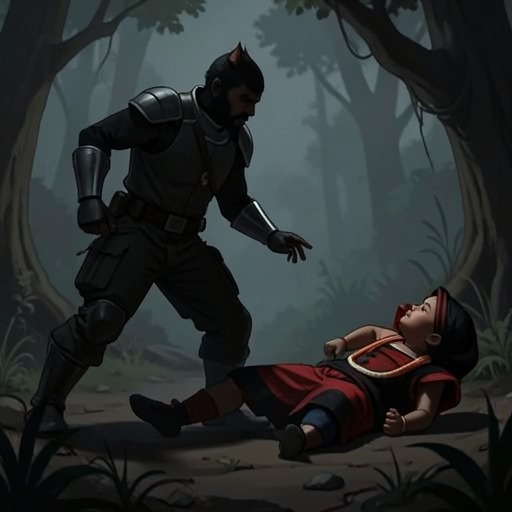
Predator and prey
MasqueradePredator and prey is the framework Robert Rothman uses to understand his own nature and his place in the world. By describing predation as an enduring cycle, he recasts deliberate transgression as part of an order older than individual choice—and feels freer once he accepts that account of himself.
The Expression as a Worldview
Rothman’s reasoning begins with a claim about shared human impulses: he believes attraction to beauty and the desire to possess it are widespread, but that only a few people act on those feelings without the restraints of society and morality. The contrast is central to his worldview. He presents himself not as someone without desire, but as someone who has crossed a boundary that most people continue to respect.
He also describes his struggle against his nature as a failure. In this account, “predator” and “prey” are not merely labels for opposing roles; together they make a pattern he considers persistent and larger than any one person. The framework turns an individual choice into an apparent feature of the world.
Rothman’s Self-Justification
Rothman applies the expression to himself directly, imagining a world abundant with potential prey and claiming the freedom to act at will. His language joins power to possession and control. Although he recognizes that the woman before him may merit sympathy, he treats that feeling as weaker than the needs driving him. The contrast exposes the moral evasion built into his reasoning: acknowledging another person’s suffering does not alter his conduct.
His further claim that new lives will continue to appear, and that some will eventually become prey to people like him, makes the cycle seem self-renewing. This is Rothman’s interpretation of human existence, not an independent account of the world established by the passage. By presenting harm as one turn in an ancient pattern, he minimizes the significance of his own responsibility.
Narrative Significance
The expression gathers Rothman’s beliefs about instinct, restraint, and power into one image. Its movement from supposedly universal desire to the exceptional person who acts upon it lets him portray himself as both governed by nature and released from ordinary limits. The resulting freedom is psychological: once he accepts his “true nature,” he no longer questions why he is as he is. The predator-and-prey cycle therefore reveals less about an impersonal law of life than about the story Rothman tells himself to make his choices feel inevitable.