Vertebrate
MayaVertebrates are the book’s living thread between deep evolutionary time and the human mind: a diverse lineage shaped by contingent biological processes, yet presented in debate and verse as the means by which the universe comes to perceive itself. The text moves between concrete natural history, ecological accounts of island life, and a philosophical argument over whether consciousness is merely one adaptive trait or a retrospective sign of evolution’s direction.
Biological History and the Question of Purpose
In a discussion about whether life’s evolution had been driven only by unpredictable mutations, José asks whether natural science might overlook mechanisms involving intention or purpose. His challenge makes vertebrate history part of a larger dispute: can the emergence of human consciousness be treated as an arbitrary outcome of the struggle for existence, or as the process’s destination?
José argues that consciousness cannot be just one incidental quality among many. He sees it as the culmination of a natural tendency toward increasingly specialized sensory capacities and intellectual overview. The repeated emergence of eyes and vision, flight, and upright walking serves him as evidence of recurring evolutionary directions. The claim reaches beyond biological recurrence, however: it interprets those developments as signs of a larger impetus rather than simply as traits that arose under particular conditions.
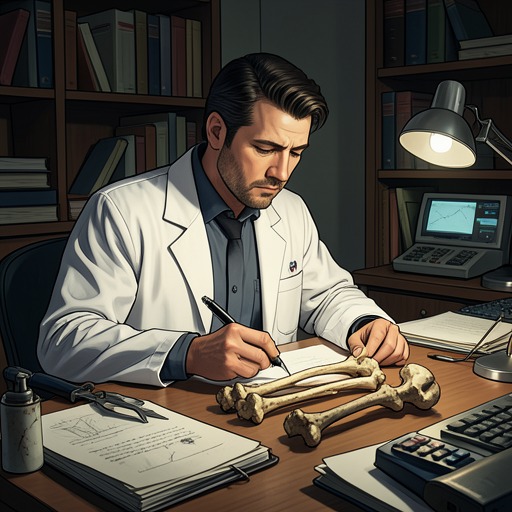
Frank answers from the standpoint of evolutionary biology. Wings and feathers, he explains, develop through mutations over many thousands of generations; natural selection favors individuals with a small advantage in survival and reproduction. That account supplies a mechanism, but the conversation probes a difficulty in explaining incremental change: rudimentary wings might be cumbersome long before they become useful for flight. The exchange therefore distinguishes the operation of selection from the broader question of whether evolutionary history has an intended end.
Deep Time and Retrospective Meaning
John Spooke develops the argument through the scale of geological time. Three hundred million years ago, he suggests, it would have been premature to call life absurd or purposeless: its apparent destination might simply not yet have had time to flower. Humanity, on this view, belongs to the present evolutionary vanguard but has not necessarily reached the goal. Only a future observer, whether living a hundred, a thousand, or a billion years later, could know where the process had been going.
This proposal reverses ordinary causal explanation. Frank objects that a cause points backward in time and cannot lie in the future. John’s answer is that later developments may give earlier events a purpose visible only in retrospect. He applies the same reversal to the formation of the solar system: a witness to its immense, seemingly blind forces might have judged the spectacle absurd, but that judgment would have been premature if the later emergence of life and reason altered its meaning.
The argument does not establish that biological evolution follows a plan. Rather, it places two modes of explanation beside one another: natural selection accounts for how traits can spread through inherited variation, while retrospective teleology asks whether later consciousness can make the earlier history of life meaningful. Vertebrates matter to this debate because their evolutionary history leads, in the book’s framing, to organisms capable of asking what that history means.
The Planet, Life, and Human Consciousness
At a gathering where participants present their views of life, José makes a related, anthropocentric case about the conditions that made humanity possible. The universe, he argues, could not have been much smaller or substantially different and still have produced a human being. The human brain, composed of atoms forged in long-extinguished stars, is described as perhaps the universe’s most complex matter and more difficult to understand than neutron stars or black holes.
José also treats planetary circumstances as prerequisites for the appearance of life and consciousness. A universe capable of forming stars and planets could eventually produce at least microorganisms; on Earth, Jupiter’s enormous gravity helps shield the planet from repeated impacts by meteors and asteroids. The planet’s apparent chaos and its protective conditions are thus folded into an argument about the emergence of a biosphere and, eventually, human awareness. José concludes that the Big Bang’s applause came only fifteen billion years after the explosion: consciousness arrives late, but it is the moment when the universe can register its own history.
That image makes vertebrate life more than a catalogue of bodily forms. It places warm-blooded vertebrate neurons at a culminating point in an evolutionary relay, without turning the scientific account into proof that evolution had a predetermined endpoint. The distinction remains important: the text dramatizes the human capacity for cosmic reflection, while the characters disagree about whether that capacity reveals a purpose already present in nature or supplies meaning only after the fact.
Ecological Vulnerability and the Island Record
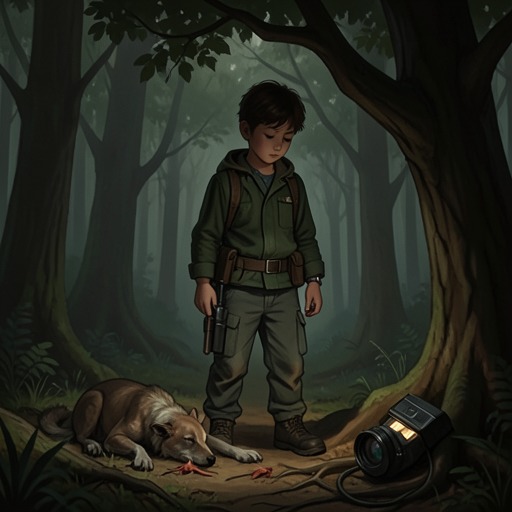
The evolutionary story has an ecological counterpart in the account of Pacific islands, where vertebrates and other animals are affected by the consequences of deliberate and accidental introductions. On Taveuni, the expedition’s subject is the ecological balance disturbed by imported species: stowaway rats, mice, insects, and lizards; intentionally introduced animals such as opossums and mongooses; and domestic animals that escape or are abandoned. The account also includes herbivores such as rabbits and roe deer as accessible prey, illustrating how introductions can alter relationships among species rather than merely add new ones.
The narrator describes a recurring chain of attempted remedies. Toads are brought in to control insects in sugar plantations, and cats to control rats; these introduced animals can become worse pests than the species they were meant to suppress. Predators are then imported to control the new problem, threatening birds and native reptiles and prompting demand for still larger predators. The sequence exposes the danger of treating an ecosystem as a set of isolated nuisances: each intervention can create pressure for another, while a food web formed over millions of years cannot be rebuilt at a stroke.
Taveuni also shows that this damage is neither uniform nor inevitable. More than one hundred bird species inhabit the island, many of them native, including the Orange-breasted Pigeon. The absence of the Indian mongoose is identified as decisive to the persistence of this richness. Introduced magpies have occupied ecological space, and introduced toads have displaced native frogs toward the forest interior, but the island’s exceptional bird life remains largely intact. The contrast makes species introductions legible as a chain of specific pressures, not a single undifferentiated loss.
The broader account links ecological disruption to more than introduced animals. Deforestation and imprudent plantation exploitation cause severe erosion and destroy traditional habitats; commercial farming and the pursuit of profit further displace local subsistence. In this setting, vertebrate survival depends on habitat and ecological relations as much as on the traits of individual animals. The island narrative thus counters any simple celebration of evolutionary progress: life’s long development can produce intricate forms, while human actions can unravel the conditions on which those forms depend.
Vertebrates as the Book’s Frame
Late in the book, Vera asks what two stories are about, and the narrator answers simply that they concern vertebrates. The reply reframes the material around an animal lineage rather than treating human history as an isolated subject. What might seem to be separate stories—biological change, consciousness, and the fate of life—belong to a shared history of organisms with backbones.
The final poetic sequence sharpens that frame. It places the first corks popping in the neurons of a warm-blooded vertebrate beside the arrival of postmodern primates at a wider vision; elsewhere it insists that elves are not virtual beings but vertebrates, described through eggs and mutant reptile young. These images collapse the distance between the fantastic and the biological. The imagined creature is grounded in embodied life, and the human mind that can invent it is itself part of the vertebrate story.
Vertebrates therefore connect the book’s largest scales without resolving their tensions. They are vulnerable animals within disrupted ecosystems, products of a history explained through mutation and selection, and—at the human end of that history—possible instruments of cosmic self-awareness. The universe’s supposed destination remains contested; the fact that life can ask the question is the narrative’s recurring marvel.