About 15 billion years ago through the present
Cosmic Origins and Evolution
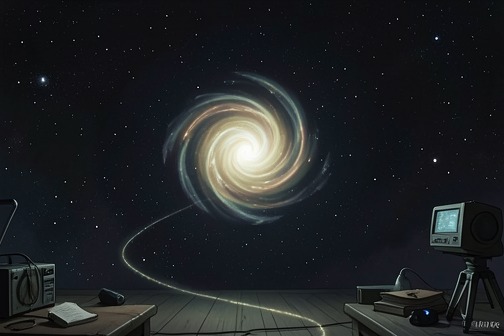
The novel frames its human story against the universe’s long unfolding: the [Big Bang](entity:event-recall-event-big-bang-99b429bd6303) gives rise to stars and planets, life emerges on [Earth](entity:location-recall-location-dd4e41a8f628), and vertebrates pass through an immense evolutionary history before any creature can look back and describe it. [Frank Andersen](entity:character-recall-character-frank-andersen-5bd99dff9106) understands his body as the latest link in an unbroken chain of cellular life, a perspective that makes human consciousness seem both astonishing and painfully temporary.
The book repeatedly returns to the possibility that evolution has a purpose—or that purpose only becomes visible retrospectively, once later life can recognize the earlier stages that made it possible. This question shapes [Frank](entity:character-recall-character-frank-aae9eaa69e27)’s encounters with [Ana María Maya](entity:character-recall-character-680077602348) and [José](entity:character-recall-character-a1a12645ab4b), and becomes the philosophical thread joining the novel’s ecological concerns, its mysterious legends, and its meditation on mortality.
Frank’s childhood in Vestfold, before age eight
Frank Finds the Dead Roe Deer
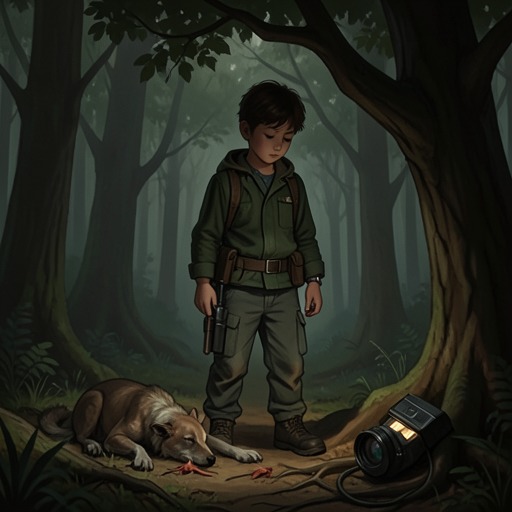
As a young child in [Vestfold](entity:location-recall-location-268a653f6771), [Frank Andersen](entity:character-recall-character-frank-andersen-5bd99dff9106) runs through a forest carrying hazelnuts to show his mother and comes upon a dead roe deer beneath autumn leaves. The discovery fills him with shame and fear: if the animal can lie dead in the woods, then he, too, is only a mortal creature with a limited time on [Earth](entity:location-recall-location-dd4e41a8f628).
He keeps the experience secret rather than asking his family for comfort. The unspoken shock becomes a lasting source of his fascination with nature and deep time, but also the origin of an existential anxiety that returns whenever death feels close.
Late 1980s through the early 1990s
Frank and Vera Build a Life
[Frank](entity:character-recall-character-frank-aae9eaa69e27), a Norwegian evolutionary biologist, meets [Vera](entity:character-recall-character-7ad1f984513a) in [Spain](entity:location-recall-location-spain-336a02c89dc7) in the late 1980s. Within a few months they are living together in [Oslo](entity:location-recall-location-oslo-aa85218d6b1a), bound by a shared longing for permanence and by Vera’s childhood fantasy of a magical drink that could grant eternal life to two people who shared it.
Vera returns to [Barcelona](entity:location-recall-location-barcelona-c4abb0c424bd) in 1992 to defend her doctoral work on human migrations from Africa. Her postcard tells Frank that she is pregnant with their daughter and asks how they can accept the brevity of life. The child seems to them like a portion of their imagined “magic drink”: something of their love has begun a life that may continue through generations.
When Sonia is four and a half
The Fatal Car Accident
After collecting [Sonia](entity:character-recall-character-8f9a3bb67b83) from day care, [Vera](entity:character-recall-character-7ad1f984513a) puts the child in the car and steps away to retrieve her forgotten shoes. She switches off the engine and removes the key but forgets to set the handbrake; the car, left in neutral, begins to roll. Sonia is killed in the ensuing accident.
The ordinary chain of mistakes becomes unbearable for both parents. [Frank’s grief](entity:state-recall-state-frank-c56eb9f22f4f) hardens into repeated questions and reproaches, while Vera carries crushing guilt. Their daughter’s death destroys their shared domestic life even though their love and their common sorrow remain.
After Sonia’s death and before Frank’s Pacific expedition
The Marriage Breaks Under Grief
[Frank](entity:character-recall-character-frank-aae9eaa69e27) and [Vera](entity:character-recall-character-7ad1f984513a) try to live together after the accident, but grief fills their home. Frank asks the same painful questions about the car, the handbrake, and the shoes, while Vera is unable to escape either her guilt or his anguish. Their eventual reconciliation does not restore their ability to share a household.
Vera leaves their home in [Oslo](entity:location-recall-location-oslo-aa85218d6b1a) and returns to [Barcelona](entity:location-recall-location-barcelona-c4abb0c424bd). Frank recognizes later that she was not simply fleeing him or refusing forgiveness; she was trying to divide a sorrow too large for one home to contain. Their separation leaves both still attached to their daughter and to one another, but unable to imagine a way back.
Several years before the novel’s main events
John’s Bereavement
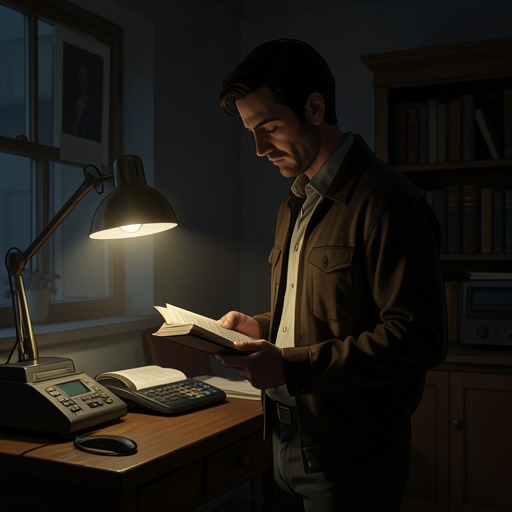
[John Spooke](entity:character-recall-character-b5d88c9679bd), an English writer living in Croydon, loses his wife [Sheila](entity:character-recall-character-33e01f7b7996) after a long illness. He keeps a photograph of her near his desk and finds it increasingly possible to speak with her in his thoughts, continuing the habits and private language they shared while she was alive.
Her death makes him acutely aware of how much a person’s vitality depends on a loved one’s presence. His own grief later helps him recognize the intensity of [Frank](entity:character-recall-character-frank-aae9eaa69e27)’s loneliness and motivates the risky interventions through which he tries to bring people back into one another’s lives.
May 26, 1992, recalled during the novel’s opening
Frank Receives Vera’s Postcard
In the opening frame, John has before him [Vera](entity:character-recall-character-7ad1f984513a)’s old postcard from [Barcelona](entity:location-recall-location-barcelona-c4abb0c424bd). Its message recalls her pregnancy, her promise that she would have shared the imagined life-giving drink with [Frank](entity:character-recall-character-frank-aae9eaa69e27), and her question about accepting that life is brief.
Frank had once shown the card to John on [Taveuni](entity:location-recall-location-cfc91b5a89d0), translating it word by word. The postcard links the couple’s early ideal of lasting union to their later estrangement, and it gives the novel its recurring image of love as a choice made in the face of mortality.
January 1998, at Maravu Plantation Resort
John’s Immortality Test
After hearing [Frank](entity:character-recall-character-frank-aae9eaa69e27) speak of [Vera](entity:character-recall-character-7ad1f984513a)’s magical-drink fantasy and their shared hunger for eternity, John turns a lighter into a playful test. He tells Frank that lighting it will grant him eternal life on [Earth](entity:location-recall-location-dd4e41a8f628), but that the choice cannot be withdrawn.
Frank lights it without hesitation. The exchange reveals that he fears not immortality but the prospect of disappearing forever, and John recognizes in him a rare person who cannot accept that the world will simply continue without him.
A wet, stormy morning in January 1998
Frank’s Perilous Flight
Returning from fieldwork in the [South Pacific](entity:location-recall-location-196ce688b036), [Frank](entity:character-recall-character-frank-aae9eaa69e27) takes a small Sunflower Airlines plane from [Nadi](entity:location-recall-location-9ed899a6d772) to [Taveuni](entity:location-recall-location-cfc91b5a89d0). The cramped aircraft bucks in strong winds as it struggles over [Mount Tomaniivi](entity:location-recall-location-95af48839adc); its elderly pilot has no copilot, and his damaged plane and incomplete instruments intensify Frank’s fear.
The flight revives the childhood terror of the dead roe deer. Frank sees himself as a fragile vertebrate whose evolutionary inheritance has survived countless dangers only to end in his own short life. He lands safely, but the panic and the questions about death follow him onto the island.
January 1998, shortly after the flight from Nadi
Frank Reaches Taveuni
At [Matei Airport](entity:location-recall-location-3a30289e518e), [Frank](entity:character-recall-character-frank-aae9eaa69e27) waits for his luggage and meets [Laura](entity:character-recall-character-476b6f1374ce), an Australian with differently colored eyes, and [Bill](entity:character-recall-character-3631e3f48ac9), an American retiree. [John Spooke](entity:character-recall-character-b5d88c9679bd) drives the new arrivals to [Maravu Plantation Resort](entity:location-recall-location-4d2655c552b5) after offering to help during a power problem at the hotel.
Frank has come to study imported plants and animals and the damage they cause to island ecosystems. [Taveuni’s relative isolation](entity:state-recall-state-7497c46c7e46) gives him a living illustration of evolution, but its introduced species, vulnerable habitats, and growing tourism also show how quickly human intervention can undo ecological balances built over millions of years.
Frank’s first days on Taveuni
A Living Evolutionary Landscape
[Frank](entity:character-recall-character-frank-aae9eaa69e27) surveys [Taveuni](entity:location-recall-location-cfc91b5a89d0)’s native and imported life, reflecting on its birds, bats, reptiles, amphibians, and people as a simplified record of vertebrate evolution. His field knowledge ranges from the ancient [Tuátara](entity:creature-recall-creature-tu-tara-e63152211906) of [New Zealand](entity:location-recall-location-1b610d9ff0fe) and Fiji’s iguanas to the cane toads introduced to plantations and the house geckos that now inhabit local buildings.
The island’s ecological history becomes a way for Frank to think about ancestry and contingency. Every living person depends on an unbroken succession of ancestors who survived long enough to reproduce; one missed generation at any point would have erased the present. That immense inherited past offers Frank a temporary counterweight to his sense that he has no future.
Frank’s first afternoon on Taveuni
Paradise and the Date Line
[Frank](entity:character-recall-character-frank-aae9eaa69e27) walks from Maravu toward the [180th meridian](entity:location-recall-location-180-1878523d48e0), crossing villages and reaching [Waiyevo](entity:location-recall-location-07a5e9b7185a), where he stops at the Cannibal Café. At the date-line monument, he considers how [Taveuni](entity:location-recall-location-cfc91b5a89d0) is divided between calendar days and is poised to become a symbolic gateway into the new millennium.
He fears that television crews and millennium tourists will turn the island’s fragile natural and cultural life into a spectacle. The more the outside world reports on a last paradise, he thinks, the more it risks destroying the dream it wants to see. His concern anticipates the novel’s larger argument about human attention, exploitation, and the value of what is about to disappear.
Frank’s first afternoon at Maravu
Frank Meets Ana and José
From his porch, [Frank](entity:character-recall-character-frank-aae9eaa69e27) sees a striking couple walking through the palms. [José](entity:character-recall-character-a1a12645ab4b) speaks about the Creator and Adam’s lack of wonder; [Ana](entity:character-recall-character-ana-c37b34a26ecf) answers with a reflection on a world creating itself. Their words seem uncannily fitted to Frank’s private thoughts.
Frank later meets them on a beach. They introduce themselves as television workers preparing a report about the millennium, though he privately suspects they are playing a role. Ana’s face feels familiar, and their intimate, formally recited Spanish exchanges soon make Frank wonder whether he has stumbled into a private ritual or an elaborate performance.
Frank’s first afternoon at the 180th meridian
The Date-Line Interview
At the date-line monument, [Frank](entity:character-recall-character-frank-aae9eaa69e27) again encounters [Ana](entity:character-recall-character-ana-c37b34a26ecf) and [José](entity:character-recall-character-a1a12645ab4b), who say they are researching the coming millennium’s effects on the island. Ana films Frank discussing biodiversity, ecological damage, and human obligations to the natural world, turning his fieldwork into a mock-serious television interview.
José warns that a global broadcast of the first moment of the new millennium could place an intolerable burden on a small Pacific island. Frank recognizes his own thoughts in José’s remarks and begins to suspect that the couple is somehow reading him—or deliberately reflecting his concerns back to him.
Frank’s first night at Maravu
The First Night’s Recitations
At dinner, [Frank](entity:character-recall-character-frank-aae9eaa69e27) listens as [Ana](entity:character-recall-character-ana-c37b34a26ecf) and [José](entity:character-recall-character-a1a12645ab4b) exchange fragments about the improbable existence of the world, consciousness, mortality, and the mysterious figure they call [Comodín](entity:character-recall-character-8710cf281895). Their language combines philosophy with playful, bodily imagery; Frank secretly writes down what he can remember using John’s borrowed pen.
The couple’s strange intimacy draws the other guests into discussion. A bridge game with [Mario](entity:character-recall-character-ee0f7de92f0e) exposes the pair’s uncanny success, while José challenges Frank on whether evolution might be directed toward consciousness. Frank defends natural selection but finds himself confronting questions his scientific habits have kept at a distance.
The first night at Maravu, during the bridge-game conversation
The Meaning of Consciousness
[José](entity:character-recall-character-a1a12645ab4b) argues that repeated evolutionary developments—such as vision, flight, and upright walking—may suggest a deeper drive toward intellectual awareness. [Frank](entity:character-recall-character-frank-aae9eaa69e27) answers with explanations based on gradual adaptation and natural selection, but José presses him on whether consciousness could be more than an arbitrary survival trait.
The debate unsettles Frank because he once entertained similar ideas before studying biology. John adds a retrospective account of purpose: events may acquire meaning only when later developments make their role visible. The gathering thus introduces the novel’s central philosophical dispute—whether the universe is blind process or a history that becomes meaningful through the consciousness it eventually produces.
The first night at Maravu
Ana Calls Herself Divine
When [Frank](entity:character-recall-character-frank-aae9eaa69e27) asks [Ana](entity:character-recall-character-ana-c37b34a26ecf) what she believes about consciousness and the universe, she says that she herself is a divine being. The declaration is delivered with a smile whose meaning remains uncertain, and the other guests respond with laughter rather than alarm.
John then argues that the universe’s purpose may only be legible in retrospect, from the [Big Bang](entity:event-recall-event-big-bang-99b429bd6303) through the development of life and reason. [Laura](entity:character-recall-character-476b6f1374ce) resists the human-centered conclusion, insisting that other life has equal value. The conversation leaves the group divided but newly attentive to the scale and mystery of existence.
The first night at Maravu, after dinner
Frank Meets Gordon
Back in his bungalow, [Frank](entity:character-recall-character-frank-aae9eaa69e27) finds a large gecko sitting on his bottle of gin. He names the animal [Gordon](entity:character-recall-character-gordon-2c4ce0d1e3ff) after the label and becomes caught in an absurd standoff: Frank needs the liquor to sleep, while Gordon refuses to move from the bottle that attracts mosquitoes.
Their exchange turns from comic bargaining into a serious, uncanny conversation about death, evolutionary kinship, the limits of knowledge, and the universe’s apparent silence. Frank finally drinks through a straw, but Gordon’s presence has already become a voice through which Frank argues with his own fear and self-deception.
Frank’s first night and following morning on Taveuni
Gordon and the Universal Self
[Gordon](entity:character-recall-character-gordon-2c4ce0d1e3ff) claims that the gecko’s species has never imagined that life must end. [Frank](entity:character-recall-character-frank-aae9eaa69e27), by contrast, is tormented by the knowledge that his body and every person he loves will disappear. Their argument ranges from the universe’s scale to whether science can ever reach beyond the reality it measures.
Gordon insists that the separate self is an illusion and invites Frank to imagine the entire universe as “I,” a practice he calls a singularis majestatis. Frank resists the idea while recognizing its attraction. The gecko’s challenge turns his philosophical anxiety into a sustained examination of selfhood, mortality, and the possibility that consciousness is not merely a local accident.
The morning after Frank’s arrival
Laura’s Gaia Vision
At breakfast, [Frank](entity:character-recall-character-frank-aae9eaa69e27) and [Laura](entity:character-recall-character-476b6f1374ce) discuss her environmental work and her belief that [Earth](entity:location-recall-location-dd4e41a8f628) is a living organism, Gaia. She is pessimistic about humanity but optimistic about the planet’s capacity to recover, even if that recovery comes through the disappearance of the species that damaged it.
Laura’s belief in a single underlying life leads her to say that humans are kin to plants and that individual identity is part of a deeper whole. Frank is moved by their physical closeness but doubts her monism and her apparent indifference to individual human value. Their conversation opens a brief possibility of intimacy while exposing the tension between ecological unity and personal attachment.
The day after Frank arrives on Taveuni
Frank Encounters Ana and José at Bouma Falls
[Frank](entity:character-recall-character-frank-aae9eaa69e27) travels toward the protected forest near Bouma and finds [Ana](entity:character-recall-character-ana-c37b34a26ecf) and [José](entity:character-recall-character-a1a12645ab4b) bathing naked at a waterfall. He overhears them speak of [Comodín](entity:character-recall-character-8710cf281895) waking into a body, the daily miracle of consciousness, and the strangeness of discovering oneself as a living creature.
Their language echoes Frank’s private thoughts about being an embodied, possibly fallen angel. When they dress and talk with him, he recognizes Ana’s face but cannot reconcile it with the body he has seen. The unexplained mismatch deepens the mystery of her identity and foreshadows the later revelation connecting her to [Goya](entity:character-recall-character-6d875d1ab27e)’s paintings.
The afternoon after the waterfall encounter
Frank Repeats Their Aphorism
[Frank](entity:character-recall-character-frank-aae9eaa69e27) secretly overhears [Ana](entity:character-recall-character-ana-c37b34a26ecf) and [José](entity:character-recall-character-a1a12645ab4b) composing their philosophical recitations on their porch. The phrases now incorporate ideas about evolution, memory, the universe seeing itself, and the long route from early life to human consciousness—material that Frank has discussed with them.
He repeats one of their lines aloud, then recites another of his own about a frightened angel trapped in flesh. Ana and José fall silent and never again perform their verbal ritual in his presence. Frank realizes that listening has changed the intimacy between them, even though he still does not know what the shared text is or why the couple has made it.
The second evening at Maravu
The Tropical Summit
John organizes a dinner-table summit to make the guests discuss the universal questions that usually remain hidden behind social introductions and boasts. He divides them with binary choices about life elsewhere, the beginning and fate of the universe, consciousness, God, and the survival of the soul, invoking the principle of the excluded middle.
The guests reveal sharply different outlooks: [José](entity:character-recall-character-a1a12645ab4b) argues for a cosmos oriented toward consciousness, [Laura](entity:character-recall-character-476b6f1374ce) presents the non-dualism of [Brahman](entity:concept-recall-concept-brahman-c943a9bc7118) and maya, [Mario](entity:character-recall-character-ee0f7de92f0e) defends the possibility of a hidden divinity, and others trust science or Christian faith. John’s performance turns the resort into a temporary forum for the novel’s central metaphysical disagreements.
The second evening at Maravu, late in the summit
The Summit Turns Ominous
As the conversation reaches death and the possibility of another reality, [Ana](entity:character-recall-character-ana-c37b34a26ecf) declares that she will not truly be dead when she dies, that the others will meet her again elsewhere, and that what looks like a funeral may actually be a birth. [José](entity:character-recall-character-a1a12645ab4b) is visibly moved, and John touches Ana’s forehead and calls the spirit “[Maya](entity:concept-recall-concept-maya-501a5a3d27bb),” then describes her as a masterpiece.
José reacts sharply, takes Ana away, and ends the gathering’s most intimate moment. The words sound like a warning or prophecy to [Frank](entity:character-recall-character-frank-aae9eaa69e27), though he cannot tell whether they are literal, philosophical, or part of a private code. The scene binds the discussion of illusion and afterlife to Ana’s unexplained illness and approaching fate.
The second evening at Maravu, after the summit
Laura and Bill Clash
[Bill](entity:character-recall-character-3631e3f48ac9) boasts of his work in the oil industry and his role in controlling dangerous well blowouts. [Laura](entity:character-recall-character-476b6f1374ce) suddenly attacks him as a symbol of the petroleum interests she opposes, but Bill calms her with a hand on her neck, revealing an intimacy that [Frank](entity:character-recall-character-frank-aae9eaa69e27) cannot yet understand.
At a later gathering, Laura drenches Bill with ice water after he mocks the group’s talk. Bill slaps her, and Laura turns to Frank with a lesson about losing oneself to gain everything. The repeated confrontations initially look like ideological warfare, but they conceal a painful father-daughter relationship shaped by control and dependence.
The final night before Frank leaves Taveuni
Frank Spends the Night with Laura
After a fundraising celebration at Maravu, [Laura](entity:character-recall-character-476b6f1374ce) and [Frank](entity:character-recall-character-frank-aae9eaa69e27) leave together with a bottle of Rioja. She reveals that [Bill](entity:character-recall-character-3631e3f48ac9) is her father, that he arranged her marriage to an oil-business associate, and that she has recently left her husband and moved to Adelaide. She loves her father but calls him a fool for trying to direct her life.
Frank and Laura share the night. Their brief intimacy gives Frank relief from loneliness and from his relentless thoughts about death, but it does not become a lasting relationship. Laura leaves early with Bill, and Frank later understands the encounter as a temporary refuge rather than a new life.
The morning before Frank leaves Taveuni
Laura Photographs the Rare Pigeon
[Laura](entity:character-recall-character-476b6f1374ce) returns from a strenuous climb to [Des Voeux Peak](entity:location-recall-location-5d77cfdd67f0) and tells [Frank](entity:character-recall-character-frank-aae9eaa69e27) she has seen the rare orange-breasted pigeon, a bird that had never been photographed. She believes she may be the first—and perhaps the last—to capture it on film.
The sighting gives Laura a personal triumph in the fragile natural world she works to protect. It also fulfills the novel’s recurring tension between witnessing something rare and helping to preserve it, while the image she later sends Frank becomes a lasting connection to their brief time together.
The morning of Frank’s departure in January 1998
Frank Leaves Taveuni
Before leaving, [Frank](entity:character-recall-character-frank-aae9eaa69e27) speaks with [Gordon](entity:character-recall-character-gordon-2c4ce0d1e3ff), who mocks human pretense and reminds him that people are as much a part of nature as geckos. Their argument reaches beyond biology to the roles of culture, memory, art, and love in a short human life.
Frank flies from Matei through [Nadi](entity:location-recall-location-9ed899a6d772) toward home, carrying the unresolved mystery of [Ana](entity:character-recall-character-ana-c37b34a26ecf) and [José](entity:character-recall-character-a1a12645ab4b) and the memory of his night with [Laura](entity:character-recall-character-476b6f1374ce). He has not yet learned the full meaning of the couple’s recitations, but John’s hints about the Prado have given him a clue to pursue later.
Late April 1998, at a conference in Salamanca
Vera and Frank Reunite
[Frank](entity:character-recall-character-frank-aae9eaa69e27) and [Vera](entity:character-recall-character-7ad1f984513a) meet again at a scientific conference in Salamanca, eight months after their separation. They embrace and cry, then agree that they will not resume their marriage, even as their renewed closeness suggests that neither has fully let go.
Vera supports Frank’s argument against careless species introductions, rebuking a speaker who claims nature should simply be left to correct human interference. Their professional exchange reconnects them through shared values, while their private grief remains too difficult to discuss directly.
The evening of the Salamanca reunion
Sonia’s Imagined Walk
[Frank](entity:character-recall-character-frank-aae9eaa69e27) and [Vera](entity:character-recall-character-7ad1f984513a) walk through Salamanca’s historic streets, but their attention turns almost entirely to the daughter they lost. They imagine how [Sonia](entity:character-recall-character-8f9a3bb67b83) might have explored the university buildings, asked questions about the city’s history, and filled the evening with a child’s curiosity.
The imagined walk gives Sonia a living presence within the city’s old architecture. Frank realizes that only he and Vera can preserve their daughter’s memories as something active rather than a closed chapter, and that their shared parenthood remains even when their marriage does not.
Night after the Salamanca conference dinner
Frank Sees Ana by the River
On the Roman Bridge over the Tormes, [Frank](entity:character-recall-character-frank-aae9eaa69e27) and [Vera](entity:character-recall-character-7ad1f984513a) speak about their family life and [Sonia](entity:character-recall-character-8f9a3bb67b83). Frank is considering whether they might attempt a new path together when he sees a man in black and a woman in red below, whom he recognizes as [José](entity:character-recall-character-a1a12645ab4b) and [Ana](entity:character-recall-character-ana-c37b34a26ecf).
He tells Vera that he has encountered the couple in Fiji and begins recounting their strange phrases and behavior. Vera laughs, convinced that he is inventing the story to keep her with him or to avoid answering whether she has a new partner. The laughter briefly restores warmth between them, but their disagreement leaves the couple’s most important questions unspoken.
The morning after Vera leaves Salamanca
Frank Searches for the Couple
After [Vera](entity:character-recall-character-7ad1f984513a) returns to [Barcelona](entity:location-recall-location-barcelona-c4abb0c424bd), [Frank](entity:character-recall-character-frank-aae9eaa69e27) searches Salamanca for [Ana](entity:character-recall-character-ana-c37b34a26ecf) and [José](entity:character-recall-character-a1a12645ab4b), asking after a television journalist and a flamenco dancer without knowing their surnames. He eventually spots them in a café on the Plaza Mayor, but Ana suddenly leaves, insisting that she wants to go home to Seville.
José runs after her and tells Frank that they must talk, asking whether he visits the Prado. The reference echoes John’s earlier hints and convinces Frank to follow the clue. He remains in Salamanca, unable to return immediately to [Norway](entity:location-recall-location-7fceb8f3598f) or stop thinking about Vera and the strange couple.
Early May 1998, at the Prado in Madrid
Frank Recognizes the Maja
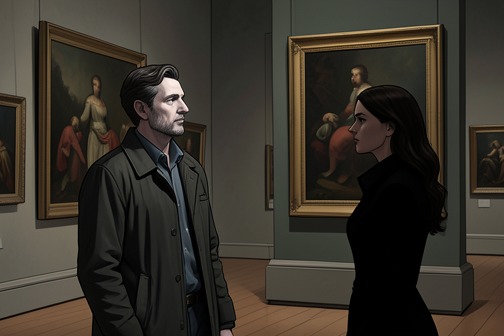
After visiting other museums, [Frank](entity:character-recall-character-frank-aae9eaa69e27) finally follows the clue to the [Museo del Prado](entity:location-recall-location-museo-del-prado-c0c9a4574b42). Before [El jardín de las delicias](entity:object-recall-object-el-jard-n-de-las-delic-aa98311c8e68), [José](entity:character-recall-character-a1a12645ab4b) appears and says that it takes billions of years to create a human being and only seconds to die. Frank understands from his grief-stricken face that [Ana](entity:character-recall-character-ana-c37b34a26ecf) has died.
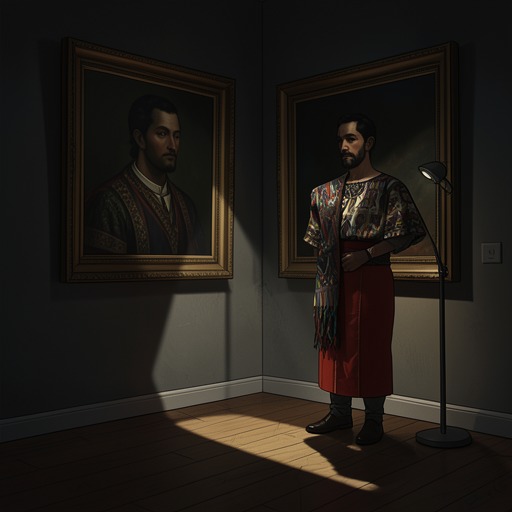
José leads him to [Goya](entity:character-recall-character-6d875d1ab27e)’s [La maja desnuda](entity:object-recall-object-la-maja-desnuda-433d6632a7fd) and [La maja vestida](entity:object-recall-object-la-maja-vestida-b0fae888bfa7). Frank recognizes Ana’s face in both paintings and understands why it had seemed familiar, while the rest of the figure does not match her body. The discovery turns his first impression into a far stranger mystery: the contemporary dancer seems to correspond exactly to a face painted centuries earlier.
Early May 1998, during Frank’s first Prado visit
José Explains the Portraits
[José](entity:character-recall-character-a1a12645ab4b) recounts the disputed history of [Goya](entity:character-recall-character-6d875d1ab27e)’s two paintings: their appearance in Manuel Godoy’s collection, their association with the [Inquisition](entity:organization-recall-organization-72c14c7de529), and the longstanding uncertainty over who posed for them. He explains that the paintings may combine a body model with another woman’s face, which accounts for [Frank](entity:character-recall-character-frank-aae9eaa69e27)’s sense that [Ana](entity:character-recall-character-ana-c37b34a26ecf)’s face has been placed on a different figure.
The history gives Frank a plausible artistic explanation for the visual division, but it cannot explain Ana’s exact resemblance or her name. José’s account leaves the central question open: whether the resemblance is extraordinary coincidence, a genetic echo, or something that reverses ordinary cause and effect.
Early May 1998, during the Prado and Botanical Garden conversations
Ana’s Name and Family Legend
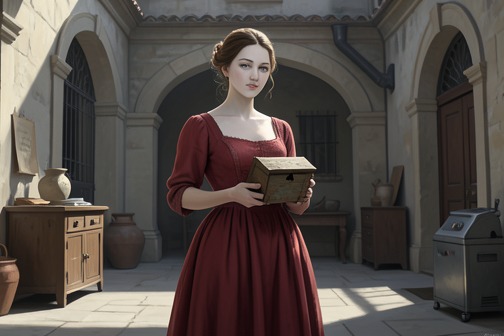
[José](entity:character-recall-character-a1a12645ab4b) tells [Frank](entity:character-recall-character-frank-aae9eaa69e27) that [Ana](entity:character-recall-character-ana-c37b34a26ecf)’s full name was [Ana María Maya](entity:character-recall-character-680077602348), and that she came from a Romani family in [Triana](entity:location-recall-location-triana-e756f95e4b3b) with a tradition linked to the flamenco singer [El Planeta](entity:character-recall-character-f7da523d8fd6). He traces the word [Maya](entity:concept-recall-concept-maya-501a5a3d27bb) through meanings associated with a flower, May celebrations, and ideas of greatness, while Frank connects it to the Indian philosophical term and to [Goya](entity:character-recall-character-6d875d1ab27e)’s maja.
José also describes Ana’s heart condition: she had been warned to stop dancing and was advised not to have children. She had collapsed onstage the previous year, yet her love of flamenco and her desire for a family remained central to her. These facts make her sudden death and her resemblance to the painting feel intertwined, though no explanation can be proved.
1998, a few days before Ana’s death
Ana Chases the Jester
[José](entity:character-recall-character-a1a12645ab4b) explains that [Ana](entity:character-recall-character-ana-c37b34a26ecf) saw a strange dwarf in the gardens of the [Real Alcázar of Seville](entity:location-recall-location-real-alc-zar-of-sevi-785c138eae6b). The figure appeared to photograph her, vanished through the gardens, and seemed to wear or carry the signs of a jester. Ana pursued him through the grounds and collapsed in the [Jardín de los Poetas](entity:location-recall-location-jard-n-de-los-poetas-4c5094f8215c), near the flamenco venue where she had once performed.
Her heart condition made the chase dangerous, but José believes she ran because the jester and his photograph were bound to stories she had heard since childhood. She survived the first crisis in hospital, then died about a week later. Her last words repeated José’s reflection on the speed of death, turning it into a final declaration of love.
Legendary episodes from 1790 to 1998, recounted in May 1998
The Dwarf’s Fifty-Two-Year Cycle
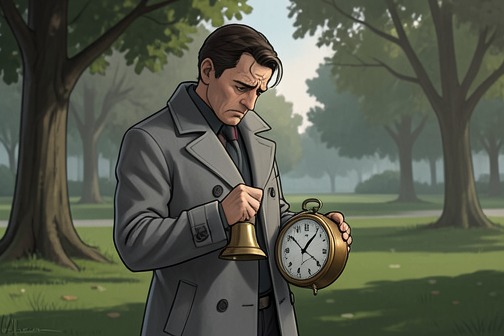
In [Madrid](entity:location-recall-location-madrid-8acd4123f416)’s Retiro Park, [José](entity:character-recall-character-a1a12645ab4b) tells [Frank](entity:character-recall-character-frank-aae9eaa69e27) the family’s oral legend of a bell-wearing dwarf. The figure is said to have appeared at [Marseille](entity:location-recall-location-marseille-feeb80613de6) in 1842, met [Manuel el Solitario](entity:character-recall-character-d0b81626a754) in [Triana](entity:location-recall-location-triana-e756f95e4b3b) in 1894, and crossed a Seville square in 1946; each appearance falls fifty-two years after the previous one.
[Ana](entity:character-recall-character-ana-c37b34a26ecf) believed the same dwarf had appeared in the Alcázar gardens in 1998. The recurring interval connects the family legend to the cyclical calendar, but its impossible continuity remains deliberately unresolved. José’s account gives Frank a framework for understanding why the dwarf’s photograph and Ana’s resemblance to [Goya](entity:character-recall-character-6d875d1ab27e)’s portrait became inseparable in her imagination.
The legend’s island episode, beginning in 1790 and ending in 1842
The Castaway and the Card Spirits
[José](entity:character-recall-character-a1a12645ab4b) relates the core tale behind [Comodín](entity:character-recall-character-8710cf281895). A German sailor is stranded on a Caribbean island with a deck of illustrated cards and, through years of solitude, begins to imagine the card figures as living beings. They emerge into the island’s world as fifty-two spirits, with Comodín the only one who understands that their existence is extraordinary.
The sailor and the spirits remain unchanged while the sailor ages. When the island begins to sink, only the sailor and Comodín escape by boat. The tale mirrors [Frank](entity:character-recall-character-frank-aae9eaa69e27)’s fear of being trapped in a world whose rules he cannot comprehend, and it supplies the imagined origin of the couple’s secret language and their evolving manifesto.
Winter 1790, in the family legend told in Madrid
The Ana Brig and the Cádiz Portrait
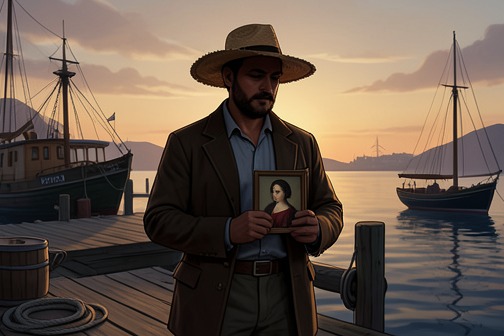
[José](entity:character-recall-character-a1a12645ab4b) says that a Spanish brig named [Ana](entity:character-recall-character-ana-c37b34a26ecf) left [Cádiz](entity:location-recall-location-c-diz-b8dc496291d1) in 1790 carrying a sailor who had bought a strange deck from a young Romani boy, the future [El Planeta](entity:character-recall-character-f7da523d8fd6). The ship later sank with its cargo, though the family legend imagines that the sailor survived and eventually reached the island where he lived with the card spirits.
At the Cádiz wharf, the dwarf supposedly carried a tiny, astonishingly realistic portrait of a young woman. To the people who saw it, the image seemed almost photographic, though photography did not yet exist. The portrait’s impossible appearance in the past becomes the bridge between [Comodín](entity:character-recall-character-8710cf281895)’s legend and [Goya](entity:character-recall-character-6d875d1ab27e)’s later paintings of a woman whose face resembles Ana’s.
Sanlúcar de Barrameda, around 1797, in the legend
Comodín and Goya’s Maja
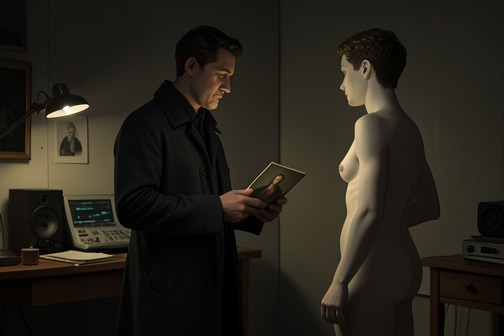
In [José](entity:character-recall-character-a1a12645ab4b)’s account, [Goya](entity:character-recall-character-6d875d1ab27e) encounters the dwarf at the estate of the [duquesa de Alba](entity:character-recall-character-262739a98cc2). The painter tries to take him to his studio, but [Comodín](entity:character-recall-character-8710cf281895) shows him the tiny portrait of [Ana](entity:character-recall-character-ana-c37b34a26ecf)’s face. Goya, already painting the nude figure that would become [La maja desnuda](entity:object-recall-object-la-maja-desnuda-433d6632a7fd), uses the mysterious image for the woman’s face, concealing the identity of the body’s model.
The story reverses the usual direction of artistic influence: a portrait of a woman from the future supposedly guides a painter in the past. It also suggests why Ana’s face can appear in a painting made before her birth. José presents the tale as family legend, not verifiable history, leaving [Frank](entity:character-recall-character-frank-aae9eaa69e27) to weigh its impossible logic against the equally unsettling resemblance.
Marseille, June 1842
El Planeta Meets the Dwarf
According to the legend, [El Planeta](entity:character-recall-character-f7da523d8fd6) encounters the jester-dwarf at a [Marseille](entity:location-recall-location-marseille-feeb80613de6) wharf after a storm-damaged ship arrives. The dwarf has escaped from a boat with a German sailor, hides his costume, and cannot communicate easily with the Andalusian singer.
In some versions, the dwarf draws a deck of cards and recites one verse for each card. El Planeta later carries the remembered fragments to Seville. The meeting links the [Cádiz](entity:location-recall-location-c-diz-b8dc496291d1) portrait and the card spirits to the family’s later history, while the dwarf’s apparent youth across decades makes ordinary chronology impossible.
Triana, June 1894
Manuel Meets the Dwarf
Fifty-two years after the [Marseille](entity:location-recall-location-marseille-feeb80613de6) encounter, [Manuel el Solitario](entity:character-recall-character-d0b81626a754) meets a dwarf by the Guadalquivir in [Triana](entity:location-recall-location-triana-e756f95e4b3b). The dwarf claims to be the same figure once aided by [El Planeta](entity:character-recall-character-f7da523d8fd6) and produces an old jacket as proof; he also gives Manuel written verses associated with the fifty-two cards.
Manuel later recounts the story while playing cards and winning repeatedly. A drunken loser attacks him, and he dies of his injuries days later. His death gives the family legend a documented historical anchor, while the story of the dwarf and the card verses passes into the family’s oral inheritance.
After Ana’s heart diagnosis, before her death in 1998
The Secret Language of Cards
[Ana](entity:character-recall-character-ana-c37b34a26ecf) and [José](entity:character-recall-character-a1a12645ab4b) use the old verses associated with the cards as a private code while playing bridge. They can exchange fragments of the text to signal the cards in their hands, which explains their extraordinary partnership and their repeated victories against [Frank](entity:character-recall-character-frank-aae9eaa69e27) and [Mario](entity:character-recall-character-ee0f7de92f0e).
As Ana’s heart condition ends her dancing career and doctors advise against pregnancy, the couple expands and revises the inherited verses. Their private game becomes a personal testament about life, love, death, and the universe—an evolving manifesto they hope will outlast them. The texts Frank hears in Fiji are therefore not random quotations but a shared work built from family legend and their own experience.
May 1998, in Madrid
The Photographs Become a Manifesto
After their conversation in Retiro Park, [José](entity:character-recall-character-a1a12645ab4b) gives [Frank](entity:character-recall-character-frank-aae9eaa69e27) a large envelope of photographs taken by [Ana](entity:character-recall-character-ana-c37b34a26ecf) on [Taveuni](entity:location-recall-location-cfc91b5a89d0). Frank discovers that each image bears a maxim on its reverse; together the photographs contain all fifty-two pieces of the couple’s manifesto.
The gift is meant for Frank and [Vera](entity:character-recall-character-7ad1f984513a), not Frank alone. It gathers the fragments he heard in Fiji into a complete work and turns the couple’s private creation into a message for another pair whose shared grief has left them divided. Frank begins writing to Vera, determined that she receive the entire story rather than a partial explanation.
Thursday, May 7, 1998
Frank Sends the Letter
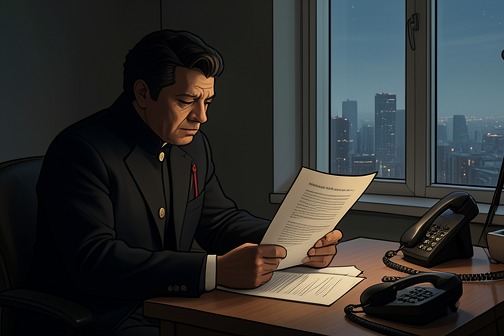
From the Hotel Palace in [Madrid](entity:location-recall-location-madrid-8acd4123f416), [Frank](entity:character-recall-character-frank-aae9eaa69e27) writes [Vera](entity:character-recall-character-7ad1f984513a) a long account of [Taveuni](entity:location-recall-location-cfc91b5a89d0), [Ana](entity:character-recall-character-ana-c37b34a26ecf) and [José](entity:character-recall-character-a1a12645ab4b), their strange sayings, his conversations with [Gordon](entity:character-recall-character-gordon-2c4ce0d1e3ff), and the mystery of Ana’s likeness to [Goya](entity:character-recall-character-6d875d1ab27e)’s maja. He attaches the transcribed manifesto and asks Vera to come with him to Ana’s funeral in Seville.
Their telephone call reveals that José has independently contacted Vera and urged her to attend. Vera agrees to read the letter and considers the trip, though she remains skeptical of Frank’s claims about time-crossing dwarfs and uncertain about their relationship. The exchange reopens communication between them without yet resolving their separation.
November 1998, at the Hotel Palace in Madrid
John Arranges a Reunion
Months after [Frank](entity:character-recall-character-frank-aae9eaa69e27)’s letter, John encounters him in the Hotel Palace. Frank says he has seen [Vera](entity:character-recall-character-7ad1f984513a) in Salamanca but does not reveal whether they have reconciled. John, who has been working on a novel based on the events at Maravu, realizes that the unexpected meeting offers a chance to bring the characters of his story together.
He persuades Frank to travel to Seville by promising to show him something unforgettable. John also contacts Vera and arranges for her to join them, keeping the plan from Frank. His intervention is partly literary experiment and partly an attempt, born of his own grief, to prevent two people from remaining isolated in sorrow.
The day after Frank and John arrive in Seville, November 1998
The Jester Returns to the Alcázar
John takes [Frank](entity:character-recall-character-frank-aae9eaa69e27) through Seville, including the gardens of the Real Alcázar, where Frank sees a costumed dwarf rush through the Puerta de Marchena and photograph them. Frank pursues him but returns empty-handed, just as the family legend says the figure vanishes.
The encounter revives the mystery of [Ana](entity:character-recall-character-ana-c37b34a26ecf)’s chase and the photograph that had supposedly linked her to the old portrait. John guides Frank toward the flamenco venue [Los Gallos](entity:location-recall-location-los-gallos-093c1e78a556), where he intends to reveal the person he has brought him to see. Frank has already begun to feel that the gardens are strangely familiar, as if he has lived the moment before.
Late evening in Seville, November 1998
The Flamenco Reunion
At [Los Gallos](entity:location-recall-location-los-gallos-093c1e78a556), [Frank](entity:character-recall-character-frank-aae9eaa69e27) watches [Ana María Maya](entity:character-recall-character-680077602348) perform flamenco with commanding grace. He recognizes the woman he believed had died and sees her alive, radiant, and fully at home in the dance she had been forced to abandon by her heart condition.
[José](entity:character-recall-character-a1a12645ab4b) appears carrying their infant son, Manuel. [Vera](entity:character-recall-character-7ad1f984513a) arrives shortly afterward, visibly pregnant. Frank realizes that the past he believed settled has opened into a new future: [Ana](entity:character-recall-character-ana-c37b34a26ecf) is alive, and Vera is carrying his child, conceived during their last night together in Salamanca.
After Ana’s performance, late night in Seville
Vera Reveals the Pregnancy
When John leaves [Frank](entity:character-recall-character-frank-aae9eaa69e27) and [Vera](entity:character-recall-character-7ad1f984513a) space to speak, Vera explains that she became pregnant after the night they spent together in Salamanca. She had not told him because they had promised not to resume their life together, and she wanted to decide for herself whether to raise the child.
Frank initially rejects the possibility, then understands that the child is his. Vera admits that she was afraid to tell him and asks whether he can forgive her, while Frank struggles with the sudden return of hope after [Sonia](entity:character-recall-character-8f9a3bb67b83)’s death. Their reunion remains uncertain, but physical contact and shared attention to the unborn child begin to replace the old distance.
The morning after the flamenco night
The Family Walks Together
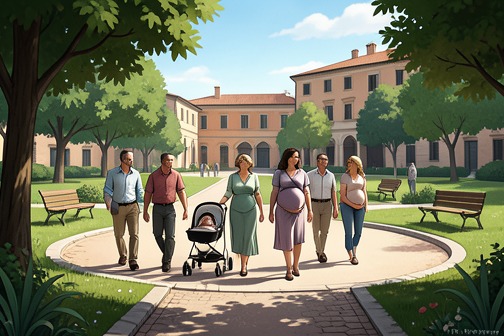
[Frank](entity:character-recall-character-frank-aae9eaa69e27), [Vera](entity:character-recall-character-7ad1f984513a), John, [Ana](entity:character-recall-character-ana-c37b34a26ecf), and [José](entity:character-recall-character-a1a12645ab4b) walk through Seville together, with José and Ana’s baby and [Vera’s pregnancy](entity:state-recall-state-vera-fce849231fda) making the group feel like an improbable extended family. They visit [Parque de María Luisa](entity:location-recall-location-parque-de-mar-a-luis-d9a319b454bf) and [Plaza de España](entity:location-recall-location-c156a4f9fe3c), trading associations between the number fifty-two, the Spanish provinces, the card deck, and the calendar of the [Maya](entity:concept-recall-concept-maya-501a5a3d27bb).
Frank and Vera gradually move closer, taking turns with the baby carriage and eventually holding hands. The circular route through the provinces reflects the novel’s recurring idea that endings can shape beginnings. John sees the gathering as the completion of two halves: Frank’s letter and the life that unfolds beyond it.
The day after the reunion in Seville
John Sees the Funeral
Before leaving Seville, John finds himself outside the Church of Santa [Ana](entity:character-recall-character-ana-c37b34a26ecf) as a funeral is beginning. He enters with the mourners, uncertain whose death is being commemorated and troubled by the possibility that his actions may somehow have contributed to what happened.
After the service, the dwarf gives him a photograph of himself sitting in the Alcázar gardens. On the back is a maxim about humanity’s cosmic consciousness and its responsibility to preserve the planet. John understands that his novel is not fundamentally about [Frank](entity:character-recall-character-frank-aae9eaa69e27) and [Vera](entity:character-recall-character-7ad1f984513a) or Ana and [José](entity:character-recall-character-a1a12645ab4b), but about [Sheila](entity:character-recall-character-33e01f7b7996), her solitaire cards, and his own grief.
Late 1998, as John prepares his epilogue
The Time Capsule Plan
John considers placing [Frank](entity:character-recall-character-frank-aae9eaa69e27)’s letter and the manifesto in a time capsule at [Taveuni](entity:location-recall-location-cfc91b5a89d0)’s proposed [Millennium Monument](entity:object-recall-object-78749f78a82e), to be opened in the year 3000. He imagines future readers encountering the story when the island’s forests and rare species may already be gone.
The capsule idea forces him to weigh secrecy against publication. If the story is circulated now, its contents cannot remain sealed for a millennium; if it is withheld, the world may forget the people and places it describes. The decision becomes part of the novel’s meditation on memory, preservation, and the uncertain future of the natural world.