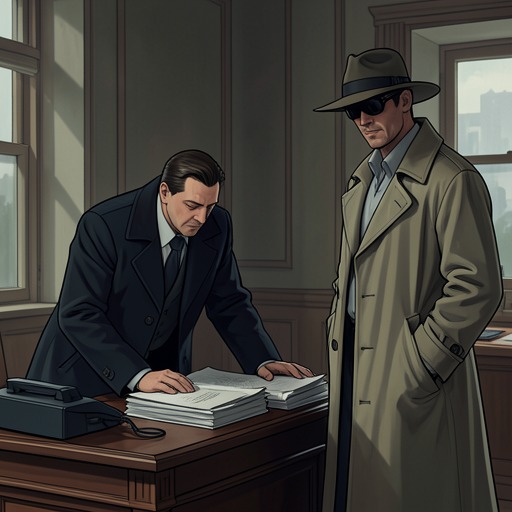
Lydgate’s financial crisis and Bulstrode’s loan
MiddlemarchLydgate’s financial crisis and Bulstrode’s loan turn a professional’s economic distress into a test of independence, judgment, and moral confidence. Lydgate needs a thousand pounds to escape immediate embarrassment; Bulstrode first counsels bankruptcy, then reverses himself and lends the money against a note of hand. The advance rescues Lydgate from the immediate threat of seizure, yet his gratitude carries an uneasy recognition: the chance to resume his work now depends on personal obligation to Bulstrode.
Causes and Background
The crisis grows out of a mismatch between Lydgate’s professional purpose and his means of living. As the year’s bills arrive, payments from patients come in slowly and irregularly, and he cannot risk offending those on whom his practice depends. Fees from Freshitt Hall and Lowick Manor have already been absorbed. Dover is threatening to seize his furniture, while Lydgate has no resource beyond the uncertain income of his work. Even a thousand pounds would not make him prosperous; it would clear the pressing debts and leave a small margin of time in which to recover.
The season intensifies the pressure. Christmas and the New Year bring the ordinary expectation that people will pay for goods and services received, making Lydgate’s financial distress harder to ignore. Its burden is also inward: the practical annoyances are joined by the consciousness that his energy is being wasted on money worries rather than directed toward the purposes for which he entered his profession. The more the debts consume his attention, the more sharply they contradict his sense of what his life should be.
His professional hopes are implicated in the crisis. Lydgate has identified the Hospital with the best use he can make of his medical vocation, but he recognizes that the Hospital’s unpopularity has helped make him unpopular as a practitioner. The patients he most wants to serve are often unable to pay. His ideals do not cancel the need to support a household, and he cannot treat professional success as a substitute for the money required to prevent his goods from being sold.
The Request and Refusal
Lydgate turns to Bulstrode because he believes him to be the only person with a personal connection to his prospects who might trust his future enough to advance money without other security. He explains that his remaining family fortune is small, that he has no expectation of further money from his own family, and that the expense of marriage has exceeded what he anticipated. He also acknowledges that his wife’s father cannot provide the necessary sum. The request is a deliberate exposure of his vulnerability, not an easy appeal: Lydgate hates hearing himself disclose his affairs, yet speaks with unmistakable directness.
Bulstrode answers without hesitation, but not with help. He says he had regretted Lydgate’s connection with his brother-in-law’s family, whom he regards as extravagant and already indebted to him for their position. Instead of taking on another obligation, Bulstrode advises Lydgate to become bankrupt. Lydgate replies that bankruptcy would not improve his prospects and rises to leave, bitterly resisting the suggestion. Bulstrode presents his advice as a corrective trial, but the exchange leaves Lydgate without the assistance he sought and facing the collapse of his household security.
The Loan and Immediate Relief
When Lydgate returns, the situation has worsened: execution has actually been put into his house. He reports the change in a short, controlled statement, then begins to take his leave. Bulstrode stops him, explaining that he has reconsidered the matter. He says that his concern for his niece and his unwillingness to see Lydgate suffer a calamitous change in position have led him to accept a small sacrifice. Having confirmed that a thousand pounds will clear the burdens, Bulstrode draws a cheque and asks Lydgate for a note of hand, with repayment to follow when circumstances allow.
The money answers the precise emergency. Lydgate expects it to pay his debts, leave something on hand, and make economy in the household possible while his practice has time to improve. As Bulstrode writes, he imagines his home and a life whose promising beginning has been saved from frustration. He thanks the banker for restoring the prospect of working with some happiness and some chance of doing good. The execution and threatened sale of his goods no longer appear immediately decisive; the loan gives him room to continue.
Obligation and Moral Unease
Relief does not arrive as a simple restoration of Lydgate’s former independence. Riding home quickly to tell Rosamond and obtain cash to pay Dover’s agent, he is struck by the contrast between his earlier purposes and his present gladness at being under a strong personal obligation to Bulstrode. The loan has rescued his material position, but it has also made dependence the condition of continuing his work. Lydgate’s response registers this change without pretending that he can refuse the help: gratitude and discomfort coexist in the same moment.
The transaction also bears a different weight for Bulstrode. He feels that helping Lydgate has quieted one source of uneasiness, but he does not fully understand the compromised motive that has made him want Lydgate’s goodwill. His generosity therefore occurs alongside concealed self-interest rather than cleansing it. The scene sets Lydgate’s openly stated need against Bulstrode’s incompletely acknowledged reasons for giving, so that the same cheque means practical rescue to one man and an unstable attempt at self-reassurance to the other.
That instability reaches beyond the immediate debt. Bulstrode is preoccupied with John Raffles, whose continued life threatens the secret and disgrace he fears. He tells himself that he wishes to be free of that threat, while his imagination and desires move toward a darker release. Against this background, his loan to Lydgate is no uncomplicated proof of benevolence: help is real, but the giver’s moral situation remains compromised. For Lydgate, the advance restores the possibility of work while binding him to a man whose private motives he does not know. The event thus makes financial dependence an ethical as well as economic condition, and marks the distance between Lydgate’s professional ideal and the compromised arrangements by which he can keep pursuing it.