Appointment of Walter Tyke as Infirmary chaplain
MiddlemarchThe appointment of Walter Tyke as Infirmary chaplain is the outcome of a closely divided institutional vote and a revealing compromise in Tertius Lydgate’s professional independence. When the ballots are tied, Nicholas Bulstrode calls on Lydgate to cast the deciding vote. Lydgate chooses Tyke, but later recognizes that his decision was not wholly free of indirect influence; the successful appointment thus becomes, for him, a lasting example of how Middlemarch’s social pressures can shape a judgment even when its maker believes the result may be defensible.
Causes and Institutional Background
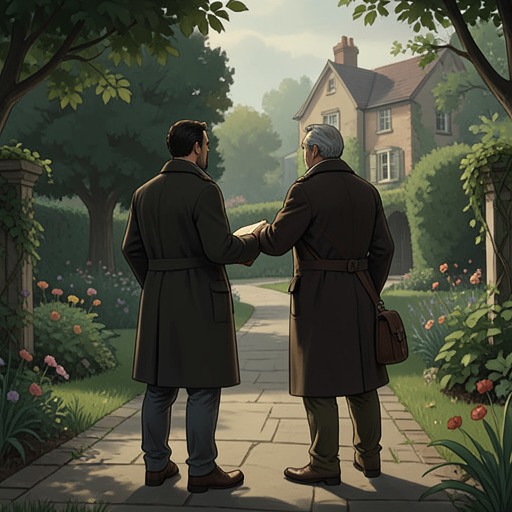
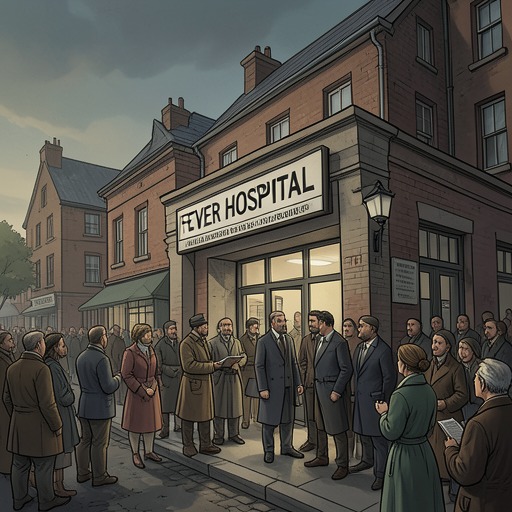
The chaplaincy vote takes place amid a broader dispute over the management and purposes of the town’s medical institutions. Bulstrode has invited Lydgate to consult with him privately about hospital management, and the two have discussed the nearly completed new hospital. Though Lord Medlicote supplied land and timber for the building, Bulstrode says that Medlicote does not intend to give personal attention to its purpose; the decision about its special destination for fevers will rest with Bulstrode. Their association gives Lydgate a consequential place in local medical affairs, but it also makes his independence a subject of scrutiny.
Lydgate’s own ambitions are directed toward medical reform. He hopes that a fever hospital, alongside the old infirmary, might become the nucleus of a provincial medical school, and he argues that professional opportunity should not be concentrated in London. In his practice, he also intends to prescribe without dispensing drugs or taking a percentage from druggists, a departure from the familiar country-doctor model that his professional colleagues may regard as an implicit criticism. These reforming commitments illuminate the tension in the chaplaincy decision: Lydgate wants to act according to professional judgment, yet his continued cooperation with Bulstrode makes his vote look politically foreseeable.
The Divided Vote
The meeting ends in a sharp disagreement about whether to hear a further account of the case or proceed immediately to a decision. Bulstrode offers to recapitulate the considerations on both sides for anyone who doubts that the voters are fully informed. John Hawley objects that the gentlemen already know whom they mean to support and proposes an immediate vote. After a brief, heated discussion, each voter writes either “Tyke” or “Farebrother” on a slip of paper and drops it into a glass tumbler.
The ballots are equally divided. Bulstrode announces the tie and identifies Lydgate’s as the casting vote. Mr. Wrench rises to say that the outcome is already settled because everyone knows how Lydgate will vote. Lydgate challenges the implication, asking whether Wrench intends offense; Wrench makes his meaning explicit by saying that Lydgate is expected to vote with Bulstrode. Lydgate replies that he will not refrain from doing so merely because others may find it offensive, writes “Tyke,” and decides the election.
Decision and Consequences
The immediate consequence is unambiguous: Walter Tyke becomes chaplain to the Infirmary, and Lydgate continues working with Bulstrode. But the appointment does not bring Lydgate the certainty that the tally suggests. He is genuinely unsure whether Tyke may be the more suitable candidate, yet he also believes that, had he been entirely free of indirect bias, he would have voted for Farebrother. The distinction matters: Lydgate does not simply confess that he knowingly chose the wrong candidate. Rather, the process leaves him unable to separate his assessment of the candidates from his professional alignment with Bulstrode and the expectation that alignment has created.
The vote remains a sore point in Lydgate’s memory, which he sees as a case in which the “petty medium of Middlemarch” proved too strong for him. The language of a local medium makes the defeat of independence neither a single dramatic coercion nor a fully conscious surrender. It is a pressure assembled out of ordinary relationships, expectations, and reputations. Lydgate’s choice may have been defensible on its merits, but he cannot take comfort in that possibility because he distrusts the conditions under which he made it.
Farebrother and the Moral Aftermath
Camden Farebrother responds without withdrawing his friendliness. His conduct contrasts with the suspicion and defensiveness that surround the vote: he is able to judge Lydgate’s action without making his own disappointment the measure of it. The appointment therefore leaves their personal relation intact even as Lydgate carries an unresolved unease about his part in the decision.
Lydgate’s reflection is sharpened by Farebrother’s willingness to acknowledge his own limitations. Farebrother describes himself as no mighty man destined for renown and questions the comforting idea that a single good resolution is enough to keep someone on the right course. His thought is that one person’s resolve may fail when it is not supported by the resolves of others. In that light, the chaplaincy vote is more than a contest between Tyke and Farebrother: it exposes the gap between Lydgate’s ideal of professional integrity and the network of local dependence in which he must act. Tyke gains the office, Farebrother remains gracious, and Lydgate is left with a decision that has settled the institution’s question without settling his own conscience.