Momo's Loneliness
MomoMomo’s loneliness is the cost of returning to a world that has moved on without her: after a year and a day away, she discovers that her friends are gone from her life, while the memories she cannot bear to lose have no one with whom to be shared. The state unfolds through searches that fail, familiar places that offer no reunion, and the growing realization that memory can preserve a bond without restoring the people who made it.
The past becomes present
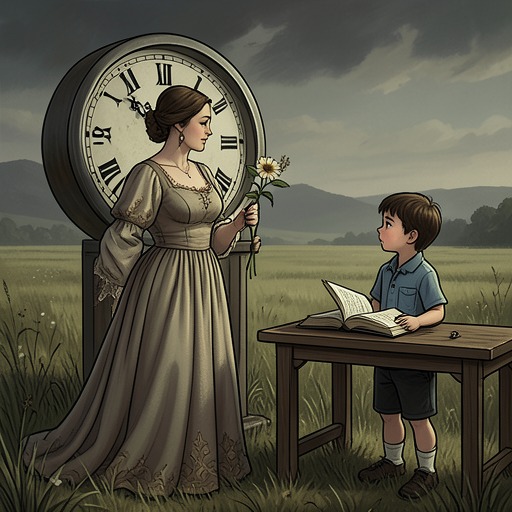
Momo had agreed to Professor Hora’s instruction that she must wait like a seed sleeping in the earth until it was ready to sprout, without stopping to ask how long the wait would last. On her return, she asks how long she has been away and learns that it has been a year and a day. The interval is at first a number to absorb; its human consequence arrives when she asks whether Beppo Roadsweeper and Guido Guide are still waiting for her.
Cassiopeia answers that no one is left, then gives Momo a single word: the past. Momo cannot yet accept that her friends and the times they shared could all be gone. Her lips tremble, and she says she is still here. The contrast is stark: Momo has returned, but the shared present she expected to resume has ended. For the first time, she understands the finality carried by the word, and her heart feels heavier than ever before.
Searching a city without reunion
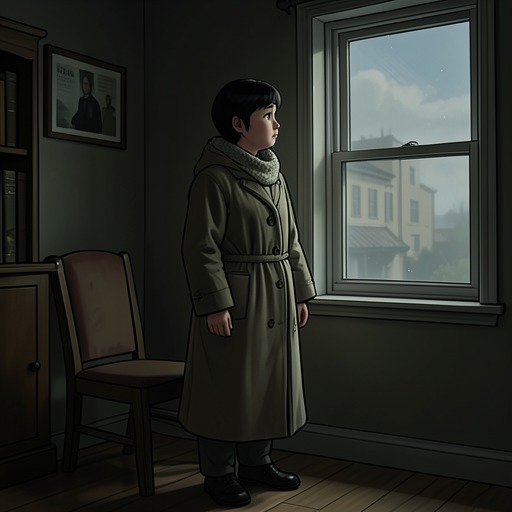
After Cassiopeia disappears, Momo retraces her steps, calling for the tortoise and looking in every nook, ditch, and gutter. She returns to the Amphitheater late that night and searches as thoroughly as the darkness allows. Although she hopes Cassiopeia might somehow have reached home before her, she knows that the tortoise’s slow progress makes this impossible. At last, she goes to bed truly alone for the first time.
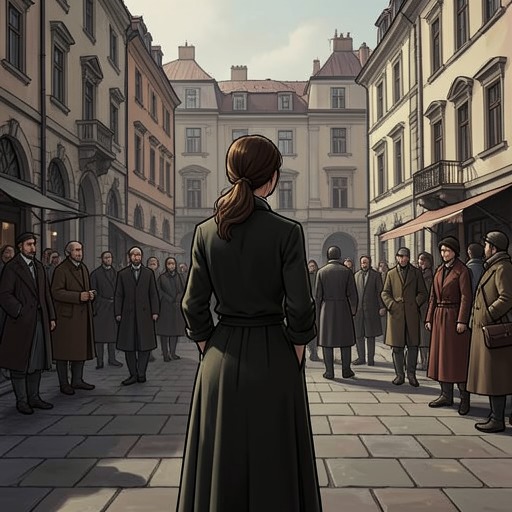
Once she gives Cassiopeia up for lost, Momo turns to finding Beppo as her remaining hope. For weeks she roams the city without direction, but no one can tell her where he is. She imagines that she and Beppo may be close, perhaps having passed the same place only an hour, a minute, or moments apart. The thought keeps hope alive, but the size of the city makes a meeting as unlikely as a message in a bottle reaching a fishing boat far from the island where it was cast. Momo sometimes waits for hours in one spot, yet must eventually move on; even then, she may miss Beppo by only a hair’s breadth.
Memory as consolation and burden
Momo’s vivid recollection of Professor Hora, the hour-lilies, and the music remains with her. By closing her eyes and listening to her heart, she can see the blossoms and hear the singing again. Though the words and melodies change, she can repeat them as readily as on the first day. Sometimes she spends whole days alone on the steps, speaking and singing to herself, with only the trees, birds, and time-worn stones to hear her.
That inner abundance does not relieve her isolation. The narrative describes her solitude as an imprisonment in a vault filled with priceless treasures: the hoard grows, yet threatens to crush her, and she is buried too deeply beneath time to attract anyone’s attention. There are moments when she wishes she had never seen the flowers or heard the music. Yet she would not surrender those memories, even at the prospect of death. They are precious precisely because she refuses to part with them, but their value sharpens the pain of having no one to share them with.
Failed returns and an unmeasured eternity
Momo also tries repeatedly to find her way back to Professor Hora, but without Cassiopeia’s help she cannot. She makes the long walk to Guido Guide’s house every few days and waits outside the gate for hours, hoping to see him again. By then she is ready to accept any arrangement that would let her stay with him and listen, even if their relationship could not return to what it had been. The gate remains shut, turning the familiar act of waiting into another refusal without an encounter.
Only a few months pass in this way, but Momo experiences them as an eternity. A clock or calendar cannot measure the loneliness she endures, just as words cannot fully describe it. She believes that, if she could reach Professor Hora again, she would ask him either to cut off her supply of time or to let her remain forever at Nowhere House. These wishes mark how unbearable continued time has become when it brings neither reunion nor a way out of isolation. Cassiopeia never reappears, whether she has returned to Professor Hora or is lost somewhere in the wide world.
The cost of remembering
Momo’s loneliness is not simply the absence of company: it is the separation between an intensely preserved past and a present in which its companions cannot be reached. She searches rather than accepting that absence, returning to the Amphitheater, wandering through the city, waiting outside Guido Guide’s gate, and trying to find Professor Hora. Each effort gives her a concrete hope, but none restores the relationships she longs for.
The memories of the hour-lilies and music make that separation more complicated. Momo can still call their beauty and sound to mind, and she will not relinquish them; at the same time, the private vault of remembrance threatens to overwhelm her because no other person can enter it with her. Her isolation thus holds two truths together: what she has experienced remains precious, and its preservation cannot substitute for companionship. By the end of this period, she has not forgotten her friends or found her way back to the people and place she seeks. She remains alone with the memories, while the story turns toward something different happening to her.