Time as life
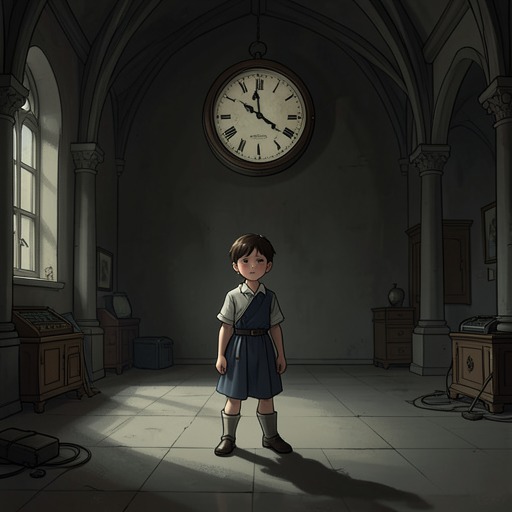
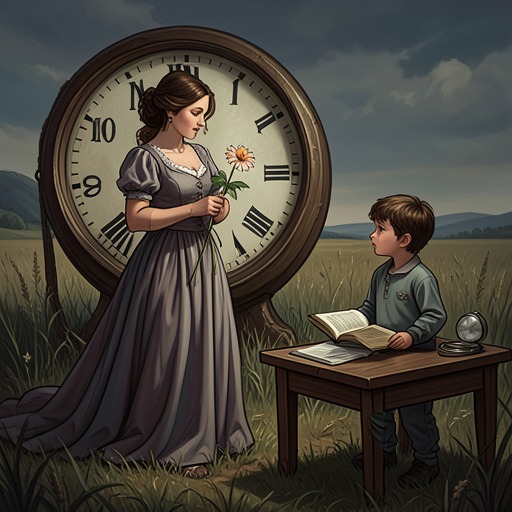
MomoTime as life is the novel’s governing distinction between measurable duration and lived experience: time is not merely something a clock records, but life itself, residing in the human heart. That distinction makes the Gray Men’s promise of efficiency a trap: people can save minutes by the clock while losing the fullness of the life those minutes contain.
Time Measured and Time Lived
Calendars and clocks measure time, but measurement alone cannot describe how it is experienced. An hour can seem to last an eternity or pass in a flash, depending on how it is spent. The novel therefore separates clock time from the quality of lived time: the unit may remain the same while its meaning changes with human experience.
The statement that time is life itself, and that life resides in the human heart, gives this contrast its moral force. Time is not presented as an external resource that can simply be collected and stored. Its value is bound to the life people actually experience.
The Gray Men’s Exploitation of Time
The Men in Gray understand the value of an hour, a minute, and even a second, but use that knowledge to take people’s time. Their expertise is compared to that of leeches in relation to blood: they recognize a vital resource and act to extract it. Their plans depend on remaining unnoticed as they gradually enter the city’s inhabitants’ lives and take them over.
Their method turns the idea of time as life against the people who accept it. They present saved time as a benefit while directing people to remove the activities and relationships that make time meaningful. In their account, time becomes a quantity to be optimized; in the novel’s account, each such quantity belongs to a human life.
Efficiency Enters Everyday Work
The barber Mr Figaro illustrates how this doctrine becomes a daily discipline. The gray agent advises him to spend fifteen minutes, rather than the usual half-hour, on each customer, avoid conversation, and reduce time spent with his mother. The recommendations extend beyond work: Mr Figaro is told to give up singing and reading, see Miss Daria rarely, and use an accurate clock to time his apprentice.
After the visitor has vanished from his recollection, Mr Figaro keeps the resolution to save time, believing it to be his own. He begins by serving a customer in twenty minutes instead of thirty, then applies the same treatment to every customer. Although he no longer enjoys his work, he treats that loss as secondary, hires two assistants, watches them closely, and organizes their movements around a timetable. The notice on his shop wall, TIME SAVED IS TIME DOUBLED!, turns the promised gain into a visible rule of work.
The Paradox of Saving Time
The consequences expose the contradiction at the heart of the policy. People do not seem to notice that saving time means losing something else; they continue to follow efficiency even as life grows poorer, bleaker, and more monotonous. The clock may register minutes saved, but those minutes have been bought by cutting away conversation, pleasure, care, and other parts of lived experience.
Children feel the change especially keenly because adults no longer have time for them. The novel’s central paradox is thus not simply that the people’s calculations fail, but that the very activity called saving time diminishes what time means. The more people save, the less they have: measured duration accumulates as life is depleted.