Timesaving Bank secrecy rule
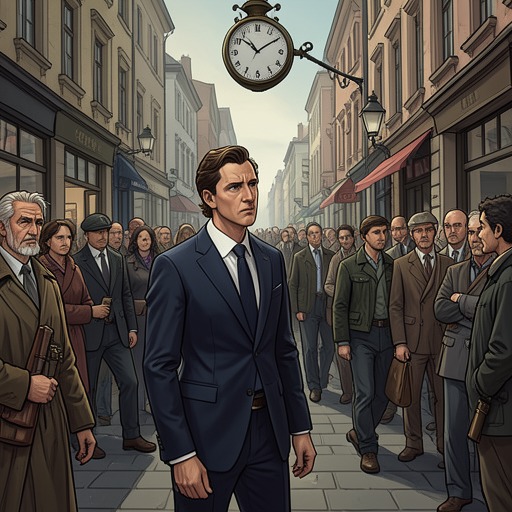
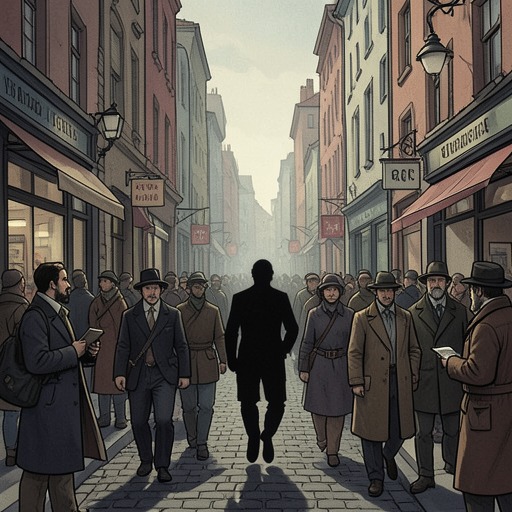
MomoThe Timesaving Bank secrecy rule makes anonymity a condition of the Men in Gray’s business: they must keep their existence and activities unnoticed because their work depends on people not knowing who is taking their time. The rule is more than a preference for concealment. It links the Bank’s survival to the public’s ignorance, while the children’s knowledge and Momo’s direct confrontation show how that protection can be challenged.
The Requirement of Secrecy
A gray man states the rule plainly when Momo asks whether anyone loves him. He says, "We have to remain unrecognized" and insists that "No one must know of our existence or activities." The Men in Gray, he explains, make sure people do not remember them because they can conduct their business only by passing unnoticed. The confession does not describe a particular technique for concealing or erasing memories; it establishes the required outcome: people must not recognize the Men in Gray or retain knowledge of their activities.
The gray man connects concealment directly to the Bank’s extraction of time. People lose to the Men in Gray the time they believe they have saved; the gray man says they drain it, hoard it, and need more each day as their numbers grow. Secrecy therefore protects both the theft and the thieves. If people recognized the source of their loss, the Men in Gray could no longer rely on unnoticed activity to sustain their business.
Exposure Through Momo
The rule becomes visible because Momo refuses to accept the gray man’s dismissive confidence that she is no match for the Men in Gray. She asks whether anyone loves him, and his reply turns into an involuntary disclosure: he describes the Bank’s dependence on anonymity and admits that people like Momo threaten its livelihood. As he speaks, his face grows greyer and convulses with horror; afterward, he appears to emerge from a trance, asks what happened, and accuses Momo of spying on him. The episode makes secrecy look like a constraint the Men in Gray must obey, not simply a tactic they freely choose.
The gray man’s alarm also reveals a weakness in the rule. Momo has heard what he says, and he has acknowledged that the Men in Gray can be endangered by people who resist their influence. His immediate denial does not undo the disclosure; instead, the contrast between his involuntary confession and his attempt to blame Momo underscores how urgently the Men in Gray need their activities to remain unknown.
Secrecy in Public
At the trial of Agent No. BLW/553/c, the secrecy problem appears on a wider, civic scale. Asked how the children learned about the Men in Gray and their activities, the agent calls it a mystery and dismisses their knowledge as childish nonsense. He argues that the scheduled meeting had been stopped by leaving people no time to attend, and that even if it had taken place, adults would have dismissed the children’s account. His response shows a practical means of preserving secrecy: prevent people from assembling to hear the information, and rely on disbelief if they hear it anyway.
The agent then says the Men in Gray would have done better to let the meeting go ahead, reasoning that its claims would not have been taken seriously. The judge interrupts before he can finish. The exchange exposes a tension within the rule’s enforcement: the Men in Gray need their existence to go unrecognized, yet their efforts to suppress a meeting can themselves reveal that there is something to suppress. In both Momo’s encounter and the trial, secrecy is presented as the condition that protects the Bank—and as a vulnerability whenever knowledge begins to circulate.