Magnolia-Bloom Deadline
MulanThe Magnolia-Bloom Deadline is the seasonal limit imposed on the Butterfly Fairy after the Queen Mother of the West warns that her mortal husband is under a shadow. She must reach his side before the magnolia blooms, but the warning gives no precise date and does not explain what threatens him. The deadline therefore governs the story through a natural sign whose arrival can be watched but not postponed: when the flower opens, the chance to fulfill the warning has passed, and the Butterfly Fairy’s hope of reunion gives way to transformation into stone.
The warning and its terms
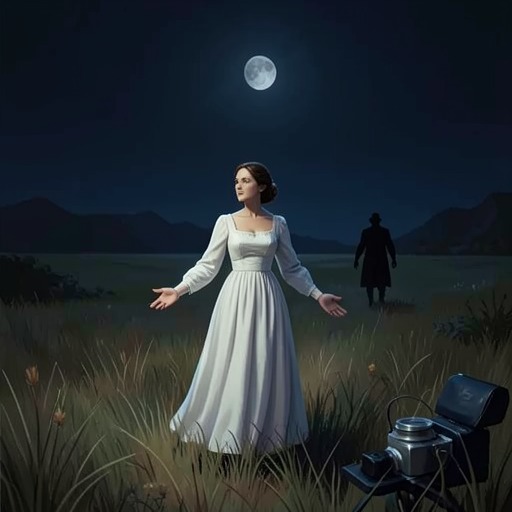
The deadline comes to the Butterfly Fairy in a dream. An Immortal attendant, also described as her dear friend, brings the Queen Mother of the West’s warning. The Queen Mother says that the Butterfly Fairy’s mortal husband faces a shadow and that his spirit will depart unless she is at his side before the magnolia blooms. The warning establishes both the urgency and the condition, but not the cause: the friend cannot answer the Butterfly Fairy’s questions about what will happen. The deadline is thus definite in its seasonal endpoint while remaining unexplained in its danger.
The Queen Mother’s concern extends beyond the husband. Her friend says the Queen Mother fears that approaching winds and waves may drown the Butterfly Fairy as well. This adds a second peril to the warning, but does not change its stated requirement: the Butterfly Fairy must reach her husband before the flower blooms. The dream offers her no account of how to avert the danger beyond being present. Its limited knowledge leaves her with a task, a deadline, and uncertainty about what either will mean.
A journey measured in seasons
The warning collides with the practical circumstances of the couple’s separation. The Emperor’s examinations are in the Imperial City, far from their home, and the most practical route is to travel to a port village and continue by boat. The couple have enough money for only one fare, so the husband must make the journey alone. The Butterfly Fairy’s absence from him is not a choice to disregard the warning; it follows from their limited means and the plan for him to travel first.
The timing initially seems to leave room for hope. The examinations are scheduled for autumn, and the husband promises to leave for home immediately afterward. He expects to return before midwinter, well before the magnolia blooms. When he departs in summer, he repeats his assurance that his spirit will not leave the earth unless she is with him. This promise sits uneasily beside the dream: the Queen Mother’s warning makes her presence urgent, while the husband believes his return will occur in time and reassures her about the very danger she fears.
The seasons turn that difference in expectation into a measure of delay. The husband does not return as winter arrives. The Butterfly Fairy keeps vigil through the long nights, and her fear grows as the days lengthen without him. The account does not explain why he is delayed or establish what has happened to him. Instead, it shows the deadline tightening through the contrast between his promised return and the arrival of spring, the season in which the magnolia will bloom.
The flower as the deadline’s visible sign
When the Butterfly Fairy can wait no longer, she packs traveling supplies, closes the house, and sets out for the port village where her husband boarded his boat. At the docks, she waits day after day in changing weather. The villagers see her remain at the river’s edge, watching the boats; they call her the Waiting Wife. Her vigil makes the deadline a public spectacle as well as a private fear, though the village can witness her waiting without supplying the missing husband or resolving the warning.
The landscape’s seasonal changes mark time without giving her the result she seeks. Mountains in the distance turn green, the air grows warmer, and more boats arrive. None carries her husband. Then a family hurrying to greet a visitor passes with flowers, and a branch falls at the Butterfly Fairy’s feet. She reaches for it before recognizing the delicate pink blossom: it is a magnolia in full bloom. The deadline is not announced by a calendar or by a messenger. It arrives in an ordinary object dropped in passing, and the flower turns the passage of seasons into an unmistakable threshold.
The missed deadline and its consequence
After the magnolia opens, the Butterfly Fairy is no longer seen waiting by the river. In her place is a large, white, oddly shaped rock, with hollow openings and twisted layers. The villagers notice her disappearance and the stone that replaces her, but no one witnesses the precise moment of change. The sequence links the flower’s arrival to her transformation while preserving the difference between what the villagers see and what the later explanation establishes.
The Jade Rabbit explains to Mulan that the Butterfly Fairy turned herself to stone rather than continue existing with a broken heart. He distinguishes this state from death: she is not dead, but she is not alive in a way that would ordinarily count as living. Her condition can end only if she is reunited with her husband. The deadline therefore does not simply mark the end of a journey window; it leads to a suspended existence whose possible release depends on the reunion the Butterfly Fairy had been trying to achieve.
Narrative function
The deadline’s force comes from the gap between a precise condition and an uncertain future. The Butterfly Fairy knows what must happen before the magnolia blooms, but neither the dream nor her husband’s assurances tell her what the shadow means or why he fails to return. The seasonal marker makes the danger legible only when it is too late for her to meet the stated condition. At the same time, the husband’s promise that his spirit will remain unless she is with him echoes the warning without resolving it; his absence, the flower’s opening, and her transformation are connected by the narrative, while his fate remains undisclosed in this account.
The story also returns to the deadline through Mulan and the Jade Rabbit’s encounter with the Butterfly Fairy’s house. Mulan recognizes the scholar as the husband the Jade Rabbit had mentioned, and the Rabbit says their arrival cannot be coincidence. That recognition ties the old warning to the present journey and clarifies why the stone figure matters: the Butterfly Fairy’s fate is not presented as an irreversible death, but as a separation that could change through reunion. The magnolia bloom has passed, yet the condition for restoring her life remains open.