Hossbach Memorandum
MunichThe Hossbach Memorandum turns a secret meeting record into a test of what political evidence can accomplish. Read by Hugh Legat in Munich and presented to Neville Chamberlain at the moment of decision, it sets out Adolf Hitler’s ambitions beyond the immediate dispute over Czechoslovakia. Its force lies in the distance between what it appears to prove—a planned war of expansion—and what Chamberlain believes Britain and France can politically do with that knowledge.
Identity and Contents
The document is presented as the minute of a meeting Adolf Hitler held with senior military commanders on 5 November 1937, less than eleven months before the crisis in which Hugh Legat encounters it. Legat reads the date on the first page after learning that the Munich talks have reached a deal. That timing changes the document’s meaning: it is not a prediction written in response to the current emergency, but a record of plans formed well before the immediate deadline.
The memorandum begins with Germany’s growing need for food and the strain imposed by rearmament at its existing pace. It also identifies the vulnerability created by dependence on international trade and the prospect of disrupted supplies or sanctions. Its proposed remedy is the acquisition of greater living space in Europe, pursued by force. The document therefore joins material anxieties to territorial ambition: economic difficulty is not offered as a reason to limit expansion, but as part of the case for it.
The record gives that programme a time horizon as well as a rationale. It states that, if Hitler were still alive, his unalterable resolve was to solve Germany’s problem of space by 1943–45 at the latest. The incorporation of Austria and Czechoslovakia is described as a substantial politico-military advantage: shorter and better frontiers would free forces for other purposes and permit the creation of up to about twelve new divisions, roughly one per million inhabitants. In this account, annexation is not an isolated settlement of national claims. It is a means of reorganizing military capacity for further action.
Reading the Record in Munich
Legat encounters the memorandum while alone in his hotel room, after an unexpected agreement has overturned his expectation that the negotiations would continue through the weekend. He locks the door, opens the envelope, and begins working through pages typed in the same large lettering as the earlier document he had received in London. The German is a difficult hybrid of Hitler’s language and bureaucratic phrasing; Legat gradually gets its meaning as he reads. The act is private and hurried, but the implications are larger than the room: the text links the diplomatic settlement being made that night to a strategic design laid down in the previous year.
The memorandum does not present Hitler’s position as uncontested within the leadership. Its second part records discussion in which the senior commanders Blomberg and Fritsch, and Foreign Minister Neurath, raised concerns about the practicability of his strategy. The French Army was too strong, the Czech border defences too formidable, and Germany’s motorised divisions too weak. Legat also recognizes the political consequence of that disagreement: all three men have since been removed, replaced by Wilhelm Keitel, Brauchitsch, and Joachim von Ribbentrop. The record thus supplies not only evidence of expansionist intent but a contrast between earlier reservations and the officials who now occupy the relevant positions.
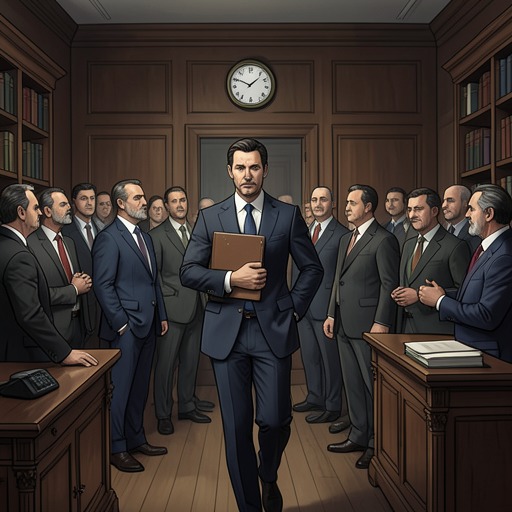
The memorandum’s significance sharpens against the immediate crisis. Neville Chamberlain has been told that Hitler will invade on Saturday if the Sudeten question is not settled, while a message from Benito Mussolini has secured only a twenty-four-hour postponement of mobilisation. At a meeting with Chamberlain and other British officials, Sir Horace Wilson reports Hitler’s demand for a settlement by Saturday and his impression that Hitler is not bluffing. The memorandum reaches the same room of decision by a different route: the crisis presents an urgent deadline; the record supplies a longer history of the ambitions behind it.
From Secret Evidence to Political Warning
At the end of the novel’s sequence, Legat places the memorandum before Chamberlain and describes it as the minute of a meeting in which Hitler explicitly committed himself to war. Asked how it came into British hands, he identifies a German diplomat friend who gave it to him in strict confidence. The document’s circulation is therefore presented as a risky personal transfer, rather than as an official exchange or a paper already incorporated into the government’s deliberations.
Paul von Hartmann makes the warning explicit. He argues that the memorandum disproves Hitler’s claim to have no further territorial demands in Europe: the plans described amount to a war of conquest for living space, with the incorporation of Austria and Czechoslovakia only the first step. He adds that the commanders and Foreign Minister who objected have been replaced, and urges Chamberlain not to sign the agreement. Hartmann believes that if Britain and France stand firm, the Army will move against Hitler to prevent a disastrous war. The memorandum supports his account of Hitler’s intentions and of the leadership’s altered composition; the predicted response of the Army remains Hartmann’s judgment, not something the document itself can guarantee.
Chamberlain acknowledges Hartmann’s courage and sincerity but rejects the political conclusion. For him, the immediate obstacle is the claim to self-determination of ethnic Germans seeking to leave a country in which they are a minority. He says the peoples of Britain and France cannot be expected to take up arms to deny that claim, and argues that the danger of Hitler’s future ambitions must be weighed against the immediate prospect of war. He folds the memorandum and advises Hartmann to return what is, as he puts it, his government’s property. The record is thus received, understood, and still refused as a reason to abandon the agreement.
Narrative and Historical Function
The memorandum’s role is not simply to reveal a concealed plan. Its first appearance in Legat’s reading forces earlier evidence into a new frame: the Sudeten crisis is no longer legible only as a dispute over a particular territory or deadline, but as an episode within a strategy of expansion. Its dated account and concrete military calculations give that reinterpretation documentary weight. Yet the same specificity has limits: it can record Hitler’s aims and the objections voiced at the meeting, but it cannot establish that the Army will act if Britain and France resist.
That gap between evidence and consequence gives the document its dramatic function. Hartmann treats it as a warning that should change policy; Chamberlain treats the immediate political reality as decisive, even after accepting the memorandum’s importance. The paper travels from a meeting in November 1937, through Legat’s clandestine reading in Munich, to Chamberlain’s hands on the night of the conference. At each step its significance grows, but its power to determine events does not. It makes the stakes of the agreement unmistakable without resolving the question of whether knowing the truth is enough to prevent what the record anticipates.