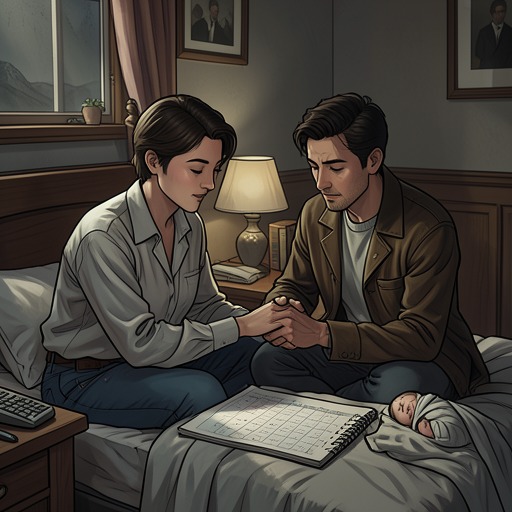
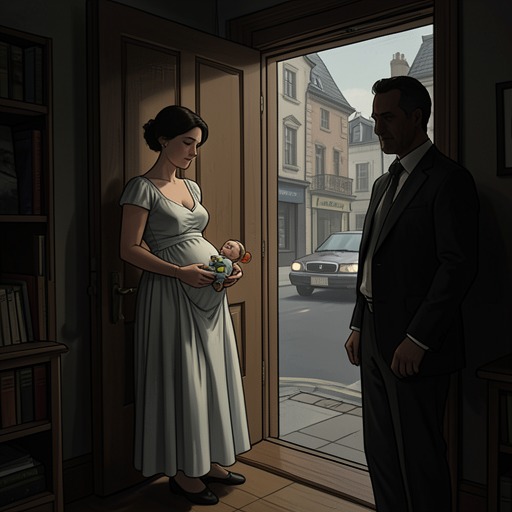
Event 1
Discovery of the De Kempervennen cottage murders
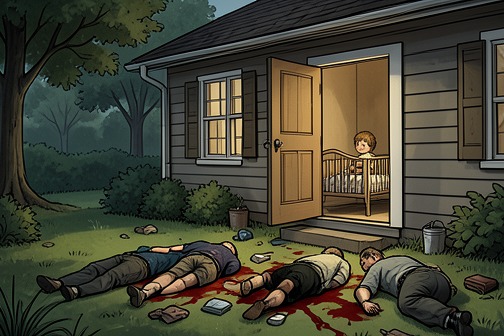
The discovery of the [De Kempervennen](entity:location-recall-location-de-kempervennen-58b7cd716cc2) cottage murders begins with a missed breakfast delivery, not a search for a crime scene. At [Vipcottage Eekhoorn 1553](entity:location-recall-location-vipcottage-eekhoorn-3c1e2b98384f), a park worker finds a living child in grave distress and, after summoning help, enters a bloodied bungalow where four bodies are found. The scene’s force comes from that reversal: the ordinary signs of an occupied holiday cottage give way, step by step, to evidence of neglect, violence, and death.
## The Routine Visit
The worker has been employed at De Kempervennen for more than two years, and guests sometimes leave their morning bread hanging on the door when they have checked out early. He has learned to read an untouched delivery as a likely administrative oversight: reception has failed to tell him that the occupants have gone. Seeing the old bread bag on the handle of Vipcottage Eekhoorn 1553, he blames the reception staff and goes to replace it.
At seven o’clock he notices details that complicate his first assumption. Coats remain on the rack inside, along with firewood and women’s shoes; the newspaper in the bag is from the previous day. He looks through the side window, shrugs, and turns back toward his green park van with the old bag and a fresh delivery. The cottage appears inhabited, but nothing yet explains why the bread has been left untouched. His reluctance to linger—he hurries and nearly trips—makes the next sight all the more abrupt.
## The Child and the Call for Help
A small child crawls into view, staring blankly while chewing a large yellow pacifier. Dark smears cover the child’s face; blond curls cling to dirty cheeks, and a faded green pajama suit is wet and stained. The diaper hangs halfway down the child’s legs. In dirty hands, the child grips a worn stuffed toy with long ears. These details turn the unattended delivery into an immediate emergency, but the worker first hesitates, considering whether he can leave and pretend he saw nothing.
The child reaches for the door handle without being able to reach it, points back into the room, then rolls its eyes and collapses with a soft thud. The worker opens the door, which is unlocked. He recognizes that someone has died inside by the smell, though his only previous experience of a corpse was seeing his grandmother laid out in a coffin. That memory had left him convinced that the claims of peaceful sleep at a wake were false; here, however, recognition arrives before he has seen the bodies.
He repeats a question to himself, kneels beside the child, and listens for a heartbeat. The child is breathing shallowly but does not respond when he gently taps its cheek. A sharp chemical smell comes from the child’s mouth. He radios reception and asks her to call both the police and an ambulance, stressing that it is a matter of life and death. Then he stays with the child, touches its hands and cold forehead, and awkwardly gathers it into his arms at the open front door. He rocks the child and tries to breathe the cold outside air rather than vomit. From where he sits, he can see blood throughout the living room.
## Four Bodies Inside the Cottage
The first police car arrives, followed seconds later by an ambulance. Two officers and two ambulance attendants hurry to the worker and the child. One attendant checks the child’s pulse and examines its bluish-veined abdomen and eyes; the child is alive, apparently malnourished and dehydrated. The rescuers lift the child onto a stretcher. The worker, overwhelmed by the possibility that the child might die in his lap, also carries guilt about not knowing how to resuscitate a child and not being able to put his mouth to the child’s crusted lips.
A panicked call from inside announces that another person is alive and that three bodies lie there. The attendant who had been comforting the worker runs back into the bungalow. The worker follows, though he cannot explain why; the account suggests that the sight of death draws him onward. His shoes stick to the carpet, soaked with blood, as he moves through the hall toward the open room. The announcement of three bodies proves to be incomplete: someone inside counts four, with three lying there.
The first body he sees is a man slumped against the kitchen counter behind the bar. Bloody smears across the beige tiled floor show that the man had dragged himself there with his last strength. In the living room, two women lie intertwined on a red sofa. One has sought shelter in the other’s lap, while the other bends over her protectively. Broken wine glasses, a bottle, an untouched cold platter, and partly smoked roll-up cigarettes suggest that the evening began sociably. The overturned pine coffee table marks a rupture in that domestic arrangement. A further man lies in clotted blood against the low wall beside the fireplace; a Walther 9x9 mm police pistol rests to his right, and the officers recognize it immediately as a service weapon.
## The Discovery’s Immediate Meaning
The worker’s entrance into the cottage provides the scene’s human point of view: the bodies are not first presented through an investigation but encountered by someone whose job has brought him to the door. His sequence of responses—irritation at reception, hesitation at the child, alarm at the smell, and then physical shock at the blood—measures how ordinary routine is overtaken by catastrophe. Even the abandoned meal and wine retain the trace of an evening that had seemed convivial before the overturned table and bodies made its ending visible.
The child’s survival sets the discovery apart from a simple count of the dead. The child is found amid the aftermath, neglected and barely responsive, but alive enough to be carried out for emergency care. Inside, the worker encounters four bodies and a police service weapon, while the cause and full circumstances of the deaths remain unexplained in this moment. The discovery therefore opens on two simultaneous facts: a violent domestic scene has ended in multiple deaths, and one vulnerable child has survived it.
Event 2
Peter and Eva's first kiss
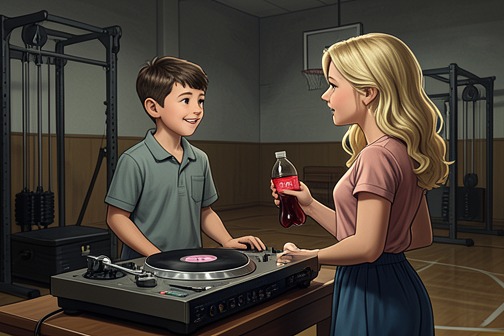
[Peter and Eva's first kiss](entity:event-recall-event-ff7a29168955) grows out of a friendship that [Peter](entity:character-recall-character-peter-22e18a2305ec) experiences as unspoken love, and its decisive turn comes when [Eva](entity:character-recall-character-eva-a4f4507c5fab) asks him to stop holding back. The scene begins not with a courtship but with a school dance: Peter is behind his turntable, uncertain of his place beside her, while she crosses the gap between them. Much later, after Eva has sought his comfort over another boy's betrayal, an ordinary conversation becomes a confession, and her invitation changes their relationship from imagined possibility into physical intimacy.
## First Encounter at the School Dance
Peter is DJing in the gymnasium at his own school when Eva approaches him for the first time. He already knows her by sight: she is a year below him, in fourth-year havo, and he finds her beautiful, with blonde curls and a flushed, healthy-looking face. Yet he assumes she is beyond his reach and has not considered approaching her himself. The imbalance is present from the start: Peter has formed a private impression of Eva, while she is the one who actually initiates their contact.
Eva shouts that he is playing well and stays beside the turntable with a cola. Peter does not know what to say, so he nods, grins, and shrugs while they sway to a disco record. She moves loosely and confidently; he feels awkward by comparison. She touches his shoulder, laughs, and asks whether he has any Billy Idol. The small request gives their first exchange a practical shape: Eva asks for a song, and Peter, rather than answering with a declaration, asks which one she wants to hear.
The difference between them is also social. Peter sees himself as a rocker and Eva as a disco girl, someone who would never choose a boy like him. He remembers her white cowboy boots, bare brown hockey legs, white denim miniskirt, pink shirt slipping from one shoulder, and large silver earrings. The dance makes his attraction vivid, but it does not make him think a relationship is possible. Eva remains near his table for the rest of the evening, dancing with her friends, while Peter reads their glances and laughter from the other side of the turntable.
## An Uneven Friendship
Their relationship develops after the dance, not during it. They speak more often at school, sometimes cycle home together, and Eva occasionally comes to watch when Peter is DJing. They do not go out together or share the usual outings Peter associates with close friends. The closeness is real but asymmetrical: Eva regards him as a friend, while he privately treats her as an unreachable love. Her habit of greeting him with three kisses, as she does her girlfriends, brings physical familiarity without resolving that difference.
A change comes when Eva's relationship with Rick ends. She rushes to Peter in tears in the schoolyard, a conspicuous crossing of the social divisions that separate disco students, preppy students, rockers, and punks. Peter puts an arm around her and walks with her to a nearby cafe. Eva says Rick kissed another girl, who was one of her friends. The betrayal carries extra force because she has also been hurt by her parents' separation after her father had someone else. In asking why one woman is not enough for a man, she brings the fear of infidelity in her family into the immediate pain of her breakup.
Peter takes her hand and promises he would never do such a thing. He points to his own father, who has been faithful to his mother for more than twenty years, and tells Eva that Rick was foolish to betray someone as lovely as her. Eva cries again and says she is glad to have a friend who understands her. Peter's account complicates that reassurance: he admits that he did not really understand her and listened partly because he was afraid to say what he felt. His care is sincere, but the language of friendship also shelters the love he has not yet dared to declare.
## Confession and Invitation
They linger over coffee. After three cups, Eva orders berry ice cream and says she does not want to return to school; Peter orders beer. They talk about school, his examinations, the coming vacation, and what he will do after graduation. Peter plans to go to the School of Journalism in [Utrecht](entity:location-recall-location-utrecht-0de51c6961a8). His deeper ambition is a career in music, but he has dismissed it as unrealistic because he believes he lacks stage presence. Journalism seems another way to remain close to music by writing about it.
With alcohol on an empty stomach, Peter suddenly talks freely. He tells Eva how beautiful and kind he thinks she is, a disclosure that makes explicit the feeling he has kept hidden throughout their friendship. Eva sighs, rubs the tip of her nose, and looks up at him with a shy smile. They fidget with the Persian cloth on the table before she asks him to kiss her. The sequence matters: Peter's confession does not produce a confident advance of his own. Eva answers his long-held desire with a clear invitation, taking the initiative that he has repeatedly lacked.
## The First Kiss
Peter knows what he wants to do but is afraid to do it. He leans toward Eva and gives her a hesitant kiss on the mouth. She giggles, then tells him she wants a real kiss. The distinction makes the first attempt a threshold rather than the scene's completion: Peter has crossed from silence to contact, but Eva still has to guide him past his self-consciousness.
She puts her hands around his neck, and they kiss again. Her tongue moves along his lips; he tastes the sweet berry liqueur. He carefully takes her head in his hands and strokes her curls. Peter becomes so dizzy that he thinks he might faint. He whispers her name and kisses her once more, trembling with happiness. The physical details carry what his earlier explanations could not: intimacy is no longer an idea he guards privately but a shared experience, initiated by Eva and answered by Peter.
## Significance
The kiss reverses the distance established at their first meeting. Peter had thought Eva belonged to a social world that would exclude him, and even after they grew close he continued to treat her as inaccessible. Yet the decisive approach comes from her, first through friendship and trust and then through an explicit request. His role changes from the shy DJ who can only nod while she asks for a record to a young man who has confessed his feelings and responds to her touch.
The scene also makes the limits of Peter's earlier self-assurance visible. He had promised Eva that he would be different from Rick, but his promise was easier than speaking honestly about his own love. The kiss follows the moment when he finally names his admiration, and it answers not only his attraction but the emotional intimacy formed when Eva came to him heartbroken. What began as a one-sided secret becomes mutual, though the scene's balance depends on Eva's courage to make the invitation Peter cannot bring himself to offer.
Event 3
Peter and Eva's fertility treatment journey
[Peter and Eva's fertility treatment journey](entity:event-recall-event-29a6ba78fffc) turns their wish for a child into a prolonged negotiation with medical limits, bodily effort, and grief. [Peter](entity:character-recall-character-peter-22e18a2305ec)'s male-factor infertility leads them from timed attempts at home through repeated procedures; after the death of [Lieve](entity:character-recall-character-lieve-d33dc86ede7e), the donor-conceived child they had hoped to raise, the pursuit of parenthood becomes inseparable from mourning and from conflict over who gets to decide whether to try again.
## Testing and Timed Attempts
Peter initially resisted seeing a gynecologist. After a year of trying, a doctor advised the couple that not becoming pregnant within that period was not, by itself, cause for alarm, and suggested tracking [Eva](entity:character-recall-character-eva-a4f4507c5fab)'s temperature to estimate ovulation. The recommendation made intimacy part of a schedule: Eva measured her temperature every morning at half past six, before the alarm, and recorded it. A rise of 0.2 degrees Celsius indicated that ovulation might be near, prompting the couple to time their attempts around it. The routine was organized around conception and the need to get to work, rather than around unhurried closeness.
The couple eventually received a referral. Five weeks later, a gynecologist examined Eva and found no apparent abnormality. Her temperature records indicated monthly ovulation, and an ultrasound showed no blockages, cysts, or inflammation in her uterus or ovaries. Blood was taken from both partners, and Peter was asked to return for semen testing after five days without ejaculation. A second test followed three weeks later. The results were consistent: Peter had too few sperm, and those present had limited movement. The explanation shifted the problem away from an identifiable condition in Eva and toward the limits of Peter's fertility; the couple were told that medical treatment was their remaining route to a child.
## Repeated Treatment and Its Limit
The treatment history eventually encompassed nine IVF attempts, four ICSI treatments, and five KID procedures. The numbers mark not a single intervention but a sustained effort, one in which Eva underwent the physical treatment and the pain and loss while Peter understood his own part as paying and holding her hand. That imbalance informs his later refusal to continue: he could not bear to watch her healthy body endure further treatment because of his infertility.
The birth and death of Lieve changed what those procedures meant. Lieve was Eva and Peter's child, but she was conceived with a donor and was not genetically Peter's daughter. Peter says that he hated the unknown donor, a feeling that makes the distinction between loving a child and being her genetic father part of the couple's grief. After [Lieve's death](entity:event-recall-event-lieve-f01357e31fa7), Peter concluded that the repeated treatments had reached a boundary. He and Eva had barely survived the loss, and with their baby they buried the dream that treatment would bring them the family they had wanted. Eva, however, still wanted to continue trying. Her tearful question about why he would not go on reopened a disagreement they had discussed for thousands of hours. She called him a coward and a quitter; Peter saw stopping as a way to prevent her from bearing still more consequences of his infertility.
## Grief and Uneven Recovery
The cemetery keeps the loss present in ordinary life. Lieve is buried in the children's section beneath a white fieldstone bearing a message of lasting remembrance, among forget-me-nots. The plot is close to sports fields, where children's voices carry across the grounds. Peter describes the contrast between that everyday sound and the sorrow of the burial place as especially painful.
Eva's grief appears in gestures as much as in speech. At [Lieve's grave](entity:location-recall-location-lieve-0a2391b9471b) she removes withered flowers and avoids Peter's eyes, seemingly afraid that speaking will release an overwhelming cry. Peter waters the forget-me-nots, strokes her back, and holds her hand. He also recognizes his jealousy of the intensity of Eva's grief for the child. His reaction is not presented as a lack of awareness: he calls attention to his own shame and to the force of the bond between mother and dead child. Elsewhere, Eva insists that she remains a mother who loves Lieve, though she never truly had the chance to know her. The journey therefore does not resolve loss into a simple decision to move on; the grave, the remembered birth, and the couple's different responses continue to shape what parenthood means to them.
Peter later says that the grief has worn down from being present day and night. He and Eva have made new friends, he has returned to music and motorcycling, and their life seems to have found a new balance. Yet visiting the place associated with their suffering brings the past back into view. Recovery and remembrance coexist: renewed routines offer room to live, but they do not make the loss disappear.
## A Different Route and a New Conflict
The couple's later effort to conceive takes shape through their relationship with [Steef](entity:character-recall-character-steef-7536a306facc) and [Rebecca](entity:character-recall-character-rebecca-a2bff63b7d1a). The proposal is described as gentle pressure: Eva is to calculate her next ovulation, and the four are to meet then, repeating the attempt if it does not work. Before a planned partner-swapping evening, Steef stresses that the participants should agree on how far they are willing to go. He and Rebecca explain that couples set different boundaries, from limited sexual contact to full partner-swapping; Rebecca is open to bisexual contact, while Steef is not. The arrangement thus combines an explicit conversation about consent and limits with a reproductive aim.
After a sexual encounter, Steef brings a box of morning-after pills from a night pharmacy and describes the intimacy between himself and the person he addresses as more than a purely physical connection, while denying that it is romantic love. The later narrative gives the reproductive arrangement a consequence beyond the evening itself: Eva experiences possible pregnancy symptoms, though she initially considers pregnancy very unlikely and hopes that it would mean another chance. When Peter learns that Eva is pregnant, he accuses the others of having taken his semen, adding that his wife had consented. His accusation makes genetic fatherhood and consent the final conflict in this journey. The attempt to have a child has moved from medical procedures undertaken by the couple together to a conception Peter experiences as a violation, even as the earlier infertility and loss remain the circumstances behind the plan.
Event 4
Lieve's stillbirth
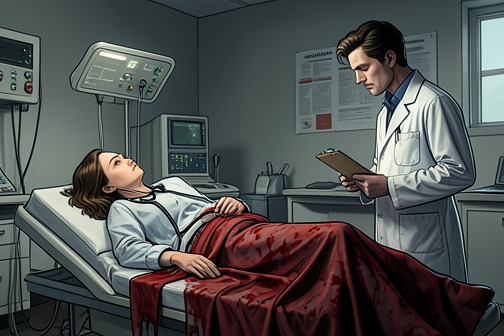
[Lieve's stillbirth](entity:event-recall-event-e01decb5066b) on 22 July is the devastating reversal of [Peter](entity:character-recall-character-peter-22e18a2305ec) and [Eva](entity:character-recall-character-eva-a4f4507c5fab)'s long effort to become parents: after years of hope, treatment, and preparation, their daughter is delivered by emergency caesarean after a placental abruption, but her heartbeat has already stopped. Recalled a year later at [Lieve's grave](entity:location-recall-location-lieve-0a2391b9471b), the event remains both a precise medical crisis and the beginning of a grief the couple experience in markedly different ways.
## Background and the Sudden Emergency
Peter and [Eva's pregnancy](entity:state-recall-state-eva-s-pregnancy-c6680c04e44a) followed a prolonged struggle to conceive. After a year of trying, their general practitioner initially saw no cause for alarm and recommended that they track Eva's basal temperature to identify ovulation. The routine made sex increasingly scheduled, and the strain surfaced in arguments about whether to enter medical treatment. Eva feared giving up her overwhelming wish for a child; Peter wanted a child with her but missed their earlier intimacy. They eventually saw a gynaecologist. Eva's examination and scans showed no apparent abnormality, while two semen analyses found that Peter had too few sperm and that those present moved poorly. Their route to parenthood had come to depend on medical help, making the pregnancy precious after repeated disappointment.
On the morning of 22 July, Eva woke Peter in panic, with blood between her legs, and said they were losing the baby. He first considered calling a doctor, midwife, or ambulance, then tried to reassure her even as he understood that something was seriously wrong. Their hospital bag was already packed, but the car keys were not on their usual hook. Peter searched frantically through the house and found them on the toilet's little basin. The delay sharpened the urgency: Eva's towel was quickly soaked, and she cried out as the bleeding continued.
The drive became a desperate attempt to reach the hospital. Peter drove through red lights and along pavements and cycle paths to get around traffic. Blood ran from the rubbish bag Eva held between her legs and dripped onto the car's beige upholstery. Beside him, she stared ahead with wide, frightened eyes, biting her lip as her body trembled. The scene makes their different forms of action visible: Eva endures the physical emergency, while Peter tries to navigate the journey and keep moving despite his panic.
## Hospital and Delivery
At the emergency department, the response was far less immediate than Peter expected. Eva was put in a wheelchair and made to wait while she insisted that she could feel the baby fighting for its life. She was thirty weeks pregnant, and Peter believed [Lieve](entity:character-recall-character-lieve-d33dc86ede7e) could survive outside the womb; he wanted the staff to take Eva to the operating room without delay. Eva had been searching frightening medical websites and understood the danger before the gynaecologist confirmed it: her placenta had detached. The ultrasound also showed that Lieve's heart had stopped.
The confirmation brought the crisis to a halt in a matter of minutes. In a modest white room, Eva lay on the operating table beneath a green sheet while staff placed intravenous lines and prepared her for surgery. Doctor Van Dam arrived with his face hidden behind a mask; the antiseptic smell, the iodine on Eva's abdomen, and the sound of equipment belong to Peter's recollection of a procedure he could not control. Eva refused sedation. Peter held her cold hand, fighting dizziness and the fear that he might faint or vomit. When the operation began, the couple could not see what was happening behind the drape. They heard instruments and the steady beeping of the monitors; a tear rolled down Eva's face as a nurse stroked her head.
After the staff announced that the baby had been delivered, Lieve was lifted above the green curtain. She was tiny, purple, and still. Eva nodded when asked whether she wanted the baby placed with her. Wrapped in a cloth, Lieve was laid on her mother's chest. Eva stroked her daughter's small, misshapen face and recognized her as complete, even as she grieved that she was dead. The encounter gave the parents a chance to hold and see the child they had spent years hoping to meet, but it could not reverse the loss.
## Taking Lieve Home and Saying Goodbye
Peter remembers that morning as the death of his family: the future they had imagined seemed to disappear with Lieve. Yet their first acts as parents were acts of care. They dressed her in an outfit they had bought together during a weekend in Maastricht, then wrapped her in a quilt Eva's mother had made from pieces of Eva's own baby clothes, sheets, and blankets. They laid Lieve in a transparent box beside Eva's hospital bed. They looked for familiar features in her face, touched and kissed her cold body, and smelled her head repeatedly because they wanted to remember her scent.
The couple chose to take Lieve home and bury her, so Eva could have a place to visit. Her grave was on the children's section of the cemetery, beneath a white stone inscribed with the words For ever in our hearts and surrounded by blue forget-me-nots. The location lay beside sports fields; the sound of playing children made the contrast between everyday life and the parents' loss especially sharp. Eva tended the grave and went there every day for a year, sometimes twice in one day. Once, a woman who saw her lying there grew so concerned that she approached to check whether Eva was alive, then called Peter to ask whether he was keeping an eye on her.
## The Anniversary and Unequal Grief
A year after the stillbirth, Eva and Peter return to the grave. Eva pulls dead flowers from the bed while Peter fills a watering can and pours water over the forget-me-nots. She is so afraid of breaking into a scream that she avoids speaking and even looking at him. Peter strokes her back and holds her hand, but beside the grave he becomes acutely aware of his own jealousy: he resents the intensity of Eva's love and grief for the dead child. His response does not make the loss smaller; it exposes how his own pain has become tangled with shame and resentment.
When Eva kneels and speaks to Lieve as her daughter, Peter's anniversary visit releases a sharp memory of the emergency. He had not returned to the grave since the funeral, to Eva's frustration, because he could not bear what he regarded as a monument to his failure. The anniversary therefore brings together two kinds of return: Eva's repeated visits to the place where Lieve is buried, and Peter's belated return to the event in memory. His account acknowledges that, although he says he and Eva have found a new balance and that grief no longer occupies every hour, speaking about the past in therapy brings the suffering back into view.
The memorial details also show that the loss persists in ordinary life rather than ending with the burial. A year after [Lieve's death](entity:event-recall-event-lieve-f01357e31fa7), Eva's grave is maintained with fresh flowers and small ornaments, and she tells her daughter that her parents must carry on without abandoning her. Peter's account of their different responses resists a single, orderly image of mourning: Eva's daily visits and Peter's avoidance are both bound to the same child, while neither removes the pain. The event's return at the anniversary makes the stillbirth not just a past medical emergency but the defining loss around which the parents' memories, relationship, and attempts to continue living are organized.
Event 5
Peter decides to pursue adoption

[Peter decides to pursue adoption](entity:event-recall-event-9dfa6c1cd7d4) after a sudden return of energy leads him to reconsider the choices that have shaped his and [Eva](entity:character-recall-character-eva-a4f4507c5fab)’s life. The decision offers them a new shared direction after infertility and loss, but it does not erase their grief or resolve the difference between [Peter](entity:character-recall-character-peter-22e18a2305ec)’s acceptance of adoption and Eva’s continuing wish for a child who grows in her body.
## Background and Change of Direction
At a therapy session, Peter tells [Hetty](entity:character-recall-character-hetty-5721f65706f8) that he would rather continue with his life than keep examining whether he is entitled to exist. He acknowledges that grief has become less constant: he and Eva have new friends, he listens to music again, and he rides his motorcycle. Yet therapy itself brings the suffering back into view. After leaving, he feels a renewed appetite for ordinary life and imagines inviting [Steef](entity:character-recall-character-steef-7536a306facc) for a beer at the beach, taking a holiday, cycling across the heath, going out with Eva, finding a new job, and attending a concert.
Driving past green fields and newly built neighborhoods, Peter sees the couple’s difficulty not as a lack of options but as a loss of confidence in their decisions. They had chosen marriage and then chosen to have a child with conviction. When conception did not come easily, they abandoned their intention to avoid medical treatment and entered a succession of fertility decisions that, in his view, left them overwhelmed and estranged from themselves. He concludes that they need not rely on Hetty to find a way forward: they must stop doubting and choose a new shared goal.
## Adoption as a Chosen Future
Peter names that goal as adoption. He regards it not as a lesser substitute for a biological child but as another affirmative choice: the child would have no blood tie to either parent, which he considers fairer to all three. The distinction matters to his decision. Adoption is not framed as a second-best outcome after failed treatment, but as a different route into parenthood that Peter believes he and Eva can choose together.
His resolve takes shape as he drives, with the music turned up and his heart pounding. The guitar solo of [Guns N' Roses](entity:organization-recall-organization-guns-n-roses-2a7f655edf97)’s [Sweet Child O’ Mine](entity:expression-recall-expression-sweet-child-o-mine-2e505b45c5d1) brings [Lieve](entity:character-recall-character-lieve-d33dc86ede7e) to mind; the song had once carried promises for their daughter, and its title turns the new hope toward the child they lost. The forward movement of Peter’s decision therefore begins not by leaving Lieve behind, but by passing through a reminder of her.
## Lieve’s Grave and Unfinished Grief
Peter turns away from the route home and goes to Lieve’s grave, a place he has not visited since the funeral and has avoided to Eva’s frustration. Her grave is on the children’s section of the cemetery, marked by a white fieldstone bearing the words For always in our hearts and surrounded by forget-me-nots. Nearby playgrounds and sports fields make the sound of living children part of the setting; Eva has kept the grave tidy, adding pink flowers beside two cheerful plastic Disney dwarfs.
Peter lays a white rose against the stone and kneels. He wants to feel love for the child he says was not his and with whom he never formed a bond, but what he feels is guilt. The visit complicates any reading of adoption as simple recovery: he can envision a future child while still struggling to recognize his connection to the child who died. His earlier account of feeling better likewise coexists with the pain of being reminded of what happened.
## A Shared Plan, Not Yet a Shared Longing
In a later domestic scene with [Rebecca](entity:character-recall-character-rebecca-a2bff63b7d1a) and Steef, Peter holds their baby, [Sem](entity:character-recall-character-sem-f5b4cfffb814), and tells Eva that they will sign up for adoption. Eva responds positively to the fairness of adoption, but privately withholds her dream of a child conceived in her body and born from her. Her words and silence expose a difference that Peter’s sudden certainty does not settle: he has made adoption his chosen path, while Eva’s desire for a biological child remains alive.
That tension persists in Eva’s later account of bodily unease and the possibility that she might be pregnant. She avoids running, cycling, and bumpy roads, while telling herself that pregnancy would be a miracle and a second chance. The adoption decision is therefore a genuine turn toward a common future, but not proof that the couple’s hopes have become identical. Its significance lies in Peter’s attempt to replace the exhausting proliferation of medical choices with a deliberate commitment, even as grief and differing desires continue to shape what that commitment means.
Event 6
Boundary-crossing intimacy among the four

The boundary-crossing intimacy among the four begins as a night of music and drinking and becomes a charged encounter between [Peter](entity:character-recall-character-peter-22e18a2305ec), [Eva](entity:character-recall-character-eva-a4f4507c5fab), [Steef](entity:character-recall-character-steef-7536a306facc), and [Rebecca](entity:character-recall-character-rebecca-a2bff63b7d1a). Its decisive turn is not simply that the couples touch and kiss: Peter’s excitement at reconnecting physically with Eva gives way to his shock when she turns toward Rebecca and accepts Steef’s touch. Eva’s later account supplies a different emotional frame, linking the night to her anger over Peter’s decision to stop therapy and insisting that, despite recognizing how far things went, she feels newly alive rather than regretful.
## Background and Trigger
Peter’s account places the encounter amid a gathering with Steef and Rebecca. Before the dancing takes over, Eva remarks that a man being discussed looks a little like Steef. Peter is convinced she says it deliberately to put him in his place, an early sign that he experiences the evening through jealousy and alertness to comparison. The remark does not stop the party; instead, it helps establish the tension beneath its increasingly uninhibited surface.
Eva’s retrospective account identifies a more consequential source of her mood. Peter had told her that he had stopped therapy. She says that, without this disclosure, she might have drunk less and sent Steef and Rebecca home in time. She had been angry throughout the evening, and attributes her excessive drinking to that anger. Her account does not claim that the decision to stop therapy alone explains everything that follows, but it makes clear that the gathering’s turn toward intimacy occurs against an existing marital conflict rather than in an emotional vacuum.
## Music and Disinhibition
The music becomes the scene’s immediate force. When Steef spills beer, Peter says that he does not care if the floor cracks; his body feels fluid as he spreads his arms, closes his eyes, and gives himself over to the guitar and Billy’s rough voice. The passage renders abandon physically: the sound seems to take possession of him, and he shouts. The lyric “It's a nice day to START AGAIN.” marks the moment with an image of renewal, though the night’s later consequences make any fresh beginning less straightforward than the refrain suggests.
The excitement spreads across the group in gesture rather than discussion. Steef shouts, all four yell like exuberant teenagers, and the women jump after kicking off their shoes. Steef gathers both women against him; as they nearly lose their balance and laugh, his hands appear to seize their breasts. Eva does not stop him. Peter then pulls Eva away from Steef, places his hands around her hips, and presses his erect body against her. His repeated insistence that he dares anything and is Billy registers a temporary surrender to the performance and the music, not a considered resolution of the couple’s problems.
## Escalation and Uneven Participation
When the music slows to Billy Idol’s “Eyes without a Face,” Peter dislikes the song, while Eva puts her arms around his neck and dances close with him. He wants to preserve her arousal, fearing it will fade. Across the room, Steef and Rebecca have fallen onto a sofa; Peter sees Steef touch Rebecca’s breast and take her nipple into his mouth. The curtains are still open. Peter steers Eva toward another sofa, dismissing the prospect of a mess on its white upholstery because, in his thinking, tomorrow can deal with tomorrow.
Peter kisses Eva cautiously, and she kisses him back. They use their tongues, and he understands this as the first time in a long while that he has kissed his wife that way. They sink toward the sofa together, but Eva wriggles free, stands, closes the curtains, and straightens her skirt. Peter’s heart races as he reaches for her, wanting her close and wanting to prevent a pause in which either of them might reconsider. The curtains’ movement changes the scene’s exposure, but it does not restore the private reunion Peter is trying to hold on to.
He hears Steef groan and looks despite wanting not to. Rebecca is sitting on Steef with her dress pushed above her hips, revealing salmon-pink lace underwear. She laughs at something he says, then takes Eva by the hand. Rebecca puts a hand into Eva’s neckline and strokes her breast; Steef strokes Eva’s calf and moves his hand upward. Eva does not push them away or respond with the outrage Peter anticipates. Instead, she bends to kiss Rebecca, closes her eyes, and gives herself over to Steef’s hand between her legs. Peter remains on the sofa, physically aroused but frozen. The encounter’s central reversal is therefore also a disparity of experience: what Peter had treated as a chance to reclaim closeness with Eva becomes a scene in which he cannot act and Eva directs her intimacy elsewhere.
## Eva’s Retrospective and Significance
The narrative shifts from Peter’s immediate, first-person perception to Eva’s account of the same night. She acknowledges that things got out of hand, yet says that it does not feel that way to her. Her heart is still pounding and her arms and legs feel exhausted by the alcohol, but she describes the aftermath as a pleasant hangover, one that leaves her smiling through the day. She says she has no regrets, even though she believes she ought to have them. That contrast prevents Peter’s paralysis from serving as the only measure of what the encounter means.
The scene thus brings two responses to one boundary-crossing night into direct tension. Peter’s longing to keep Eva close turns into stunned observation; Eva’s account connects her conduct to anger and heavy drinking while also presenting the experience as a return to feeling alive. Her retrospective qualification does not erase the evening’s loss of control, but neither does it reduce her response to remorse. The encounter marks a shift from the couple’s troubled intimacy toward a more complicated arrangement among all four: what begins as shared exuberance ends with Peter isolated on the sofa, while Eva remembers the night as an experience she does not wish to disown.
Event 7
Farewell on the first anniversary of Lieve's death
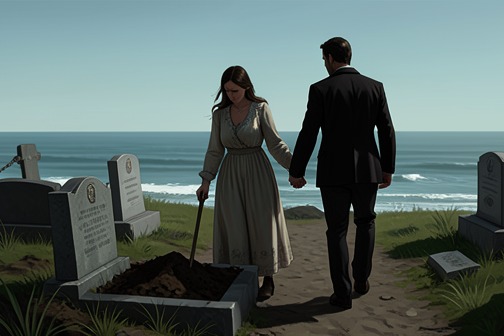
The farewell on the first anniversary of [Lieve](entity:character-recall-character-lieve-d33dc86ede7e)’s death brings [Eva](entity:character-recall-character-eva-a4f4507c5fab) and [Peter](entity:character-recall-character-peter-22e18a2305ec) together at their daughter’s grave, where a private ritual of remembrance becomes a difficult promise to continue living. Eva says she will no longer come every day, but insists that Lieve remains her daughter and that she remains her mother. Peter accompanies her, carrying his own guilt and jealousy alongside a grief he has struggled to meet. Their departure from the cemetery, hand in hand, leads not to certainty or cure but to a brief, physical experience of release by the sea.
## Background: Two Unequal Griefs
Peter and Eva reach the anniversary from different positions. Peter has not visited Lieve’s grave since the funeral. He had avoided it as a monument to his failure, and his reluctance had angered Eva. He has begun to feel that grief is less constant: he and Eva have new friends, he listens to music and rides his motorcycle, and he thinks they have found a new equilibrium. Yet being in therapy brings the suffering behind them back into view. His sense of improvement and his discomfort at the grave coexist; neither cancels the other.
Eva’s mourning has remained closely tied to the grave. For a year she has visited every day, sometimes twice in one day. Her grief has been so visible that a woman once contacted Peter after finding Eva lying on the grave and crying, her fists pressed against her stomach. At the anniversary visit, Eva again finds it hard to speak. She keeps her jaw clenched and avoids Peter’s eyes, afraid that opening her mouth will release a scream. Her silence is not an absence of feeling but an effort to hold it in.
The grave itself makes private sorrow part of a landscape that cannot be controlled. Lieve is buried in the children’s section beneath a white fieldstone marked with a message of lasting love and surrounded by forget-me-nots. Plastic ornaments and bright flowers try to make the corner cheerful, while nearby children’s voices carry across from the sports fields. The contrast between the memorial and the sounds of living children sharpens the pain of the place. Earlier, Peter had knelt there with a white rose, wanting to feel love for a child he had never known alive and finding guilt instead. At the anniversary, that unresolved feeling accompanies him as he stands beside Eva.
## At the Grave: A Promise, Not Forgetting
On [Bevrijdingsdag](entity:time-recall-time-bevrijdingsdag-a4b8144d0a0e), Eva chooses the grave as the place to mark the year. She clears withered flowers from the bed while Peter fills a watering can and pours water over the forget-me-nots. He strokes her back and holds her hand, but the scene exposes his unease: he feels most inadequate beside the remains of Eva’s greatest love, jealous of a dead baby and of the sincerity of her grief. His touch offers companionship, but it does not mean that he feels what she feels.
Eva kneels and rests her hand on the stone. She addresses Lieve as their little girl and tells her that both parents are there. Peter clears his throat and offers a greeting of his own, but experiences his words as something said for form’s sake. Eva then explains that she has come to say she will let Lieve go. She describes the death as Lieve’s choice to become an angel, expressing a belief that gives spiritual meaning to the loss without changing the fact of her death.
Her farewell carefully distinguishes letting go from abandonment. Eva tells Lieve that her parents must go on, but that she will not be left behind: she will remain in their hearts, Eva will think of her continually even if she stops visiting every day, and she will always be her mother. The promise does not ask Eva to stop remembering or loving her child. Instead, it gives her a way to imagine a change in their daily practice while preserving the bond she fears losing.
Eva bends to kiss the stone and takes a small stone angel from her bag. She places it among the forget-me-nots as a guardian for the times she is not there. The couple look at the figure and the flowers above the small plot in which their shared dream is buried. Peter admires Eva’s ability to believe that Lieve has become an angel who hovers around them, while acknowledging that he cannot believe it himself. The ritual allows them to stand together without requiring identical convictions.
## Leaving the Cemetery
Eva whispers that she is letting Lieve go. Peter strokes her curls, presses his face to her neck, and kisses her earlobe. They say goodbye without crying, then walk away holding hands. Peter feels lighter, and the change is registered through ordinary perception: he hears birds and gulls and notices sunlight shining between the trees. The relief is real but bounded. Nothing about the farewell reverses the loss; the scene marks a moment in which leaving the grave becomes possible.
Eva suggests going to the beach. They walk for what feels to Peter like miles along the waterline and through the shallow tidal pool, with their clothes gathered up and their shoes in their hands. At the quieter nudist beach, Eva proposes lying in the sand. Peter is uncomfortable among the naked bathers, but chooses not to complain. Eva takes off her clothes and settles into the warm sand with her arms spread, describing the feeling as freedom. The movement from the grave to the beach gives the day a striking change of setting and bodily register: after tending a stone and speaking of the dead, the couple walk together beside water and enter a space Eva experiences as free.
## Grief Beyond the Anniversary
The farewell does not make mourning linear. Elsewhere, Eva is frightened when she realizes that several hours have passed without her thinking of Lieve. She recalls the baby’s small body, closed fists, and fine hair, and fears that forgetting even briefly might mean letting her daughter go. She lights a candle beside Lieve’s photograph and holds on to the identity of a mother whose child died before she could truly know her. The anniversary promise therefore sits beside, rather than resolves, her resistance to forgetting.
Later, Eva’s uncertainty about a possible pregnancy brings another kind of hope and fear into her daily life. She notices tense breasts and nausea at the smell of coffee, avoids running, cycling, and bumpy roads, and reminds herself that pregnancy would be unlikely even as she imagines it as a second chance. On mornings when anxiety leaves her unable to rise, she turns to Lieve’s photograph for comfort before getting ready for work with young children. These later moments complicate the meaning of the anniversary: Eva can promise to stop visiting the grave every day and still carry Lieve into her thoughts, her sense of motherhood, and her hopes for the future.
Event 8
Steef's mistaken killing in Utrecht
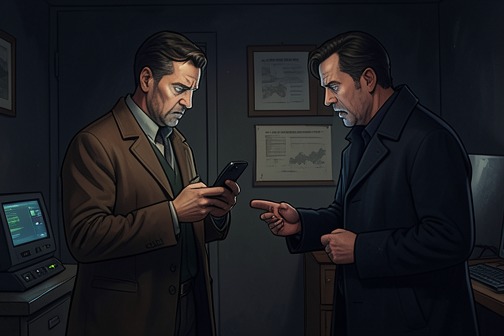
[Steef's mistaken killing in Utrecht](entity:event-recall-event-9ddd84f9ba3d) is a fatal misidentification with consequences that reach beyond the moment of the shooting. [Steef](entity:character-recall-character-steef-7536a306facc) believed a man was drawing a weapon and shot him; the supposed weapon was a mobile phone. His account links the death to the trauma he already carried from war and to the danger that follows when the dead man’s relatives seek revenge.
## The Fatal Misidentification
Steef tells [Peter](entity:character-recall-character-peter-22e18a2305ec) that the killing happened in [Utrecht](entity:location-recall-location-utrecht-0de51c6961a8) the previous year. He had taken the man for an armed drug dealer and thought he saw him draw a gun. Only afterward did he realize that what the man had taken out was his mobile phone. The account turns on the gap between perceived threat and what was actually in the dead man’s hand: a split-second judgment becomes an irreversible death.
## Trauma and Earlier Experience
Steef describes the aftermath as a breakdown: everything came out, and he was unable to work for months. The shooting is not presented as an isolated source of distress. [Rebecca](entity:character-recall-character-rebecca-a2bff63b7d1a) says that Steef had also served in [Srebrenica](entity:location-recall-location-srebrenica-40ec9a707f24) and had never properly processed what he experienced there. Steef recalls the confusion of combat, including a grenade exploding nearby while he continued running without recognizing that the sound around him came from machine guns. His survival, set against the thousands of Muslim men who died, shapes his insistence that people should resist death and take what they can from life. The exhortation sits uneasily beside the killing he has just confessed.
## Retaliation and Continuing Fear
The killing also places Steef in danger after the event. Rebecca explains that a young man pursuing Steef is a brother or nephew of the man Steef accidentally shot, and that the dead man’s family had already been seeking revenge. Later, Steef believes that the men are still after him, even inside the place where he has taken refuge. Peter checks the visible exit and sees no one leaving; the discrepancy between Steef’s certainty and the evidence at hand shows how fear continues to shape his perception.
## Investigation and Significance
Steef is not suspended because of the young man’s death. He explains that the police have no proof against him and that his suspension instead follows photographs found in the young man’s home, which make Steef vulnerable to blackmail in the authorities’ view. This distinction keeps the shooting and the later investigation connected without treating them as the same accusation. The episode’s central reversal is both personal and narrative: Steef, a police officer who believed he was confronting an armed attacker, killed a man whose phone he mistook for a weapon, and the consequences continue through trauma, threatened retaliation, and official scrutiny.
Event 9
Nighttime attack and threat against Steef's family
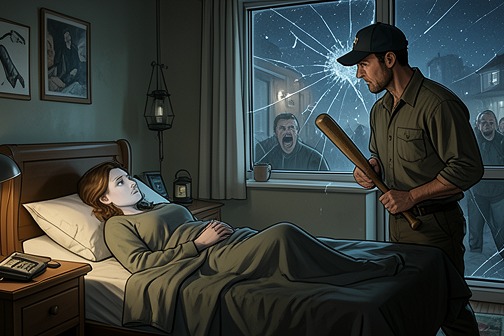
The [Nighttime attack and threat against Steef's family](entity:event-recall-event-a5463d8b6fa2) brings the consequences of [Steef](entity:character-recall-character-steef-7536a306facc)’s accidental shooting in [Utrecht](entity:location-recall-location-utrecht-0de51c6961a8) to his doorstep. A young attacker arrives at night, damages [Rebecca](entity:character-recall-character-rebecca-a2bff63b7d1a)’s car, and calls Steef a murderer; although the household recognizes the danger, Steef insists on handling the confrontation himself rather than summoning the police.
## Background and Escalation
Weeks before the attack, Steef had told [Peter](entity:character-recall-character-peter-22e18a2305ec) that he shot a man in Utrecht after mistaking the man’s mobile phone for a weapon. He had believed he was facing an armed drug dealer. In the aftermath, Steef broke down and was unable to work for months. The shooting’s consequences therefore precede the night’s violence: what Steef describes as a fatal mistake has become, for the dead man’s relatives, a grievance demanding retaliation.
The attack begins after Peter and Rebecca have fallen asleep together. A tremendous crash outside, furious shouting, and the sound of breaking glass wake them. The voice identifies Steef by name and calls him a filthy murderer. From their window, Peter and Rebecca see a person in a baseball cap poised to strike Rebecca’s Fiat Panda with a baseball bat. The threat is no longer distant talk about the dead man’s family; it has reached the car outside their home.
## The Confrontation
Rebecca rejects Peter’s suggestion that they call the [Dutch police](entity:organization-recall-organization-534b21685fed). Steef wants to handle the matter himself, she explains, because he does not want trouble at work. That choice leaves the household watching as the attacker smashes the car’s side mirror and threatens to do the same to Steef’s head. When the front door opens, the young man pauses; Steef steps outside wearing only ragged jeans.
At first, Steef appears to have the advantage. Against the thin young man and his raised bat, he moves with confidence, grinning as he advances in a wide-legged stance. But the narrator notices what Peter misses: something black tucked into the waistband of Steef’s jeans, his fingers curled around it. She recognizes it as a pistol. The threat is therefore not simply a bat-wielding attacker confronting an unarmed man; Steef has brought a firearm into an already volatile encounter.
The young man retreats and then runs, clutching the bat against himself. Steef pursues him rather than letting him go or calling for help. Once he is gone from view, the household can speak aloud again, but relief is mixed with fear. Rebecca asks why Steef insists on taking matters into his own hands and says the young man is a brother or cousin of the man Steef accidentally shot in Utrecht. His family, she says, has been pursuing Steef for weeks and will not rest until it has taken revenge. With [Sem](entity:character-recall-character-sem-f5b4cfffb814) asleep in her arms, the narrator meets Peter’s worried look; the danger now plainly concerns all of them, not only Steef.
## Aftermath and Wider Consequences
Steef eventually comes back and presents the encounter as settled: he says he impressed on the young man that starting a war with him would end badly, and that he fears nobody. His manner turns a retaliatory threat into something he claims to have controlled by force of will. Peter, however, points out that the whole neighborhood heard the commotion and someone may already have called the Dutch police. The confrontation cannot be kept within Steef’s chosen terms; its noise has carried the danger into public view, where police involvement may follow whether he wants it or not.
The attack also makes visible how violence has accumulated around Steef rather than ended with the shooting in Utrecht. Before this night, he had described killing a man he mistook for an armed drug dealer, then breaking down so completely that he could not work for months. He had also told Peter and Rebecca about his service in [Srebrenica](entity:location-recall-location-srebrenica-40ec9a707f24), where the immediate unreality of bombardment gave way, much later, to an awareness of survival and of the many men who did not survive. His appeal to break out of self-made prisons and enjoy life sits uneasily beside the pistol hidden at his waist and his decision to chase an attacker. The language of defiance offers no clear boundary between courage and renewed exposure to danger.
Later, Steef’s perception of threat again becomes difficult for those around him to share. He insists that hostile men are still after him, even inside a place where Peter can see that nobody has come out. That episode does not establish that the family’s retaliation caused his fear, but it echoes the night’s uncertainty: danger can be real, yet Steef’s sense of who is pursuing him is not always reliable. The gun also recurs in Peter’s life. Under Steef’s instruction, Peter practices shooting; Steef’s close guidance recalls how he had taught [Eva](entity:character-recall-character-eva-a4f4507c5fab), while Peter struggles to identify a target as an enemy. The household’s encounter with the pistol-wielding threat thus sits within a wider pattern in which violence passes from Steef’s past into the present, and from his actions into the other characters’ lives.
## The Threat Beyond the Night
The confrontation does not settle the wider danger around Steef, and the later account of his suspension complicates its aftermath without proving that the night’s attacker caused it. Steef tells Peter that the authorities have no evidence against him and clarifies that he was not suspended over the young man’s death. Instead, photographs discovered at the young man’s home made Steef, in the police’s view, vulnerable to blackmail. The distinction leaves the original shooting unresolved in public terms while exposing a separate source of professional peril: the inquiry concerns not only what Steef did, but what compromising material might be used against him. The family’s threatened revenge, Steef’s choice to confront the attacker alone, and his precarious position at work remain distinct pressures, none of them offering a secure end to the violence.
Event 10
Peter and Steef's U2 concert night

[Peter](entity:character-recall-character-peter-22e18a2305ec) and [Steef](entity:character-recall-character-steef-7536a306facc)’s [U2](entity:organization-recall-organization-u2-2290503e09b6) concert night begins as a shared experiment in ecstasy and becomes a test of loyalty: Peter moves from feeling shut out of the crowd to claiming a profound bond with Steef, then helps him through a drug-fuelled panic. The night’s physical intensity and emotional candour sit alongside Peter’s troubled marriage to [Eva](entity:character-recall-character-eva-a4f4507c5fab) and the grief that still shapes his life after the loss of [Lieve](entity:character-recall-character-lieve-d33dc86ede7e).
## Background and Emotional Stakes
The concert takes place in a period when Peter is trying to find a new balance after the loss of Lieve. He later tells [Hetty](entity:character-recall-character-hetty-5721f65706f8) that he is no longer consumed by grief day and night: he and Eva have new friends, and he has returned to music and motorcycling. Yet being in therapy brings back the suffering they have lived through. The concert’s exhilaration therefore belongs to a life in which recovery and grief coexist, not to a clean break from the past.
Peter’s grief has also been bound up with guilt and avoidance. At Lieve’s grave, he remembers staying away since the funeral and describes feeling guilty rather than the love he thinks he ought to feel for a child he never got to know. That unresolved pain gives weight to the concert’s temporary release. Music draws Peter into the present, but the night does not establish that the loss has been overcome; it reveals how intensely he can feel when music, drugs, and Steef’s company loosen his usual restraint.
## The Concert and the Crowd
Steef’s ecstasy appears to take effect within about twenty minutes. At the [Amsterdam ArenA](entity:location-recall-location-amsterdam-arena-162542c577dc), he bounces with excitement, joins the wave, whistles, waves, claps, and chats with strangers. Peter, by contrast, monitors every bodily sensation and feels nothing at first except the need to urinate. He is anxious about leaving Steef alone, and the press of the crowd makes that dependence tangible: as the audience surges toward the stage, Peter follows behind Steef’s broad back, apologizing as people push past him.
When Peter finally goes to the toilet, the filthy floor soaks his trainers. The crude, uncomfortable detail gives way to a sudden reversal: back among the crowd, he feels the music, the audience’s affection, and a sense of belonging. He jumps and raises his hands as the stadium moves together. During “[Elevation](entity:expression-recall-expression-elevation-f6b7f43dfdcb),” the crowd becomes, in his perception, a single swaying mass. The concert changes from something Peter fears he is missing into an experience in which he feels included at last.
That release also becomes sexual. Peter responds to the people around him with uncharacteristic openness, touching and kissing a young woman in the crowd and wanting to go further before she turns her attention back to the performance. He then sees Steef again and, as they jump together, feels that they belong together. The drug amplifies the sensation, but Peter’s thoughts give it a personal meaning: he regards Steef as his friend and soulmate, not merely a companion at a concert.
## From Exhilaration to Crisis
After the concert, Peter and Steef leave hand in hand with two women from Budel. They share long, wet kisses with them outside, but the mood has already changed for Peter. When one woman offers to go home with him, he no longer wants her company; he wants to be alone with Steef. The swift turn from sexual possibility back to the friendship he values makes the night’s shifting attachments explicit.
The evening continues at a nightclub. Peter takes another half-pill despite thinking that he should not. He turns off his mobile phone and removes his wedding ring, then reflects that Eva does not know where he is and may not worry. He wants her to worry and be afraid. This deliberate gesture introduces a harsher strain into the night’s freedom: Peter’s separation from his marriage is not simply forgetfulness or intoxication, but includes a wish to make Eva feel his absence.
Steef becomes convinced that men he identifies as Yugoslavs are after him and insists that they must leave immediately. As they push through the club, Peter sees Steef trembling and becomes frightened too, imagining that the men may be waiting outside. When a doorman considers involving the police, Peter intervenes. He says that Steef is ill and claims that his medication is in the car, asking to be let out so Steef can take it. The doorman opens the door, and Steef rushes outside.
## Aftermath and Significance
Outside, Steef is still overwhelmed. Near the water, Peter wets his hands and places them on Steef’s neck; Steef turns toward him in tears and admits that he is terrified and wants the feeling to stop. Peter suggests water and food, asks whether he should call [Rebecca](entity:character-recall-character-rebecca-a2bff63b7d1a) or Eva, and remains with him. The earlier scene of two friends swept up in music has become one of care: Peter’s attention shifts from his own euphoria to Steef’s immediate fear.
They walk for what feels like hours through quiet streets and past empty office buildings. As the sky grows lighter, Steef stops, holds Peter by the shoulders, and thanks him for being his friend, calling him a remarkable man. Peter is moved and says that, despite what happened at the end, he had an incredible night. The closing exchange does not erase the panic or settle the complications in Peter’s marriage. Instead, it gives the night its clearest outcome: after the drug-driven confidence, sexual experimentation, and fear, the connection Peter returns to is his friendship with Steef.
Event 11
Peter and Eva's partner-swapping night
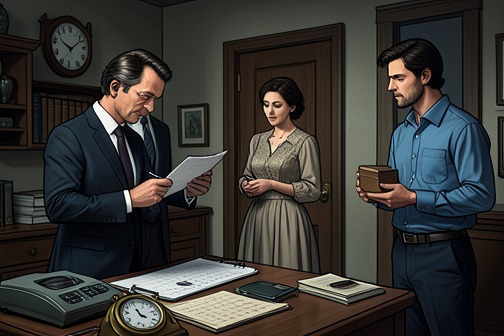
[Peter](entity:character-recall-character-peter-22e18a2305ec) and [Eva](entity:character-recall-character-eva-a4f4507c5fab)’s partner-swapping night is an experiment undertaken under the strain of infertility, and it becomes a turning point because its declared rules cannot reconcile the couple’s different aims. What is presented as a carefully bounded evening of shared sexual exploration also gives Eva an opportunity to pursue conception with [Steef](entity:character-recall-character-steef-7536a306facc). The leaking condom discovered afterward exposes how far the night has moved from the agreement the four people thought they were making.
## Causes and Background
For Peter and Eva, sex has become increasingly organized around the effort to have a child. After a year of trying, their doctor advises them to monitor Eva’s temperature and time intercourse around ovulation. Each morning at half past six, Eva takes her temperature; when it rises by 0.2 degrees Celsius, Peter is expected to ejaculate inside her so they can get to work on time. The procedure leaves little room for affection or spontaneity, and Peter misses the intimacy they had before trying to conceive.
The strain leads to an argument over whether to enter fertility treatment. Peter resists the medical process, wanting a child conceived through love rather than in a tube, while Eva says her desire for a child is too powerful to abandon. Their tests eventually make the difficulty concrete: Eva’s examinations show no apparent abnormalities, her temperature chart indicates that she ovulates, and scans reveal no blockages, cysts, or inflammation in her uterus or ovaries. Two semen analyses show that Peter has too few sperm and that those present barely move forward. The couple is told that medical intervention is their remaining route to having a child.
Against that background, Eva’s interest in Steef is not simply an extension of the evening’s stated sexual experiment. During the encounter, she thinks that she wants Steef’s semen as quickly as possible. Peter, by contrast, enters the night anxious and uncertain about what the experiment will mean for his marriage. The event therefore brings together two different pressures: a wish to escape the mechanical routine of timed intercourse and Eva’s desire to find another route to conception.
## The Setting and the Rules
At eight in the evening, Peter and Eva arrive at Steef and [Rebecca](entity:character-recall-character-rebecca-a2bff63b7d1a)’s home, nervous while it is still light outside. Rebecca closes the curtains and welcomes them into a room arranged like a Moroccan Berber tent: brightly colored cushions cover the floor, a fur blanket lies over the sofa, thick candles burn, and incense and cigarette smoke mingle with soft lounge music. Rebecca wears a glittering blue tunic over matching underwear; Steef appears barefoot in white linen. The theatrical setting makes the evening feel unlike ordinary domestic life, but Peter’s joke about not having brought a djellaba does little to dispel his anxiety.
Steef asks whether the two couples have discussed how far they want to go. Eva calls the evening an experiment and says they do not know whether they will become swingers. Steef warns that even a single encounter may permanently change Peter and Eva’s sex life. His caution recognizes the stakes, but it cannot settle the tension between the couple’s expectations.
Before the drug takes effect, Steef and Rebecca explain the available arrangements. A soft swap may involve touching and kissing but reserves intercourse for each person’s own partner; a full swap involves sex among all four. Steef is uncomfortable with bisexual activity, while Rebecca is not. The rules also establish that no one has to continue an unwanted act: a hand can be pushed away, a participant can leave at any time, and a touch on a partner’s shoulder means the activity is over. In a closed swap, a knock on the door serves as the signal to stop. For a full swap, a condom is expected. These instructions make consent explicit, yet the evening will also reveal that agreed safeguards do not ensure that everyone shares the same purpose.
Steef produces four pink pills from a white handkerchief. He takes one with sangria, and Eva chooses half of one; the group then takes the drug. Over prawns and spicy meatballs, they continue discussing the rules. The combination of ritualized preparation, explicit limits, and intoxication gives the evening a carefully staged quality, even as Peter remains unsure how to participate.
## The Encounters
Peter’s first sexual contact takes place with both women nearby. Rebecca and Eva massage him with warm oil, touching his shoulders, thighs, and body while Steef watches from across the room. Peter invites Steef to join, but Steef gives him an encouraging thumbs-up rather than taking part. Peter then turns to watch Eva and Rebecca kiss. Rebecca takes the lead in touching Peter, and Eva joins them; Peter tries to respond without losing sight of Eva or risking a breach of her boundaries. The experience is exciting to him but also awkward: he is conscious of what to do and of the possibility of offending someone.
Eva’s experience of the encounter with Peter and Rebecca is markedly different. She later remembers that she cannot lose herself in it. Instead of unfolding naturally, each touch demands thought: she is aware of her inexperience and lets Rebecca direct the activity. Rebecca touches Eva and Peter, and guides Eva’s hand, but Eva feels detached and mechanical. Peter’s hand in Rebecca’s crotch produces no response in her; when Rebecca touches her, Eva compares the feeling to being at the gynecologist. She wants Steef’s attention, not this performance, and eventually focuses on bringing Peter to orgasm so that the encounter can move forward. Her account makes clear that physical participation does not mean uncomplicated enjoyment or shared desire.
Later, Eva and Steef have sex. Eva asks him to continue, and his oral attention brings her to an unusually intense orgasm. As he asks whether he may have intercourse with her, she pulls him toward her and agrees. The scene changes the meaning of the evening: Eva is no longer merely participating in a general experiment but actively seeking Steef’s semen. She urges the encounter toward ejaculation and holds him close afterward, so that for a brief moment they lie together quietly and sweatily, almost as if they were in love. Steef then withdraws and sees that the condom has leaked.
## Breach and Consequences
Afterward, Peter laughs as Steef explains what happened, though the mood is subdued. Wearing a batik dressing gown and sitting beside Rebecca, Steef repeatedly says that the failure was his fault and that he feels terrible. He says the four of them have broken rules and apologizes to Peter, adding that they should never have begun this experiment with close friends. He insists on telling Peter the truth rather than concealing the leak, because he considers Peter a friend and does not want to make matters worse through hypocrisy. Rebecca’s expression reveals nothing, and Peter and Eva sit with the others in a heavy silence.
The condom is the night’s most consequential object: earlier, protection had been stated as a condition of full swapping; afterward, its failure makes the possibility of conception immediate. The event also exposes a deeper mismatch that no stop signal or sexual boundary could resolve. Peter entered hoping for an experience that might interrupt the mechanical routine of trying to conceive, while Eva’s desire for Steef’s semen connects the encounter directly to that struggle. The carefully described rules thus frame, rather than prevent, the breach: the night changes the couple’s sexual relationship, and its consequences extend beyond the room in which the experiment took place.
Event 12
Eva refuses the morning-after pill

[Eva refuses the morning-after pill](entity:event-recall-event-3da138af100f) after a condom accident with [Steef](entity:character-recall-character-steef-7536a306facc), choosing to preserve the possibility of pregnancy despite his explicit wish to prevent it. The decision is decisive because it makes a private act of bodily autonomy inseparable from deception: [Eva](entity:character-recall-character-eva-a4f4507c5fab) protects the chance to become a mother, while Steef and [Peter](entity:character-recall-character-peter-22e18a2305ec) have not agreed to the future she is trying to keep open.
## Background: A pregnancy longed for and resisted
Eva’s choice comes after a long struggle to conceive with Peter. After a year of trying, their general practitioner initially saw no reason for alarm and advised them to chart Eva’s basal temperature. Each morning, she measured it and recorded the result; when it rose by two-tenths of a degree, they treated the likely approach of ovulation as a cue for intercourse. Sex became timed and purposeful, sometimes reduced to getting semen into Eva quickly enough for both of them to reach work. The routine narrowed intimacy to a few fertile days each month.
Six months into temperature tracking, Eva and Peter argued about whether to enter medical treatment. Peter wanted a child with her but objected to conception through a medical procedure, and he told her that he missed their former sex life. Eva, by contrast, felt that abandoning the effort would betray a desire that had come to occupy her entirely. The following morning they accepted a referral. A gynecologist found no obvious problem with Eva’s reproductive organs, but two semen analyses showed that Peter had too few sperm and that those present moved poorly. Their difficulty conceiving was therefore not a passing disappointment: treatment appeared to be the remaining medical route to a child.
That history helps explain why the possibility created by the condom accident carries such weight for Eva. The encounter does not establish that she is pregnant, and she tells Steef she is not. But in the wake of years of unsuccessful attempts, even an uncertain chance is something she wants to protect. The morning-after pill is not simply a medication to her; taking it would mean deliberately closing that chance.
## Steef brings the pills
At dawn, Steef arrives at Eva and Peter’s home in the rain. Eva has been lying in bed, unwilling to face Peter, and hurries downstairs when she sees Steef at the door. Their customary greeting is a kiss, but this time they do not kiss. Steef asks for Peter and, told that he is out, follows Eva into the kitchen while she offers to make coffee.
Steef apologizes for his reaction to what he calls the condom accident. He has gone to a night pharmacy and brings a small white box, explaining that he obtained it without a prescription. He takes responsibility for what happened and says Eva had been kind to him, describing a bond between them that was intimate but not romantic. His apology therefore carries two distinct meanings: he acknowledges that the accident was his fault, yet he also treats the possibility of pregnancy as a danger that must be managed.
He explains that the box contains two pills, one to be taken immediately and the other twelve hours later. He warns that they may cause nausea and says they make it 95 percent certain that Eva will not become pregnant. Steef insists that he does not want another child. He says that [Sem](entity:character-recall-character-sem-f5b4cfffb814) was conceived against his will and that, although he tries to be a good father, he considers himself too unstable and too attached to freedom to want another child. His appeal is not only practical; he asks Eva to recognize that no child should come from this situation.
## Eva’s concealed decision
Eva does not openly refuse the medication at the kitchen table. Instead, she tells Steef that she will take the first pill after breakfast because she does not want to take it on an empty stomach. The delay lets her preserve the appearance of cooperation while concealing her actual choice. She knows what the box contains, accepts it, and does not tell Steef that she has decided against taking it.
While preparing breakfast, Eva lays out eggs, freshly squeezed orange juice, tea, white bread, and croissants. The bright, carefully arranged meal sharpens the contrast between the ordinary domestic morning and the decision she is making beneath its surface. She wonders why a settled, prearranged life is not enough and thinks of herself as someone who is deliberately risking the destruction of what she has. At the same time, she regards the risk as an attempt to fight for her own happiness. Her reasoning is bound to motherhood: she wants to keep Steef’s semen inside her and cherish the small possibility that it could lead to a child.
After Steef has gone to shower, Eva puts the morning-after pill in the grey rubbish bin, burying it beneath the other waste. The disposal is the action that makes her refusal real. Her promise about taking it after breakfast has been a cover, and the ordinary refuse conceals a decision with consequences neither man has consented to. Peter and Eva eat in silence, with the Sunday newspaper between them; the domestic scene continues, but Eva has made a consequential choice without disclosing it.
## Conflict over parenthood and consent
The refusal places Eva’s longing for a child against Steef’s stated wish not to have one. It also exposes an imbalance in who would bear the immediate physical consequences: Steef can ask her to take the medication and describe what he fears, but Eva is the one who would swallow it, experience its possible side effects, or carry a pregnancy. Her private thought that no one else can decide what she puts into her body asserts that distinction. Yet her choice is not transparent agreement between the people involved. She hides it behind a promise, preserving her bodily decision through deception rather than open consent.
The surrounding events make that deception more than an isolated response to an accident. Before the encounter, Eva and [Rebecca](entity:character-recall-character-rebecca-a2bff63b7d1a) discuss swinging around Eva’s next ovulation and Rebecca proposes what she calls soft coercion: if one attempt does not result in pregnancy, they can try again. The possibility that a condom could leak is raised as part of that plan. Against this background, Steef’s later accusation that Eva and Rebecca stole his semen, with his wife’s consent, casts the incident as a dispute about reproductive deception and his claim to choose whether to become a father. The accusation does not erase Eva’s desire or her control over her body; it reveals the collision between that control and the other participants’ understanding of what they agreed to.
The episode thus joins the book’s infertility story to a sharper conflict about parenthood. Earlier, Eva and Peter’s attempts to conceive made sex a schedule governed by temperature readings and ovulation. Now an unintended opening appears in an encounter whose circumstances are themselves bound up with a plan to get Eva pregnant. The pill offers a 95 percent chance of closing that opening; Eva discards it instead. Whether her decision will produce a pregnancy remains unresolved here, but the secrecy has already changed the stakes: what Steef understands as an accident to be corrected becomes, for Eva, a possibility she refuses to surrender.
Event 13
Steef suspended and investigated over incriminating photographs and the boy's death
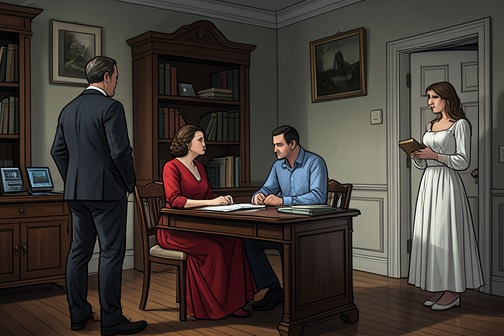
[Steef](entity:character-recall-character-steef-7536a306facc)’s suspension and investigation over photographs and a boy’s death transform a chain of uncertain evidence into a crisis of trust for [Eva](entity:character-recall-character-eva-a4f4507c5fab) and [Peter](entity:character-recall-character-peter-22e18a2305ec). The discovery of the body makes Steef’s earlier pursuit of a boy with a gun seem potentially fatal; later, however, the manner of death, the limits of the evidence, and the arrest of another suspect unsettle that conclusion without making Steef’s conduct seem unproblematic.
## Background and the First Accusations
The investigation enters the story through Eva, who tells Peter that photographs from their website are at the police station and that Steef has been suspended. At first, Peter reacts with relief. He assumes that the photographs, which show Steef and [Rebecca](entity:character-recall-character-rebecca-a2bff63b7d1a), cannot by themselves justify a serious accusation: appearing on the internet is not illegal. Eva then adds a more alarming allegation: Steef is also accused of having handled a boy too roughly.
The accusation acquires a different weight when Eva tells Peter that the boy’s body has been found in a ditch beside the [A9](entity:location-recall-location-a9-fe9b6b7309c7). Peter connects the news to the boy in a baseball cap and to his earlier memory of Steef with a pistol tucked into his jeans. The evidence does not yet establish that Steef killed the boy, but the coincidence of the boy, the weapon, and the discovery of a body makes suspicion immediate. Peter’s thought that the potential father of his child may be a murderer shows how quickly the investigation reaches beyond Steef’s employment and into the couple’s private future.
## Evidence, Suspicion, and Competing Accounts
The photographs are not the only material drawing attention to Steef. In a later account, Steef explains that the boy was strangled, not shot, and that it is uncertain whether the dead boy was the same person who had threatened him. He says the investigators found photographs of him and Rebecca on the boy’s computer. They also received an anonymous call from a neighbor who said Steef had chased a boy with a pistol and believed the boy to be the one involved in the earlier incident.
These details narrow and complicate the accusation at once. The discovery of photographs on the boy’s computer creates a connection between him and Steef, while the anonymous report supplies a possible account of Steef’s pursuit. But neither fact, as Steef presents it, proves that he caused the death. The distinction between being connected to a dead boy, pursuing someone while armed, and killing him matters: the investigation raises questions about both the death and Steef’s conduct, without initially resolving either.
## The Personal Cost of the Investigation
Eva delivers the news while distressed. Her fingers are cold as she reaches for Peter’s hand, and tears streak her mascara when she tells him about the accusation and the body. Peter hears the information not as detached reporting but as a threat to the fragile possibility of a child. His alarm is also entangled with the couple’s existing grief: he has described their lives as having found a new balance after losing [Lieve](entity:character-recall-character-lieve-d33dc86ede7e), even as reminders of that loss continue to reopen it. The prospect of a child therefore carries hope and fear together, and the investigation puts a frightening identity on the man who may be connected to that hope.
In another scene, Peter and Steef arrive at a house where Eva and Rebecca are sitting in the kitchen, subdued and looking at the floor. Rebecca cries; Steef says he is sorry. Eva takes Peter aside and tells him that Steef has been suspended and that he is thought to have killed a boy. She holds her arms over her abdomen and stares at the dark television screen rather than looking at Peter. Peter interprets her avoidance as evidence that she has deceived him, and dismisses the murder allegation as an attempt to intimidate him. His response shows that the investigation no longer operates only as a question of what happened to the boy: it intensifies his suspicion of Eva and his sense that others are trying to manipulate him.
## Reversal and Significance
The apparent case against Steef is later revised. When Peter threatens to tell Steef’s colleagues that he pursued the boy with a gun, Steef laughs and says he did not kill him. He tells Peter that the actual perpetrator was arrested that afternoon and that he is no longer suspected. Peter still objects that an officer should not have pursued someone with a weapon while off duty. The arrest therefore resolves the central suspicion of murder but does not erase the troubling conduct that helped make the accusation plausible.
The event’s force lies in that distinction. Photographs, an anonymous report, and a body found beside a major road initially converge into a story in which Steef appears guilty; subsequent information separates the evidence of association and armed pursuit from responsibility for the killing. For Peter, the delay before that clarification allows the accusation to become bound up with his fear for the child and his distrust of Eva. The eventual release from suspicion changes what he believes about the death, but it cannot simply reverse the damage done while the evidence remained uncertain.
Event 14
Peter discovers Eva's pregnancy and leaves home
[Eva](entity:character-recall-character-eva-a4f4507c5fab)’s pregnancy discovery and departure mark a sudden turn from private hope to decisive separation. At school, a [Predictor pregnancy test](entity:object-recall-object-predictor-2f8610a14b16) confirms that she is expecting a child. Although she had just imagined waiting several weeks before telling the men, Eva now sees the pregnancy as a reason to leave [Peter](entity:character-recall-character-peter-22e18a2305ec) and choose a different life. Before he returns home, she packs, leaves him a note, locks the house behind her, and drives away. The scene is narrated through Eva’s perspective; Peter’s response, and whether he has yet learned the news, remain outside it.
## The Test at School
[Rebecca](entity:character-recall-character-rebecca-a2bff63b7d1a) is waiting for Eva in the schoolyard with her young son, [Sem](entity:character-recall-character-sem-f5b4cfffb814), who is eating a softened biscuit in his buggy. Eva admits that she is barely holding on. She asks a colleague to keep an eye on the children so she can show Rebecca and Sem around the school; inside, the two women lock themselves in the teachers’ toilet. The ordinary school setting, with children still playing outside and Sem beside them, becomes the private setting for a decision that will alter several lives.
Eva takes the Predictor pregnancy test from her bag with trembling hands. Rebecca opens the instructions, but Eva says she has done the test many times before and knows how to use it. She sits on the toilet, holds the test between her legs, and urinates on it. Once she has replaced the cap, she closes her eyes briefly, uncertain what she hopes the result will be. Not being pregnant would let her return, unnoticed, to the life she knows—and to its familiar grief. The test therefore measures more than a possible pregnancy: for Eva, either result appears to lead toward a painful life she already understands.
The wait stretches across small, sharply noticed actions. The test lies on the sink while Eva pulls up her trousers and flushes; she notices running water, Rebecca arranging her hair, their fingers meeting, and Sem smearing softened biscuit over himself. When the minute has passed, the two women look at the test together. Two blue lines confirm the pregnancy. Rebecca congratulates her and embraces her, while Eva stands rigid in her arms, overwhelmed by happiness and fear. Her tears feel difficult to contain, and the news arrives not as uncomplicated relief but as a future that is both wanted and frightening.
## From Shared News to Flight
Sem begins struggling against the straps of his buggy. Eva lifts his warm, plump body, but he cries loudly for his mother; Rebecca takes him back and comforts him with practiced ease. As she does so, she reassures Eva that they can wait seven weeks before telling the men. That proposal briefly offers a timetable for keeping the news private. Eva rejects the delay: everything has changed, and she believes they should leave together, Rebecca, Sem, and herself, for France, Spain, or somewhere farther away, where they could raise Sem and have the new baby in peace and safety.
Rebecca reacts as if Eva has proposed something unthinkable. She will not simply leave [Steef](entity:character-recall-character-steef-7536a306facc). Eva, however, has already reached a different conclusion about her own marriage. She thinks she has spent long enough hesitating and being unhappy, and that her home and marriage are crushing her. The pregnancy becomes the reason she can finally act on a wish to leave. She imagines the child living freely, surrounded by love and sunlight, rather than growing up under restraint. She also fears that staying will end in disaster: she expects Steef to hate her and demand that she end the pregnancy. These are Eva’s expectations and fears, not events the scene confirms will come to pass.
## Packing What Cannot Be Left Behind
Eva sits through the remainder of the school day in a daze. Once home, she has more than two hours before Peter is due back. She brings down a large travel bag and fills it with clothes and practical necessities, including underwear, books, her passport and driving licence, music CDs, bank statements, and a credit card. The packing is hurried but not indiscriminate: she also takes a framed photograph of [Lieve](entity:character-recall-character-lieve-d33dc86ede7e), a lock of Lieve’s hair, and a little sweater knitted by her mother. She cannot leave Lieve behind. Vitamin pills and chamomile tea go into the bag too, alongside a family photo album her mother gave her when she married Peter.
The chosen objects join the immediate requirements of escape to the family history Eva refuses to abandon. Her passport, licence, and financial documents make departure practicable; the photograph, lock of hair, sweater, and album preserve attachments that travel with her. She places the bag in the car’s trunk and remembers the vehicle papers, which are in Peter’s desk drawer. Going through his belongings, she cries—not, as she understands it, from love or sorrow, but from pity. She knows that leaving will strike at Peter’s worst fear and destroy the life in which he has made her central. Her recognition of his likely pain does not reverse her decision: she judges that her own happiness requires the departure.
## The Note and the Locked Door
Before leaving, Eva writes Peter a farewell note. She apologizes, admits that leaving this way is cowardly, and says she cannot face his pain. She hopes that one day he will forgive her and find happiness with someone who can give him the love he deserves. The note is an attempt to acknowledge the injury without confronting him in person. Peter is not present for the pregnancy test, the packing, or the goodbye, and the scene does not show him reading the message.
Eva pulls the door shut, locks it, and drops the key through the letter slot. The action makes her decision physical: she can no longer simply turn around and walk back inside. Shaking, she takes her place behind the wheel and drives away. As she leaves the bare, dull street, she feels its sadness fall from her. She rejects the idea that staying would have been the braver choice; to her, perpetual compromise and sacrificing her life for Peter’s well-being would have been cowardice. She sees the neighborhood as oppressive and depressing, and turns her back on it without knowing where she is going or what awaits her. What she does know is that she intends to have the child, and imagines needing only shelter, a job, and perpetual sunshine. The departure resolves the immediate choice but leaves its consequences—and Peter’s reaction—unshown.
Event 15
Peter's paranoid breakdown and illegal gun purchase
[Peter's paranoid breakdown and illegal gun purchase](entity:event-recall-event-648bfa6386ef) mark the point at which suspicion becomes an immediate physical danger. Convinced that [Steef](entity:character-recall-character-steef-7536a306facc) means to take [Eva](entity:character-recall-character-eva-a4f4507c5fab) from him, [Peter](entity:character-recall-character-peter-22e18a2305ec) treats ordinary gestures as evidence of a conspiracy, searches for a weapon, and eventually holds a loaded pistol to his own head. A phone call interrupts the crisis and sends him toward Eva, but his abrupt hope of reconciliation does not undo the perilous choices that brought him there.
## Suspicion Becomes a Private Plot
Peter's crisis intensifies after he sees Steef and [Rebecca](entity:character-recall-character-rebecca-a2bff63b7d1a) kiss. The kiss is on the cheek, and Peter recognizes that they are being cautious because he may come home. Yet he reads the moment as proof of a wider scheme: in his account, the couple's openness is a cover that allows them to act under his eyes while dismissing jealousy as an unworthy, bourgeois feeling. His certainty is not confirmation of their intentions; it is the interpretation through which he now sees them.
He imagines Rebecca and Eva as collaborators seeking to unsettle him at his most vulnerable. In his mind, Steef has wanted Eva from the beginning and sees her grief as something he can overcome by sleeping with her. Steef's departure sharpens the suspicion. He embraces Peter, acts as though they remain close friends, and gives him a friendly slap on the shoulder. Peter experiences that apparent warmth as intolerable deception. Rather than challenge Steef, he decides to play along so he can discover what the others are really planning.
## From Spiritual Certainty to Armed Self-Protection
After speaking with [Hetty](entity:character-recall-character-hetty-5721f65706f8), Peter interprets the sunlight outside her house as a sign from the Higher World. He believes he has been admitted to a higher level of consciousness just in time to prevent disaster, and he takes the day's hardships as lessons that have finally made their meaning clear. This revelation leads him to recast the couple's struggle to have a child: he concludes that they have tried to force the truth, making him a father when he was not meant to be one. His seed, in this explanation, is lazy, and souls are not supposed to enter the world through him. The insight offers a supernatural explanation for infertility, but it also turns a painful uncertainty into a fixed verdict about his purpose.
Music reinforces this way of reading experience as a message. Peter hears a song as if it has sought him out because he is an antenna in a higher consciousness; later, he turns off the radio while the singer seems to continue. The music's imagery of shadows becomes, for him, an account of a dark life too large for them. These impressions do not calm him. They sit alongside his conviction that Steef is armed, dangerous, and capable of murder, and that Eva and Rebecca are afraid and under Steef's control. Peter distinguishes himself from them by deciding Steef cannot control him, then concludes that protecting himself requires speaking Steef's language: obtaining a weapon.
## The Search for a Pistol
One evening, after the others have left and Eva has gone to bed angry with him, Peter gives himself over to these thoughts. He makes a triple espresso, sits at the computer, and puts on [Pink Floyd](entity:organization-recall-organization-pink-floyd-244f5d106528)'s *[The Dark Side of the Moon](entity:expression-recall-expression-the-dark-side-of-t-bc8e0e2befa7)*. He replays the introduction, trying to make out what he hears, then fastens on lyrics about madness. The sequence shows him using both music and repetition to search for confirmation while his thoughts narrow to a single imperative: Steef is armed, Steef is mad, and Peter must protect them.
He searches online for a pistol and finds the site Snuffelsnel, where someone is seeking a gun without paperwork or red tape. The post has received a response from Don D., who has supplied a Hotmail address but no mobile number. Peter answers under the name Lost Soul, leaving his own mobile number and email address. The exchange gives his fear a practical route: a private online search for an unregistered weapon becomes the beginning of an illegal purchase. Later, Peter refers to the seller as a junkie and says the man put bullets in the gun. The weapon is not an abstraction by then; it is loaded and in Peter's possession.
## The Pistol at His Temple
Alone with the gun, Peter considers death as an escape and as a way to punish Eva. He imagines that she would find his ruined body and that others would blame her, then revises the thought: perhaps his death would spare her a difficult separation and leave her free to find someone who could make her happy. He looks across the large window toward Steef and Rebecca's dark house, then retrieves the pistol from his coat pocket and sits on the sofa with its weight in his hand.
The gun's physical details make the danger immediate. It has bullets; its barrel is cold against Peter's right temple, and his hand trembles. He doubts that he has the strength to kill himself and fears he would miss, taking out an eye or an ear instead. The imagined act wavers between suicide, revenge, and the prospect of further injury. When the telephone rings, he is startled enough to drop the pistol. At first he thinks Eva is calling in tears, regretful and asking him to collect her. The call breaks the suicidal scene before he acts, though his first assumption about who is on the line is mistaken.
## A Sudden Reversal, Not a Resolution
The caller is [Sanne](entity:character-recall-character-sanne-83125c18e6fd). She explains that Eva is in Brabant, at Center Parcs, specifically at [De Kempervennen](entity:location-recall-location-de-kempervennen-58b7cd716cc2). Sanne says that she has thought carefully and believes she should tell Peter, even though Eva may never forgive her; she offers to accompany him. Peter leaps up, but decides it is better to go alone. His immediate objective shifts from preparing to die to going to get Eva.
On his way out, Peter imagines that the crisis may become a new beginning. He plans to approach Eva calmly, honestly, gently, and with the understanding he associates with Hetty. Then he remembers that the pistol is still on the sofa. The possibility of Eva returning to a loving reunion and seeing the weapon exposes how completely the earlier crisis has entered their home. Peter goes back inside, puts the gun in his pocket, and resolves to throw it away with a forceful toss somewhere along the way. The evidence ends with that intention, not with the gun's disposal or a confirmed reconciliation: he leaves to find Eva carrying the danger he means to abandon.
Event 16
Armed confrontation in the Kempervennen cottage

The armed confrontation in the [De Kempervennen](entity:location-recall-location-de-kempervennen-58b7cd716cc2) cottage begins as a dispute over an unwanted pregnancy and [Steef](entity:character-recall-character-steef-7536a306facc)’s claim to the child, then turns into a direct threat to life. [Rebecca](entity:character-recall-character-rebecca-a2bff63b7d1a) arrives with [Sem](entity:character-recall-character-sem-f5b4cfffb814), but the apparent visit quickly becomes the opening move in a confrontation that [Eva](entity:character-recall-character-eva-a4f4507c5fab) must try to contain.
## Rebecca’s Arrival
Eva comes to the door with a towel around her wet body and sees Rebecca outside in a gray coat, holding Sem close. Rebecca barely looks at her; both their faces are red and blotched, and Rebecca seems in a terrible state. She apologizes as she enters, and Eva’s happiness at seeing them disappears. Rebecca sobs that she could not do otherwise and says Steef forced her to tell him everything. Before Eva can shut the door, Steef appears from the dark and catches it. Eva recognizes too late that Rebecca’s visit has lured her into his trap.
## The Pregnancy Becomes a Claim of Ownership
Steef grabs Eva’s bare arm, and the towel slips to the floor. As he shakes her, her first thought is of her child; she covers her abdomen with one hand. Rebecca cries out for him to stop, but he orders her to be quiet. Eva sees the boy beside them and recognizes the scale of her mistake. Rather than let fear dictate her response, she retrieves the towel and holds it in front of her like a shield, then stands between Steef and Rebecca. She insists that they do not want this confrontation, asks everyone to sit calmly in the room, and proposes that they talk it through once she has dressed. Her composure is an attempt to keep the encounter from becoming more dangerous, not a sign that she is unafraid.
Rebecca explains that [Peter](entity:character-recall-character-peter-22e18a2305ec) had visited in a panic, searching for Eva and asking why she had left. He had also become aggressive. After Peter departed, Steef forced Rebecca to disclose what had happened. Steef now names the central grievance: Eva has taken his semen, he says, with his wife’s consent, and he considers their actions criminal. He rejects the prospect of becoming the child’s father and invokes a child’s need for a father as a reason he should have a say in what happens. His accusation turns a pregnancy into a contest over possession and authority; he presents himself as the wronged party while describing Eva and Rebecca as having acted over his head.
Eva first tries negotiation. She gives Rebecca a glass of wine, sits beside her, and rubs her back, then tells Steef that arguing will only hurt everyone. She apologizes for how events have unfolded and asks him to help find a solution they can all live with. Steef refuses that shared premise: the only outcome he will accept, he says, is for Eva to have an abortion. Rebecca takes Eva’s hand and kisses it, a gesture that leaves Eva angry and incredulous because the plan had been Rebecca’s idea. The brief movement from apology to ultimatum exposes how little room Steef is willing to leave for Eva’s choice.
## Threat, Plea, and Interruption
Eva counters Steef’s demand for an abortion by invoking what she witnessed on the night he pursued the young man with a pistol. She warns that she can tell his colleagues, challenging his authority with the prospect that a police officer suspected of murder will not be taken seriously in court. Steef answers with a threat to make her life hell if she has the child. The argument makes the conflict more than a dispute about parenthood: each tries to control the outcome by threatening the other, and Eva’s appeal to expose his conduct is the leverage she has against his demand.
Eva then asks Steef to consider that the unborn child would be Sem’s sibling and his own child. He hesitates. She slides from the sofa, goes down on her knees, crawls to him, and begs him to forgive her and the child, asking to be allowed to become a good mother. Steef lays a hand on her head, and for a moment his gesture seems almost paternal; he says hoarsely that he cannot bear women crying. Eva weeps against his lap, describing herself as unable to stop. The scene shifts from threats toward a fragile accommodation: she agrees to go with them, then asks whether Steef can be the father of her child.
Before he answers, the room’s door flies open. A scream, the hall’s blinding light, and a cold draft break into the strained quiet. Steef pushes Eva protectively against his stomach; she hears a click, looks up, and sees a gun barrel against his temple. The confrontation’s negotiation ends at the instant a new armed threat enters the room, leaving the question of Steef’s response—and the pregnancy’s future—unsettled.
## The Scene’s Unresolved Turn
The confrontation closes not with a decision about the pregnancy but with that decision overtaken by immediate danger. Eva’s plea has produced a moment of hesitation and a tentative willingness to leave together; the question of whether Steef will be the child’s father is still unanswered when the door bursts open. The sudden scream, harsh hall light, and cold draft break the room’s strained quiet, and the gun barrel at Steef’s temple converts a conflict over parenthood and choice into a threat to life. The scene therefore ends at a sharp reversal: the fragile possibility of agreement gives way to armed violence, with the outcome left suspended.
Event 17
The cottage shooting
[The cottage shooting](entity:event-recall-event-df08df85bb9c) is the novel’s decisive collision of grief, reproductive deception, and possessive violence. [Peter](entity:character-recall-character-peter-22e18a2305ec) arrives at a confrontation over [Eva](entity:character-recall-character-eva-a4f4507c5fab)’s pregnancy and the way it was conceived; when [Rebecca](entity:character-recall-character-rebecca-a2bff63b7d1a) shoots him, he answers with gunfire that kills Rebecca, [Steef](entity:character-recall-character-steef-7536a306facc), and Eva. He tries to die afterward, but [Sem](entity:character-recall-character-sem-f5b4cfffb814)’s presence interrupts that choice and gives Peter a reason to remain alive.
## Background: infertility and a concealed plan
The crisis grows out of Peter and Eva’s struggle to conceive. Their general practitioner initially dismisses their concern, reasoning that after a year of trying, many couples are still not pregnant, and recommends temperature tracking rather than immediate referral. Eva records her temperature every morning; when it rises, they have sex according to the likely timing of ovulation. The attempt to make conception measurable changes their sex life into a schedule, a strain that Peter eventually tells Eva he no longer wants to accept.
After a further argument, the couple sees a gynecologist. Eva’s examination, temperature charts, and ultrasound reveal no obvious reproductive problem, but two semen tests show that Peter has too few sperm and that they move poorly. The prospect of medical treatment sharpens the conflict between his wish for a child conceived through love and Eva’s overwhelming desire to become a mother. That history makes the later pregnancy more than a private surprise: it raises the question of whose reproductive choices were made, and whose consent was bypassed.
Eva and Rebecca plan to use partner-swapping to try to bring about a pregnancy. They intend to time the encounter for Eva’s next ovulation and, if the first attempt fails, to try again. When the condom is raised as an obstacle, Rebecca suggests that it could leak. The plan is not discussed with Peter or Steef. Its logic depends on a deliberate risk of conception, while leaving the men outside the decision that may make one of them a biological father.
## The confrontation
The pregnancy’s possible consequences have already surfaced in Steef’s response to the condom accident. He brings Eva a [Morning-after pill](entity:object-recall-object-283d3f2dea1d) from a night pharmacy, says he accepts responsibility for what happened, and describes the intimacy between them as a bond rather than romantic love. He also says he does not want another child: Sem was conceived against his will, and Steef considers himself too unstable and too attached to his freedom to be a father again. His later fury at the cottage therefore comes from more than surprise. He understands the pregnancy as the result of a choice made about his body without his knowledge.
When Steef learns what Eva and Rebecca arranged, he calls it the theft of his semen and condemns both women for deciding that they could dispose of him in this way. He insists that he does not want the child and invokes the importance of a father, drawing on his own conflicted experience of raising Sem. His anger makes explicit the reproductive wrong at the center of the confrontation: the pregnancy is bound up with a concealed plan, not with a shared agreement about parenthood.
Peter sees Steef cowering and hears Eva say that she and Peter are having a child. The claim reaches him at the point where he is already armed and overwhelmed by what he has learned. When he prepares to pull the trigger, the image of [Lieve](entity:character-recall-character-lieve-d33dc86ede7e) dead in the hospital returns to him. He cannot shoot while a child is involved. The memory briefly interrupts the violence, but it does not dissolve the danger in the room.
## The shooting
A shot rings out and wounds Peter in the flank. He sees Rebecca in the doorway, gripping the weapon, and blood pours from his side. He says he fires because he believes she will shoot again and he has to protect himself. Rebecca falls; Eva runs to her and drags her to the sofa. The scene shifts from a confrontation over who may claim the child to a struggle in which Peter experiences the people around him as an undifferentiated mass of noise and threat.
Peter swings his pistol toward Steef, who springs at his hands. Peter fires again, and Steef collapses against the wall. Eva screams. When Peter turns toward her, he describes the choice as a contest between her and himself and says he cannot remain alone. Eva fires too, but her bullet strikes the ceiling; Peter’s shot hits her heart. She falls across Rebecca’s body. The sequence leaves all three of them shot by Peter, with Rebecca’s initial shot having wounded him and Eva’s return shot missing him.
## Sem and the aftermath
After the room goes quiet, Peter collapses and points the barrel toward his own heart. He cannot lift his hand high enough to finish the act. As the guitars fall silent and his pain continues, he begins to cry; then he hears a child crying in the corner of the kitchen. Sem is hidden beneath the counter, clutching his stuffed rabbit. The discovery changes the meaning of Peter’s failed suicide attempt: he understands that the child has witnessed what he has done, and that he will have to live with Sem’s frightened eyes and atone for the killings.
Peter tries to reach for Sem and then for his mobile phone, but the wound makes movement painful. He apologizes. Sem puts his pacifier in his mouth and stares at Peter, while Peter slips away into the cold. The passage does not establish Peter’s recovery; it ends with his resolve to live for Sem set against his physical collapse.
## Significance
The shooting brings the novel’s disputes over infertility, genetic parenthood, and consent into the same confined space as Peter’s bereavement and fear. Peter’s infertility makes the pregnancy especially charged, but the evidence does not settle every question of biological paternity in the confrontation itself. Instead, Steef’s accusation exposes how Eva and Rebecca’s plan assigned consequences to him without his agreement, while Eva’s assurance to Peter places the hoped-for child within their marriage. The competing claims cannot be reconciled before violence takes over.
The event also turns on two interruptions. The memory of Lieve prevents Peter from firing at Steef when he first has the chance; Sem’s crying later prevents Peter from completing his suicide. Children, absent and present, mark the limits Peter briefly recognizes and then the responsibility he cannot escape. His survival is not presented as absolution: he understands it as punishment and obligation, a life he must continue for Sem after destroying Sem’s family.
Event 18
Lieve's death
[Lieve](entity:character-recall-character-lieve-d33dc86ede7e)’s death is remembered by [Peter](entity:character-recall-character-peter-22e18a2305ec) through the image of her cold, lifeless body. The memory surfaces during his armed confrontation with [Steef](entity:character-recall-character-steef-7536a306facc), where it collides with the possibility of another child and becomes part of the moment in which Peter cannot bring himself to shoot.
## The remembered death
Peter recalls Lieve’s body as small, cold, and without life. In the confrontation, the recollection takes a specific form: he sees her again in the hospital’s glass container. The account gives no further circumstances of her death; its force lies in the image that has remained with him.
## Return during the confrontation
As Peter points his weapon at Steef, he registers Steef’s fearful gaze and the prospect of death. The memory of Lieve enters that immediate threat. When Peter raises the weapon again, he sees her dead in the hospital and recognizes that a child is involved. He cannot fire. The recalled loss does not settle the confrontation, but it interrupts Peter’s attempt to kill Steef.
## Narrative significance
The memory makes Lieve’s death an active presence in Peter’s later choices rather than a completed event left behind. In the instant before violence, the image of her body and the presence of a child become inseparable from the decision before him. The past does not erase the danger; it changes what Peter is able to do within it.