Grandmother's Spell Book
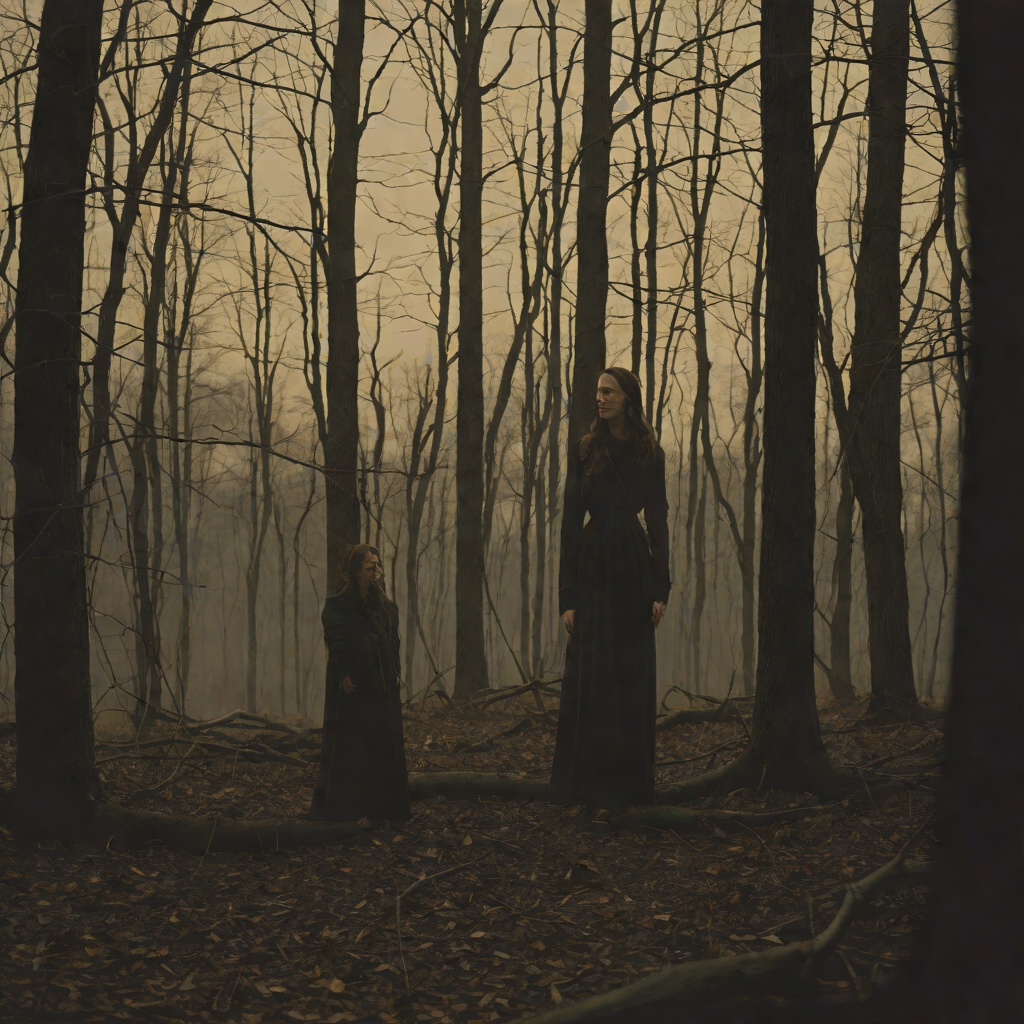
NightbitchGrandmother's Spell Book is the worn, German-language volume of hex signs and unfamiliar symbols that belonged to Nightbitch's maternal grandmother, a wrinkled, near-blind old woman who lived in a little house on the family property and wore only plain dresses and plain shoes. The book's worn cover featured hex signs and unfamiliar symbols, its text entirely in German, and it was kept on the old woman's nightstand, pulled out only for the serious work of magic. To the girl who would become Nightbitch, the book was simply "her little book," the known repository of spells she could ask for when ordinary adult power failed her.
The Spell for the Kittens
The book's one fully witnessed use came when the girl was small and heartbroken over a litter of kittens that would not stop following her on her long walk to the bus each morning. She sobbed and threw rocks at them, scolded them and told them to go back home, but they knew her fingers tasted like milk and wanted to lick them and be tucked into her warm jacket. She begged her parents to take the animals inside, imagining them crying all day in the rocky lane, hungry and cold, then wandering off into the woods to be eaten by a fox. Her parents, wide-eyed at her despair, insisted the kittens would be fine and pushed her out the door, unable to be bothered to watch over animals that were, after all, just animals. In that moment the girl felt a horrible chasm between herself and her parents that she knew would never fully be spanned, and she ran the half-mile to the bus stop crying, her legs hot, her lungs full of gravel, loving the kittens as if they were her own children.
She went instead to her grandmother, who barely spoke English and muttered in convoluted German, and asked for a spell to keep the kittens safe. The old woman smiled, her whole face lighting, and bade the child enter her little shack, which smelled of garlic and dirt and candle wax. She pulled the little book from her nightstand and thumbed its soft pages, then fetched a magnifying glass from the stand to examine the faded words more closely, studying it for a time to find just the right page. She took the book to the kitchen table, where she left it open to consult intermittently while pulling jars from her shelves and putting a heavy metal pot on the open fire. Into the pot she dumped dried herbs and fresh ones, an amount of carefully measured water drawn from the hand pump at the crude sink, and three dandelion heads the girl collected obediently from the lawn. As the girl came back into the shadowy house, she saw her grandmother slipping the body of a small rodent into the brew. When all the ingredients had been collected and concocted, they drank chamomile tea until the pot reached a boil, at which point the grandmother took it from the fire with a towel wrapped round its handle and carried it to the fence line at the edge of the pasture, where she dumped the boiling mixture under and along the fence while mumbling quietly in German.
"Okay," her grammy said, and the girl hugged her waist, smelling the life of her, loving no one more. The next day all the weeds were dead where they had poured the concoction, the rodent body was gone, and the kittens were asleep in their nest as she left for school. The spell had worked—or so the girl believed, and the belief itself was the inheritance.
The Book in the Studio
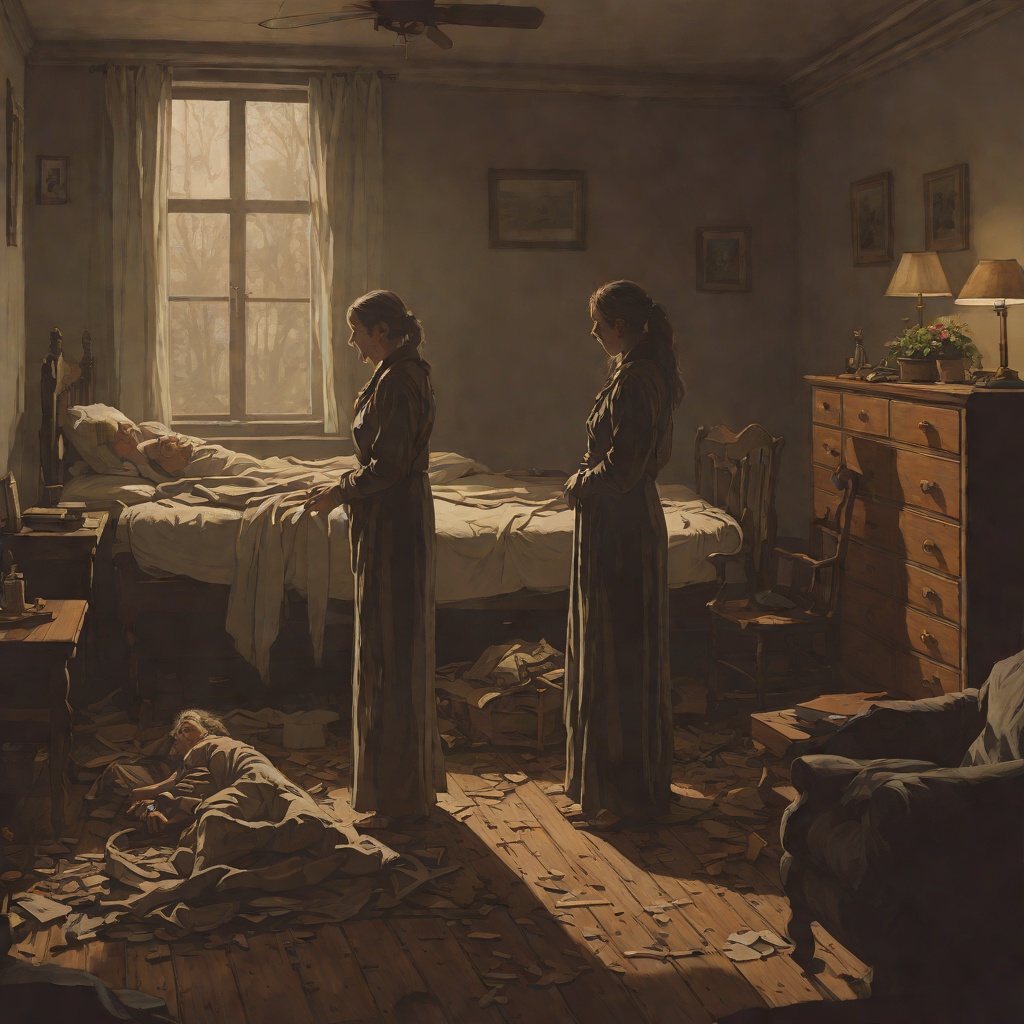
Decades later, the book resurfaces in the mother's studio, the room she now calls the Guest Room, in a transformed form: the book her grandmother had used to make her concoctions, but in English, found online at a rare-books site. It sits on the unmade bed among a constellation of other texts of craft and power—the Field Guide, a book on herb craft and the poison path, a history of disruptive performance art, a book about textiles and costuming, an instructional seller's manual for herbs. The English translation is the crucial act of recovery: what was once illegible, locked in a language the girl could not read and a near-blind woman could barely see, becomes readable, usable, and hers. The studio walls themselves carry the grandmother's visual language, hung with hex signs the mother made from her childhood memories of such signs on barns, and photos of women who dressed as her grandmother had, in plain dresses with long braided hair.
The book's reappearance is not nostalgia but reclamation. The mother's childhood reading of her own family history had been one of abandonment—her mother always pushing her out the door, away and away, go fast, too distracted by headaches and naps and pleas to be left alone to tend to the kittens or the girl's despair. But she came to see that pushing as her mother's best love, and the grandmother's book as the hidden counter-tradition: the women's magic that ran beneath the surface of a "good and responsible and holy" mother who was always somewhere far away in her own head. The spell book is the material proof that the women in her line had power, that they had delayed their greatness until time extinguished it completely, and that the grandmother's craft was the one thing that had been passed down intact.
The Book's Place in Nightbitch's Transformation
The spell book belongs to the same lineage of knowledge as A Field Guide to Magical Women, the 1978 mythical ethnography by Wanda White that the mother discovers in the library and reads obsessively. Where the Field Guide offers a taxonomy of magical women—the Slaythe, the Apothecarian tribe, the WereMothers of Siberia—the grandmother's book offers the actual practice, the lived craft of one woman who made a boiling mixture of herbs, dandelion heads, and a rodent's body and poured it along a fence line to protect what she loved. The Field Guide gives Nightbitch a framework for understanding her transformation; the spell book gives her the proof that such knowledge was always already in her family. The two books together, one on the nightstand and one on the studio bed, bracket the mother's journey from confused reader of her own body to deliberate practitioner of inherited power.
The book also connects to the mother's deepening sensory and bodily knowledge. Her heightened senses in the grocery store—smelling the ripe yeasts of the bakery, the milks in all states of freshness and souring, the deadened fields of grass in the bagged-bread aisle—are a canine development, but they are also a way of knowing the world that the grandmother's craft presupposed: a knowledge gained through smell, taste, and direct contact with living and dead matter rather than through books alone. The spell book's ingredients—dried and fresh herbs, measured water, dandelion heads, a rodent's body—are the same kind of bodily, material magic that Nightbitch practices when she buries a dead animal in the farthest corner of the lawn, her treasure, her prize, and rolls in the grass to collect the smells in her fur. The grandmother's brew and the mother's burial are the same act in different registers: taking the raw matter of the world and using it to protect, to mark, to claim.
Significance
The spell book is the novel's proof that the mother's transformation is not an aberration but a return. It is the object that links Nightbitch to a matrilineal tradition of women's magic that the respectable, sensible world—the world of her own mother, who told her to forget her grammy and her book, to be serious, to do something sensible—had tried to erase. The grandmother's near-blindness, her German muttering, her plain dresses and plain shoes, her little shack smelling of garlic and dirt and candle wax: all of it marks her as a figure outside the domestic order, a keeper of knowledge that could not be spoken in the family's ordinary language. The book is that knowledge made physical, and its translation into English and its placement in the studio is Nightbitch's deliberate act of claiming it. When she performs her final stage show, opening the space within her chest and releasing a long, high howl, with a soprano singing in German or a language that sounds like German, the grandmother's language returns as performance—the hidden tongue of the women's line, finally heard in public. The spell book is the quiet origin of that howl: the little German book of hex signs that held the power all along, waiting to be read.