The Dog Kennel
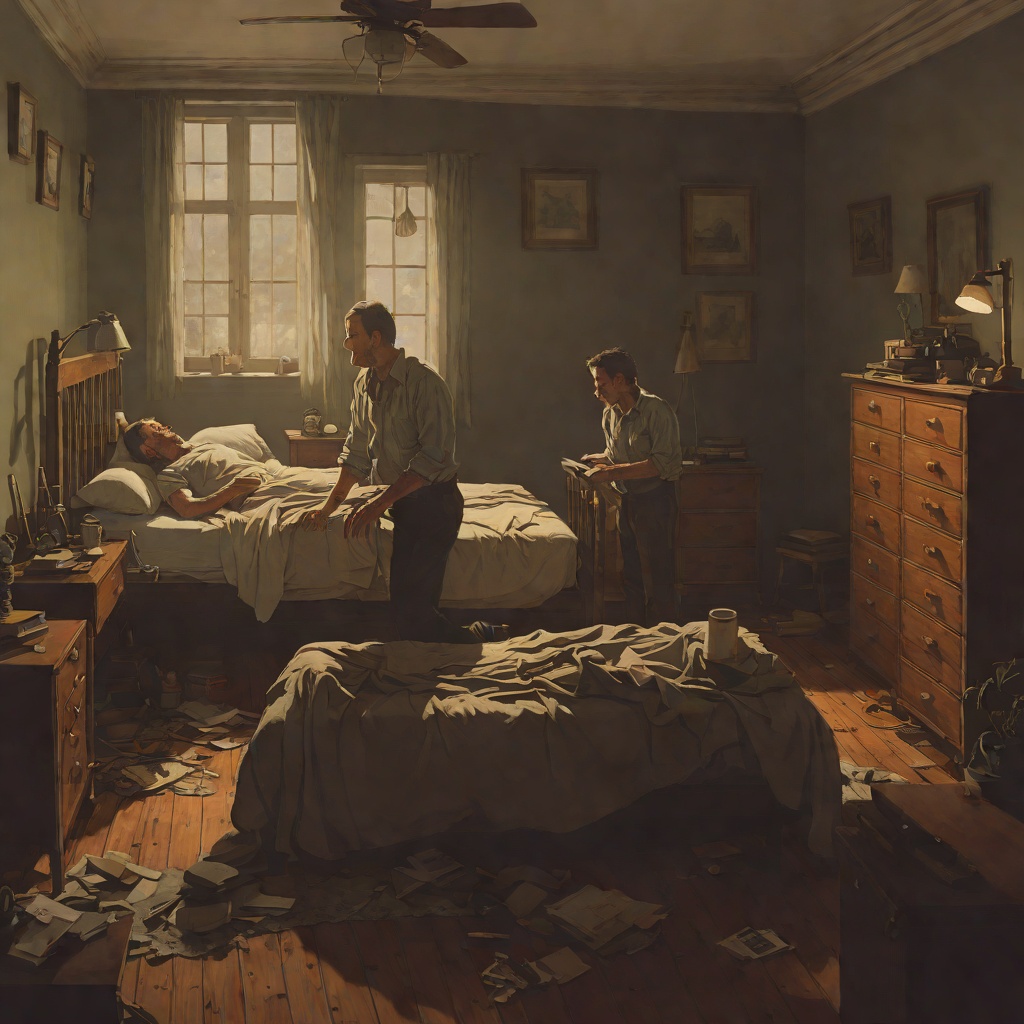
NightbitchThe Dog Kennel begins as an ordinary piece of pet equipment, a beige plastic crate, but in Nightbitch's hands it becomes the most charged domestic object in the house. It first appears in the bedroom beside the marital bed, bedded down with a soft throw blanket and a down pillow from the bed, a sight that greets The Husband when he returns from a week away for work to find the kitchen orderly and clean, the bathroom shady and smelling of bleach, the beds made, and the carpets vacuumed. The kennel sits there as the single strangest detail in a house that has been scrubbed into an unfamiliar tidiness, a silent announcement that something in the household has changed while he was gone. He walks through the house calling for his wife, and the kennel waits in the bedroom like an answer he cannot yet read.
From Living Room Prop to Bedroom Fixture
The kennel's journey through the house traces the arc of Nightbitch's transformation. It first stands in the living room, where it becomes a point of contention between the parents. The Husband, returning to find the dog stuff has taken over the domestic space, objects that the meat and the kennel are too much, that it is not natural, that it is too much, as if he has drawn a conclusion that they must all now accept. Nightbitch rolls her eyes in the dark and insists it is just a game, that the boy loves dogs, that there is no harm, that it is all fine. The kennel, in this moment, is the visible emblem of everything The Husband cannot accept about his wife's new life, the object that makes his discomfort concrete and arguable.
The Binky Weaning and the First Night
The kennel's true purpose emerges on the night Nightbitch decides to wean her son from his binky and move him out of her bed. She invokes the doggy rules, telling the boy sternly that doggies do not have binkies, and he hands over the yellow binky without protest, a victory she registers with a stunned Jesus, she should have done this months ago. Then she asks where doggies sleep, and when the boy's brow wrinkles in puzzlement, she groans out of bed, drags the oversized kennel from the living room, up the narrow stairs, and into her bedroom, where it fits perfectly in the corner. She stuffs a down comforter into the enclosure and gestures at it with a Ta-da! The boy points at the toddler-sized kennel and says, Eh? and she asks what doggy needs to make his kennel cozy. That night he asks her to open it ickle bit, and she closes it halfway, reaches in and pats his head, then sits cross-legged on the floor counting backward from one hundred to one, swaying slightly in the darkness. When she reaches one, she rises carefully and walks to the bedroom door, expecting his little voice, his cry, but instead there is nothing. She exhales quietly, then begins to laugh, a chuckle that turns into an uncontrollable fit she has to continue out in the hallway, where she slides down to the floor to sit and cry and laugh, so tired and also so relieved. It is already ten o'clock, too late to watch anything, so she washes her face and spreads out in her deliciously empty bed while her son dreams in the kennel. The kennel has given her back her bed, her night, her solitude, and the victory is sweet enough to make her weep.
The Kennel as Sleeping Ritual
The kennel soon becomes the site of a new bedtime ritual that replaces the long hours of books and stories and songs and water and hugs and crying. Now Nightbitch simply licks her son's face, tilts her head back and lets out a little howl, and then scurries downstairs. The boy cuddles up in a little pile and pulls the wire door closed, not latching it but simply creating a sense of safety, a barrier between him and the monsters in the closet and the monsters in the hallway and the terrifying darkness all around. He falls asleep in there all on his own for the first time in his life, and when Nightbitch tells The Husband this on the phone, he is astonished. The kennel, which The Husband had called unnatural, has become the instrument of the boy's independence, the place where he learns to put himself to sleep without his mother beside him.
The Kennel in the Bedroom Inventory
The kennel reaches its fullest expression in the inventory of Nightbitch's bedroom, where it sits as the centerpiece of a room transformed into a den. The beige plastic dog-kennel is lined with a fuzzy blanket and a thin cushion, dragged by her son to her bedside. Around it sprawl the accumulated evidence of her new life: a healthy ficus in the corner with a small bit of digging in the dirt, a trail of soil spilled onto the floor, a stainless-steel doggy bowl full of fresh water, another full of bone-shaped cookies, many faux-fur throw rugs in white, off-white, white tipped with gray, and black thrown around the room, a dreamcatcher dangling by the window with white feathers fluttering in the breeze, piles of clothes tamped down into perfect places on which to rest, an overly expensive linen caftan with the seam up the back torn and stained with something brown, a black satin eye mask, serums, a wooden box full of jerky, an unlabeled spray bottle full of a lavender concoction, a bit of rope, balled-up socks once wet but now dried and almost crusty, two dirty tennis balls in a corner, a dozen large feathers on the chest of drawers, a picture of a bunny nestled in green grass, a bed pillow with no case and the corners gnawed off, a stack of children's books including Grimm's fairy tales, a light catcher creating rainbows on the walls, many vases of fresh and unfresh wildflowers, a real raccoon pelt slung over the mirror, and a pile of sticks good for chewing. The kennel anchors this chaos, the one object that explains all the others, the reason the room has become a nest rather than a bedroom. Nightbitch knows it must be picked up by the time her husband returns home, that there will be need for just enough tidying so that an extended explanation is not in order. She rehearses under her breath, It's a game, as she takes the sticks and arranges them in a vase with the feathers, It's just an experiment, as she refills the water bowl, It's…It's what I need, as she strips the bed of its soiled linens. She tosses a dirty shirt to the boy, who follows her on all fours and, as he has been taught, collects the cloth in his mouth and bounds down the stairs, galumphing around a corner and toward the hamper. The kennel is the heart of this new household order, the object around which mother and son have organized their shared dog life, and the thing she must hide from the man who cannot understand it.
The Kennel and the Architecture of Transformation
The kennel's placement in the bedroom, dragged there by Nightbitch herself, reverses the logic of the house around it. The mid-century bungalow with its odd angles, built by a builder who did not know how to build, had once seemed the height of charm, but now angers her with its doors all too narrow or too short, its corners that are never right angles, its rooms that never feel clean no matter how much she scrubs. The kennel, by contrast, fits perfectly in the corner of her bedroom, a manufactured enclosure that suits her new life better than the house's crooked architecture ever did. Where the house frustrates her body with its wrong angles and narrow doors, the kennel receives her son's sleeping body without complaint. It is the one structure in the house that works as intended, and its perfect fit in the corner reads as a quiet triumph over the bungalow's failures. The kennel is also the object that most clearly marks the distance between Nightbitch's world and The Husband's: he sees a dog crate in the living room and calls it unnatural, while she sees a bed, a safety barrier, a place where her son finally sleeps alone. The same object, read two ways, becomes the emblem of their irreconcilable visions of what the family is becoming. And when Nightbitch begins to sleep in the guest room, her studio, whenever her husband is home, disappearing until her husband and son run out of things to do and puzzle over where Mama could be, the kennel remains in the bedroom as the site of the boy's independence, the proof that the transformation has already happened whether The Husband accepts it or not.