Mother-rage
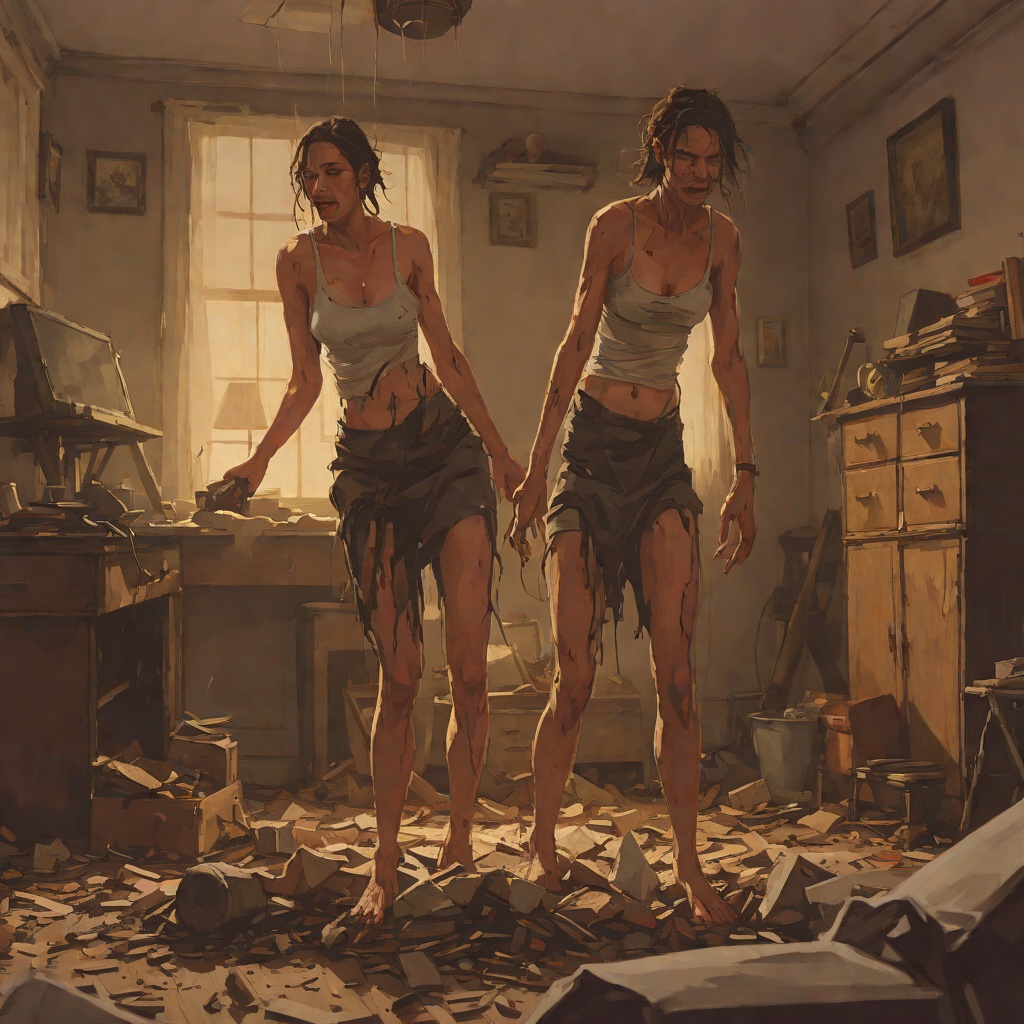
NightbitchMother-rage is the volatile, all-consuming fury that defines the protagonist's inner life in Nightbitch, the force that both threatens to destroy her and, paradoxically, becomes the engine of her liberation. It is the white-hot flame of anger that ignites in her chest when her son screams in the night, the violent instinct that surges through her during her premenstrual agony, and the righteous indignation that crystallizes her suspicion that society, adulthood, marriage, and motherhood are all "masterfully designed to put a woman in her place and keep her there." More than a mere emotion, mother-rage is a form of perception, a lens through which she sees the sham of her existence, and the raw material from which she births a new, monstrous self. It is the point of origin from which, as the narrative insists, "all women do" create something new, transforming her from a tired, compliant mother into the feral creature she names Nightbitch.
The Anatomy of Rage: From Flame to Fire
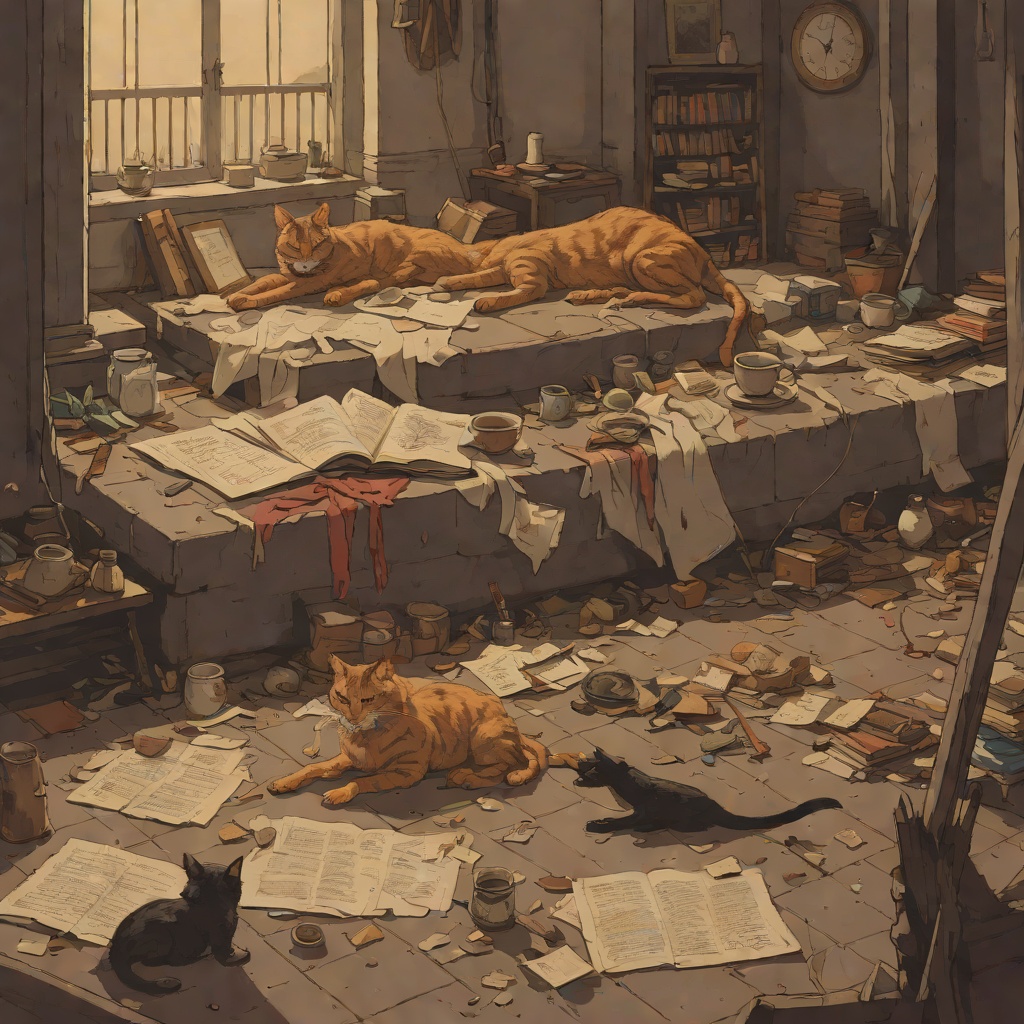
The novel meticulously traces the origins and physical manifestations of mother-rage, grounding it in the specific, grinding realities of her daily life. The rage is first kindled in the deepest hours of the night, when her son, who refuses to sleep in his own bed, wakes for the third or fourth time. As she lies "as still as a corpse," waiting for her husband to wake—a thing he never does—her child's screams "fanned a flame of rage that flickered in her chest." This flame is not a new phenomenon but an ancient, carefully tended fire, one that women have stoked and protected since girlhood, keeping it secret and never letting it "rage into a mountain of light, because that's not becoming of a girl." The narrative frames this as a collective inheritance: a woman looks into the eyes of other girls and sees their fires flickering there, offering conspiratorial nods without ever speaking of the "near-unbearable heat." The rage is also profoundly physical, amplified by her body's cycles. In the days before her period, she experiences an agony so acute that she suddenly understands those women who had murdered their husbands and then claimed PMS as a defense, admitting that her only instincts during this time are toward violence. This bodily fury is compounded by the relentless demands of her environment, from the fat black cat that "rawled and rawled at the exact frequency that inspired homicidal rage" to the grocery store, which becomes a locus of oppression where she spirals into an even worse mood despite her efforts toward positive thought.
The Conspiracy of the Everyday: Rage as Revelation
Mother-rage is not just a reaction to exhaustion; it is an analytical tool that reveals the structural conspiracy against women. After quitting her job, as her body struggles to regain its equilibrium and she is stripped of her career, her comely figure, her ambition, and her familiar hormones, the idea of an "anti-feminist conspiracy" seems "not only plausible but nearly inevitable." She inflates with mother-rage and composes elaborate, emotional arguments against "the system and capitalism and the patriarchy and then religion and gender roles and biology." This rage is directed not only at abstract systems but at the specific people who embody them. Her parents, who never call and whom she never calls, are held responsible in some foundational way for the injustices besetting her, and she indulges in a general rage directed at the past and to the east, where they live, hundreds of miles away. The rage also targets the myth of the working mother, personified by the artist from her graduate program who has "seamlessly transitioned into motherhood" and posts milestones on social media. Watching this woman strap her baby to her chest and work with chicken wire in a gallery, Nightbitch asks herself, "Why can't I do that? How can it be that easy?" The answer, which her rage supplies, is that it is a lie, a performance that conceals the same drudgery and erasure. Even the name "Nightbitch" itself becomes a focus of her fury, as she argues that such a gendered slur doesn't account for the fact that she made a boy with her own body, nurturing his multiplying cells to her own detriment, to her own fatness, and to the decline of her youthful sex appeal. She realizes there isn't really a commensurate word to degrade men, and that her vision for herself had not been of a mother, but now that she was one, she felt strongly that she needed to be a hot one—a demand that is itself a source of rage.
The Failure of Prescription: Rage Against the Cure
The world offers Nightbitch a series of remedies for her rage, all of which she rejects because they are designed to suppress the very fire that is her source of truth. Her husband, returning home for a forty-eight-hour stretch, tells her to stop worrying about her hair growth and get on top of her week, advising her to make a plan, draw up a schedule, and treat it like a job. His final, infuriating prescription is the mantra "Happiness is a choice." She wants to slap him across his talking face, but instead tries to take his suggestion to heart, choosing happiness and making a weekly schedule, even as the coarse patch of hair on her neck lengthens and spreads. This prescription is echoed and commodified by Jen, the "Herbal Ambassador" whose business card proclaims the tagline "Live the Life You Deserve." Jen's recruitment messages, lifted from a glossy pamphlet, promise that her products will help Nightbitch feel fine and realize her full potential, offering a corporate, capitalist solution to a systemic, spiritual problem. At Jen's herb party, the mothers are whipped into an evangelical frenzy, yelling in unison "I am!" when asked who is ready to have more energy and be happy. When Jen shouts, "Who came here today to live the life you deserve?" Nightbitch thinks, "The life I deserve? What was that? Some sort of curse?" The entire apparatus of the party—the testimonials, the crying, the projected charts outlining earning potential, the flowchart demonstrating how the mothers are "weaving a powerful web of financial support"—is revealed to be a machine for converting female discontent into sales, a way of managing rage by channeling it into a multi-level marketing scheme. The narrative makes clear that these cures are worse than the disease, as Nightbitch finds the story of a lawyer mom who stays home to sell herbs "the most depressing story she had ever heard, possibly even more depressing than her own life."
The Feral Solution: Rage Transformed
The ultimate resolution of mother-rage is not its suppression but its embrace and transformation into a new way of being. The novel suggests that what Nightbitch needed all along—more than medical attention or psychotherapy, more than choosing happiness or adjusting her attitude—was "to sink her sharp teeth into something living and bloody and feel its essence drain away until it was simply a rotting and unmoving thing." This is the culmination of her rage, a single night of violence that is not a breakdown but a breakthrough. It is "one night to not care what anyone thought, to shit where she pleased, to not be needed by any living thing, and to be only a body in motion in the dark." The rage that once flickered in her chest as a flame of frustration becomes the fuel for her transformation into Nightbitch, the feral creature who hunts, kills, and buries her prey. This is not a loss of self but a discovery of a more authentic one. After a night of transformation, she wakes not with fear but with a "near-religious ecstasy, something bright and pure" that wells from her core. She loves her body, loves being a body, and loves the boy, another body she has made. The rage has burned away the false self—the good sport, the hot mom, the choosing-happiness automaton—and revealed the monster beneath, a monster that is not a degradation but an apotheosis. This connection to a deeper, ancestral power is reinforced by her memories of her Appalachian upbringing, where her grandmother used a spell book and boiling concoctions to kill weeds, and where her mother's distant, holy behavior is reinterpreted not as abandonment but as "her mother's best love." The rage, it turns out, is a legacy, a fire passed down through generations of women who delayed their greatness until time extinguished it completely, and Nightbitch's transformation is her refusal to let that fire die. She reclaims the skills of her girlhood—keeping bees, dipping candles, tracking animals—and in doing so, she reclaims the power that her rage had always been pointing toward. Mother-rage, in the end, is not the problem to be solved but the solution itself, the force that allows a woman to become a monster, and in doing so, to finally become herself.