Spanish Navy
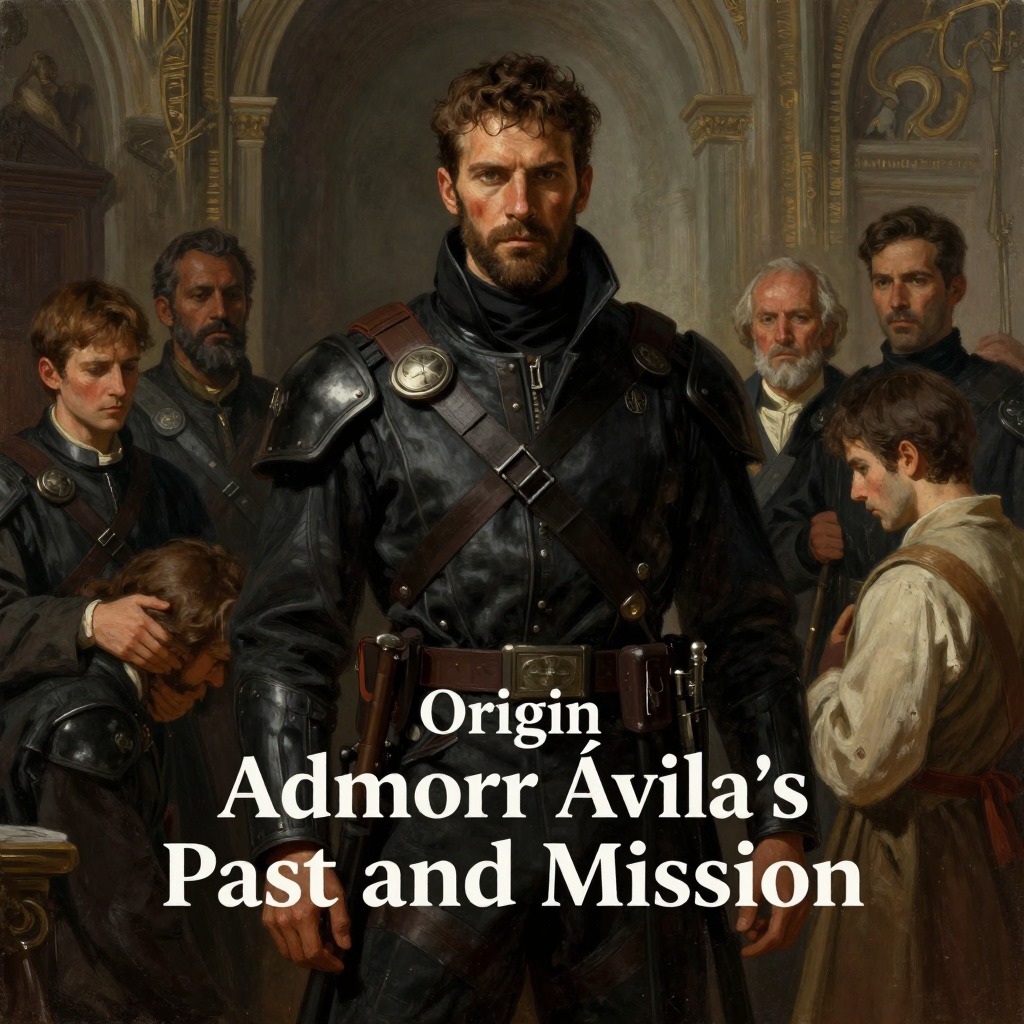
OriginThe Spanish Navy (Armada Española) is the institution that shaped Admiral Luis Ávila's identity as a disciplined officer and, after a catastrophic terrorist attack destroyed his family, became the organization that discarded him. Its uniform, symbols, and codes of honor are woven into the novel's central assassination plot, serving both as Ávila's disguise and as the mark of a man whose loyalty to the service was ultimately replaced by a fanatical religious crusade.
Identity and Institutional Role
The Spanish Navy is presented as a historically proud but diminished force. Admiral Ávila reflects that "the Spanish Armada may not be the most potent navy on earth anymore, but we still know how to dress an officer" . Its emblem, the mace, is the symbol of the Spanish navy's Unidad de Operaciones Especiales (E00293–E00294). The Navy's motto, "Pro Deo et patria" (For God and country), is recited by Ávila during the Palmarian pope's homily (E03138–E03139), linking the institution's traditional values to the conservative religious ideology that later recruits him.
Ávila's Career and Trauma
Ávila served the Navy for a lifetime before the Cathedral of Seville bombing on Easter morning destroyed his wife María and their three-year-old son Pepe (E00271–E00283). The trauma triggered severe alcoholism and post-traumatic stress disorder. Within months, the Spanish Navy quietly forced him to retire, leaving him with only a modest stipend (E01991–E01992). His ceremonial pistol, a cheap weapon left uncleaned in a dusty closet, failed to fire when he attempted suicide on his fifty-ninth birthday (E01995–E01997). The Navy's abandonment of Ávila after his breakdown is a crucial step in his transformation from a decorated officer into a killer.
The Assassination and the Uniform
Ávila wears his full-dress navy whites—a double-breasted white jacket, broad black shoulder boards, an imposing array of service medals, a starched white standing-collar shirt, and silk-trimmed white slacks —to the Guggenheim Museum. The uniform grants him access and authority; a security guard admires his rosary beads without suspicion (E00547–E00548). After the shooting, the Guardia Real agent who pursues him reports seeing a figure in a white military uniform (E01312–E01313), and the getaway car's description is broadcast with that detail. Ávila later strips off the top of the uniform, appearing in a V-neck T-shirt and a borrowed baseball cap , shedding his naval identity as he flees.
The Navy's Legacy and the Regent's Network
The Regent, who recruits Ávila for the assassination, exploits the Navy's institutional prestige. The Regent tells Ávila that "we occupy the highest levels of government" and that the tattoo on his palm—the Francoist "VICTOR" symbol—will ensure his release if captured . The Navy's chain of command, which Ávila once served, is replaced by the Regent's invisible hierarchy. After the murder, Ávila sings the Oriamendi hymn in his mind—"¡Por Dios, por la Patria y el Rey!" (For God, for Country, and King!)—a battle cry from the Carlist wars that the Navy's traditionalist officers would have known . The Spanish Navy thus functions as the institutional shell from which Ávila's military discipline is extracted and repurposed for a religious war.